Artwork
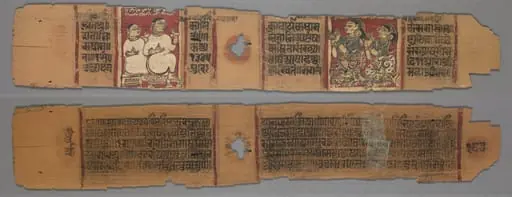
Two nuns teaching lay women, colophon page of folio 167 (recto) from a Kalpa-sutra and Story of Kalakacharya

Two nuns teaching lay women, colophon page of folio 167 (recto) from a Kalpa-sutra and Story of Kalakacharya is an unspecified painting by the Indian Miniature artist Unknown. It dates from 1278 and is held in the collection of the Cleveland Museum of Art. This painting appears on the colophon page of a Jain manuscript completed in 1278, likely produced in Palanpur, Gujarat.
- Accession no.
- 1971.126.a
- Credit line
- Purchase from the J. H. Wade Fund
About this work
You see two nuns in flowing white robes teaching three women dressed in bright, patterned fabrics and gold jewelry.
You see two nuns in flowing white robes teaching three women dressed in bright, patterned fabrics and gold jewelry.
This painting comes from a Jain religious book made in 1278. The nuns are spiritual guides, while the laywomen are wealthy patrons who paid for the book. Their fine clothes show off their status, but the nuns’ simple robes remind us what really matters to the faith.
To see more art like this, look up western india, gujarat, palanpur (prahladanapura).
Overview
This painting appears on the colophon page of a Jain manuscript completed in 1278, likely produced in Palanpur, Gujarat. It illustrates a moment of religious instruction, depicting two nuns guiding laywomen in spiritual practice. The scene is part of an illuminated copy of the Kalpa-sutra and the Story of Kalakacharya, texts central to Jain devotional life. Such manuscripts were commissioned as acts of piety, with the act of patronage itself considered spiritually beneficial.
Subject & Meaning
The two nuns, dressed in plain white robes, serve as spiritual teachers, embodying the Jain ideal of renunciation. The three laywomen, adorned in richly patterned silks and gold jewelry, represent wealthy patrons who funded the manuscript’s creation. Their contrasting attire underscores a theological emphasis: material wealth is acknowledged but not exalted, while spiritual discipline remains the highest value. The scene affirms the symbiotic relationship between monastic authority and lay support in Jain religious life.
Technique & Style
Executed in tempera on paper, the painting employs fine brushwork and mineral pigments to render intricate textile patterns and delicate facial features. The nuns’ flowing white robes are rendered with minimal detail, emphasizing simplicity, while the laywomen’s garments display elaborate designs in vibrant hues. The composition is flat and frontal, typical of western Indian manuscript painting, with no attempt at perspective, focusing instead on symbolic clarity and devotional presence.
History & Provenance
The manuscript was created in 1278 in the region of Palanpur, a center of Jain artistic production in Gujarat. It was commissioned by lay patrons who sought religious merit through the sponsorship of sacred texts. The inclusion of donor figures within the imagery was a common practice, serving both as a record of patronage and a devotional act.
The folio has survived intact, offering rare insight into the social and religious dynamics of 13th-century Jain communities.
Context
In medieval western India, Jain communities invested heavily in manuscript illumination as a form of religious devotion and social expression. Wealthy merchants and landowners commissioned such works to demonstrate piety and secure spiritual benefit. The depiction of patrons within sacred narratives reinforced their role in sustaining monastic institutions. This painting reflects a broader cultural practice where art, faith, and social status were deeply intertwined.
Legacy
This folio remains a key example of Jain manuscript art from the 13th century, illustrating the visual language of religious patronage and monastic authority. It contributes to the understanding of how Jain communities preserved doctrinal texts and maintained spiritual hierarchies through art. Similar works from Gujarat continue to inform scholarly study of medieval Indian religious practices and the role of visual culture in sustaining faith traditions.
Artist & collection









- Folio 167, from a Kalpa-sutra and Story of Kalakacharya: two nuns teaching lay women (recto); genealogical text (verso)
 Folio 167, from a Kalpa-sutra and Story of Kalakacharya: two nuns teaching lay women (recto); genealogical text (verso)
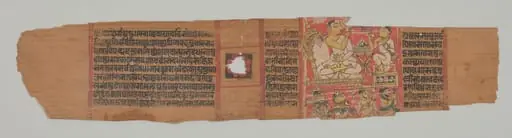 Monk preaching to a disciple with a lay audience, folio 2 (recto) from a Parshvanatha Charitra (Life and Stories of Lord Parshva) of Bhavadeva-suri
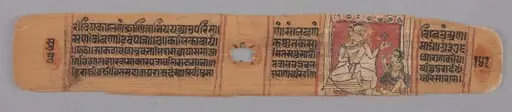 Monk Holding a Flower Venerated by a Lay Disciple: Folio 141 (verso), from a Kalpa-sutra and Story of Kalakacharya
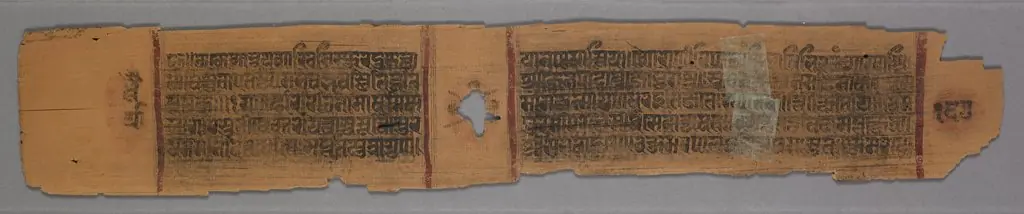 Two nuns teaching lay women, colophon page of folio 167 (recto) from a Kalpa-sutra and Story of Kalakacharya
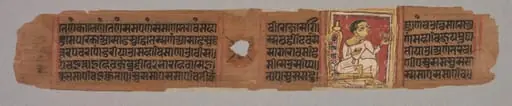 Monk Holding a Flower: Folio 2 (recto), from a Kalpa-sutra and Story of Kalakacharya
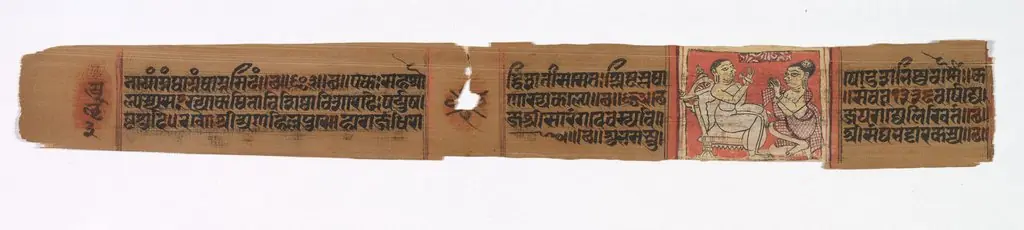 Leaf from a Jain Manuscript: Colophon page, Kalpa-sutra and The Story of Kalakacharya of Devachandra: Monk Teaching Lay Disciple
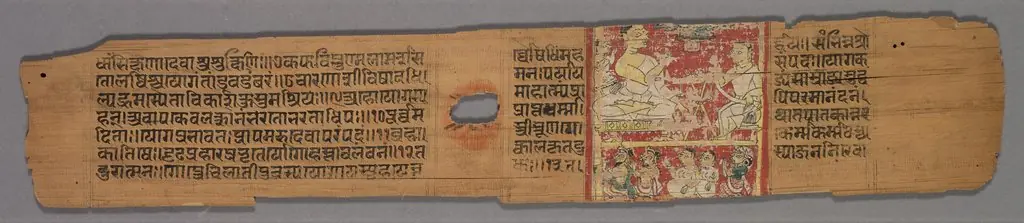 Leaf from a Jain Manuscript: Yoga-shastra: Jain monk with Disciple and Two Laymen, Two Nuns and a Laywoman below (verso)
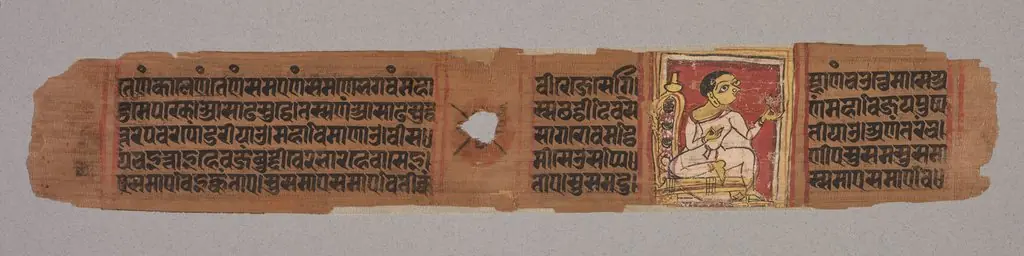 Leaf from a Jain Manuscript: Kalpa-sutra: Monk Holding a Flower (recto)
 Leaf from a Jain Manuscript: Kalpa-sutra: The Monk Gautama, Enthroned (recto)