Artwork
Frederick II the Great (1713-86), king of Prussia
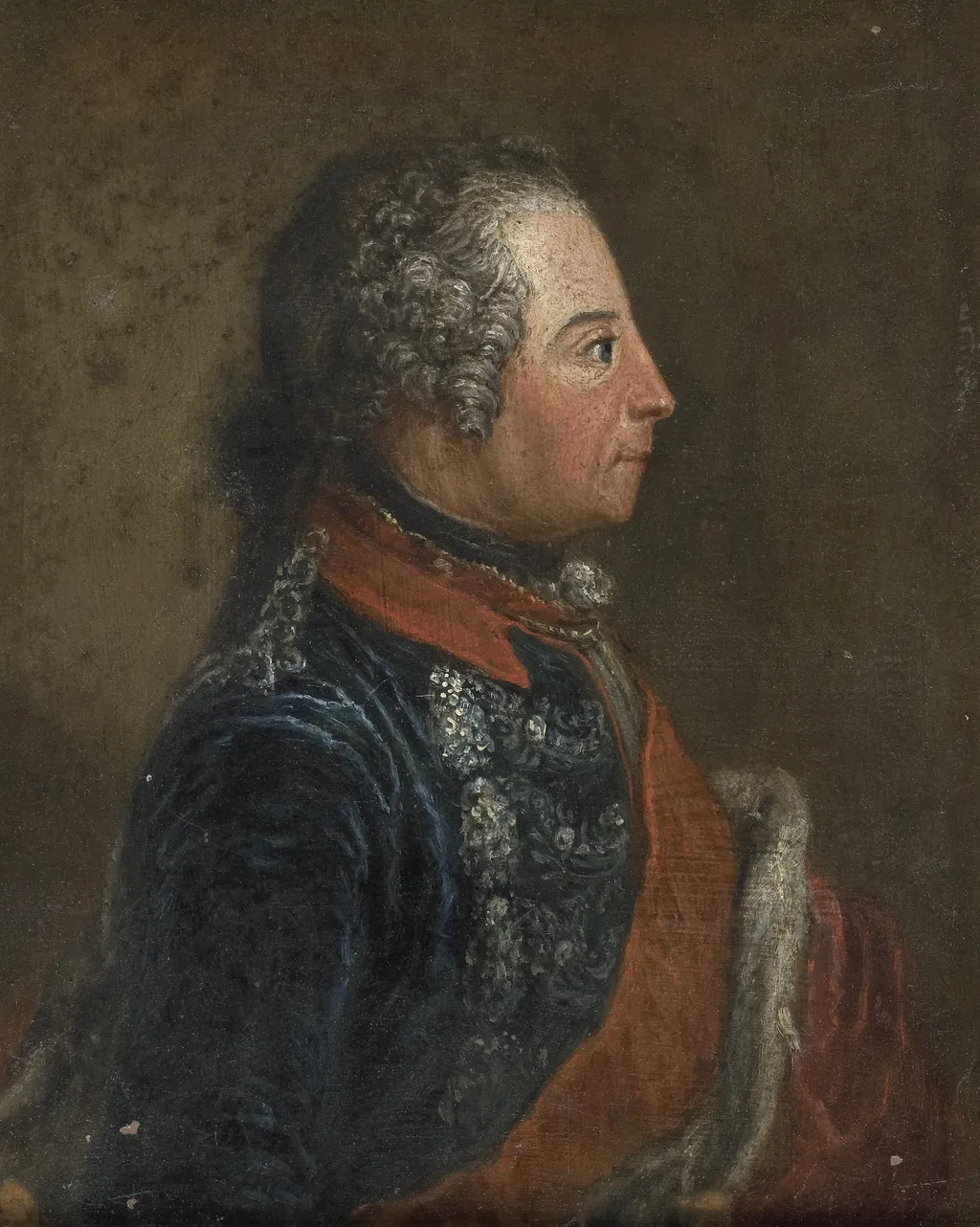
Frederick II the Great (1713-86), king of Prussia is an oil painting. It dates from 1750 and is held in the collection of the Rijksmuseum. The work is a copper portrait of Frederick II, King of Prussia (1713‑1886), rendered in profile and looking toward the viewer’s right.
About this work
Subject & Meaning
The painting shows Frederick II of Prussia as its central figure, rendered in a miniature format on copper in 1750. Its iconography aligns with royal portraiture of the period, emphasizing authority and Enlightenment ideals through conventional symbols of kingship. The work’s meaning centers on the monarch’s political role and intellectual patronage within Prussian history.
Technique & Style
Stylistically, it adheres to the conventions of the miniature genre, utilizing the durable metal ground typical for such intimate portraits of the era.
Created in 1750, this anonymous work is classified as a miniature painting executed in oil paint on a copper support. The piece measures 8.4 cm in height and 7 cm in width. Stylistically, it adheres to the conventions of the miniature genre, utilizing the durable metal ground typical for such intimate portraits of the era.
The composition focuses on the depiction of Frederick II of Prussia, rendered in oil to capture the likeness of the monarch within a compact format.
History & Provenance
The miniature portrait of Frederick II the Great was created in 1750 on a copper support using oil paint. The work is attributed to an anonymous artist and is believed to have been made in Germany. It depicts the King of Prussia and measures 8.4 cm in height by 7 cm in width.
The piece is currently held in the collection of the Rijksmuseum in Amsterdam, which previously operated as the Nederlandsch Museum voor Geschiedenis en Kunst.
The miniature is held in the collection of the Rijksmuseum in Amsterdam, the Netherlands, where it is catalogued as part of the holdings of the Nederlandsch Museum voor Geschiedenis en Kunst. Painted on copper in 1750, the work is recorded in the museum's records as depicting Frederick II of Prussia.
No specific exhibition history is documented in the available sources.
Context
Frederick II the Great (1713-86), king of Prussia, was a prominent historical figure who influenced European politics and culture during the 18th century. As a monarch, he shaped Prussian governance and military strategy, contributing to the broader context of Enlightenment-era leadership. His reign intersected with artistic developments, including the production of small-scale paintings on copper, a medium favored for its reflective quality and suitability for intimate portraiture.
One such work, attributed to an anonymous artist, depicts the king in a miniature format measuring 8.4 cm in height by 7 cm in width. Created in Germany around 1750, this painting is part of the Rijksmuseum's collection in Amsterdam and exemplifies the genre of royal portraiture through its detailed rendering and symbolic composition.
Scholarly analysis of this artwork emphasizes its role within the visual culture of Frederick II's court, where imagery served to reinforce authority and legacy. The painting's classification as a miniature reflects contemporary artistic trends in Northern Europe, particularly the use of copper supports for portable, detailed works intended for private patronage. Its presence in a national museum collection underscores its historical significance as both an artistic artifact and a representation of Prussian identity during the 18th century.
Overview
The work is a copper portrait of Frederick II, King of Prussia (1713‑1886), rendered in profile and looking toward the viewer’s right. The figure is dressed in a dark blue coat with elaborate silver embroidery, a red collar, and a red sash over the left shoulder, his curly gray hair visible. The composition emphasizes the monarch’s dignified presence through formal attire and a restrained pose.
Artist & collection

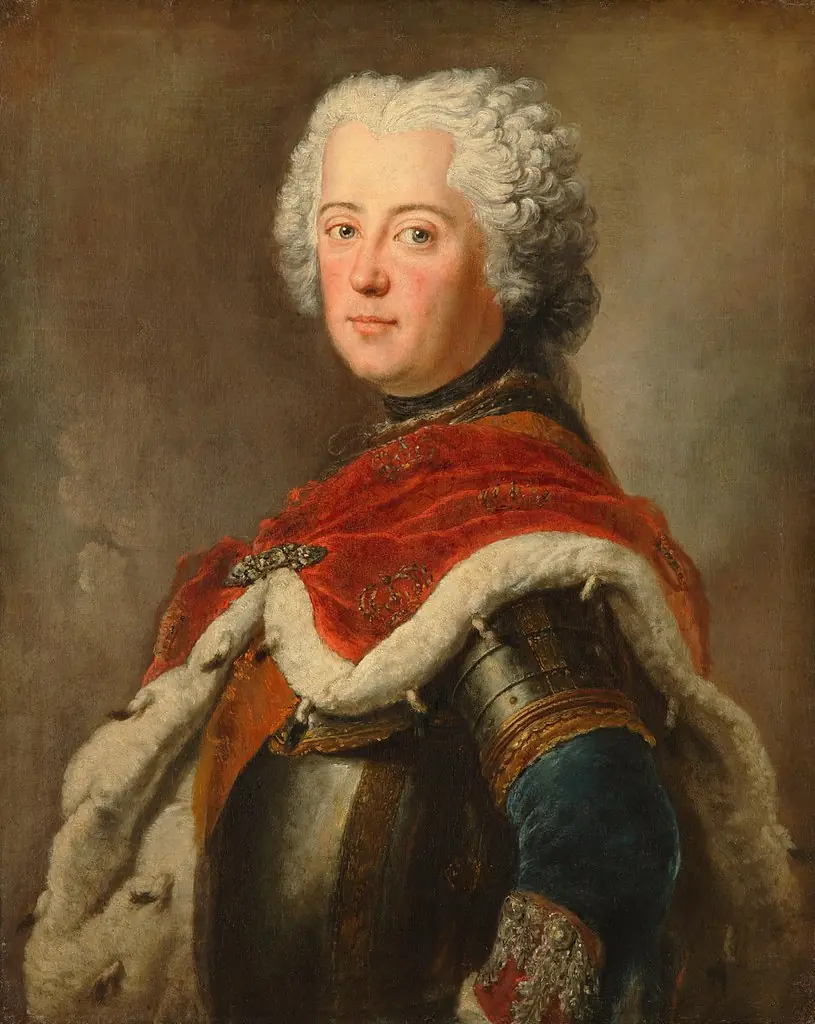 Crown prince Frederik de Great in Armour
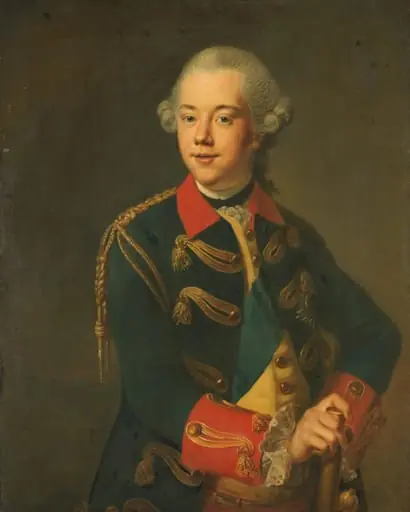 Portrait of William V, Prince of Orange-Nassau
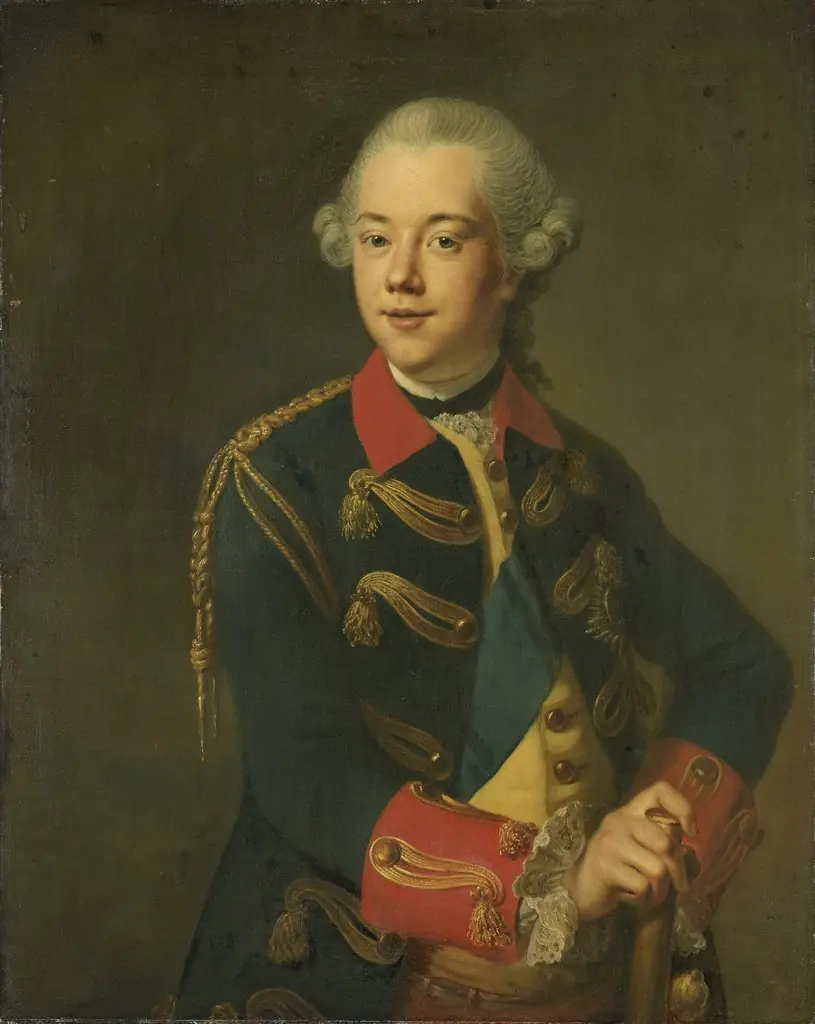 Portrait of William V, Prince of Orange-Nassau
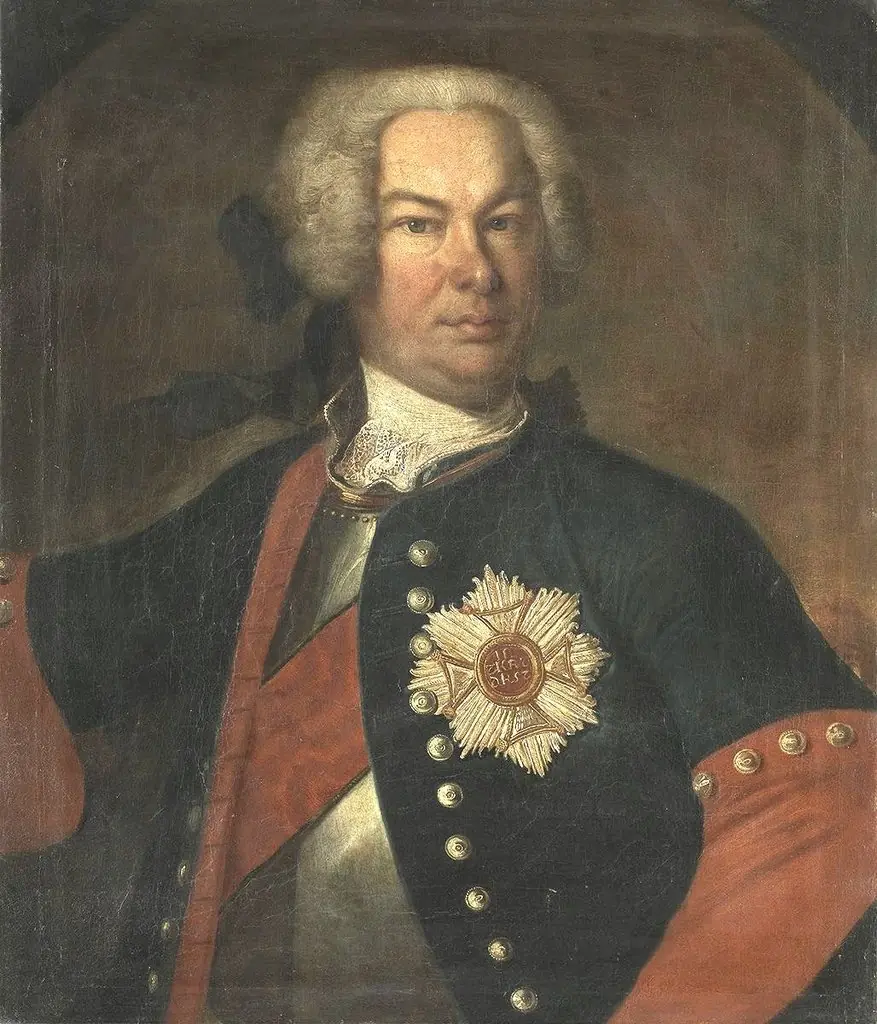 Johann Christian, Father of Carl Theodor of the Pfalz
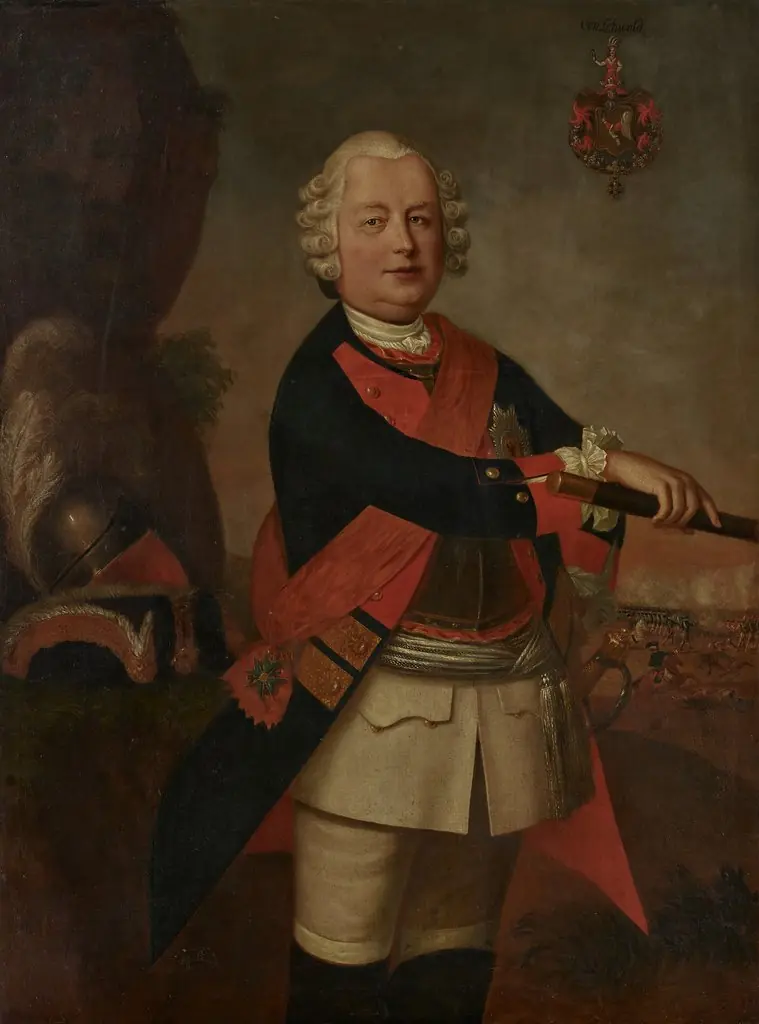 Lieutenant General Johann (Hans) von Lehwald
 Herzog Clemens Franz de Paula von Bayern
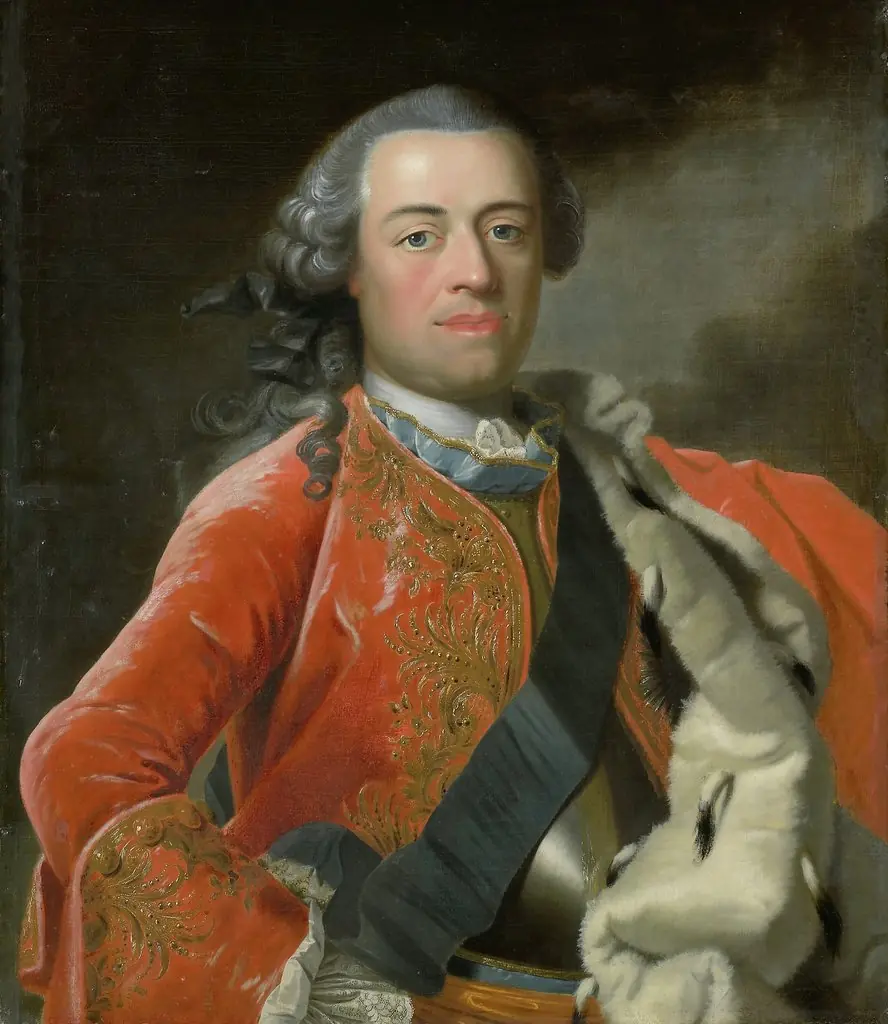 Portrait of Willem IV van Oranje-Nassau (1711-1751)
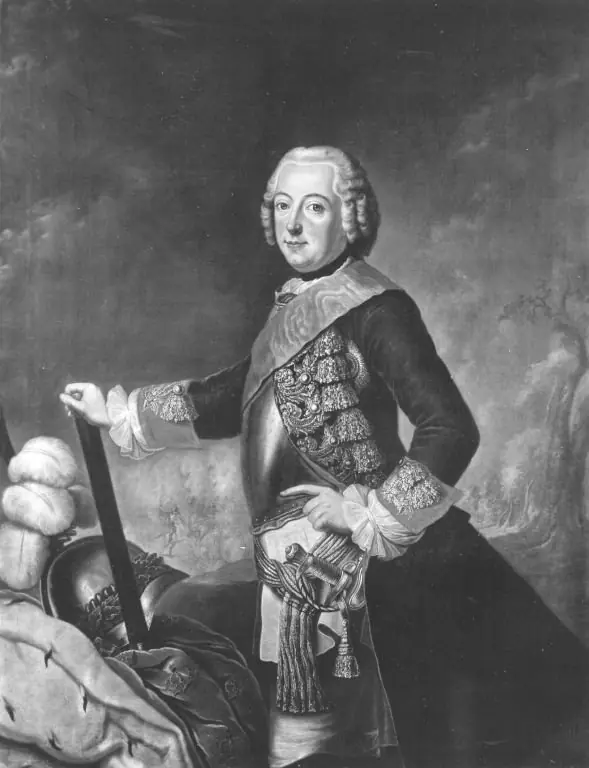 Friedrich II. der Große
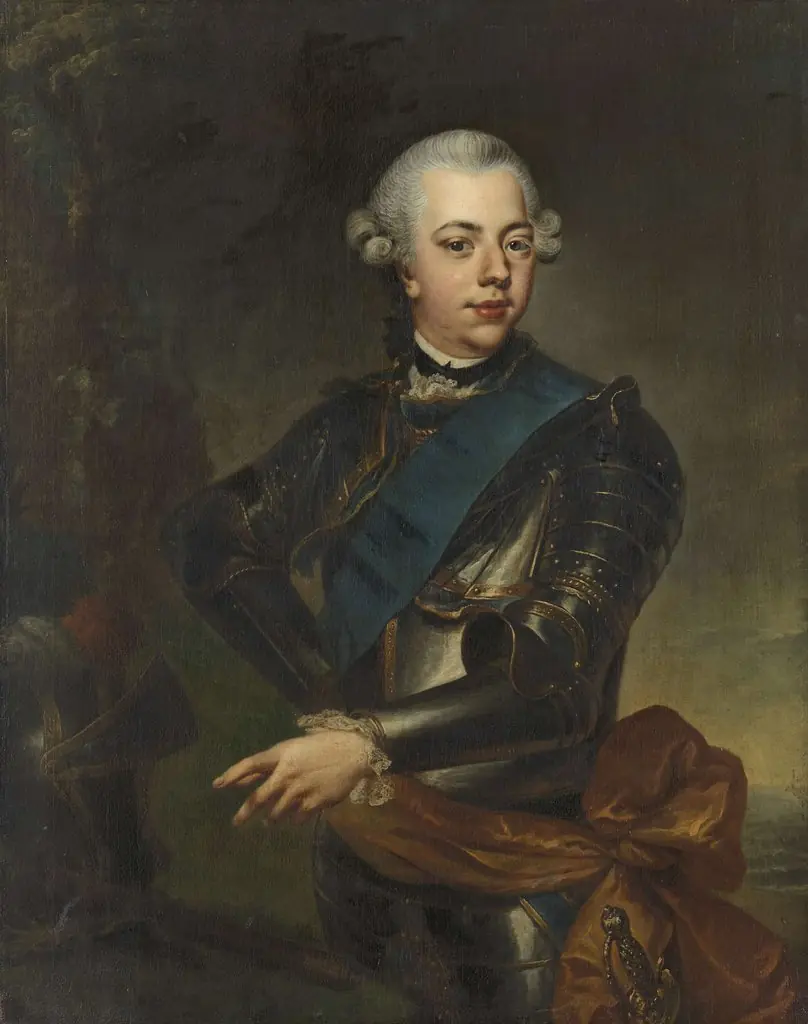 Willem V (1748-1806), prins van Oranje-Nassau
 Portrait of Grand Duke Pavel Petrovich, the Future Emperor Paul I of Russia (1754-1801)
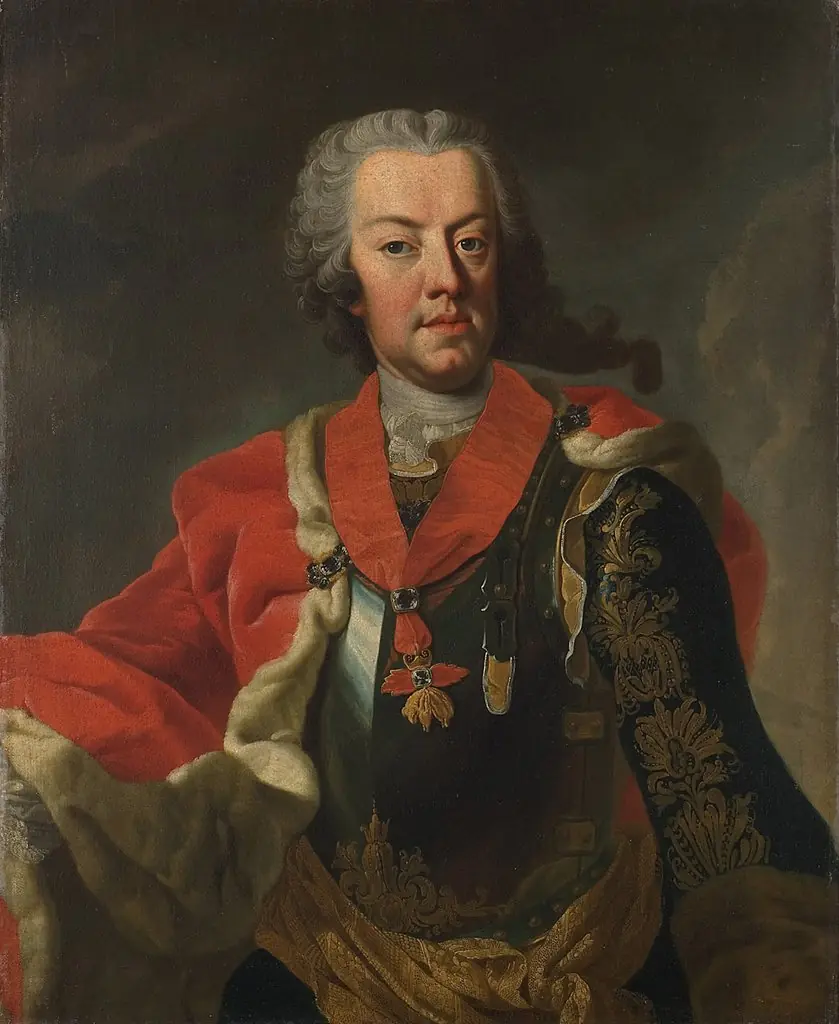 Herzog Karl Alexander von Lothringen (1712-1780), Brustbild
- Prince Henry of Prussia (1726-1802)