Artwork
Portrait of Grand Duke Pavel Petrovich, the Future Emperor Paul I of Russia (1754-1801)
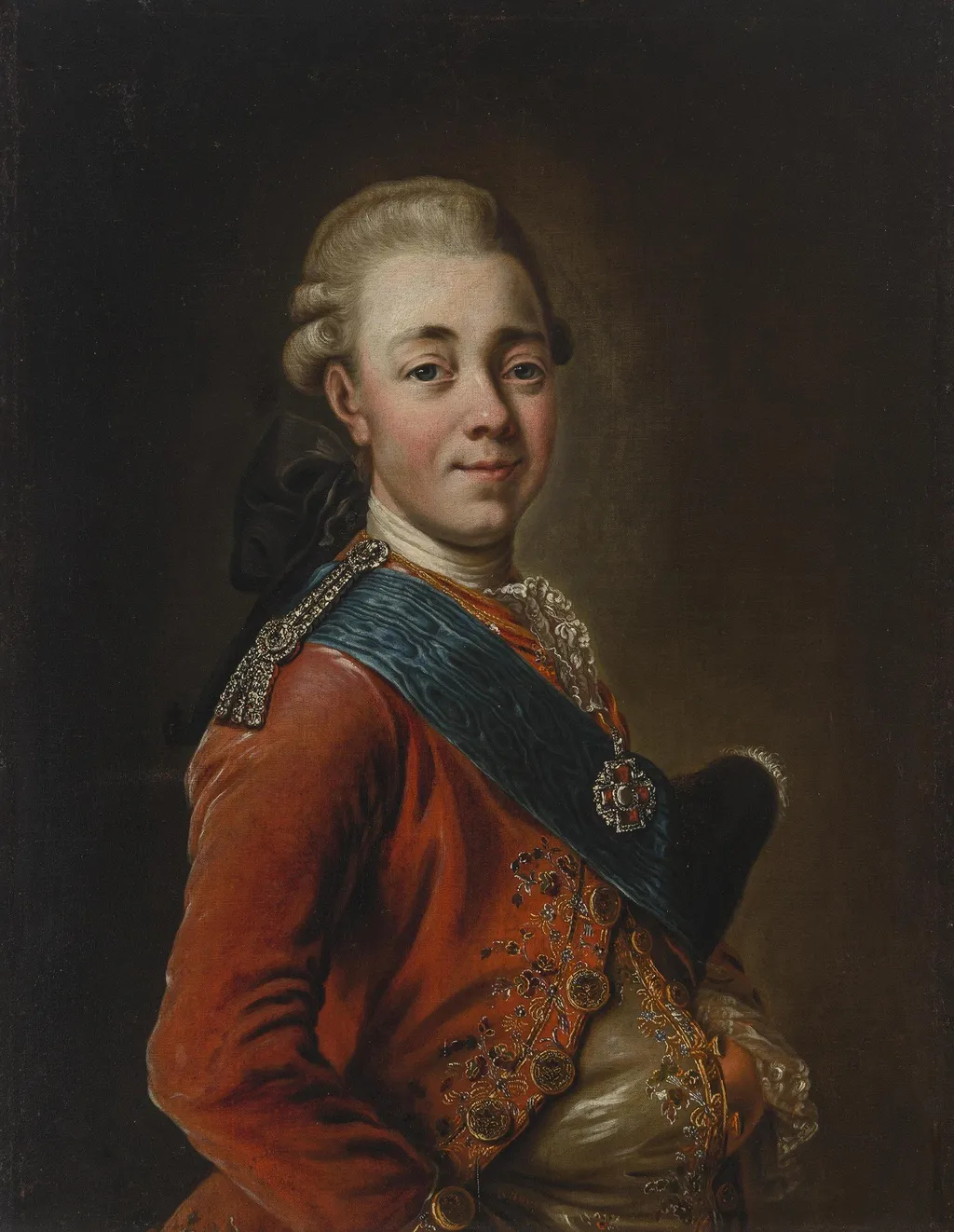
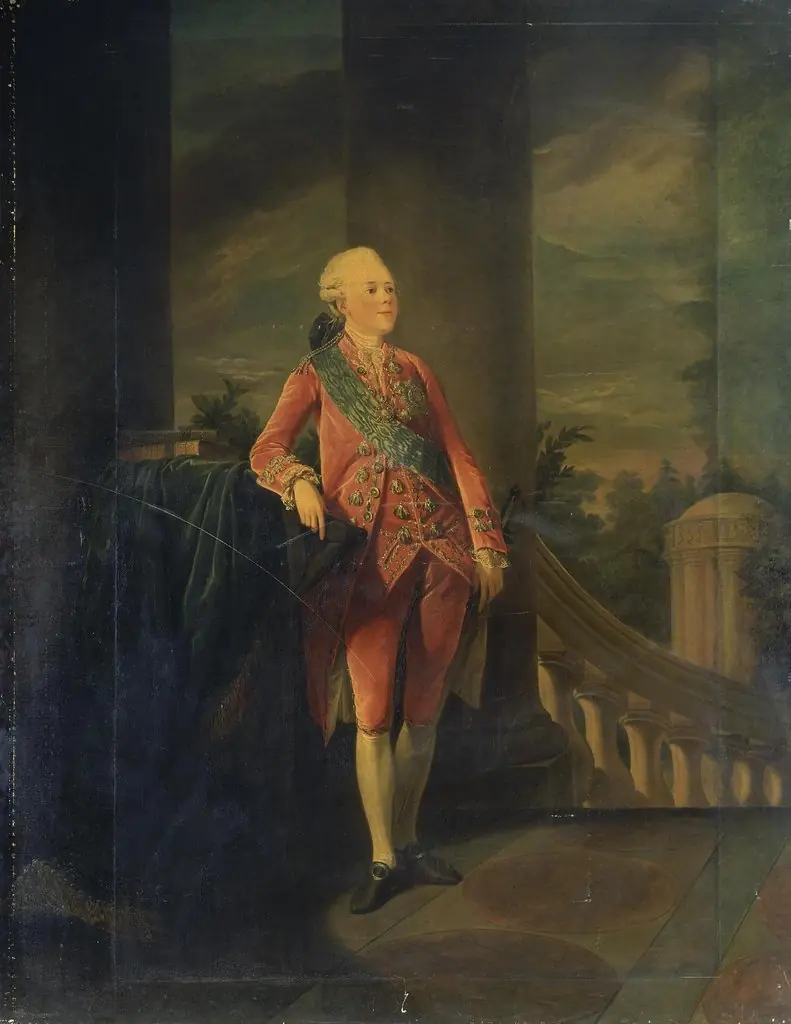
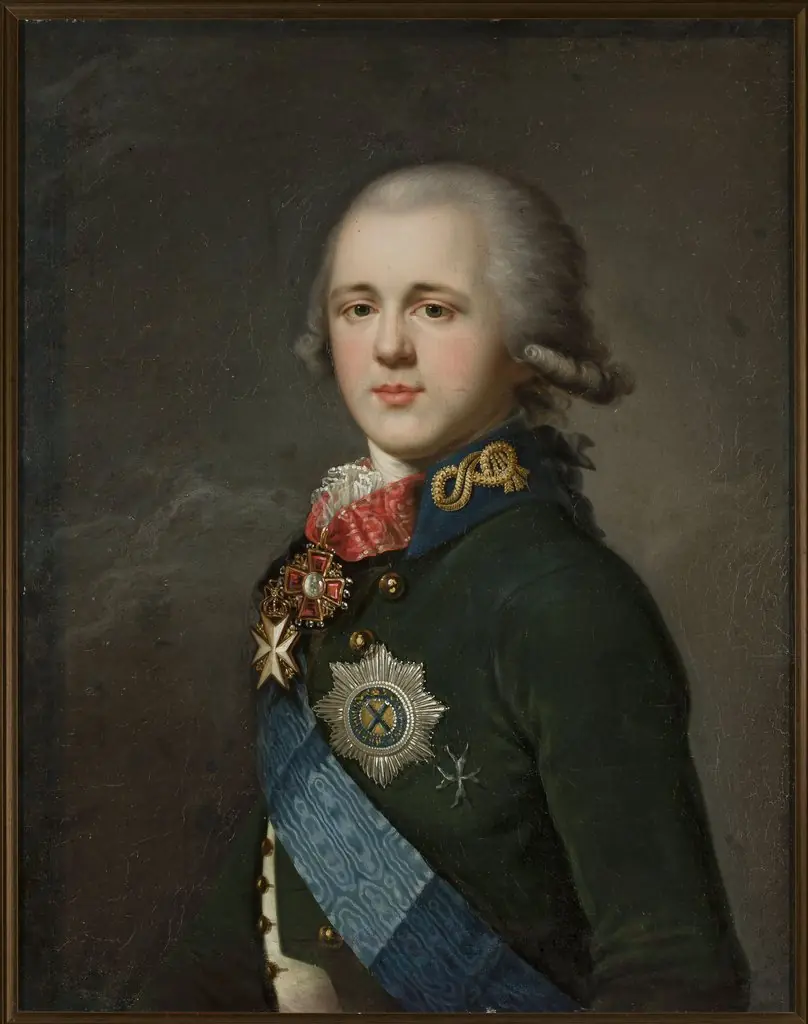
Portrait of Grand Duke Pavel Petrovich, the Future Emperor Paul I of Russia (1754-1801) is an oil painting by the Rococo painting artist Unknown. It dates from 1775 and is held in the collection of the Hermitage Museum. The work is an oil portrait of Grand Duke Pavel Petrovich, later Emperor Paul I of Russia (1754‑1801).
About this work
Overview
It depicts the young heir to the Russian throne at approximately twenty years of age, dressed in the elaborate ceremonial costume of the Russian imperial court.
The Portrait of Grand Duke Pavel Petrovich, the Future Emperor Paul I of Russia (1754-1801) is an oil on canvas painting dated to 1775, currently held in the State Hermitage Museum in Saint Petersburg. The work is attributed to an unknown artist and measures 83 by 65 centimeters. It depicts the young heir to the Russian throne at approximately twenty years of age, dressed in the elaborate ceremonial costume of the Russian imperial court. The portrait entered the Hermitage collection in 1995 through the bequest of G.D. Dushin and bears the museum number ERZh-3261. While the artist remains anonymous, the painting serves as a significant document of imperial portraiture in late eighteenth-century Russia, capturing a pivotal figure whose brief reign from 1796 to 1801 ended in assassination and earned him the epithet 'the Russian Hamlet.'
Subject & Meaning
The portrait depicts Grand Duke Pavel Petrovich, son of Empress Catherine the Great and Emperor Peter III, who would later reign as Paul I of Russia from 1796 until his murder on 11 March 1801 during a palace coup. The sitter is shown three-quarters toward the viewer, his body facing left while his gaze meets the viewer directly. He wears an elaborate powdered wig, grayish-white and curled at the sides, gathered at the back with a black ribbon bow. His costume consists of a rich red velvet coat with ornate gold embroidery and decorative buttons, a white lace cravat, and lace cuffs at his wrists. Across his chest runs a wide blue sash from which hangs a jeweled star-shaped order, while an elaborate silver-braided epaulette rests on his right shoulder. His left hand, gloved in white, tucks into his coat at the waist. The blue sash and star-shaped order correspond to the insignia of the Order of Saint Andrew, the highest Russian imperial order, while the portrait's counterpart in the Russian Museum collection also displays the cross of Saint Anna. The overall presentation emphasizes the young Grand Duke's status as heir apparent and projects the authority and legitimacy of the Romanov---dynasty during the reign of his mother, Catherine the Great.
Technique & Style
The painting is executed in oil on canvas, measuring 83 by 65 centimeters. The technique displays the smooth, highly finished brushwork characteristic of European court portraiture of the period. Light falls strongly from the left, illuminating the face, wig, and the rich textures of the velvet and embroidery, while the right side of the figure recedes into shadow. This dramatic chiaroscuro effect focuses attention on the sitter's countenance and the luxurious materials of his costume. The face is rendered with particular smoothness and refinement, while the costume details allow for more visible texture and painterly handling. The background remains dark and undefined, shifting from deep brown to near-black with subtle warm tonal variations behind the head, a conventional device in formal portraiture that isolates the subject and enhances the sense of psychological presence. The overall approach aligns with the conventions of Russian imperial portraiture in the second half of the eighteenth century, which combined Western European techniques of illusionism with the specific representational demands of court culture.
History & Provenance
The portrait was painted in 1775 in Russia, during the reign of Catherine the Great. The work entered the State Hermitage Museum in 1995, having been handed over in accordance with the will of G.D. Dushin. It is catalogued under museum number ERZh-3261. The painting has been published in M. Dedinkin's exhibition catalogue Her Imperial Majesty's Hermitage (Saint Petersburg, 2014). It was also included in the exhibition 'Jewels! The Glitter of the Russian Court,' which highlighted the opulent material culture of the Russian imperial court and the symbolic function of regalia in portraiture. The relatively recent acquisition by the Hermitage, more than two centuries after its creation, suggests a period of private or alternative institutional ownership prior to its return to the premier repository of Russian imperial art.
Context
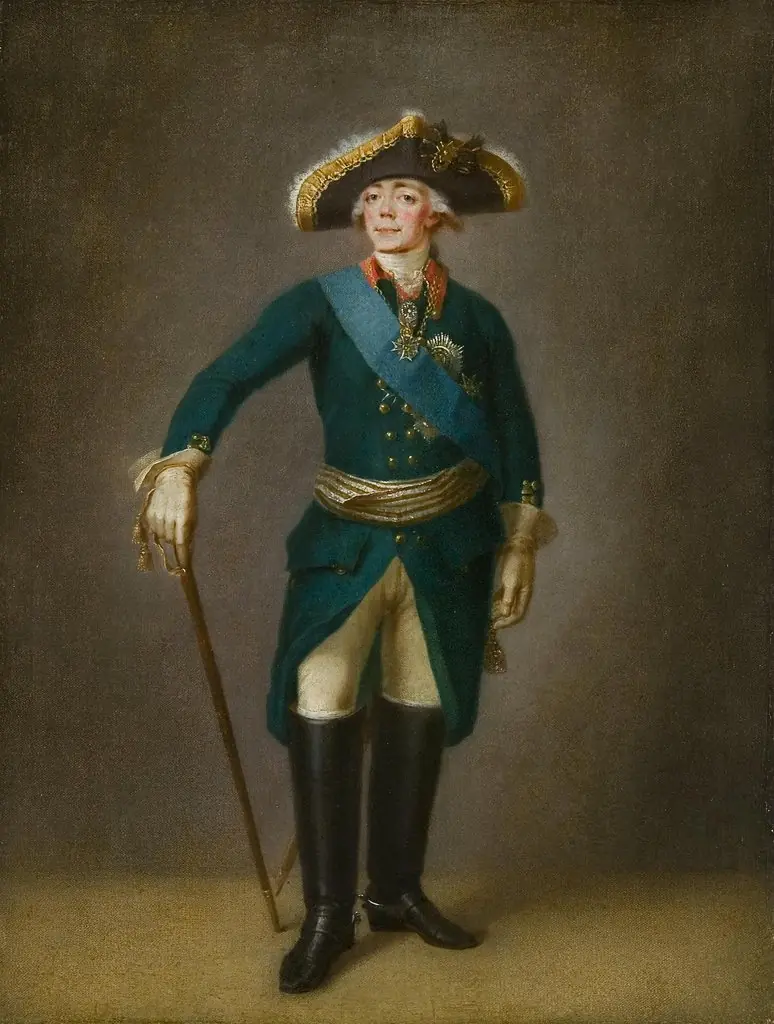
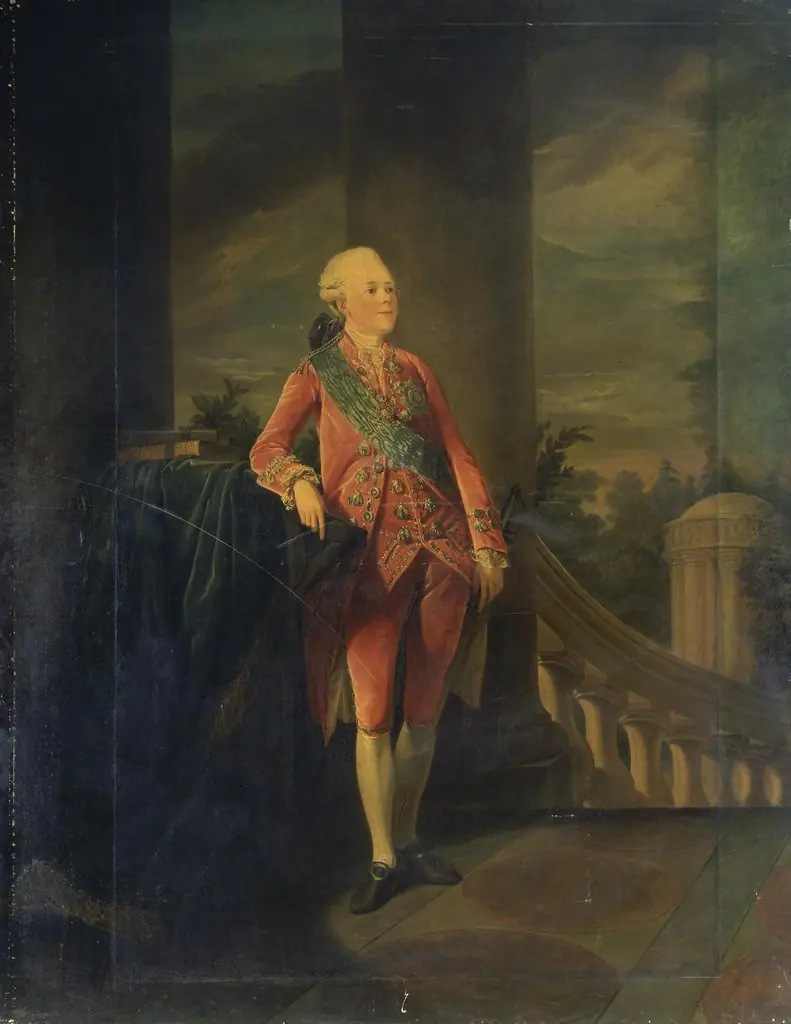
The portrait belongs to a broader tradition of official imperial imagery that documented the Romanov dynasty and secured its visual legacy. During the reign of Catherine the Great, the production of portraits of the heir apparent served both personal and political functions, reinforcing the continuity of the dynasty and the legitimacy of her rule. The year 1775 places this work in a period of relative stability in Catherine's reign, following the Pugachev rebellion and during the empress's consolidation of domestic and foreign policy. The anonymous status of the artist is not unusual for Russian court portraiture of this era, where workshop production and the demands of official commissions sometimes obscured individual authorship. The portrait may be compared with other depictions of Paul Petrovich from the same period, including works attributed to or after Alexander Roslin, which circulated in various versions and adaptations. The State Russian Museum holds BK-5386 holds a related portrait of the Grand Duke, dated after 1771, which similarly depicts him with the orders of Saint Andrew and Saint Anna, indicating a standardized approach to representing the heir's official status across different artistic hands and workshops.
Legacy
The portrait contributes to the visual documentation of one of Russian history's most tragic monarchs, whose reign lasted only from 1796 to 1801 and ended in assassination. Paul I's posthumous reputation as 'the Russian Hamlet,' a figure of pathos and political failure, has colored subsequent interpretations of his image, yet contemporary portraits such as this one present the young Grand Duke at a moment of promise and established succession. The work's acquisition by the Hermitage in 1995 reflects ongoing efforts to reassemble and study the dispersed visual record of the Russian imperial court. Its inclusion in exhibitions such as 'Jewels! The Glitter of the Russian Court' demonstrates the continued scholarly and public interest in the material culture of Russian monarchy. As an anonymous work, the portrait also raises questions about attribution and the collaborative nature of court art production that continue to engage art historians. The painting stands as a significant document of the formal conventions and political imperatives that shaped imperial portraiture in the decades before the upheavals of the nineteenth century transformed Russian society and its visual culture.
Artist & collection