Artwork
Fujiwara no Teika’s “Poems on Flowers and Birds of the Twelve Months”
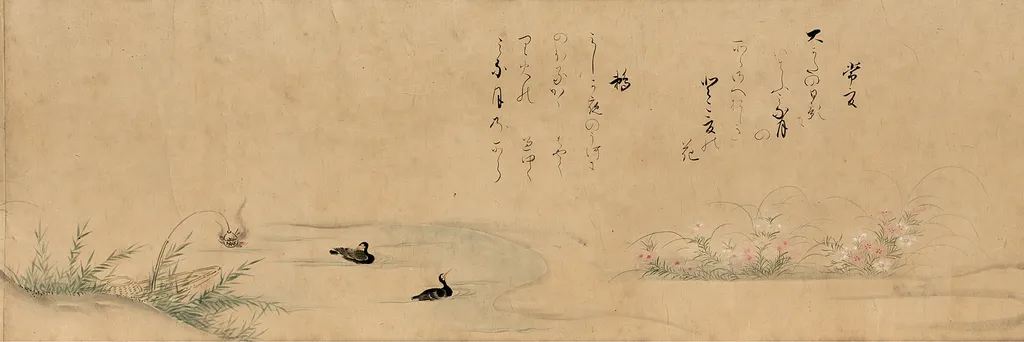
Fujiwara no Teika’s “Poems on Flowers and Birds of the Twelve Months” is an unspecified painting. It dates from 1749 and is held in the collection of the Metropolitan Museum of Art. This painting, titled "Poems on Flowers and Birds of the Twelve Months," presents a serene natural scene.
About this work
History & Provenance
The work was acquired by the Metropolitan Museum of Art, where it is catalogued as a painting and listed with an inception date of 1749‑01‑01.
Created in Japan in 1749, the painting forms part of a series titled “Poems on Flowers and Birds of the Twelve Months.” It is credited to an anonymous painter and depicts a bird on a scroll.
The work was acquired by the Metropolitan Museum of Art, where it is catalogued as a painting and listed with an inception date of 1749‑01‑01. It remains in the museum’s permanent collection, and no earlier ownership records have been documented.
The painting is held by the Metropolitan Museum of Art in New York. It is part of the museum’s collection, listed under the collection designation for the work, though a specific accession number is not provided in the documentation. The work was created in Japan in 1749 and is classified as a painting depicting a bird and a scroll.
No exhibition records are included in the sources consulted, so its exhibition history cannot be detailed from the available information.
Overview
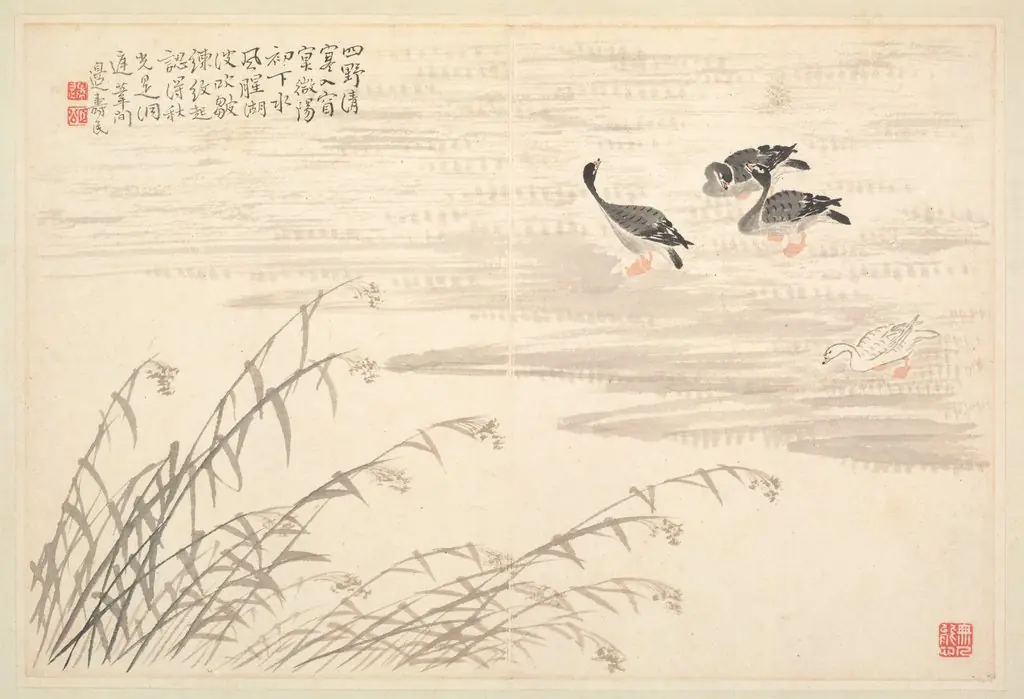
This painting, titled "Poems on Flowers and Birds of the Twelve Months," presents a serene natural scene. It depicts a tranquil pond where three birds gently rest on the water's surface. The composition integrates visual elements of nature with calligraphic text, featuring black ink poetry inscribed across the upper portion of the work. The artwork combines a quiet landscape with literary expression, reflecting a traditional artistic theme.
Subject & Meaning
The artwork centers on the theme of "flowers and birds," a recurring motif in East Asian art. Three calm birds float on a pond, surrounded by tall green reeds on the left and pink blossoms near the right bank. These natural elements are complemented by poetic verses, which further elaborate on the seasonal imagery of flora and fauna.
The tranquil depiction of resting birds suggests a moment of natural repose within the broader cycle of the year.
Technique & Style
The painting employs a subtle approach to its landscape elements. Light brushstrokes define the background, creating a sense of spaciousness around the central pond. The composition balances the verticality of the reeds on one side with the delicate forms of the pink flowers on the other.
Integrating black ink calligraphy directly onto the painted surface is a characteristic feature, merging the visual art with literary expression in a unified aesthetic.
Context
The title associates this work with Fujiwara no Teika, a prominent Japanese poet of the Kamakura period, suggesting a connection to his literary tradition. The "Flowers and Birds of the Twelve Months" theme was a popular subject in both poetry and visual arts across East Asia, often used to evoke the changing seasons and their associated natural beauty. This painting exemplifies the interrelationship between poetry and painting in Japanese artistic practice.
Artist & collection

 Album of Calligraphy and Paintings
 Album of Calligraphy and Paintings
 Album of Calligraphy and Paintings
 Birds and Flowers in a Landscape of the Four Seasons
 Untitled
 Untitled
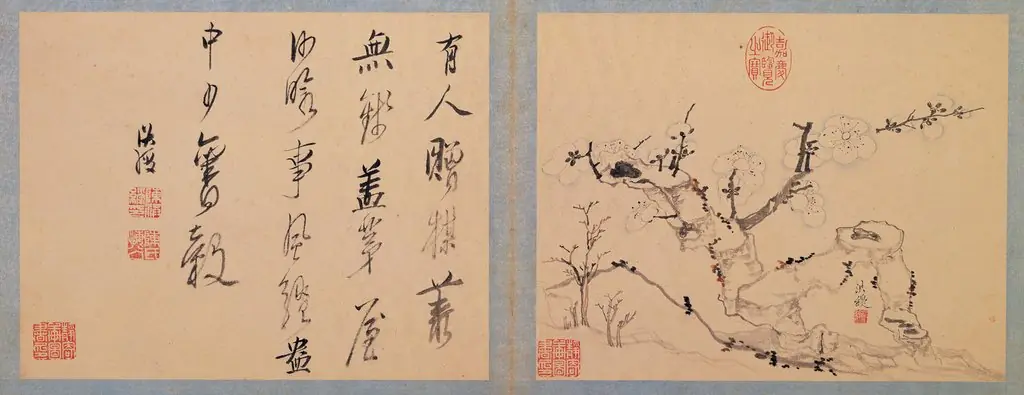 Old Plum
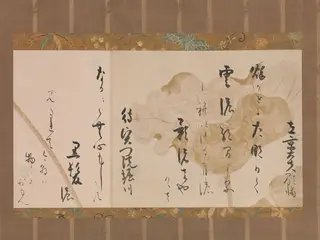 本阿弥光悦書・俵屋宗達下絵 小倉百人一首和歌巻断簡|Two Poems from One Hundred Poems by One Hundred Poets
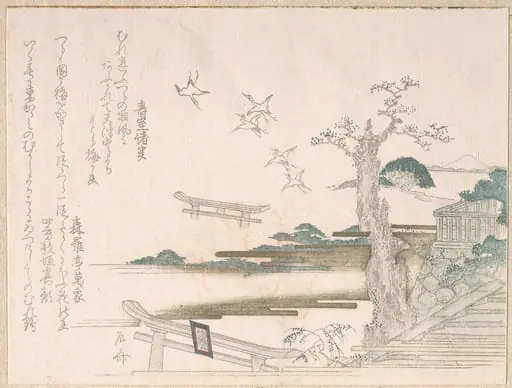 『春雨集』 摺物帖柳々居辰斎画 鎌倉の鶴岡八幡宮に鶴|Spring Rain Collection (Harusame shū), vol. 2: Cranes at Tsurugaoka Hachimangō Shrine in Kamakura
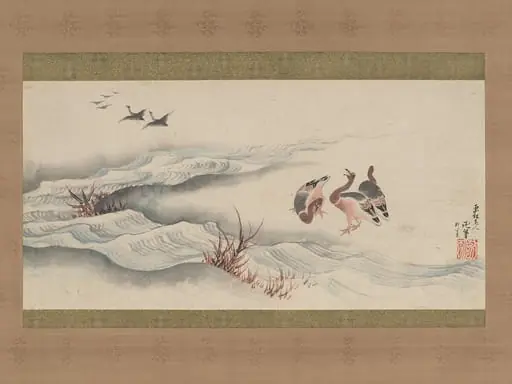 Untitled