Artwork
Ganesha
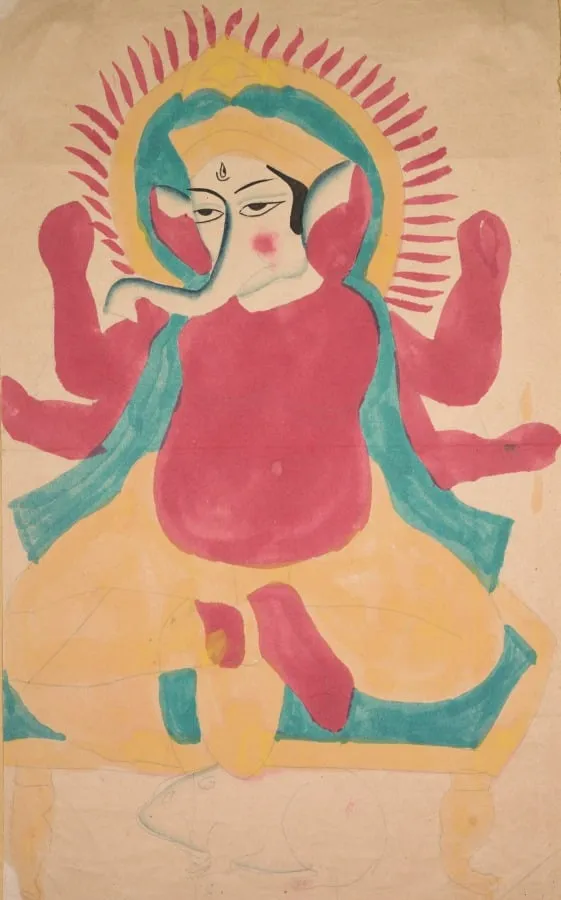
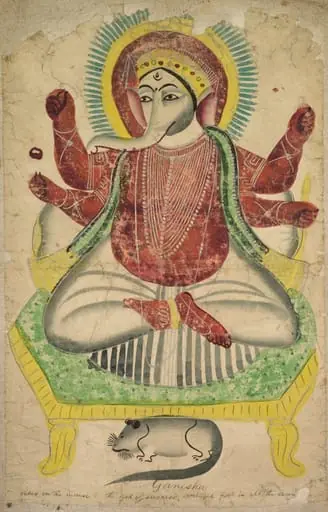
Ganesha is an unspecified painting by the Bengal School artist Unknown. It dates from 1890 and is held in the collection of the Cleveland Museum of Art.
- Accession no.
- 2003.166
About this work
Overview
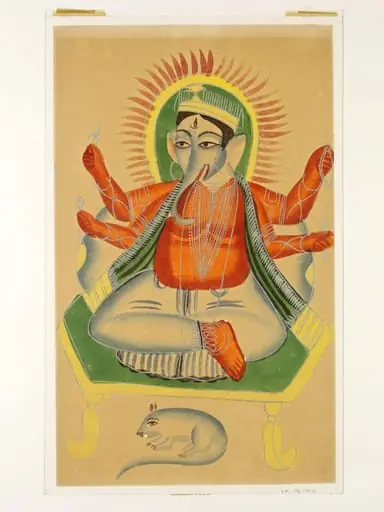
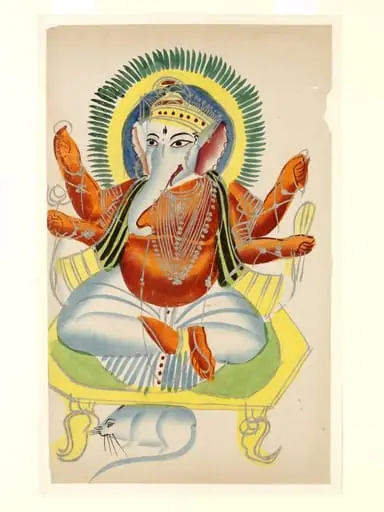
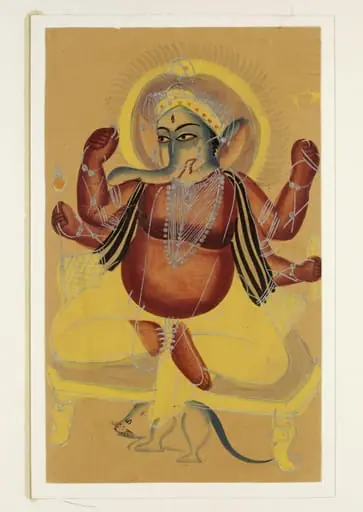
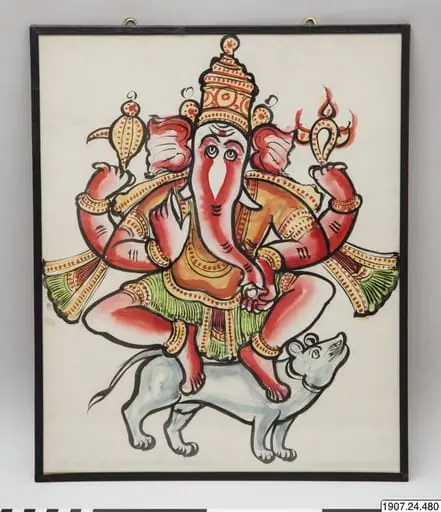
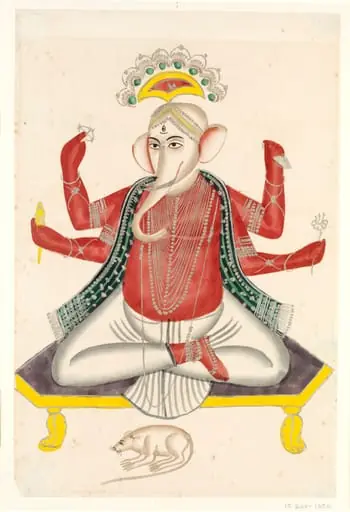
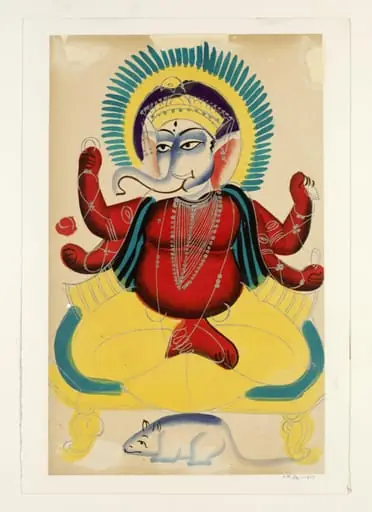
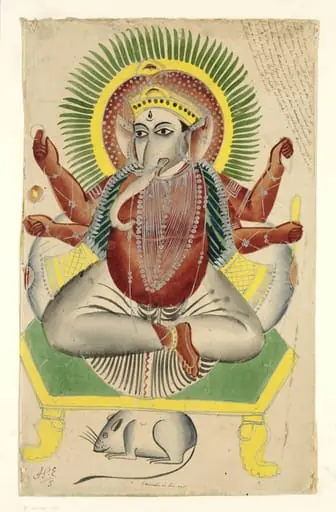
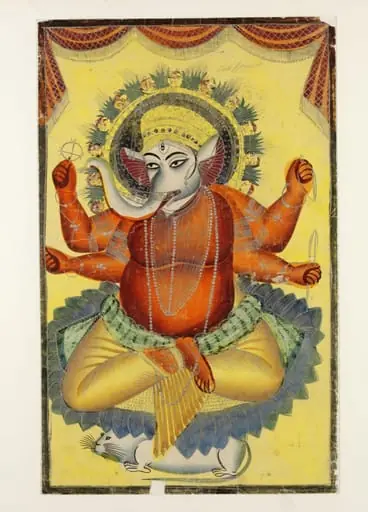
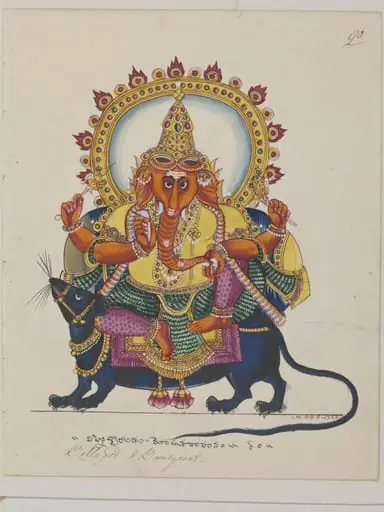
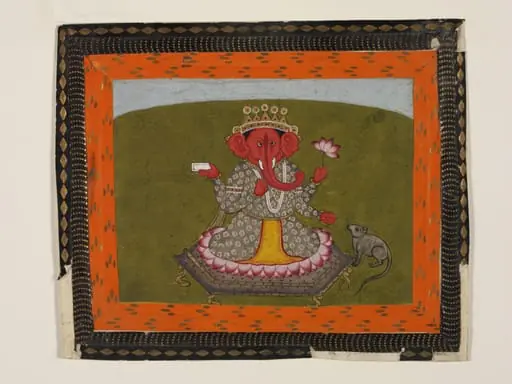
This Kalighat painting depicts Ganesha, the elephant-headed Hindu deity, seated on his vehicle, a mouse. Characteristic attributes include a sweet in one hand and a broken tusk in the other.
Subject & Meaning
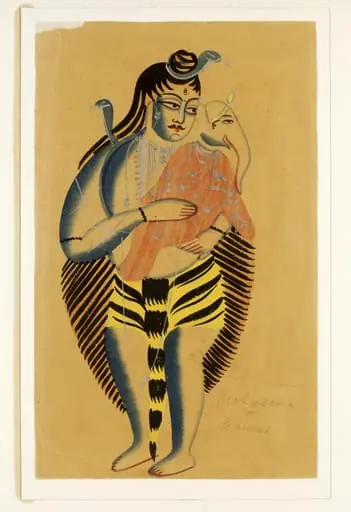
As Lord of Beginnings and Remover of Obstacles, Ganesha is revered for auspicious occasions and new endeavors. His mythology, including his creation from his mother Parvati’s body and his beheading by his father Shiva (later replaced with an elephant’s head), underlies his symbolic role.
Technique & Style
Executed in the distinctive Kalighat style, this work features simple, bold lines and vibrant colors (notably red, yellow, and blue). The painting remains unfinished, illustrating the artisans’ practice of working in stages.
History & Provenance
Originating from Kalighat, Kolkata, this painting was likely produced for pilgrims as a portable devotional item, intended for personal use rather than palace decoration.
Context
Part of the Kalighat painting tradition, this work reflects the neighborhood’s artisanal practice of creating accessible, quick, and colorful religious images for a devout audience.
Legacy
While not palatial art, this piece contributes to the understanding of Kalighat paintings’ significance in popular Hindu devotion and the dissemination of religious imagery among the general populace.
Artist & collection