Artwork
Gathering Manna
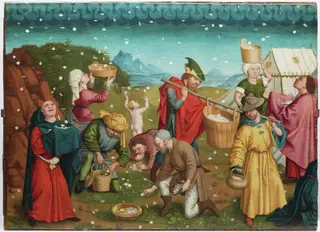
Gathering Manna is an unspecified painting. It dates from 1499 and is held in the collection of the Metropolitan Museum of Art.
About this work
Subject & Meaning
The composition focuses on male figures engaged in the act of collecting the miraculous food provided by God to the Israelites during their Exodus.
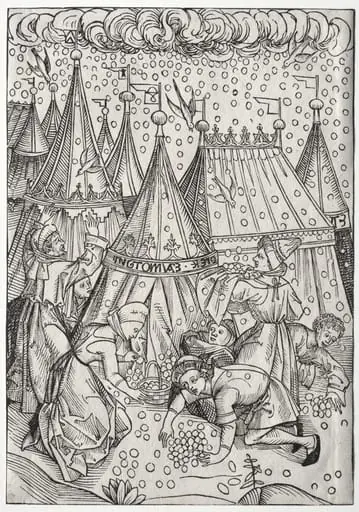
Created in 1499 by the workshop of Friedrich Brunner, this religious painting illustrates the biblical episode known as the gathering of manna. The composition focuses on male figures engaged in the act of collecting the miraculous food provided by God to the Israelites during their Exodus. As a depiction of divine sustenance, the work symbolizes God's providence and care for his people in the wilderness.
The scene serves as a visual narrative of faith and survival, grounding the spiritual concept of heavenly provision in a tangible, human activity.
History & Provenance
Gathering Manna is a religious painting created in 1499 by the Workshop of Friedrich Brunner. The work depicts the biblical gathering of manna and measures 50.2 cm in height by 53 cm in width. It is held in the collection of the Metropolitan Museum of Art in New York, recorded among the museum's European paintings holdings, though the accession number is not specified in the available records.
Dating to 1499, it belongs to the late fifteenth-century Northern Renaissance tradition and depicts the Israelites gathering manna in the desert. No exhibition history is documented in the cited sources.
Overview
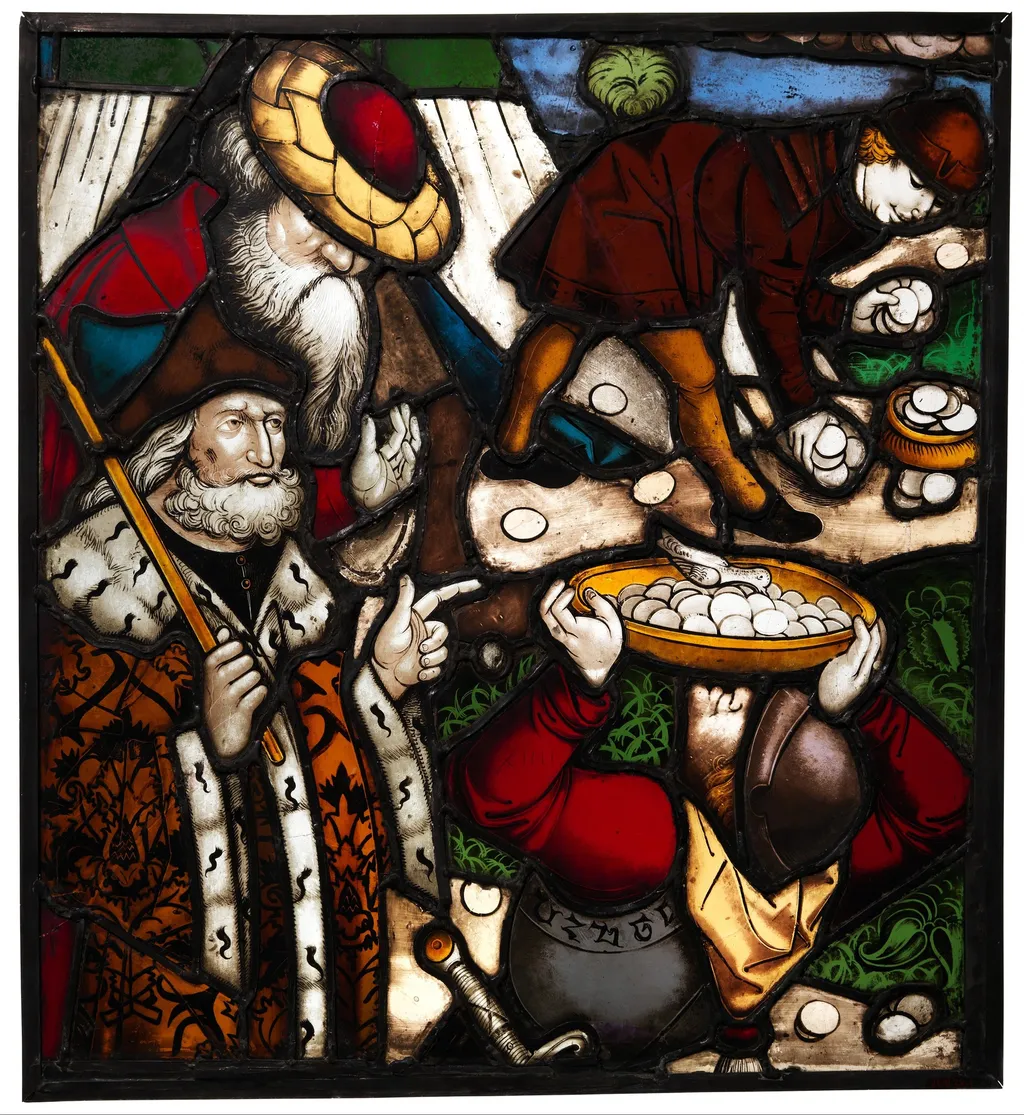
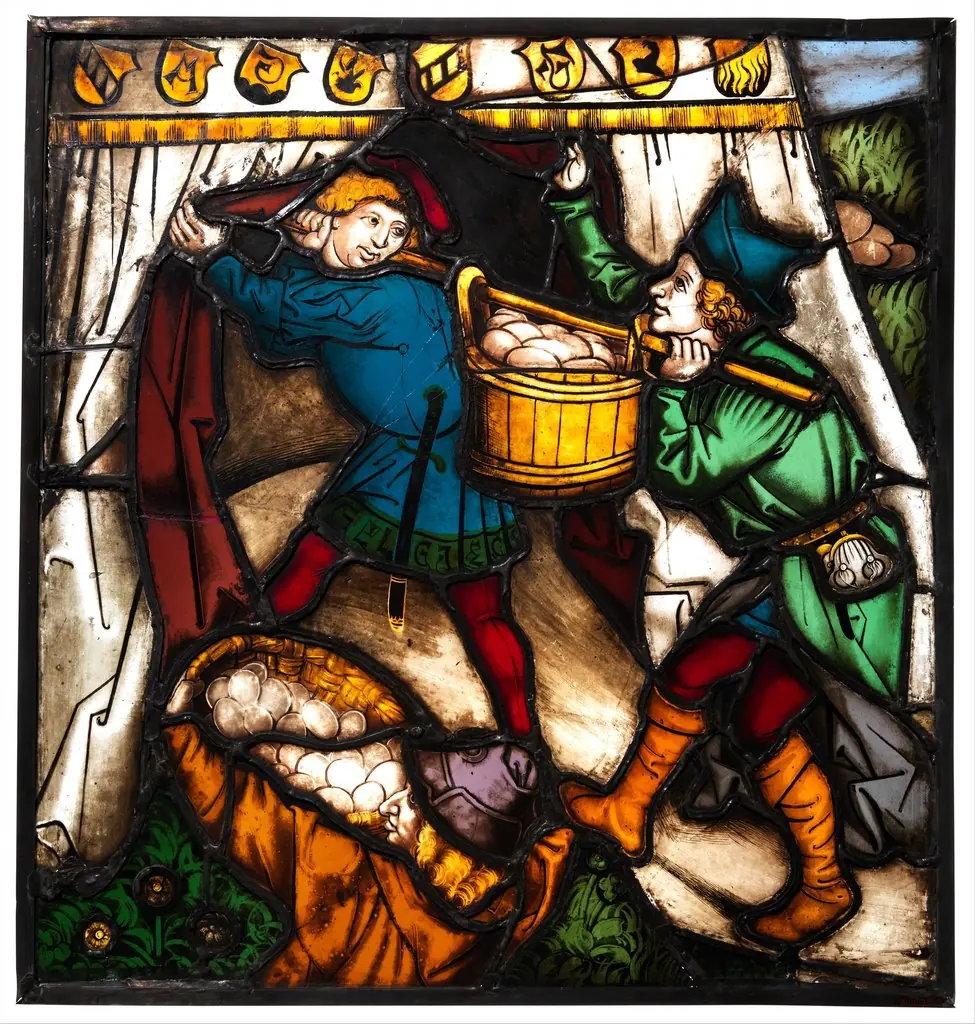
The artwork titled "Gathering Manna" is a vibrant stained glass panel that illustrates a biblical narrative. It features two central male figures set within a densely populated and colorful scene. The composition is characterized by its bright palette, incorporating prominent reds, yellows, and greens, and the distinct visual separation of its glass components. The piece conveys a moment of divine provision through its detailed rendering.
Technique & Style
Rendered in stained glass, the artwork utilizes sharp, clear lines to define forms and delineate the individual pieces of colored glass. The composition is rich with detail, featuring a busy background populated by numerous smaller figures, which contributes to the scene's dynamic quality. Bright, saturated colors enhance the narrative's visual impact, while the patterned robe of the older figure and the detailed yet simple attire of the younger man add textural interest to the overall design.
Artist & collection

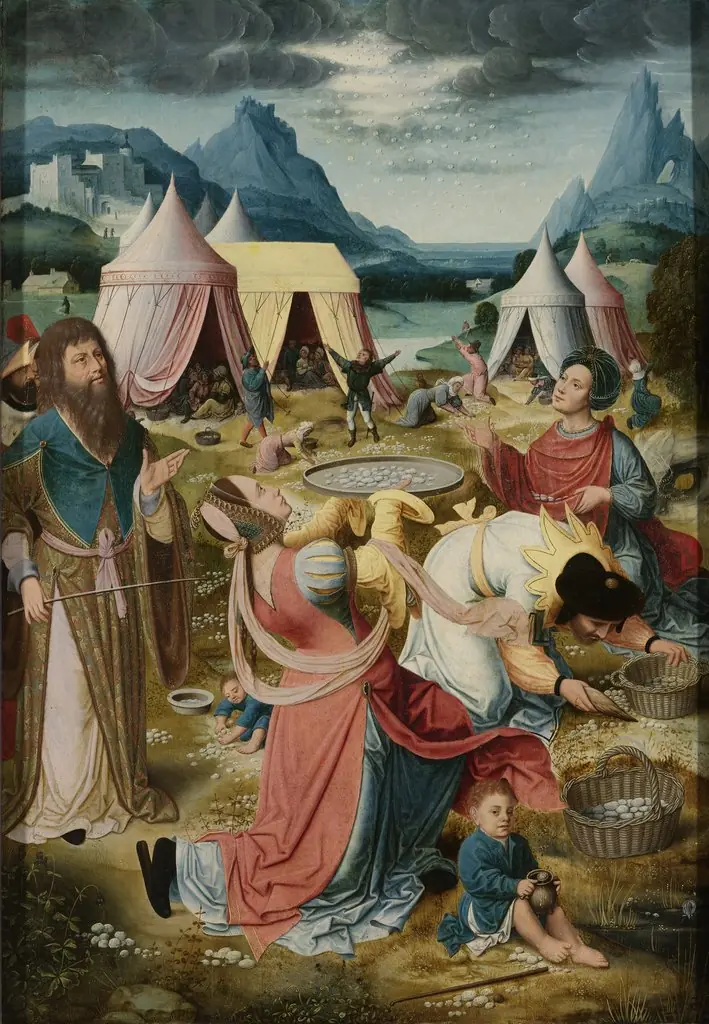 Right wing of an altarpiece with the gathering of manna (inner wing) and Ecclesia (outer wing)
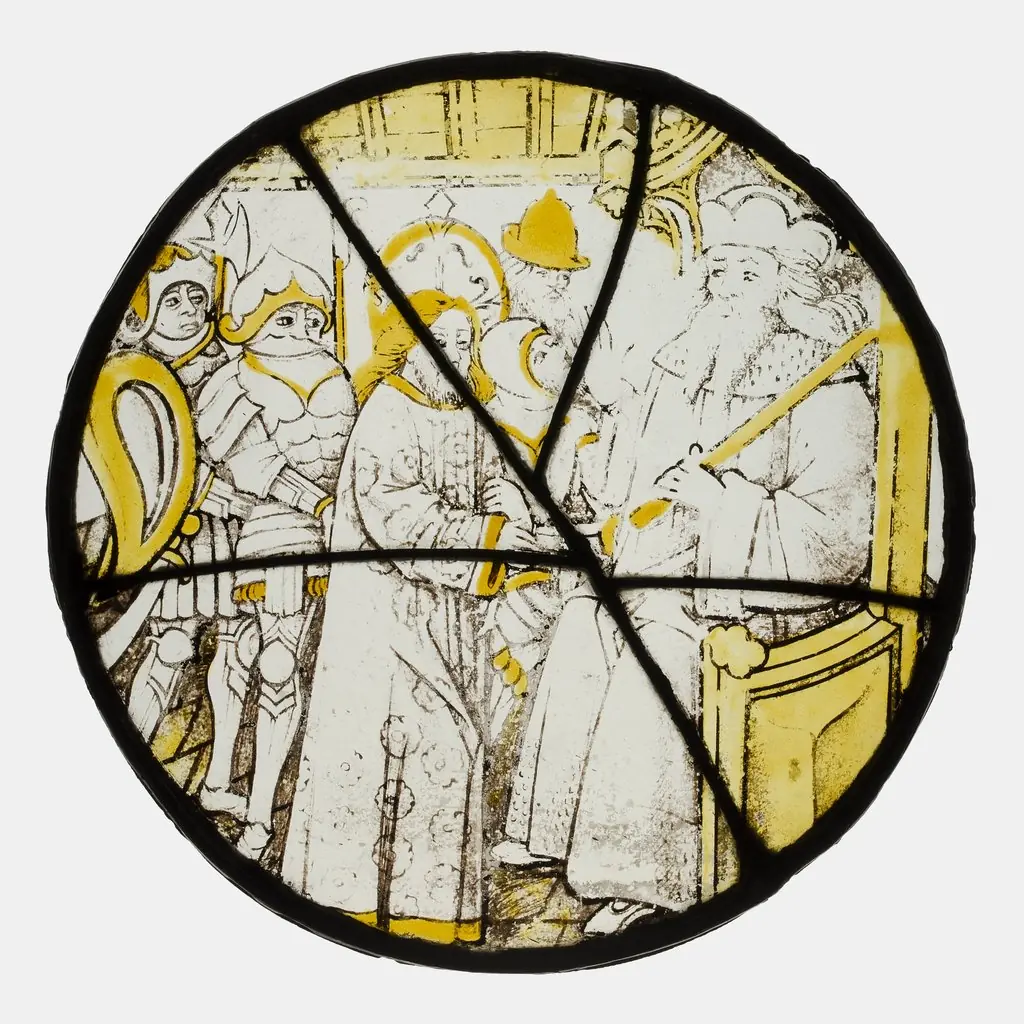 Roundel with Christ before Pilate
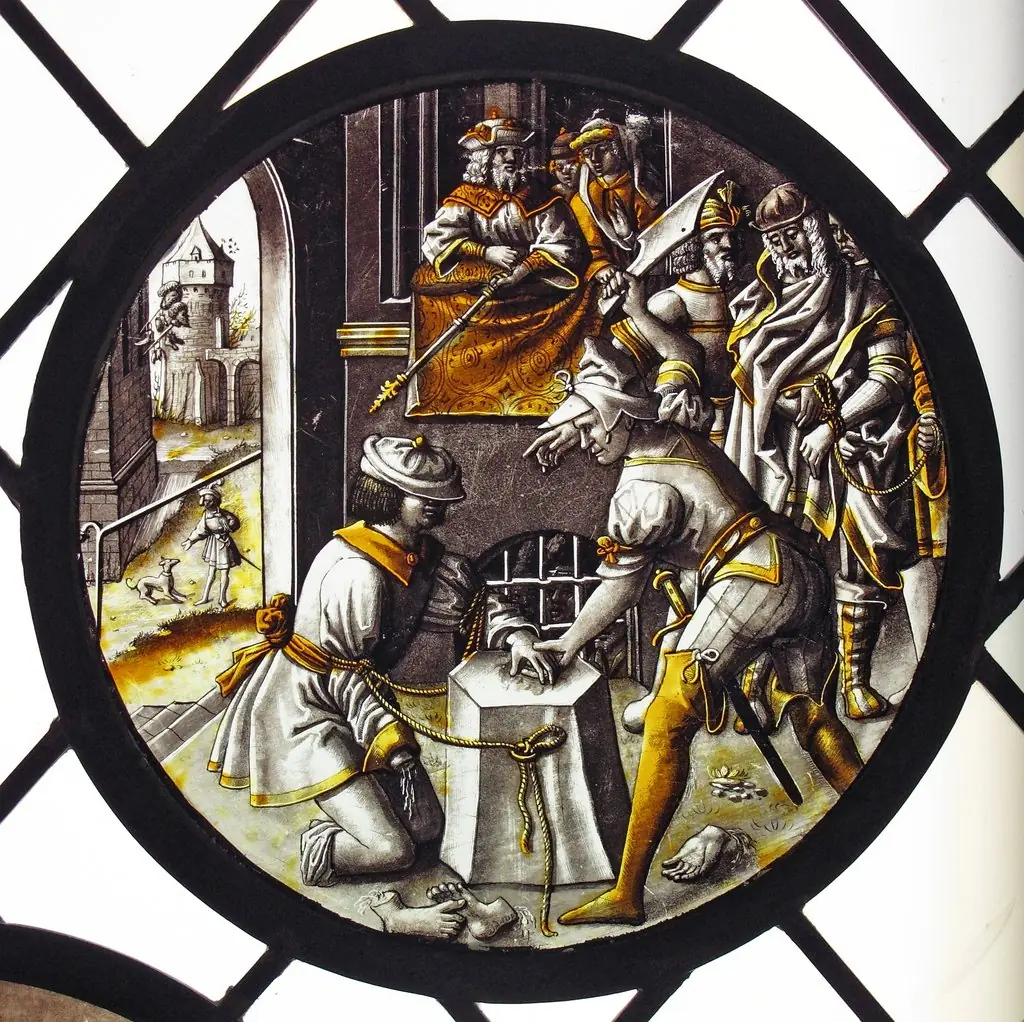 Roundel with Martyrdom of Saint Jacobus Intercisus
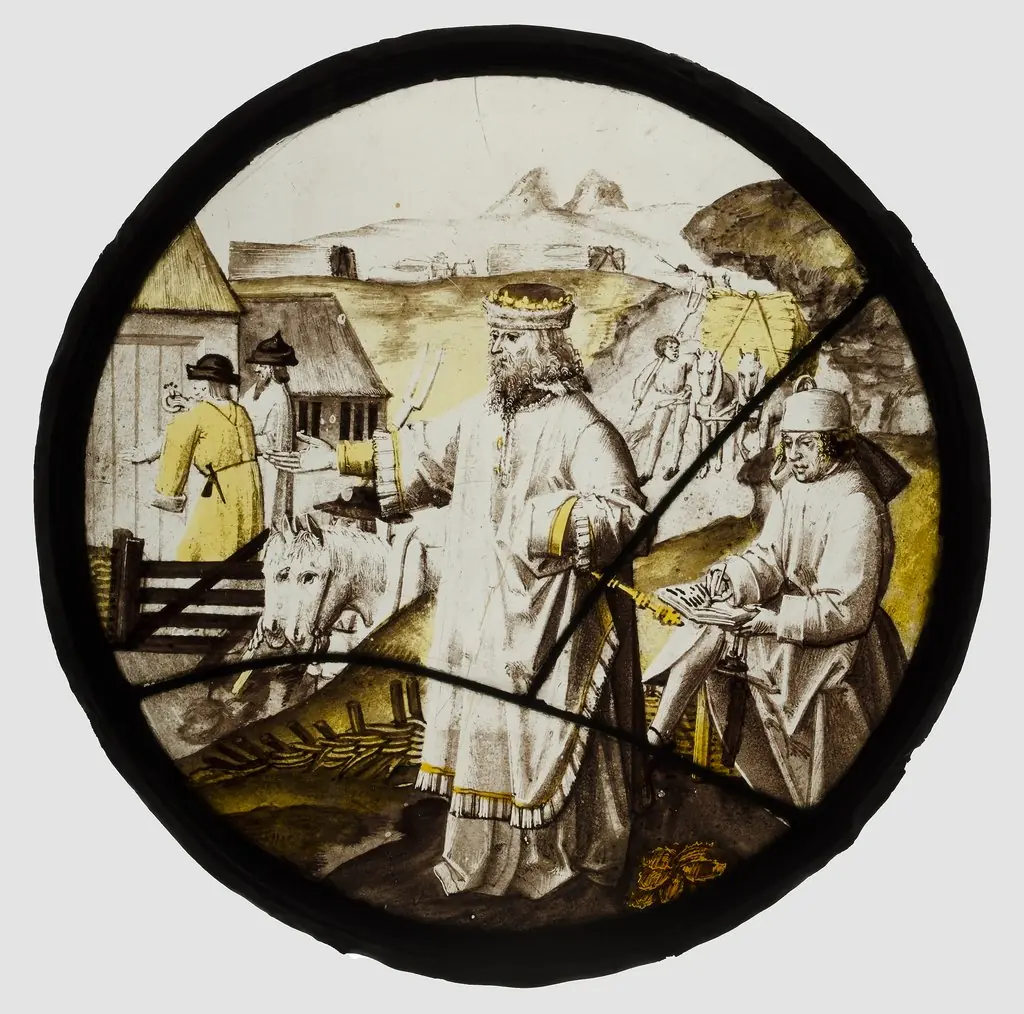 Roundel with Joseph Buying Corn in Egypt
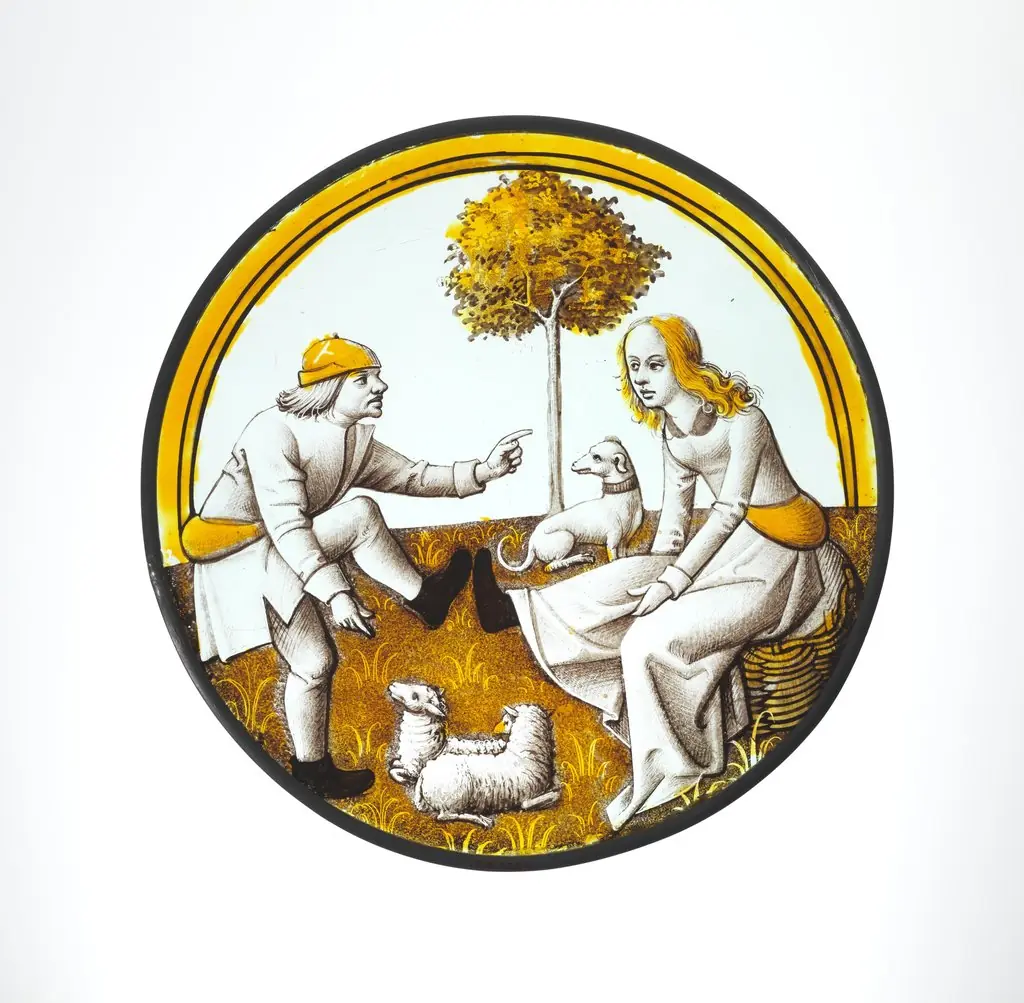 Roundel with Playing at Quintain
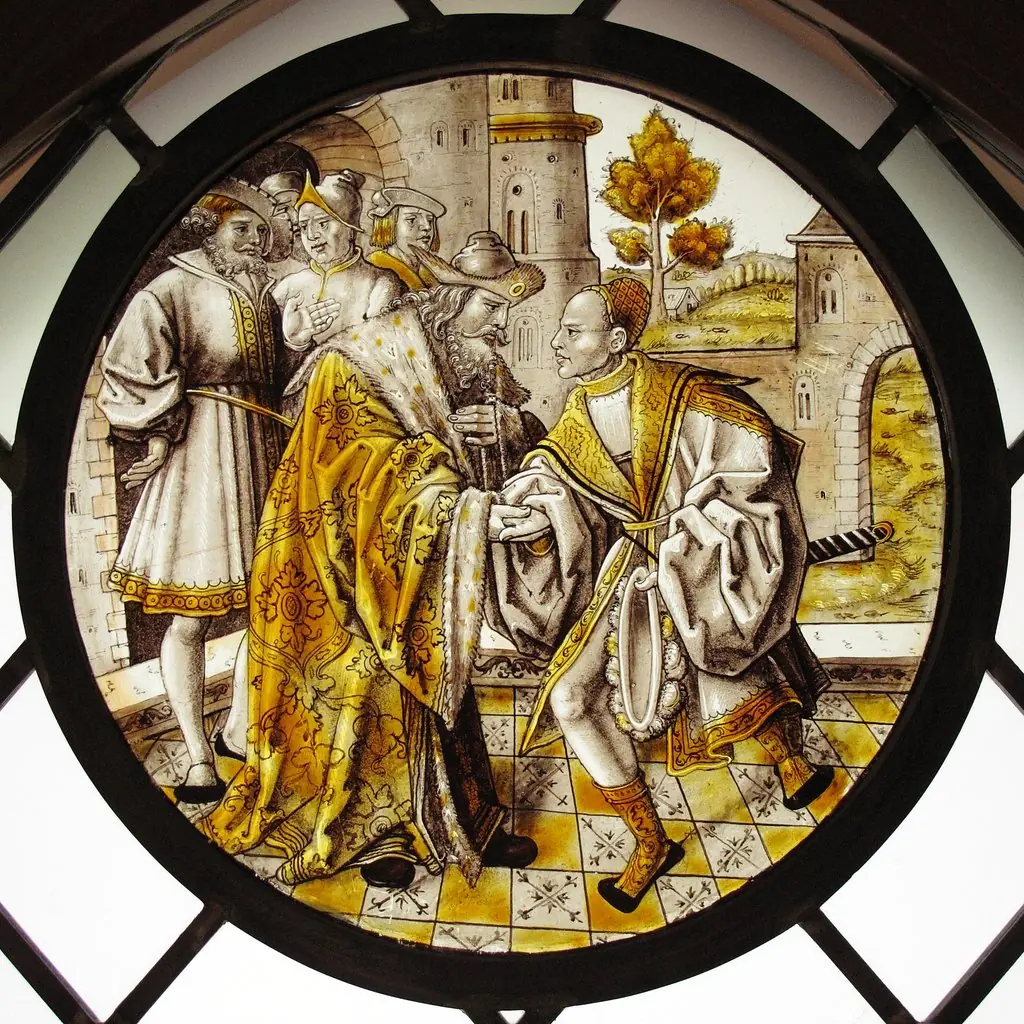 Roundel with Return of the Prodigal Son
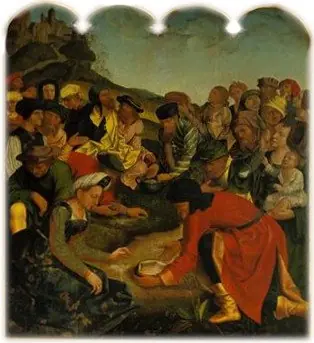 Apanha do Maná no Deserto
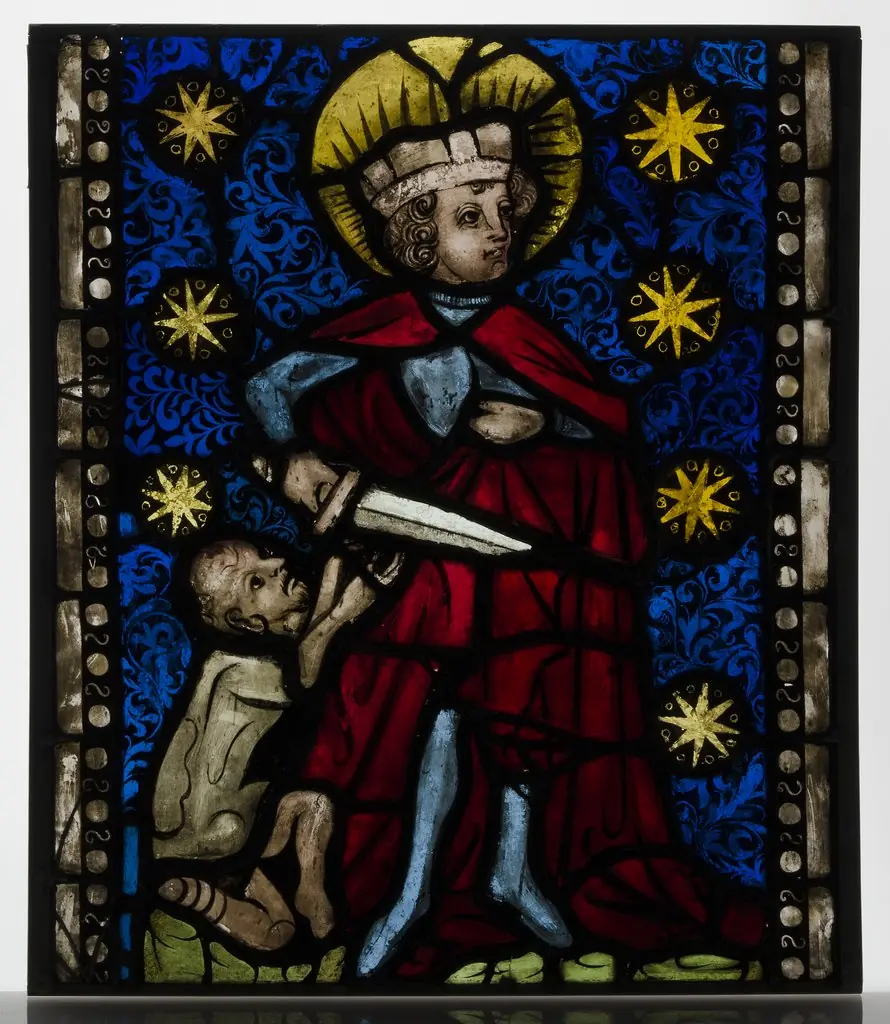 Saint Martin Dividing His Cloak
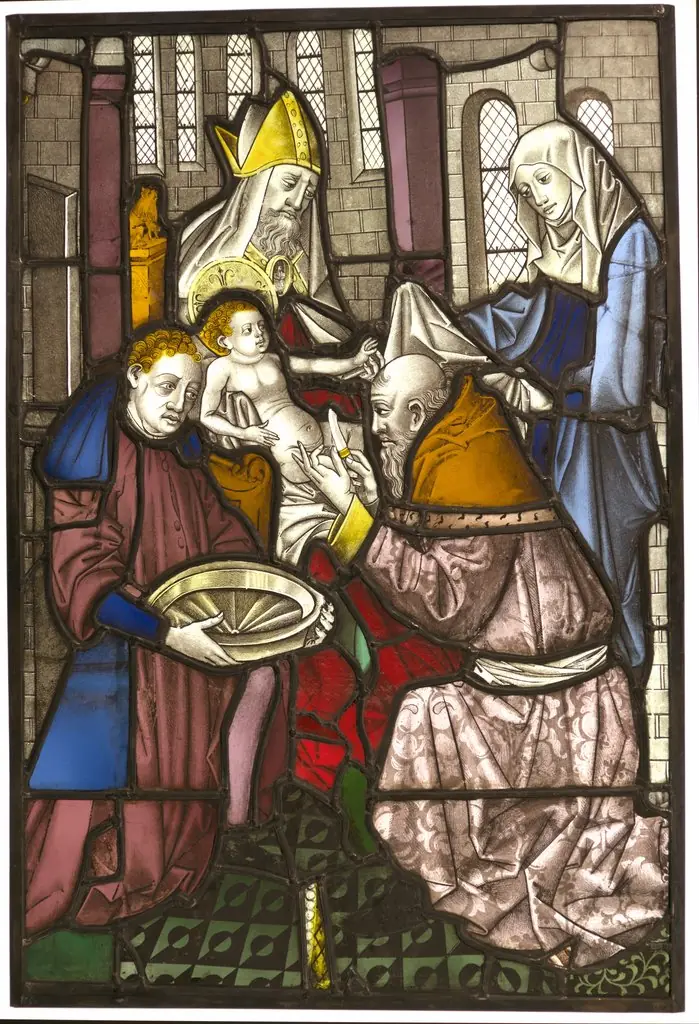 The Circumcision