Artwork
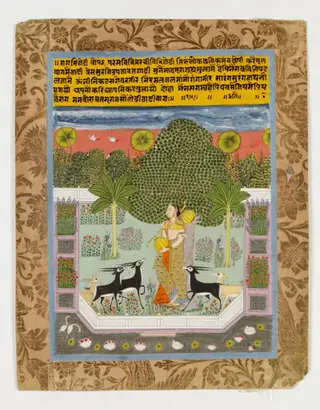
Gaudi Ragini
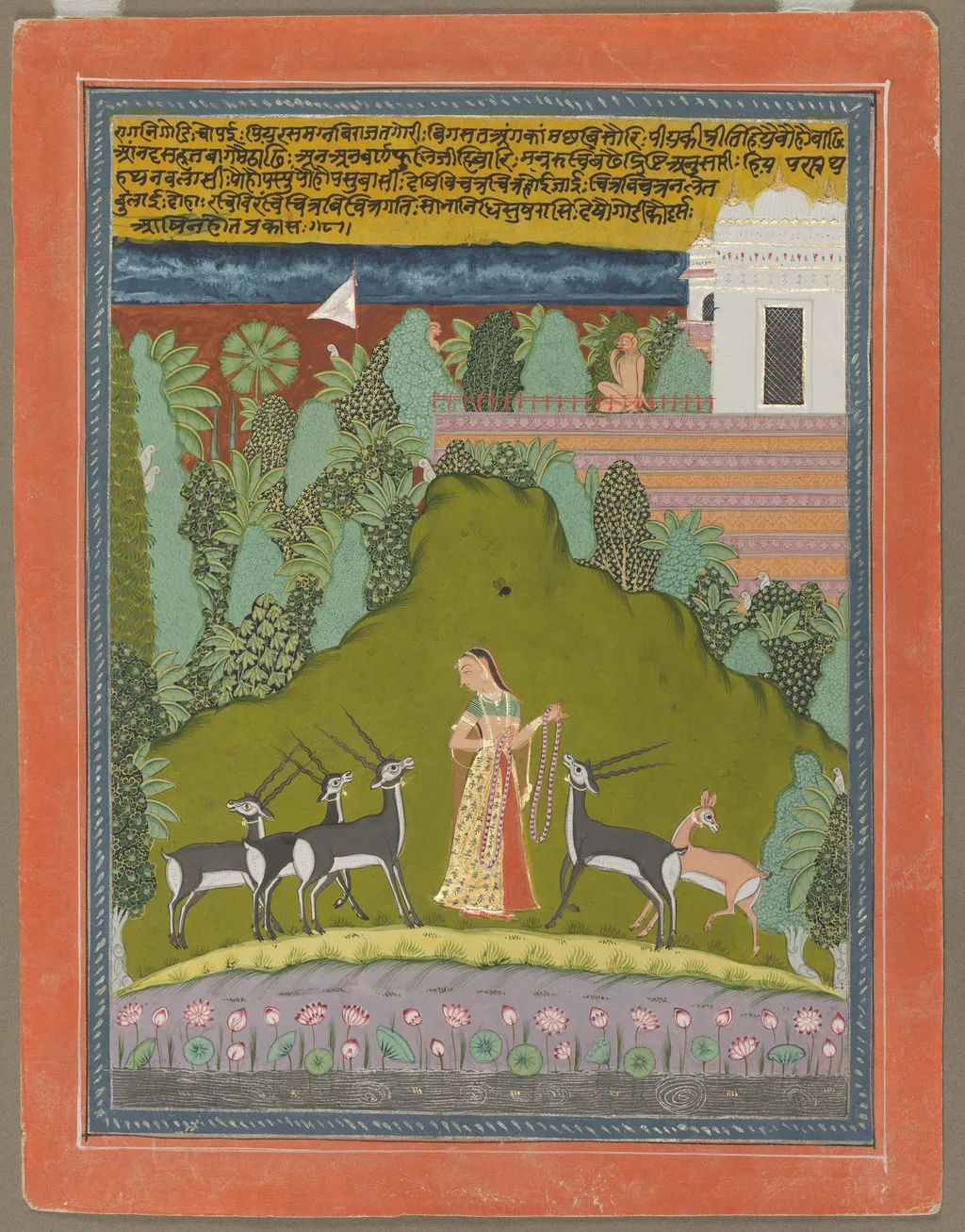
Gaudi Ragini is an unspecified painting. It dates from 1712 and is held in the collection of the Cleveland Museum of Art.
About this work
History & Provenance
While the artist remains unidentified, the piece has been maintained as part of the institution's holdings since its acquisition.
The Gaudi Ragini was created in 1712, as recorded by the work’s canonical date.
The Cleveland Museum of Art holds the painting, where it is catalogued as accession 1968.109. Its prior ownership history before entering the Cleveland Museum of Art is not documented in the available sources.
The painting Gaudi Ragini, dated to 1712, is held in the collection of the Cleveland Museum of Art. The work is cataloged under the accession number 1968.109 within the museum's records. While the artist remains unidentified, the piece has been maintained as part of the institution's holdings since its acquisition.
No specific exhibition history is documented in the provided sources for this work.
Context
Gaudi Ragini is classified as a painting from 1712 and is held in the collection of the Cleveland Museum of Art. The work is attributed to an unknown artist and was created in the early 18th century, situating it within the historical period of its production.
Overview
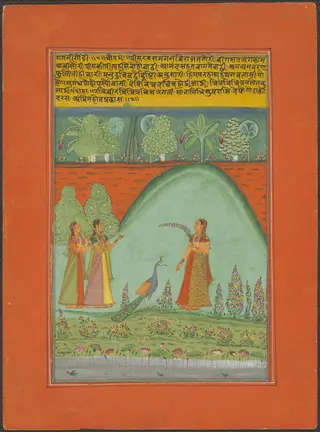
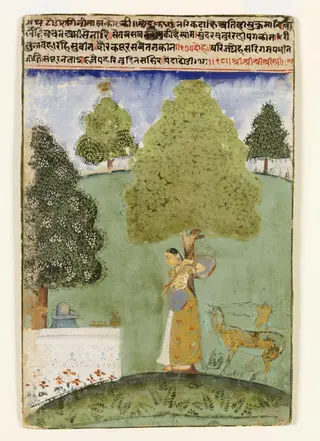
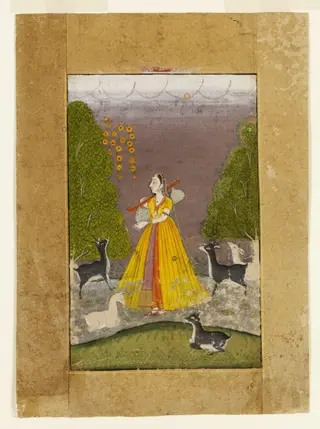
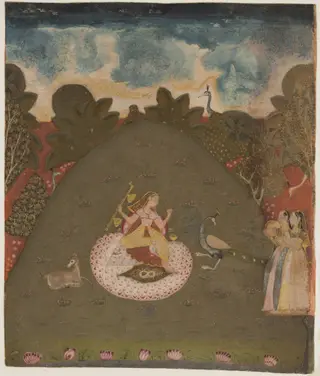
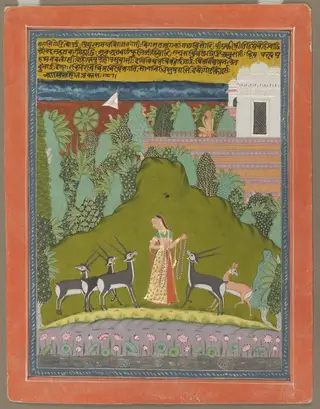
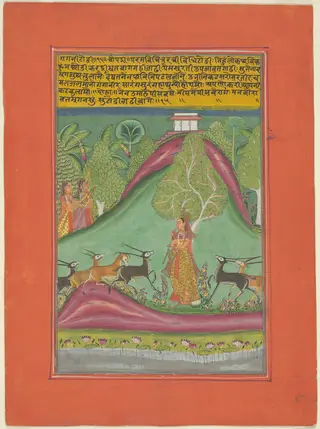
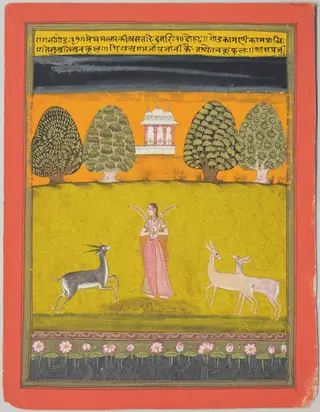
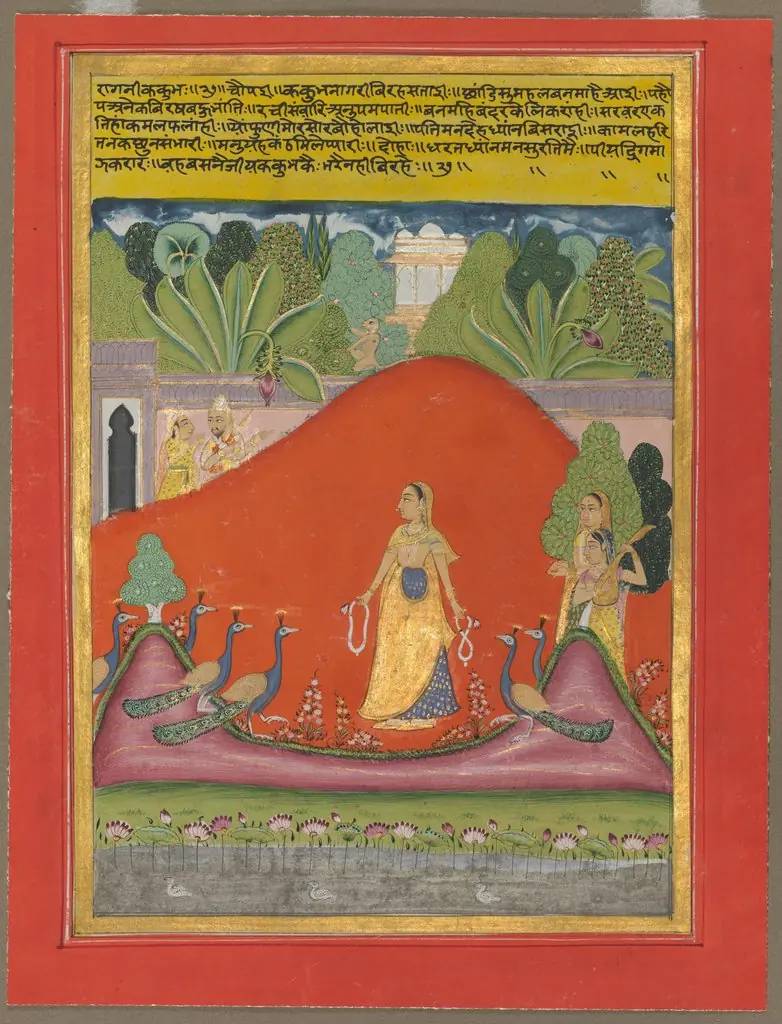
Gaudi Ragini is a painted composition that presents a woman dressed in vivid red and gold, standing amid a gently undulating green landscape. Around her, four spotted deer, two with white markings and two darker, are positioned either grazing or simply present, creating a tranquil interaction between human and animal. A red‑tiled roofed structure rests on a hill behind the figure, while a distant white dome punctuates the horizon.
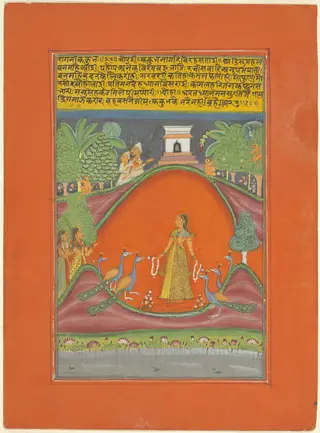
The image is enclosed by a decorative border of red, blue, and gold, topped with inscription and finished with floral motifs at the lower edge.
Subject & Meaning
The central female figure, calm and holding a staff, appears to act as a guardian or guide for the surrounding wildlife, suggesting themes of harmony between humanity and nature. The inclusion of the deer, traditionally symbols of gentleness and renewal, reinforces a peaceful pastoral narrative, while the architectural elements hint at a cultivated, perhaps sacred, setting.
Technique & Style
Executed in a richly colored palette, the work employs precise detailing to render the textiles, animal coats, and architectural features. The border’s ornamental pattern and the use of gold accents reflect a decorative tradition often associated with manuscript illumination or courtly paintings, indicating a high level of craftsmanship and an emphasis on visual splendor.
Artist & collection