Artwork
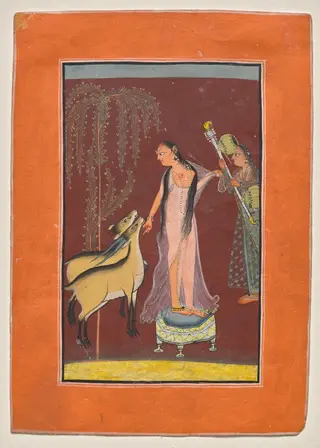
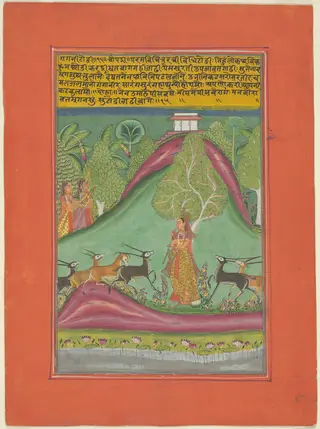
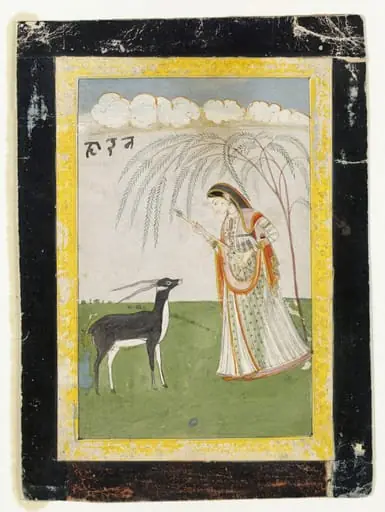
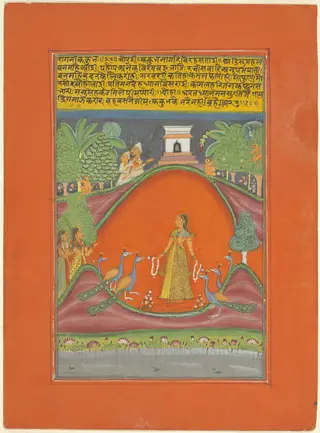
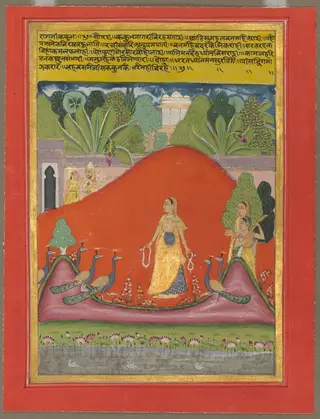
A Lady with Attendant and a Pair of Deer: Probably Gujari Ragini of Dipak, from a Pahari Ragamala
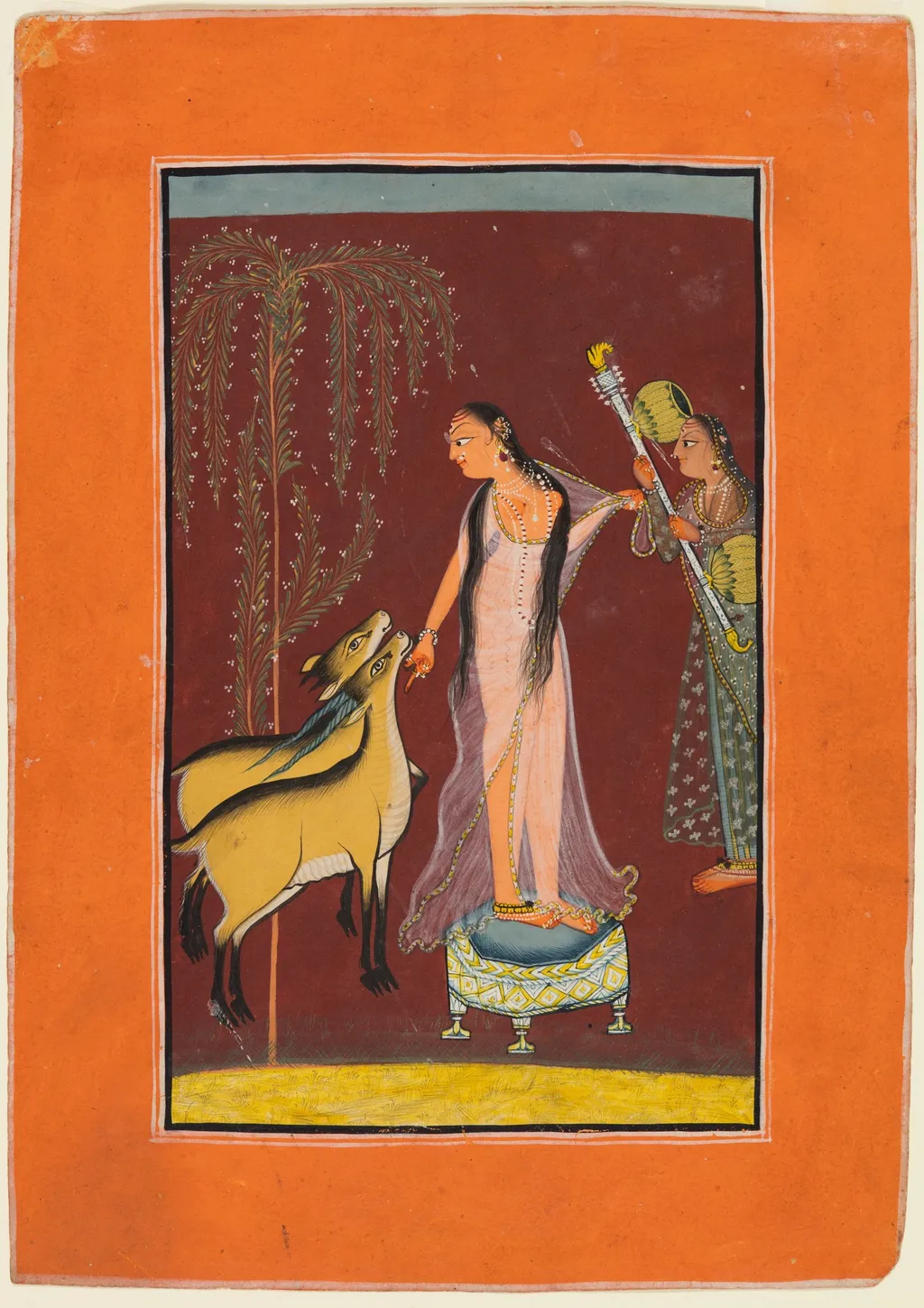
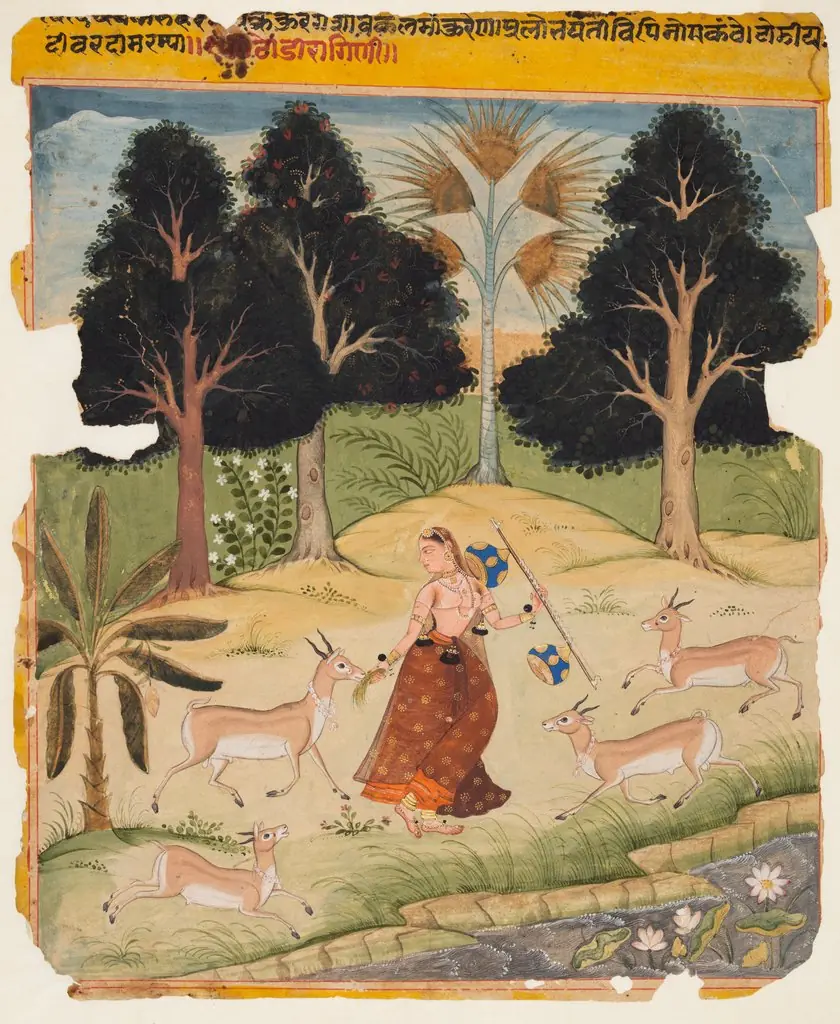
A Lady with Attendant and a Pair of Deer: Probably Gujari Ragini of Dipak, from a Pahari Ragamala is an unspecified painting. It dates from 1710 and is held in the collection of the Cleveland Museum of Art. The work portrays a seated lady on a modest stool, clothed in a long, flowing gown with a translucent veil draped across her shoulder.
About this work
History & Provenance
Prior to entering the Cleveland Museum of Art, the work's ownership history is not documented; it was acquired by the museum and assigned accession number 2018.
The painting is dated to circa 1710 based on stylistic assessment of the Pahari Ragamala tradition. Its creator remains unidentified, and no record of a specific commission survives in the sources. Prior to entering the Cleveland Museum of Art, the work's ownership history is not documented; it was acquired by the museum and assigned accession number 2018.108, where it is now housed.
The painting is held in the collection of the Cleveland Museum of Art, as recorded in its Wikidata entry. It carries the accession number 2018.108, indicating it entered the museum's holdings in 2018. No prior provenance or earlier ownership history is documented in the available sources, and no exhibition history is recorded.
Overview
The work portrays a seated lady on a modest stool, clothed in a long, flowing gown with a translucent veil draped across her shoulder. She holds a slender implement in her right hand, while an attendant bearing a staff stands to her left. Two deer flank the scene on the right, set against a dark red wall that bears a solitary plant on the left.
Subject & Meaning
The composition combines courtly elegance with natural symbolism. The lady, likely a noble figure, is accompanied by an attendant, suggesting service or ritual. The presence of deer, traditional symbols of grace and fertility in Indian iconography, may allude to themes of harmony between humanity and nature, a common motif in ragamala narratives.
Technique & Style
Executed in the Pahiri ragamala tradition, the painting employs delicate brushwork to render the translucent veil and the fluid folds of the gown. A restrained palette of deep reds and muted greens creates spatial depth, while fine detailing on jewelry and the plant accentuates texture. The overall style reflects the refined courtly aesthetic of 18th‑century Himalayan art.
Artist & collection