Artwork
Gujari Ragini (Krishna with Gopis Playing the Flute), from a Ragamala Series
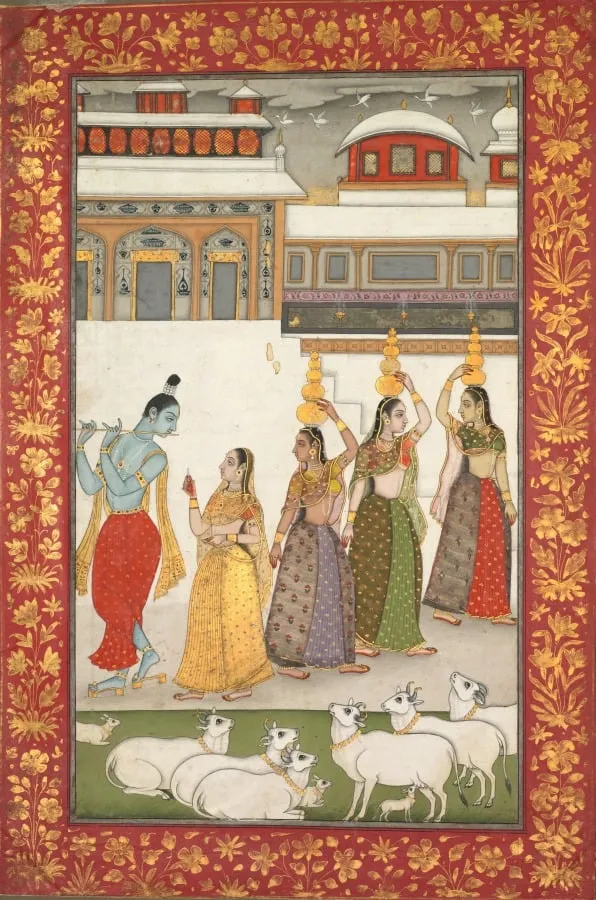
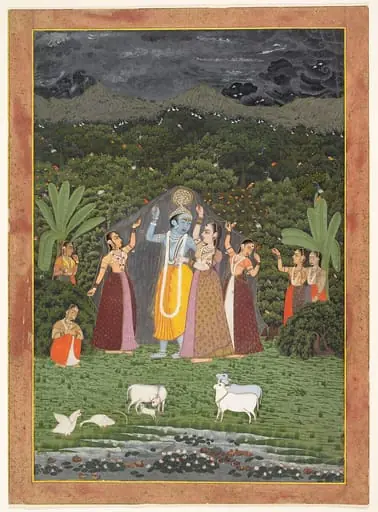
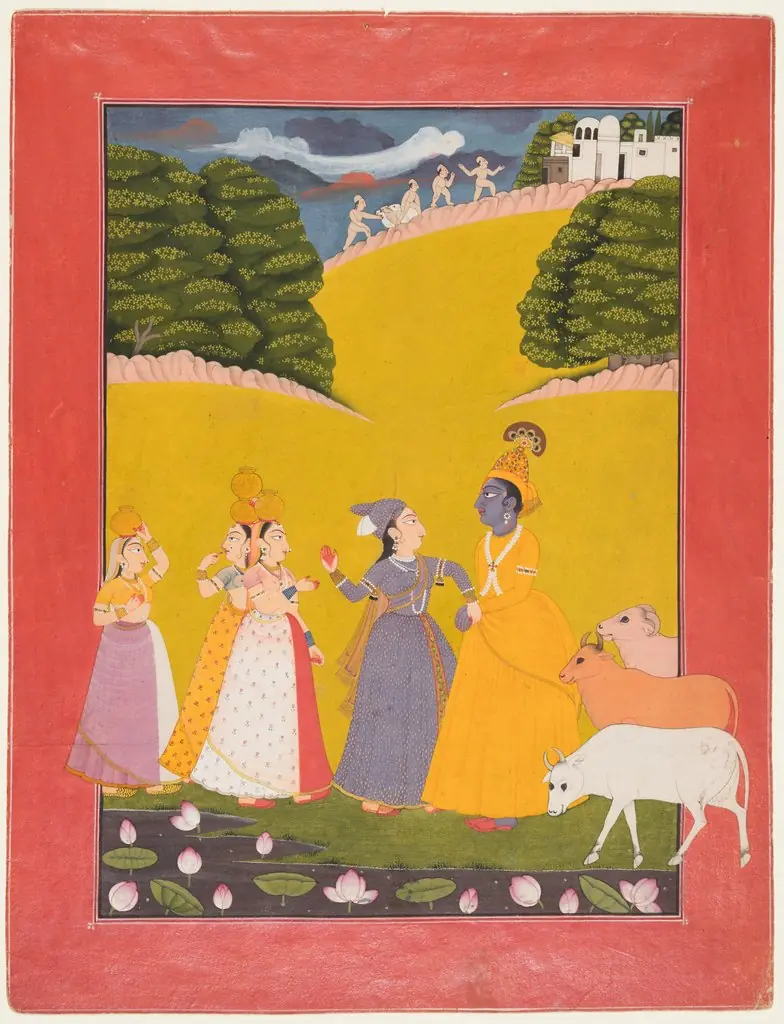
Gujari Ragini (Krishna with Gopis Playing the Flute), from a Ragamala Series is an unspecified painting by the Baroque artist Unknown. It dates from 1704 and is held in the collection of the Cleveland Museum of Art. The work depicts a blue‑skinned figure playing a flute, surrounded by five women in brightly colored garments.
- Accession no.
- 2003.344
- Credit line
- Gift of Jack and Jeanette Walton in memory of his grandparents, Dr. and Mrs. E. K. Zaworski
About this work
Overview
The work depicts a blue‑skinned figure playing a flute, surrounded by five women in brightly colored garments. Behind them a structure with arched openings and domed roofs rises, while four white cows lie on a grassy floor. The composition is enclosed by a red border adorned with gold‑leaf motifs.
Subject & Meaning
The blue figure and his flute reference the Hindu deity Krishna, traditionally portrayed as a divine musician who enchants both cattle and devotees. The presence of the cows and the women, often identified as gopis, suggests themes of devotion, playfulness, and the pastoral romance associated with Krishna’s mythic narratives.
Technique & Style
Rendered in a miniature painting tradition, the piece employs delicate brushwork and vivid pigments. The use of gold leaf in the border and the intricate detailing of the architecture reflect the refined aesthetic of Deccan court art, where ornamental richness and precise line work are hallmarks.
History & Provenance
The painting belongs to a Ragamala series, a set of visual interpretations of musical modes. Such series were popular in the Deccan region, where local courts commissioned works that combined devotional iconography with the theory of Indian classical music.
Context
Within the broader cultural setting, the image aligns with the devotional practices that celebrated Krishna’s lilas (divine pastimes). The inclusion of musical and pastoral elements mirrors the synthesis of art, music, and spirituality characteristic of the period’s courtly patronage.
Artist & collection