Artwork
Heinrich(?) vom Rhein zum Mohren (1477–1536)
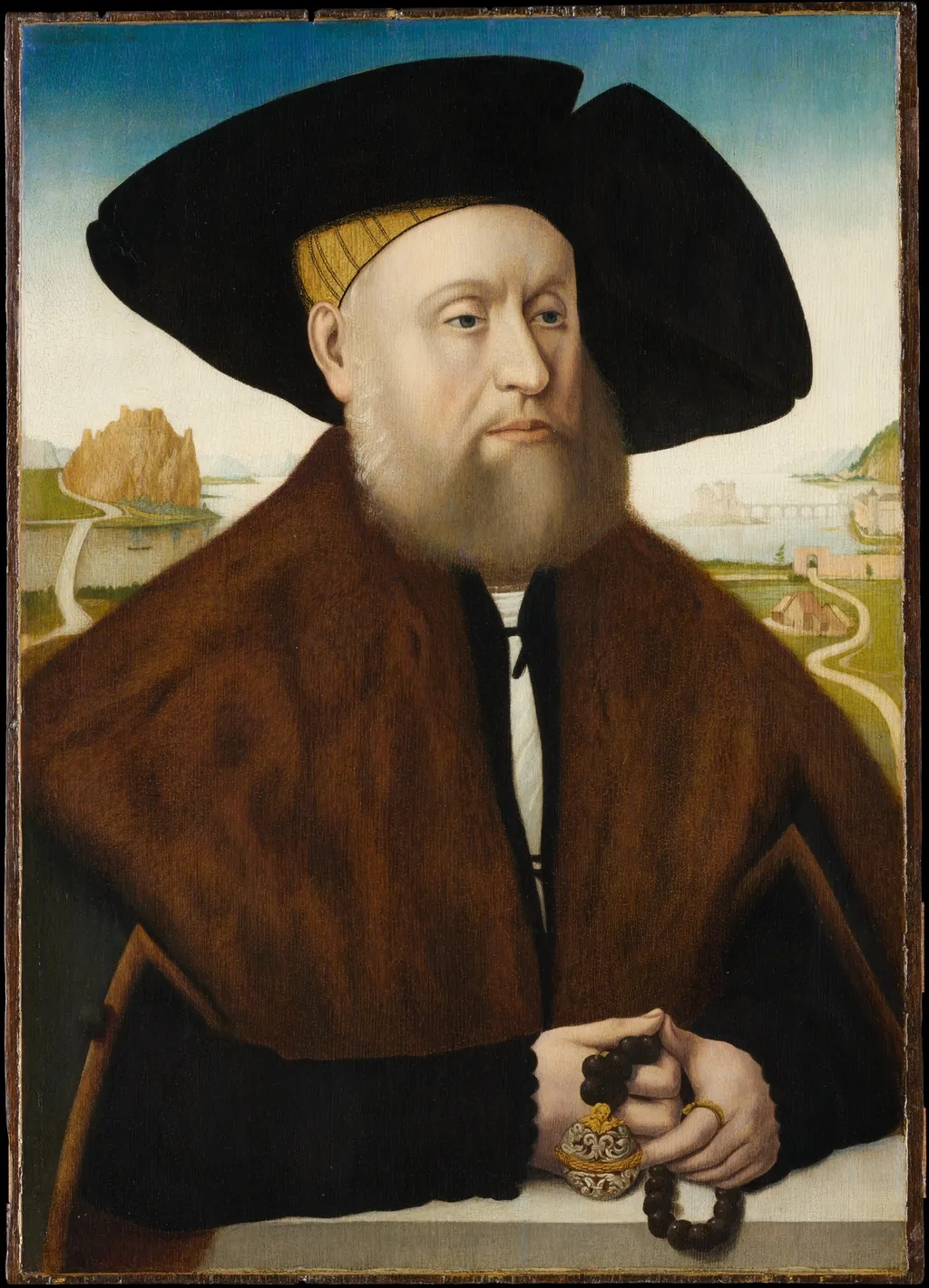
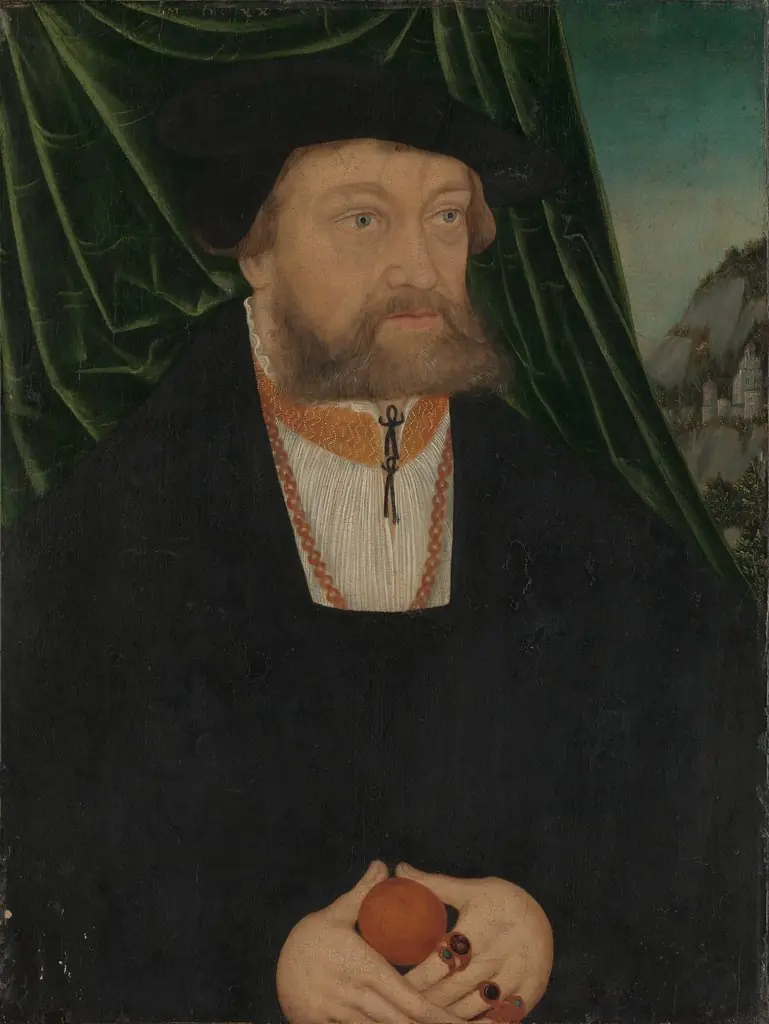
Heinrich(?) vom Rhein zum Mohren (1477–1536) is an oil painting. It dates from 1520 and is held in the collection of the Metropolitan Museum of Art. Artist Heinrich(?
About this work
Technique & Style
The work is an oil painting executed on a rectangular oak panel, as recorded in the Metropolitan Museum catalogue (material: oil paint, gold leaf, oakwood).
The work is an oil painting executed on a rectangular oak panel, as recorded in the Metropolitan Museum catalogue (material: oil paint, gold leaf, oakwood). The portrait, dated 1520, follows a copyist’s approach after Conrad Faber von Creuznach, employing fine brushwork to render facial features and subtle modeling typical of early‑16th‑century Northern portraiture. Gold leaf is applied in decorative bands that frame the figure, adding a luminous border that enhances the formal composition.
The support is a solid wood panel, and the painting’s condition is stable within the museum’s collection, though specific conservation notes are not detailed in the available records.
History & Provenance
Created in 1520, this oil and gold leaf painting on oakwood depicts a male portrait. The work is attributed to a copy after Conrad Faber von Creuznach, though it is associated with the name Heinrich vom Rhein zum Mohren. The piece has a documented ownership chain that includes Arthur Lee, 1st Viscount Lee of Fareham, followed by N. M. Friberg, and later Jack and Belle Linsky along with their foundation.
These private collections eventually transferred the artwork to the Metropolitan Museum of Art, where it remains part of the permanent collection. The painting's creation history is tied to the early sixteenth-century German portraiture tradition, with its specific dating fixed at 1520.
The portrait is housed in the Metropolitan Museum of Art in New York, where it is part of the museum’s collection of European paintings. Its acquisition traces to a bequest from Arthur Lee, 1st Viscount Lee of Fareham, and later additions from N. M. Friberg, Jack and Belle Linsky, and The Jack and Belle Linsky Foundation, forming the eponymous Linsky Collection within the museum. The work has been featured in several institutional exhibitions, including “European Paintings in The Metropolitan Museum of Art by Artists Born before 1865: A Summary Catalogue,” “German Paintings in The Metropolitan Museum of Art, 1350–1600,” “The Jack and Belle Linsky Collection in The Metropolitan Museum of Art,” and “Metropolitan Jewelry.”
Context
Portrait of an unidentified man, dated 1520, exemplifies early German portraiture through its oil paint medium, gold leaf accents, and oakwood panel. The work is attributed to a copy after Conrad Faber von Creuznach and belongs to the Metropolitan Museum of Art’s Linsky Collection, having entered the museum via the bequest of Arthur Lee and subsequent donations. Its inclusion in catalogues such as European Paintings in The Metropolitan Museum of Art by Artists Born before 1865 and German Paintings in The Metropolitan Museum of Art, 1350–1600 reflects scholarly attention to the piece within the broader context of Renaissance portraiture. The attribution and stylistic analysis contribute to understanding the workshop practices of 16th‑century German artists.
Overview
Artist Heinrich(?) vom Rhein zum Mohren created this oil painting, depicting a distinguished male figure. The subject, rendered with a serious expression and a commanding presence, is dressed in opulent attire. His gaze is direct, and he holds a significant object in his hand, suggesting his status.
While a subtle landscape appears in the background, the primary focus remains on the individual, highlighted by the artist's use of deep, rich colors.
Subject & Meaning
The painting portrays a man with a thick beard and a resolute expression, wearing a dark fur coat and a broad-brimmed hat. His elaborate clothing signifies wealth and importance. In his right hand, he displays a ring or seal, possibly indicating his profession, authority, or personal identity.
His left hand rests on his chest, a gesture that might convey self-assurance or a personal connection to the emblem he presents.
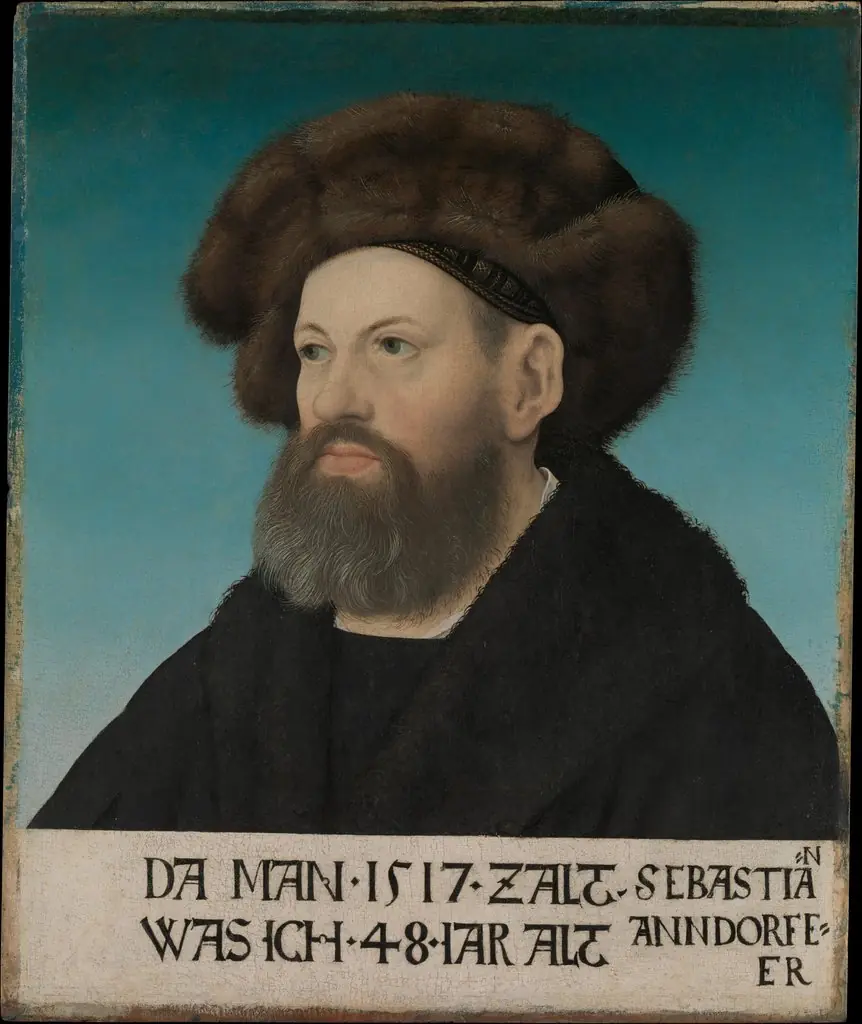
Artist & collection

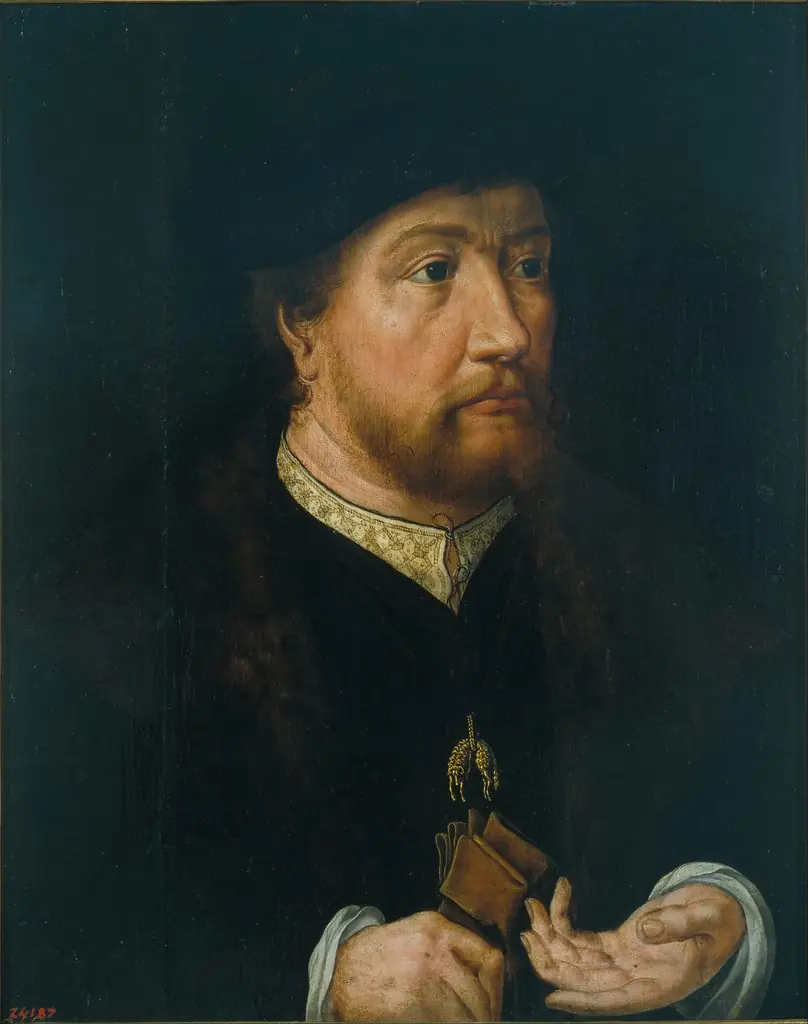 Portrait of Henry III, Count of Nassau
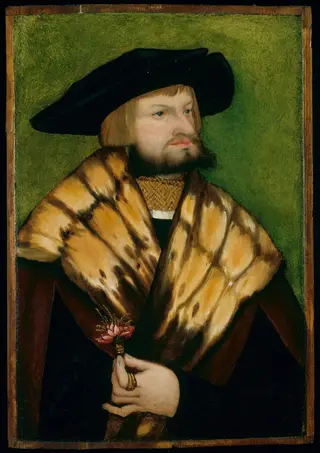 Portrait of Leonhard Fuchs
 Portrait of a Man
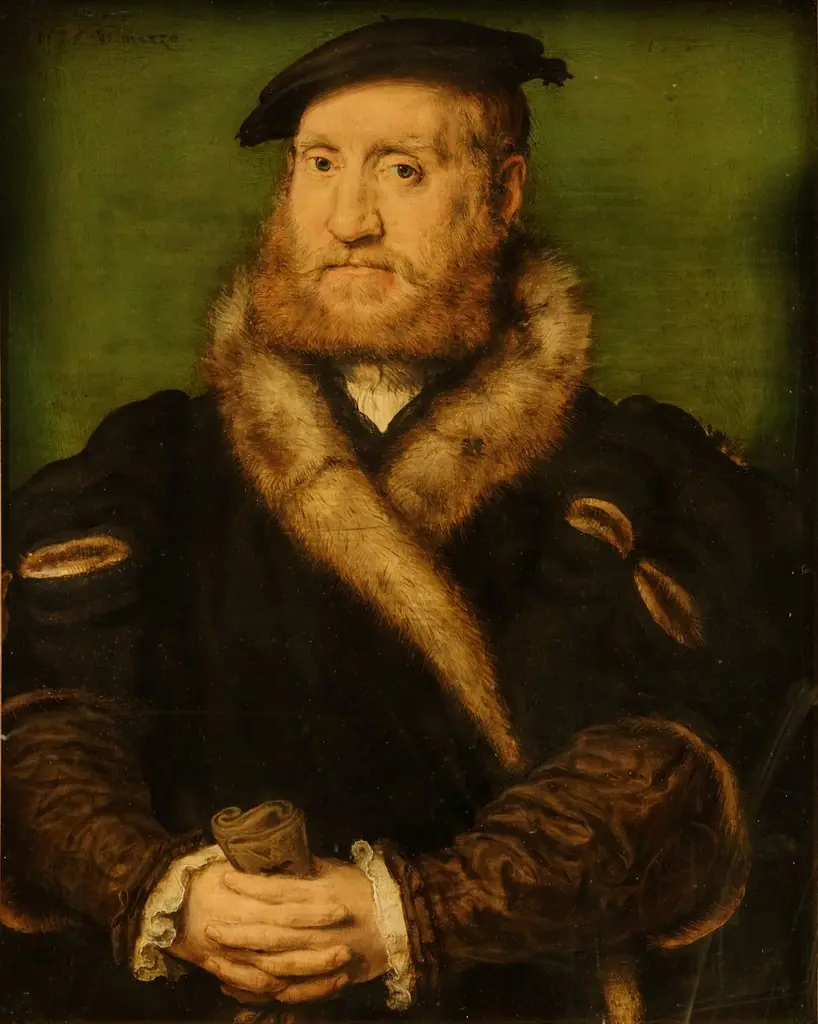 Bearded Man in a Fur Coat
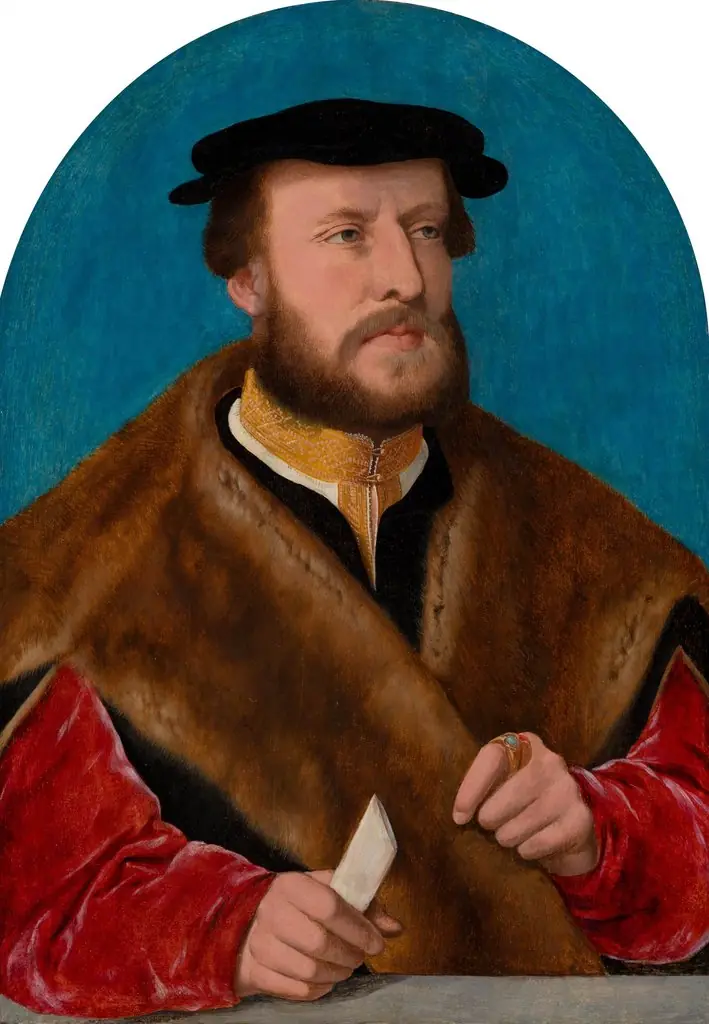 Portrait of Jakob Omphalius
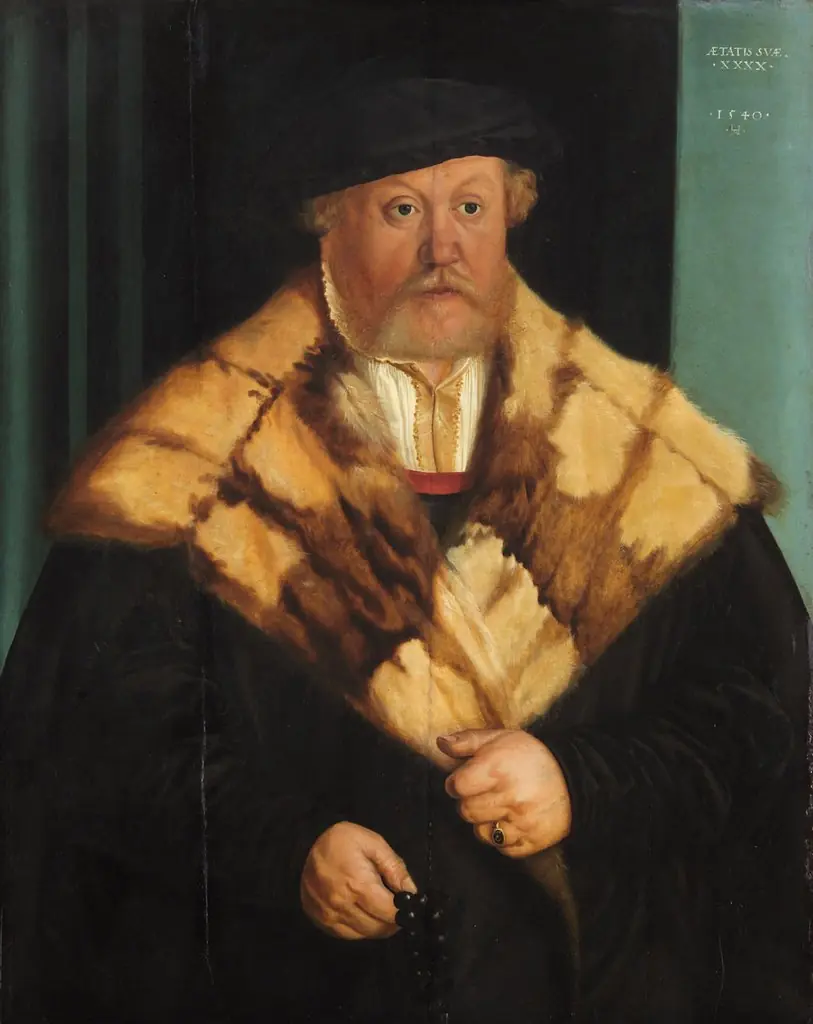 Hanns Mädl
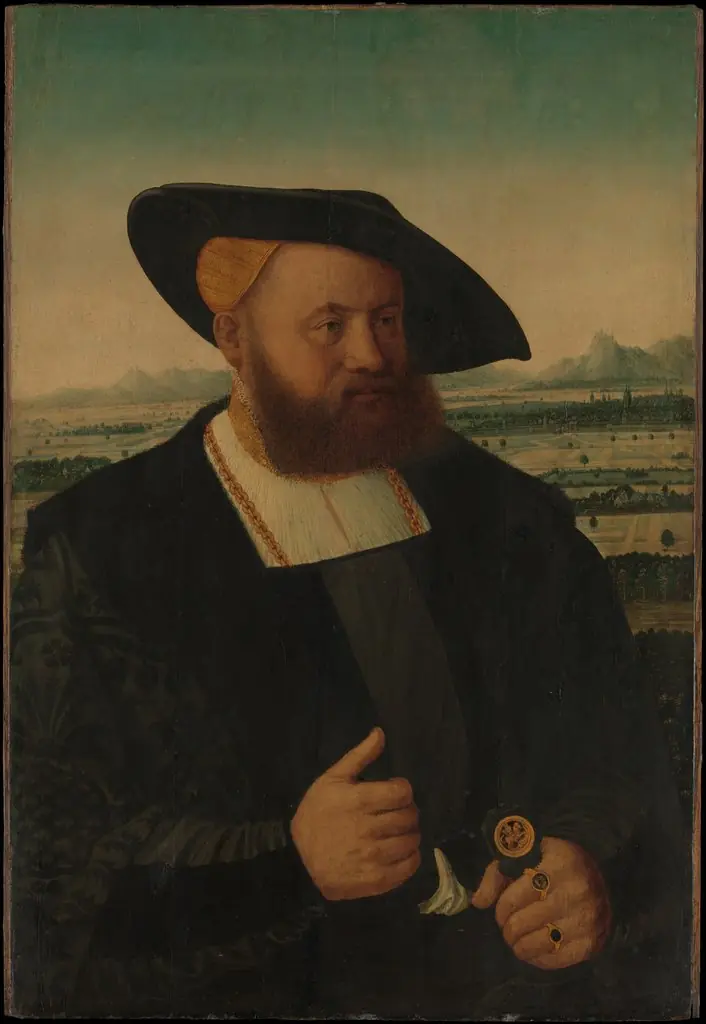 Portrait of a Man with a Moor's Head on His Signet Ring
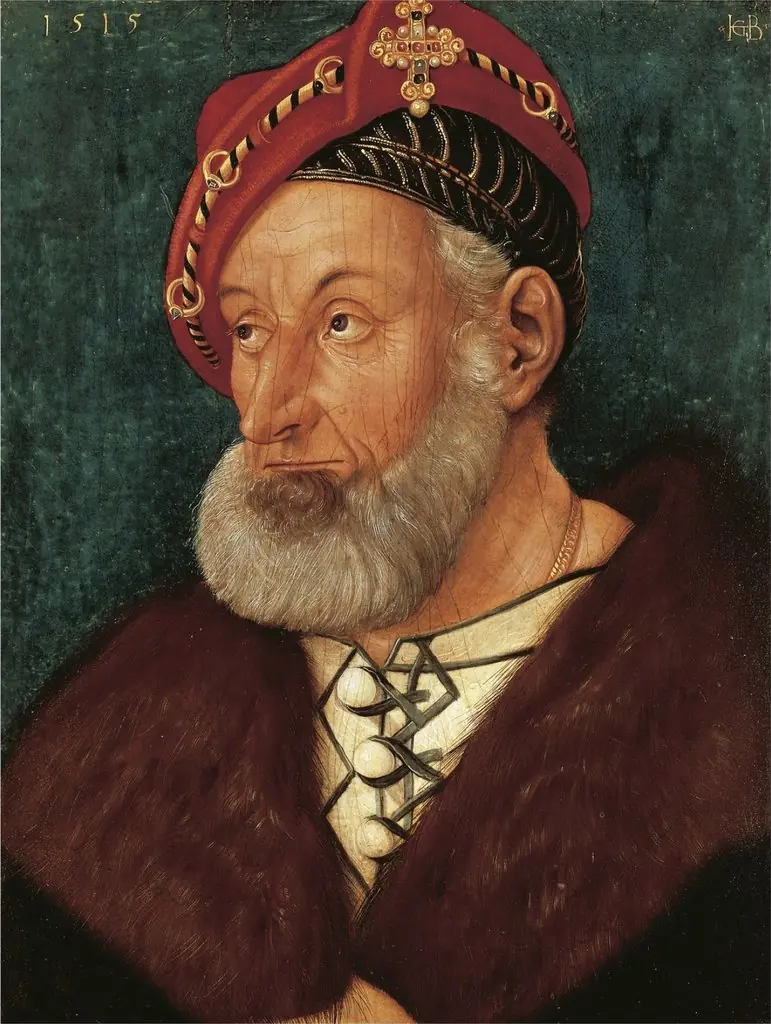 Margrave Christoph I of Baden
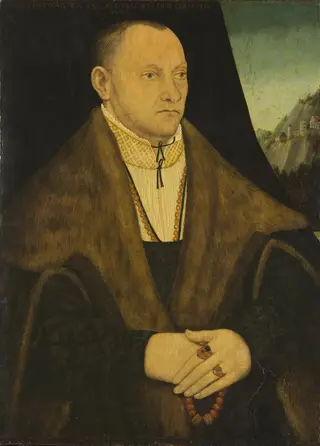 Portrait of a man
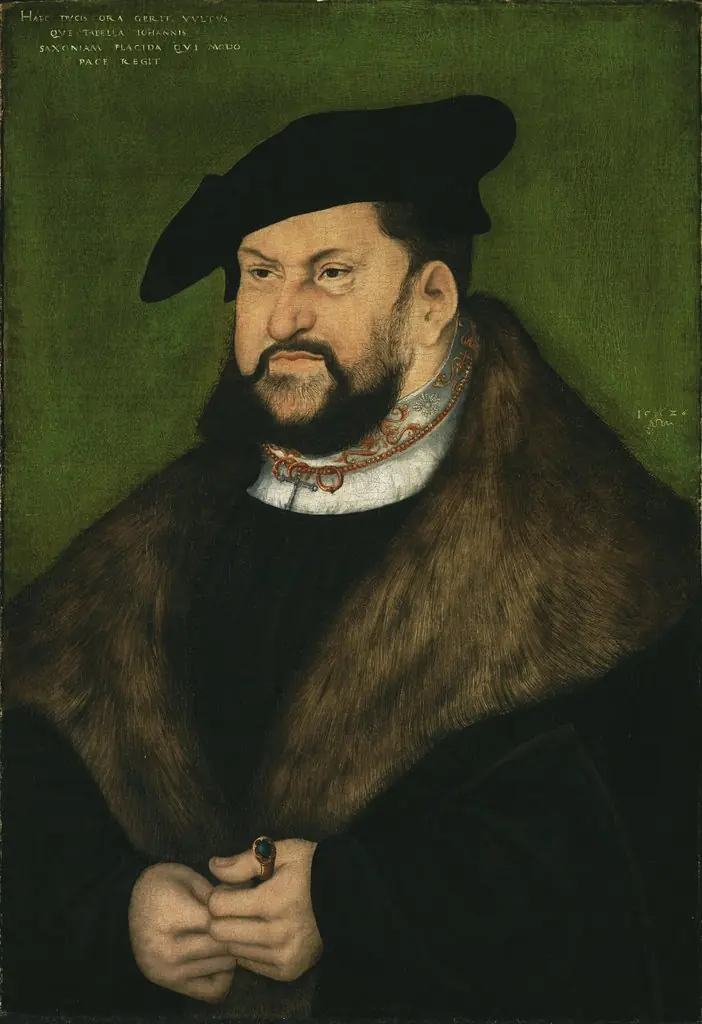 Portrait of Johannes the Steadfast, Elector of Saxony
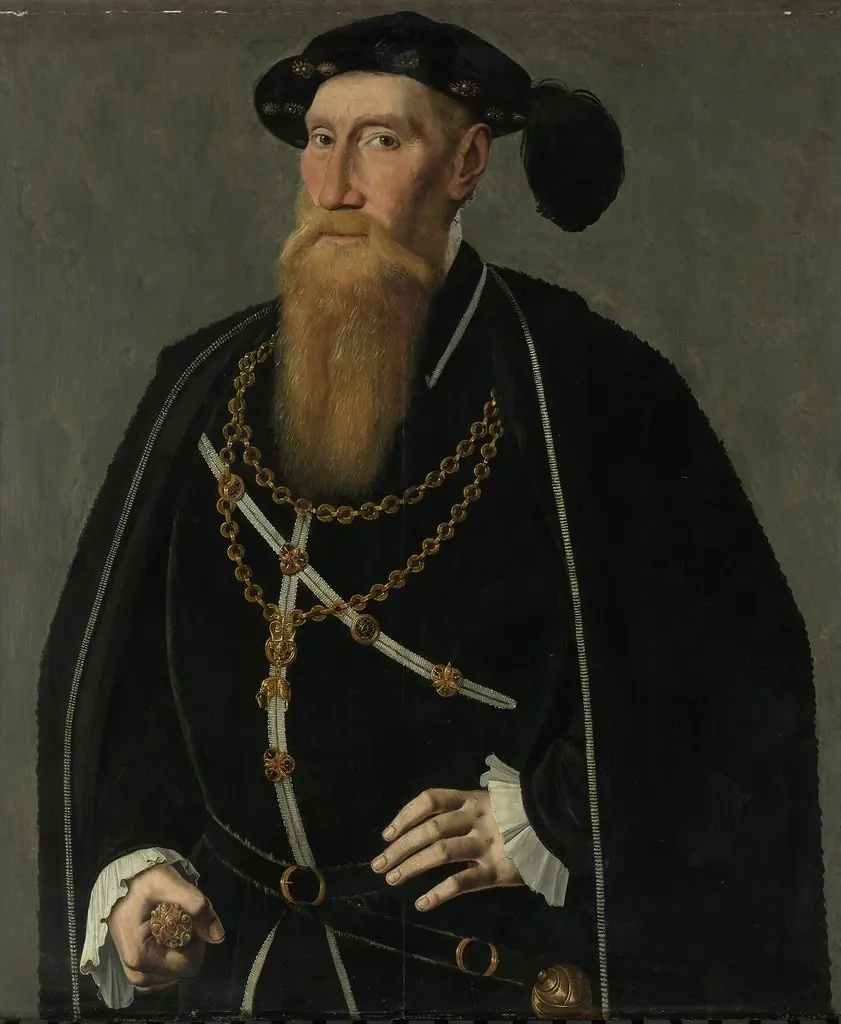 Portrait of Reinoud III of Brederode
- Sebastian Andorfer (1469–1537)