Artwork
Hertenjacht
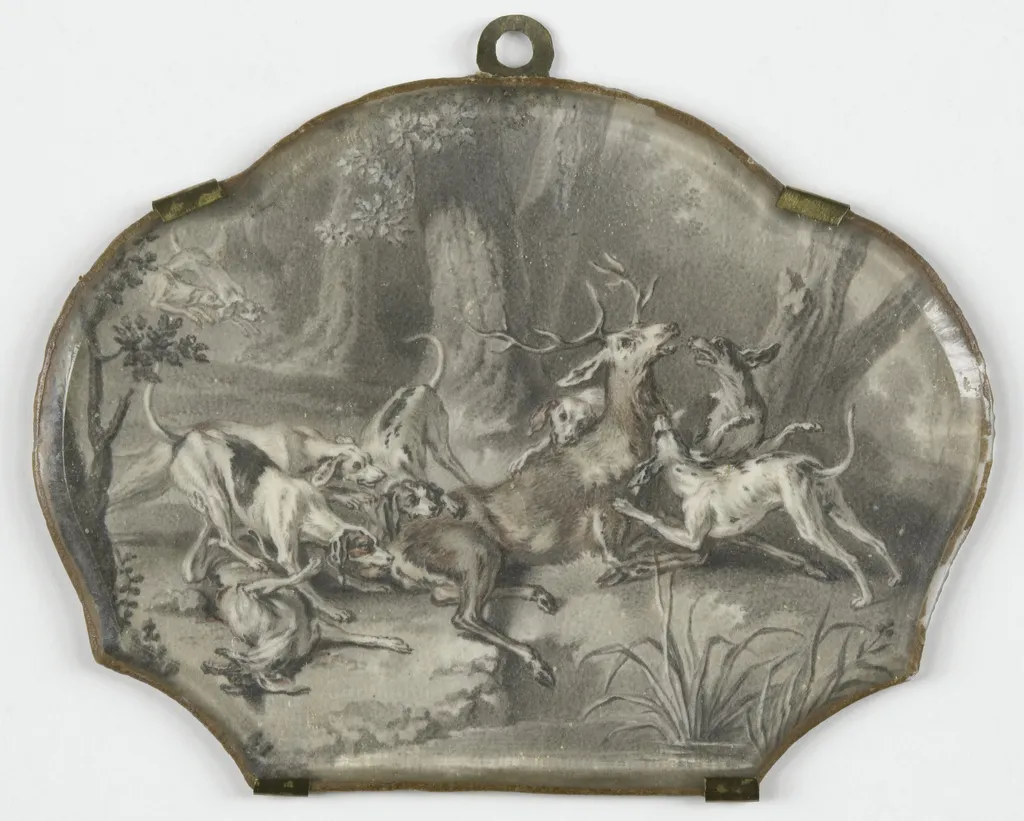
Hertenjacht is an unspecified painting. It dates from 1725 and is held in the collection of the Rijksmuseum.
About this work
Context
As part of the Rijksmuseum's collection, it contributes to scholarly understanding of anonymous artistic production and the material experimentation of the era.
Hertenjacht is classified as a miniature painting on cardboard created in France around 1725, reflecting the anonymous tradition of small-scale decorative works from that period. Its attribution to an anonymous hand and material choice align with broader practices of 18th-century Dutch and French decorative art, where miniature paintings were often executed on unconventional supports such as cardboard. The work's dimensions of 4.7 cm in height and 6.4 cm in width underscore its intimate scale, typical of devotional or ornamental objects.
As part of the Rijksmuseum's collection, it contributes to scholarly understanding of anonymous artistic production and the material experimentation of the era.
Legacy
The painting is recognized as an anonymous miniature from 1725 that exemplifies early French cardboard art, and its presence in the Rijksmuseum collection has contributed to renewed scholarly interest in the genre. Although its creator remains unidentified, the work’s modest dimensions and material have informed studies of 18th‑century decorative practices, influencing later assessments of similar cardboard paintings.
Overview
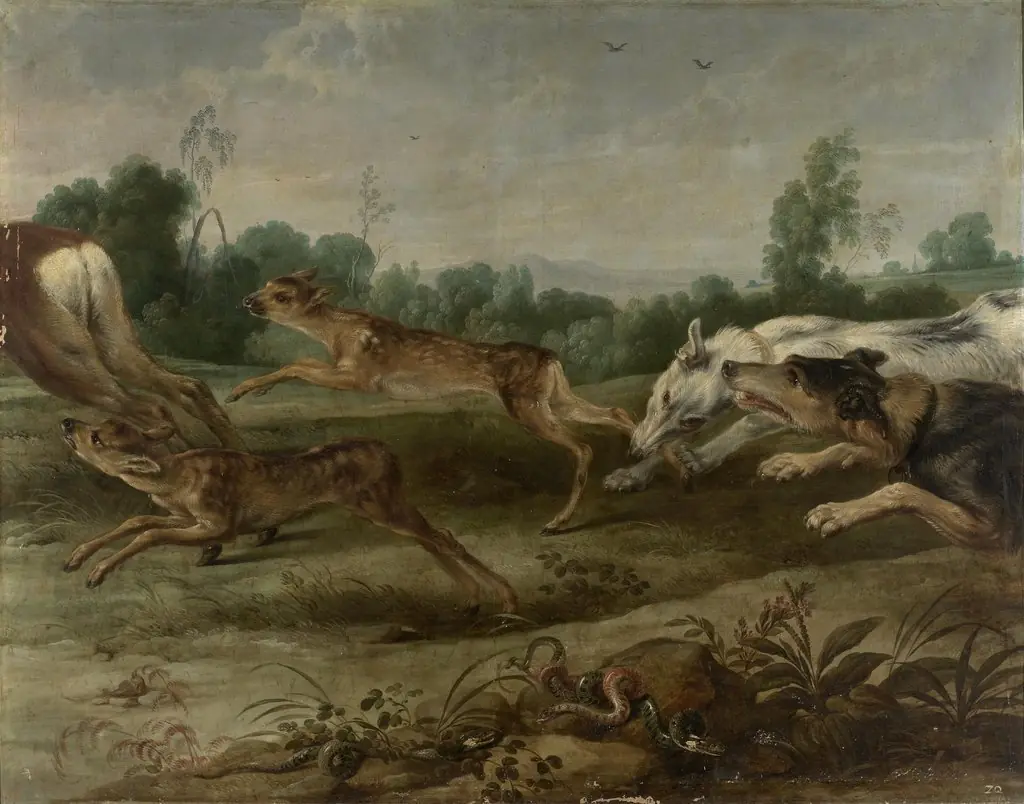
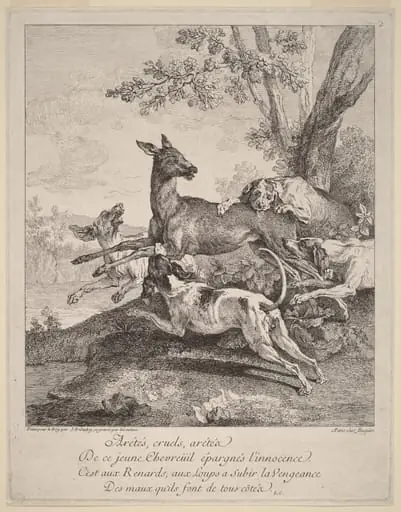
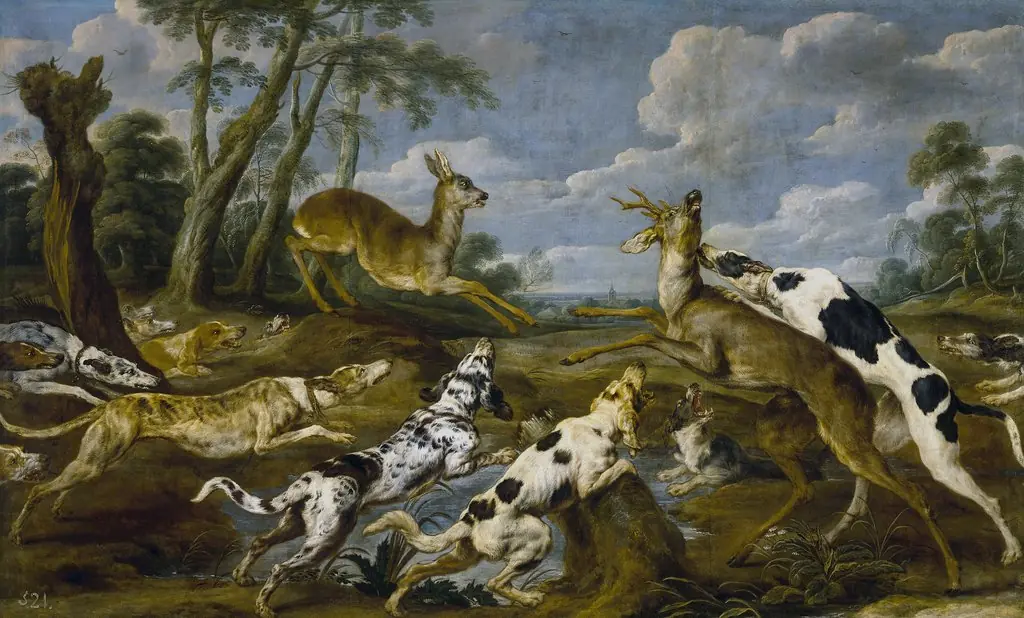
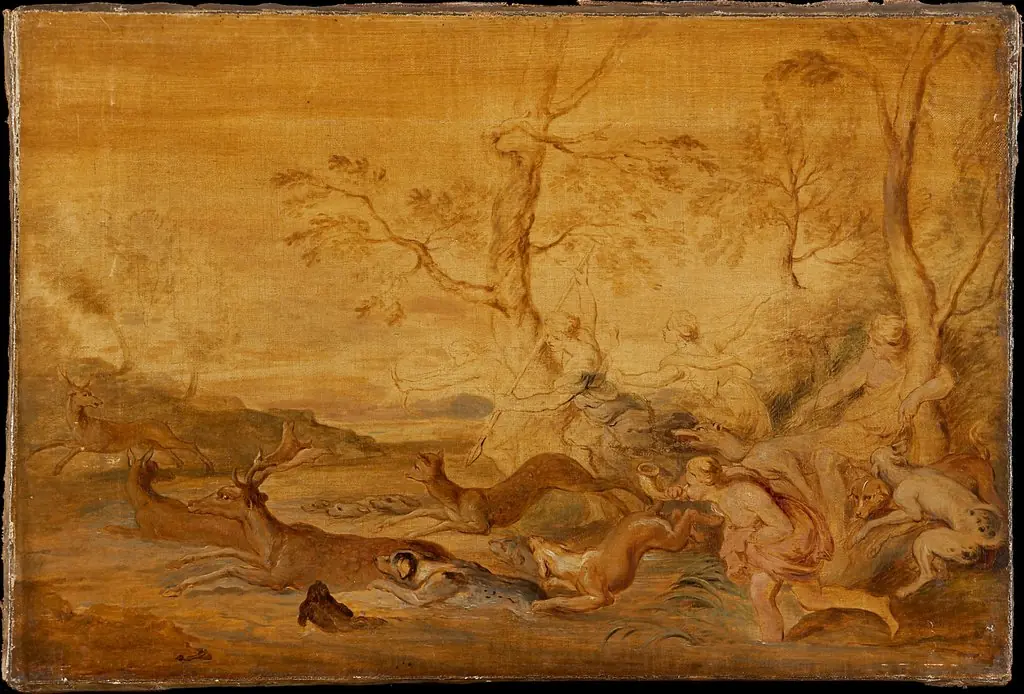
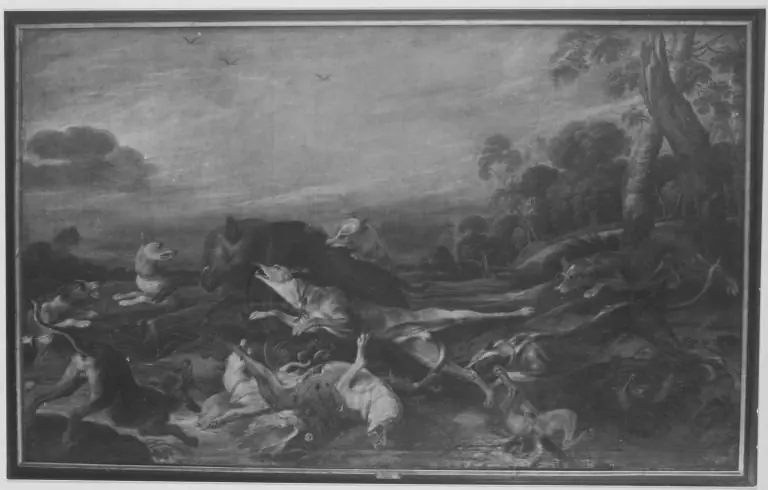
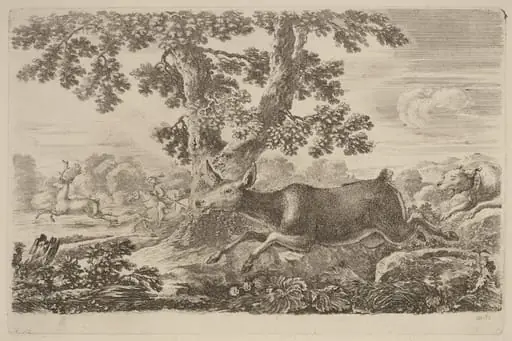
Hertenjacht is a cardboard painting that portrays a dynamic chase scene in a forest setting. Central to the composition is a deer, its antlers and legs clearly rendered, surrounded by a pack of dogs that bite at its limbs and leap overhead. The work employs a muted palette of browns and grays, emphasizing the tension of the moment.
Subject & Meaning
The image captures the traditional hunting motif of a deer pursued by hounds, illustrating the interaction between predator and prey. By focusing on the physical struggle and the surrounding woodland, the piece reflects themes of nature’s violence and the human practice of hunting, though no explicit narrative beyond the chase is provided.
Technique & Style
Executed on cardboard, the painting adopts a realistic approach, with careful attention to the anatomy of both the deer and the dogs. The artist renders fur, antlers, and foliage with fine detail, while the limited color range of browns and grays contributes to a subdued, naturalistic atmosphere.
Artist & collection