Artwork
Saint Luke drawing the Madonna
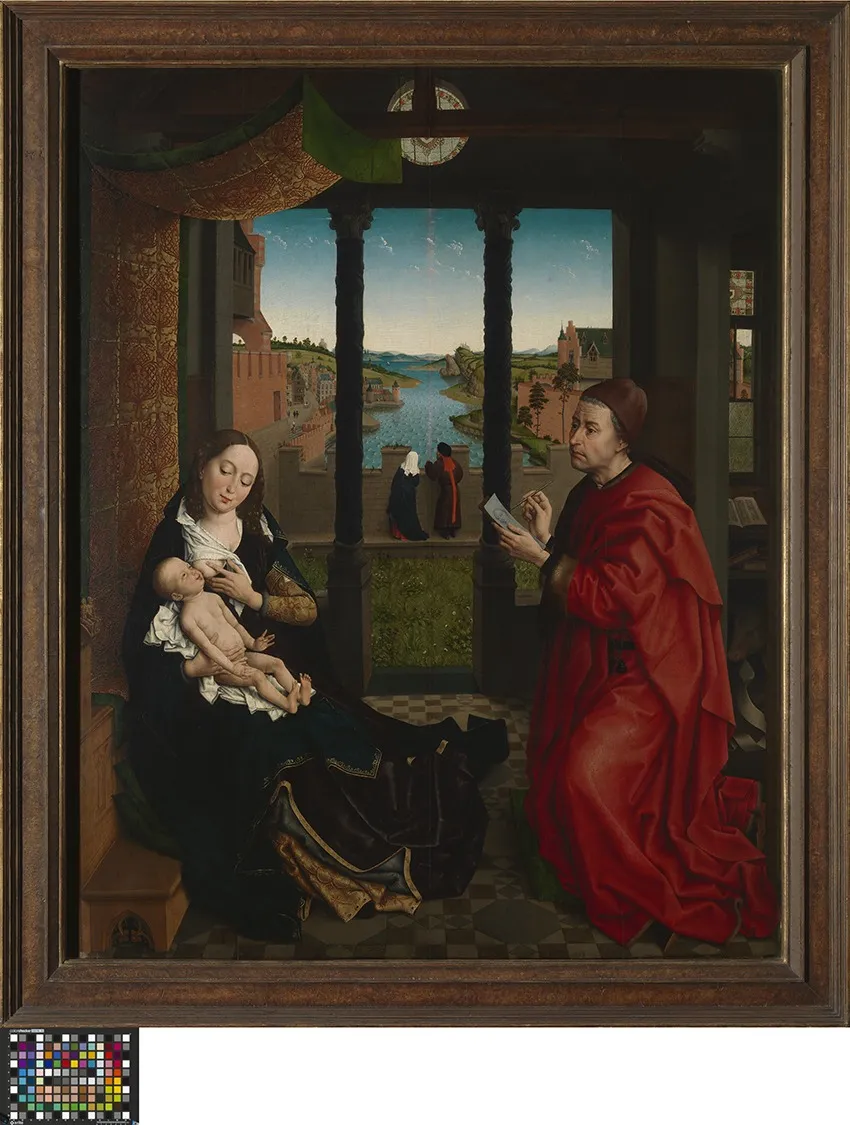
Saint Luke drawing the Madonna is an oil painting by the Northern Renaissance artist Unknown. It dates from 1500 and is held in the collection of the Groeningemuseum.
About this work
Subject & Meaning
The painting depicts Saint Luke the Evangelist drawing the Virgin Mary, a devotional subject that became especially popular in Early Netherlandish painting.
The painting depicts Saint Luke the Evangelist drawing the Virgin Mary, a devotional subject that became especially popular in Early Netherlandish painting. According to the source, the scene shows Luke seated at work on his portrait of the Virgin, with the Christ Child present alongside her, set within a landscape that includes a river, a house, and a tree. The presence of a Gospel Book and a bull, the latter being Luke's traditional evangelist symbol, reinforces his identity as the author of the third Gospel and the legendary first iconographer of the Virgin.
The subject expresses the idea that Luke was the original painter of Mary's likeness, a tradition that conferred sacred legitimacy on the act of religious image-making. By depicting Luke at the moment of drawing, the anonymous Bruges master of circa 1500 visually affirmed the divine origin of Marian portraiture and, by extension, the spiritual authority of devotional painting itself.
Technique & Style
The work is an oil painting executed on wooden panel, measuring 135 cm in height by 107 cm in width. It portrays Saint Luke engaged in drawing the Madonna and Child within a domestic interior that includes symbolic elements such as a river, a house, a tree, a Gospel Book, and a bull. The composition reflects Early Netherlandish painting conventions, emphasizing meticulous detail and naturalistic rendering. The painting is housed in the Groeningemuseum and is part of the Flemish Art Collection.
Context
Created around 1500, Saint Luke drawing the Madonna is attributed to the Anonymous Master of Brussels and stands as a significant example of Early Netherlandish painting. The work depicts the Evangelist Luke portraying the Virgin Mary, a traditional subject that underscores the artist's role as a divine witness within the religious art of the period. Housed in the Groeningemuseum within the Flemish Art Collection, the painting reflects the devotional practices and technical mastery characteristic of the late 15th and early 16th centuries in the Low Countries.
Its composition, featuring the saint alongside the Madonna and Child within a domestic setting, aligns with the genre's focus on intimate religious narratives.
Overview
The work portrays a figure in a red garment, presumed to be Saint Luke, holding a sheet of paper and a quill as he stands before a seated woman in black, cradling an infant swaddled in white. A window behind them opens onto a river and a town, while the oil medium renders a balanced palette of warm and cool tones.
History & Provenance
The painting is part of the collection of the Groeningemuseum, a repository for Flemish art. Its acquisition history is not detailed in the available data, but its presence in the museum situates it among works that illustrate regional devotional imagery from the period.
Artist & collection









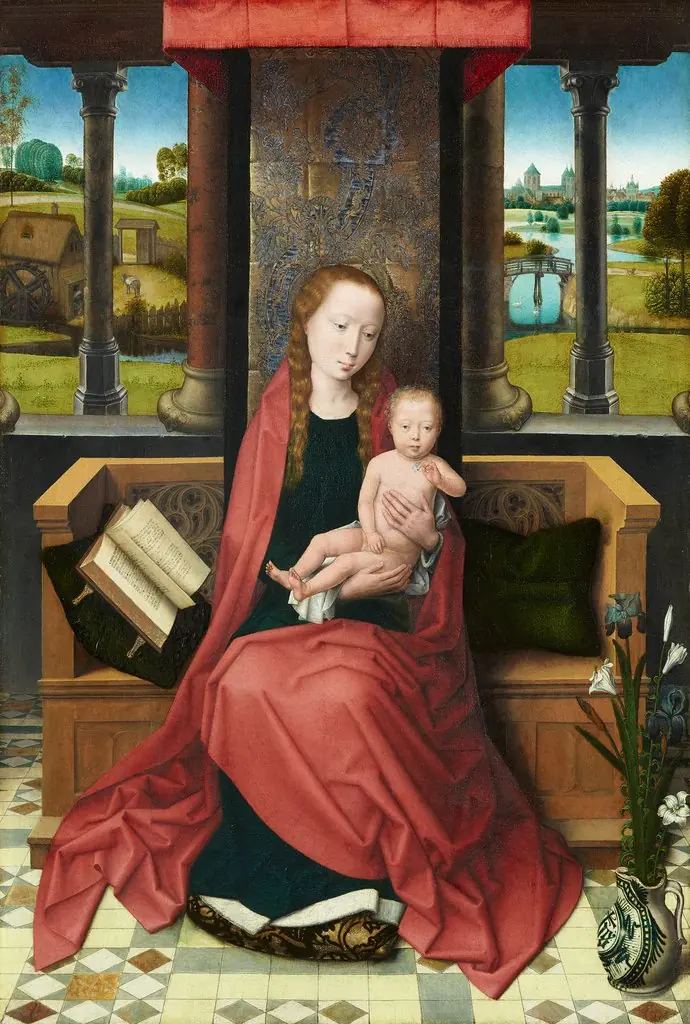 The Virgin and Child Enthroned
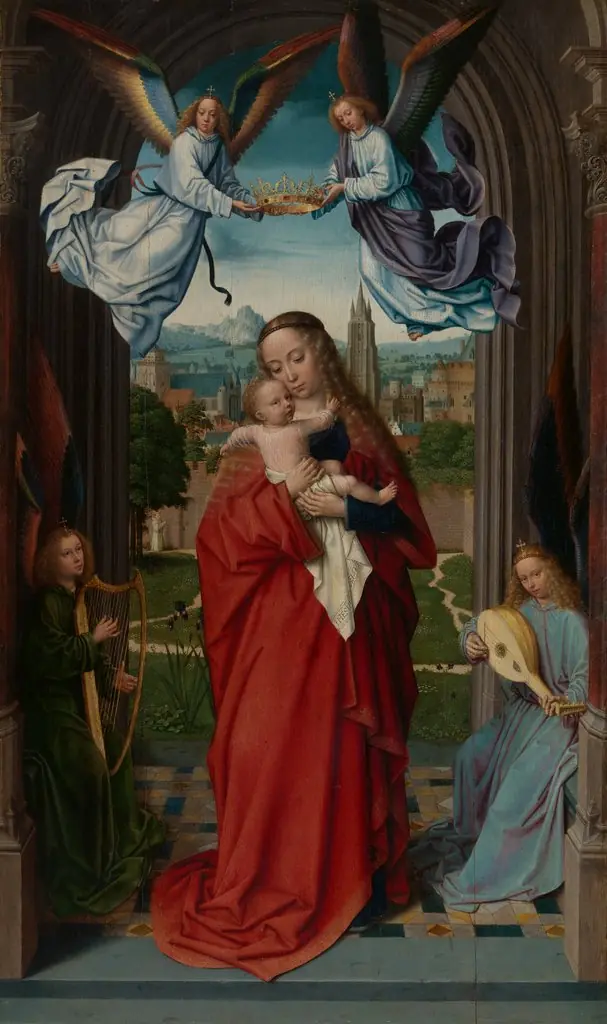 Virgin and Child with Four Angels
 Virgin and Child with Saint Anne
 Holy Family
 Holy Family
 Triptych of Madonna and Child with Angels; Donor and His Patron Saint Peter Martyr; and Saint Jerome and His Lion
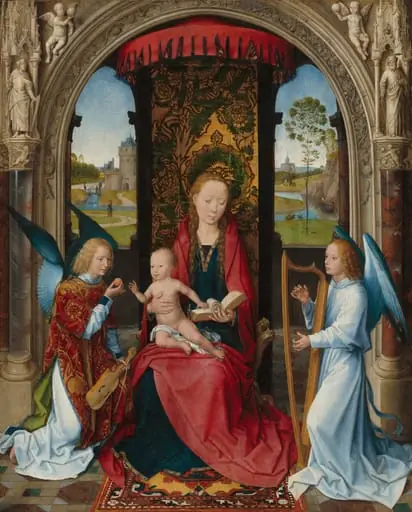 Madonna and Child with Angels
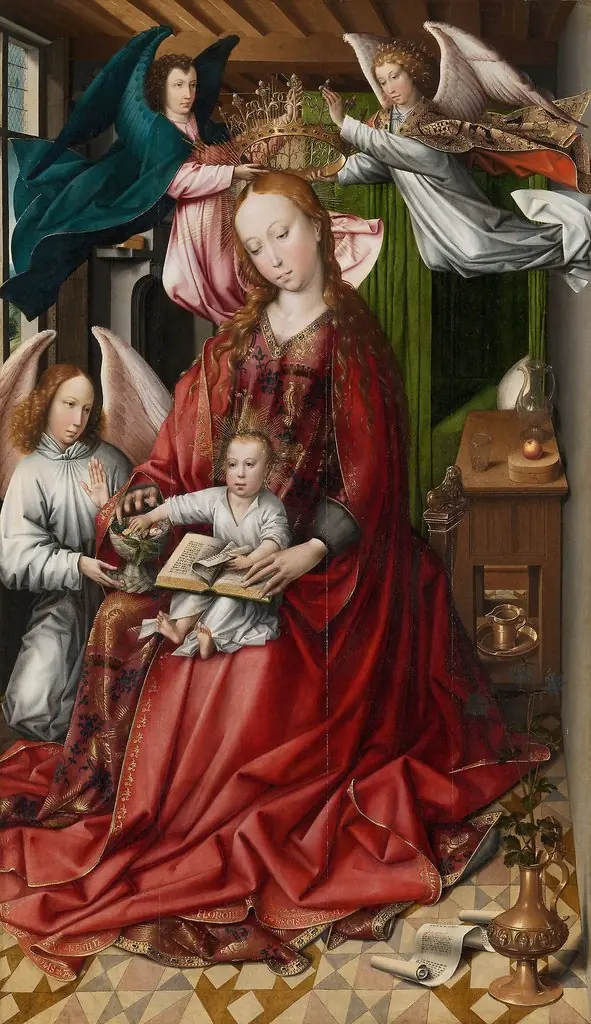 Virgin and Child Crowned by Angels
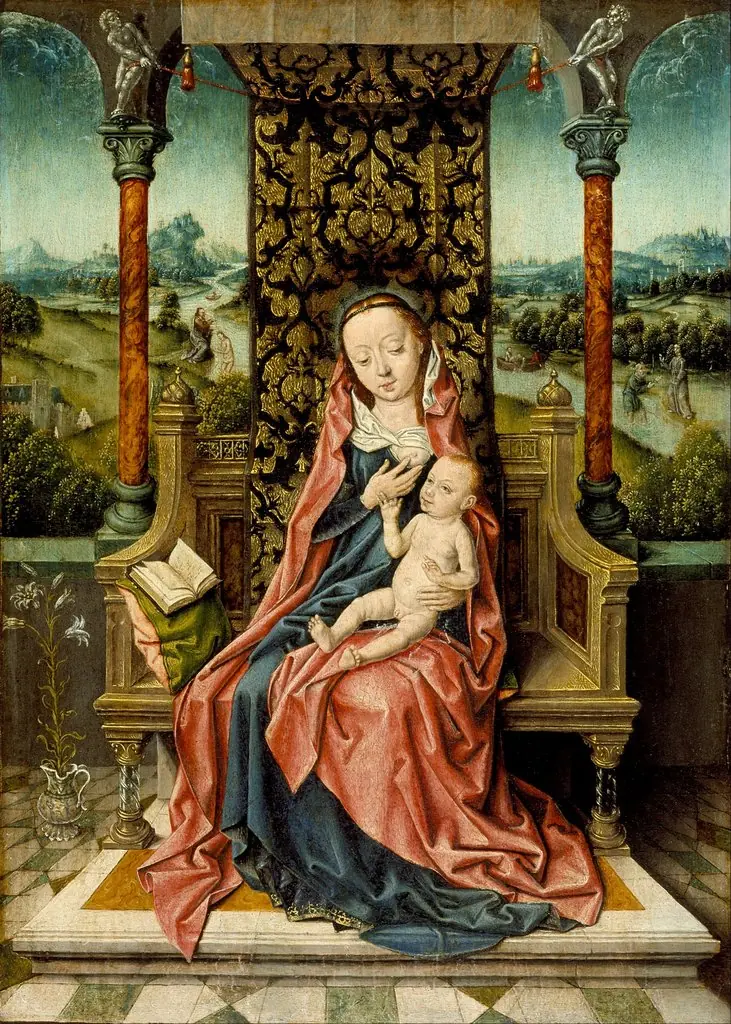 Madonna and Child Enthroned