Artwork
The Virgin and Child Enthroned
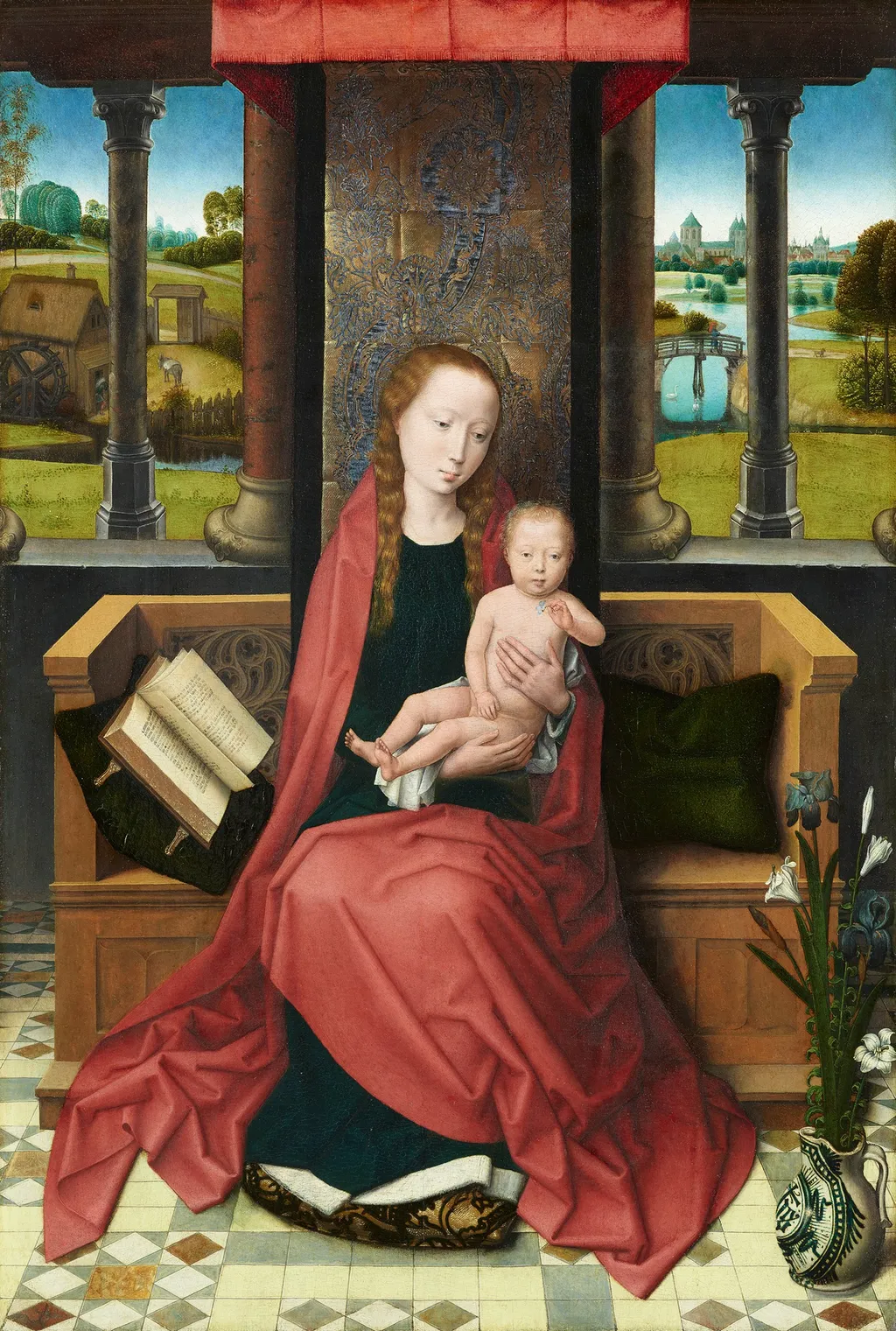
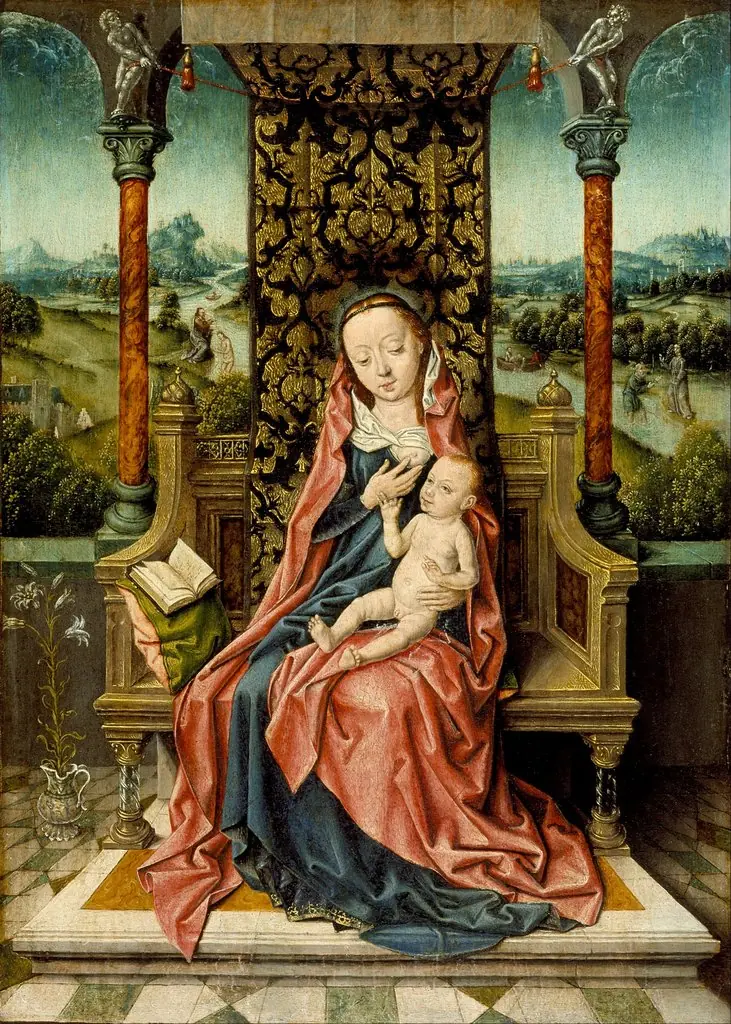
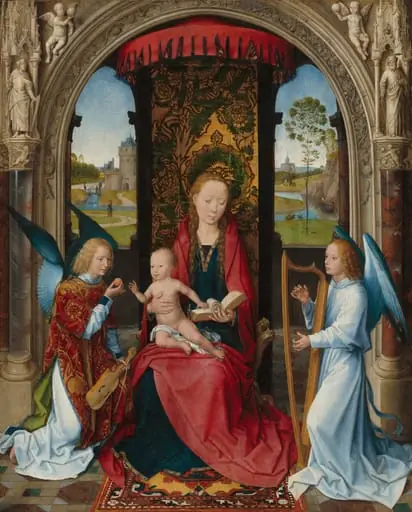
The Virgin and Child Enthroned is an oil painting by the Northern Renaissance artist Hans Memling. It dates from 1490 and is held in the collection of the Gemäldegalerie Berlin.
About this work
Overview
The Virgin and Child Enthroned is a religious painting created by the Early Netherlandish artist Hans Memling in 1480.
The Virgin and Child Enthroned is a religious painting created by the Early Netherlandish artist Hans Memling in 1480. Executed in oil paint on a wooden panel, the work measures 83.1 by 57.7 centimeters. It belongs to the collection of the Gemaldegalerie Berlin. The painting depicts the Virgin Mary seated on an ornate throne holding the Christ Child, a subject that Memling and his workshop frequently produced in various formats for private devotion during the late fifteenth century. This particular version is notable for its high quality and fine state of preservation, distinguishing it within Memling's broader output of enthroned Virgin compositions.
Subject & Meaning
The composition centers on the Virgin Mary, who wears a dark dress beneath a voluminous red mantle that drapes across her knees and pools onto the floor. She holds the naked Christ Child on her lap. An open book rests on the left armrest of the throne, a common Marian attribute signifying her wisdom and fulfillment of prophecy. In the lower right corner, a decorated ceramic vessel holds white lilies and dark irises. The lilies symbolize the Virgin's purity, while the irises allude to her sorrow. The figures occupy an ornate wooden throne with carved armrests and a high backrest covered in patterned brocade, surmounted by a red canopy, signifying her status as the Queen of Heaven.
Technique & Style
Memling applied oil paint smoothly to the wooden panel, achieving fine detail particularly in the rendering of textiles, foliage, and distant architecture. Light falls evenly across the scene, casting soft shadows beneath the figures and objects. The composition is framed by four columns that open onto a landscape view showing a river, bridge, buildings, and green fields under a blue sky. The floor displays a geometric pattern of colored tiles. Stylistically, the work synthesizes elements from earlier Netherlandish masters. The humble domestic atmosphere and tile pattern recall compositions by the Master of Flemalle and Rogier van der Weyden, while the position of the Christ Child shows the influence of Hugo van der Goes. However, the arcade opening onto the landscape, which lends a horizontal rhythm to the composition, is a pure Memling invention.
History & Provenance
The painting was created in 1480 during Memling's mature period in Bruges. It differs from the artist's other enthroned Virgins due to its notably larger format and iconographically simpler, less ornate decoration, such as the absence of an Oriental carpet on the bare tile floor. Scholarly analysis confirms Memling's own execution of the work, dismissing earlier doubts as unwarranted despite minor mechanical elements like the dotted contours of oval trees in the left background. An interesting detail in the landscape is the church on the right, which has been identified as possibly the abbey church of Seligenstadt, Memling's birthplace. The painting eventually entered the collection of the Gemaldegalerie Berlin, where it resides today.
Context
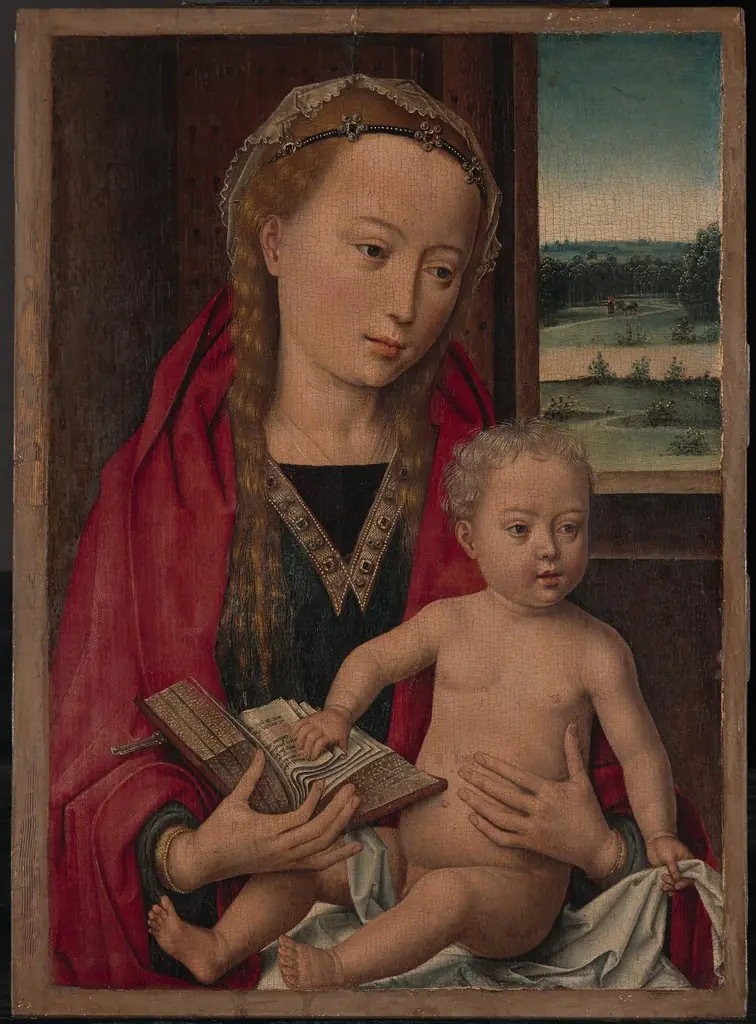
Hans Memling was active in Bruges by 1465 and died in 1494, running a large and productive workshop. The enthroned Virgin and Child was a highly popular product of his studio, with the figures frequently reappearing across multiple works, including triptychs and smaller roundels used for private devotion. While Memling often enriched established prototypes with extended landscapes, this particular painting is distinguished by its directness and structural clarity. The architectural feature of a second row of small columns of a different type, standing behind a parapet and supporting a beam, remains somewhat ambiguous, leading to speculation that the painting might originally have had accompanying wings that would have contextualized this element.
Own this work as a print
Artist & collection
Artist
Hans Memling was a German-Flemish painter who worked in the tradition of Early Netherlandish painting.

![Saint Veronica [obverse], by Hans Memling](https://artifactworldgallery.com/img/hans-memling--saint-veronica-obverse--5a649fd8b09c96b9-w320.webp)