Artwork
Horse Stable
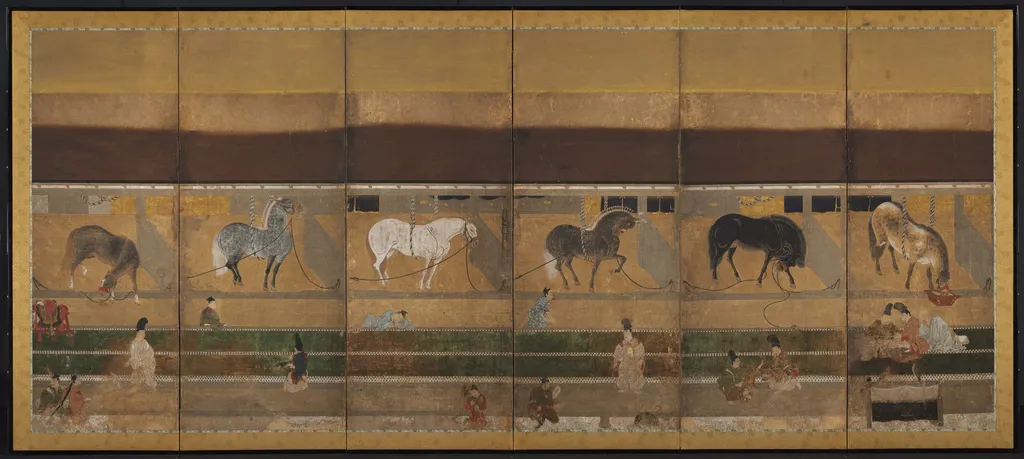
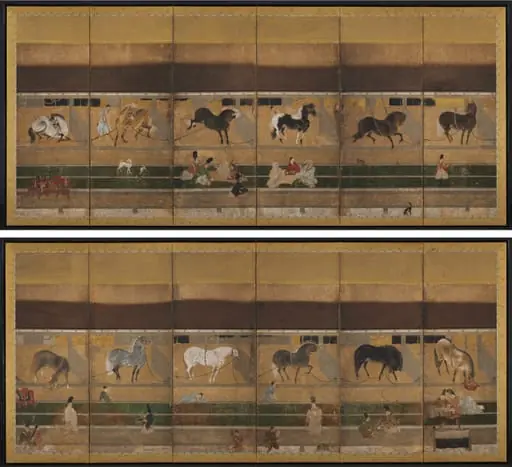
Horse Stable is an unspecified painting. It dates from 1512 and is held in the collection of the Cleveland Museum of Art.
About this work
Subject & Meaning
Horse Stable, dated 1512 and attributed to the Tosa School, is a Japanese painting in the Cleveland Museum of Art. Its title indicates the subject is a horse stable, likely an interior view of horses housed within a stable setting. No further details about its iconography or symbolic meaning are provided in the sources.
History & Provenance
The work remained in private hands until it entered the collection of the Cleveland Museum of Art in 1934, receiving the accession number 1934.
Horse Stable was painted in 1512 by artists of the Tosa School in Japan. The work remained in private hands until it entered the collection of the Cleveland Museum of Art in 1934, receiving the accession number 1934.373.2. Since that acquisition it has been housed at the museum in Cleveland, Ohio, as part of the institution's Japanese painting holdings. No earlier ownership records are documented in the sources.
Overview
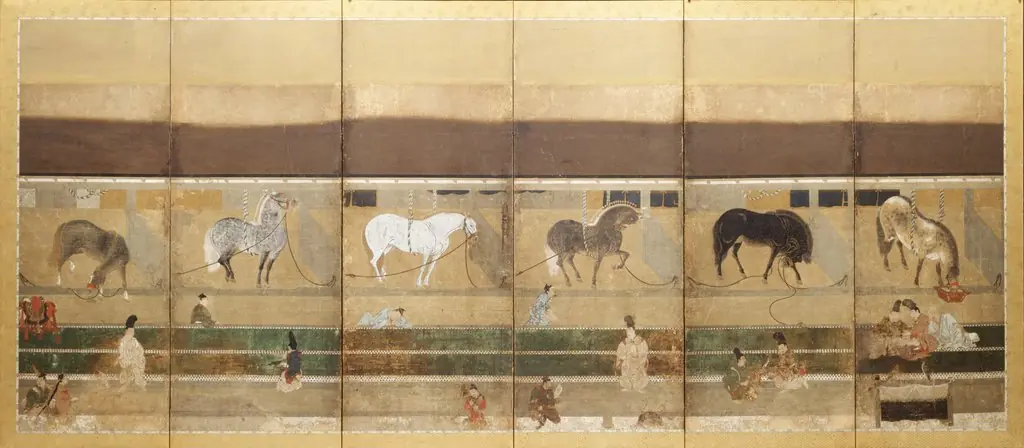
The canvas portrays a quiet horse stable where six horses stand in a line, each displaying a distinct coat coloration. All animals face toward the right, their heads turned slightly outward, while a small group of figures in the foreground attend to them. The scene is rendered in subdued, earthy hues that emphasize a calm, pastoral atmosphere.
Technique & Style
The artist employs chiaroscuro, contrasting light and shadow to model the forms of the horses and figures, giving them a three‑dimensional presence. Muted browns, beiges and greens dominate the palette, reinforcing the naturalistic tone and contributing to the overall sense of serenity.
Context
The depiction aligns with a tradition of genre paintings that document agricultural or equestrian subjects, reflecting an interest in the quiet aspects of rural labor and animal husbandry.
Artist & collection

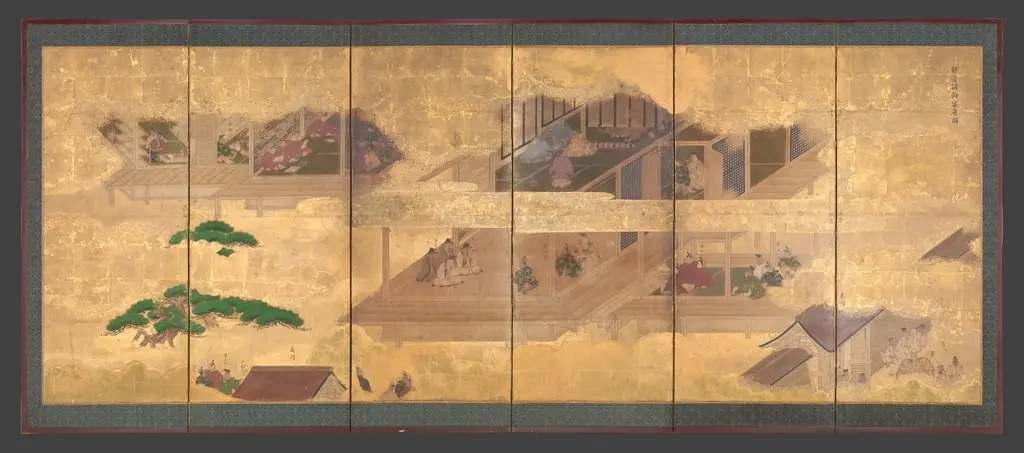 Scenes at the University with Images of the Ancient Sages; Debate and Banquet at the Administration Offices
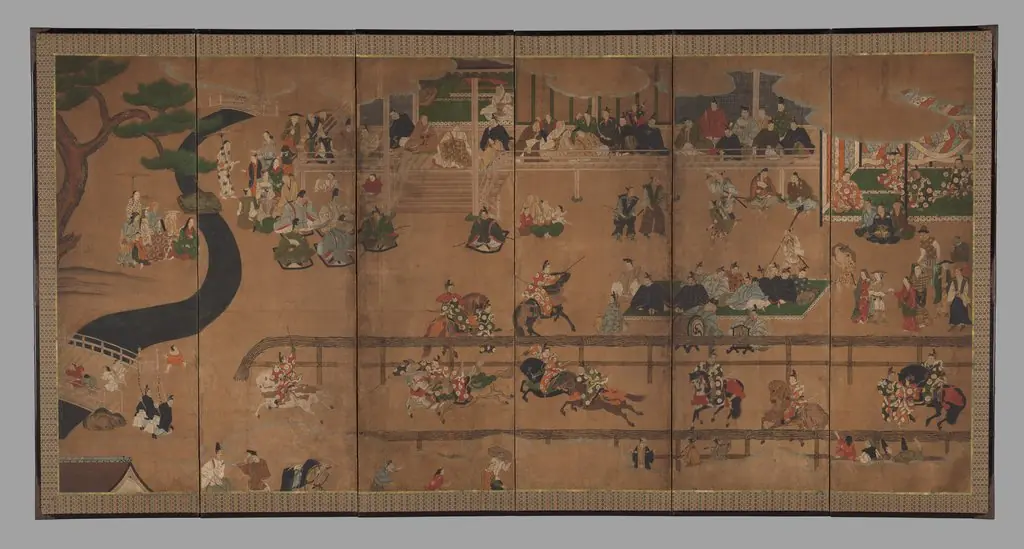 Horse Race at the Kamo Shrine (Kamo kurabeuma zu)
 Horse Stable
 Famous Views of Ōmi
 Scenes from the Tales of Ise
 Scenes from the Tales of Ise
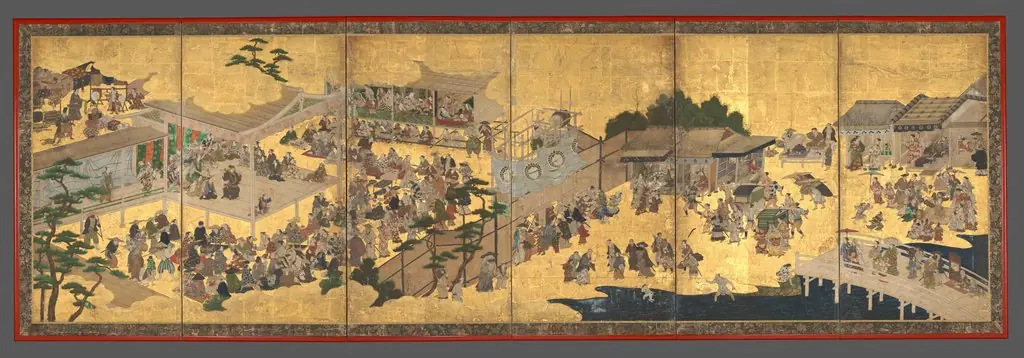 Women’s Kabuki
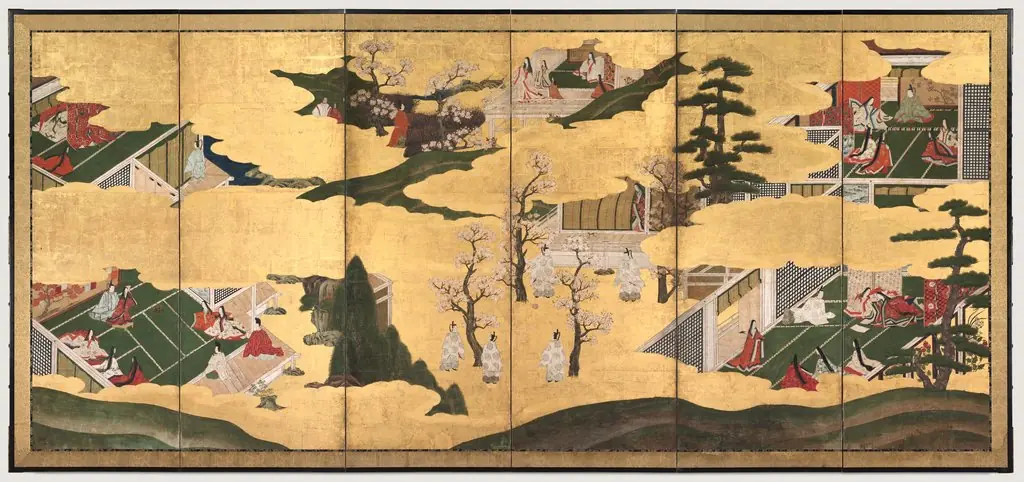 Scenes from the Tale of Genji
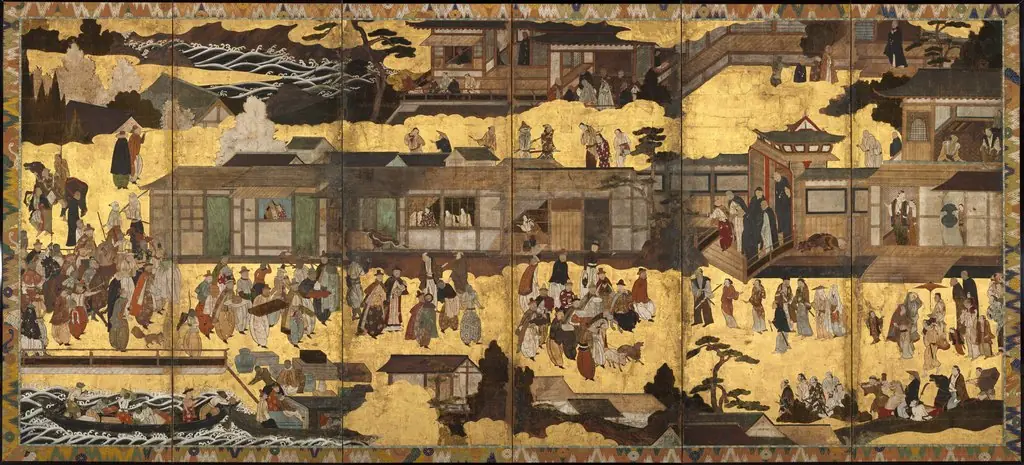 Arrival of the "Southern Barbarians"
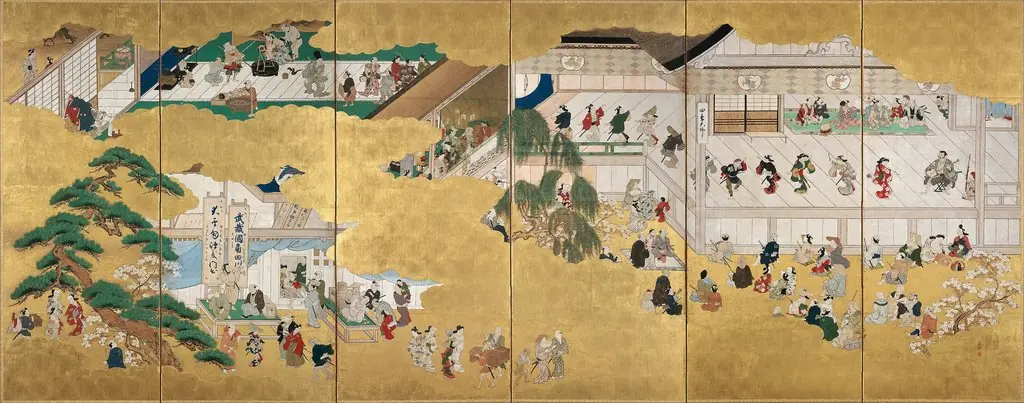 Scenes from the Nakamura Kabuki Theater