Artwork
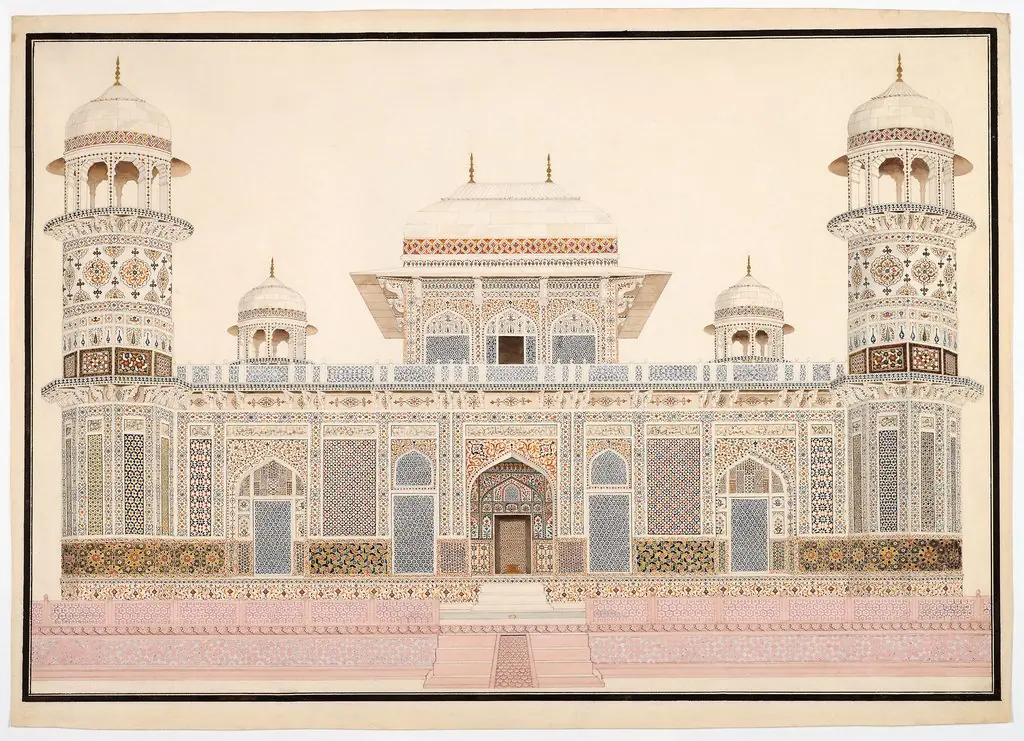
I'timad-ud-Daula's Tomb at Agra
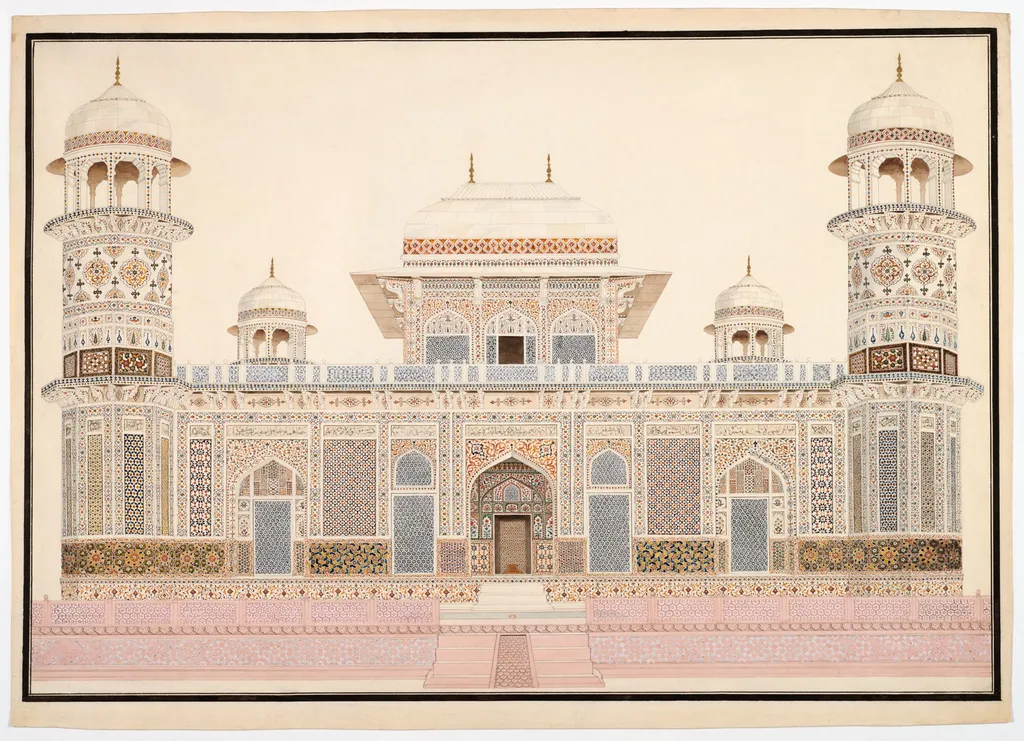
I'timad-ud-Daula's Tomb at Agra is a watercolor painting by the Mughal Painting artist Unknown. It dates from 1820 and is held in the collection of the Art Institute of Chicago.
- Accession no.
- 210482
- Credit line
- Purchased with funds provided by the Friends of Indian and Islamic Art of The Art Institute of Chicago
About this work
Overview
This watercolor on paper depicts the I'timad-ud-Daula's Tomb at Agra, showcasing its intricate architectural details. The tomb, built for Mirza Ghiyas Beg by his daughter, Mughal Empress Nur Jahan, exemplifies Mughal craftsmanship through its white marble and semiprecious stone inlays.
Subject & Meaning
The tomb honors Mirza Ghiyas Beg, a humble traveler who rose to become Prime Minister under Emperor Jahangir. Commissioned by Nur Jahan, it reflects her wealth and influence. Despite its modest size, the tomb's opulent design signifies the high status of its occupant.
Technique & Style
Executed in the Company style, this watercolor utilizes pencil, pen, ink, gold, and watercolor on J. Whatman paper. The artist meticulously rendered the pietra dura inlays and carved jali screens, demonstrating the style's emphasis on detailed documentation of Indian architecture and landscapes for British colonists.
History & Provenance
Created between the later 18th and mid-19th centuries, this piece aligns with the Company style's timeline, which flourished before the advent of photography. The exact artist remains unspecified, characteristic of many Company style works produced by both British and Indian artists.
Context
Produced in an era of British interest in cataloging Indian sights, this drawing served as a visual record of Mughal architectural achievement. It highlights the cultural exchange and documentation efforts of the time, capturing the tomb's construction details (1622-1628) with precision.
Legacy
This watercolor contributes to the historical record of I'timad-ud-Daula's Tomb, preserving its 17th-century appearance. As part of the Company style corpus, it also illustrates the artistic and documentary practices of the British East India Company era in India.
Artist & collection









- I'timad-ud-Daula's Tomb at Agra
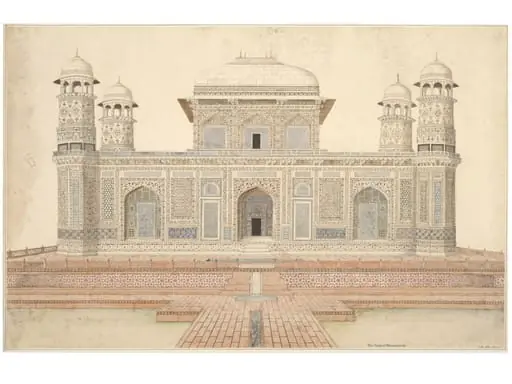 The facade of the tomb of I'timad ad-daula and his wife Asmat Begum, Agra.
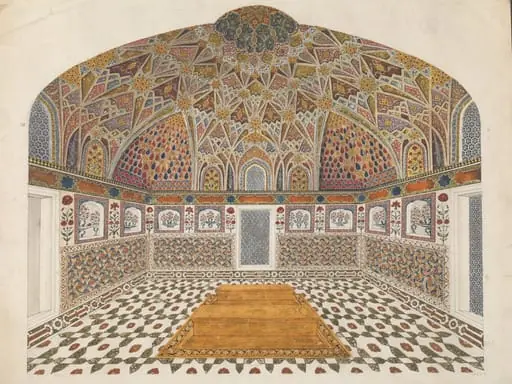 Interior of I'timad ad-Daula's tomb
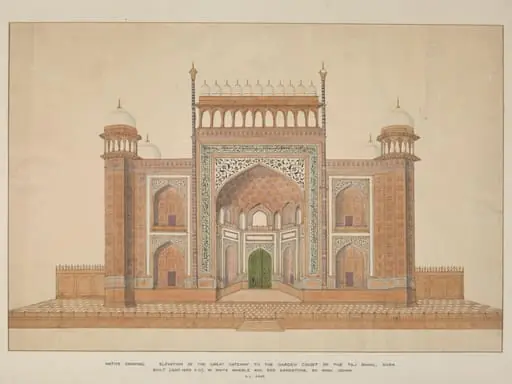 Gateway to the Taj Mahal
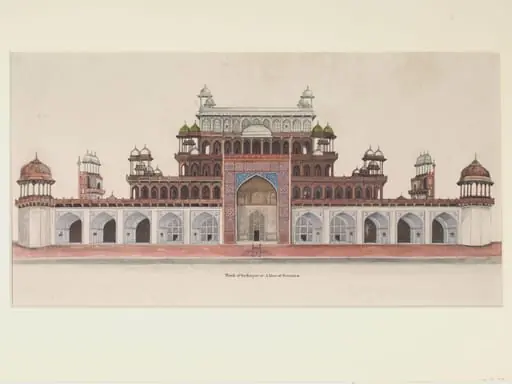 Elevation of the front of the mausoleum of the Emperor Akbar at Sikandra near Agra
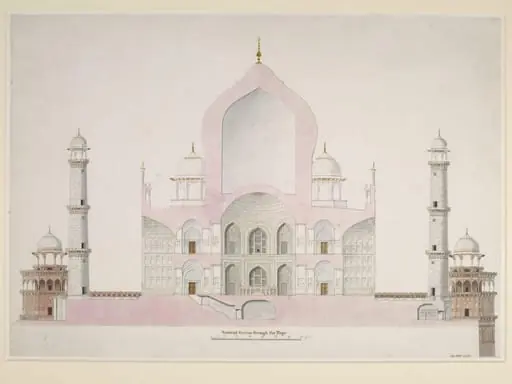 Vertical Section through the Tage
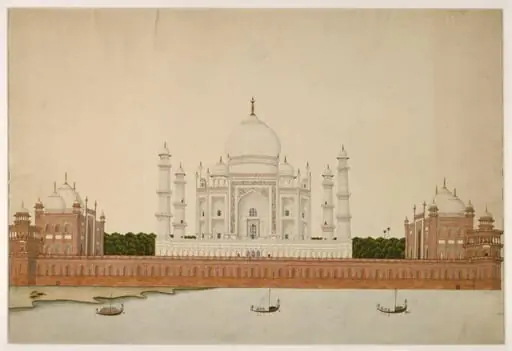 The Taj Mahal
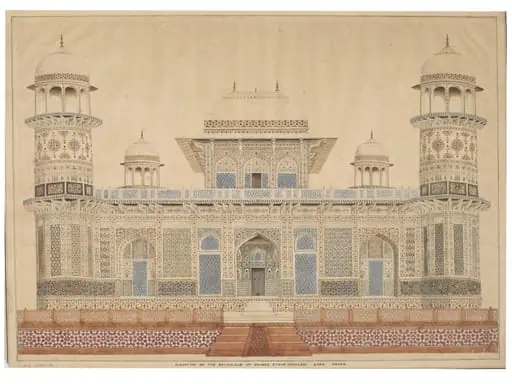 Mausoleum of Itimad ud-Daula.
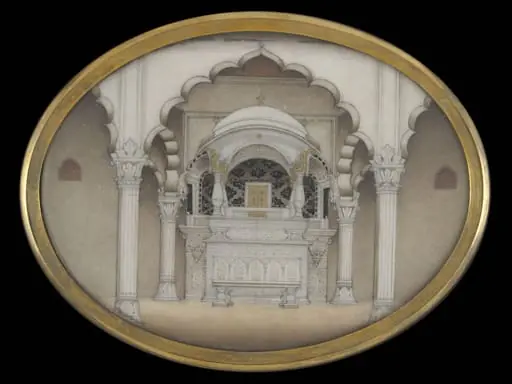 One of five views of Delhi and one of Lahore.
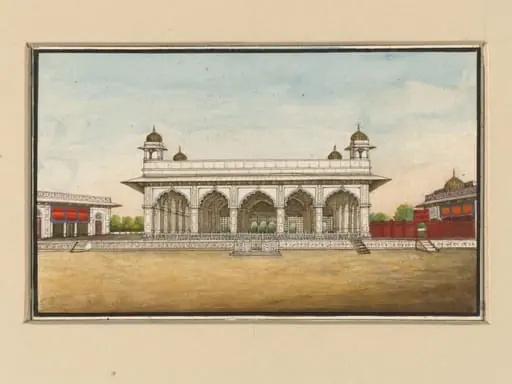 One of four drawings of Mughal architecture.
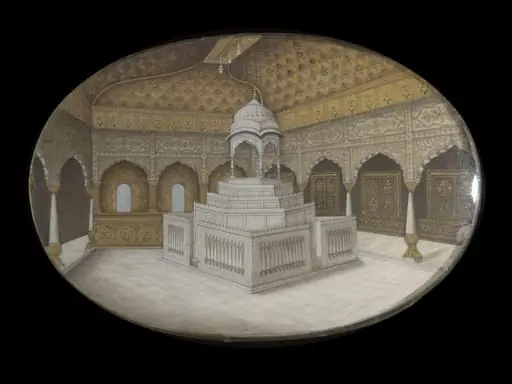 A Mughal tomb.