Artwork
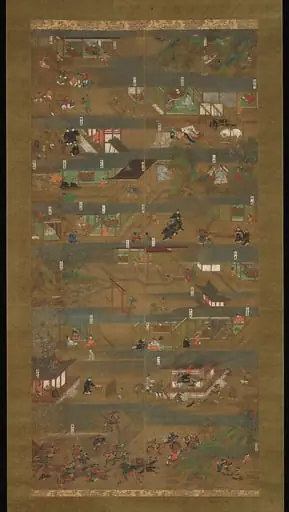
聖徳太子絵伝図|Illustrated Biography of Prince Shōtoku (Shōtoku Taishi e-den)
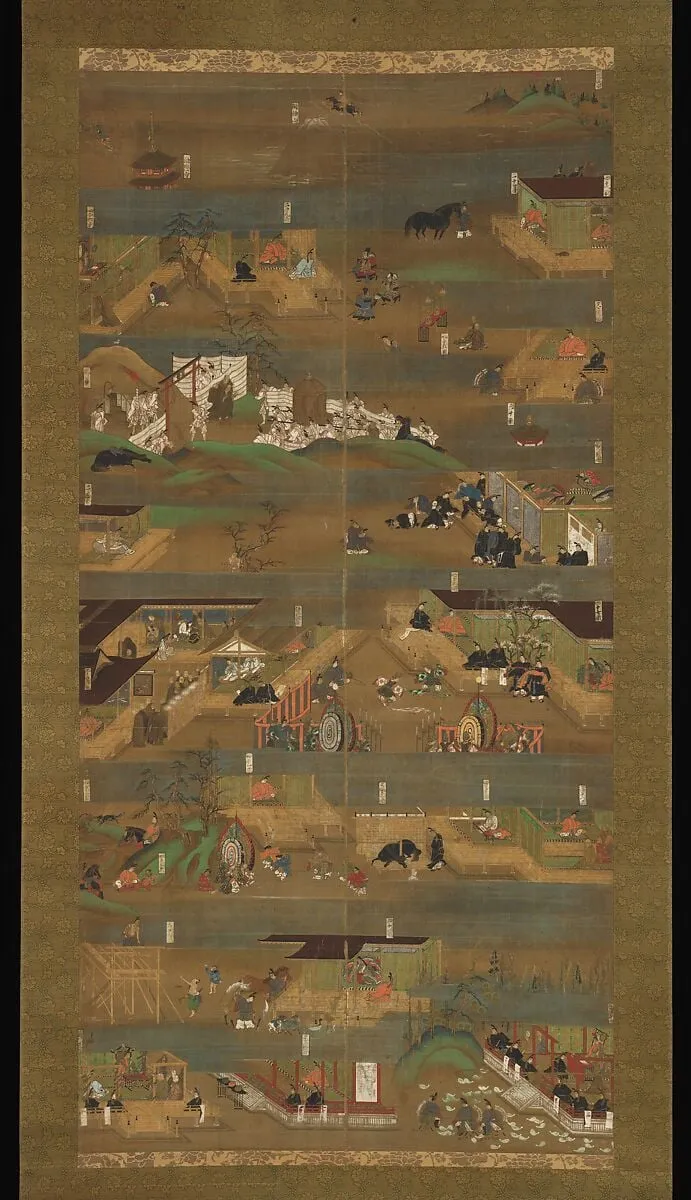
聖徳太子絵伝図|Illustrated Biography of Prince Shōtoku (Shōtoku Taishi e-den) is an ink painting. It dates from 1316 and is held in the collection of the Metropolitan Museum of Art. This painting, titled Illustrated Biography of Prince Shōtoku (Shōtoku Taishi e-den), is one of a pair of hanging scrolls.
- Accession no.
- 29.100.470
- Credit line
- H. O. Havemeyer Collection, Bequest of Mrs. H. O. Havemeyer, 1929
About this work
Subject & Meaning
The hanging scroll titled Illustrated Biography of Prince Shōtoku depicts narrative scenes that feature a dancer, a horse and a male figure, according to the work’s cataloguing data. These iconographic elements refer to episodes associated with the semi‑legendary Prince Shōtoku, emphasizing his role in the spread of Buddhism and his political authority in early Japan. By visualising these subjects the painting conveys both historical narrative and devotional meaning, reflecting the cultural and religious context of the Asuka period.
History & Provenance
The museum assigns the work the specific accession number 29.
The Illustrated Biography of Prince Shōtoku (Shōtoku Taishi e-den), created in 1316, is currently held in the collection of the Metropolitan Museum of Art in New York. The museum assigns the work the specific accession number 29.100.470. This hanging scroll, executed in ink, color, and gold on silk by an anonymous Japanese painter, constitutes one of a pair depicting scenes from the prince's life.
While the provided records confirm its institutional location and cataloging details, the available source material does not contain specific information regarding past or future exhibition histories for this particular artwork.
Overview
This painting, titled Illustrated Biography of Prince Shōtoku (Shōtoku Taishi e-den), is one of a pair of hanging scrolls. Executed with ink, color, and gold on silk, it depicts a narrative scene from Japanese history. The artwork serves to recount episodes from the life of Prince Shōtoku, a pivotal figure whose influence shaped early Japanese culture and governance. Its format as a hanging scroll is characteristic of traditional East Asian painting.
Technique & Style
Rendered with ink, color, and gold on silk, this painting exemplifies traditional Japanese scroll painting techniques. The use of vibrant pigments alongside metallic gold accents would have created a rich visual effect, enhancing the narrative's impact. The depiction of figures, including men, horses, and dancers, suggests a dynamic composition, characteristic of biographical narratives intended to convey movement and event. The silk medium itself provides a smooth surface for intricate detail.
Artist & collection

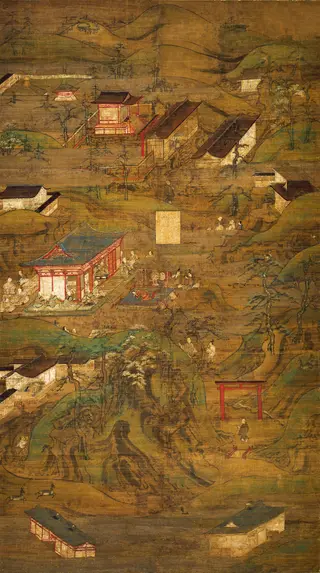 Illustrated Legends of the Tenchi-in (Tenchi-in engi)
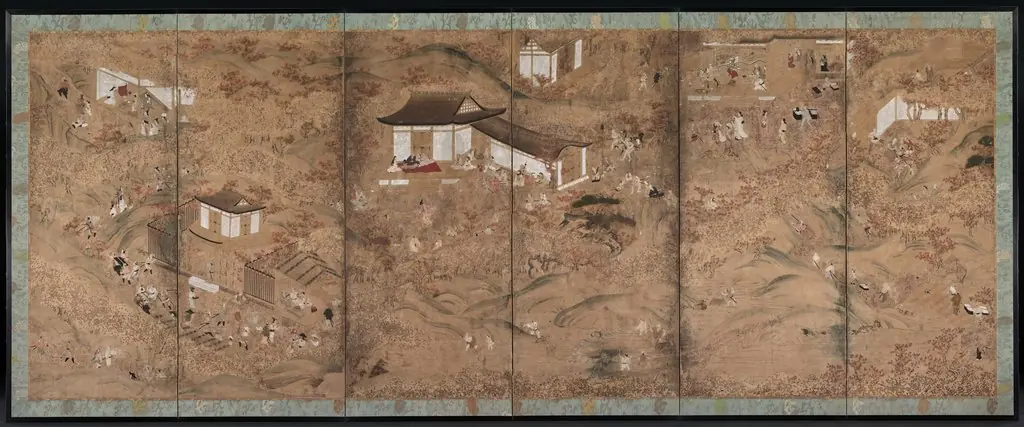 Autumn in the Mountains
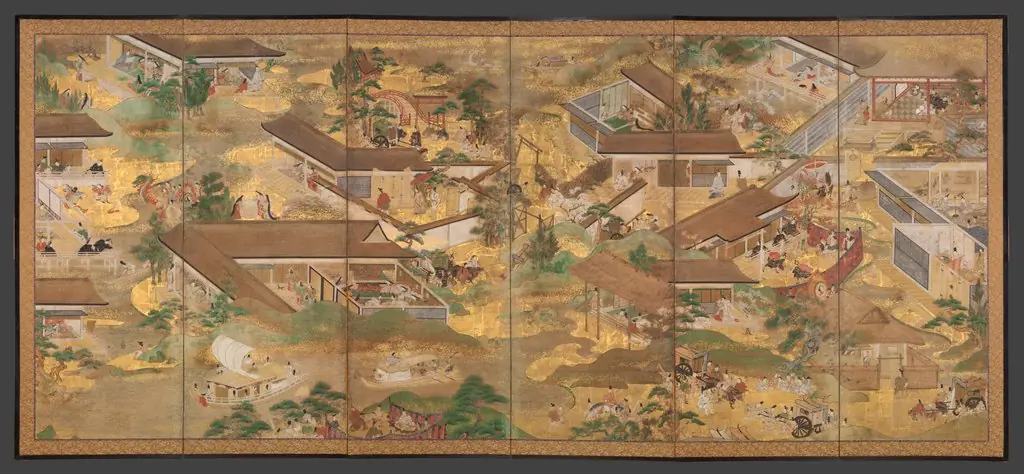 Fifty-Four Scenes from The Tale of Genji
 春日宮曼荼羅 (Kasuga miya mandara)|Mandala of Kasuga Shrine
 五代董源江堤晚景 軸
 Pastimes and Pleasures in the Eastern Hills of Kyoto
 Scenes from the Tales of Ise
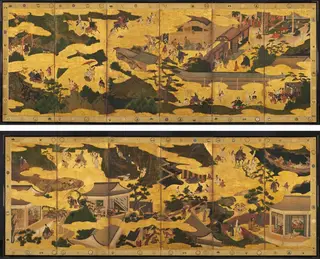 Scenes from the Tales of Ise
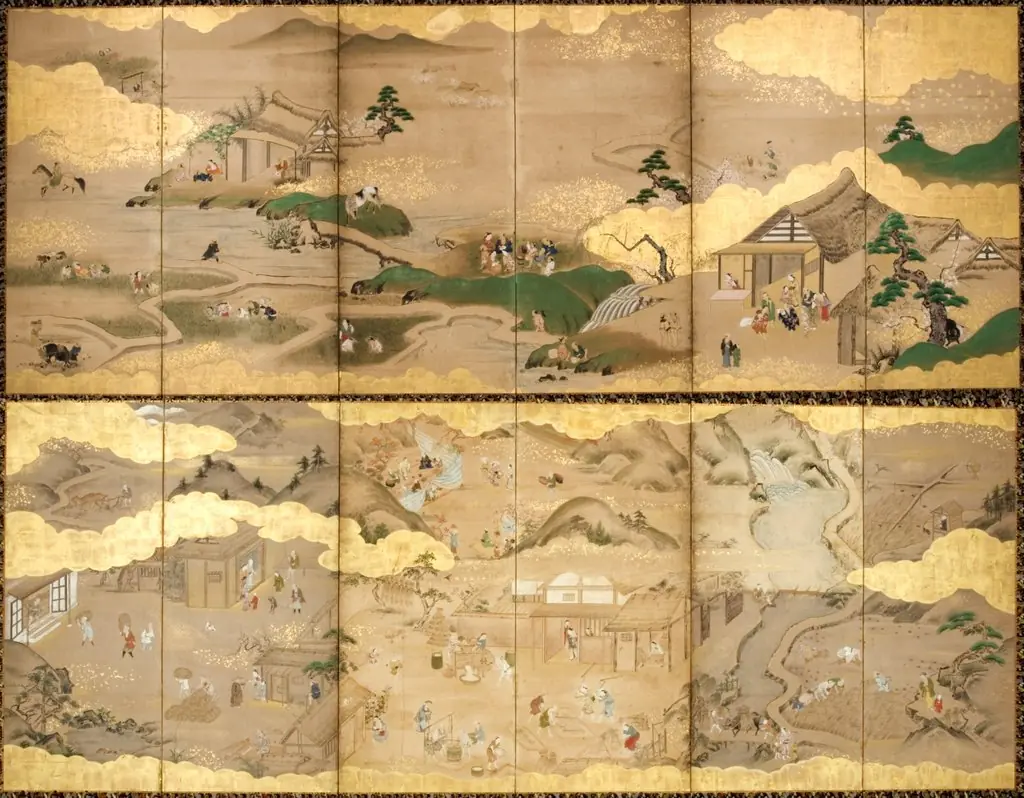 Rice Cultivation through the Four Seasons
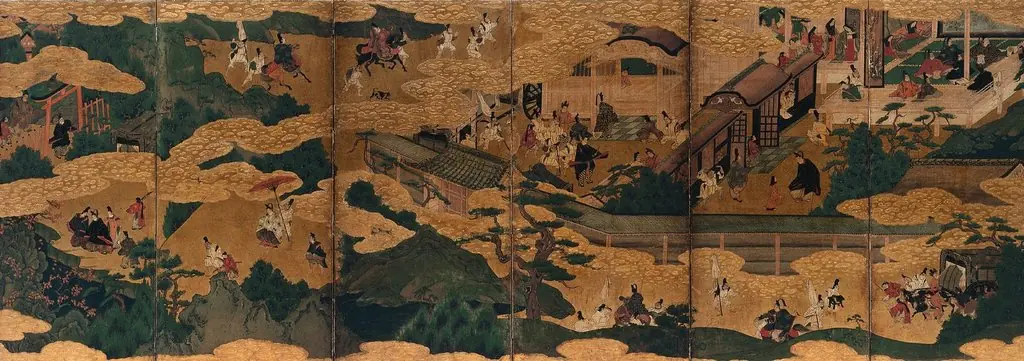 Scenes from the Tales of Ise
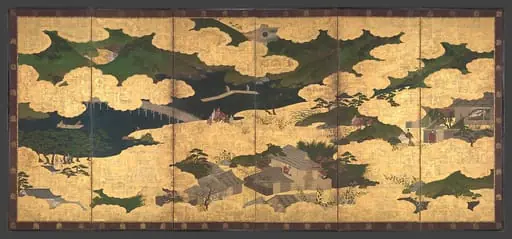 平家物語図屏風 「小督」 「大原御幸」|"Kogō" and "The Imperial Procession to Ōhara", from The Tale of the Heike (Heike monogatari)
- 聖徳太子絵伝図|Illustrated Biography of Prince Shōtoku (Shōtoku Taishi e-den)