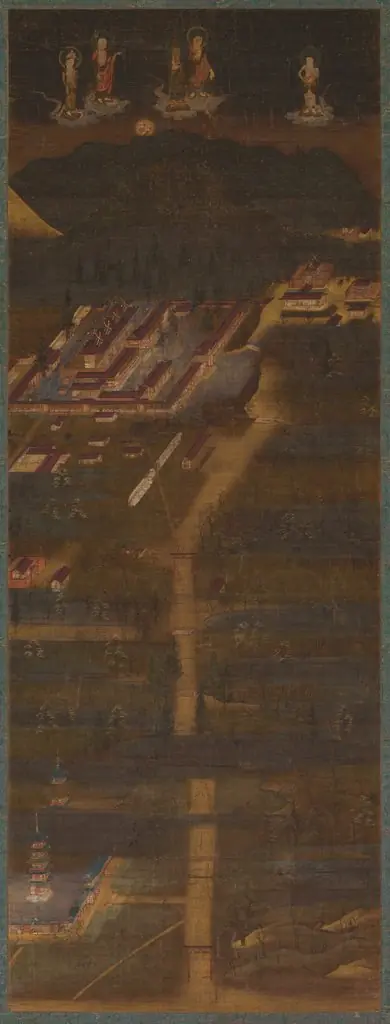
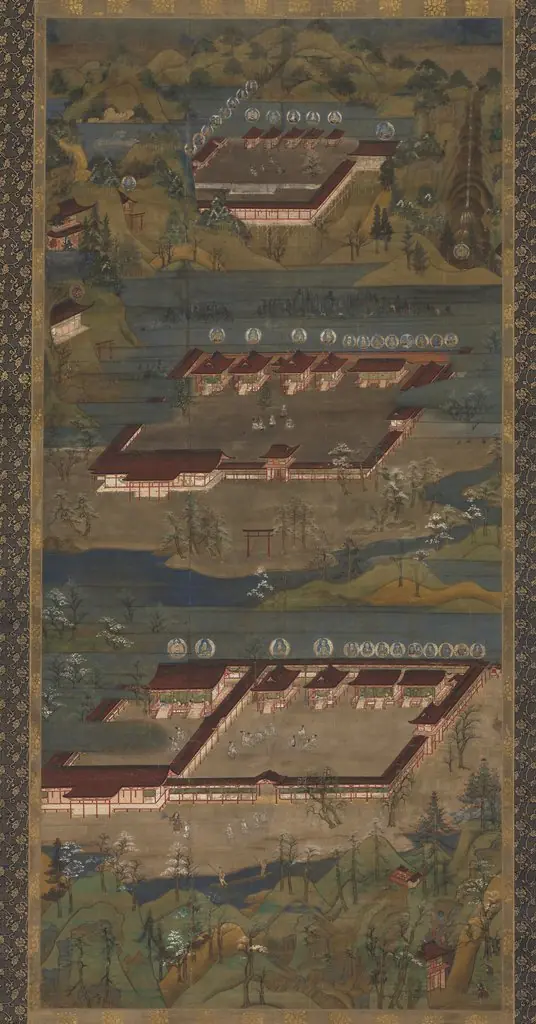
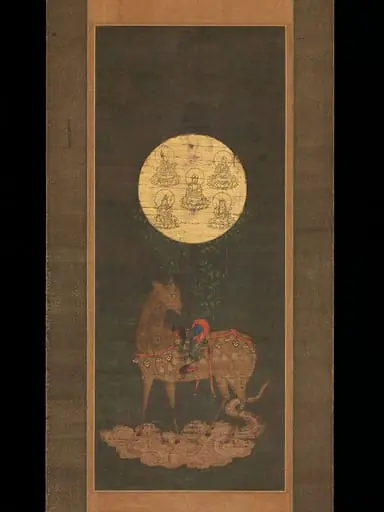
Artwork
春日宮曼荼羅 (Kasuga miya mandara)|Mandala of Kasuga Shrine
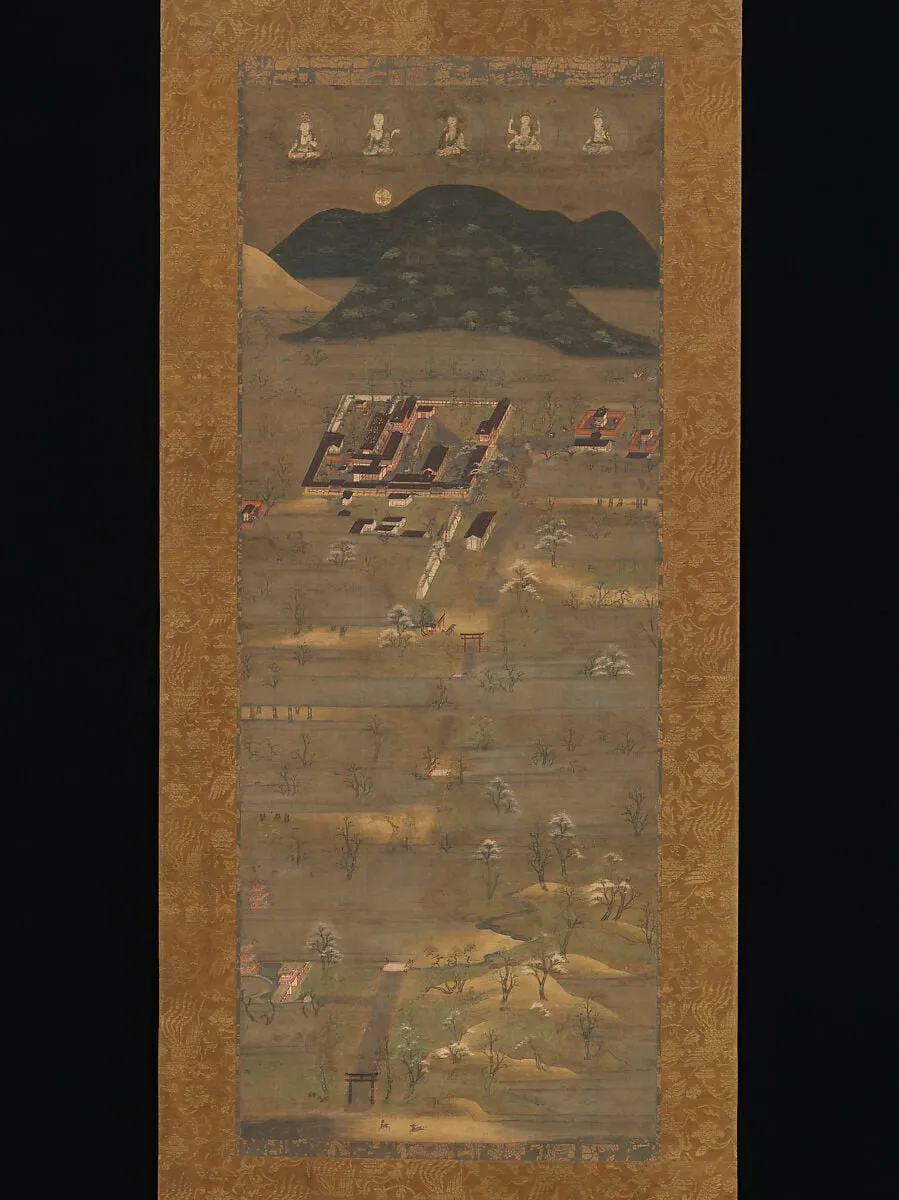
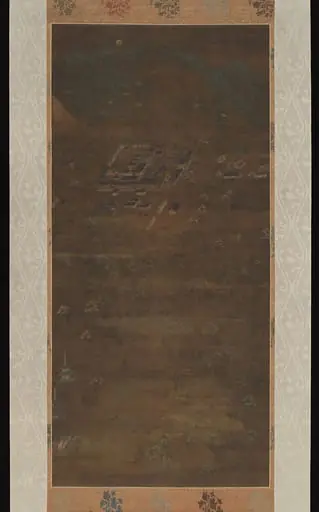
春日宮曼荼羅 (Kasuga miya mandara)|Mandala of Kasuga Shrine is an ink painting. It dates from 1316 and is held in the collection of the Metropolitan Museum of Art. The "Mandala of Kasuga Shrine" is a hanging scroll crafted with ink, color, and gold on silk.
About this work
Subject & Meaning
The hanging scroll titled 春日宮曼荼羅 (Kasuga miya mandara), also called the Mandala of Kasuga Shrine, was created in 1316 using ink, color, and gold on silk.
The hanging scroll titled 春日宮曼荼羅 (Kasuga miya mandara), also called the Mandala of Kasuga Shrine, was created in 1316 using ink, color, and gold on silk. Executed as a devotional landscape painting, it depicts the sacred precinct of the Kasuga Shrine together with the Buddhist deities understood as the honji (original forms) of its Shinto gods, situating the work within the syncretic honji-suijaku tradition of medieval Japan. The composition functions as a mandala that visualizes sacred geography and devotional focus, reflecting the ritual significance of the Kasuga Shrine in Kamakura-period Japan.
Its iconography emphasizes the presence of enlightened beings and the spiritual order central to the cult of the shrine.
History & Provenance
The Mandala of Kasuga Shrine, known in Japanese as 春日宮曼荼羅, is a hanging scroll painted in ink, color, and gold on silk, dated to 1316. It portrays Buddhist figures, including bodhisattvas and a Buddha, within a landscape composition representing the shrine precinct. The work is attributed to an anonymous Japanese painter and belongs to the landscape painting genre.
Since its creation in Japan, the scroll has entered the collection of the Metropolitan Museum of Art in New York, where it is shown as a representative example of fourteenth-century devotional art. No records detail a specific commissioning patron or an explicit ownership chain prior to its acquisition by the museum.
Overview
The "Mandala of Kasuga Shrine" is a hanging scroll crafted with ink, color, and gold on silk. This painting depicts the actual Kasuga Shrine in Nara, functioning as a sacred map. It illustrates the syncretic religious practices of medieval Japan by integrating Buddhist deities with indigenous Shinto gods, reflecting a period of spiritual convergence.
Technique & Style
Executed as a hanging scroll, this work utilizes ink, vibrant colors, and extensive gold on silk. The composition features a red-roofed shrine set within verdant hills, populated by small figures in white robes. Notably, the liberal application of gold leaf, appearing as glowing clouds, transcends mere ornamentation; it is intended to evoke a sense of divine radiance and spiritual illumination within the depicted landscape.
Artist & collection

 Chōmeiji Temple Pilgrimage Mandala
 聖徳太子絵伝図|Illustrated Biography of Prince Shōtoku (Shōtoku Taishi e-den)
 Mandala of the Three Shrines at Kumano
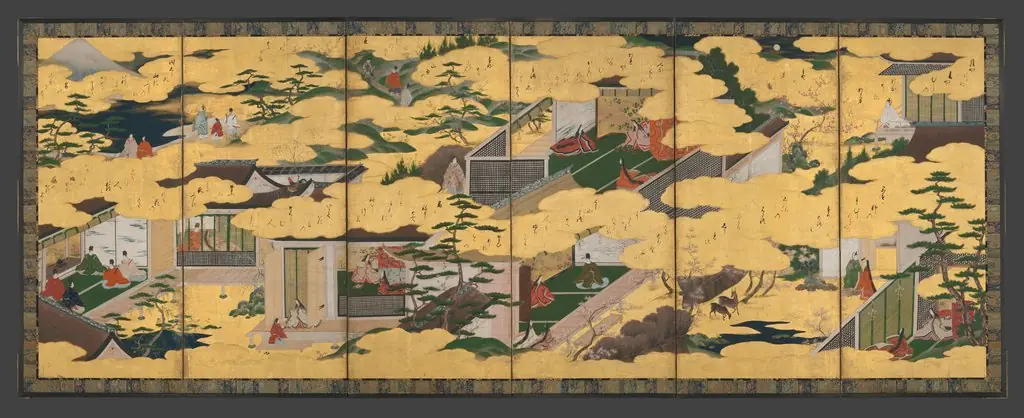 Scenes from the Tales of Ise
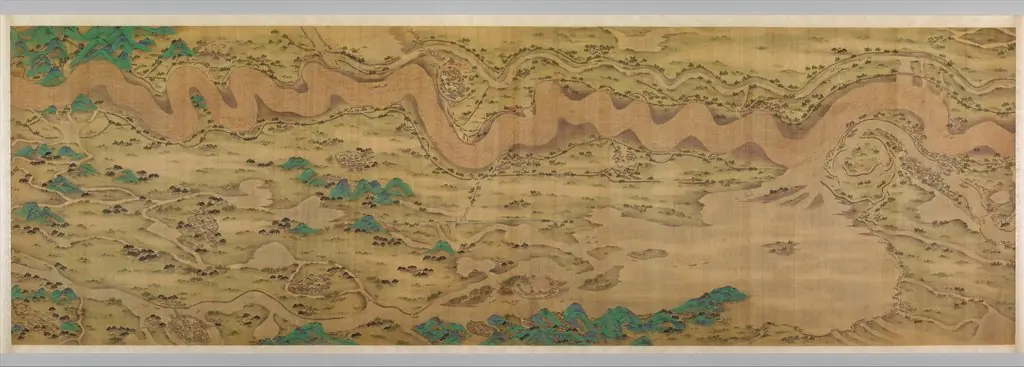 Ten Thousand Miles along the Yellow River
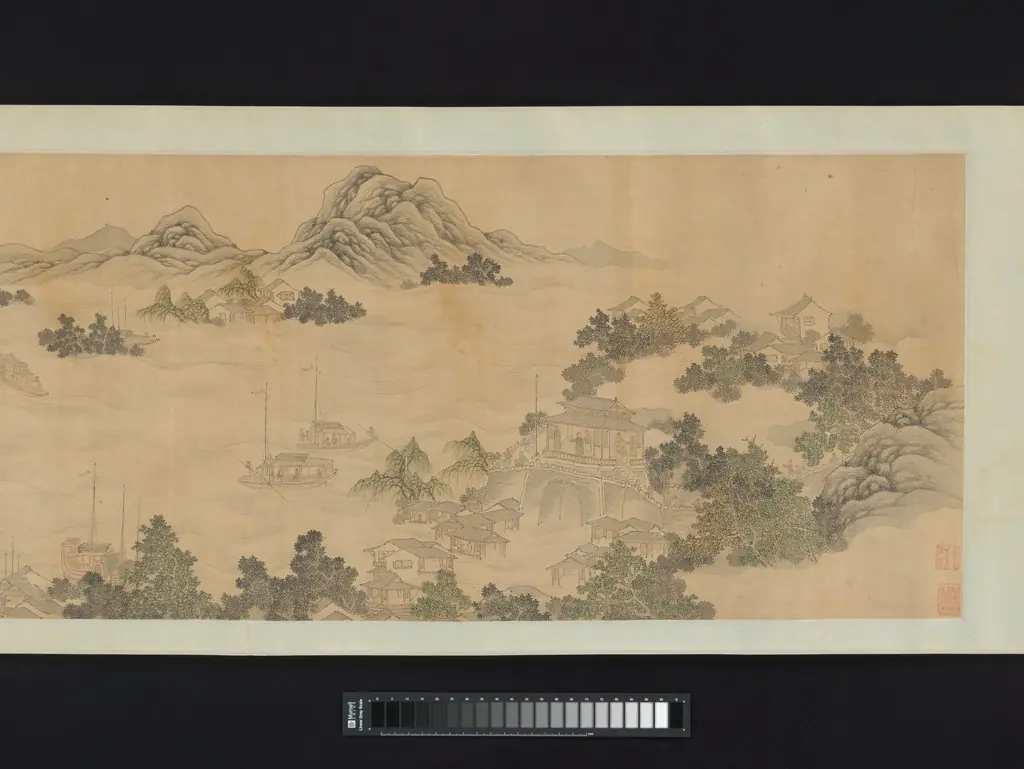 Reminiscence of Jinling
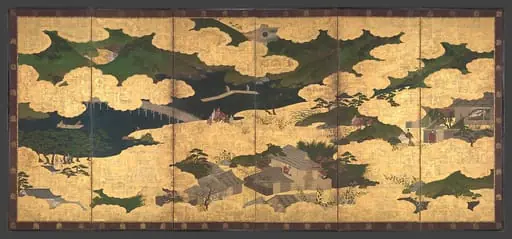 平家物語図屏風 「小督」 「大原御幸」|"Kogō" and "The Imperial Procession to Ōhara", from The Tale of the Heike (Heike monogatari)
 Landscapes