Artwork
Fifty-Four Scenes from The Tale of Genji
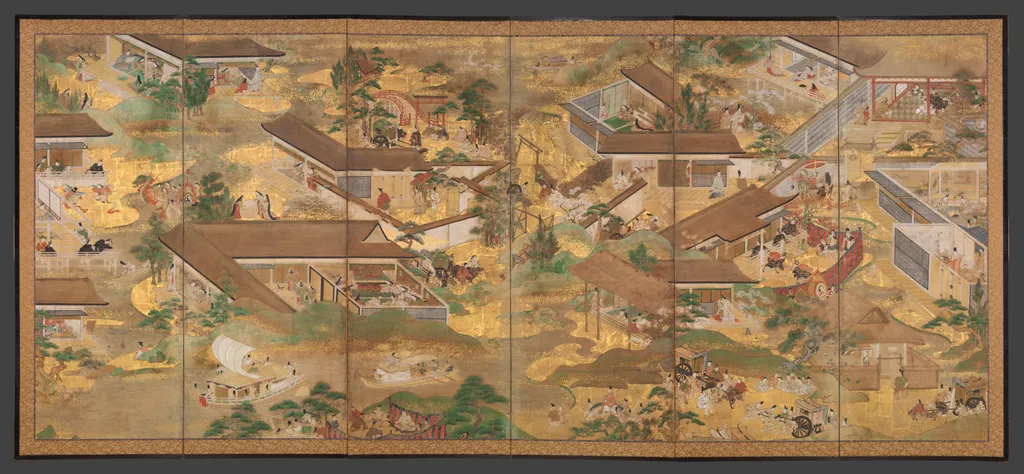
Fifty-Four Scenes from The Tale of Genji is an unspecified painting. It dates from 1692 and is held in the collection of the Metropolitan Museum of Art.
About this work
Technique & Style
The painting shows signs of handling through minor pigment loss at fold lines and surface abrasions consistent with repeated mounting and unrolling cycles.
The work was painted in 1683 on a Japanese support using traditional pigment application methods characteristic of late Edo period scroll painting. The composition follows Genji narrative cycles with flattened perspective and stylized figure rendering.
The painting shows signs of handling through minor pigment loss at fold lines and surface abrasions consistent with repeated mounting and unrolling cycles.
Formal analysis reveals restrained color fields and calligraphic line work that emphasize narrative clarity over naturalistic detail.
History & Provenance
The fifty-four scenes attributed to the Genroku period (1683) are documented as a set of handscroll paintings in ink and color on silk, created in Japan during the late seventeenth century. The set is recorded in the collection of the Metropolitan Museum of Art, where it is identified as an anonymous work dated to 1683. No direct archival evidence links the scrolls to a named patron or commissioner, and the artist remains unattributed in institutional records.
The Metropolitan Museum’s entry confirms the work’s Japanese origin and assigns the date 1683 as the year of inception, aligning with the Genroku era’s cultural milieu.
The handscroll painting Fifty-Four Scenes from The Tale of Genji, created in 1683, is part of the permanent collection of the Metropolitan Museum of Art. The work is attributed to an anonymous artist and was produced in Japan. While the specific inventory or accession number is not provided in the available records, the museum holds the piece as a significant example of late 17th-century Japanese painting. No specific exhibition history is documented in the provided sources.
Overview
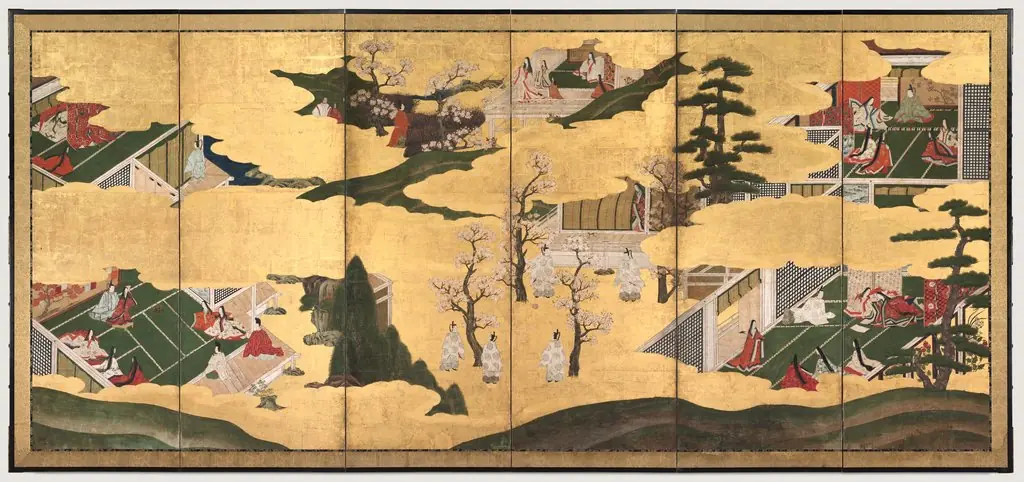
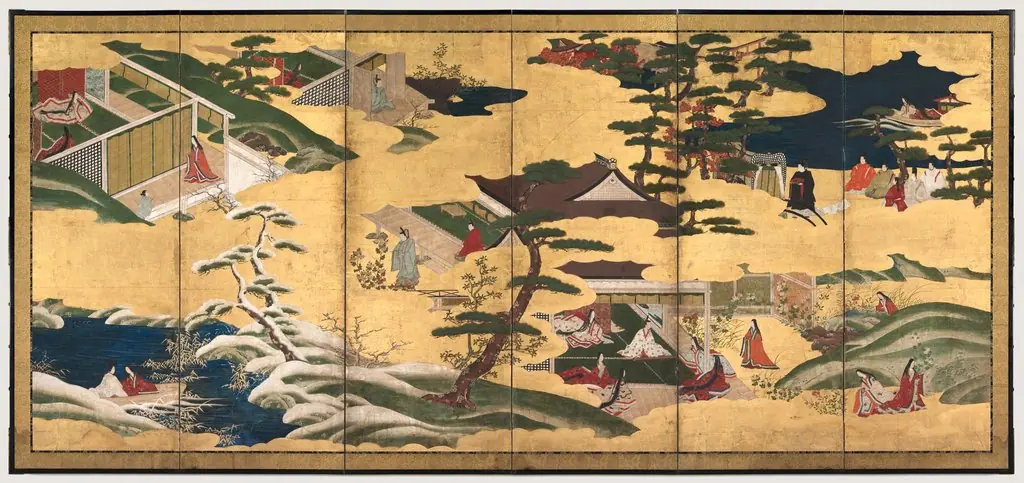
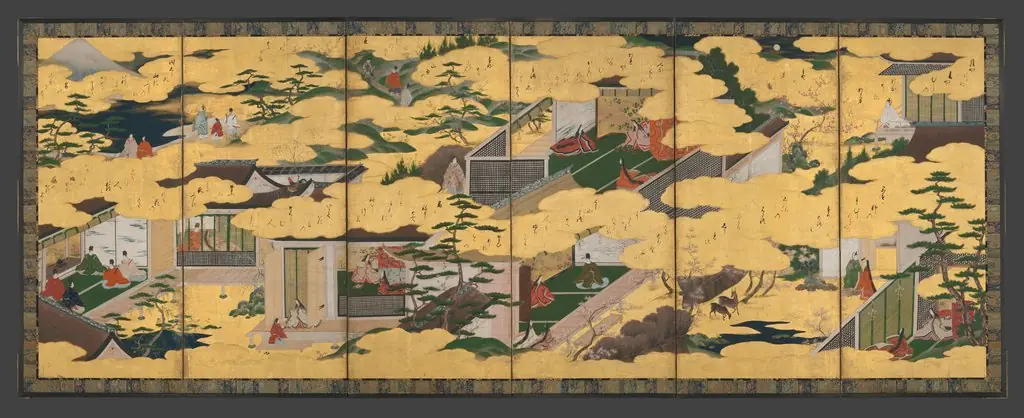
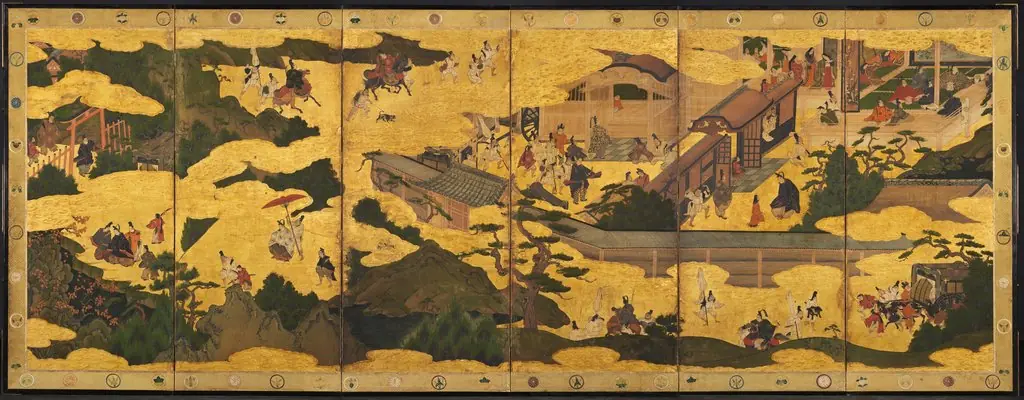
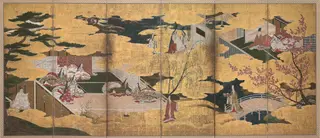
Fifty‑Four Scenes from The Tale of Genji is a multi‑panel folding screen that presents a dense visual narrative across a continuous landscape. The work arranges a succession of miniature vignettes, gardens, bridges, and figures in traditional robes, into a seamless scroll, inviting viewers to wander through the episodic world of the classic Japanese novel.
Subject & Meaning
Each vignette illustrates a moment from Murasaki Shikibu’s Tale of Genji, portraying courtly life, romantic encounters, and solitary contemplation. The juxtaposition of bustling gatherings with quiet scenes beside ponds or under trees reflects the novel’s themes of impermanence and the nuanced interplay between public ceremony and private emotion.
Artist & collection

- Scenes from the Tale of Genji
 Scenes from the Tale of Genji
 Scenes from the Tale of Genji
 Scenes from the Tales of Ise
 Scenes from the Tale of Genji
 Scene from "The Tale of Genji": from the chapter "The Maiden"
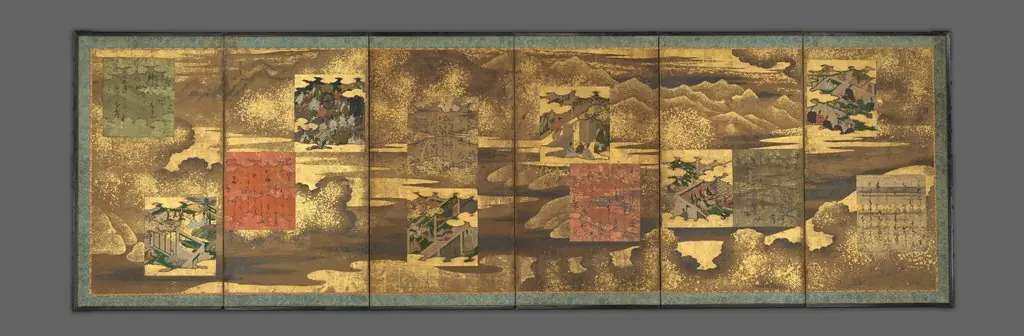 Tale of Genji Screen (Genji monogatari zu shikishi harimaze byōbu)
 Scenes from the Tales of Ise
 Genji Monogatari
 Scenes from The Tale of Genji (Genji monogatari)
 Scenes from the Tale of Genji
 The Tale of Genji
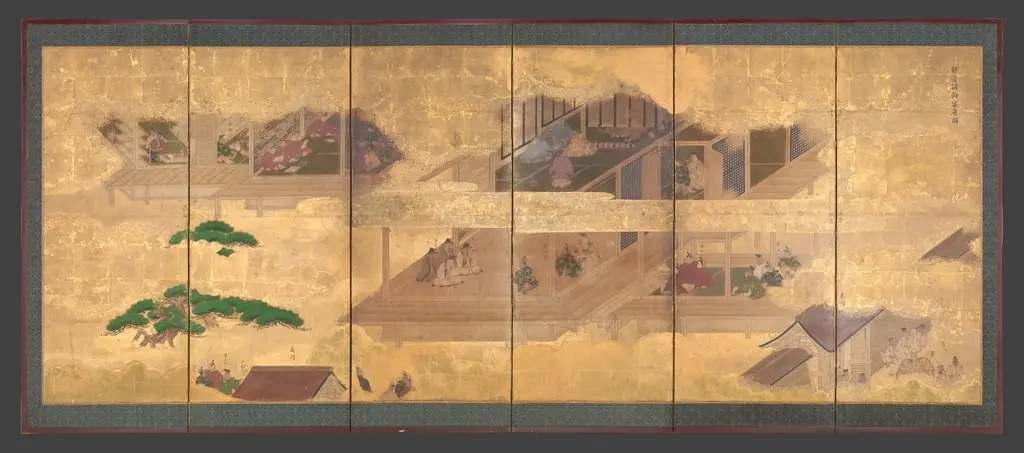 Scenes at the University with Images of the Ancient Sages; Debate and Banquet at the Administration Offices
 Spring and Autumn Farming (Autumn)
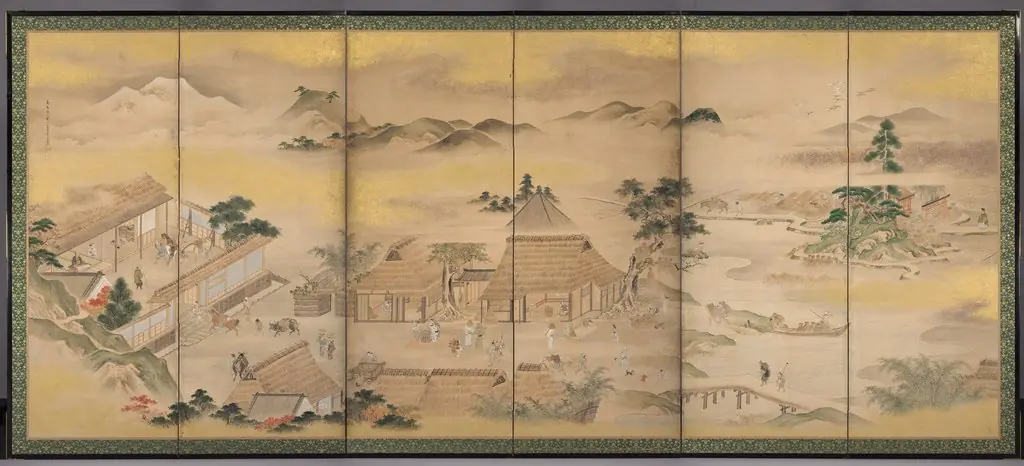 Spring and Autumn Farming (Autumn)
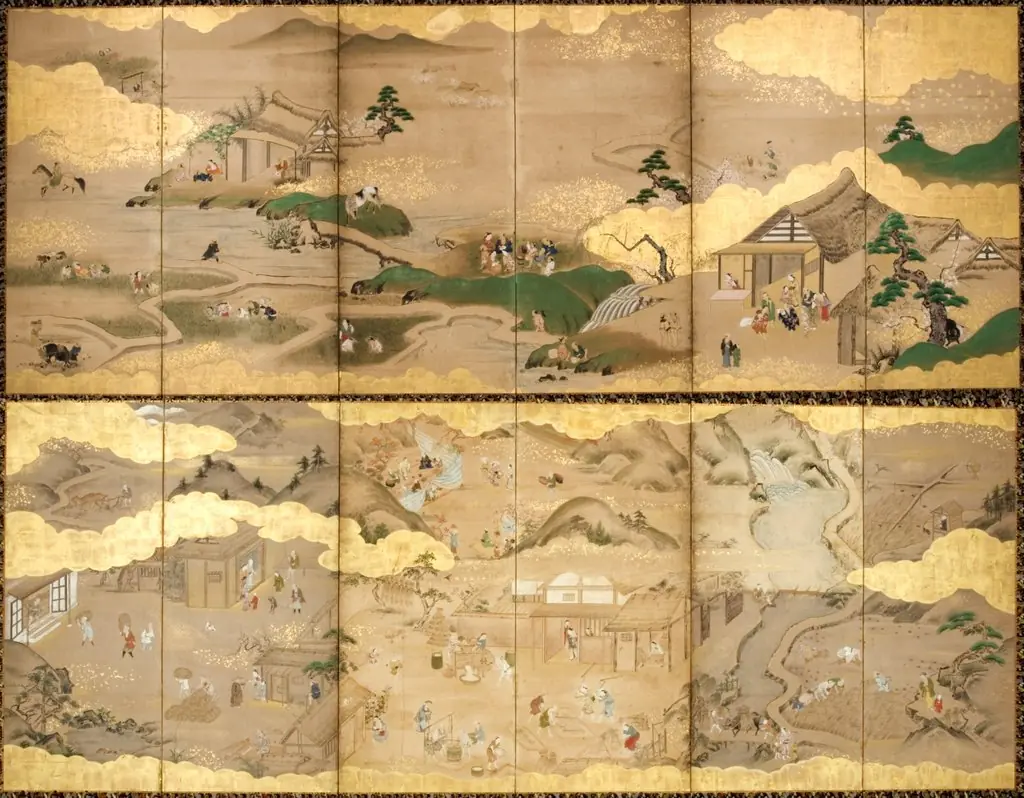 Rice Cultivation through the Four Seasons
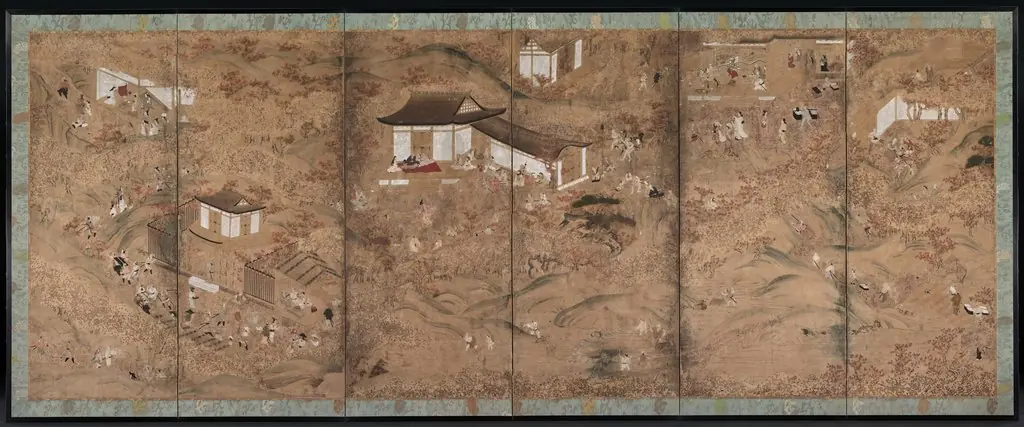 Autumn in the Mountains
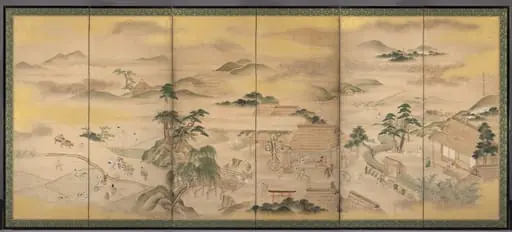 Spring and Autumn Farming (Spring)
 Genre Scenes (Fuzoku byobu)
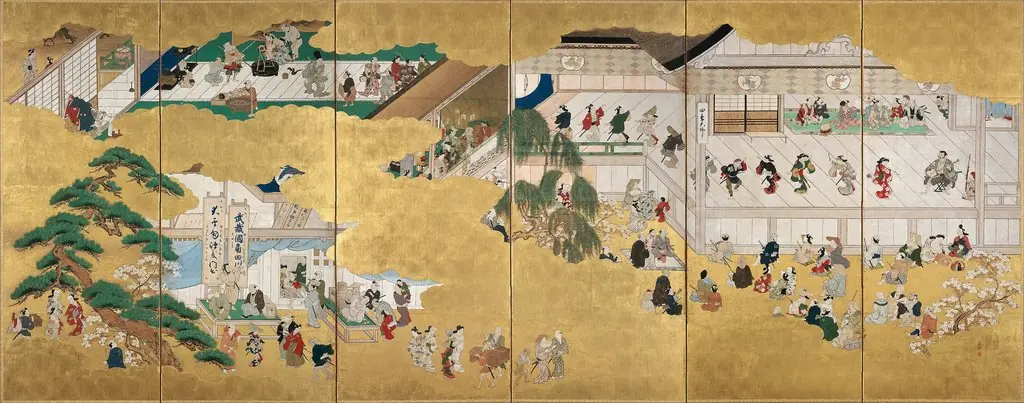 Scenes from the Nakamura Kabuki Theater
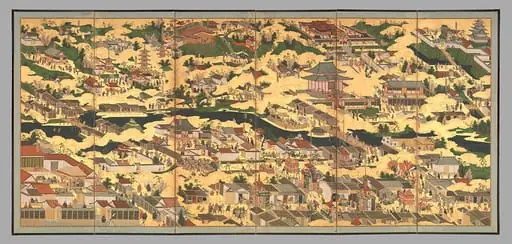 洛中洛外図屏風|Scenes in and around the Capital
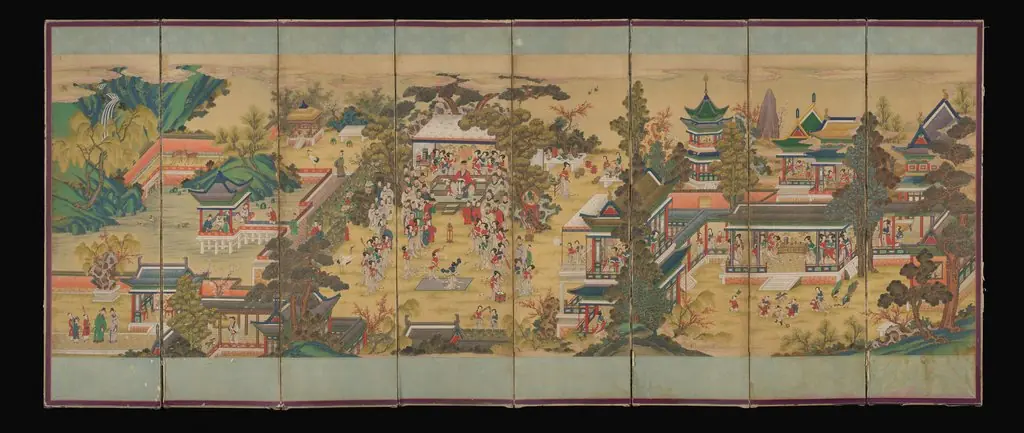 The Banquet of Guo Ziyi