Artwork
Kalighat Painting
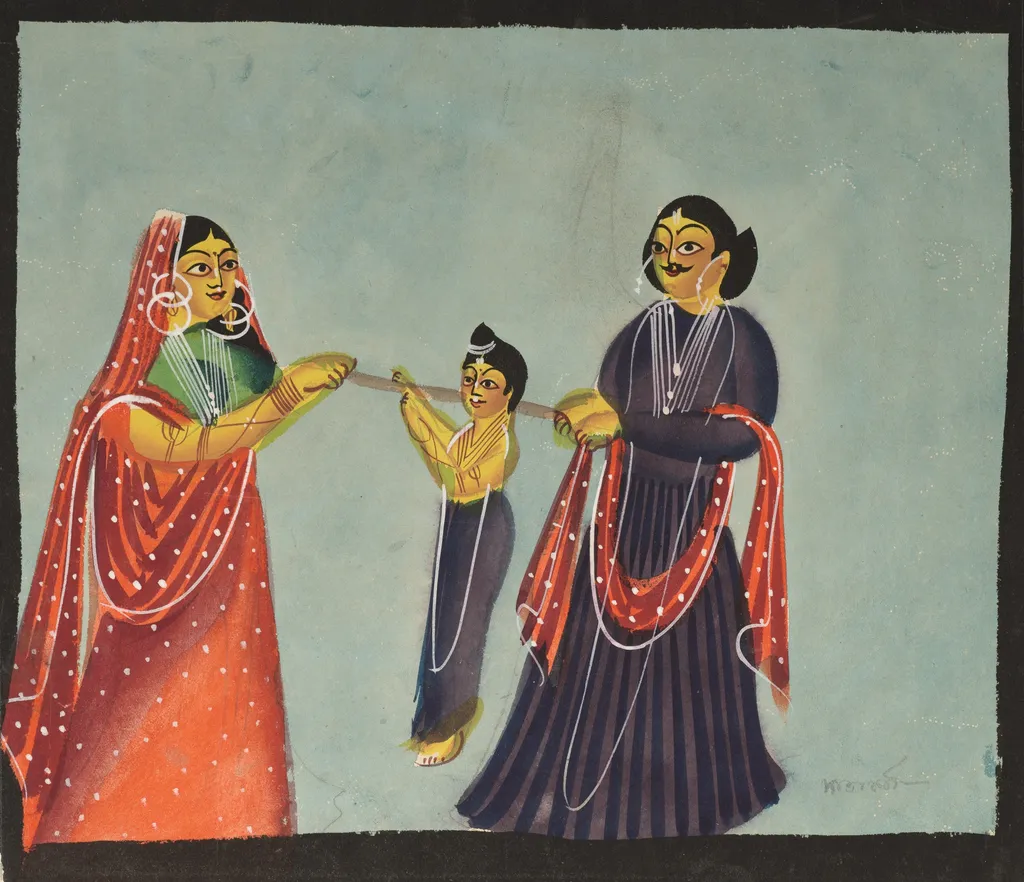
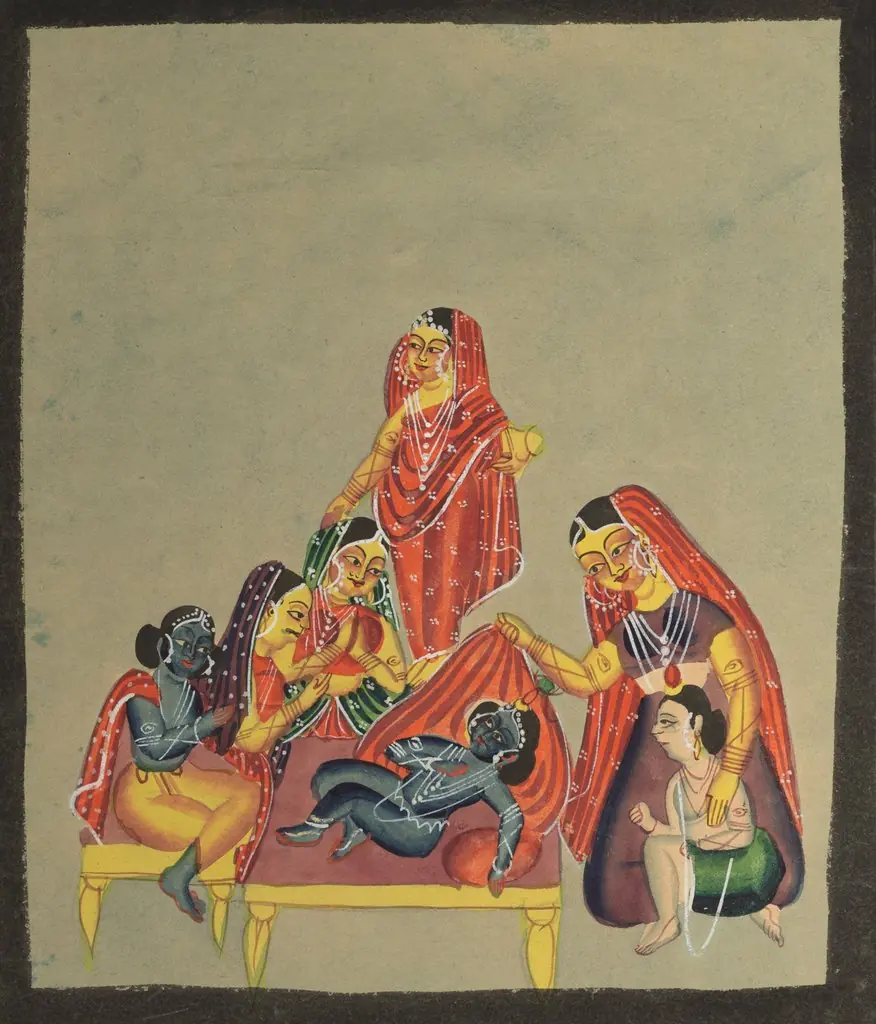
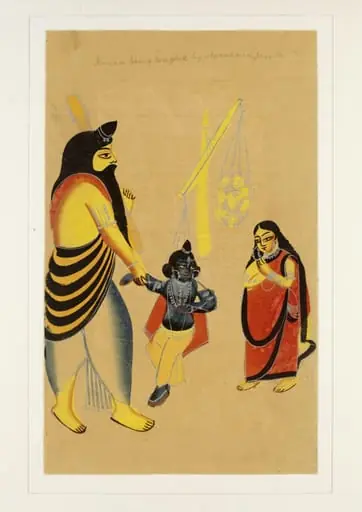
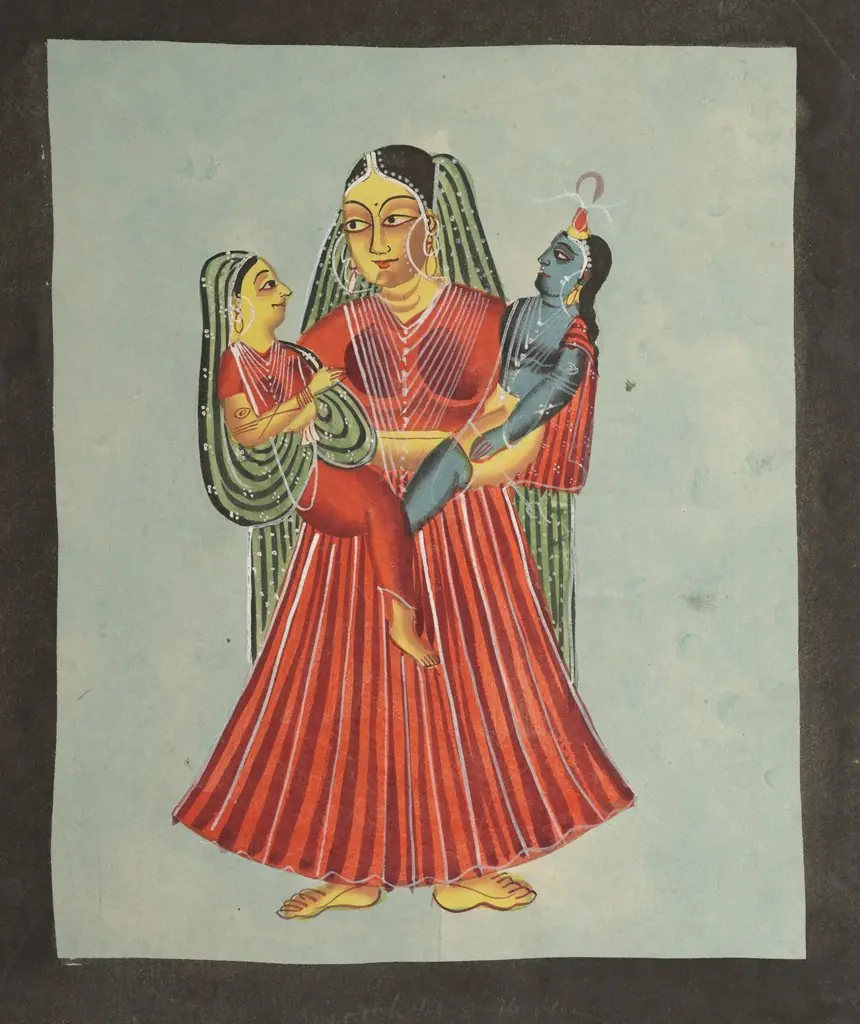
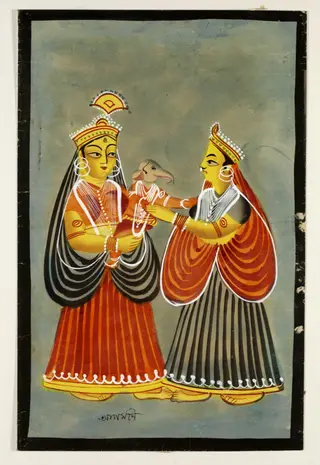
Kalighat Painting is an unspecified painting. It dates from 1896 and is held in the collection of the Cleveland Museum of Art. The work belongs to the Kalighat school of painting, a 19th‑century genre that emerged in the vicinity of the Kalighat temple in Calcutta.
About this work
Subject & Meaning
Kalighat paintings originated in 19th-century Kolkata and depict a wide range of subjects rooted in Hindu mythology, everyday life, and social satire.
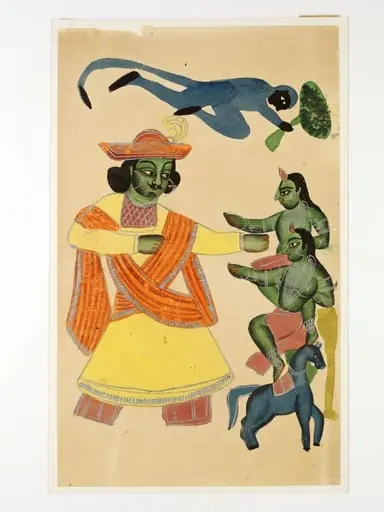
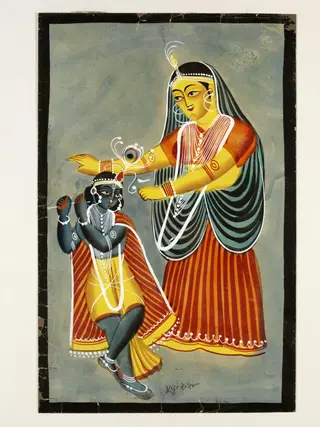
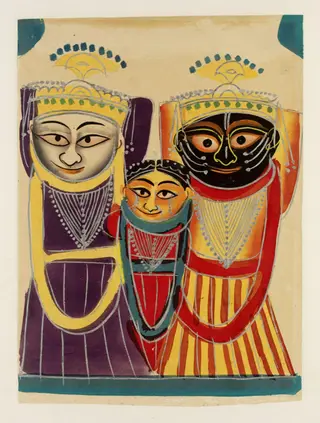
Kalighat paintings originated in 19th-century Kolkata and depict a wide range of subjects rooted in Hindu mythology, everyday life, and social satire. Common iconographic themes include scenes from the lives of deities such as Kali, Durga, Krishna, and Shiva, often portrayed with bold, simplified forms and vibrant colors. These works frequently carry symbolic meanings, illustrating moral lessons, divine power, or critiques of contemporary society, including colonial influences and urban lifestyles.
The paintings also serve as visual narratives of Bengali culture, blending religious devotion with folk traditions. Figures are rendered with exaggerated features, large eyes, elongated limbs, to emphasize emotion and action. While some compositions celebrate piety, others satirize hypocrisy, marital discord, or the pretensions of the emerging middle class, reflecting the dynamic social landscape of late 19th-century Kolkata.
History & Provenance
The work was created in Kolkata around 1890 by an unknown artist, as reflected by its inception date and production location recorded in archival data. It entered the collection of the Cleveland Museum of Art, where it has remained since at least 2003, when it was catalogued under accession number 2003.124. The painting is attributed to the Kalighat tradition, a style associated with itinerant artists who produced works near the Kalighat Kali Temple in nineteenth‑century Bengal.
The Kalighat Painting was created in 1890 in Kolkata and entered the collection of the Cleveland Museum of Art, where it is cataloged under the accession number 2003.124. The work has been part of the museum's holdings since its acquisition, reflecting its significance within the institution's Indian miniature and popular art collections.
Overview
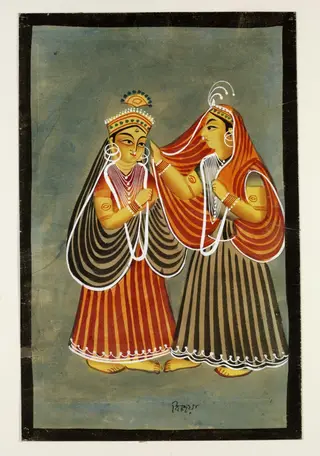
The work belongs to the Kalighat school of painting, a 19th‑century genre that emerged in the vicinity of the Kalighat temple in Calcutta. It depicts three figures arranged in a linear composition, each grasping a slender rod. The central figure is a nude male in dark trousers, flanked by two women, one in a red, polka‑dotted garment with a matching headscarf, the other in a dark dress holding a red scarf. The background is rendered in a uniform light‑blue field.
Technique & Style
Executed with bold, unmodulated outlines, the painting employs a flat application of vivid pigments characteristic of Kalighat works. The figures are stylized rather than naturalistic, their forms simplified to convey gesture and emotion. The limited palette, dominant reds, dark tones, and a pastel blue background, enhances visual contrast while maintaining the flat, decorative quality typical of the school’s water‑based media.
Artist & collection