Artwork
Worship of the Infant Krishna, from a Kalighat album
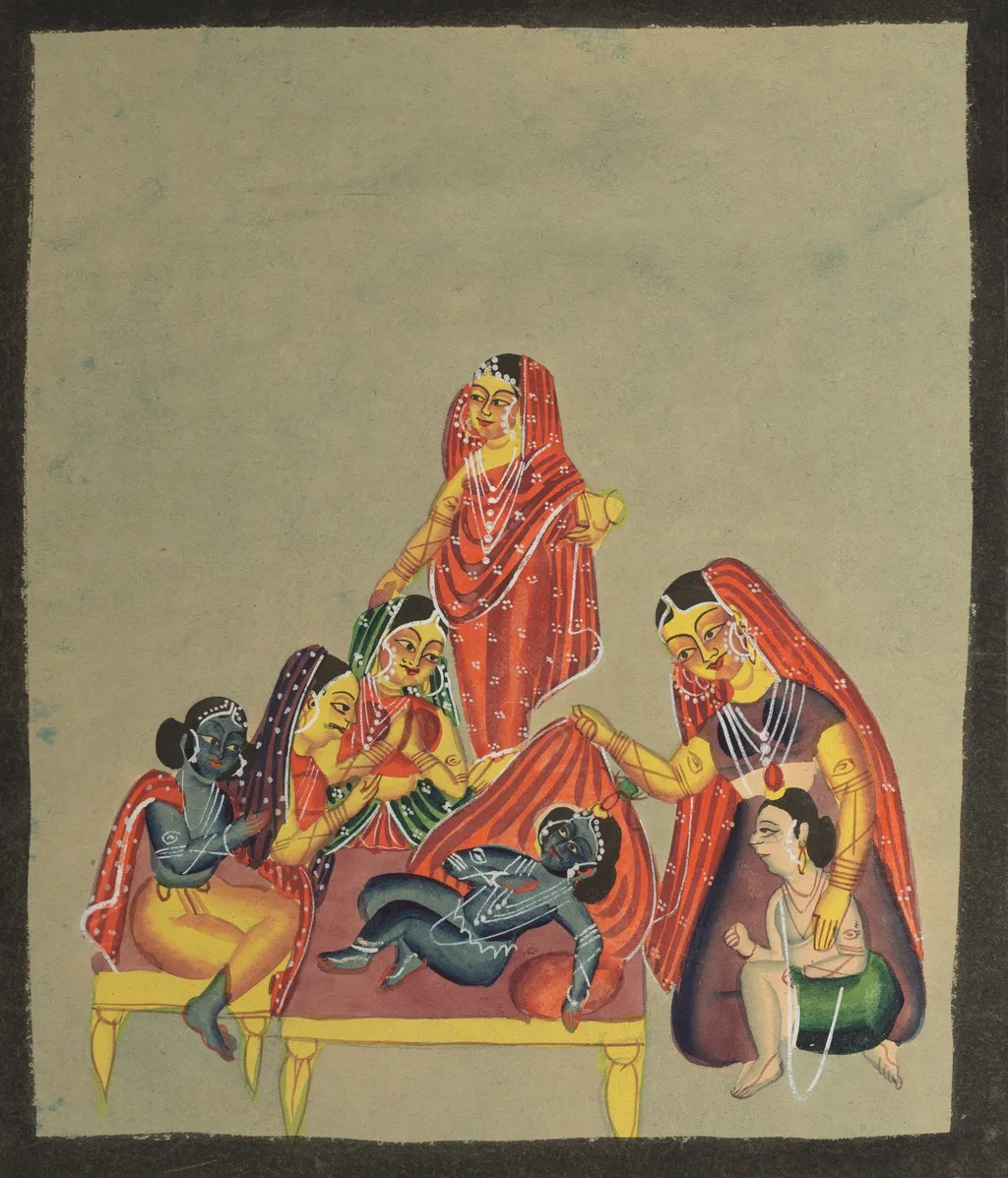
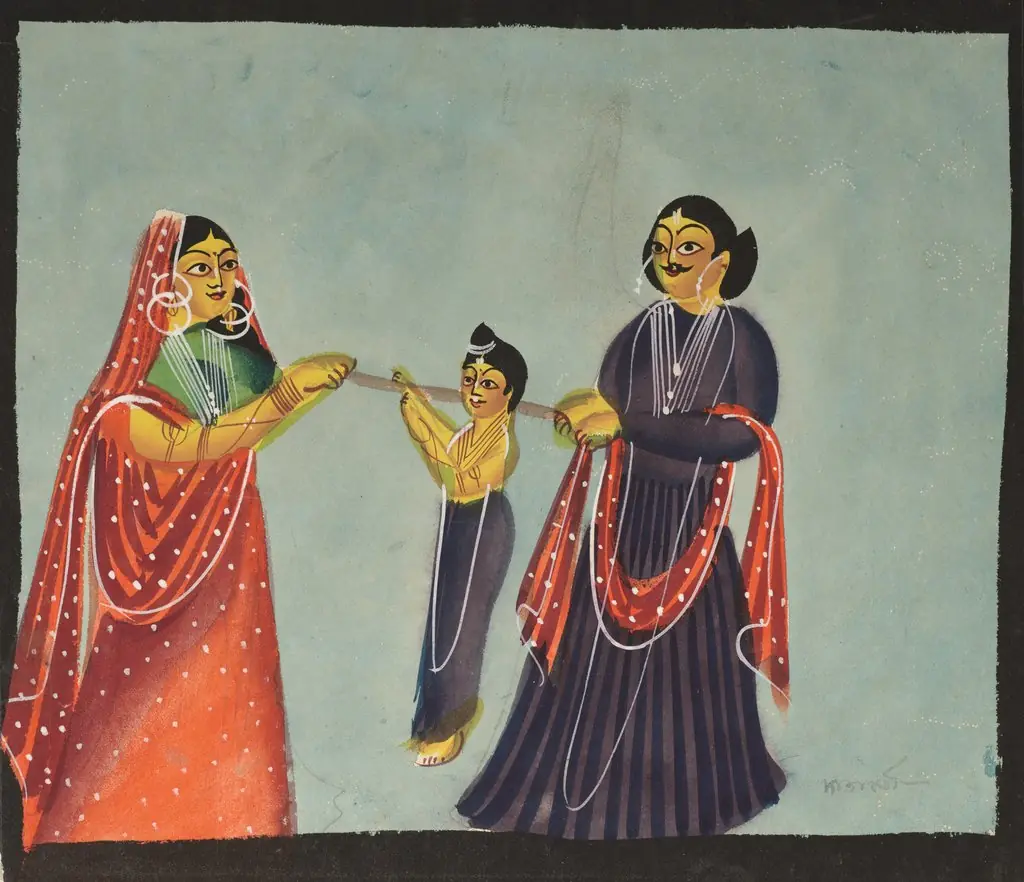
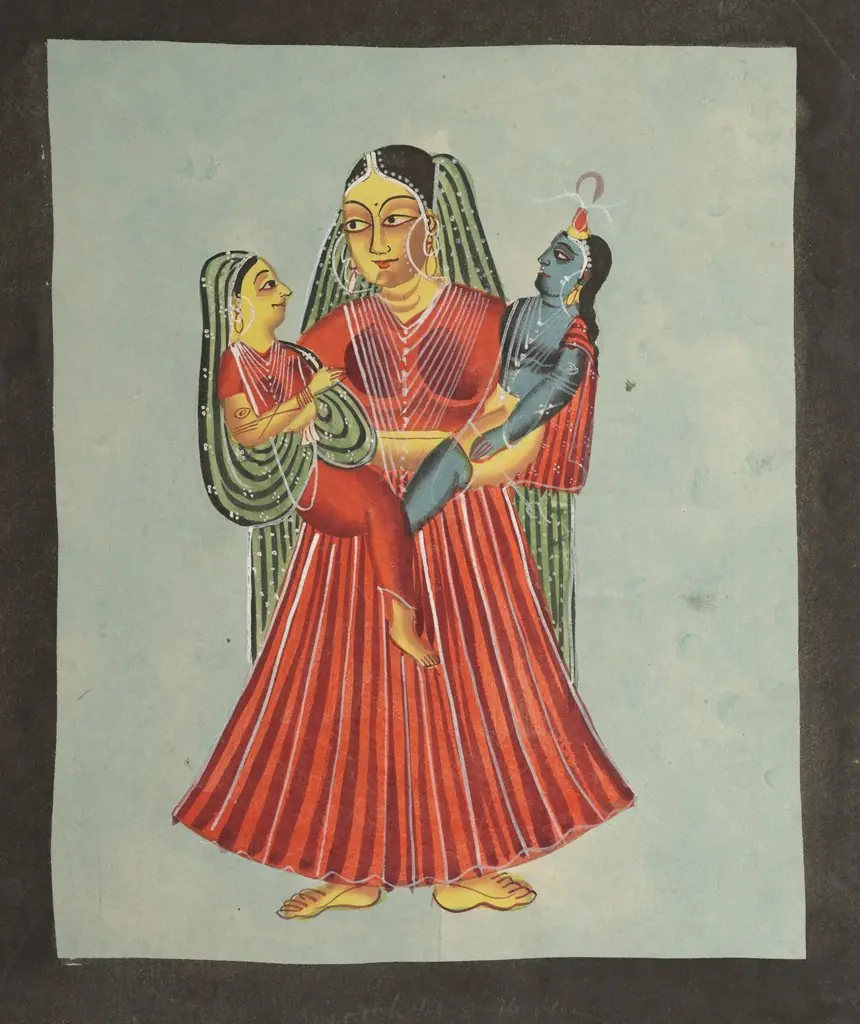
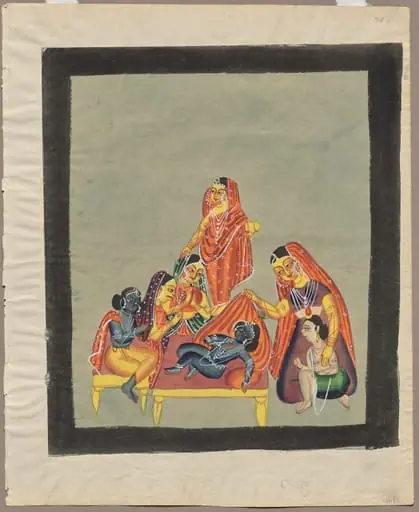
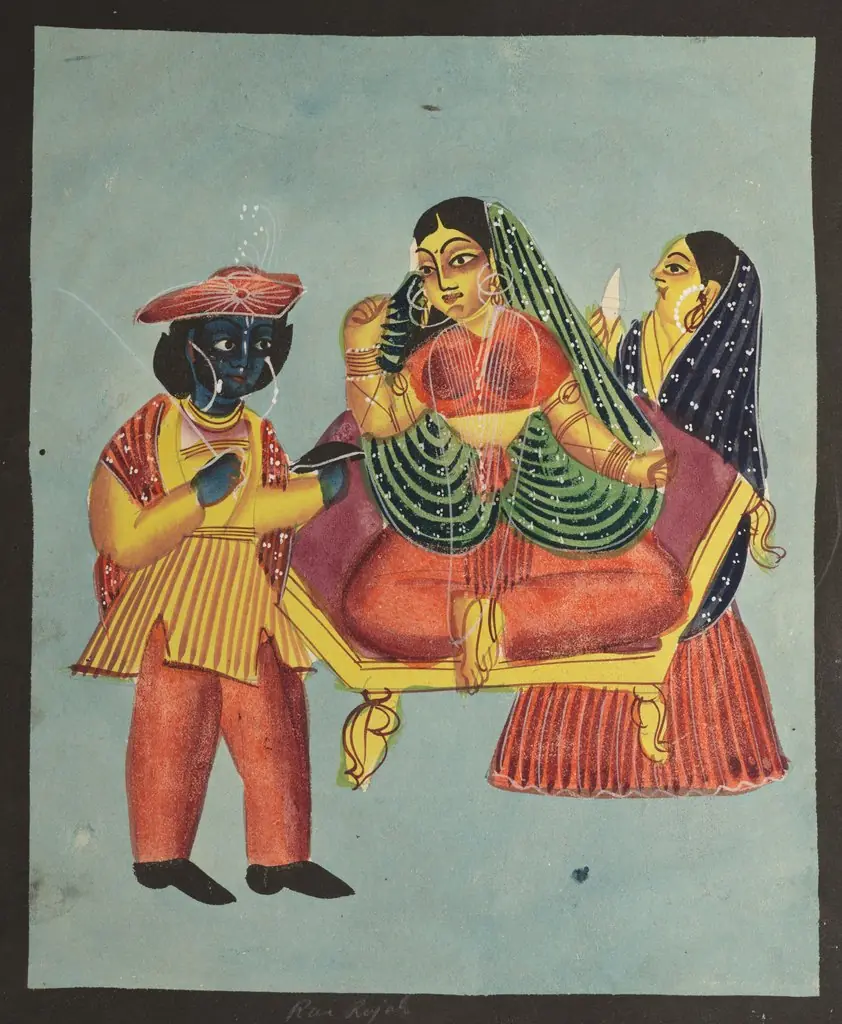
Worship of the Infant Krishna, from a Kalighat album is an unspecified painting. It dates from 1896 and is held in the collection of the Cleveland Museum of Art. This painting from a Kalighat album presents a group of women gathered around a baby, engaged in an act of devotion.
About this work
History & Provenance
The work entered the collection of the Cleveland Museum of Art, where it is cataloged under the accession number 2003.
Created in Kolkata in 1890, this painting depicts the infant Krishna and is attributed to an unknown artist. The work entered the collection of the Cleveland Museum of Art, where it is cataloged under the accession number 2003.128. While the specific circumstances of its commission and the identity of its original owner remain unrecorded in available sources, its inception is firmly dated to the final decade of the nineteenth century.
Context
The work titled Worship of the Infant Krishna belongs to the Kalighat painting tradition and was created in 1890 in Kolkata. It portrays the Hindu deity Krishna in a devotional scene typical of 19th‑century Bengali popular prints. The painting entered the collection of the Cleveland Museum of Art, where it is studied as an example of colonial‑era popular religiosity and as evidence of the artist’s engagement with folk iconography.
Scholarship emphasizes its role in documenting the visual culture of urban Bengal and its influence on later modernist interpretations of mythic subjects.
Overview
This painting from a Kalighat album presents a group of women gathered around a baby, engaged in an act of devotion. The composition emphasizes the figures through a plain background, allowing their vibrant attire and the central infant to command attention. The artwork conveys a serene atmosphere, characterized by its soft forms and a palette dominated by warm, rich colors.
Subject & Meaning
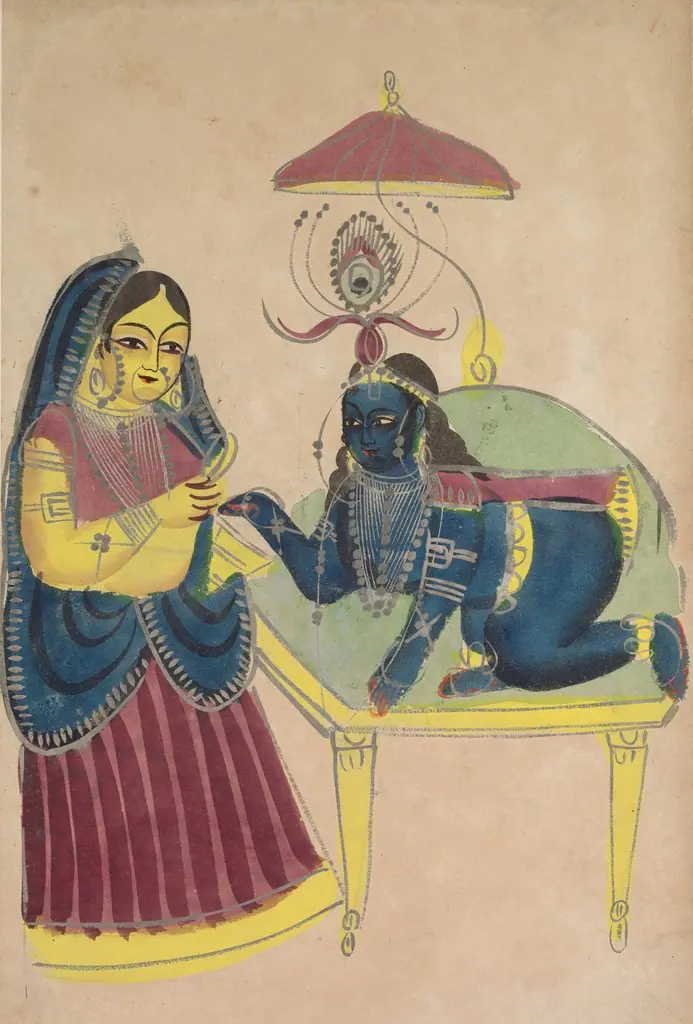
The scene illustrates the worship of the infant Krishna, a significant deity in Hinduism, identifiable by his dark complexion. He is depicted resting on a red cloth, surrounded by women in traditional garments who gaze upon him with reverence. This portrayal captures a moment of tender adoration, reflecting devotional narratives from Krishna's early life, possibly involving the gopis or his foster mother, Yashoda.
Technique & Style
The painting exhibits a straightforward and uncluttered aesthetic, typical of Kalighat school. Figures are delineated with soft, flowing lines, avoiding harsh contours or strong shadows, which contributes to the overall gentle visual effect. A vivid color scheme, featuring bright reds and yellows alongside gold accents, defines the women's clothing, while the simple background ensures focus on the devotional interaction.
Artist & collection