Artwork
Kalpa-sutra manuscript with 24 illuminations
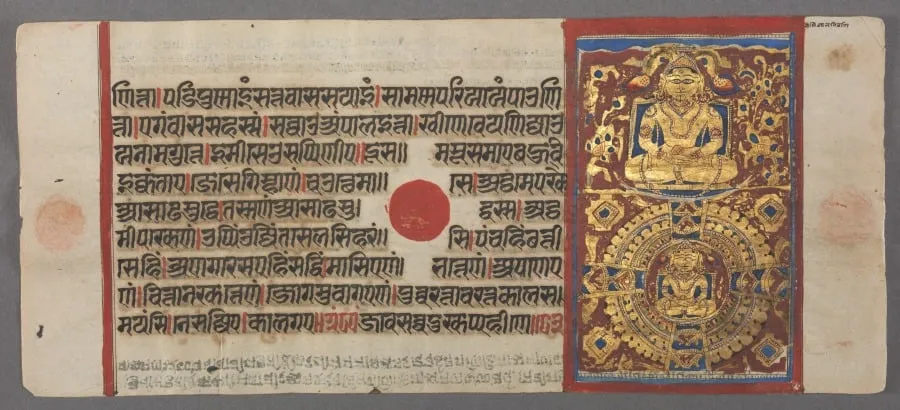
Kalpa-sutra manuscript with 24 illuminations is an unspecified painting by the Mughal Painting artist Unknown. It dates from 1488 and is held in the collection of the Cleveland Museum of Art. The object is a single folio from a medieval Jain manuscript known as the Kalpa‑sutra.
- Accession no.
- 1932.119
- Credit line
- Edward L. Whittemore Fund
About this work
Overview
The object is a single folio from a medieval Jain manuscript known as the Kalpa‑sutra. It consists of a page of Sanskrit text written in Devanagari script, accompanied by a series of small, vivid miniature paintings that illustrate episodes from the lives of Jain teachers. Marginal annotations in a finer hand provide a commentary on the main passage.
Subject & Meaning
The central narrative of the page derives from the Kalpa‑sutra, a canonical Jain text that records the teachings and biographies of revered monks. The accompanying illuminations visually recount specific events from these lives, serving both devotional and didactic purposes for the manuscript’s original audience.
Technique & Style
The miniature paintings are executed with bright pigments and fine brushwork typical of early first‑millennium Indian illumination.
The manuscript employs traditional Indian paper, later wrapped in cloth for protection. A red dot near the margin indicates the position of a binding string, a customary feature in conservative manuscript production. The text is rendered in neat Devanagari characters, while the marginal commentary appears in a smaller, more delicate script. The miniature paintings are executed with bright pigments and fine brushwork typical of early first‑millennium Indian illumination.
History & Provenance
The Kalpa‑sutra text has been in use since at least the early centuries of the first millennium CE. This particular folio reflects the manuscript‑making practices of western India, especially the region of Gujarat, where Jain communities were active in producing such religious books. The manuscript would have been stored wrapped in cloth rather than bound with a conventional string‑stitched binding.
Context
Jain manuscript production in Gujarat combined religious scholarship with artistic illustration, creating works that functioned as both scriptural reference and visual meditation. The inclusion of marginal commentaries indicates a pedagogical tradition of interpreting sacred texts within monastic and lay study circles.
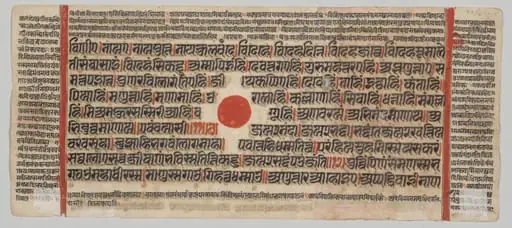
Artist & collection









- Text, Folio 35 (recto), from a Kalpa-sutra
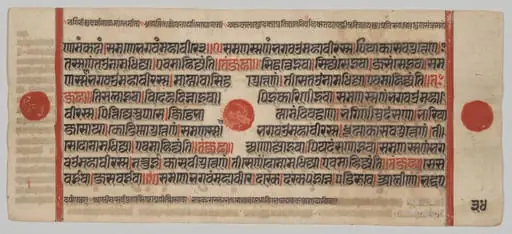 Text, Folio 34 (verso), from a Kalpa-sutra
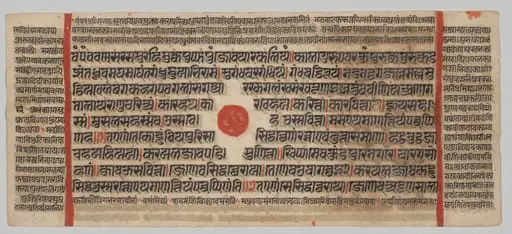 Text, Folio 32 (recto), from a Kalpa-sutra
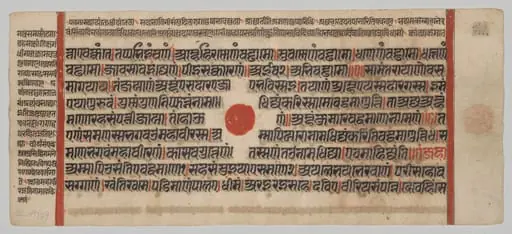 Text, Folio 34 (recto), from a Kalpa-sutra
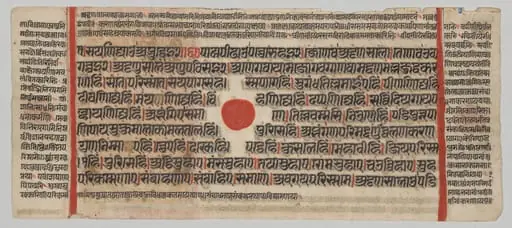 Text, Folio 22 (recto), from a Kalpa-sutra
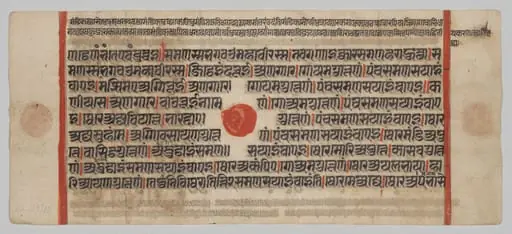 Text, Folio 58 (recto), from a Kalpa-sutra
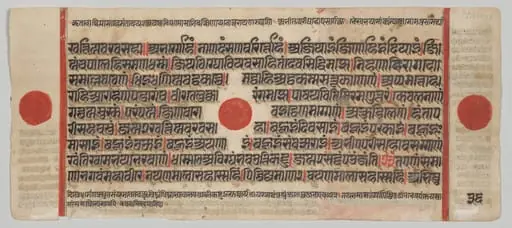 Text, Folio 36 (verso), from a Kalpa-sutra
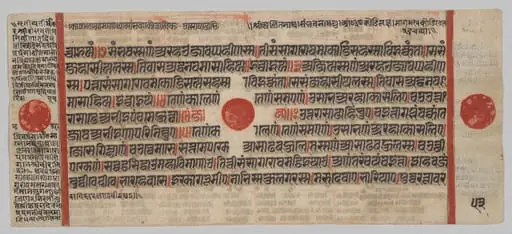 Text, Folio 53 (verso), from a Kalpa-sutra
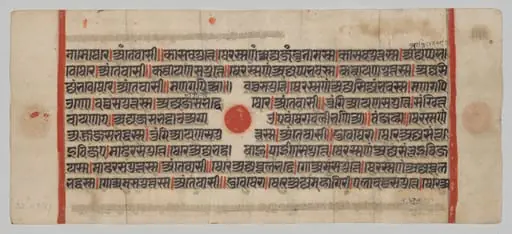 Text, Folio 59 (recto), from a Kalpa-sutra