Artwork
Kamati Ragini
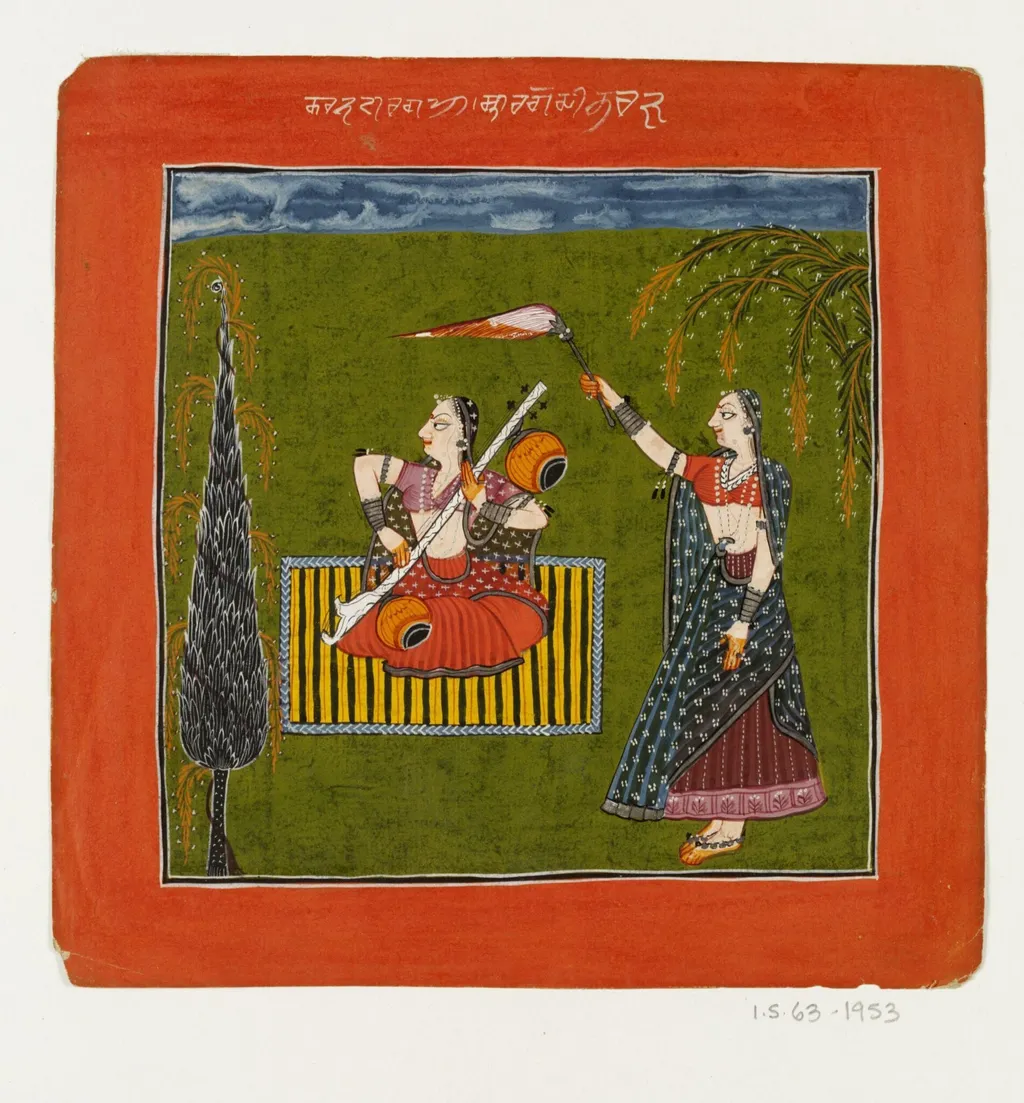
Kamati Ragini is a paint painting by the Baroque artist Unknown. It dates from 1700 and is held in the collection of the Victoria and Albert Museum.
About this work
Overview
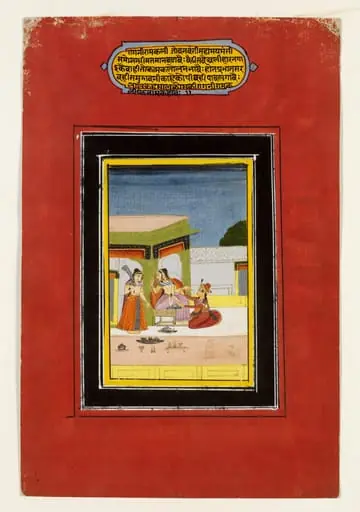
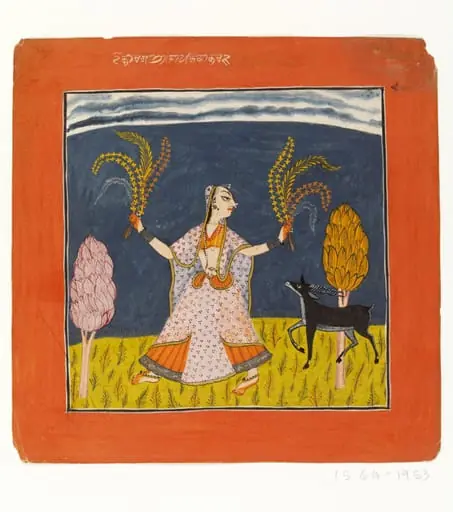
The work titled Kamati Ragini is an early 18th‑century Indian ragamala painting, executed in opaque watercolour on paper. Dated to around 1700, it measures a modest size and is framed by a red border bearing white inscription. The piece is part of the Victoria and Albert Museum’s collection and illustrates a garden scene with two female figures.
Subject & Meaning
The central figure is a young woman seated on a striped blanket, playing a vina, a traditional stringed instrument. Beside her stands a maid holding a fly‑whisk, a customary accessory indicating service. The composition reflects the ragamala tradition of visualising musical modes as courtly activities, linking sound and visual poetry.
Technique & Style
Rendered in opaque watercolour, the painting employs a vivid palette of reds, blues, greens and yellows. Fine brushwork defines the garments, a red‑black dress with a purple scarf and a blue‑white dress with a red scarf, while the background features a stylised garden, trees and a blue sky with clouds. The red border and white lettering frame the scene in a typical Mughal‑influenced aesthetic.
History & Provenance
The piece belonged to the private collection of Michael Rothenstein before being purchased by the Victoria and Albert Museum in 1953 for £300. Its acquisition reflects post‑war interest in South Asian decorative arts and the museum’s effort to broaden its representation of Indian painting traditions.
Context
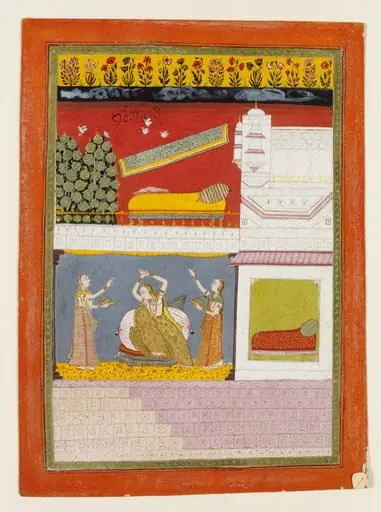
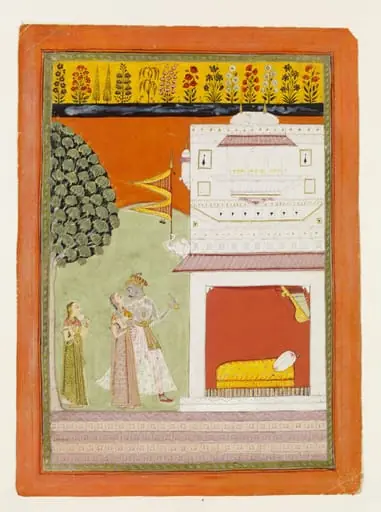
Kamati Ragini belongs to the ragamala genre, a series of paintings that personify musical modes (ragas) through narrative scenes. Produced during the Mughal period, such works often combined courtly leisure with symbolic references to music theory, serving both as visual entertainment and as instructional material for connoisseurs of the arts.
Artist & collection