Artwork
Kasuga Shrine Mandala
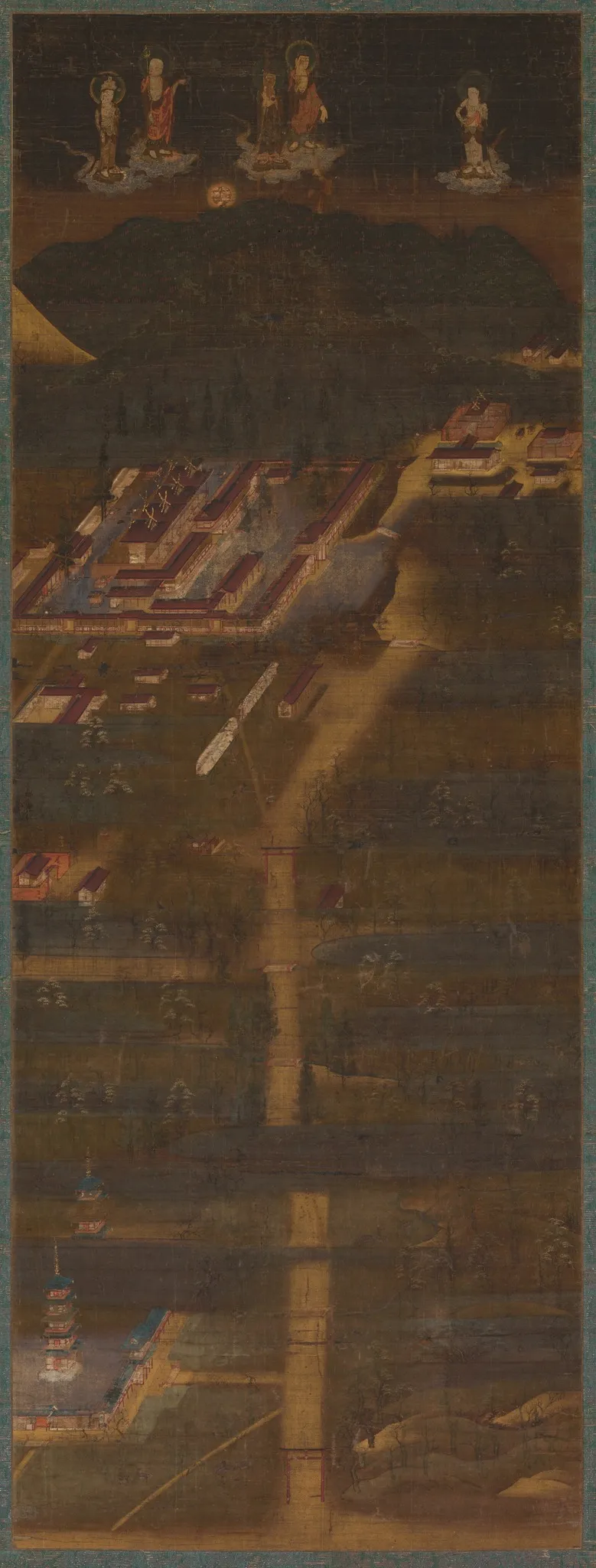
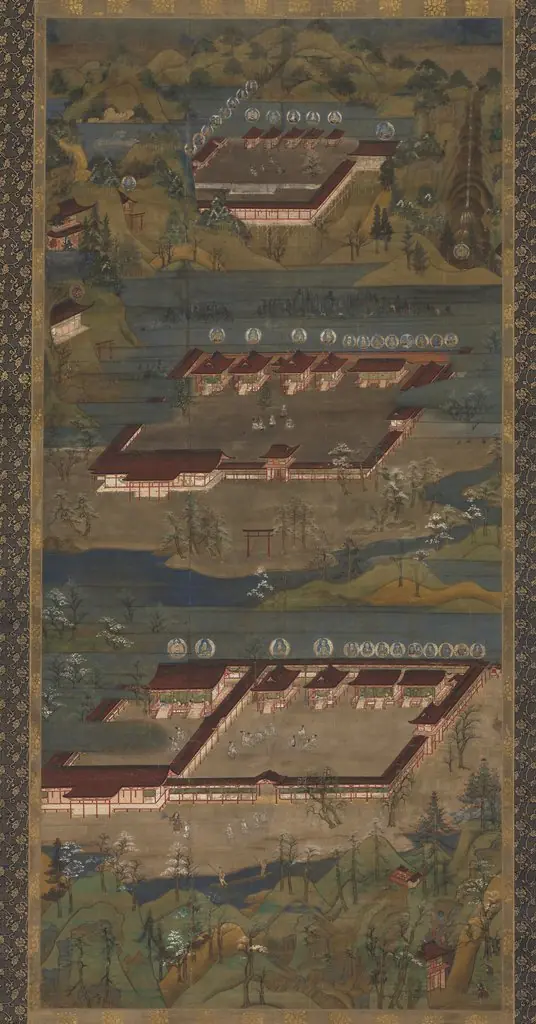
Kasuga Shrine Mandala is an unspecified painting. It dates from 1316 and is held in the collection of the Cleveland Museum of Art.
About this work
History & Provenance
Its known provenance begins with its acquisition by the Cleveland Museum of Art, where it is catalogued under accession number 2015.
The Kasuga Shrine Mandala is dated to 1316 and was produced in Japan by an unknown artist. Its known provenance begins with its acquisition by the Cleveland Museum of Art, where it is catalogued under accession number 2015.137. No earlier ownership records or details about its commission are documented in the available sources.
The Kasuga Shrine Mandala is held in the collection of the Cleveland Museum of Art. The work carries the accession number 2015.137. Created in 1316, this painting originates from Japan and is attributed to an unknown artist.
The provided sources confirm its location at the museum but do not list specific past exhibitions or further provenance details beyond its current institutional holding.
Overview
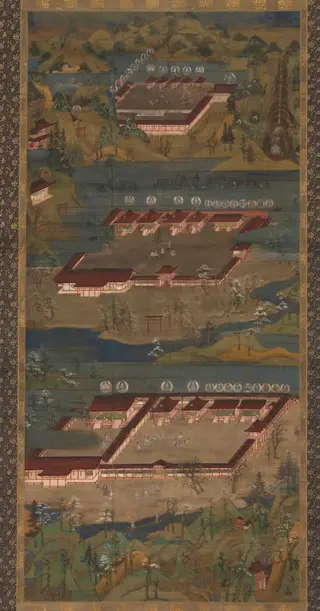
The work titled Kasuga Shrine Mandala is a painted composition that arranges a layered landscape beneath a luminous pathway. Dark, muted tones dominate the sky and ground, while a bright strip of gold and red traverses the scene, drawing the eye toward a cluster of structures that include a pagoda. Small figures occupy three rocky outcrops at the upper edge, observing the terrain below.
Subject & Meaning
The central illuminated route appears to function as a visual metaphor for a spiritual pilgrimage, standing out as the sole source of light within an otherwise shadowed environment. The diminutive figures perched on the upper islands may represent protective deities or guardians, overseeing the journey of the path as it leads toward the sacred architecture.
Technique & Style
The painting employs a stark chiaroscuro effect, contrasting deep browns and blues with a vivid, glowing band of gold‑red. This manipulation of light and darkness creates depth and emphasizes the pathway as a focal element. The composition is organized in tiers, with the upper sky, middle landscape, and lower built forms rendered in a flattened, schematic manner typical of mandala representations.
Context
As a mandala associated with the Kasuga Shrine, the piece likely served a ritual or devotional function, providing a visual guide for meditation or pilgrimage. Its stylized landscape and symbolic figures align with Japanese religious iconography, where natural elements and constructed shrines are integrated to convey cosmological order.
Artist & collection