Artwork
Mandala of the Three Shrines at Kumano
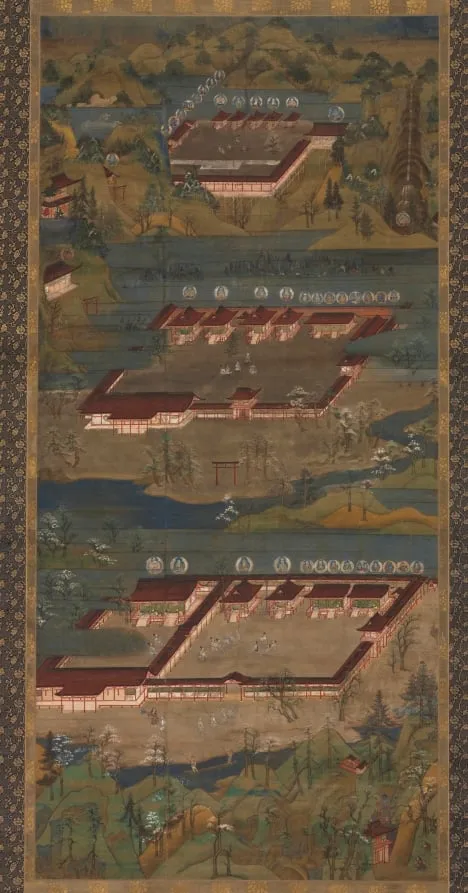
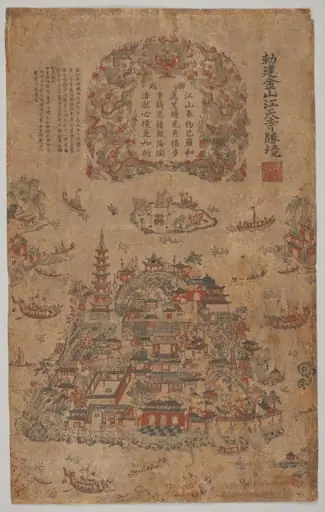
Mandala of the Three Shrines at Kumano is an unspecified painting by the Joseon dynasty painting artist Unknown. It dates from 1304 and is held in the collection of the Cleveland Museum of Art. A hanging scroll painting depicts the three Kumano shrines in a stacked composition, viewed from above.
- Accession no.
- 1953.16
- Credit line
- John L. Severance Fund
About this work
Overview
A hanging scroll painting depicts the three Kumano shrines in a stacked composition, viewed from above. The shrines are accompanied by discs containing their Buddhist counterparts.
Subject & Meaning
The painting illustrates the three shrines of Kumano - Nachi, Shingū, and Hongū - along with pilgrims and deities. The shrines are represented in a compressed, vertically arranged format, conveying the spiritual significance of the sites and the journey between them.
Technique & Style
The artist employed a bird's-eye perspective to depict the shrines and their surroundings, incorporating figures of pilgrims and deities along the pilgrimage route.
Legacy
This painting is the sole surviving work to represent all three Kumano shrines together in a single composition, making it a unique visual record of these sacred sites.
Artist & collection









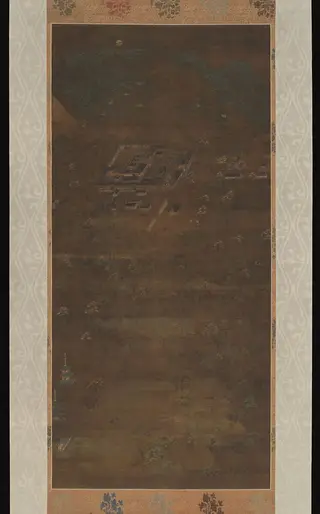 春日宮曼荼羅図|Kasuga Mandala
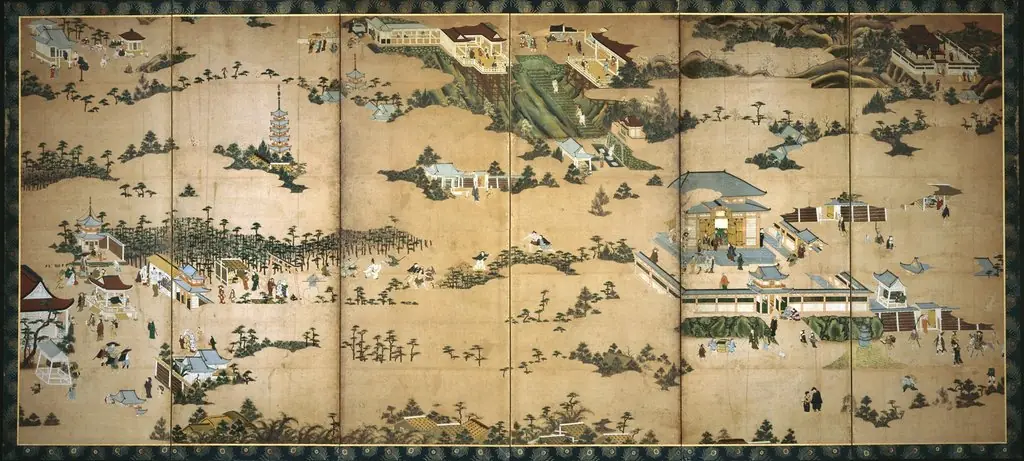 Pastimes and Pleasures in the Eastern Hills of Kyoto
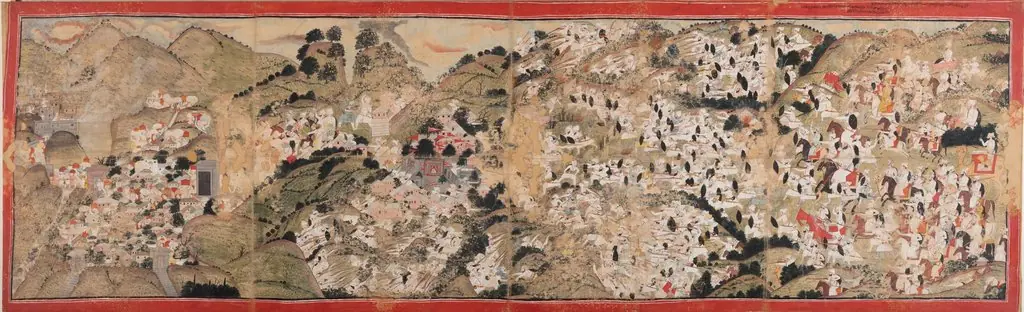 Raja Sansar Chand Attacking Kangra Fort
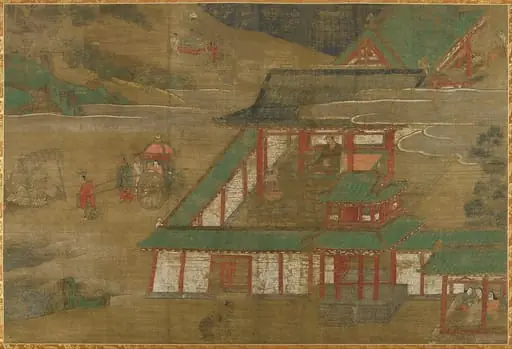 仏伝図|Scene from the Life of the Buddha
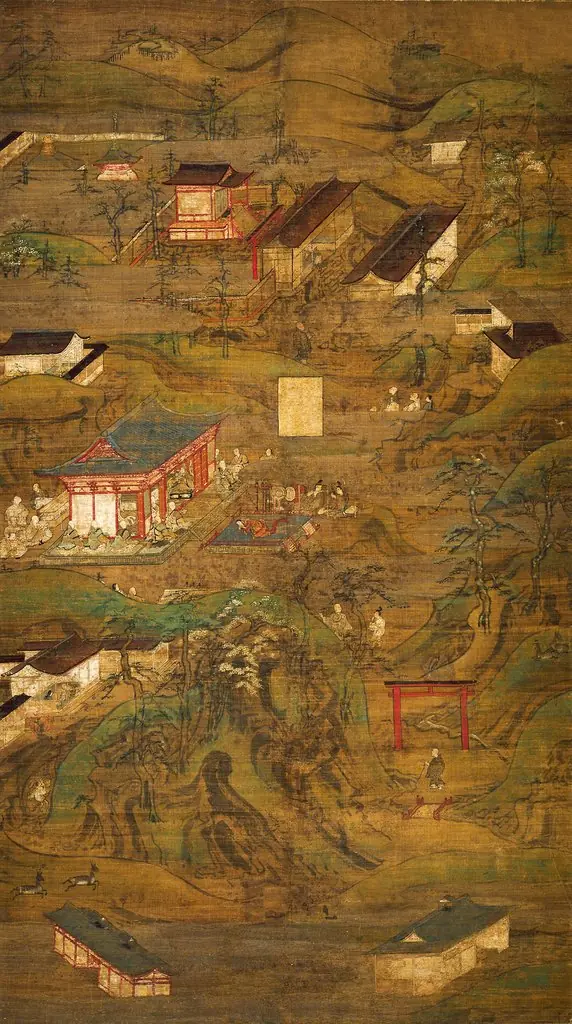 Illustrated Legends of the Tenchi-in (Tenchi-in engi)
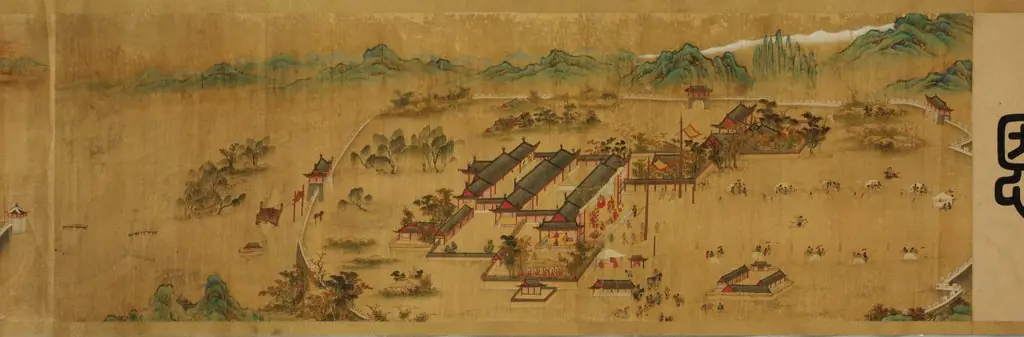 북새선은도
북새선은도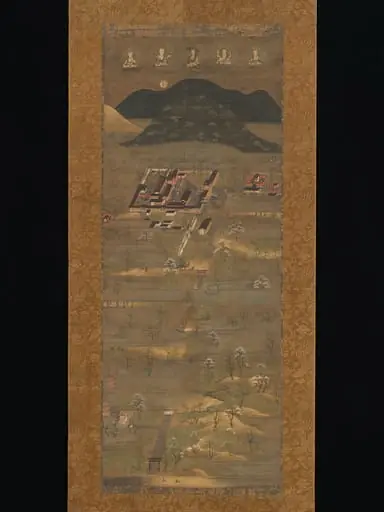 春日宮曼荼羅 (Kasuga miya mandara)|Mandala of Kasuga Shrine
 Scenic Spots of Jiangtian Temple on Jinshan, Built by Imperial Command