Artwork
清 佚名 蘇蕙璇璣圖 卷|Lady Su Hui and Her Verse Puzzle
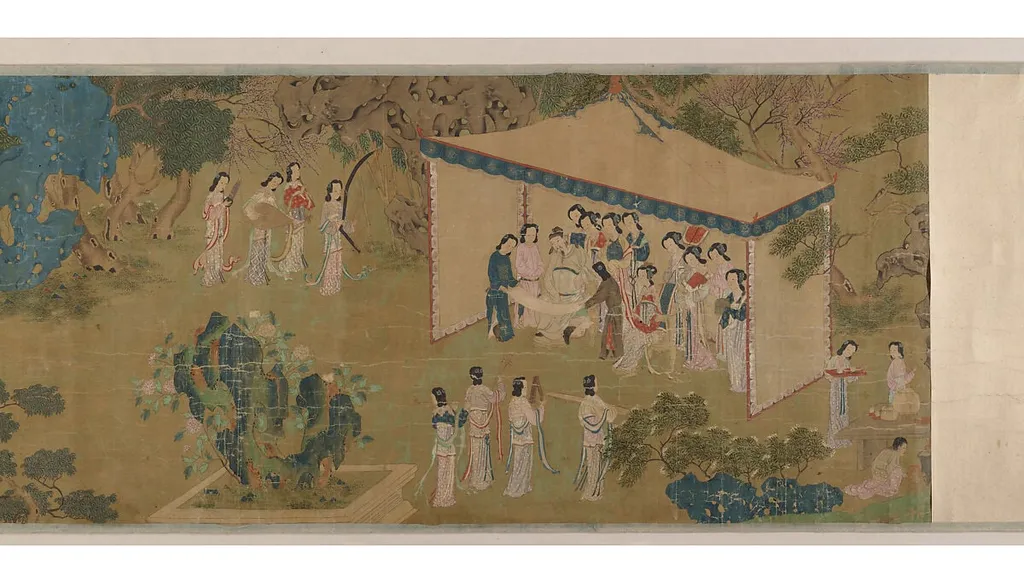
清 佚名 蘇蕙璇璣圖 卷|Lady Su Hui and Her Verse Puzzle is an ink painting. It dates from 1777 and is held in the collection of the Metropolitan Museum of Art. This handscroll, titled Lady Su Hui and Her Verse Puzzle, is an ink and color painting on silk from the Qing dynasty.
- Accession no.
- 13.62a–d
- Credit line
- Rogers Fund, 1913
About this work
Subject & Meaning
The work is dated 1777 and executed in ink and color on silk, reflecting the artistic conventions of its time.
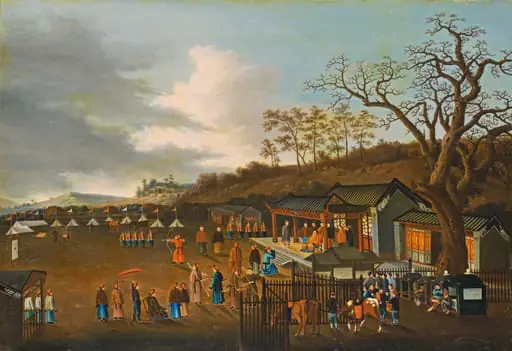
The handscroll portrays a narrative scene that includes a cart, a horse, a man, a tent and a woman, elements identified as part of the legendary episode involving Lady Su Hui and her verse puzzle. The presence of a traveling cart and tent suggests a mobile setting, while the horse and man imply movement or a journey, and the woman occupies a central, possibly intellectual, role. Together these iconographic details convey a story of scholarly exchange and poetic wit, reflecting themes of female erudition and the playful resolution of literary riddles within Qing‑era visual culture.
The work is dated 1777 and executed in ink and color on silk, reflecting the artistic conventions of its time.
History & Provenance
The handscroll titled Lady Su Hui and Her Verse Puzzle was created in China in 1777 by an anonymous artist. Classified as a painting in the genre of portraiture, the work depicts figures including a woman, man, cart, horse, and tent, rendered in ink and color on silk. The piece is currently held in the collection of the Metropolitan Museum of Art.
While the specific commissioning patron and detailed chain of ownership prior to its arrival at the museum are not detailed in the available records, the work is firmly dated to the late eighteenth century within the Qing dynasty. Its attribution remains to an unknown painter, reflecting a tradition of anonymous production for such narrative or illustrative subjects during this period.
The handscroll Lady Su Hui and Her Verse Puzzle (c. 1777) is part of the collection of the Metropolitan Museum of Art in New York. The museum’s catalog records the work as belonging to the museum’s holdings, but it does not publish an explicit accession or inventory number for this piece. No exhibition records tied specifically to this artwork appear in the sources consulted; consequently, its public display history is not documented in the available scholarly literature.
Overview
This handscroll, titled Lady Su Hui and Her Verse Puzzle, is an ink and color painting on silk from the Qing dynasty. It depicts the ancient poet Lady Su Hui seated beneath a tree, engrossed in writing on a long scroll. The composition conveys a sense of calm, with servants and horses waiting nearby, suggesting a moment of quiet contemplation amidst daily activity. The work celebrates a historical figure renowned for her intellectual ingenuity.
Technique & Style
Rendered with ink and color on silk, this handscroll exemplifies the narrative tradition of Chinese painting. The artist employs a detailed approach to depict the figures and their surroundings, creating a tranquil atmosphere. The composition carefully arranges Lady Su Hui as the focal point, with her attendants and horses providing context without distracting from her creative task. The subtle palette and precise brushwork contribute to the painting's serene and contemplative mood.
Context
The depiction of a quiet, everyday scene, featuring figures, animals, and temporary structures like tents, places this handscroll within a broader tradition of Chinese scroll painting. Such compositions frequently captured moments of daily life, historical events, or literary narratives. This work contributes to a visual legacy that often presented human activity within natural or semi-natural settings, inviting viewers to reflect on both the specific subject and universal themes of human endeavor.
Artist & collection

 明/清 佚名 舊傳王振鵬 養正圖 卷|Family Training
 Lady Xuanwen Giving Instruction on the Rites of Zhou
 Lady Xuanwen Giving Instruction on the Rites of Zhou
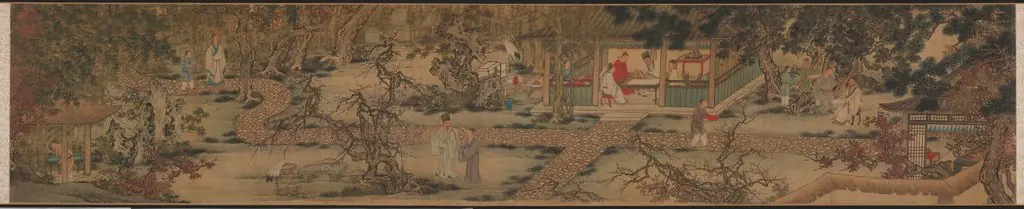 The Nine Elders of the Mountain of Fragrance
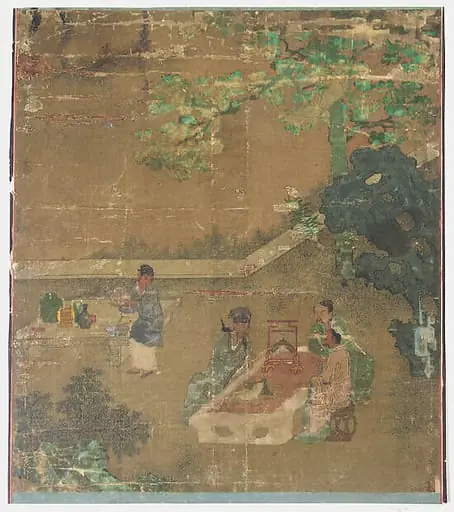 Untitled
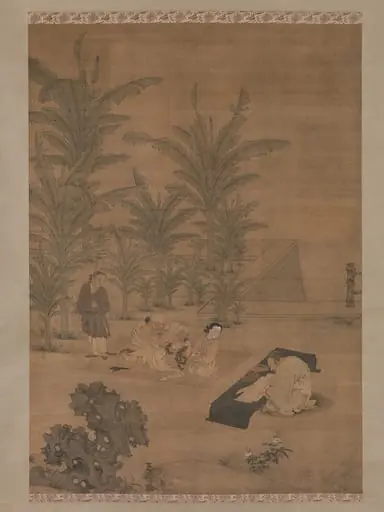 明 杜堇 伏生授經圖 軸|The Scholar Fu Sheng Transmitting the Book of Documents
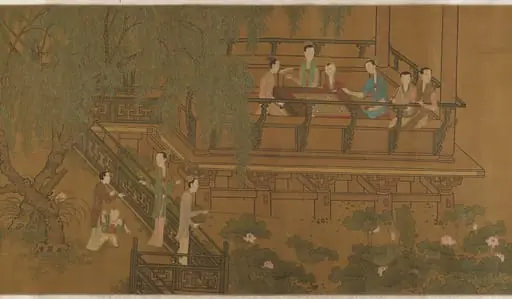 明 佚名 舊傳周昉 閑庭仕女圖 卷|Women and children in a garden
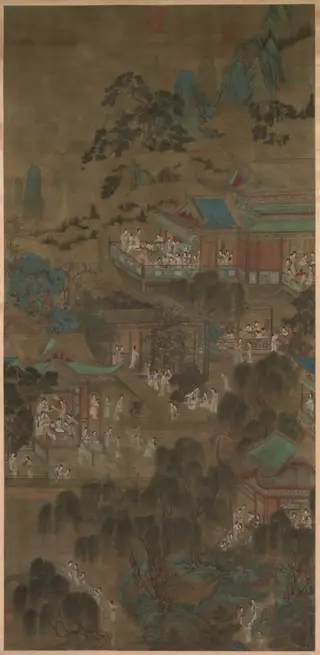 Court Ladies in the Imperial Palace
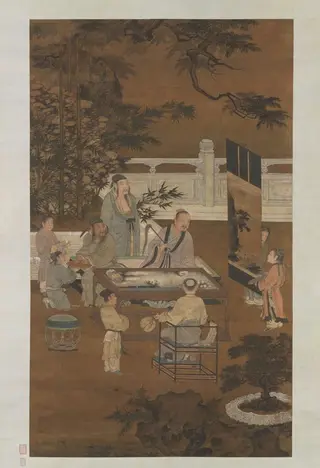 The Eighteen Scholars (Painting)
 Depiction of the Day of Spring Offering to the Gods
 Watching Geese at Lan-t'ing Pavilion
- 清 緙絲山水人物圖|Mythical landscape with immortals