Artwork
madonna col bambino e un committente presentato da san girolamo
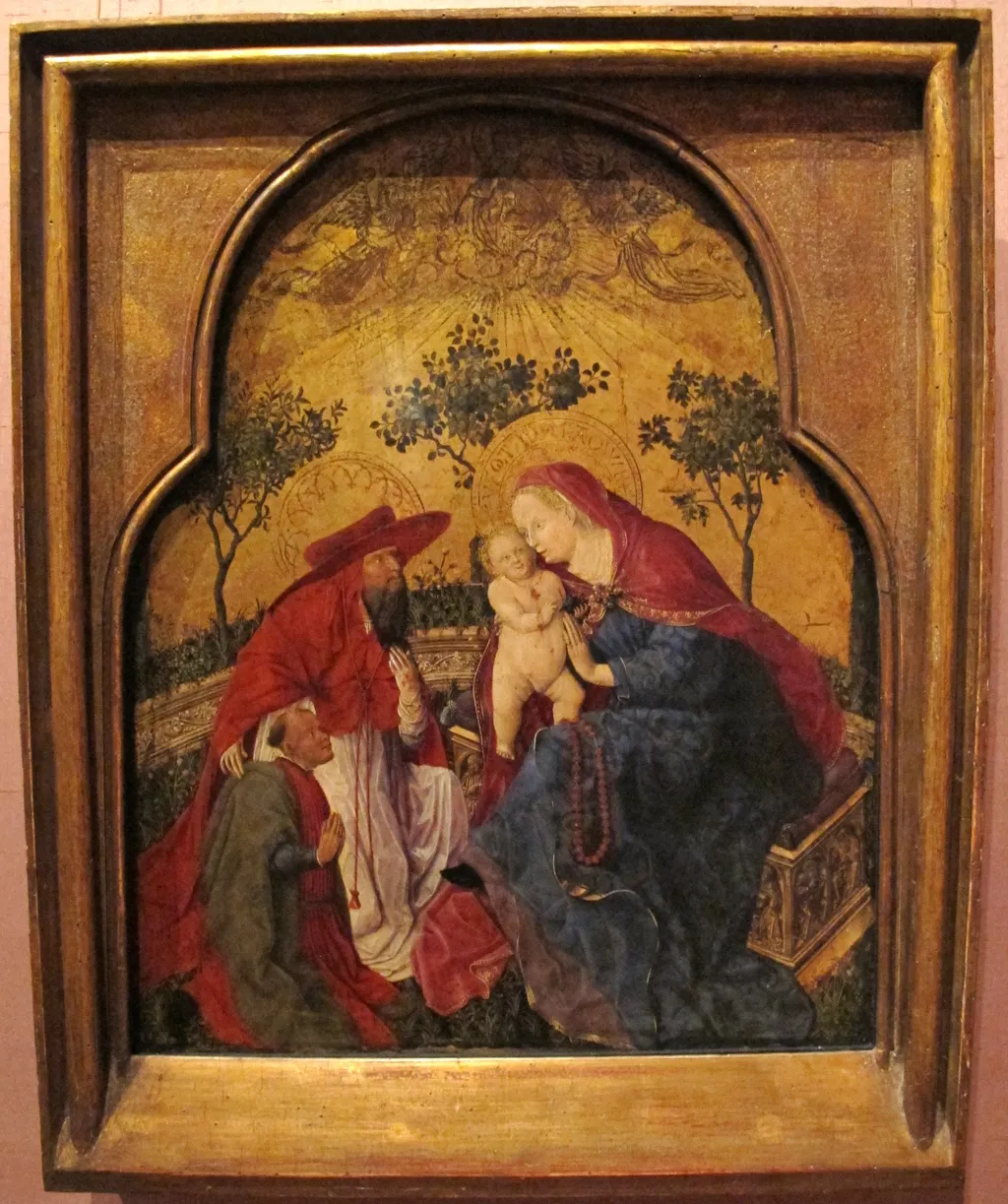
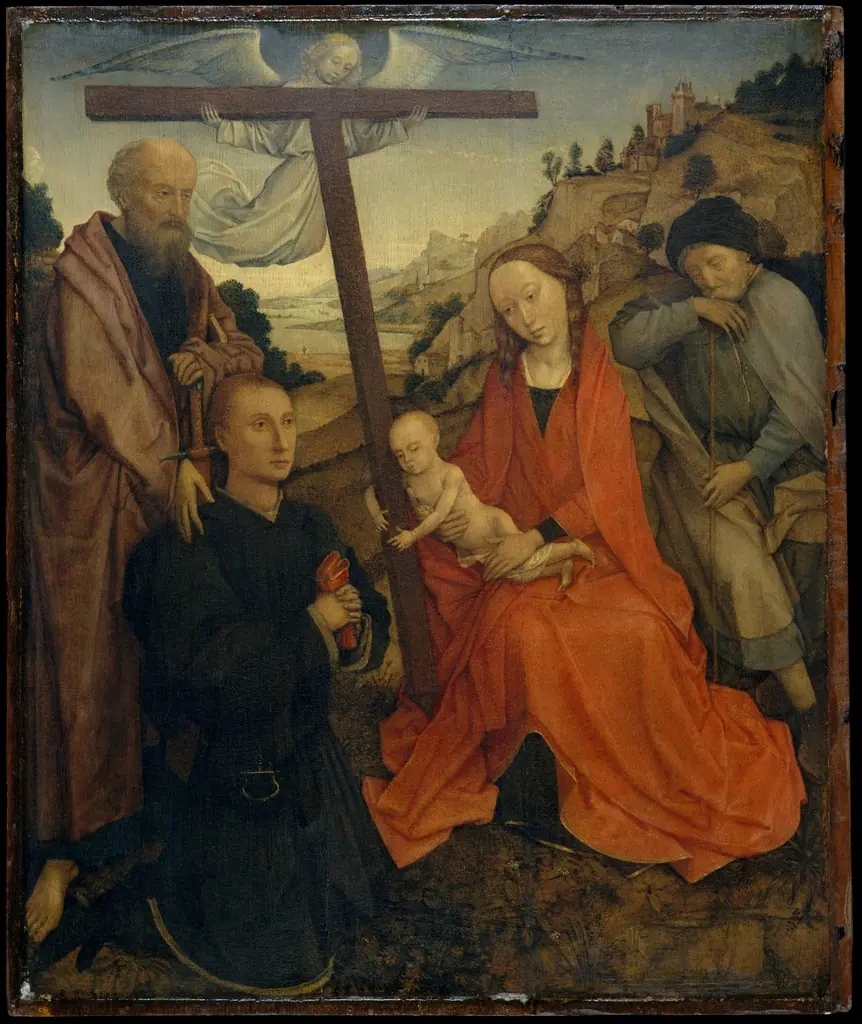
madonna col bambino e un committente presentato da san girolamo is an unspecified painting. It dates from 1450 and is held in the collection of the Metropolitan Museum of Art. This painting centers on the Madonna and Child, a recurring theme in religious art, flanked by two male figures.
About this work
Subject & Meaning
The work functions as a visual representation of faith, linking the earthly patron directly with the divine through the mediation of the saint.
Created around 1450, this religious painting depicts the Madonna and Child as its central figures. The composition includes a donor, referred to as a committente, who is presented to the holy pair by Saint Jerome. This arrangement exemplifies a specific devotional iconography common in the mid-fifteenth century, where a patron is introduced into a sacred narrative by a patron saint.
The presence of Saint Jerome acting as an intercessor highlights the donor's personal piety and desire for spiritual connection. The work functions as a visual representation of faith, linking the earthly patron directly with the divine through the mediation of the saint.
History & Provenance
The painting Madonna col bambino e un committente presentato da san girolamo is held in the collection of the Metropolitan Museum of Art. While the work is attributed to an unknown artist and dated to 1450, the provided sources do not specify a unique inventory or accession number for this piece. The museum's records identify the object as a religious artwork depicting the Madonna and Child, originating from the mid-15th century. No specific exhibition history is documented in the available references.
Context
The painting, titled Madonna and Child with a Donor Presented by Saint Jerome, dates to 1450 and is attributed to an unknown hand. It belongs to the early Renaissance period and exemplifies devotional imagery within the religious art genre.
The work is part of the collection of the Metropolitan Museum of Art, where it is displayed as a representative example of 15th‑century devotional painting. Scholars have noted its significance as an early example of donor portraits integrated into sacred scenes, reflecting evolving patronage practices.
Overview
This painting centers on the Madonna and Child, a recurring theme in religious art, flanked by two male figures. A kneeling donor is presented to the holy pair by a saint, underscoring themes of intercession and devotion. The sacred figures are set against a luminous gold background, which imparts an otherworldly quality, while subtle landscape elements and a distant cityscape provide a terrestrial context. The work exemplifies devotional painting, intended to facilitate spiritual connection.
Technique & Style
The artist utilizes a gold leaf background, a traditional technique that flattens the perspective and imbues the scene with a celestial radiance. This shimmering surface causes the figures to stand out with clarity, contributing to a sense of sacred weightlessness. A halo encircles the Virgin's head, further signifying her holiness.
Despite the abstract gold, faint trees and a distant cityscape are incorporated, subtly anchoring the divine encounter within a recognizable world.
Artist & collection

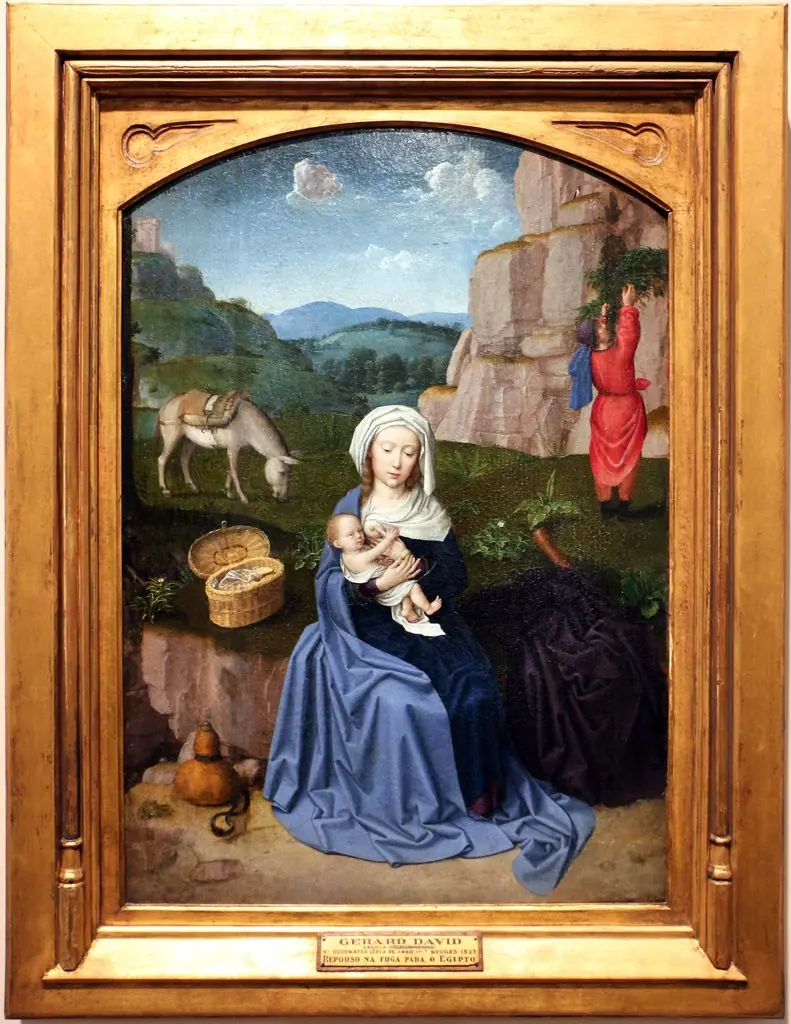
- Rest on the Flight into Egypt
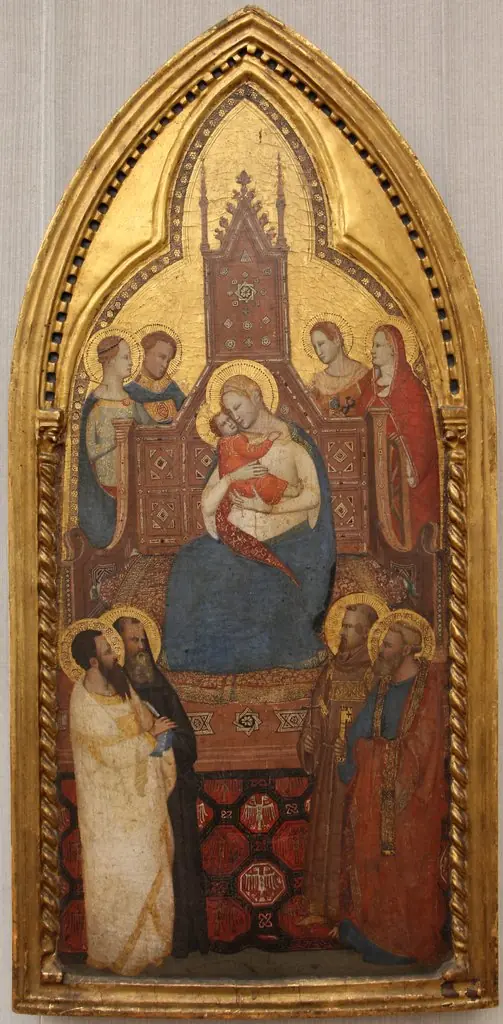 Virgin and Child enthroned with eight saints
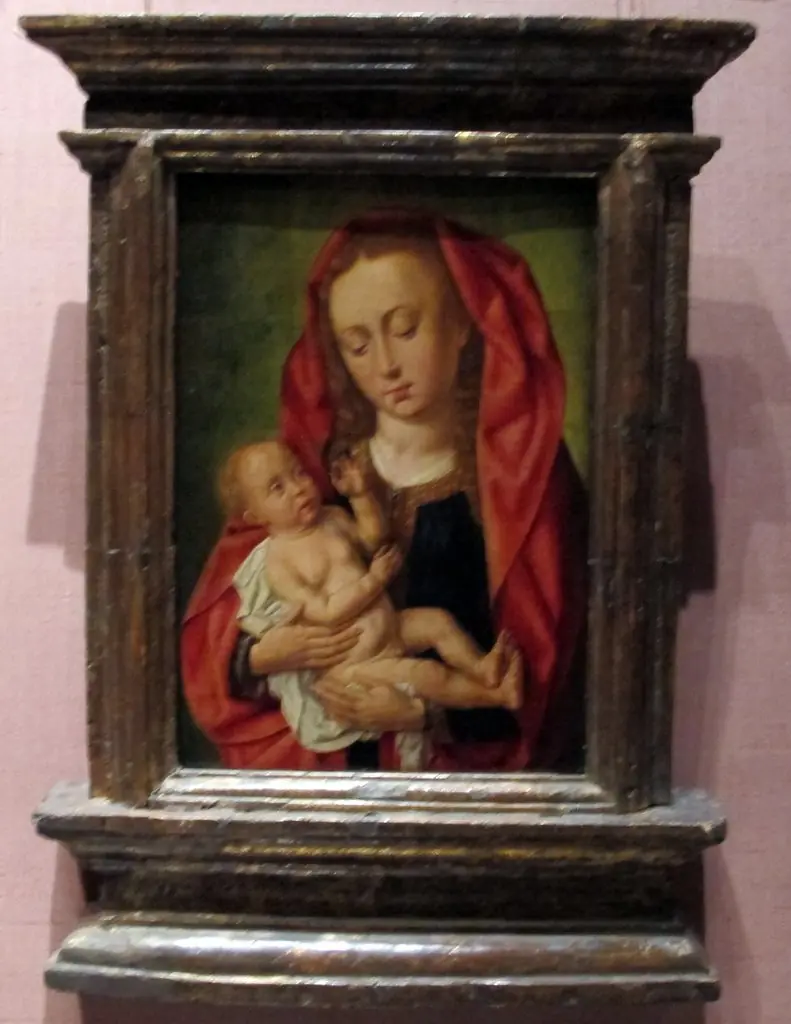 Virgin and Child with a Dragonfly
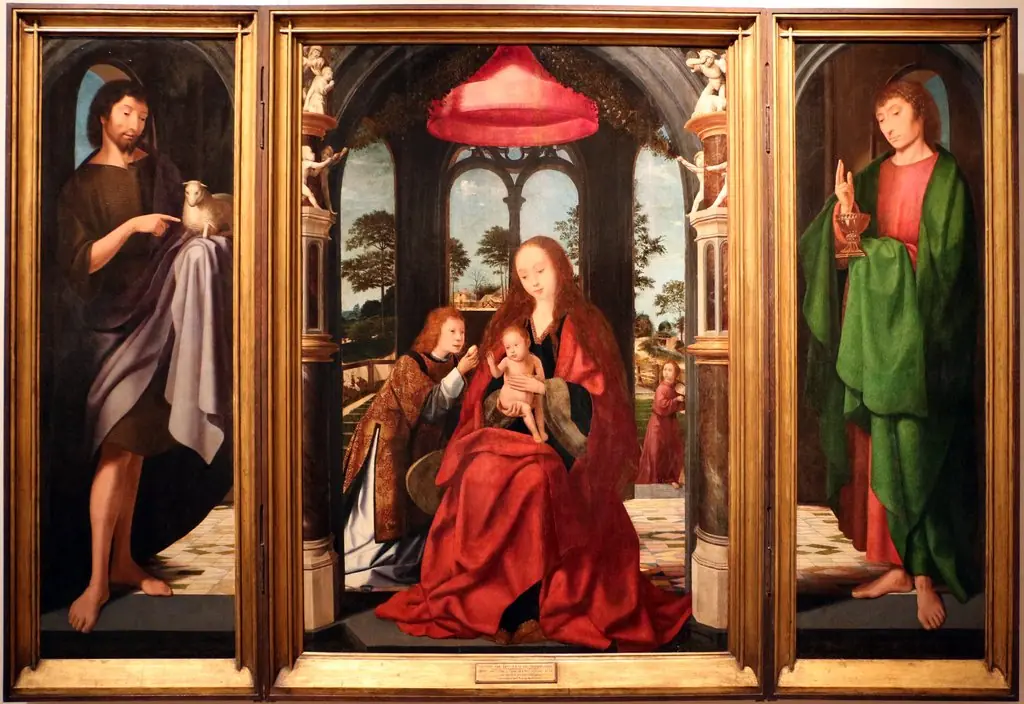 Triptych of the Virgin with the Child and Angels, St. John the Baptist and St. John the Evangelist
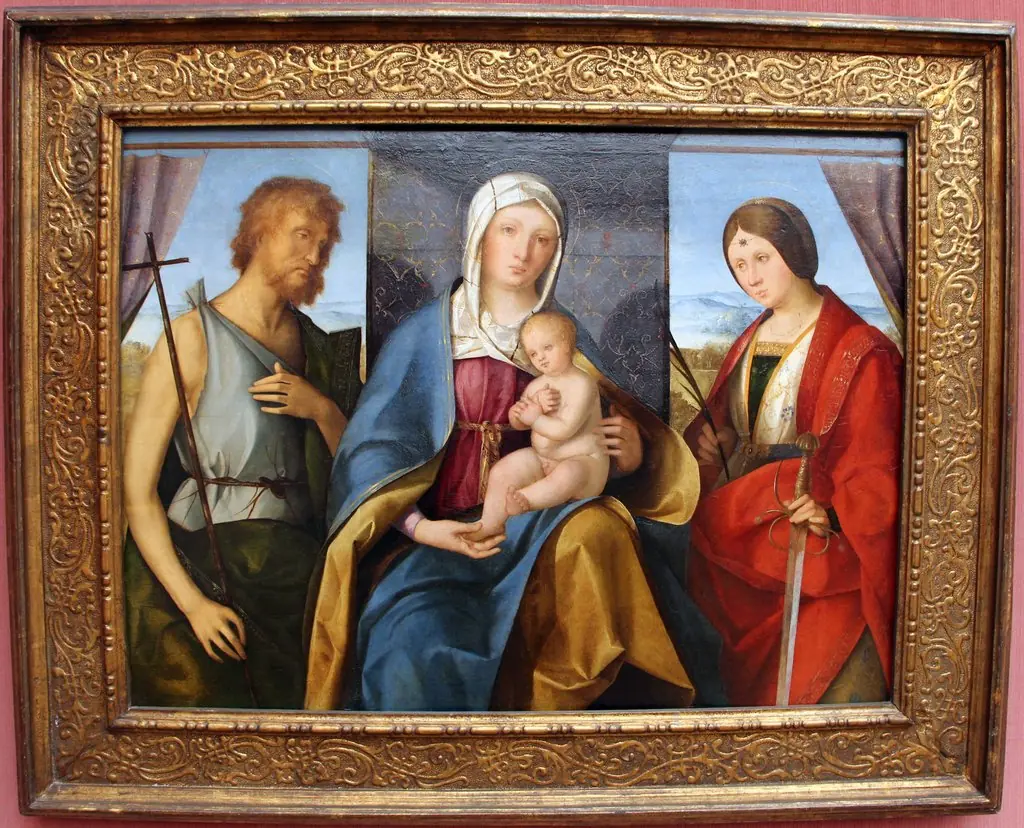 Thronende Maria mit d. Kind und den Heiligen Johannes dem Täufer und Katharina von Alexandrien
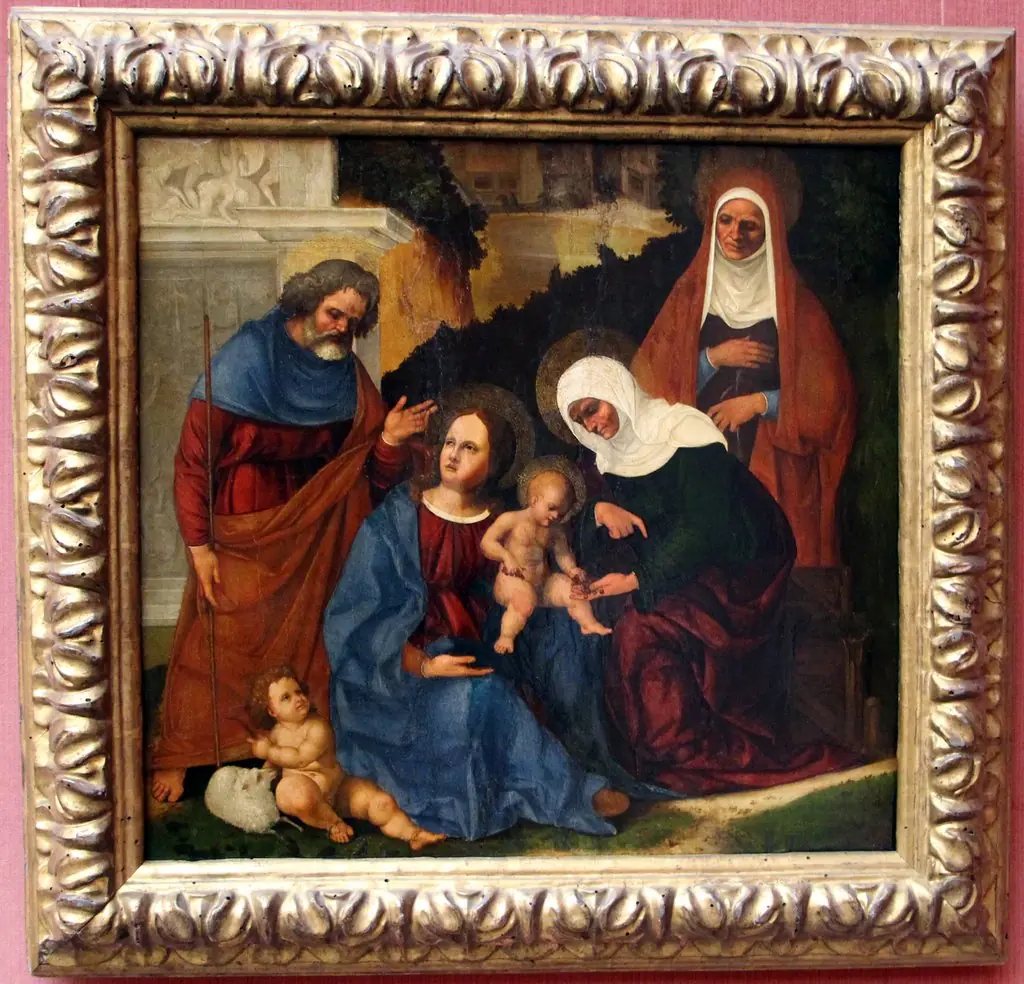 Die Heilige Familie mit Elisabeth, Anna und dem Johannesknaben
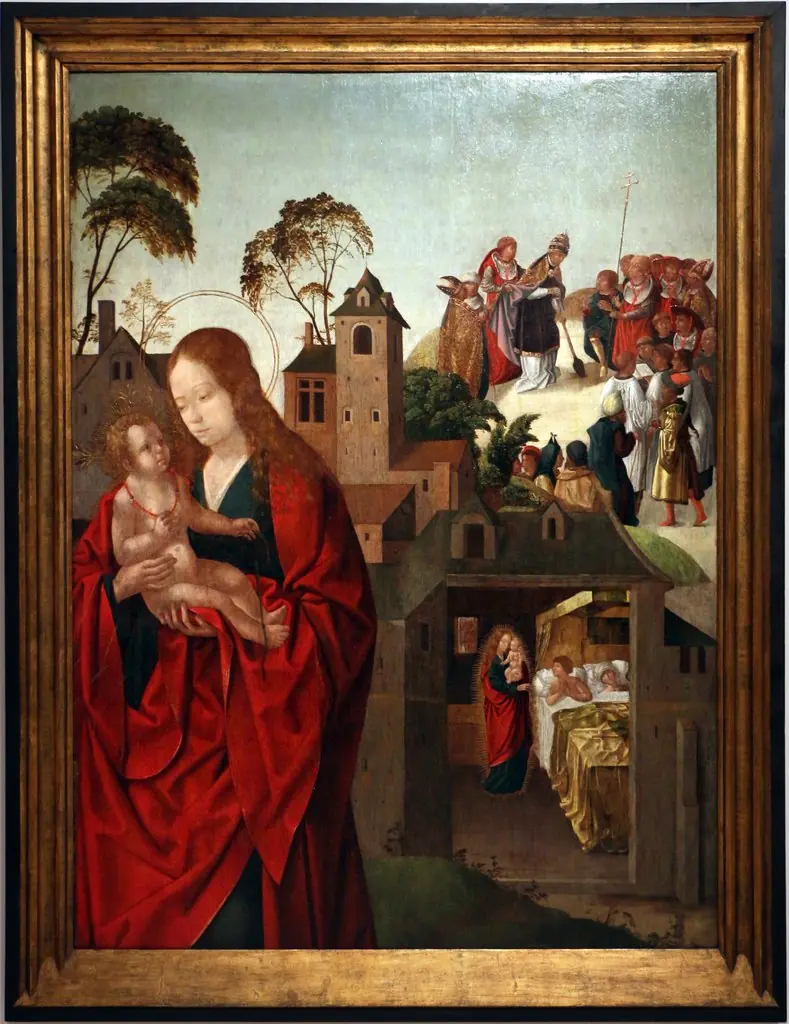 Our Lady of the Snows
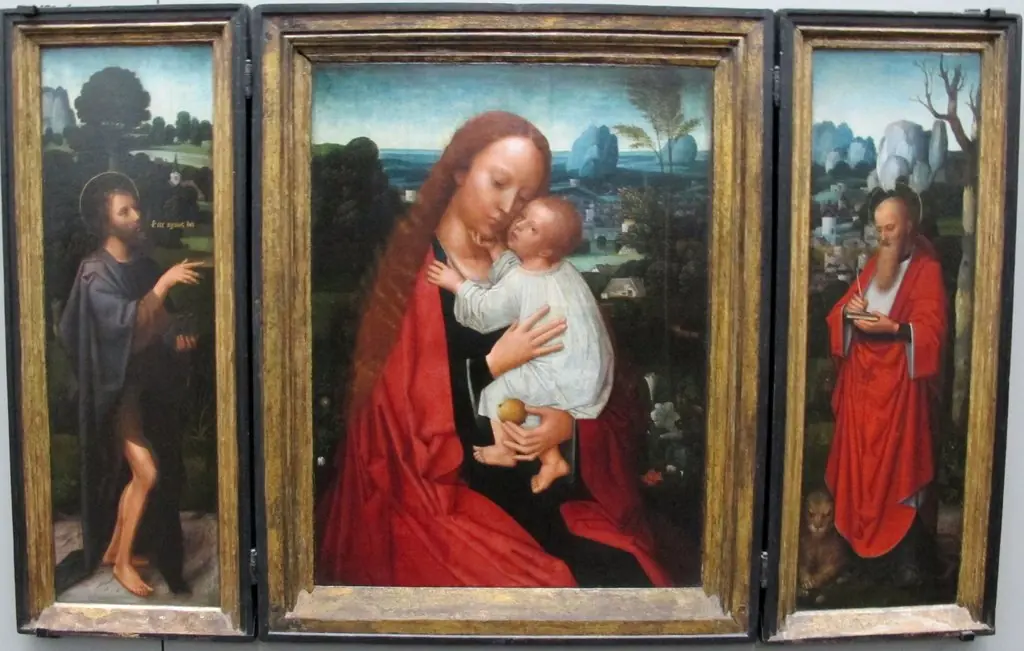 Madonna with John the Baptist and Saint Jerome
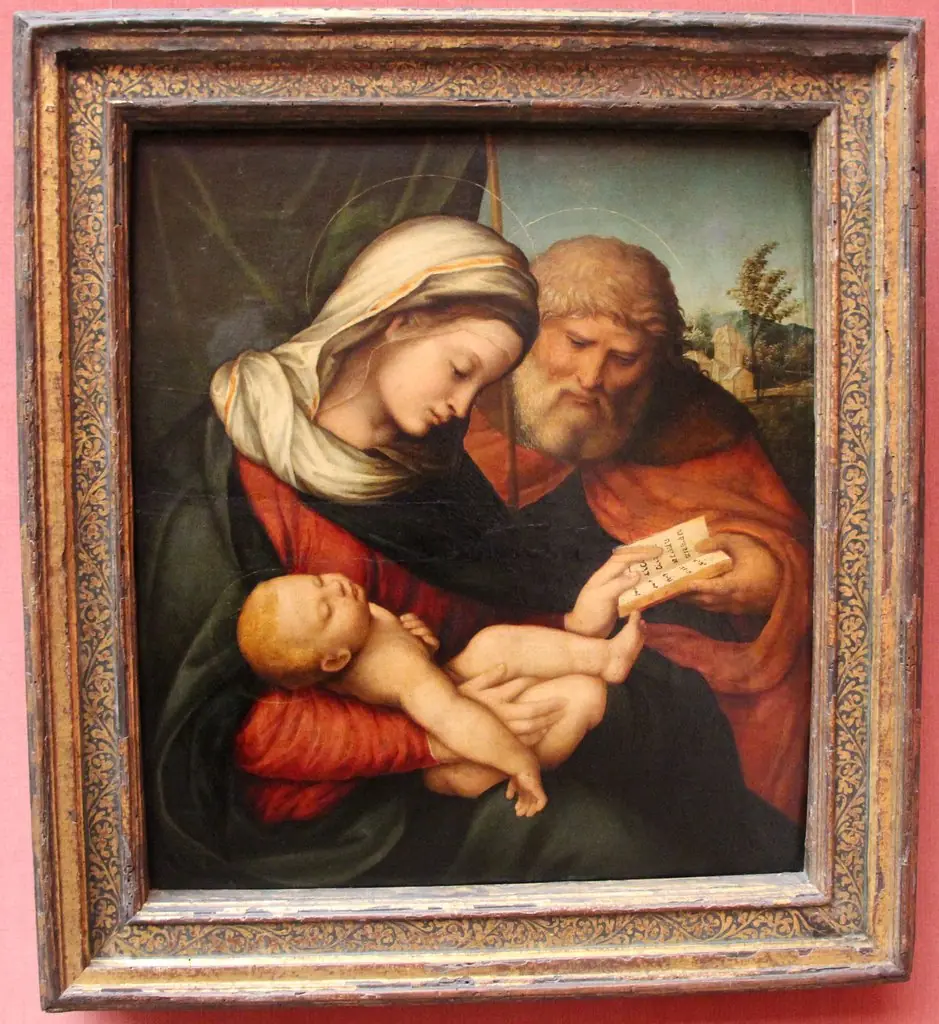 Die Heilige Famillie
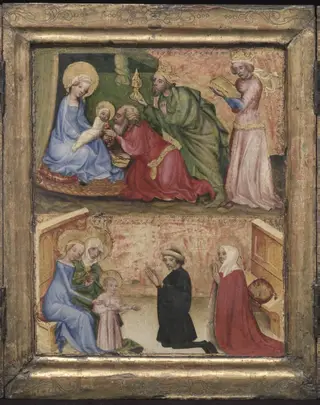 The Adoration of the Magi
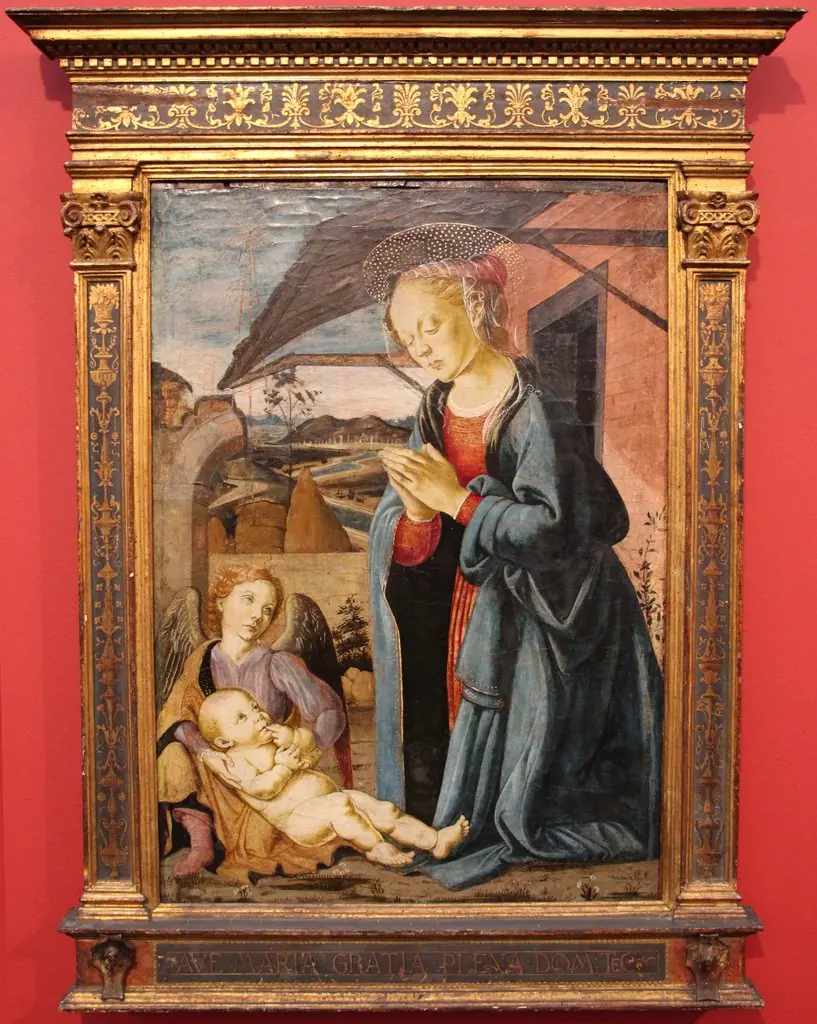 Madonna and Child and an Angel
 The Holy Family with Saint Paul and a Donor