Artwork
The Holy Family with Saint Paul and a Donor
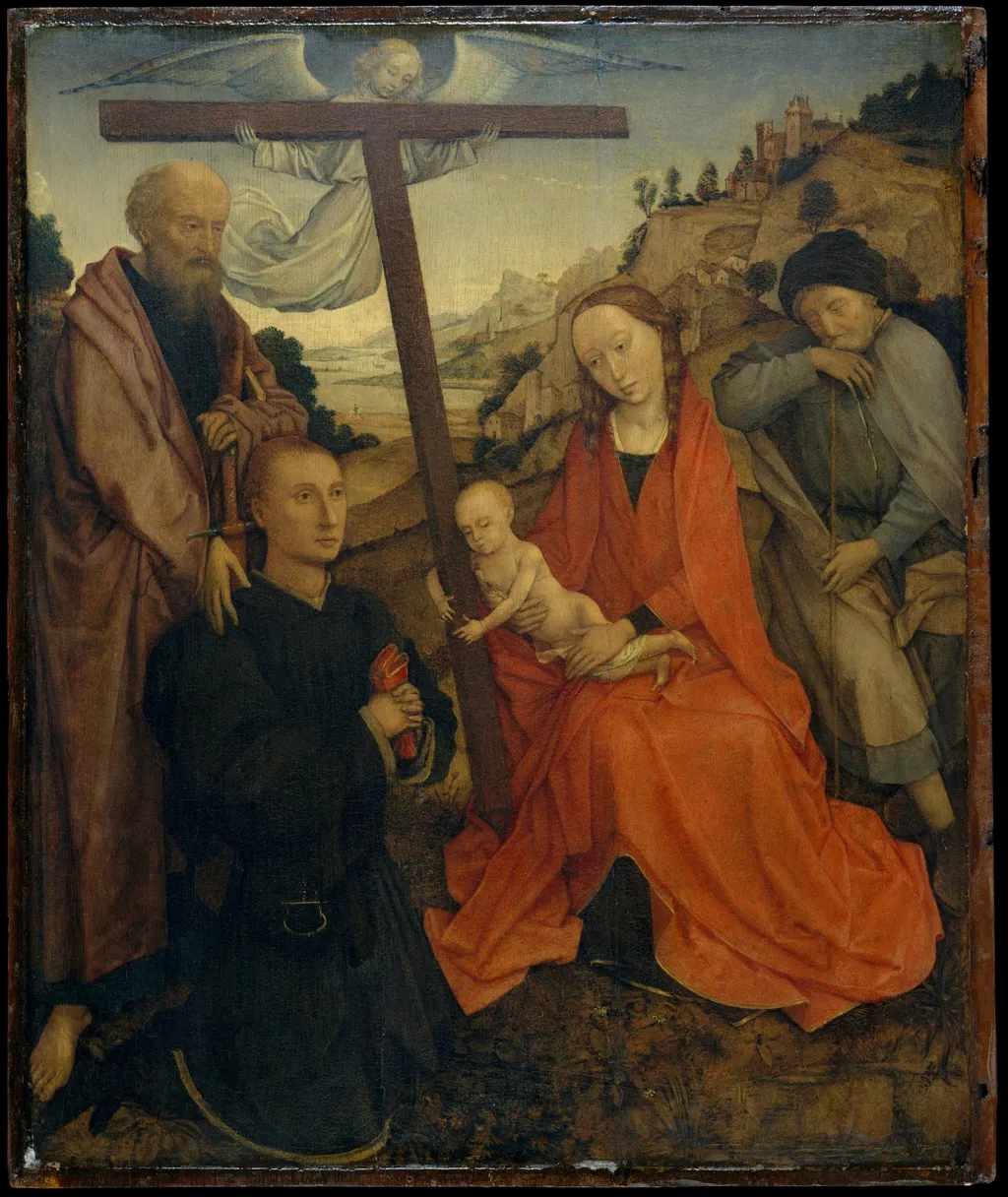
The Holy Family with Saint Paul and a Donor is an oil painting. It dates from 1500 and is held in the collection of the Metropolitan Museum of Art.
About this work
Subject & Meaning
The donor’s presence indicates a patron who commissioned the work for private devotion, linking the sacred scene to personal piety.
The painting shows the Holy Family, Mary, Joseph and the infant Christ, accompanied by Saint Paul and a donor figure. According to the sources, Paul is identified by a cross and an angel, attributes that signal his role as apostle and martyr. The donor’s presence indicates a patron who commissioned the work for private devotion, linking the sacred scene to personal piety.
The composition therefore conveys both theological unity within the family and the donor’s desire for spiritual protection. The attribution to the style of Rogier van der Weyden and its inclusion in the Friedsam collection reflect early‑16th‑century Netherlandish religious art intended for elite worship.
Technique & Style
The Holy Family with Saint Paul and a Donor is executed in oil paint on panel, a support and medium combination characteristic of early Netherlandish practice that continued into the sixteenth century. The relatively modest dimensions of 57.5 by 48.3 centimeters indicate a work conceived for intimate devotional viewing rather than large-scale altarpiece display. The composition depicts the Holy Family together with Saint Paul and a female donor, along with subsidiary motifs such as a cross and an angel, arranged within a unified sacred space.
Stylistically, the painting is attributed to a follower working in the manner of Rogier van der Weyden, suggesting the retention of his refined linear modeling, sober palette, and emotionally restrained figural treatment. The panel format and oil technique would have permitted the smooth enamel-like finish and meticulous detail associated with that tradition.
History & Provenance
The painting’s early history is undocumented, and it is attributed to the circle of Rogier van der Weyden rather than the master himself. Technical and stylistic analysis places its creation around 1500, aligning with the Netherlandish tradition of devotional panels in the generation after van der Weyden. The work entered the Metropolitan Museum of Art as part of the Michael Friedsam Collection, bequeathed in 1931.
Prior to Friedsam, the picture was owned by the Milanese collector Benigno Crespi and, by 1928, by Achillito Chiesa of Milan; it had also been associated with Herri met de Bles. The panel has no documented commission record, but its donor portrait suggests a private devotional function for a lay patron circa 1500.
The work is held at the Metropolitan Museum of Art in New York, where it entered the collection as part of the Michael Friedsam Collection (accession no. 33.19). It has appeared in one documented exhibition: The Michael Friedsam Collection, held at the museum to showcase the benefactor’s bequest.
Overview
This oil painting, titled The Holy Family with Saint Paul and a Donor, depicts a gathering of five individuals in an outdoor setting. Central to the composition is a woman holding an infant on her lap, flanked by male figures. The work combines traditional religious iconography with the inclusion of a specific patron, a common practice in art from this period.
Artist & collection

 The Adoration of the Kings
 The Nativity
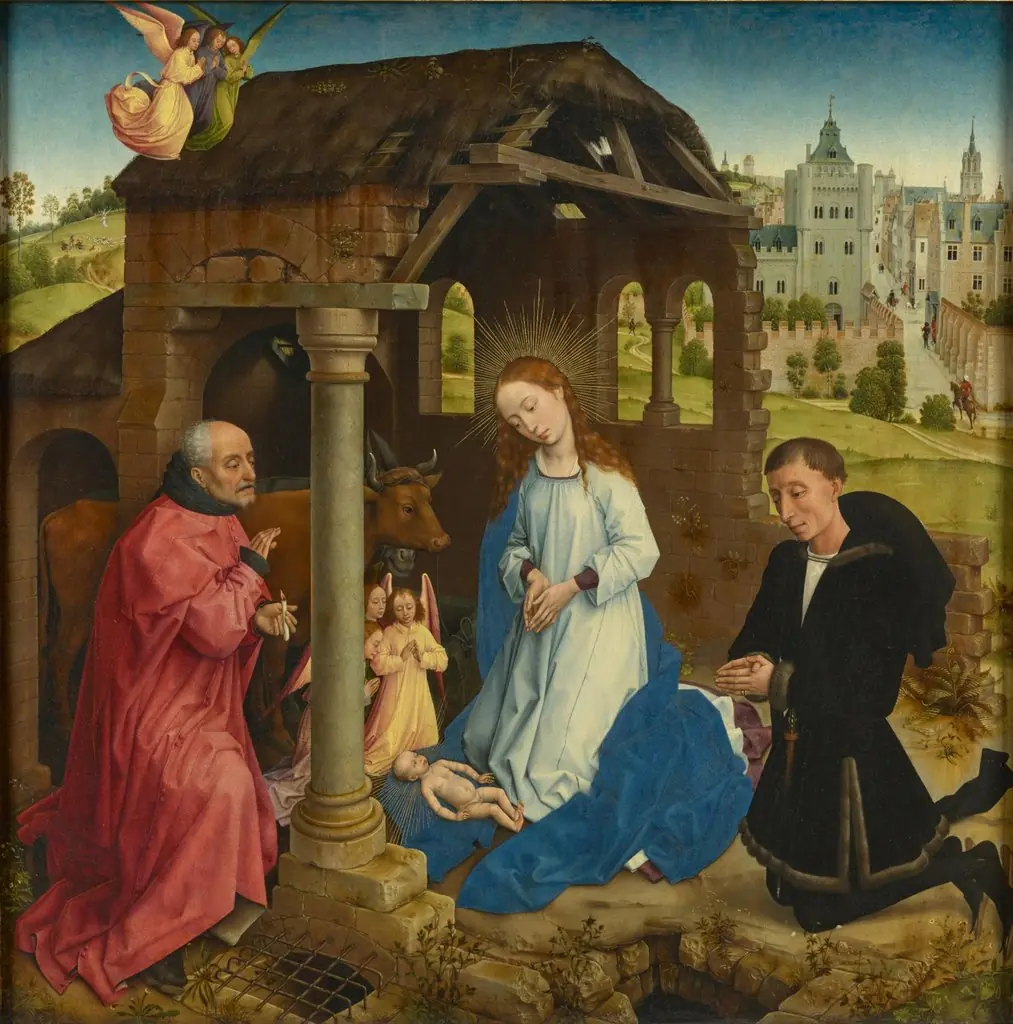 Bladelin Triptych Nativity (central panel)
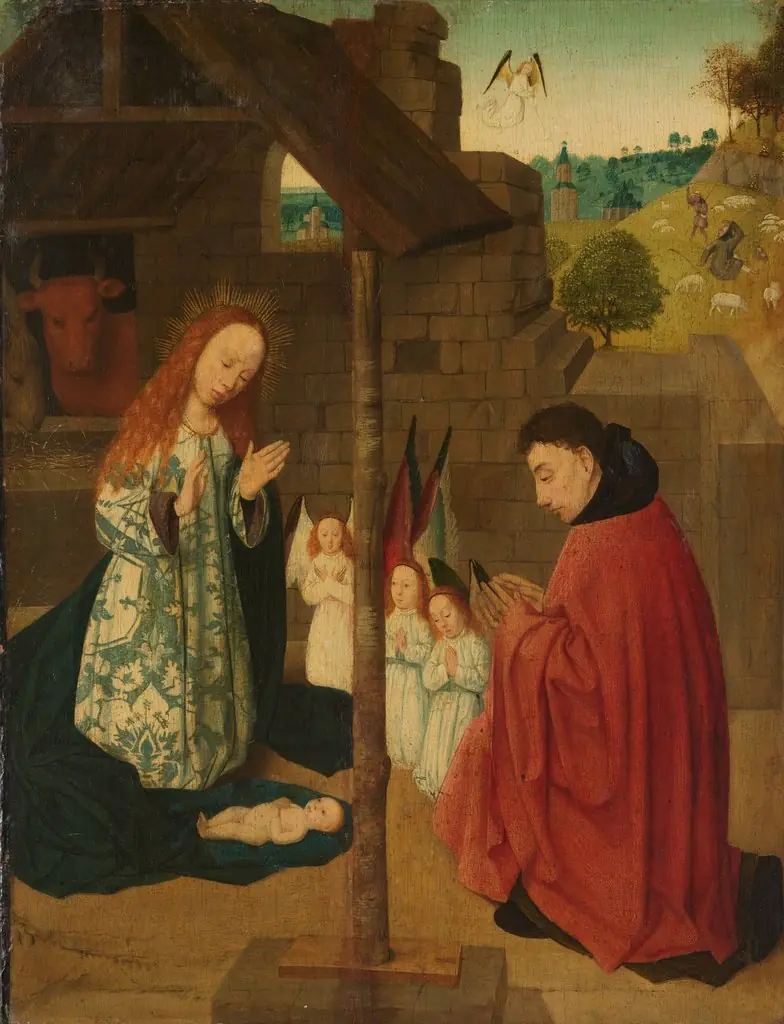 The nativity
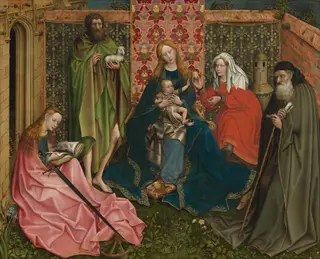 Madonna and Child with Saints in the Enclosed Garden
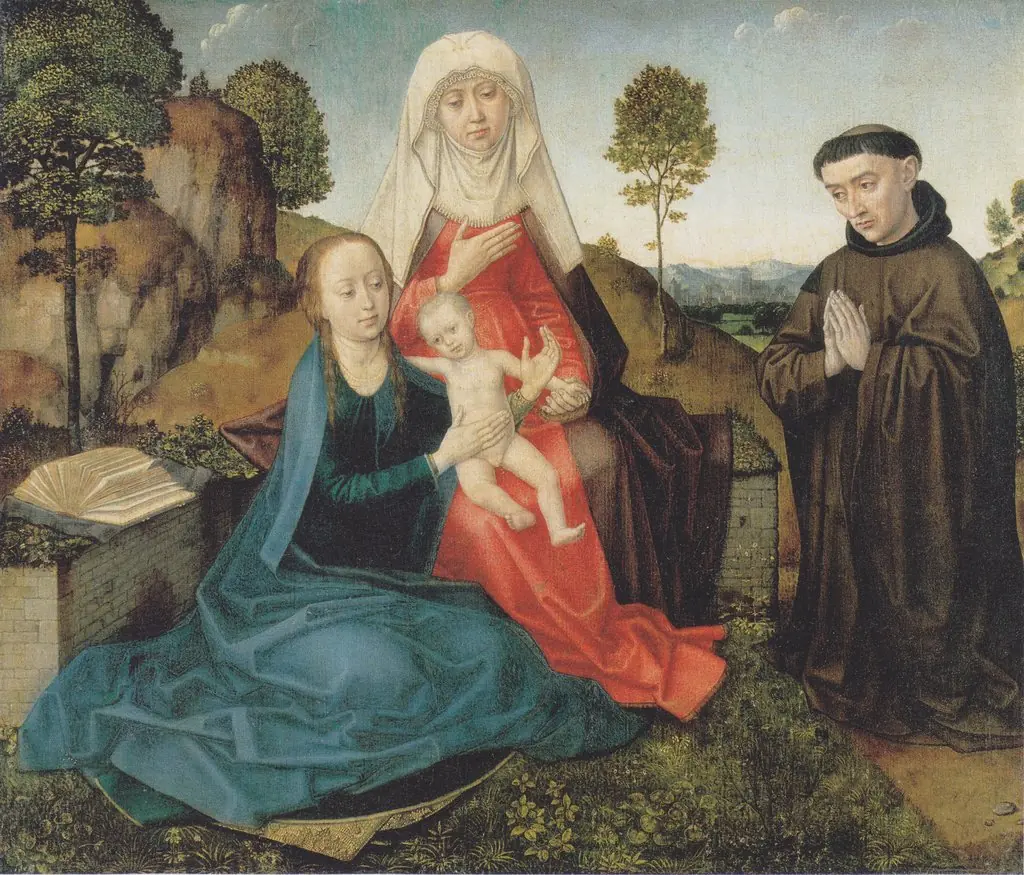 The Virgin and Child with a Franciscan Founder
 The Nativity
 The Holy Family in a Landscape
 Adoration of the Shepherds
 The Virgin and Child with Saint Anne
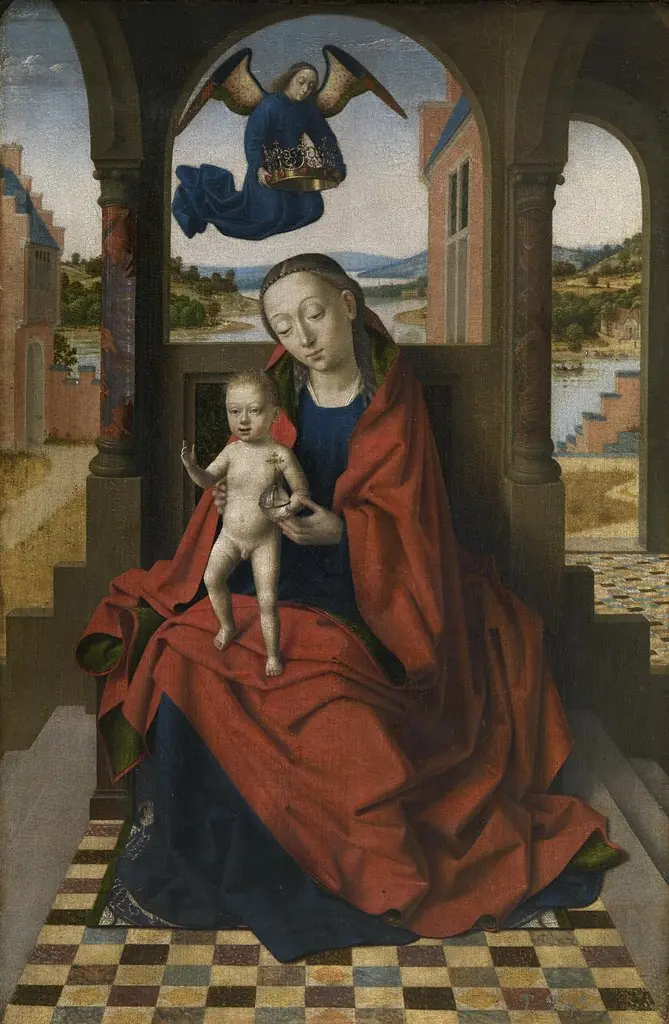 The Virgin and the Child
- The Holy Family with an Angel