Artwork
Maharao Chattar Sal (reigned 1758–64) of Kota in a Palanquin
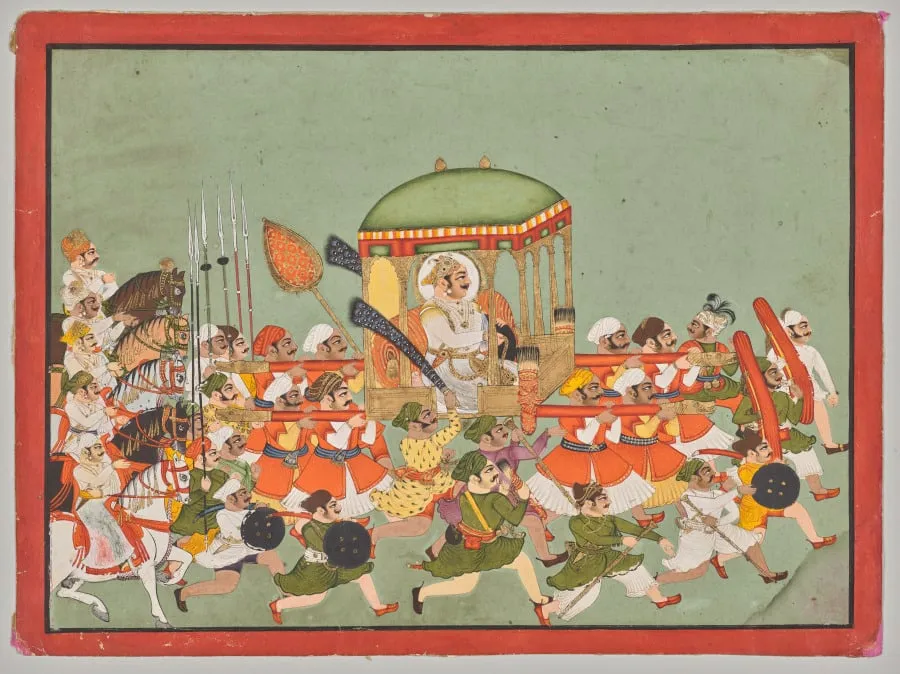
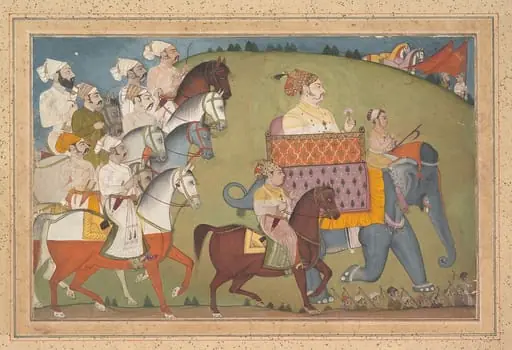
Maharao Chattar Sal (reigned 1758–64) of Kota in a Palanquin is an unspecified painting by the Patna School of Painting artist Unknown. It dates from 1760 and is held in the collection of the Cleveland Museum of Art. This painting depicts Maharao Chattar Sal of Kota being carried in a palanquin, surrounded by attendants and soldiers.
- Accession no.
- 1989.344
- Credit line
- Bequest of Mrs. Severance A. Millikin
About this work
Overview
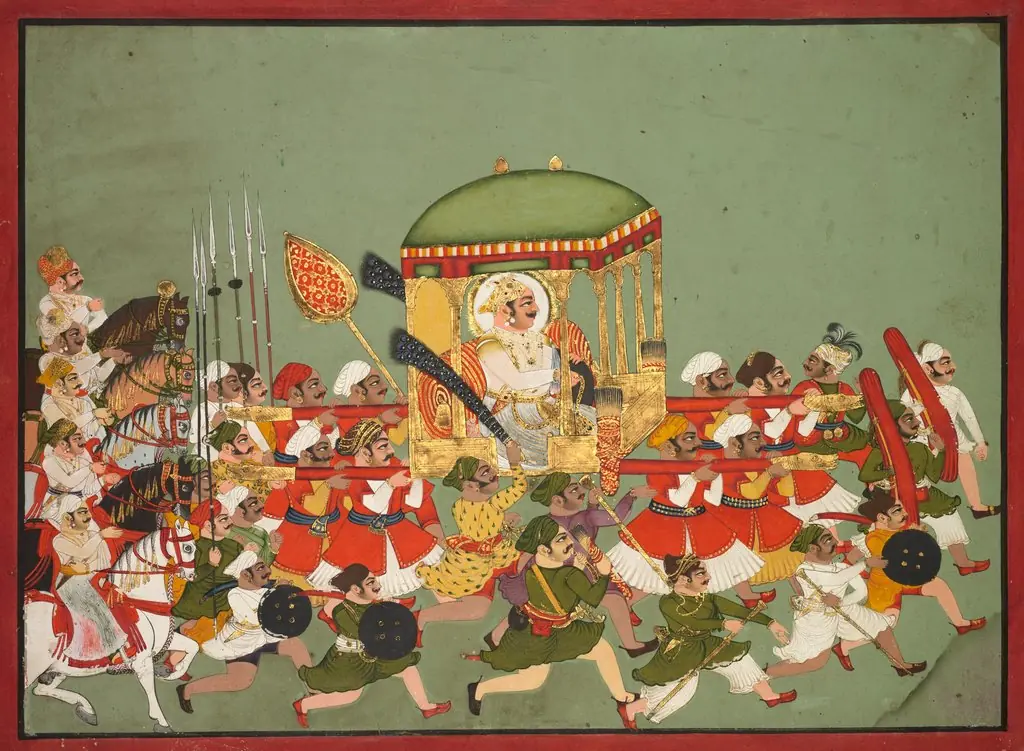
This painting depicts Maharao Chattar Sal of Kota being carried in a palanquin, surrounded by attendants and soldiers. The scene is characterized by vibrant colors and a sense of dynamic movement.
Subject & Meaning
The ruler is shown with a sun and moon disk behind his head, symbolizing divine approval of his rule. The retinue surrounding him, including cavaliers, spear bearers, and attendants with peacock fans, emphasizes his power and status.
Technique & Style
The painting exemplifies the Kota style, known for its dynamic and idealized portrayals of rulers. The use of bright colors and detailed depictions of the ruler's retinue creates a sense of grandeur and majesty.
History & Provenance
The painting originates from Kota, a kingdom in Rajasthan that gained independence in 1624 and supported a court atelier of artists. Maharao Chattar Sal reigned from 1758 to 1764.
Context
The artwork reflects the tradition of Kota artists depicting their rulers in scenes that highlighted their supreme status, often using symbols of royalty and grandeur to convey their power.
Artist & collection









 Untitled
 Rama and Sita
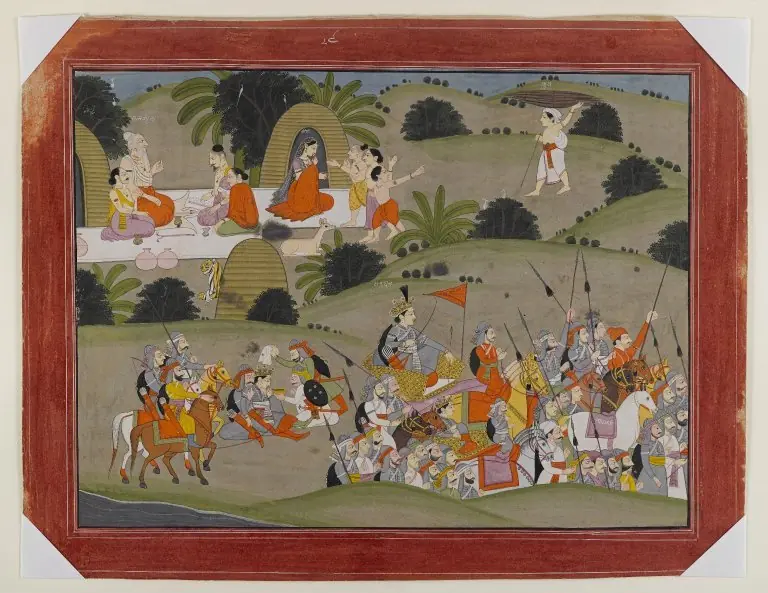 Battle between Lava and Rama's brother, Shatrughna, near the hermitage of Valmiki
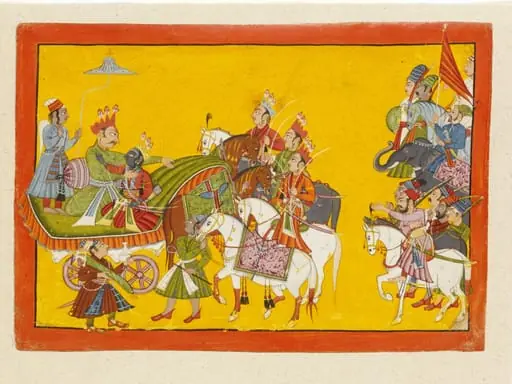 Dasaratha and Rama
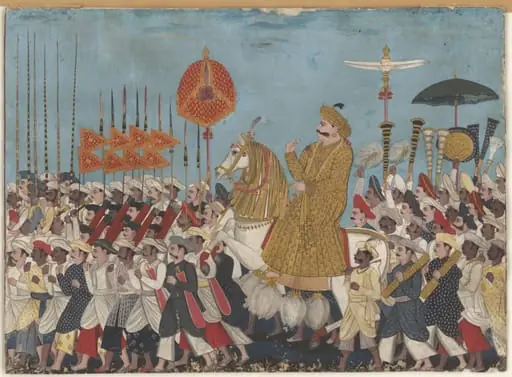 Raja Tulsaji of Tanjore
 Untitled
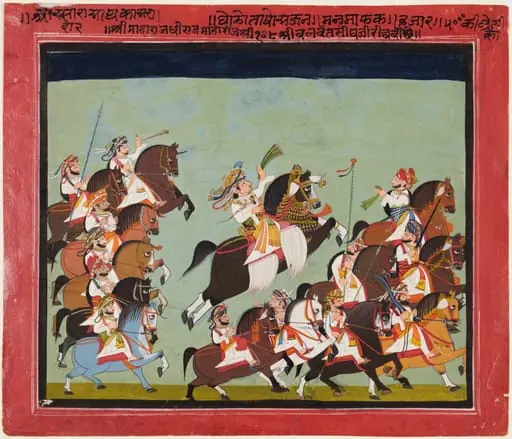 Maharaja Balwant Singh of Ratlam (r. 1825–57) in Procession with His Relatives and Courtiers
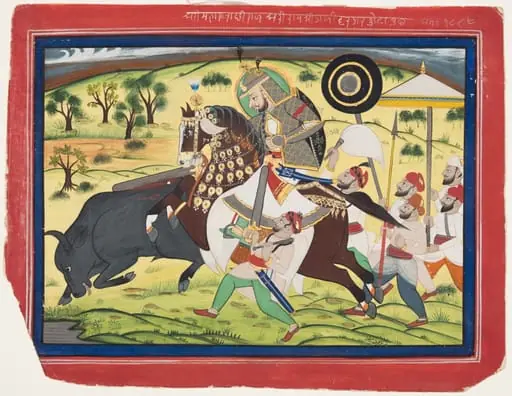 Maharao Ram Singh II of Kota (r. 1828–66) Hunting Buffalo