Artwork
Maid bringing a hookah to a lady (recto), from a Kalighat album
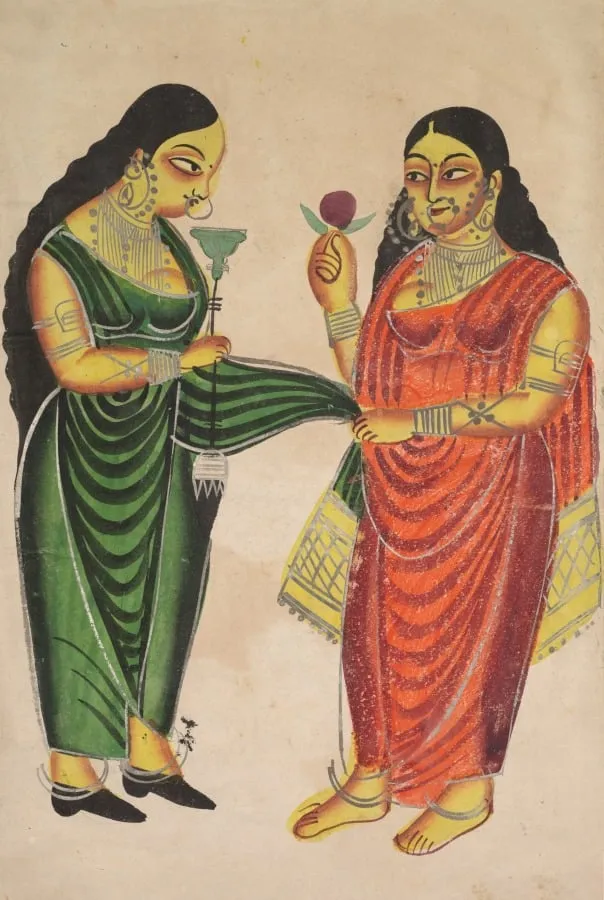
Maid bringing a hookah to a lady (recto), from a Kalighat album is an unspecified painting by the Bengal School artist Unknown. It dates from 1890 and is held in the collection of the Cleveland Museum of Art.
- Accession no.
- 2003.107.a
About this work
Overview
This painting is one panel from a Kalighat album, a series of watercolor works produced near the Kalighat temple in Kolkata during the 19th century. Created for a broad urban audience, these images blended religious iconography with sharp social commentary. The scene depicts a domestic moment charged with irony, reflecting the cultural tensions of colonial Bengal under British rule.
Subject & Meaning
The image subtly mocks their pretensions, using familiar domestic dynamics to expose the absurdity of adopting foreign customs while abandoning local values.
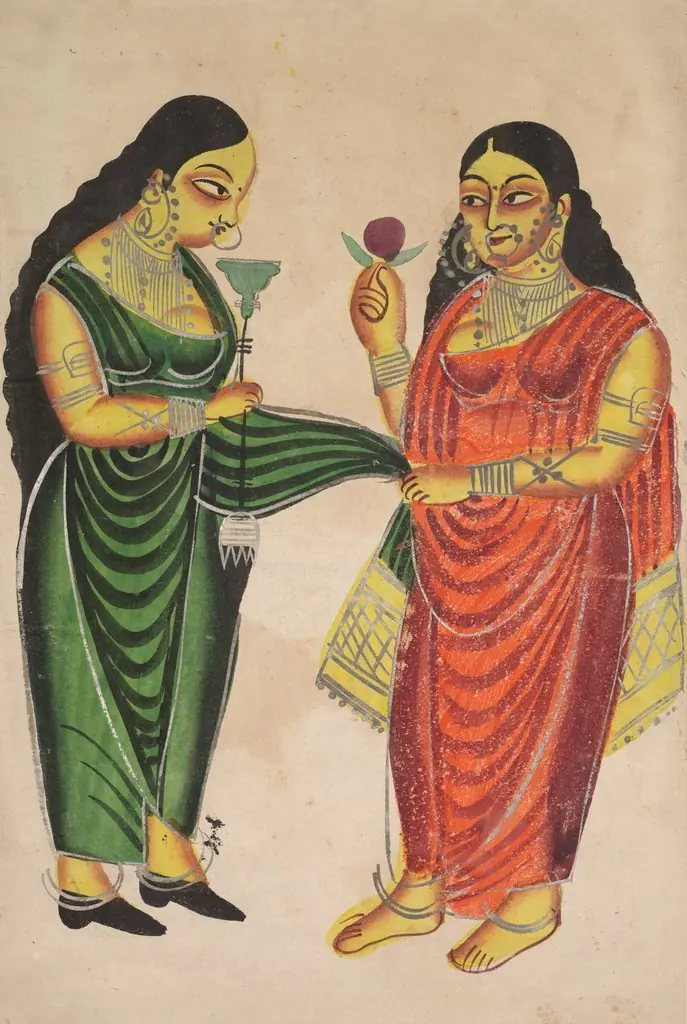
The painting portrays a servant in green offering a hookah to a woman dressed in red, her posture and adornment suggesting urban sophistication. The woman is likely a concubine or courtesan, a figure associated with the newly affluent Bengali babus who emulated British lifestyles. The image subtly mocks their pretensions, using familiar domestic dynamics to expose the absurdity of adopting foreign customs while abandoning local values.
Technique & Style
Executed in watercolor on paper, the work employs bold outlines and flat, unmodulated colors typical of Kalighat art. Figures are rendered with expressive, almost caricatured features, emphasizing gesture and costume over anatomical realism. The composition is tightly framed, directing attention to the interaction between servant and patron, reinforcing the social hierarchy through visual contrast and spatial arrangement.
History & Provenance
Produced in the mid-to-late 1800s, the painting emerged from a thriving artistic community near the Kalighat temple, catering to pilgrims and urban patrons. It entered the collection of the Cleveland Museum of Art through documented acquisitions in the 20th century, part of a broader effort to preserve Kalighat works as cultural artifacts rather than mere souvenirs.
Context
The rise of the Bengali babu class, native clerks employed by the East India Company, created a new social dynamic in Kolkata. These men adopted Western dress and habits, including the consumption of hookahs and association with courtesans, as markers of status. Kalighat artists responded with satirical imagery that exposed the contradictions of cultural mimicry in a colonial setting.
Legacy
Kalighat paintings like this one represent an early form of visual social critique in South Asia. They influenced later modernist movements in Indian art by demonstrating how folk traditions could engage with contemporary politics and class. Today, they are studied not only for their aesthetic qualities but as records of urban life under colonialism.
Artist & collection









- Maid bringing a hookah to a lady (recto), from a Kalighat album
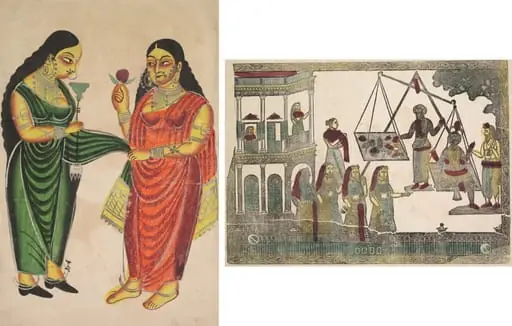 Leaf from a Kalighat album: Maid bringing a hookah to a lady (recto); Krishna weighed against precious objects(?) (verso)
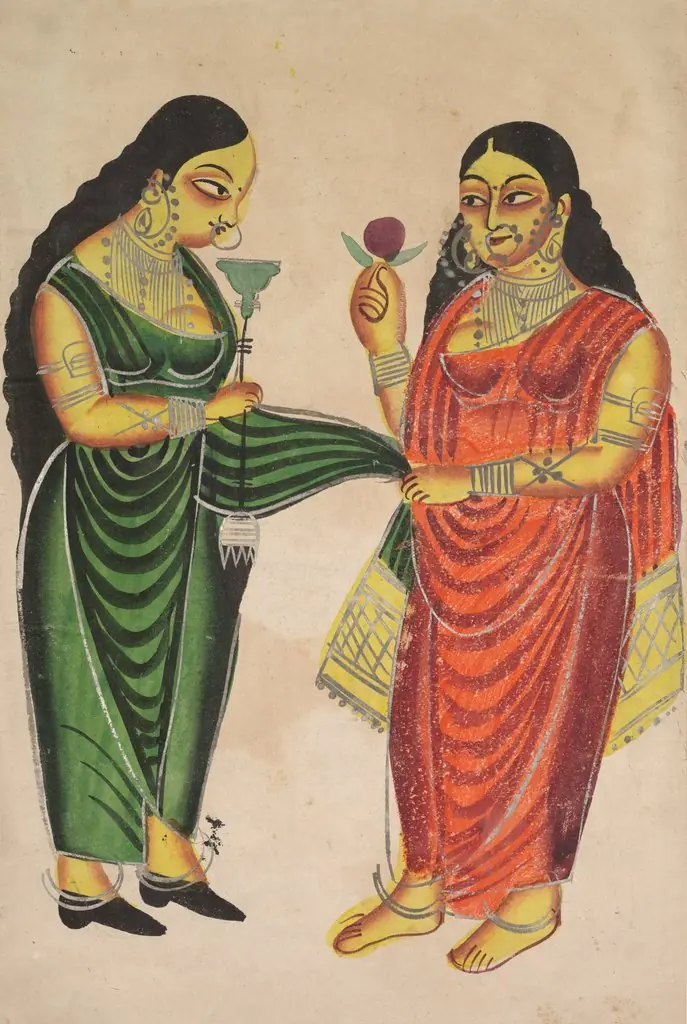 Leaf from a Kalighat album: Maid bringing a hookah to a lady (recto); Krishna weighed against precious objects(?) (verso)
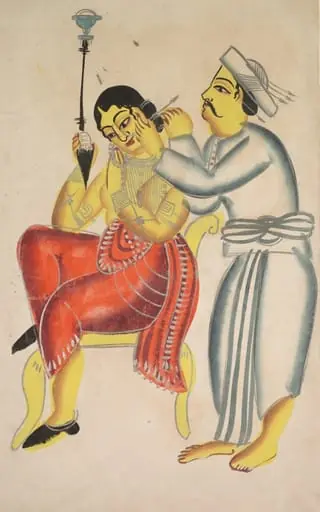 Barber Cleaning a Woman’s Ear
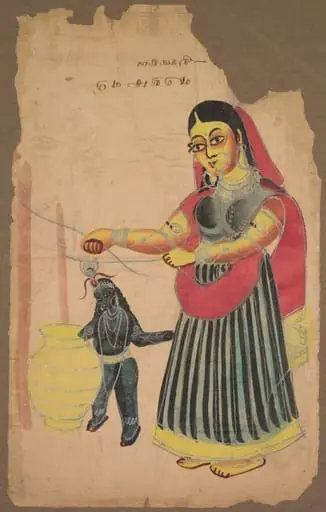 Yasoda with Krishna Churning Butter
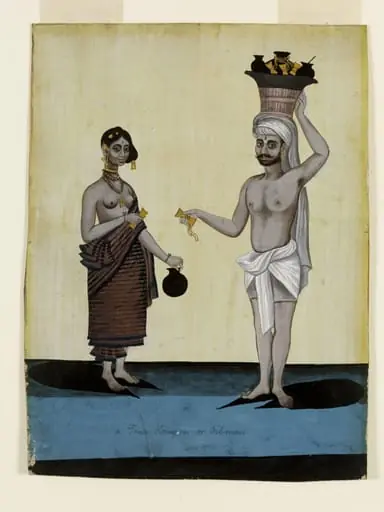 An oil-seller and his wife
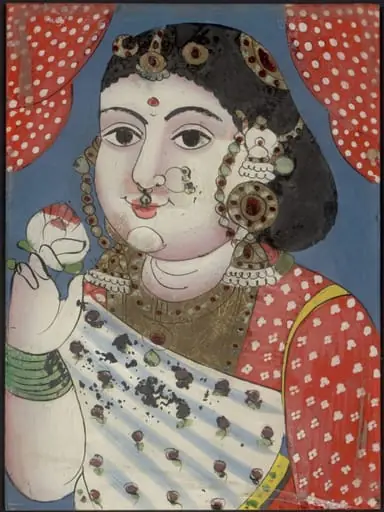 One of two portraits.