Artwork
一字金輪曼荼羅|Mandala of the One-Syllable Golden Wheel
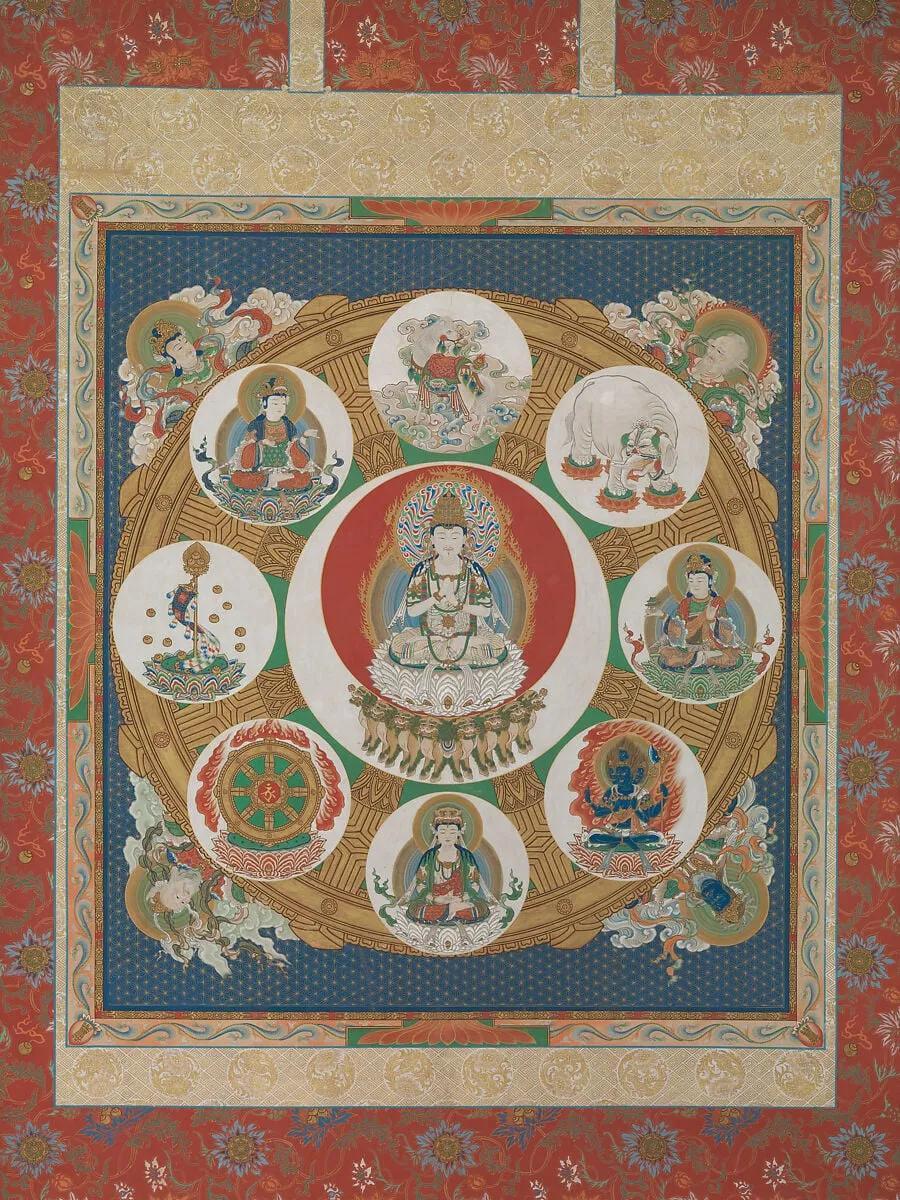
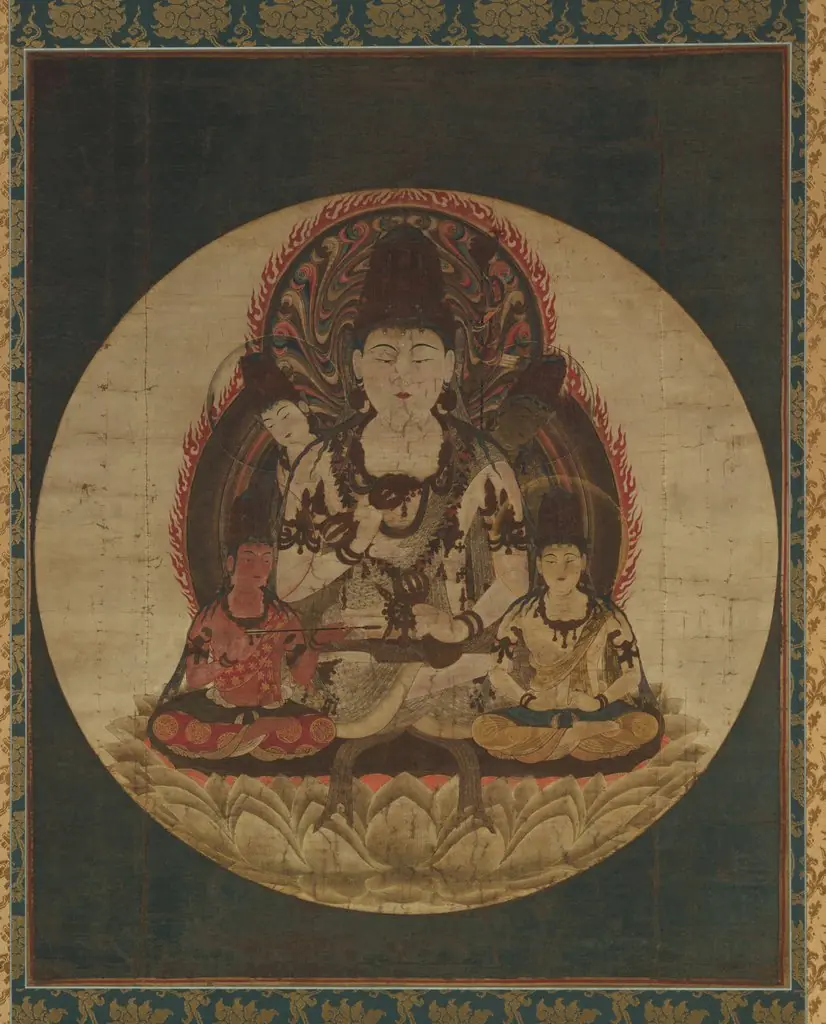
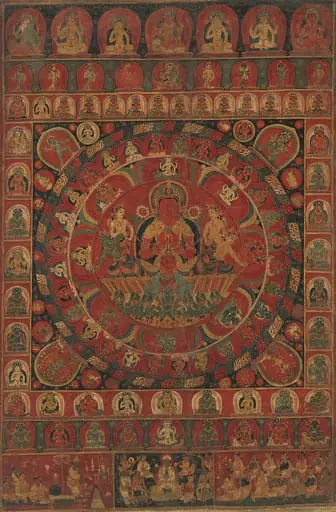
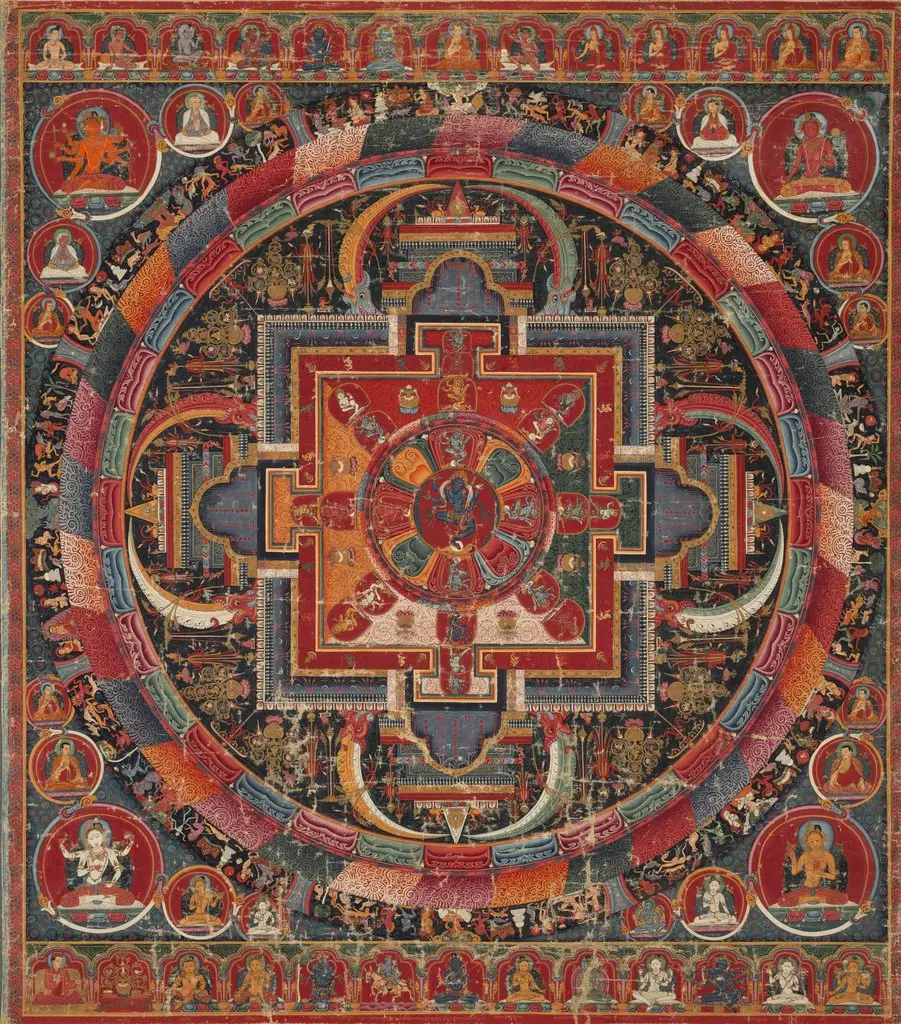
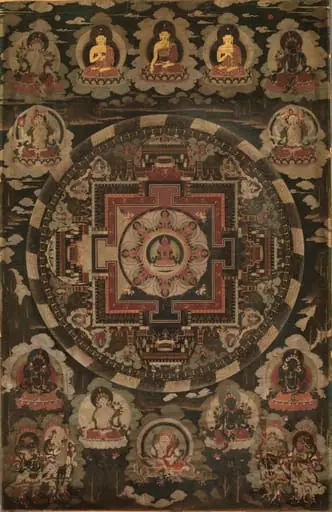
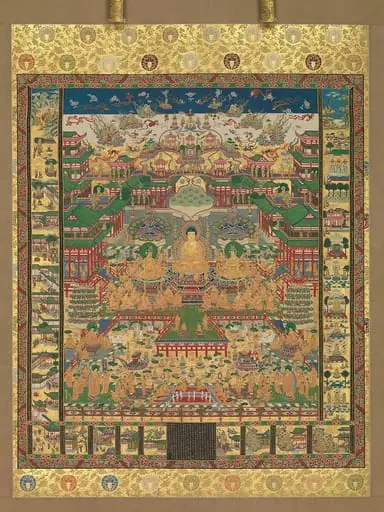
一字金輪曼荼羅|Mandala of the One-Syllable Golden Wheel is an ink painting. It dates from 1749 and is held in the collection of the Metropolitan Museum of Art. This hanging scroll, titled Mandala of the One-Syllable Golden Wheel, serves as a visual guide for Buddhist meditation.
- Accession no.
- 67.176
- Credit line
- Gift of Mr. and Mrs. L. W. Steiger, 1967
About this work
Subject & Meaning
The inclusion of the elephant serves as a key symbolic element within this composition, reinforcing the spiritual themes of the piece.
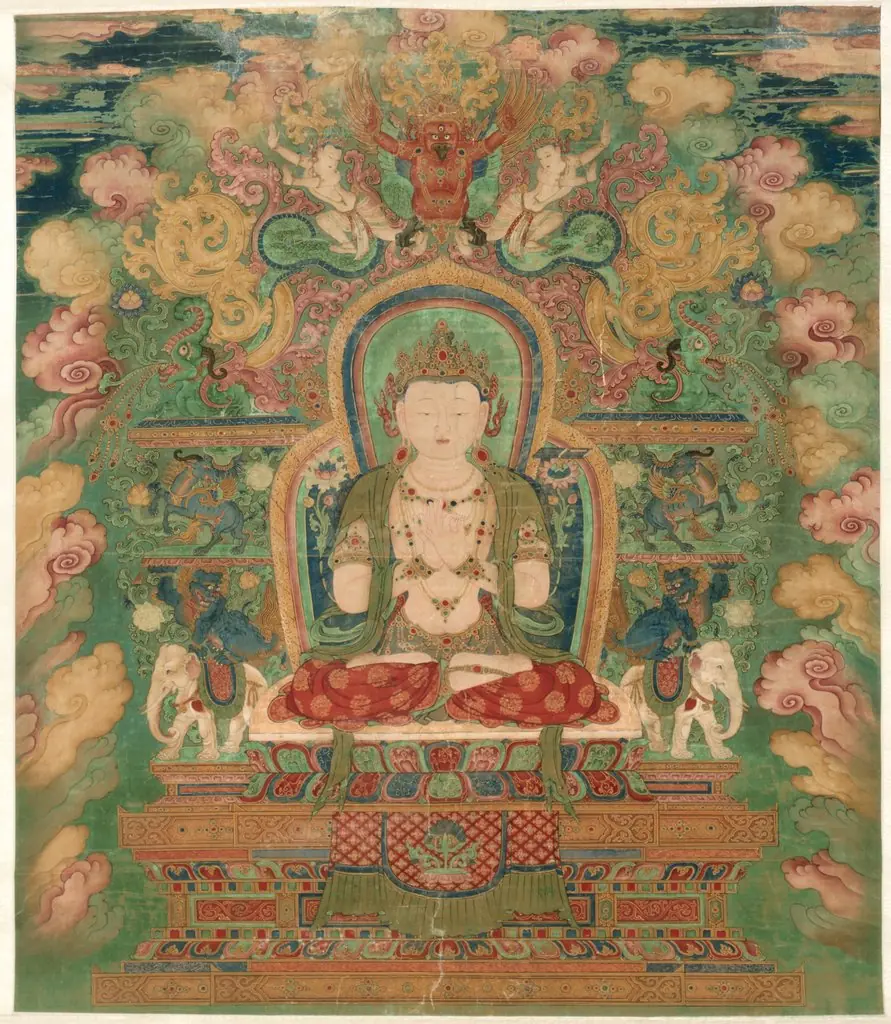
The Mandala of the One-Syllable Golden Wheel, created in 1749 in Japan, depicts the central figure of the Buddha alongside an elephant, set within a Buddhist religious context. As a hanging scroll executed in ink, color, and gold on silk, the work functions as a visual representation of specific Buddhist iconography associated with the One-Syllable Golden Wheel deity. The inclusion of the elephant serves as a key symbolic element within this composition, reinforcing the spiritual themes of the piece.
While the artist remains anonymous, the painting's structure and imagery are designed to facilitate religious contemplation and embody the doctrinal significance of the Golden Wheel tradition. The artwork, held by the Metropolitan Museum of Art, exemplifies the 18th-century Japanese tradition of rendering complex theological concepts through detailed painted mandalas.
Technique & Style
The work is a hanging scroll painted in ink, mineral pigments, and gold leaf on silk. Its support is silk, and the medium comprises ink, color, and gold applied with brush technique. The composition follows the mandala format implied by its title, centering on a Buddha figure accompanied by an elephant, reflecting Buddhist iconography.
Classified as a religious painting, it exemplifies Edo-period Japanese Buddhist art. The scroll measures approximately 112.4 cm high by 99.7 cm wide. No condition information is provided in the sources.
History & Provenance
The work known as 一字金輪曼荼羅|Mandala of the One-Syllable Golden Wheel was produced in Japan in 1749 as a hanging scroll executed in ink, color, and gold on silk. Its subject matter includes a Buddha and an elephant within a Buddhist religious context. No record of a specific patron or commission survives, and the artist is identified only as anonymous.
The work measures 112.4 cm in height and 99.7 cm in width and is now held in the collection of the Metropolitan Museum of Art. The available records do not specify an accession number, nor do they document any exhibition or loan history for the object.
Legacy
The painting is part of the Metropolitan Museum of Art's collection, where it serves as a reference for scholars studying 18th-century Japanese Buddhist art. As a hanging scroll depicting a one-syllable golden-wheel mandala with a Buddha, an elephant, and other Buddhist symbols, it illustrates the visual language of esoteric Buddhism and continues to inform research on mandala iconography. Its date of 1749 and its material execution in ink, color, and gold on silk further exemplify the technical sophistication of the period.
Overview
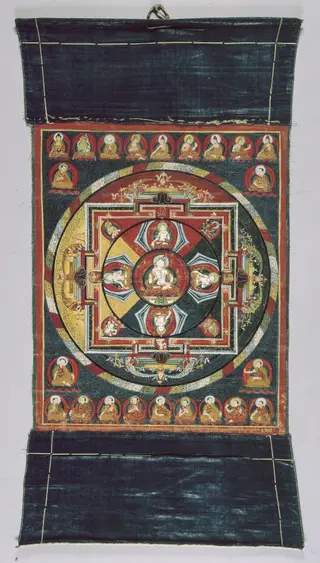
This hanging scroll, titled Mandala of the One-Syllable Golden Wheel, serves as a visual guide for Buddhist meditation. Executed with ink, color, and gold on silk, it depicts a luminous golden circle, symbolizing the Buddhist cosmos, set against a deep blue background. Within this sacred diagram, intricate details invite contemplation, reflecting its function as a spiritual map rather than a decorative object.
Artist & collection