Artwork
当麻曼荼羅|Taima Mandala
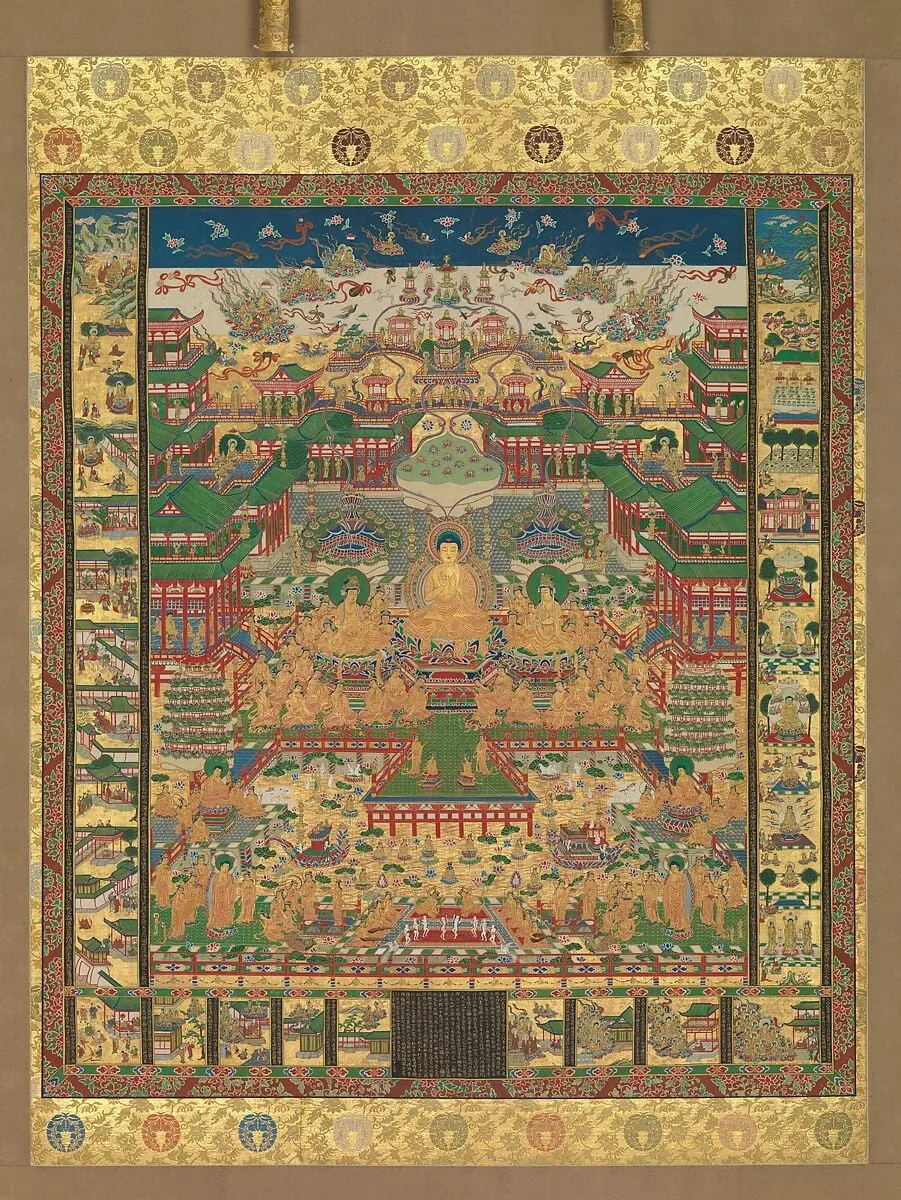
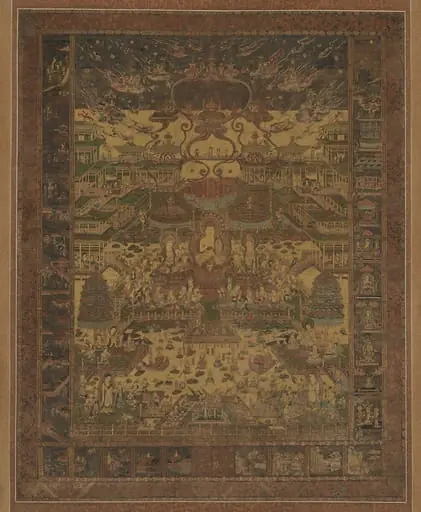
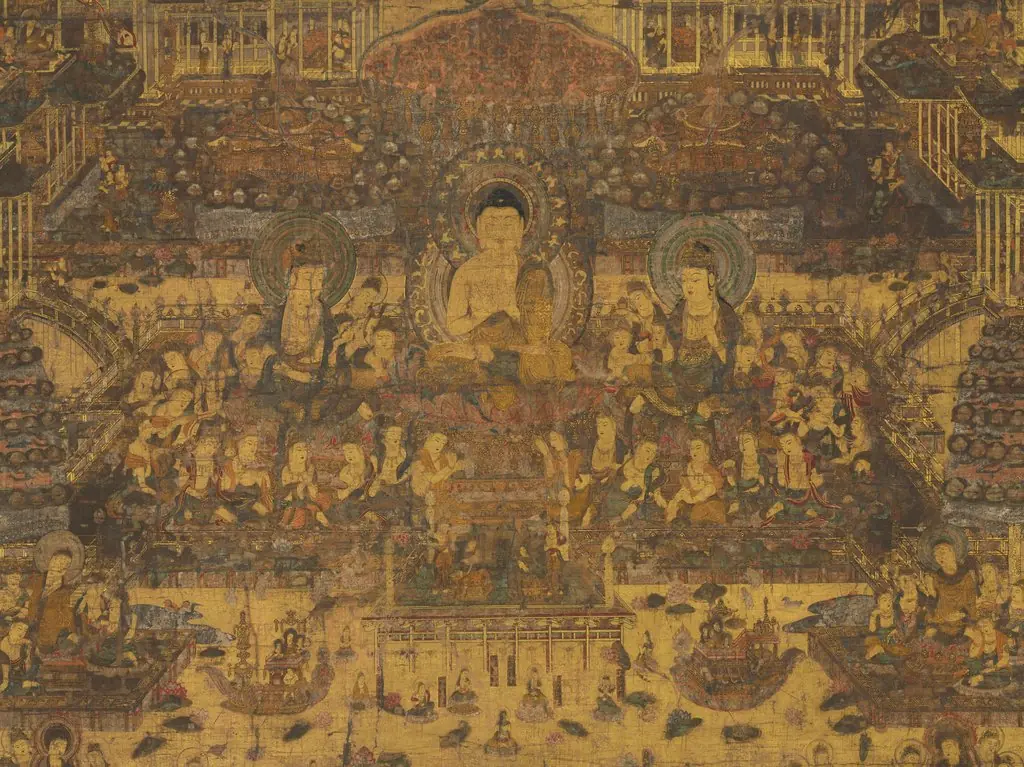
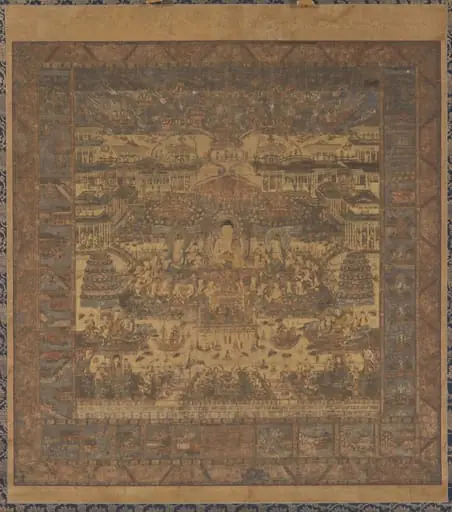
当麻曼荼羅|Taima Mandala is an ink painting. It dates from 1750 and is held in the collection of the Metropolitan Museum of Art. The Taima Mandala is a large hanging scroll, meticulously rendered with ink, vibrant colors, and extensive gold on silk.
About this work
Subject & Meaning
The Taima Mandala, a hanging scroll executed in 1750, serves as a profound religious visualization within the Buddhist tradition.
The Taima Mandala, a hanging scroll executed in 1750, serves as a profound religious visualization within the Buddhist tradition. The work depicts the Buddha seated within a celestial palace, representing the Pure Land of Ultimate Bliss. As a mandala, the painting functions as a symbolic map of the Buddhist cosmos, illustrating the spatial arrangement of the Pure Land and the presence of the Buddha.
Created on silk using ink, color, and gold, this anonymous Japanese artwork encapsulates core Buddhist iconography by centering the divine figure within a grand architectural setting. The imagery is designed to aid devotees in meditation and visualization practices, offering a tangible representation of the spiritual realm promised in Buddhist teachings.
Technique & Style
Created in 1750, the Taima Mandala is a religious hanging scroll executed in Japan. The artwork utilizes a silk support, upon which the image is rendered using ink, color pigments, and gold. This combination of materials is characteristic of traditional Japanese Buddhist painting, where the silk provides a smooth ground for the detailed depiction of the Pure Land paradise.
The formal composition centers on the Buddha and a celestial palace, reflecting the genre's devotional purpose. As an anonymous work held in the Metropolitan Museum of Art, the piece exemplifies the stylistic conventions of mid-18th-century Japanese religious art, employing gold and vibrant colors to convey the splendor of the Buddhist realm.
History & Provenance
The Taima Mandala was produced in 1750 in Japan by an anonymous painter working on silk with ink, color, and gold. The work portrays Buddha, a palace, and other Buddhist imagery and is categorized as a religious painting. It is held by the Metropolitan Museum of Art, where it is catalogued under inventory number 14.76.54, having entered the collection as a hanging scroll.
The piece was created as a religious image, though specific commissioning details are not recorded. The available sources confirm its current location and accession identifier but do not document any exhibition history or prior provenance details.
Overview
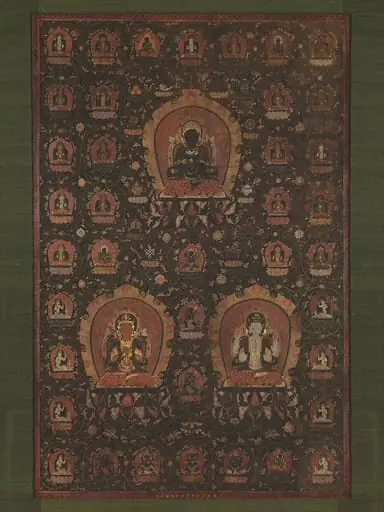
The Taima Mandala is a large hanging scroll, meticulously rendered with ink, vibrant colors, and extensive gold on silk. It depicts a complex Buddhist paradise, characterized by numerous tiny figures, elaborate golden architectural structures, and a prominent central Buddha. The scroll's original brilliance, featuring vivid reds, blues, and shimmering gold leaf, remains evident, reflecting its enduring visual impact.
Context
The creation of the Taima Mandala was primarily driven by a spiritual and educational objective rather than artistic recognition. The absence of an artist's signature underscores its function as a devotional and didactic tool, intended to guide adherents in their understanding of Buddhist principles and the path to enlightenment, rather than to celebrate individual authorship.
Artist & collection