Artwork
Twenty-three Deity Nairatma Mandala
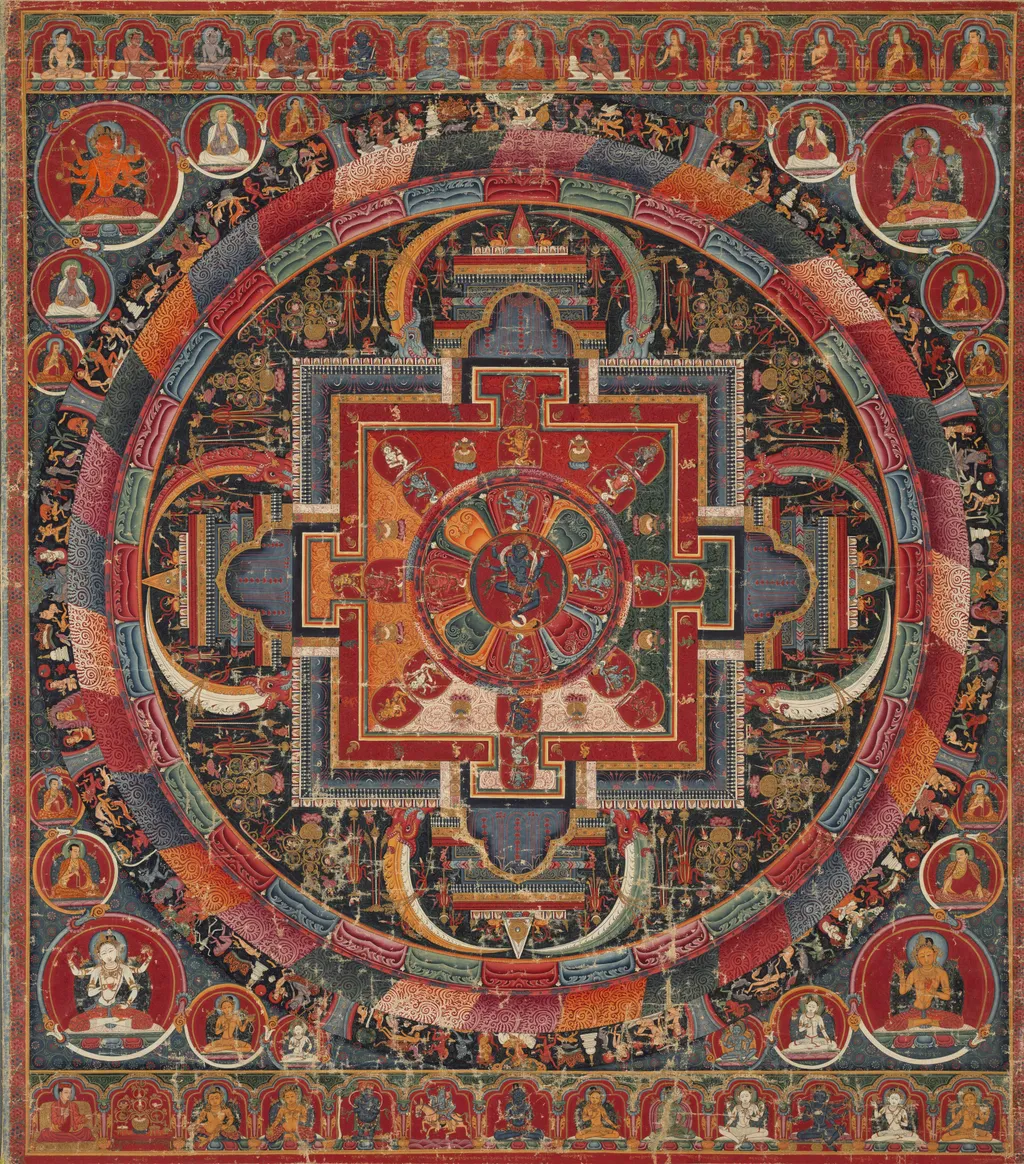
Twenty-three Deity Nairatma Mandala is an unspecified painting. It dates from 1375 and is held in the collection of the Cleveland Museum of Art.
About this work
History & Provenance
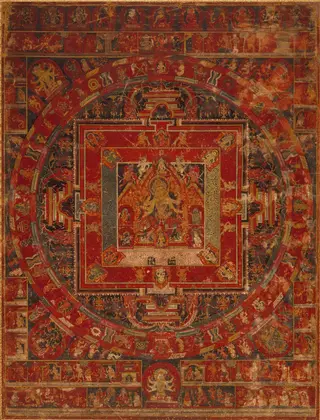
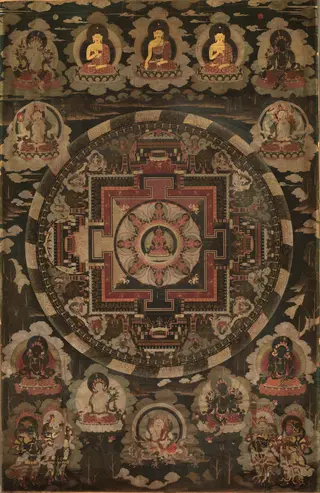
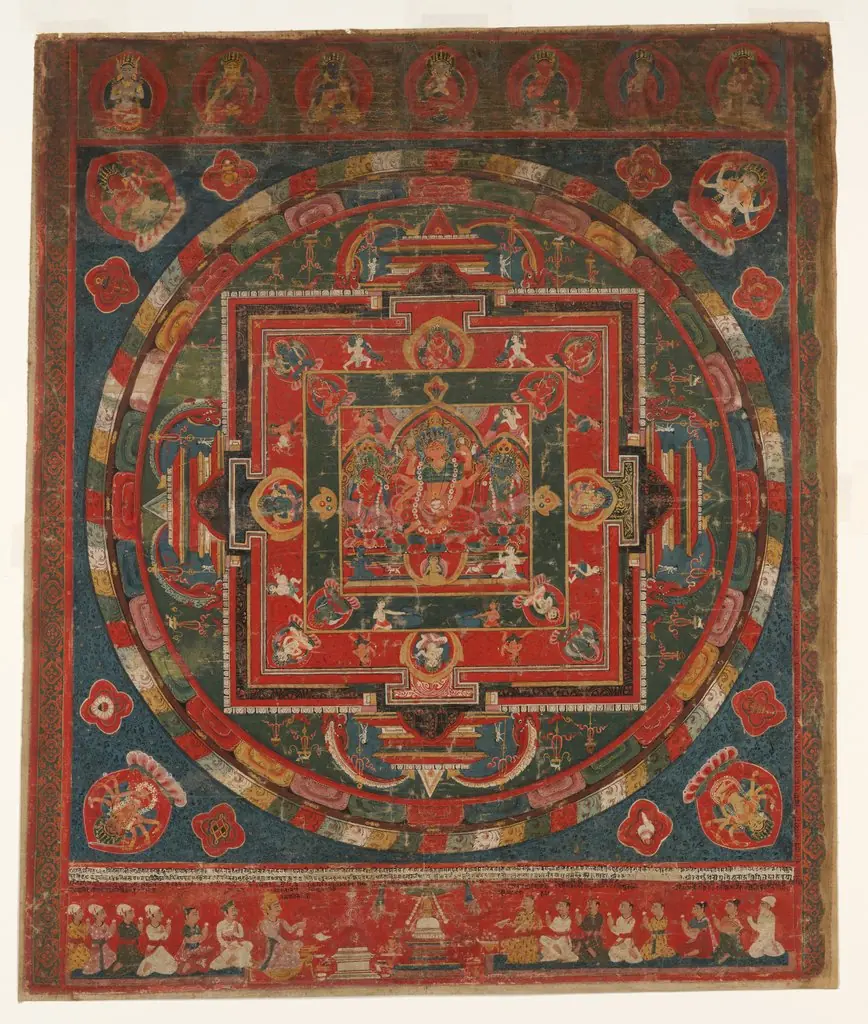
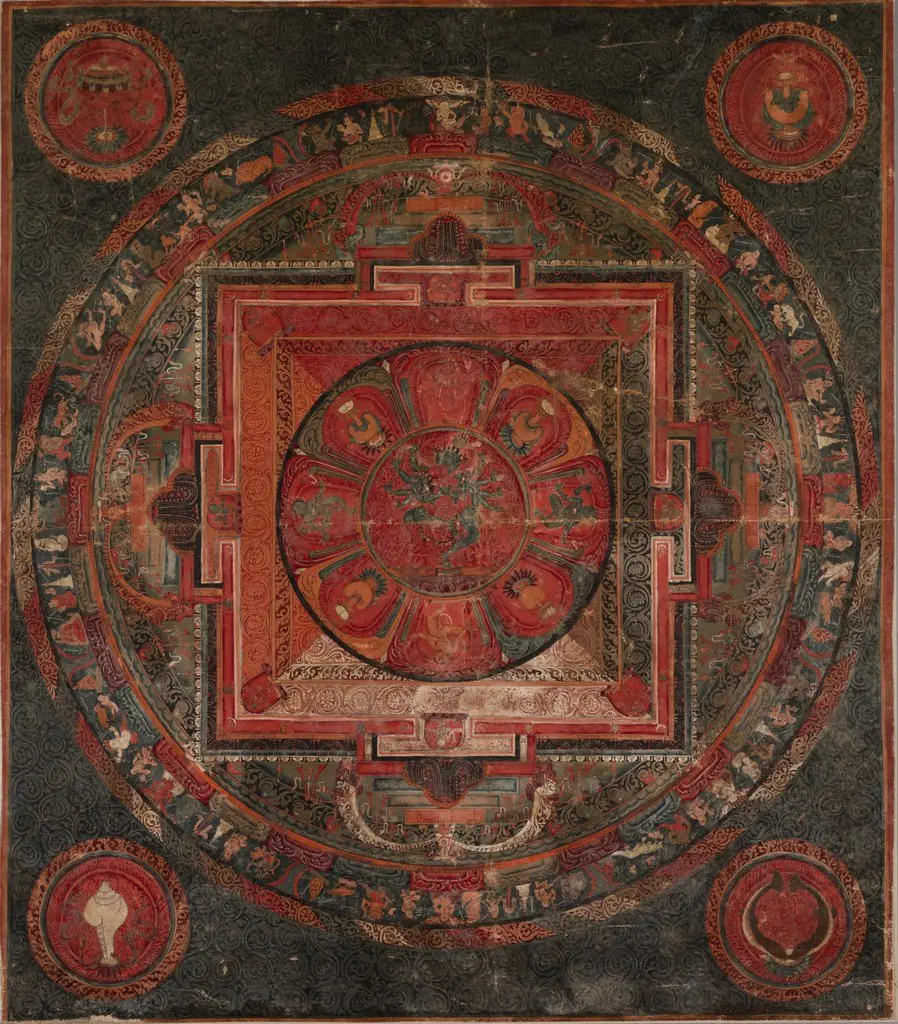
The work portrays a complex mandala populated by twenty‑three deities linked to the goddess Nairatma, exemplifying Tibetan Buddhist visual symbolism.
The Twenty-three Deity Nairatma Mandala is a religious painting dated to 1375. It was created by an unknown artist, as no specific creator is identified in the available records. The work is currently held in the collection of the Cleveland Museum of Art in Cleveland. Its inception is recorded as January 1, 1375.
The painting titled Twenty‑three Deity Nairatma Mandala, created in 1375, belongs to the collection of the Cleveland Museum of Art, where it is recorded as a religious painting. The work portrays a complex mandala populated by twenty‑three deities linked to the goddess Nairatma, exemplifying Tibetan Buddhist visual symbolism. Its accession into the museum’s Asian art department was documented in the early 1990s, and the piece has been featured in several exhibitions of Himalayan art, highlighting its role in the study of religious art of the region.
Legacy
The painting known as Twenty‑three Deity Nairatma Mandala entered the Cleveland Museum of Art collection and is catalogued as a 14th‑century religious work. Its creation date of 1375 places it within the early period of Indian‑Tibetan devotional art, and its inclusion in a major museum has made it a reference point for scholars studying mandala iconography. The attribution to an unknown artist does not diminish its role as a representative example of the genre, and its presence in the museum’s holdings has contributed to ongoing research on the evolution of multi‑deity compositions in Asian religious painting.
Overview
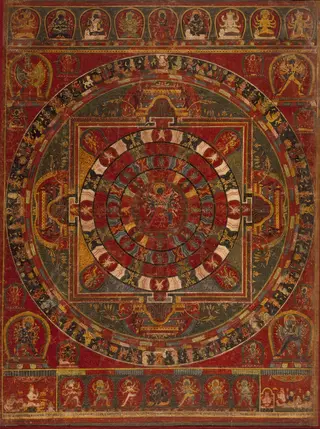
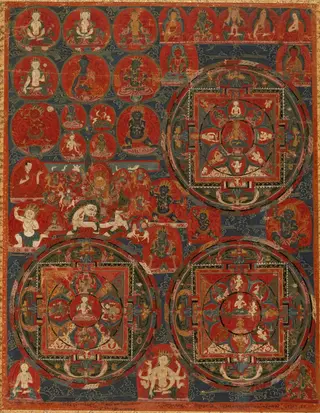
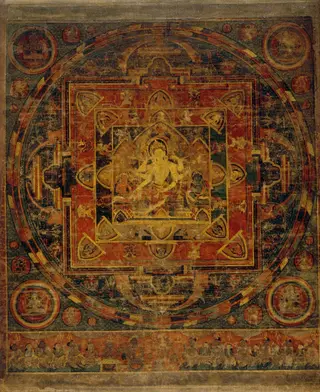
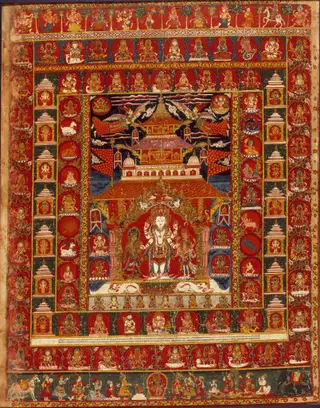
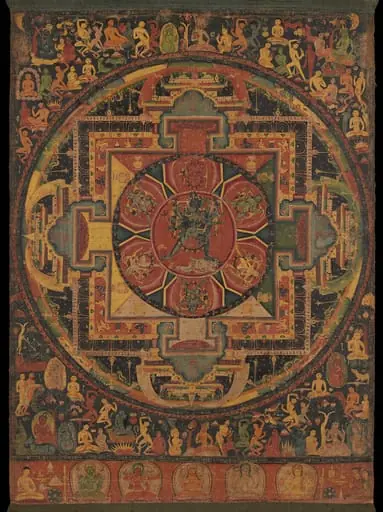
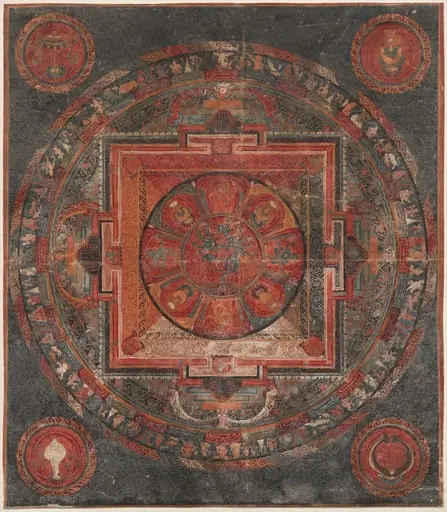
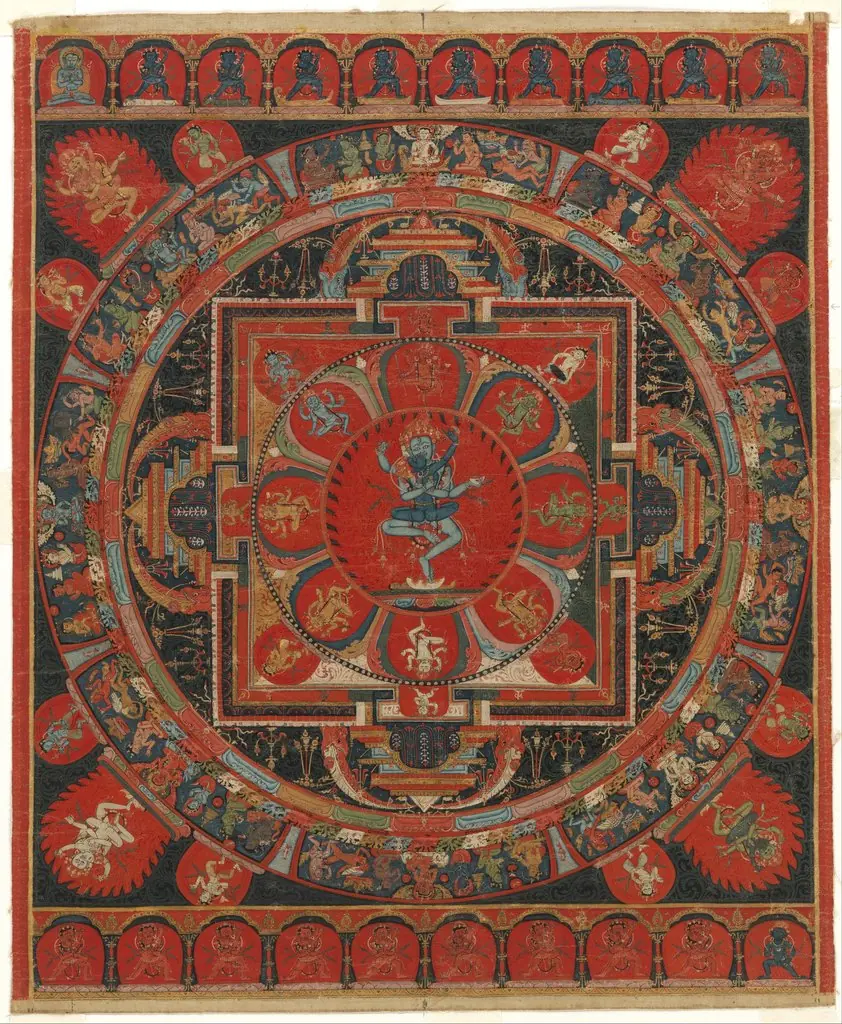
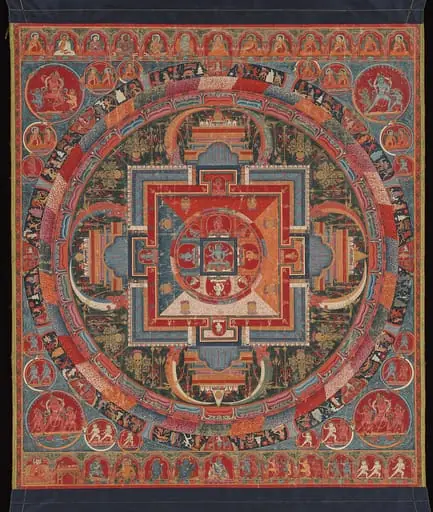
This painting, titled Twenty-three Deity Nairatma Mandala, presents a complex and vibrant composition. It features a central blue figure within a prominent circle, surrounded by numerous smaller figures and intricate patterns. The artwork is characterized by its rich palette of deep reds, blues, and golds, which create a striking contrast against a darker ground. Its overall structure resembles a detailed map, guiding the viewer through various symbolic elements.
Subject & Meaning
The composition of the Twenty-three Deity Nairatma Mandala is highly structured, suggesting a symbolic or cosmological diagram. At its core, a blue figure grasps a wheel, encircled by elaborate red and gold motifs. This central element is flanked by smaller circular enclosures, each containing seated figures clad in red robes.
The periphery of the painting is populated with miniature depictions of human figures, animals, and architectural forms, all interconnected by flowing lines, creating a dense narrative.
Technique & Style
The visual impact of this painting stems from its intense coloration and dynamic forms. Bright hues, particularly deep reds, blues, and golds, are applied with precision, creating a vivid contrast that defines the various sections. Swirling shapes and intricate patterns contribute to the energetic quality of the piece.
The meticulous arrangement of figures and symbols within a map-like framework demonstrates a deliberate and detailed artistic approach, emphasizing clarity and symbolic representation.
Artist & collection