Artwork
Marie de Medicis, Consort of Henry IV, King of France
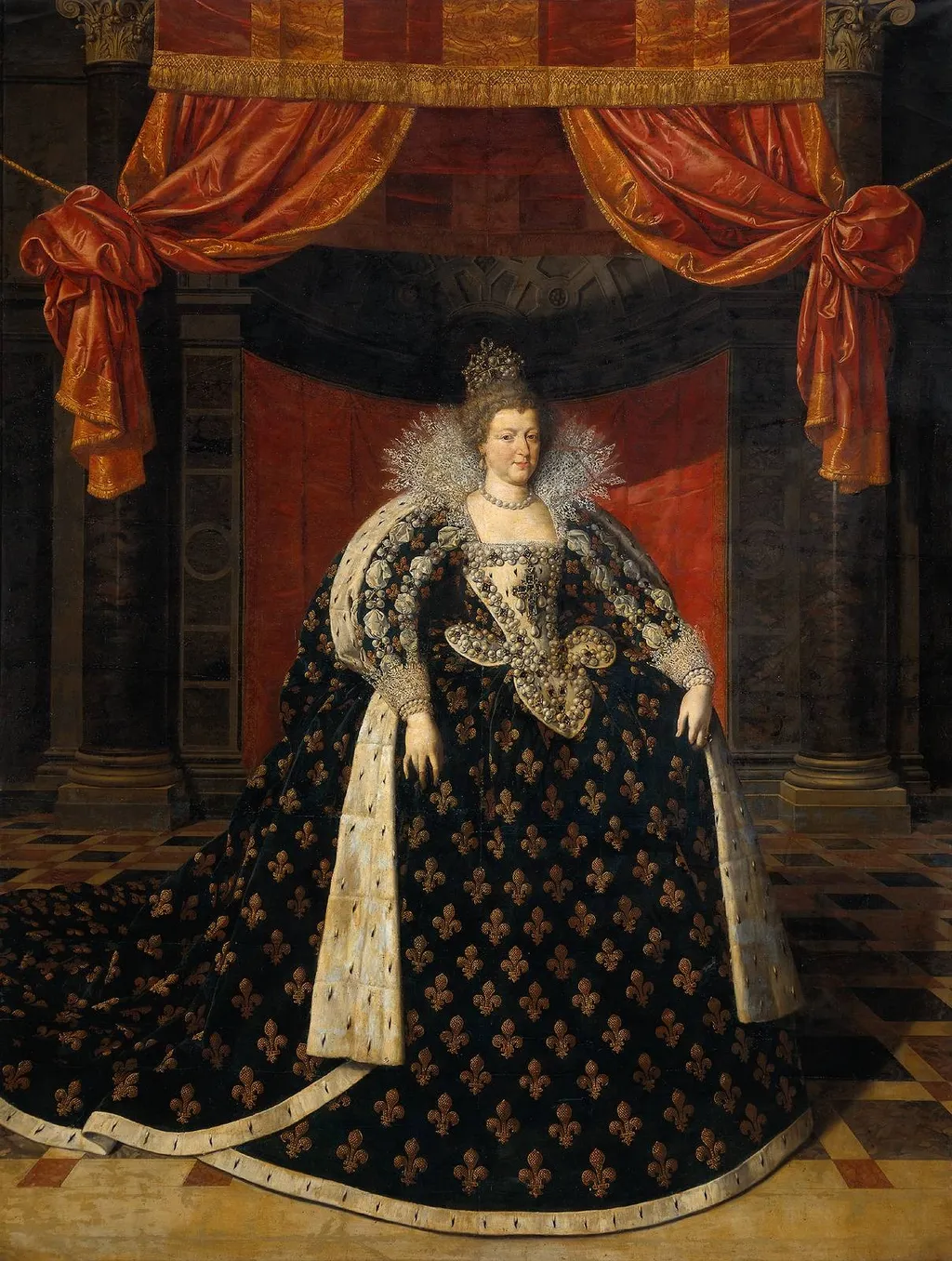
Marie de Medicis, Consort of Henry IV, King of France is an oil painting. It dates from 1610 and is held in the collection of the Rijksmuseum. The work portrays a woman dressed in an opulent black gown trimmed with gold, standing before a deep red curtain.
About this work
Subject & Meaning
The image functions as a dynastic portrait, emphasizing Marie’s role as queen consort through attire and poised bearing, rather than overt allegory.
The portrait depicts Marie de Médicis, consort of Henry IV of France, shown in three-quarter view against a dark ground. She wears an elaborate ruff and sumptuous gown with pearl-trimmed sleeves, conveying her royal status and contemporary French court fashion of the early seventeenth century. The painting’s restrained palette and precise rendering align with the portraiture of Frans Pourbus the Younger, whose workshop produced images that reinforced dynastic legitimacy and ceremonial presence for the Medici family in France.
The image functions as a dynastic portrait, emphasizing Marie’s role as queen consort through attire and poised bearing, rather than overt allegory.
Technique & Style
The portrait of Marie de' Medici was executed in oil paint on canvas, a format typical for early 17th‑century European portraiture. The work measures 285 cm in height by 218 cm in width and was created in Paris, reflecting the courtly environment of the French monarchy. Executed in the workshop of Frans Pourbus the Younger, the painting demonstrates a refined handling of light and a restrained palette that emphasizes the sitter’s dignified presence.
Its formal composition combines a three‑quarter view with meticulous rendering of texture, while the stylistic choices align with the transition from Mannerist to Baroque sensibilities.
History & Provenance
The portrait of Marie de' Medici was created in Paris in 1610 as part of a series of state portraits commissioned for the French court. Executed in oil on canvas by the workshop of Frans Pourbus the Younger, it measures 285 cm by 218 cm and depicts the consort of Henry IV. The work entered the collection of the Rijksmuseum, where it remains on display.
Provenance records indicate the painting was produced in the early 17th century and has been part of the Rijksmuseum’s holdings since its acquisition, reflecting its enduring significance as a representation of Marie de' Medici.
The piece is classified as a portrait and is cataloged under the subject Marie de' Medici, underscoring its role in diplomatic and artistic circles of the period.
Marie de' Medici, consort of Henry IV of France, is represented by a portrait held in the Rijksmuseum collection in Amsterdam. The work is accessioned under Rijksmuseum inventory number SK-A-1835. It has been featured in exhibitions at the Rijksmuseum, including the 2010 presentation of works from the museum’s holdings of Dutch and Flemish masters, and was part of the 2016 exhibition 'Women of the Baroque' that highlighted female figures in early modern European art.
The painting entered the museum’s collection through a bequest in the early twentieth century, documented in the museum’s acquisition records.
Overview
The work portrays a woman dressed in an opulent black gown trimmed with gold, standing before a deep red curtain. She wears a crown and an elaborate necklace, while the fabric of her dress is adorned with gold fleur‑de‑lis motifs. The scene is set on a tiled floor, and the overall composition conveys a sense of regal splendor.
Artist & collection

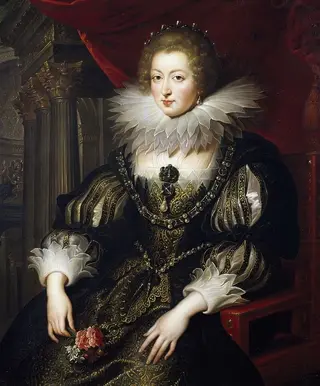 Portrait of Anne of Austria, Queen of France (1601-1666)
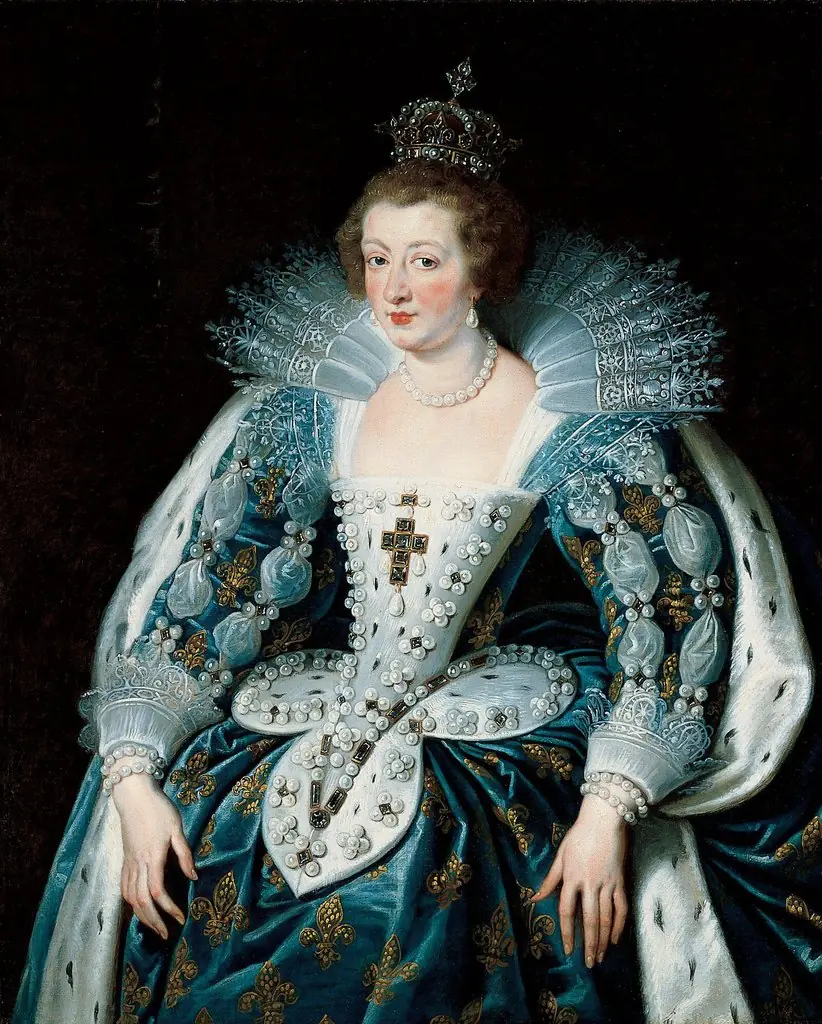 Portrait of Anne of Austria
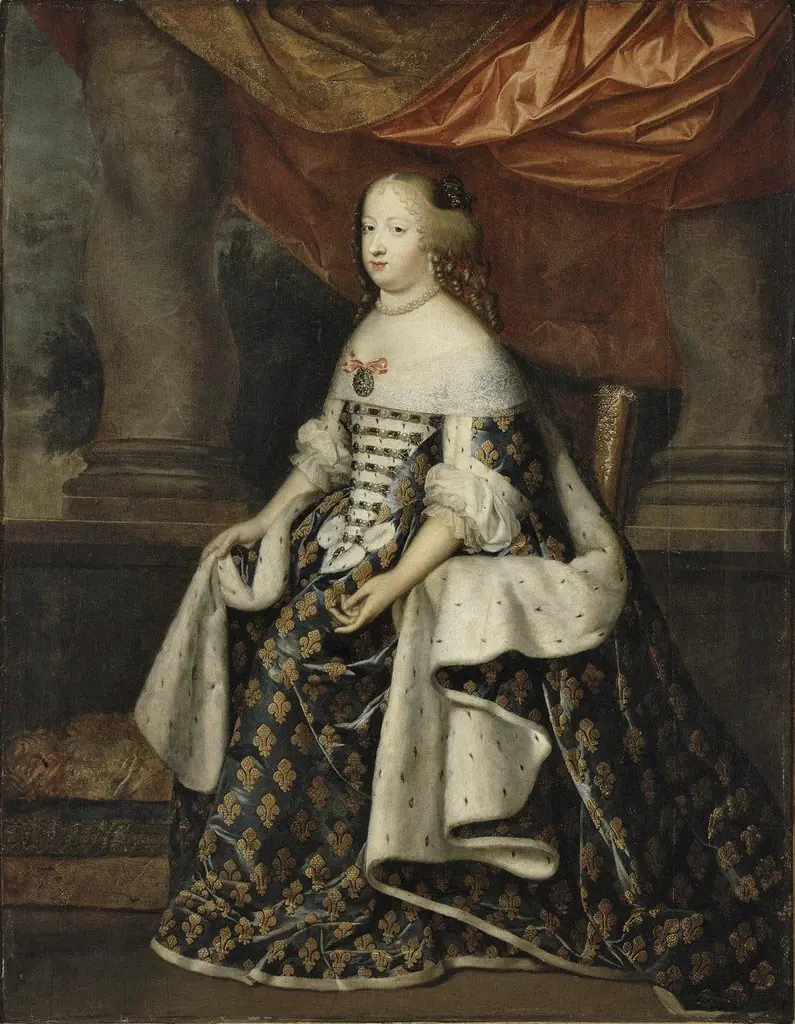 Marie Thérèse of Austria in Royal Costume
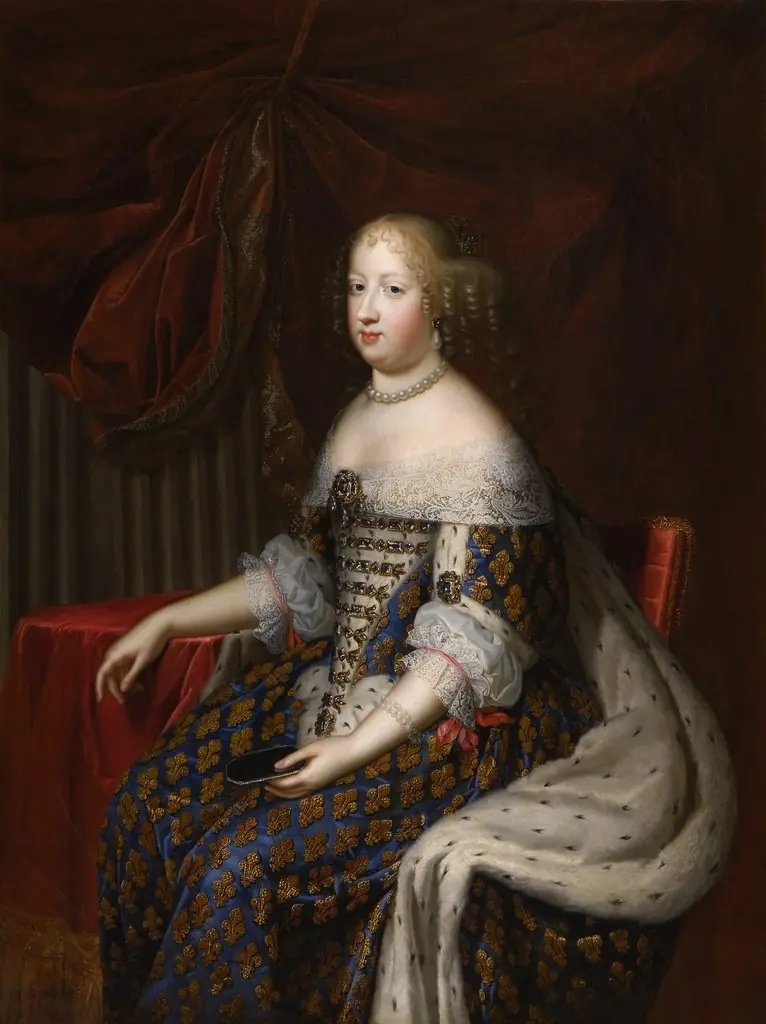 Marie-Thérèse of Austria, Queen of France
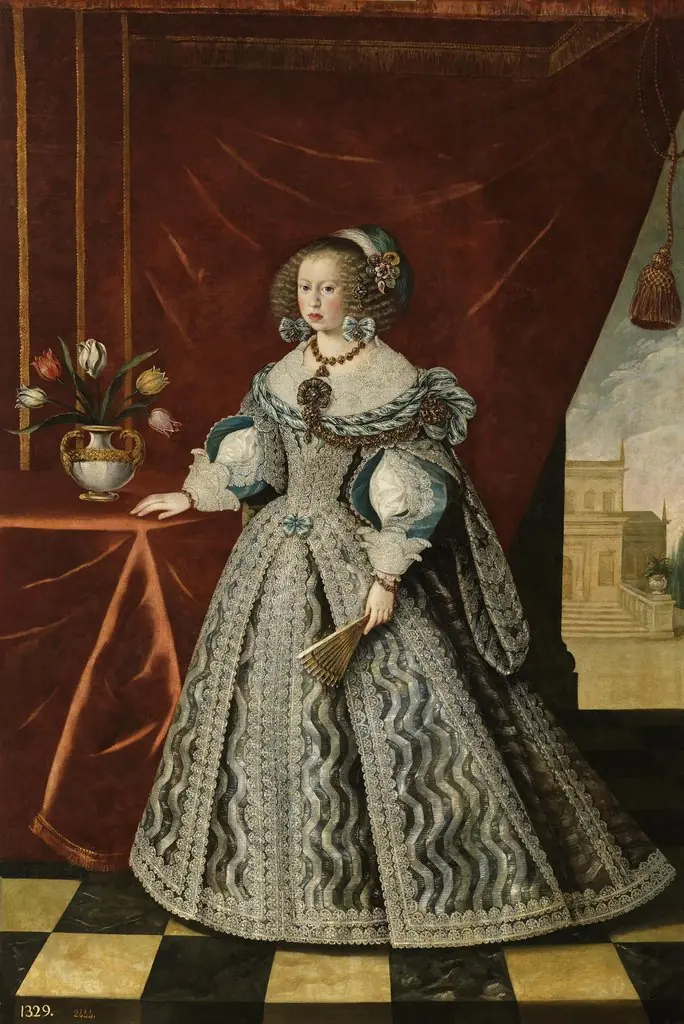 Mariana of Austria
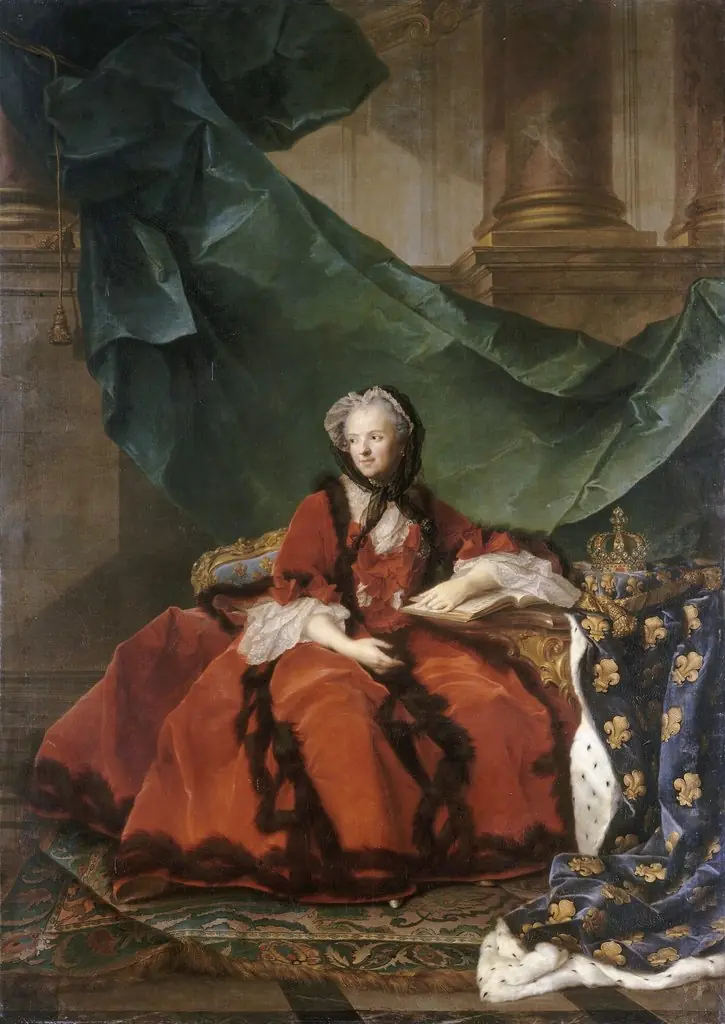 Marie Leszczyńska, Queen of France (1703–1768)
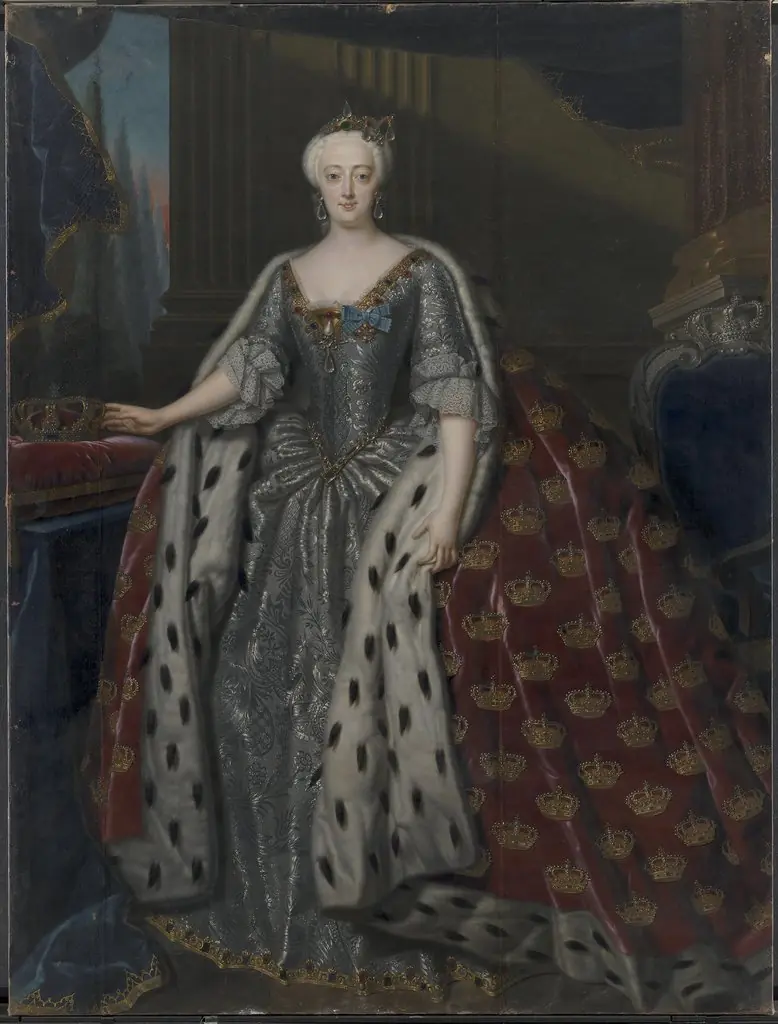 Sophie Magdalene, Christian VI's dronning
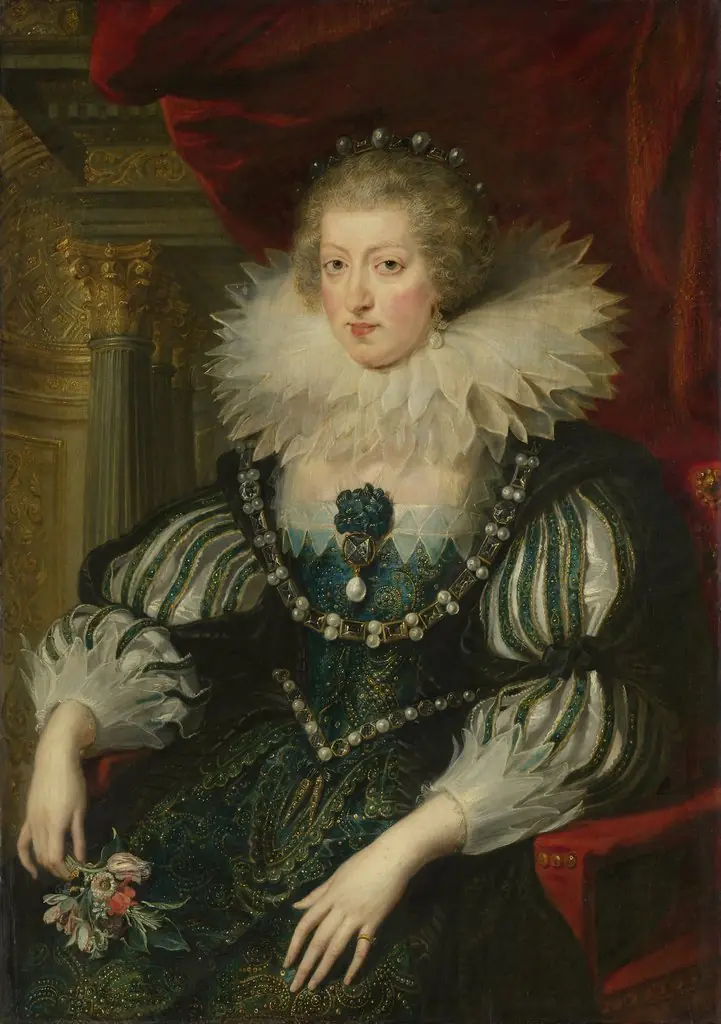 Anne of Austria (1601-66). Wife of Louis XIII, king of France
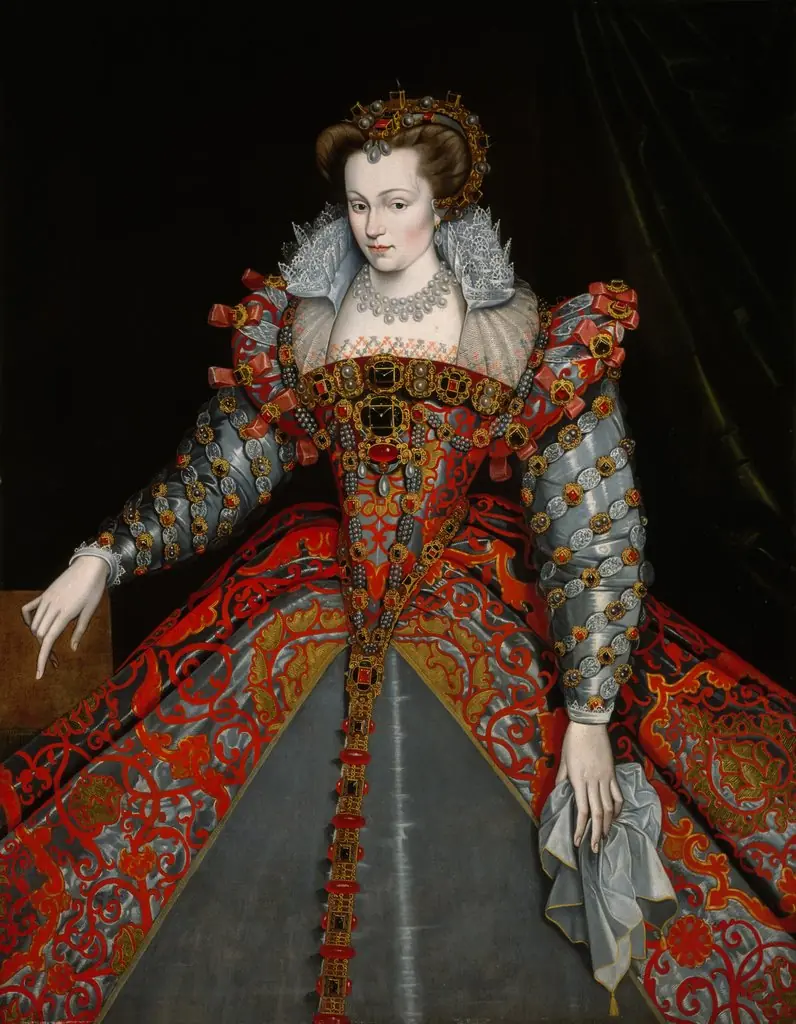 Louise de Lorraine
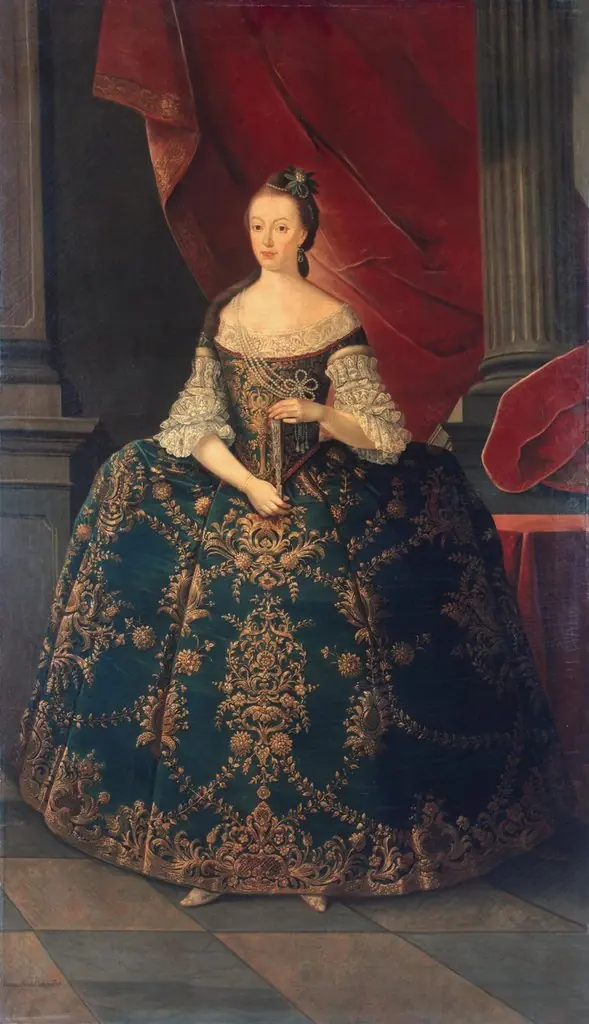 Portrait of Maria Francisca, Princess of Brasil and Beira
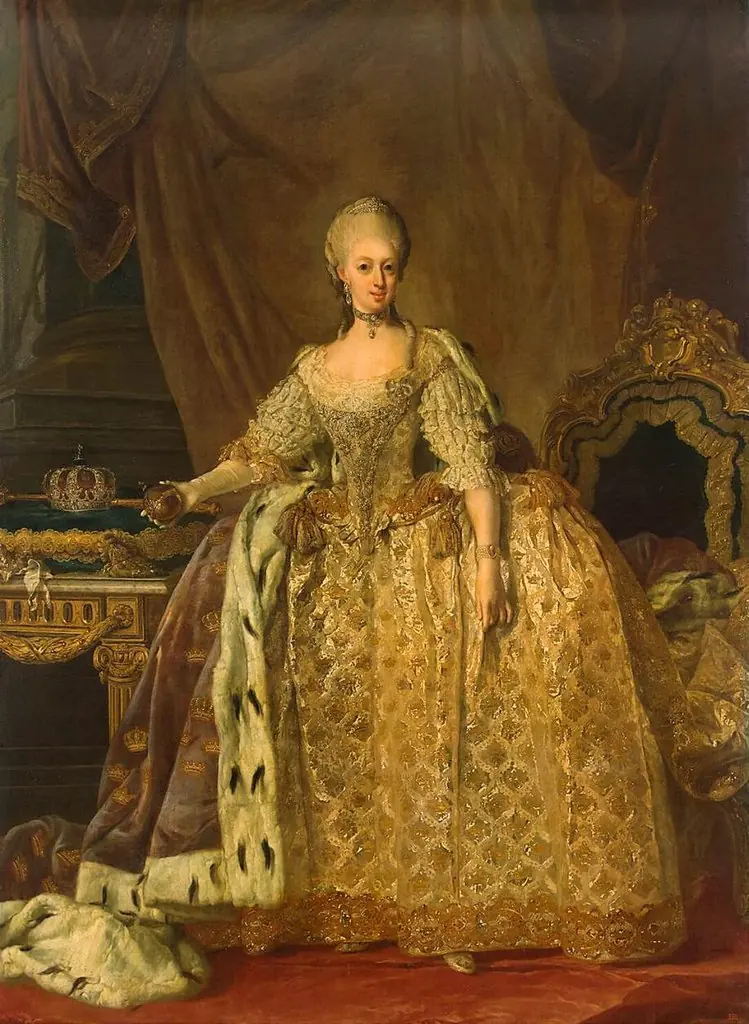 Portrait of Queen Sophie-Magdalene
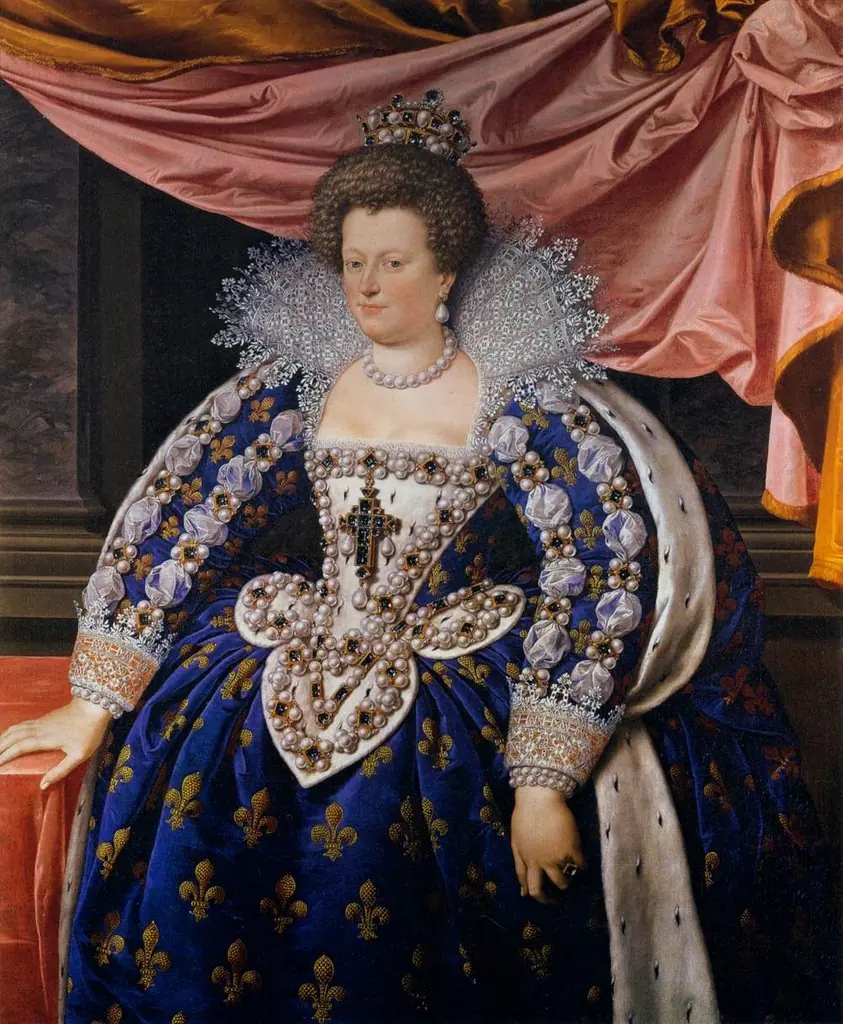
- Portrait of Marie de' Medici