Artwork
Mary Elizabeth Snow
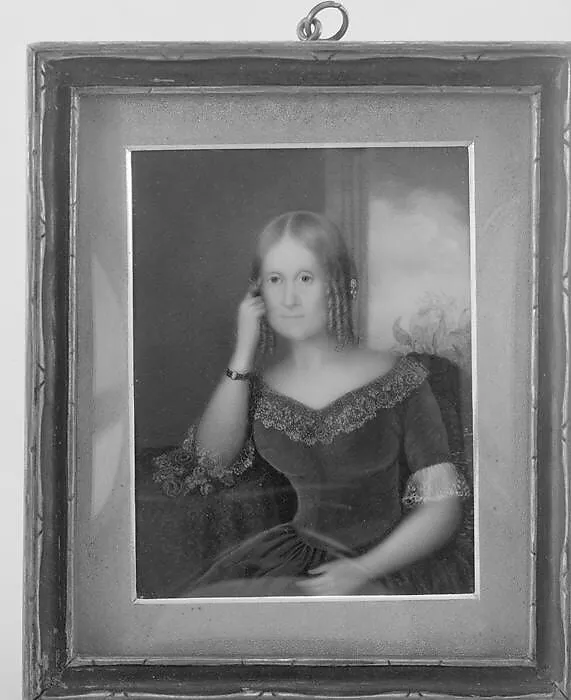
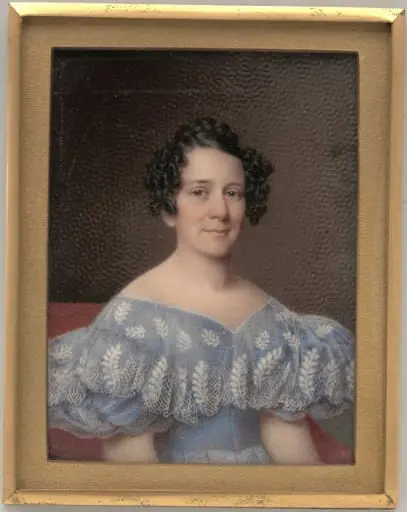
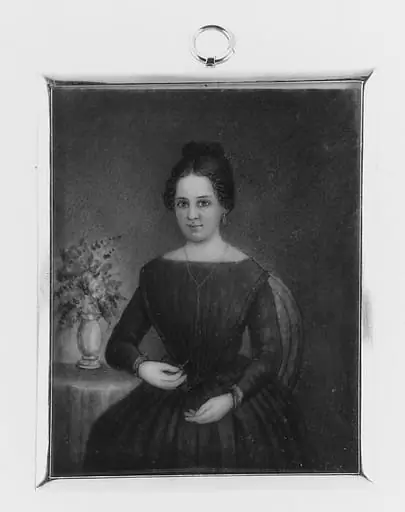
Mary Elizabeth Snow is a watercolor painting. It dates from 1839 and is held in the collection of the Metropolitan Museum of Art.
About this work
Technique & Style
The available documentation does not specify handling procedures or current condition, and no further stylistic analysis is provided in the cited records.
The work titled Mary Elizabeth Snow is rendered in watercolor on an ivory support, a technique typical of early nineteenth-century portrait miniatures. Its dimensions measure about 9.3 cm in height by 7 cm in width, placing it within the small-scale format of the portrait miniature. Executed as a portrait of a woman, the piece belongs to the portrait genre and is housed in the Metropolitan Museum of Art's American Wing collection.
The available documentation does not specify handling procedures or current condition, and no further stylistic analysis is provided in the cited records.
History & Provenance
Mary Elizabeth Snow is documented as a watercolor on ivory portrait painted in 1839, attributed to an unknown artist. The work, classified within The American Wing as a portrait of a woman, measures 9.3 × 7 cm. It is held in the permanent collection of the Metropolitan Museum of Art, New York. No record of a commission or subsequent owners is provided; the artist is listed as anonymous in the museum's records. The available documentation does not include an explicit accession number or any exhibition history.
Context
The 1839 watercolor portrait titled Mary Elizabeth Snow, housed in the Metropolitan Museum of Art and classified within the American Wing, exemplifies early United States portraiture. Scholarship situates the work within the broader context of 19th-century American watercolor practice, noting its modest dimensions and the anonymity of its creator as reflective of evolving notions of authorship. Its inclusion in the museum's collection underscores its significance as a representative artifact of early American artistic production, informing contemporary understandings of portraiture in the United States.
Overview
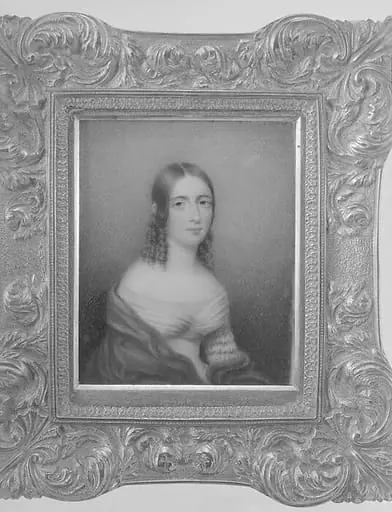
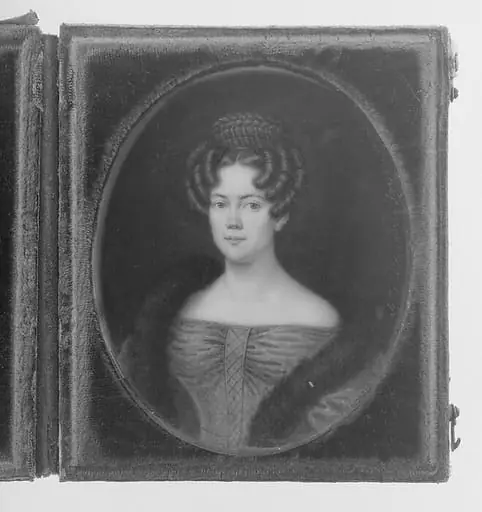
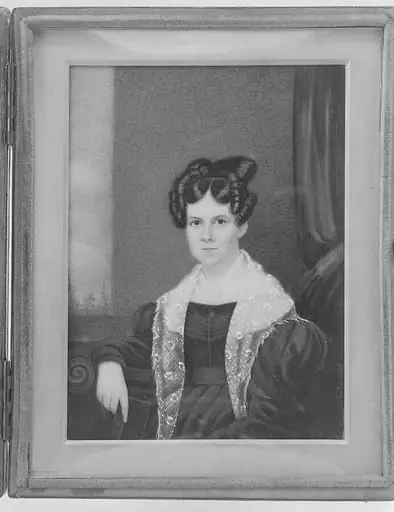
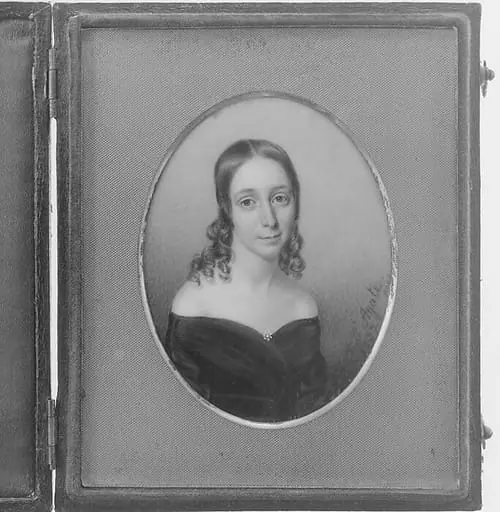
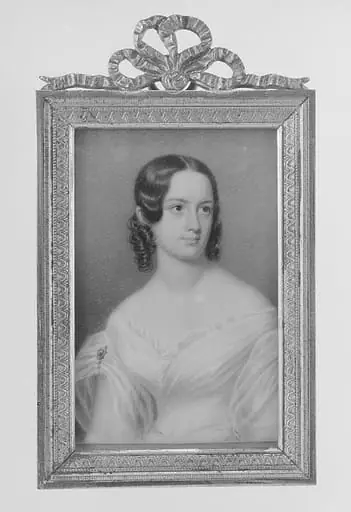
Mary Elizabeth Snow is a miniature portrait executed in 1839 by an unidentified artist. The work depicts a young woman facing the viewer directly, her dark curls framing a soft, pale complexion. She is dressed in a simple white gown with a lace collar, holding a small book in her lap, a common attribute in portraiture of the era symbolizing piety or education.
The piece is painted in watercolor on ivory, a medium favored for its translucency and ability to capture subtle skin tones, making it ideal for intimate, personal keepsakes popular in the nineteenth century. The composition is tight and focused, emphasizing the sitter's expression and the delicate rendering of her features against a neutral background. As a work from 1839, it reflects the stylistic conventions of American or British miniature painting during the early Victorian period, where such objects served as tangible tokens of affection or memory.
The artist remains unknown, a common circumstance for many surviving miniatures of this period that were often produced by itinerant painters or within domestic contexts rather than by celebrated masters.
Subject & Meaning
Mary Elizabeth Snow is presented with a direct gaze, her dark curls framing a gentle face. She wears a plain white dress adorned with a lace collar, holding a small book in her lap. This pose and attire suggest a sense of innocence and perhaps piety or education, common virtues emphasized in portraits of young women during the period, reflecting societal ideals of the time.
Artist & collection