Artwork
Memorial to Jane Amanda Fenn
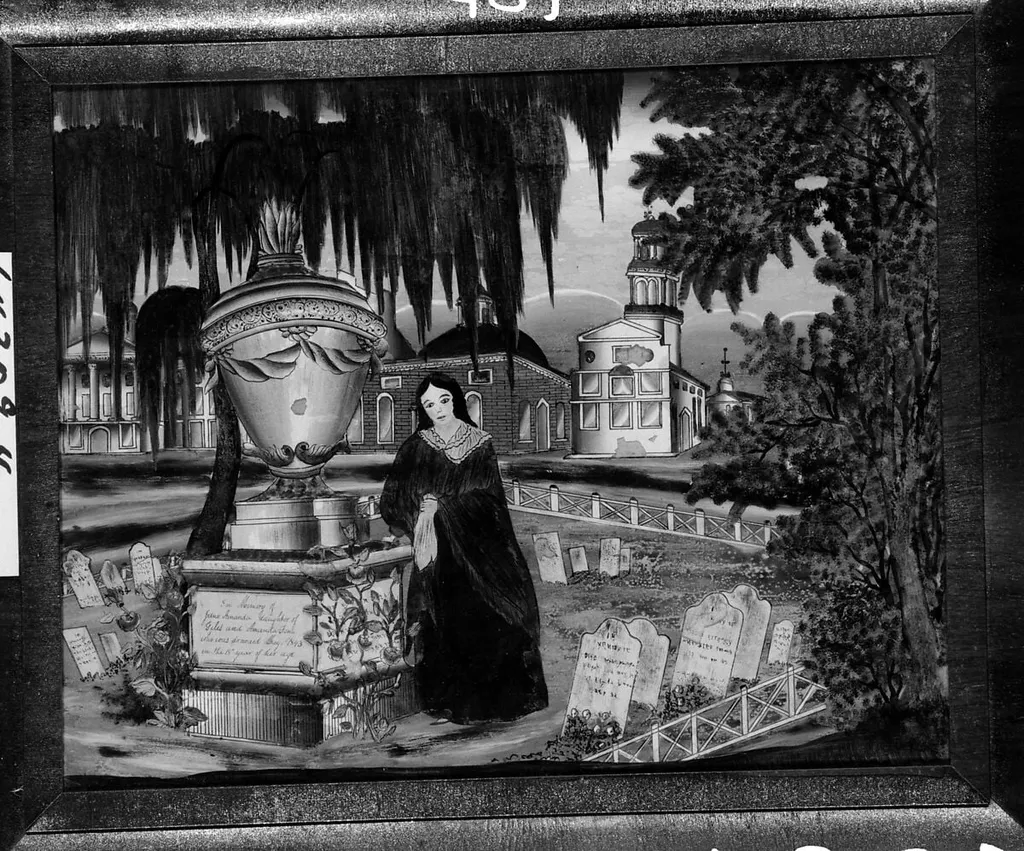
Memorial to Jane Amanda Fenn is an oil painting. It dates from 1843 and is held in the collection of the Metropolitan Museum of Art.
About this work
You see a woman in black kneeling beside a white tomb in a moonlit graveyard. The paint is on the back of a glass sheet, so the colors glow like a lantern.
No one knows who painted it, but the glass technique was rare in America in 1843. The glow makes the scene feel like a dream you can almost touch.
Look up more paintings of women in graveyards to see how other artists showed grief.
Technique & Style
The anonymous artist applied oil pigments directly to the transparent surface, resulting in a work measuring 27.
Created in 1843, the Memorial to Jane Amanda Fenn is executed as an oil painting on a glass support, a medium that distinguishes it from traditional canvas or panel works. The anonymous artist applied oil pigments directly to the transparent surface, resulting in a work measuring 27.3 centimeters in height and 34.3 centimeters in width. Classified within the religious genre, the piece depicts a cemetery setting featuring a woman, utilizing the unique properties of the glass medium to achieve its specific visual effect. The artwork is currently held in the collection of the Metropolitan Museum of Art's American Wing.
History & Provenance
The Memorial to Jane Amanda Fenn, an oil-on-glass painting from 1843, is held in the collection of the Metropolitan Museum of Art, where it is classified under The American Wing. Its physical dimensions are recorded as 27.3 cm in height by 34.3 cm in width. The provided sources document the work's institutional location and classification but do not specify an accession number or any exhibition history for the piece.
Overview
This artwork, titled Memorial to Jane Amanda Fenn, was created in 1843 by an unknown artist. Executed in oil on glass, it depicts a solitary woman dressed in black, kneeling beside a prominent white tombstone within a moonlit graveyard. The unique medium imparts a luminous quality to the scene, evoking a sense of quiet contemplation and remembrance.
Subject & Meaning
The painting's central figure, a woman in mourning attire, is positioned in a graveyard, a traditional setting for contemplating loss. Her posture of kneeling before a tomb suggests a moment of profound grief or solemn tribute. The title itself confirms the work's purpose as a memorial, inviting viewers to reflect on themes of death, remembrance, and personal sorrow in the 19th century.
Context
While the artist remains unidentified, the artwork's creation in 1843 and its medium point to a specific artistic environment. The rarity of reverse painting on glass in America during this period suggests either an artist with specialized training or an experimental approach. The piece reflects a broader cultural engagement with themes of mourning and memorialization prevalent in 19th-century American art and society.
Artist & collection

- A Mountain Cave
 Imaginary Landscape
 A Mountain Cave
 Untitled
 Landscape with Actaeon and Diana
 The Stump (after Ruisdael)
 The Penitent Saint Mary Magdalene
 Vertumnus and Pomona
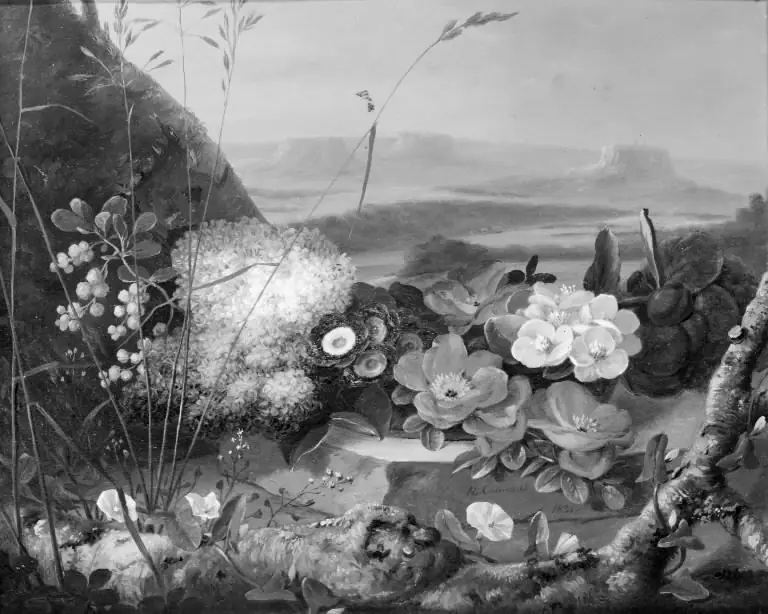 Blomster på en sten. I baggrunden et bjerglandskab
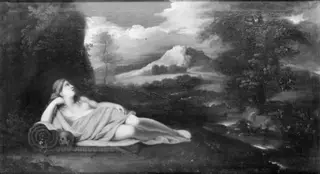 The Penitent Saint Mary Magdalene
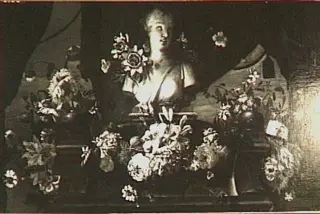 A Bust of Flora (?) with a Garland
 Tvende fruentimmere taler sammen