Artwork
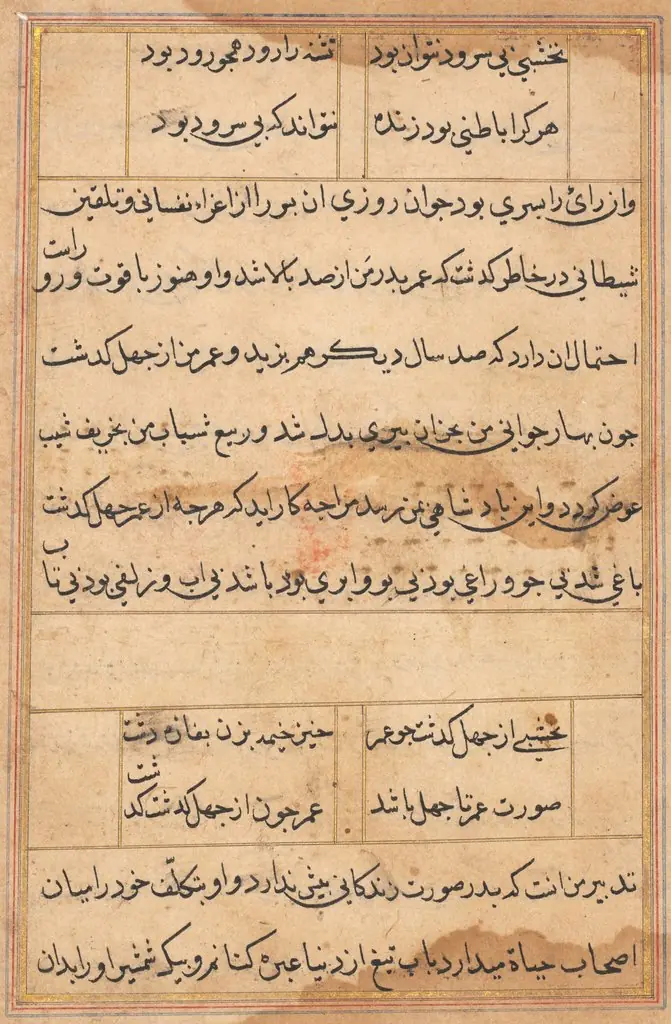
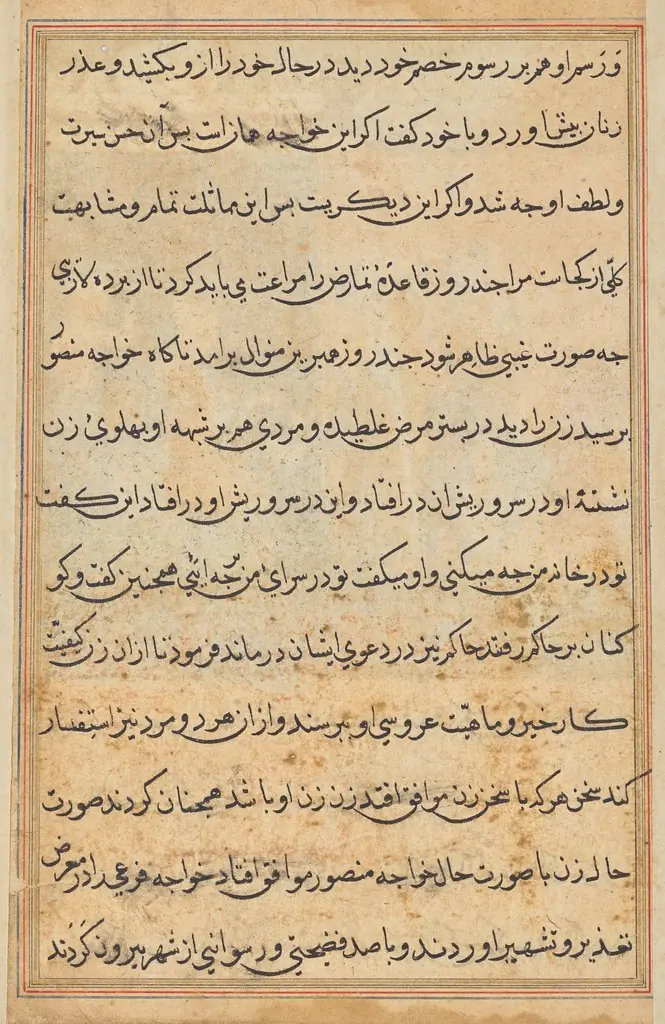
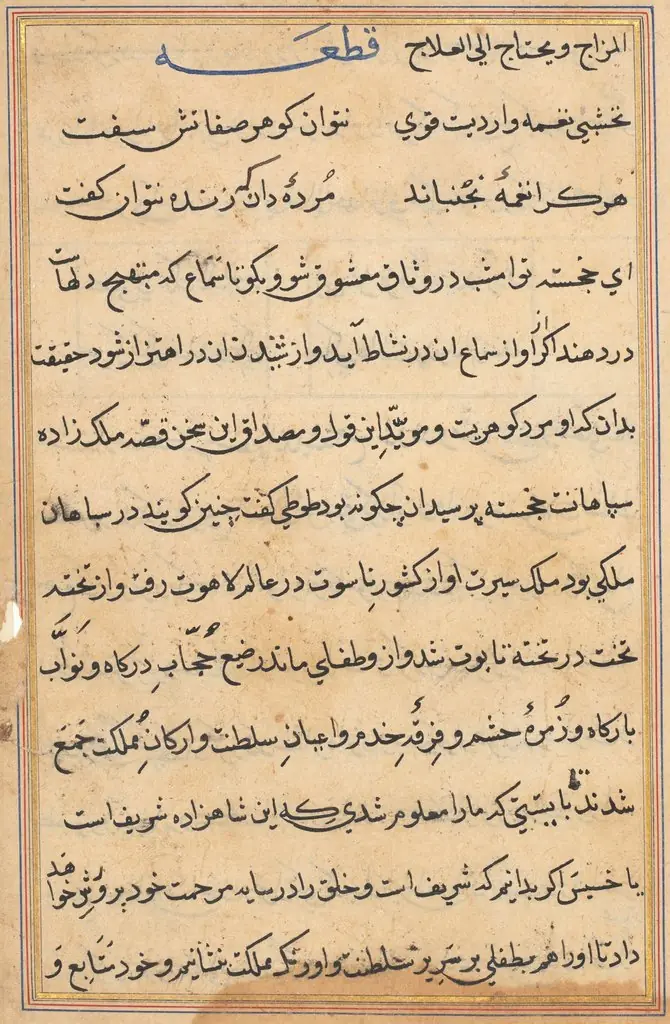
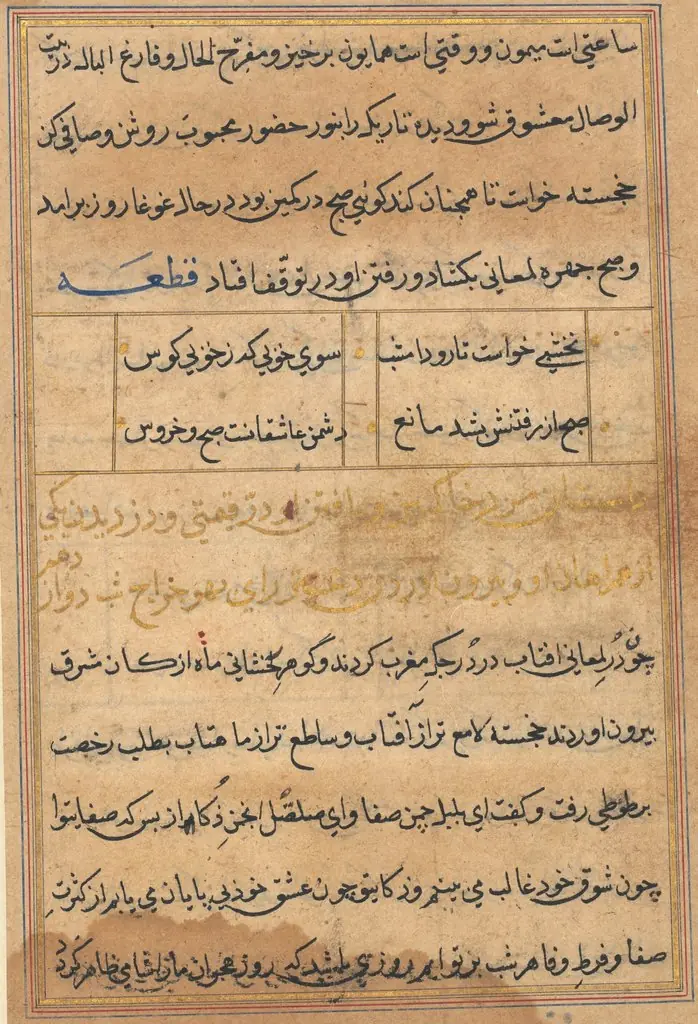
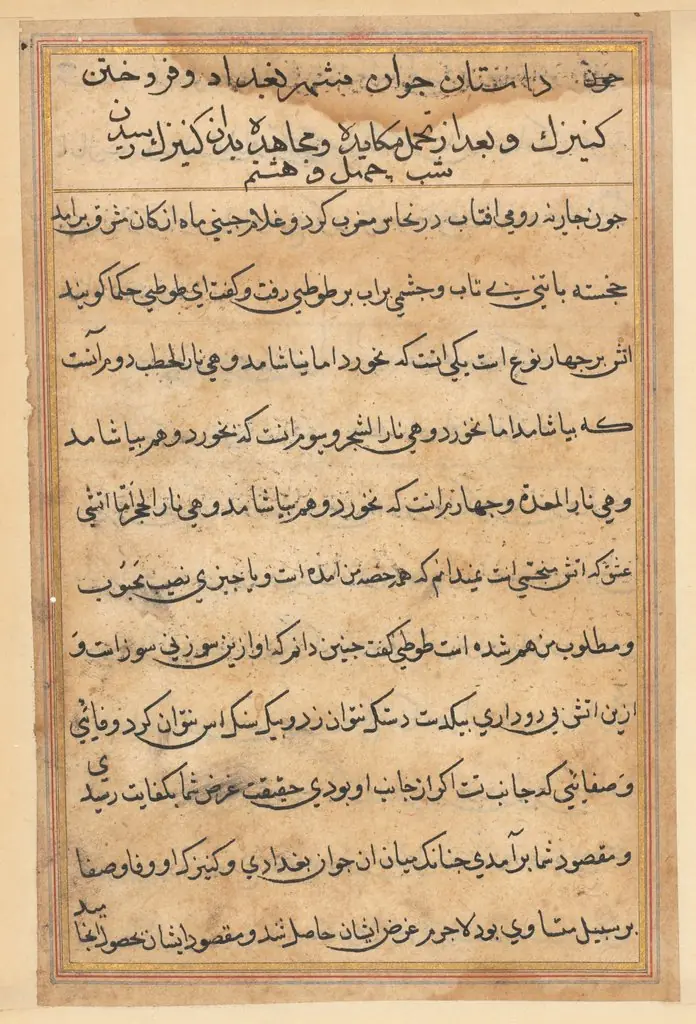
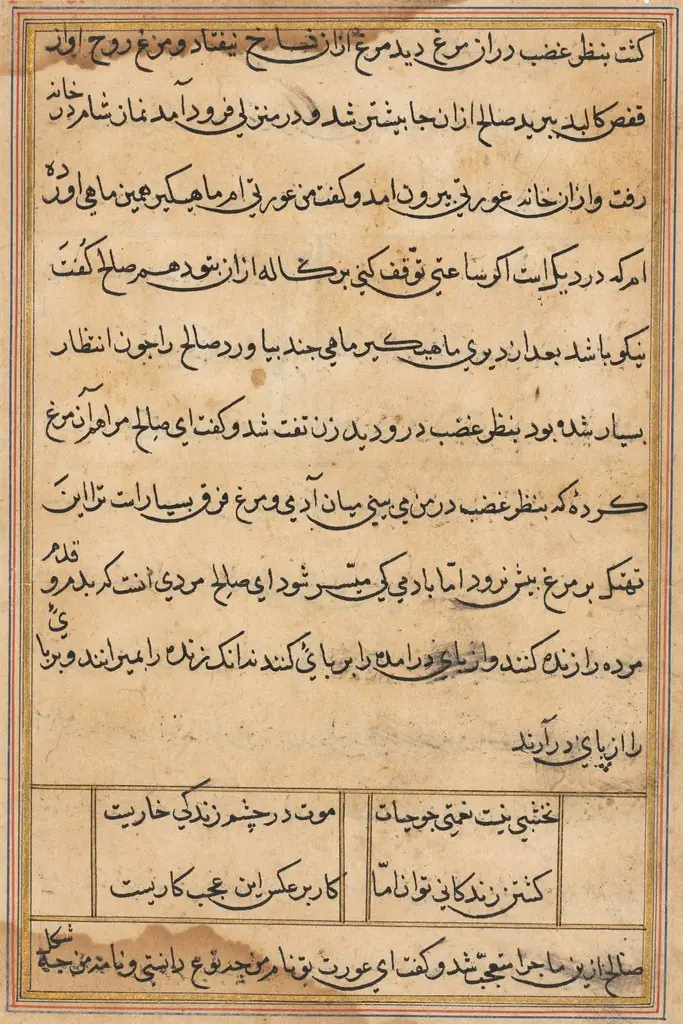
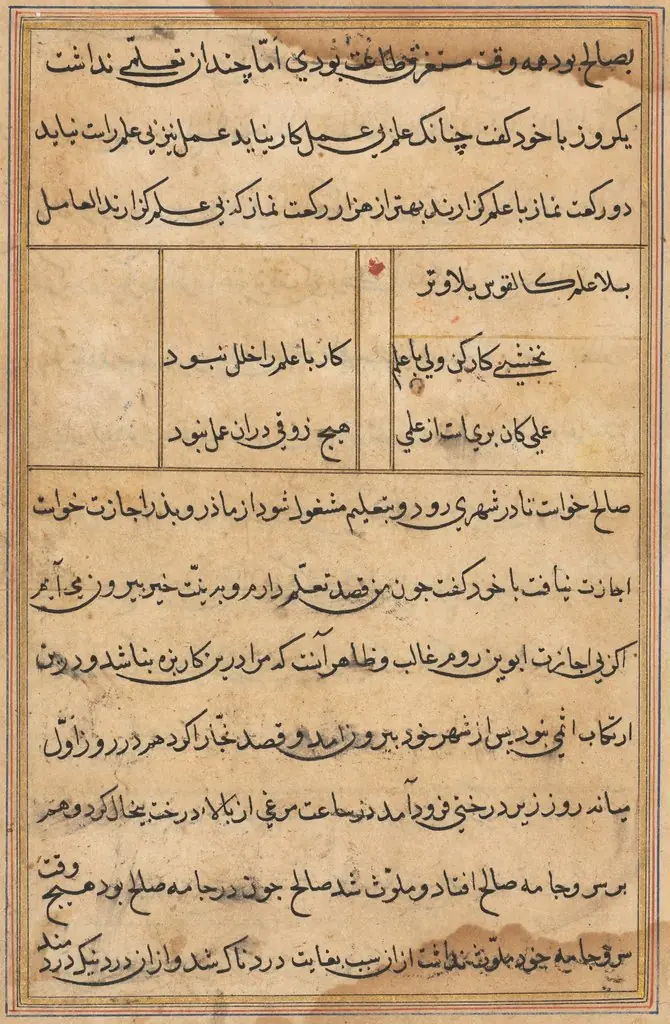
Page from Tales of a Parrot (Tuti-nama): text page
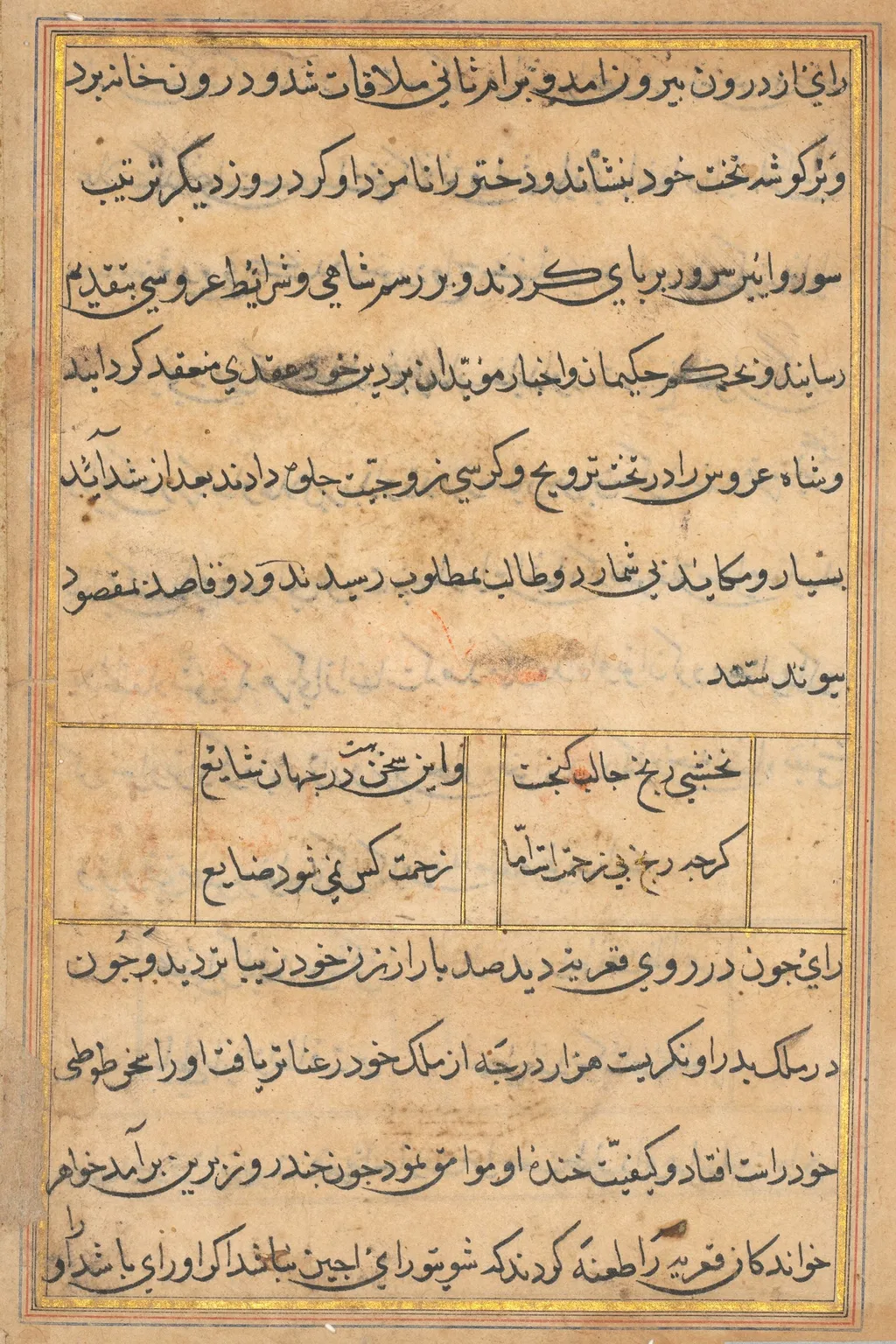
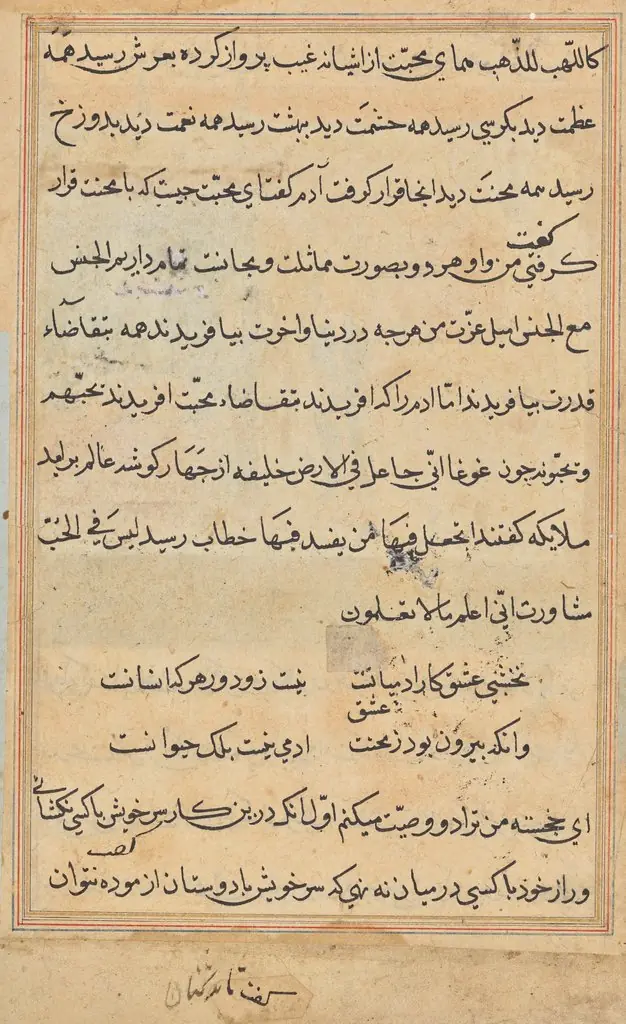
Page from Tales of a Parrot (Tuti-nama): text page is an unspecified painting. It dates from 1560 and is held in the collection of the Cleveland Museum of Art. This object is a single leaf from the manuscript known as Tales of a Parrot (Tuti‑nama).
About this work
The text appears to be a story or poem, but it's hard to tell what it's about without being able to read the language.
This painting is a page from an old book, titled "Tales of a Parrot (Tuti-nama)". The page is filled with handwritten text in a language that looks like Arabic or Persian. The text is written in black ink on a yellowed paper background, with some red and blue lines around the edges.
The handwriting is decorative and intricate, with many flourishes and ornaments. The text appears to be a story or poem, but it's hard to tell what it's about without being able to read the language. The page is quite old, dating back to 1560, and it's now held at the Cleveland Museum of Art.
If you want to learn more about this style of art, you might want to look up the artist who created it.
Technique & Style
The page is executed on a rectangular sheet of paper in the traditional Mughal manuscript technique, using ink and pigment applied with fine brushwork. As a text page, it presents a dense arrangement of Persianate script framed by decorative borders typical of sixteenth-century Indian manuscript production.
History & Provenance
The page comes from a Tuti-nama (Tales of a Parrot) produced circa 1560 in the Mughal Empire and is now held in the Cleveland Museum of Art under accession number 1962.279.296.a. It is attributed to an unknown artist. The available sources do not list any specific exhibition history for this particular page.
Context
The work belongs to the Mughal period, created circa 1560 in the imperial atelier of the Mughal Empire. It forms part of the illustrated manuscript known as the Tuti-nama, a Persianate narrative cycle that was adapted in India under imperial patronage. The manuscript's production reflects the cross-cultural transmission of Persian literary and artistic traditions into the Indian subcontinent during the sixteenth century, combining Persian conventions with emerging regional sensibilities characteristic of early Mughal workshops.
Its presence in the Cleveland Museum of Art reflects the movement of South Asian artworks into Western collections.
Overview
This object is a single leaf from the manuscript known as Tales of a Parrot (Tuti‑nama). The page measures roughly the size of a typical 16th‑century codex leaf and is composed of yellowed paper bearing dense handwritten text. The script is rendered in black ink, framed by thin red and blue lines that trace the page margins, giving the leaf a decorative border.
Subject & Meaning
The text appears to be a narrative or poetic composition, written in a language that follows Arabic‑Persian script conventions. While the precise content cannot be identified without translation, the title of the manuscript suggests a collection of stories involving a parrot, a common motif in Persian literary tradition that often conveys moral or didactic themes.
Artist & collection

- Page from Tales of a Parrot (Tuti-nama): text page
 Page from Tales of a Parrot (Tuti-nama): text page
 Page from Tales of a Parrot (Tuti-nama): text page
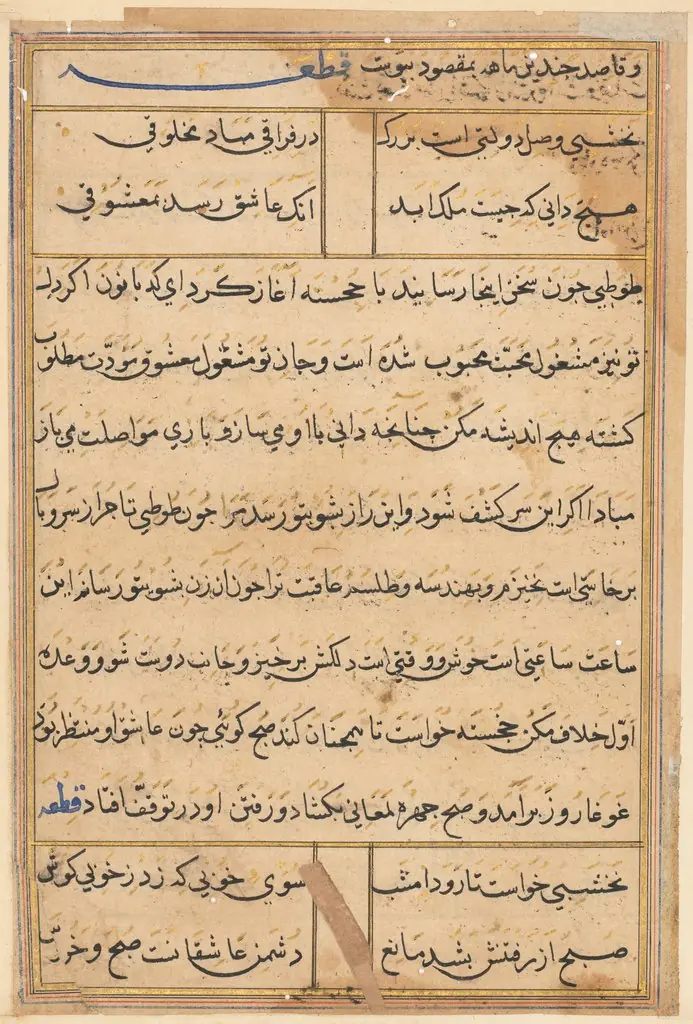 Page from Tales of a Parrot (Tuti-nama): text page
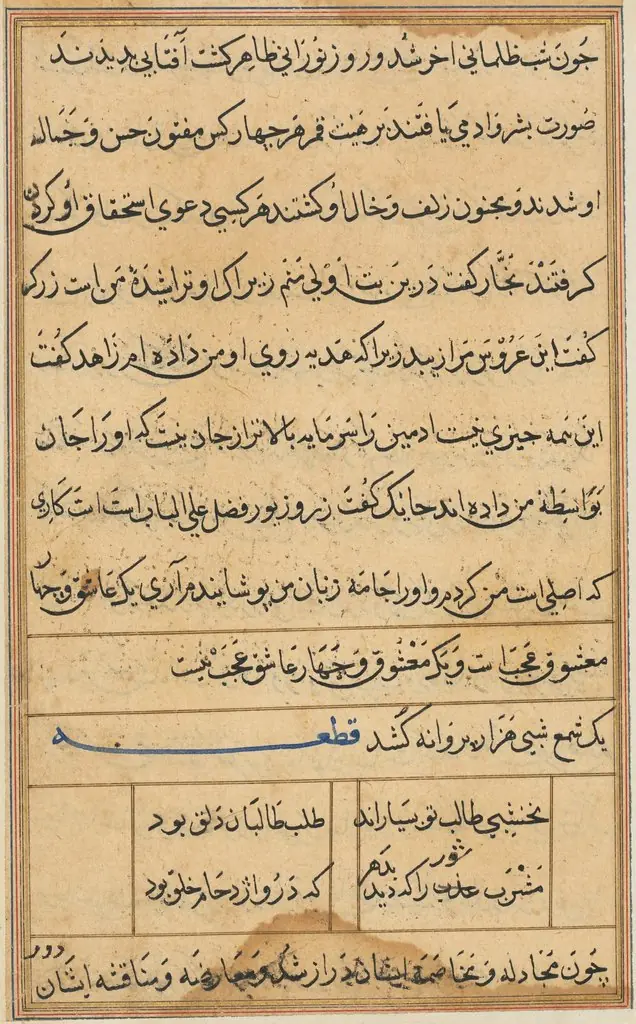 Page from Tales of a Parrot (Tuti-nama): text page
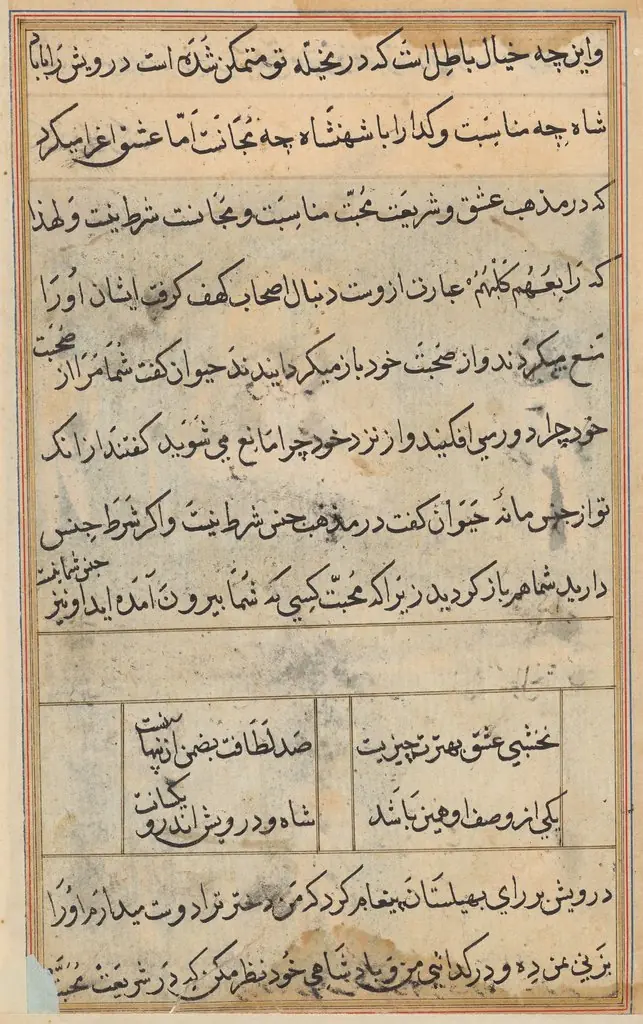 Page from Tales of a Parrot (Tuti-nama): text page
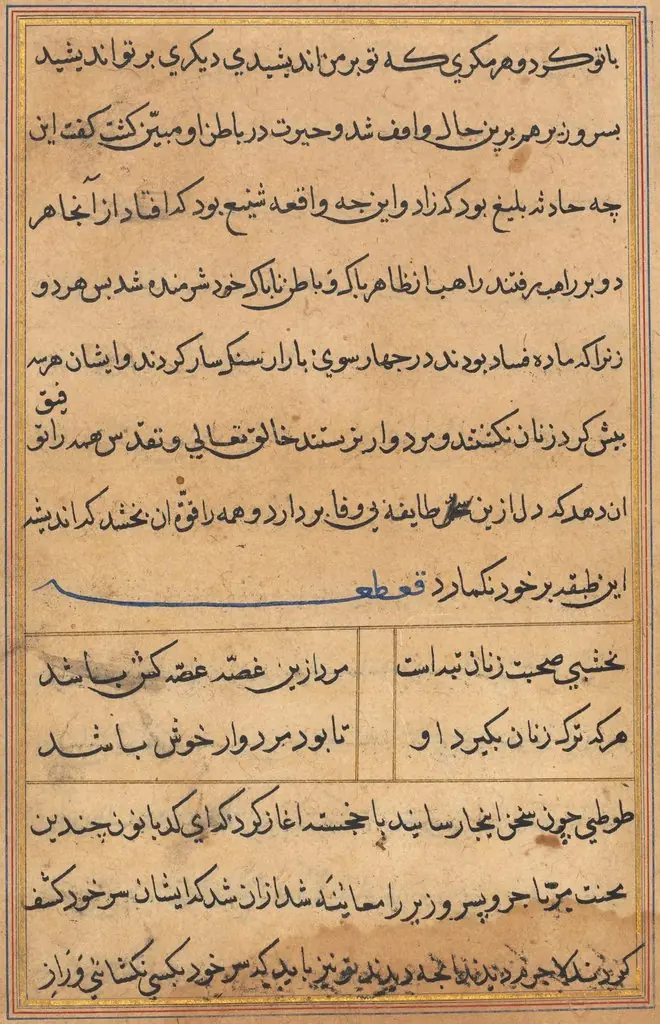 Page from Tales of a Parrot (Tuti-nama): text page
 Tuti-Nama (Tales of a Parrot)
 Page from Tales of a Parrot (Tuti-nama): text page
 Page from Tales of a Parrot (Tuti-nama): text page
 Page from Tales of a Parrot (Tuti-nama): text page
 Page from Tales of a Parrot (Tuti-nama): text page