Artwork
Page from Tales of a Parrot (Tuti-nama): text page
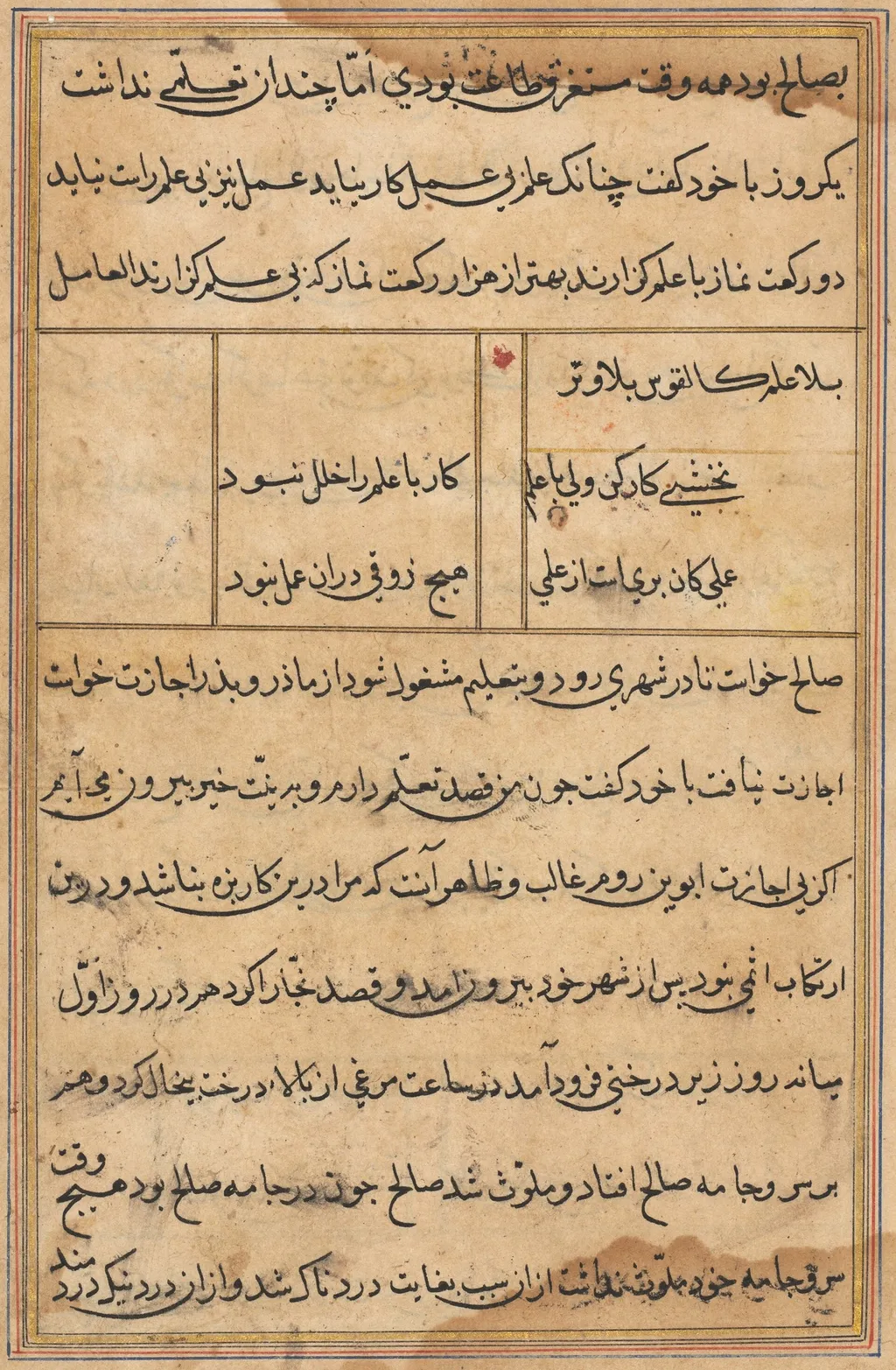
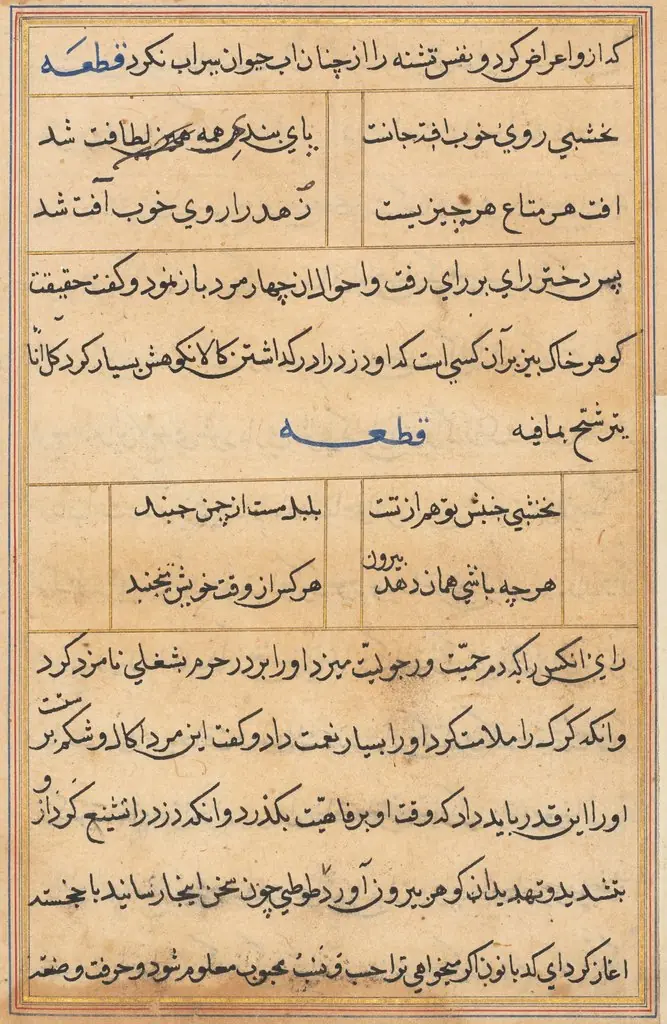
Page from Tales of a Parrot (Tuti-nama): text page is an unspecified painting. It dates from 1560 and is held in the collection of the Cleveland Museum of Art. This object is a painted page from the Persian narrative work Tales of a Parrot (Tuti‑nama).
About this work
History & Provenance
The text page from the Tales of a Parrot (Tuti-nama), created in 1560, is held in the collection of the Cleveland Museum of Art in Cleveland.
The page is a text leaf from the Tales of a Parrot (Tuti-nama) manuscript, painted in the Mughal Empire around 1560 by an unknown hand. It is classified as a painting and bears the Cleveland Museum of Art accession number 1962.279.273.a, having entered the museum’s collection in 1962. The sources do not record any earlier owners, patrons, or a specific commission for this leaf, so its provenance before the mid‑twentieth century remains undocumented.
Its creation is situated within the Mughal imperial workshop context, though no further details about its production are provided.
The text page from the Tales of a Parrot (Tuti-nama), created in 1560, is held in the collection of the Cleveland Museum of Art in Cleveland. The museum assigns this work the accession number 1962.279.273.a. Available records indicate the piece was made within the Mughal Empire, though specific exhibition histories or prior provenance details are not provided in the source materials.
Overview
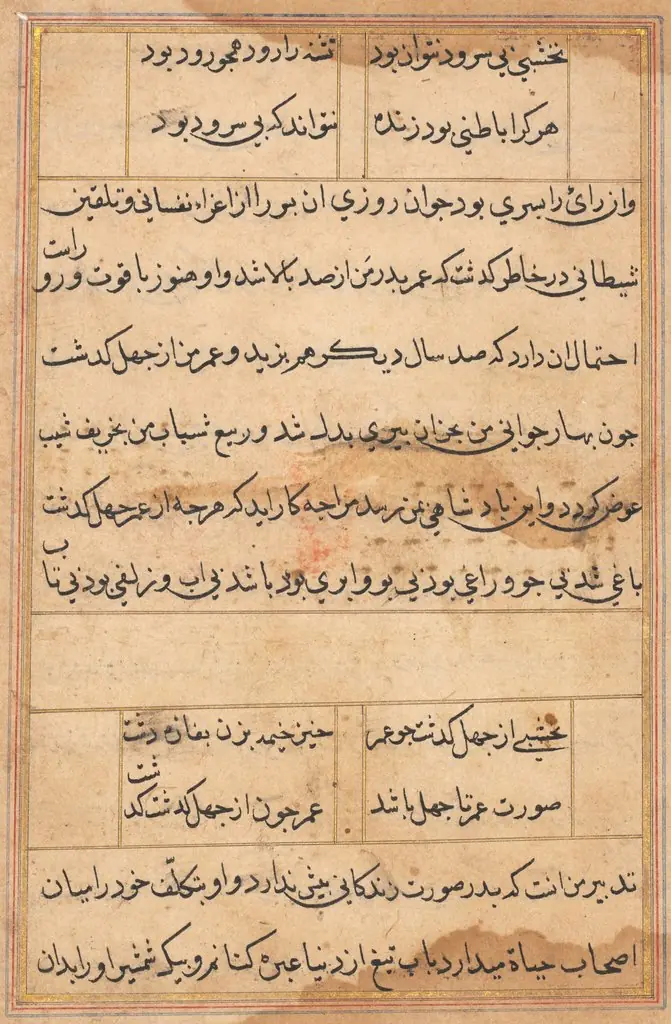
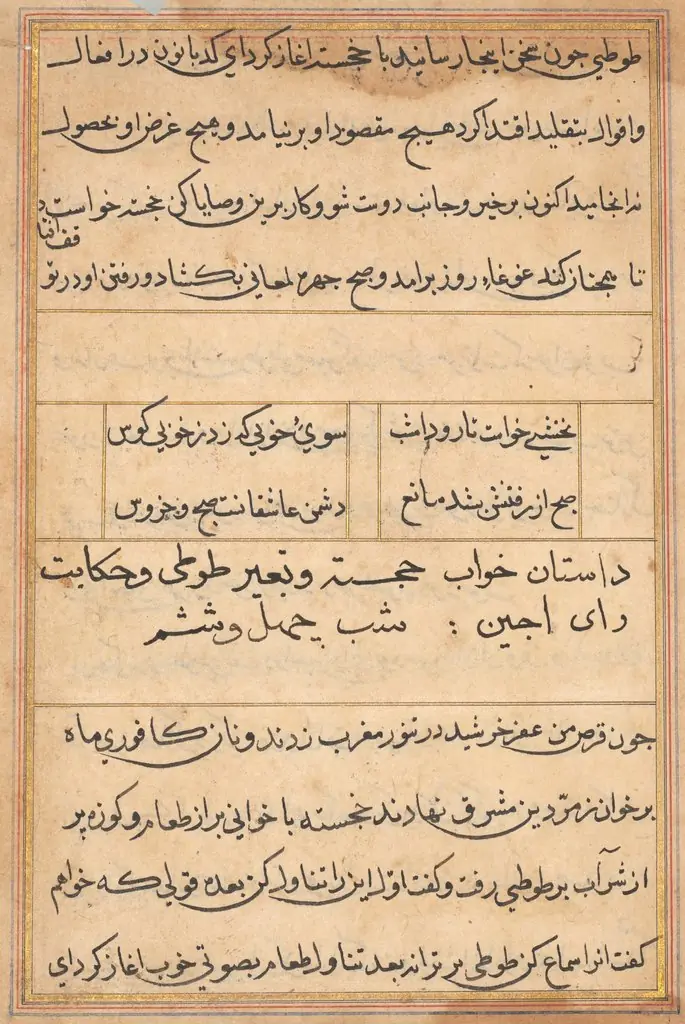
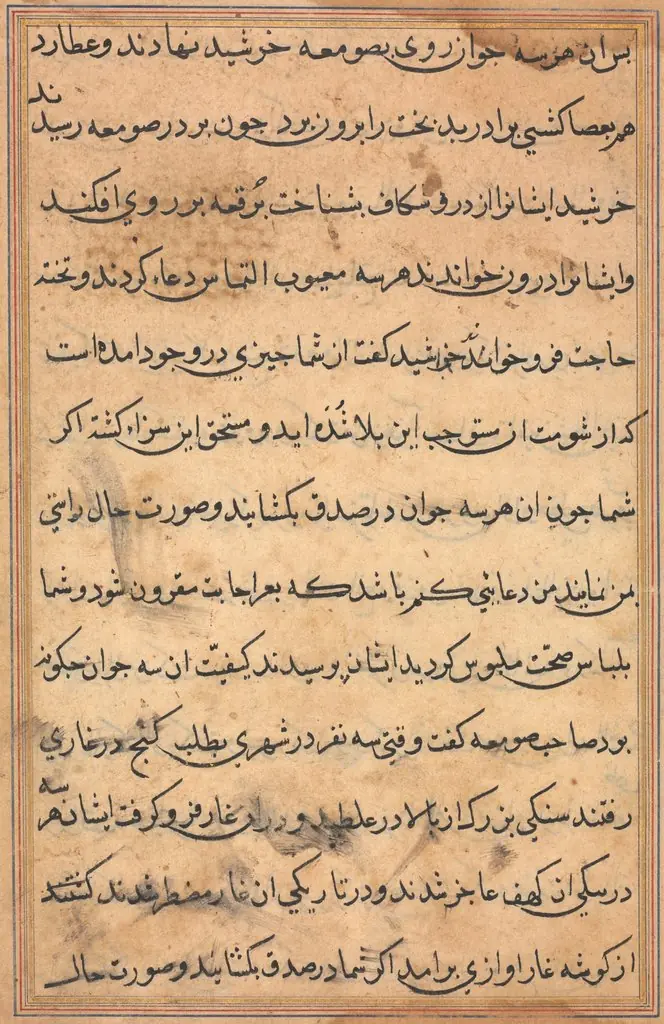
This object is a painted page from the Persian narrative work Tales of a Parrot (Tuti‑nama). The surface is dominated by black calligraphic text, arranged in orderly rows within a thin red frame. The composition includes subtle horizontal dividers and minute red punctuation marks in the margins, giving the page a decorative yet functional appearance.
Subject & Meaning
The text conveys episodes from the Tales of a Parrot, a literary collection traditionally presented as entertainment for royalty. In this instance the work was commissioned for Prince Salim, suggesting the content was intended to reflect courtly tastes and moral instruction through the parrot’s storytelling device.
Technique & Style
Executed in ink on a painted substrate, the script exhibits the fluidity of hand‑written Persian calligraphy, with slight variations that reveal the artist’s brushwork. The red border and marginal dots are applied with a fine brush, providing visual contrast and framing the dense black lettering without obscuring readability.
Context
Tales of a Parrot belongs to a genre of didactic storytelling popular in Persian literature, where a talking bird relays moral anecdotes. The manuscript’s lavish presentation reflects the high status of literary patronage in Mughal courts, where visual arts and calligraphy were intertwined with political prestige.
Legacy
Pages like this illustrate the convergence of literary and visual culture in South‑Asian courts, informing contemporary scholarship on manuscript production, courtly education, and the transmission of Persian narratives across regions.
Artist & collection

- Page from Tales of a Parrot (Tuti-nama): text page
 Page from Tales of a Parrot (Tuti-nama): text page
 Page from Tales of a Parrot (Tuti-nama): text page
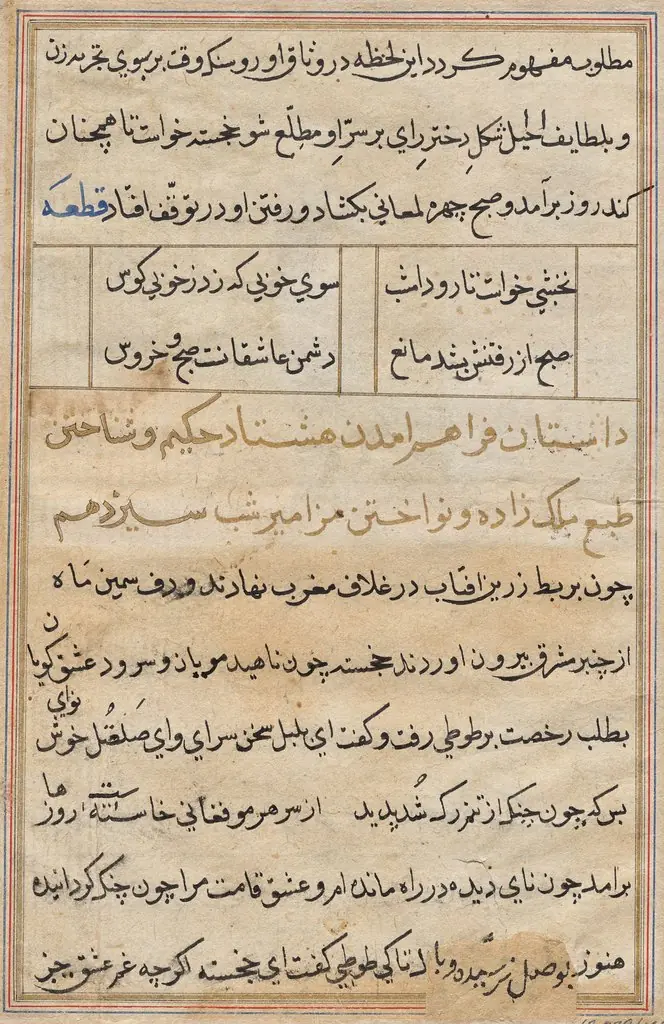 Page from Tales of a Parrot (Tuti-nama): text page
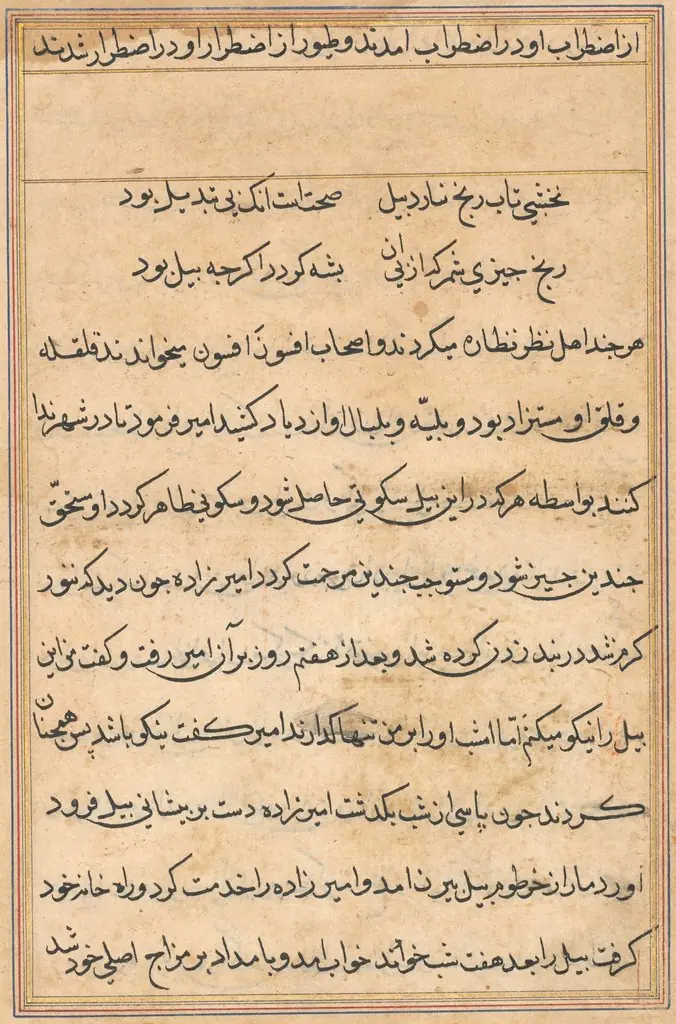 Page from Tales of a Parrot (Tuti-nama): text page
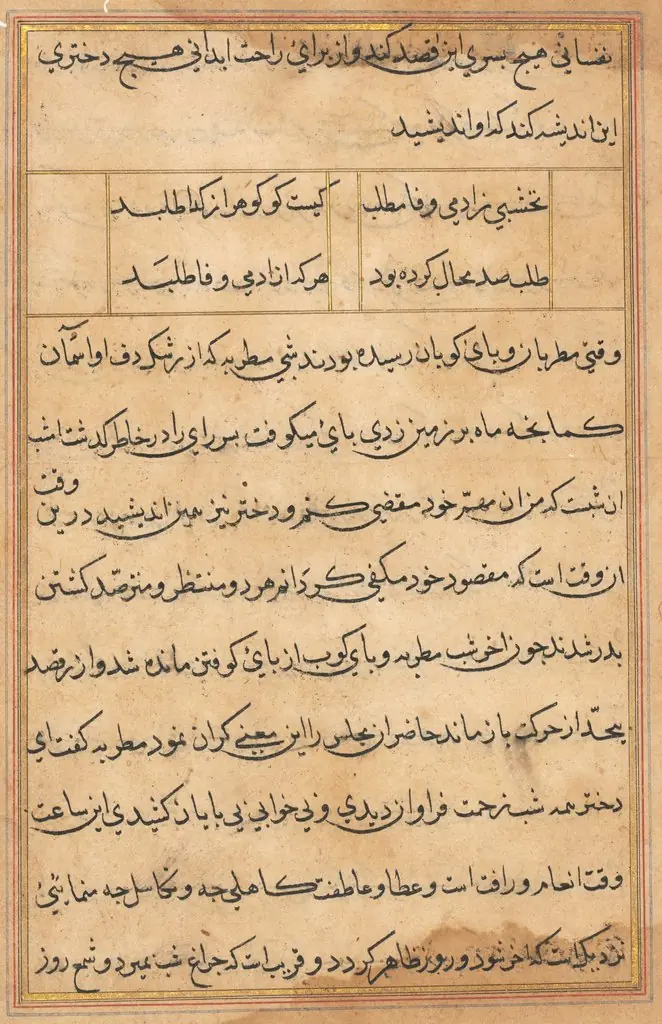 Page from Tales of a Parrot (Tuti-nama): text page
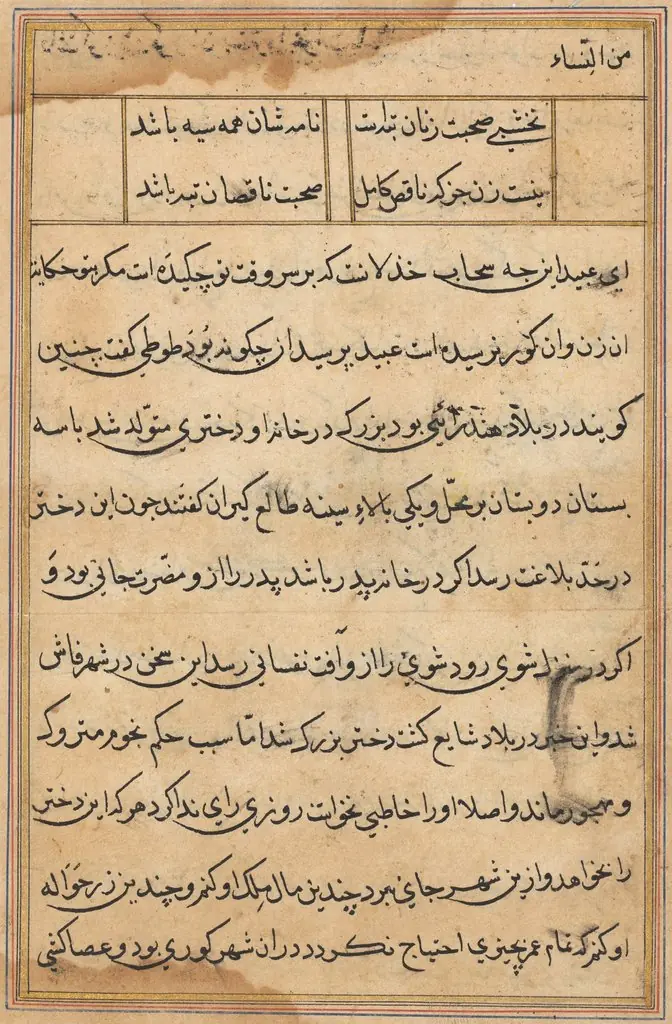 Page from Tales of a Parrot (Tuti-nama): text page
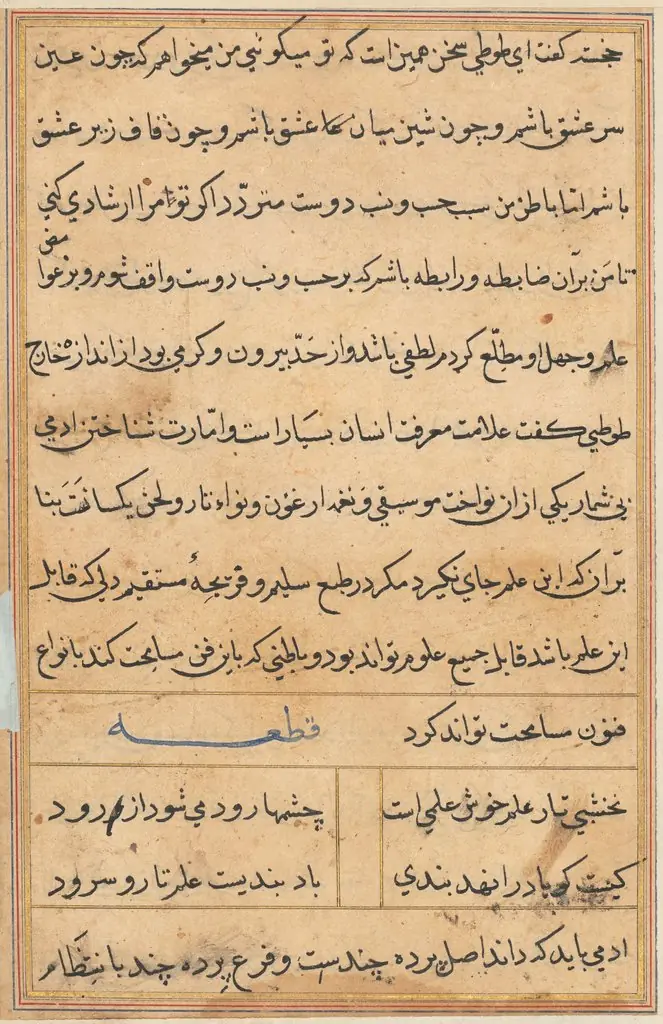 Page from Tales of a Parrot (Tuti-nama): text page
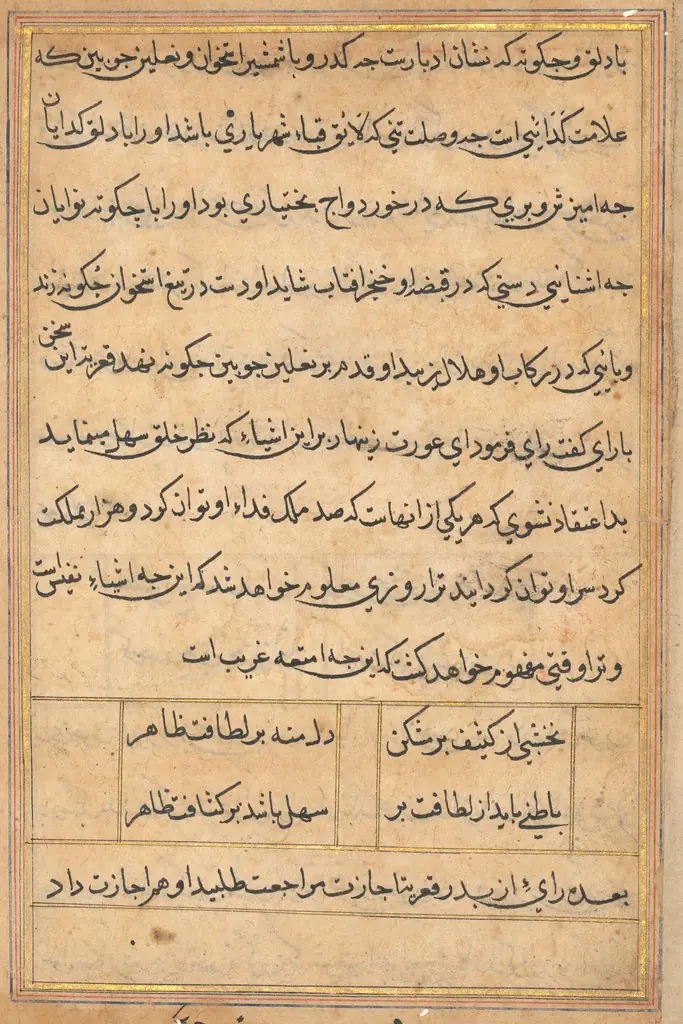 Page from Tales of a Parrot (Tuti-nama): text page
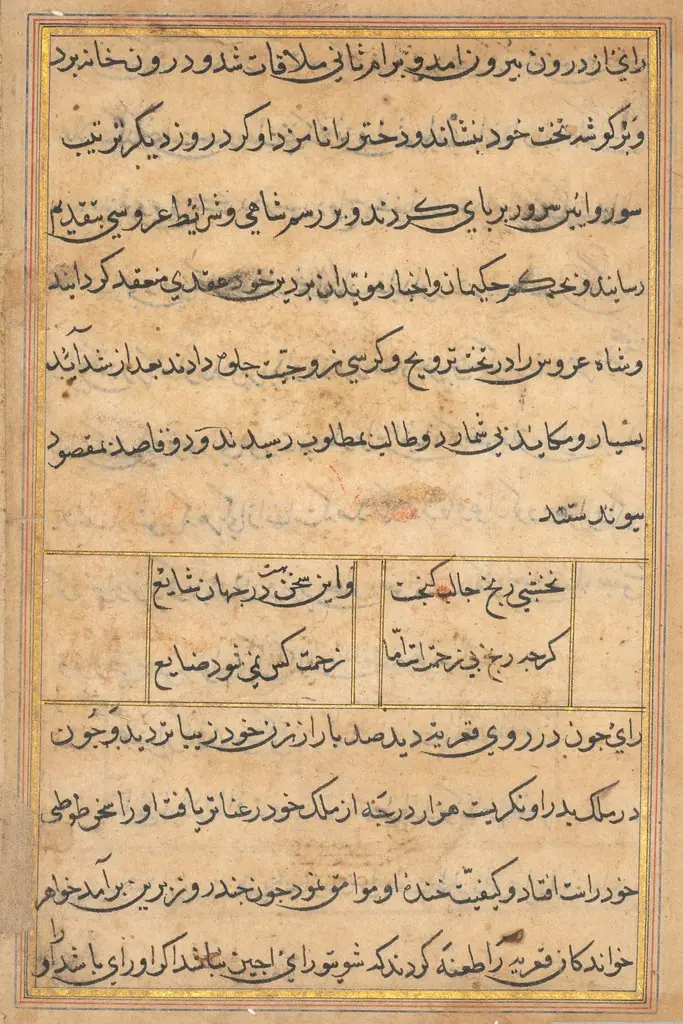 Page from Tales of a Parrot (Tuti-nama): text page
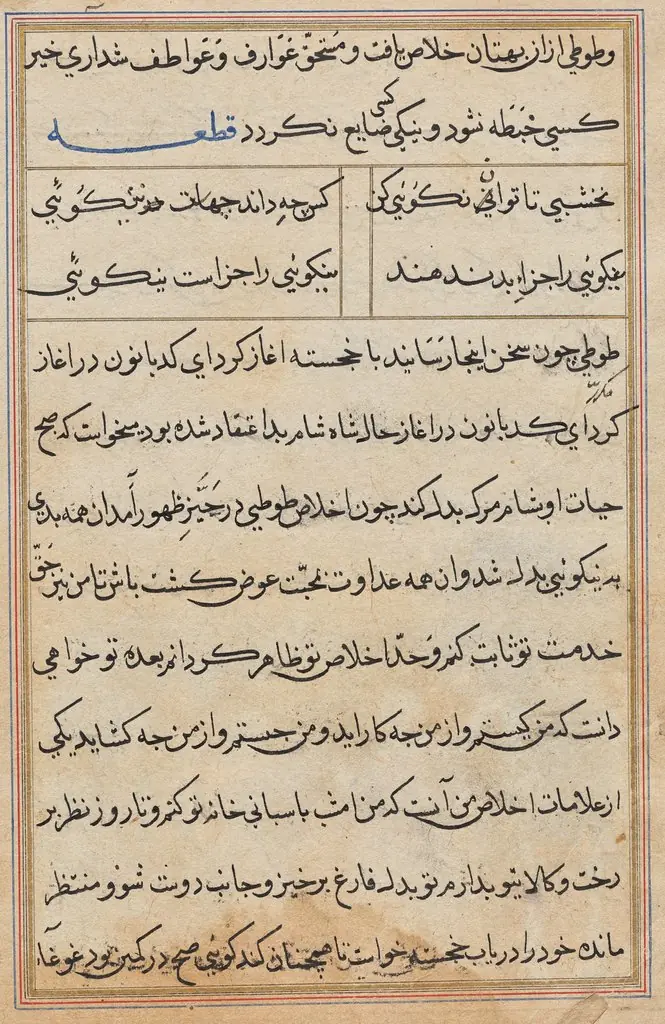 Page from Tales of a Parrot (Tuti-nama): text page
 Page from Tales of a Parrot (Tuti-nama): text page