Artwork
Page from Tales of a Parrot (Tuti-nama): text page
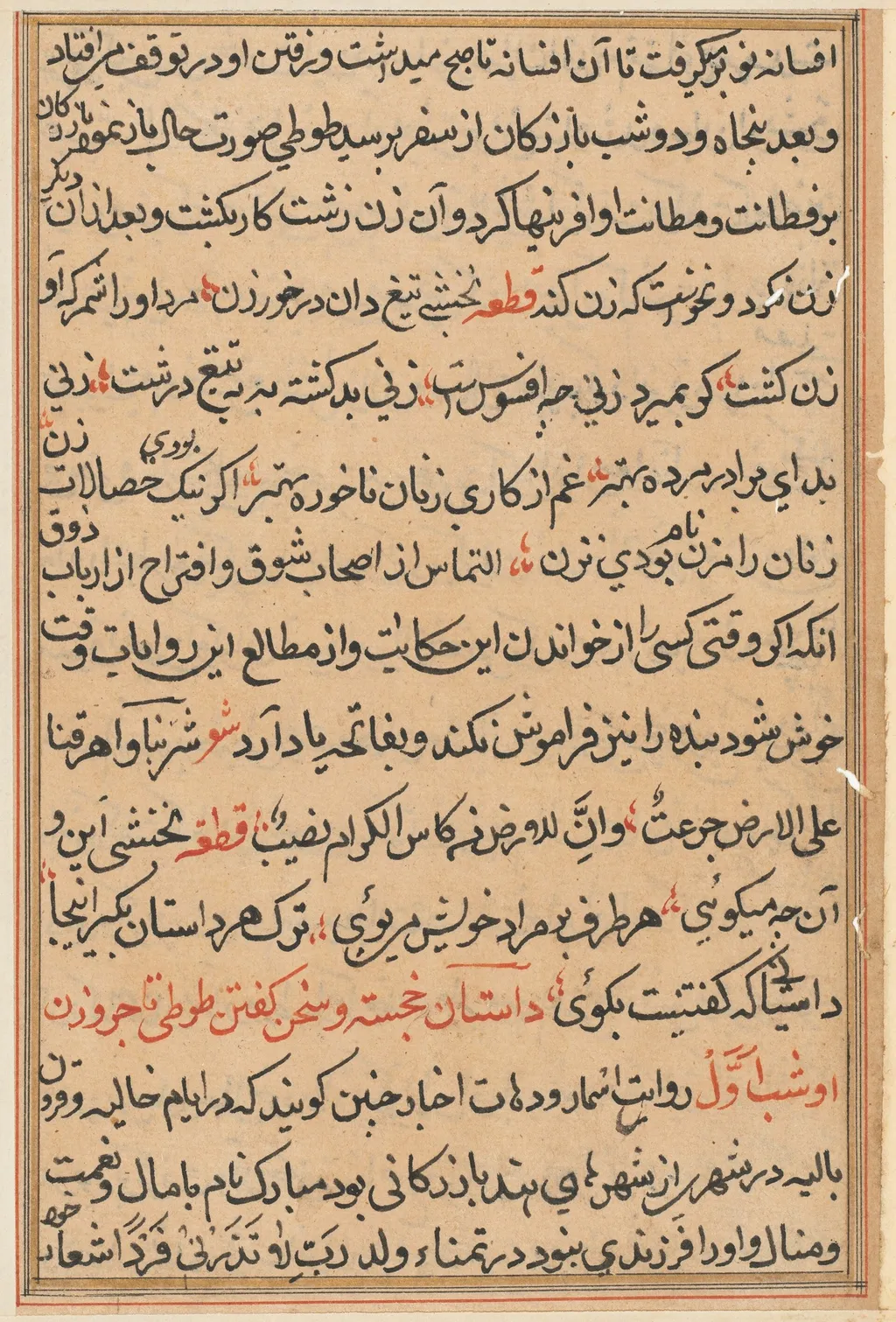
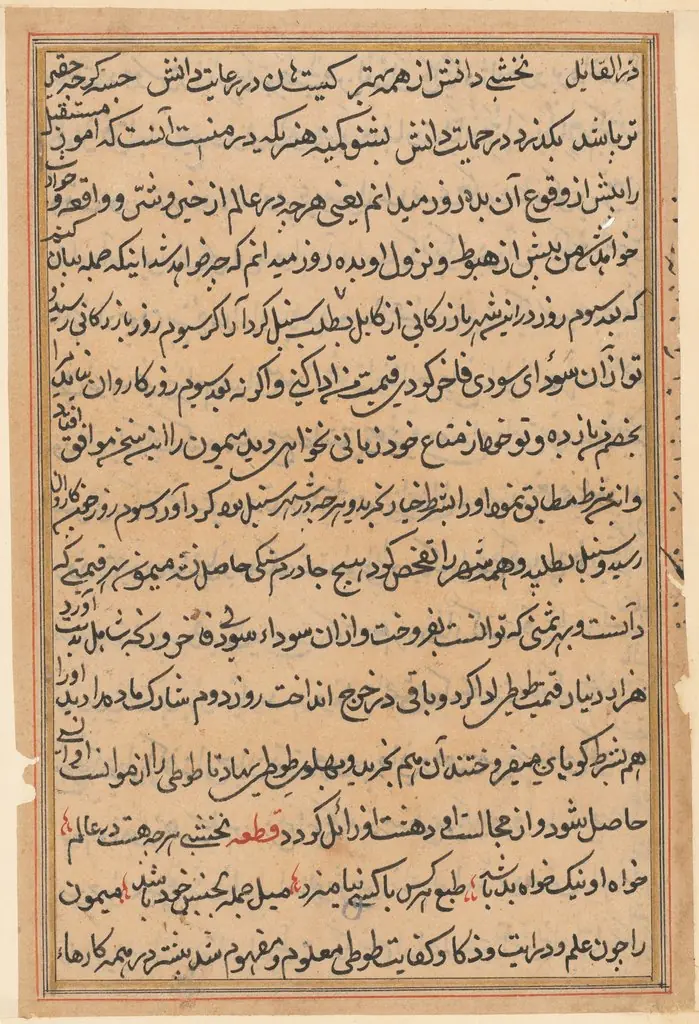
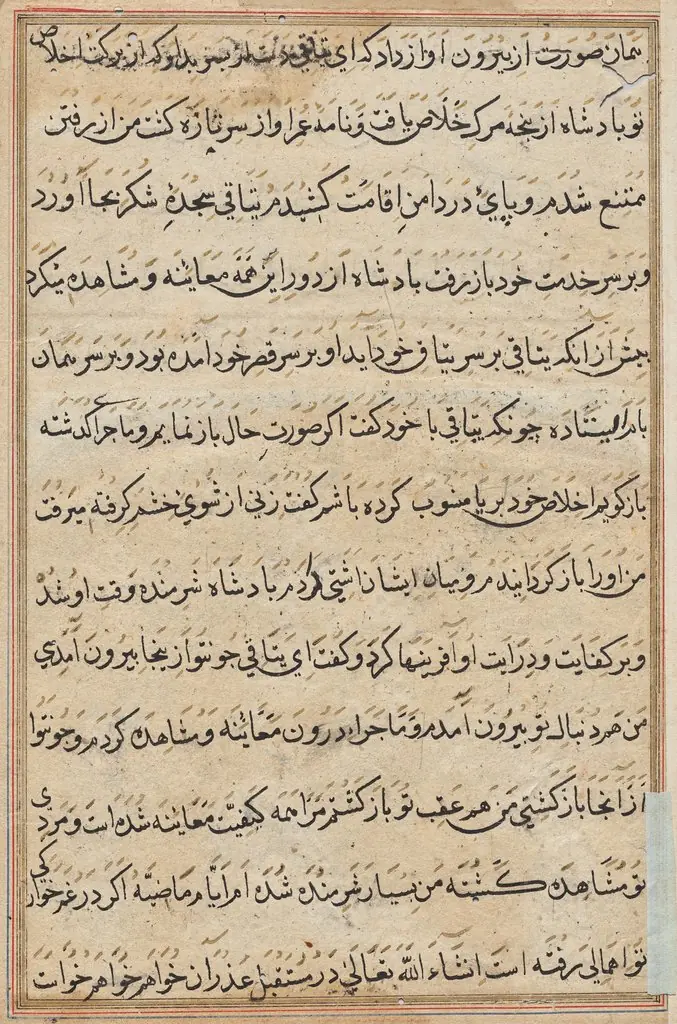
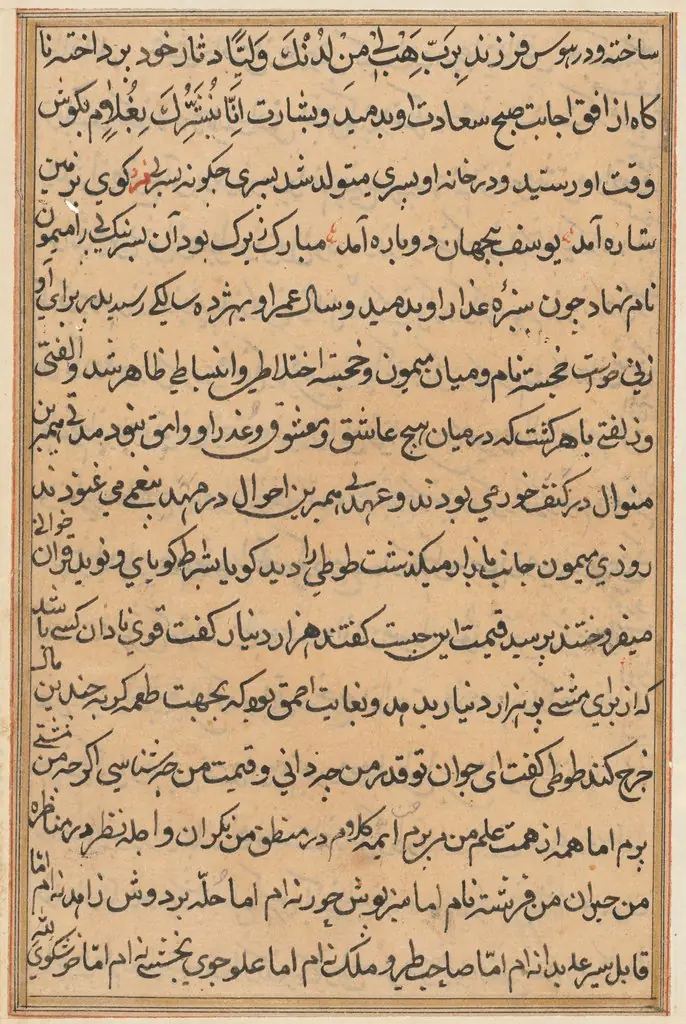
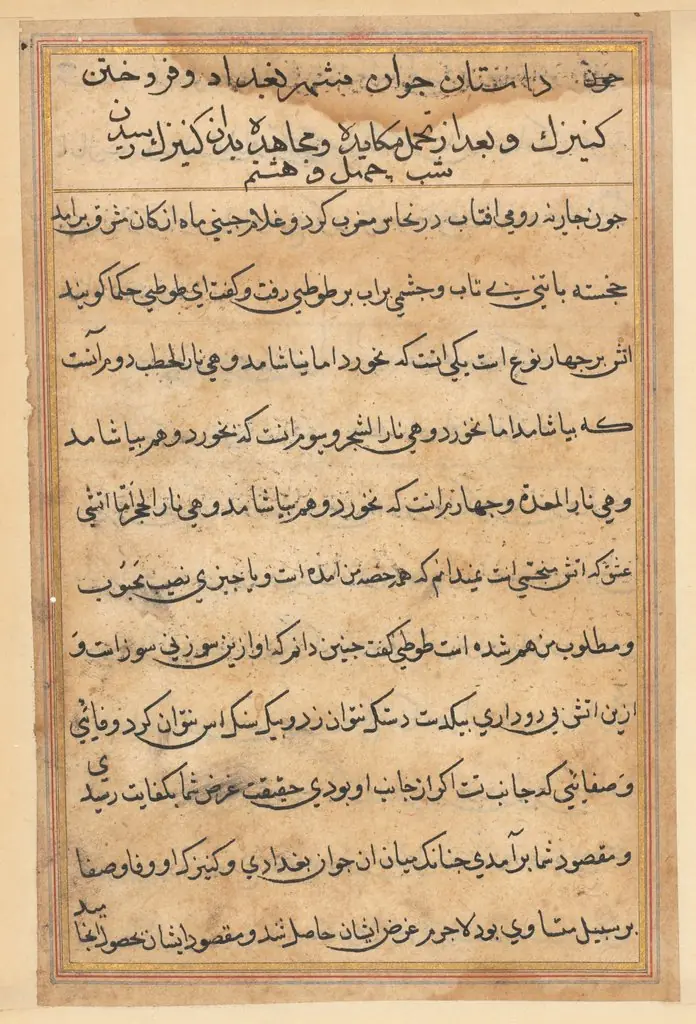
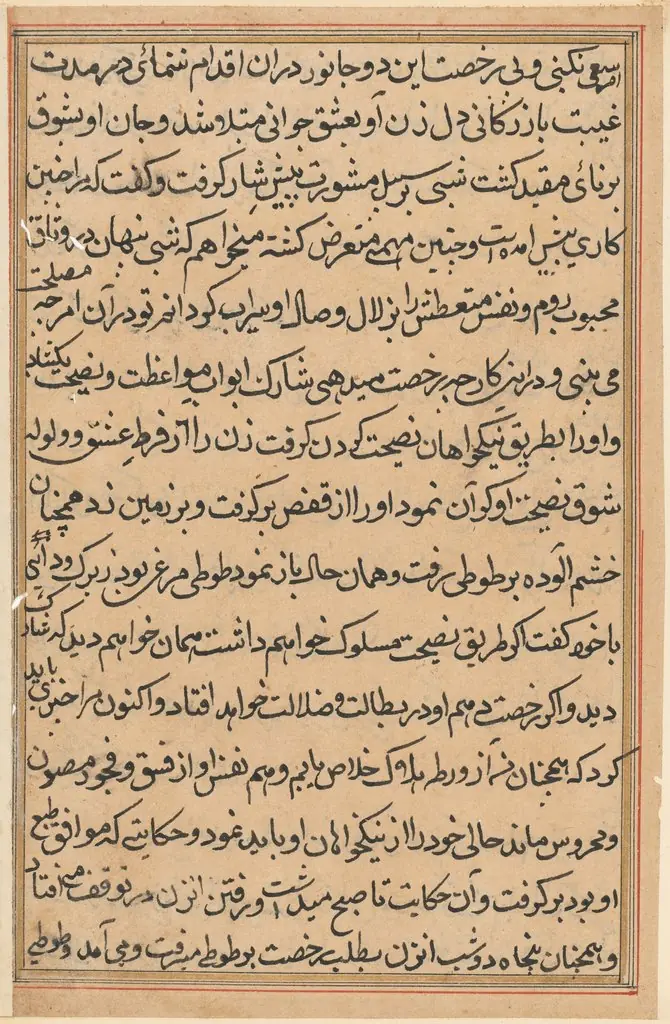
Page from Tales of a Parrot (Tuti-nama): text page is an unspecified painting. It dates from 1560 and is held in the collection of the Cleveland Museum of Art. The object is a single leaf from the illustrated manuscript Tales of a Parrot (Tuti‑nama).
About this work
History & Provenance
The work is currently held in the collection of the Cleveland Museum of Art, where it is cataloged under the accession number 1962.
Created in 1560 within the Mughal Empire, this text page from the Tales of a Parrot (Tuti-nama) was produced by an unknown artist. The work is currently held in the collection of the Cleveland Museum of Art, where it is cataloged under the accession number 1962.279.4.b. While the specific circumstances of its original commission and the detailed chain of ownership prior to its museum acquisition are not specified in the available records, its inception is firmly dated to the mid-sixteenth century.
The text page from the Tales of a Parrot (Tuti-nama) is held in the collection of the Cleveland Museum of Art. The institution assigns the work the accession number 1962.279.4.b. Created in 1560 within the Mughal Empire, this painting is attributed to an unknown artist. The provided records confirm its location and inventory details but do not list specific past exhibitions.
Overview
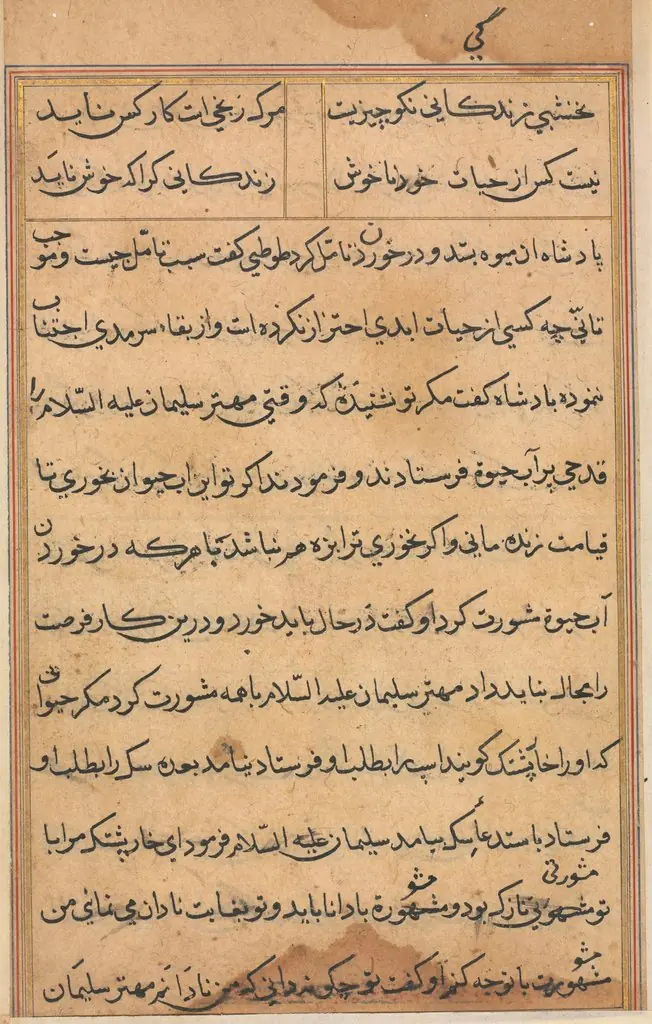
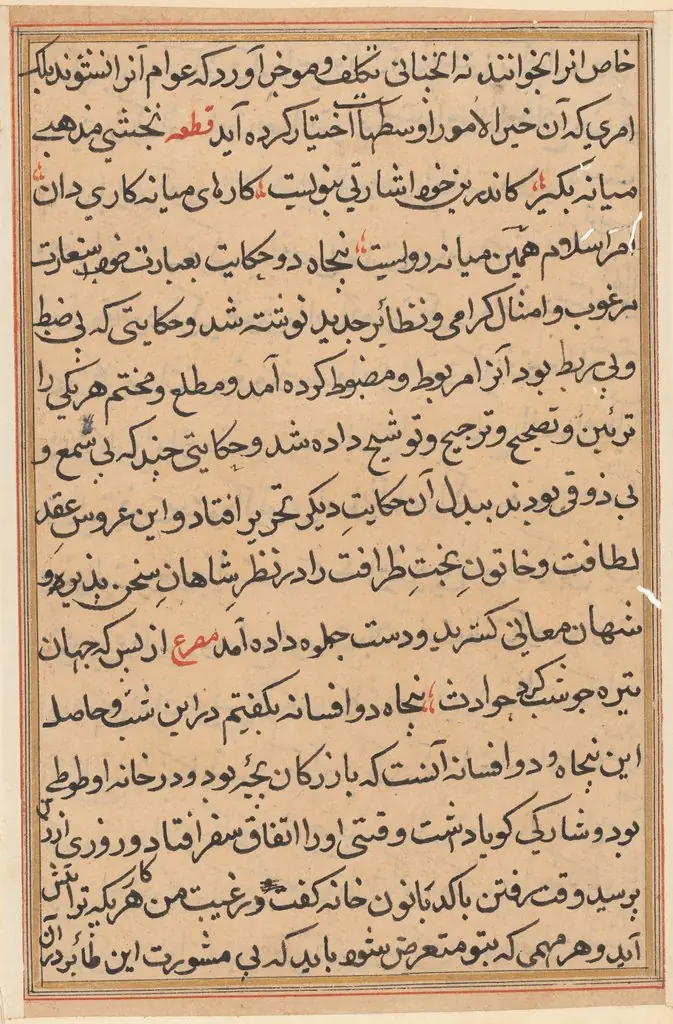
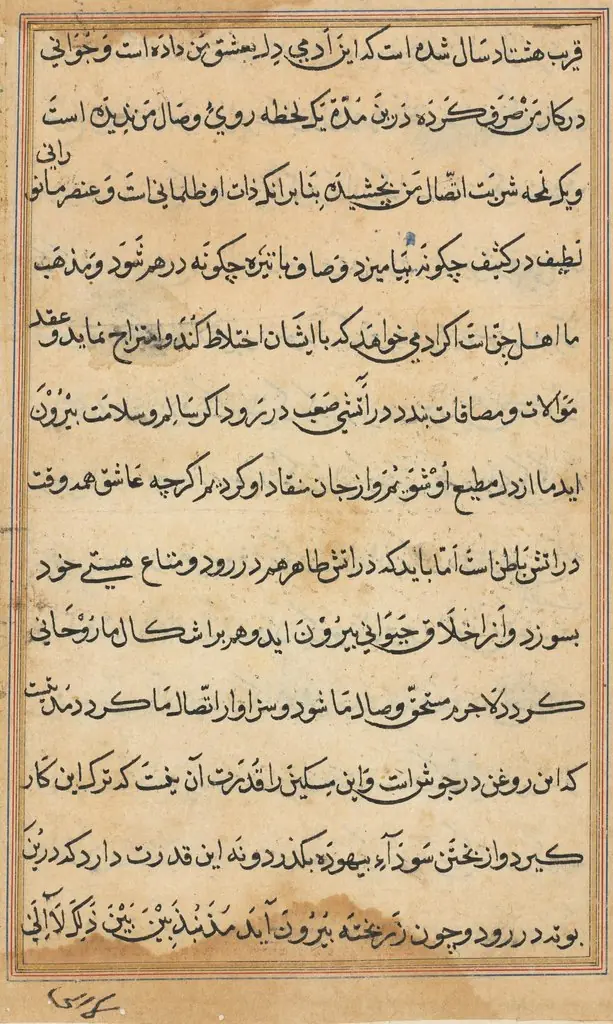
The object is a single leaf from the illustrated manuscript Tales of a Parrot (Tuti‑nama). Executed on paper, the page is densely covered with Arabic calligraphy rendered in flowing black ink, with occasional red markings that appear to be marginal notes or corrections. A thin red border frames the sheet, and the paper shows the patina of age, taking on a warm, yellowed hue.
Subject & Meaning
The manuscript recounts a collection of stories narrated by a parrot, a literary genre popular in Persian and Ottoman courts. This particular leaf likely contains a segment of the narrative addressed to Prince Salim, the intended patron, reflecting the courtly tradition of using allegorical animal tales to convey moral and political instruction.
Technique & Style
The calligrapher employed a cursive Arabic script characterized by tight, curving lines that create a rhythmic visual flow across the page. Red ink is used sparingly to emphasize corrections or marginal commentary, a common practice in manuscript production to ensure textual accuracy. The paper’s thinness and its aged coloration indicate a high-quality, possibly imported, writing surface typical of elite commissions.
Context
Tales of a Parrot belongs to a broader tradition of didactic storytelling in the Islamic world, where animal protagonists serve as vehicles for ethical discourse. Such works were often produced for royal patrons, combining literary content with luxurious materials to demonstrate both piety and prestige.
Legacy
Although only a fragment survives, the page illustrates the sophisticated interplay of text and annotation in Ottoman manuscript culture. Its preservation allows scholars to study scribal practices, patronage patterns, and the transmission of literary genres across the Islamic world.
Artist & collection

 Page from Tales of a Parrot (Tuti-nama): text page
 Page from Tales of a Parrot (Tuti-nama): text page
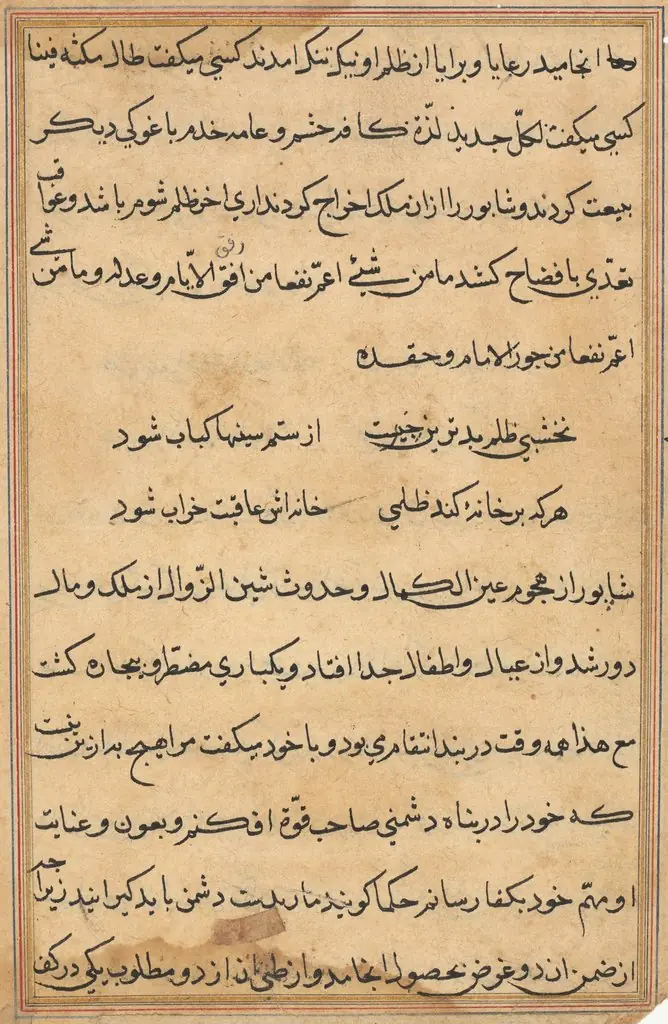 Page from Tales of a Parrot (Tuti-nama): text page
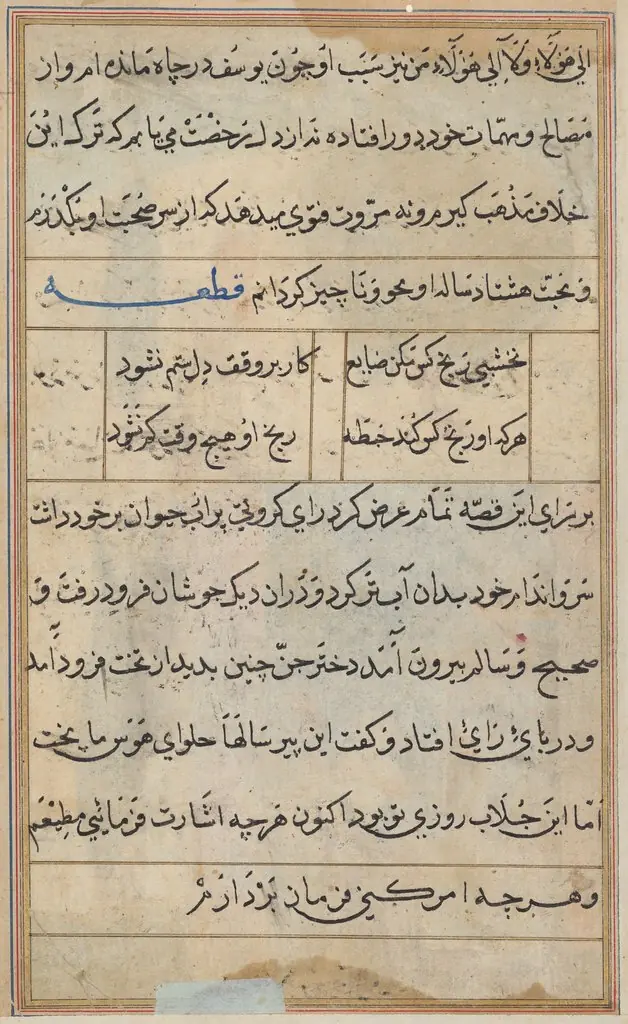 Page from Tales of a Parrot (Tuti-nama): text page
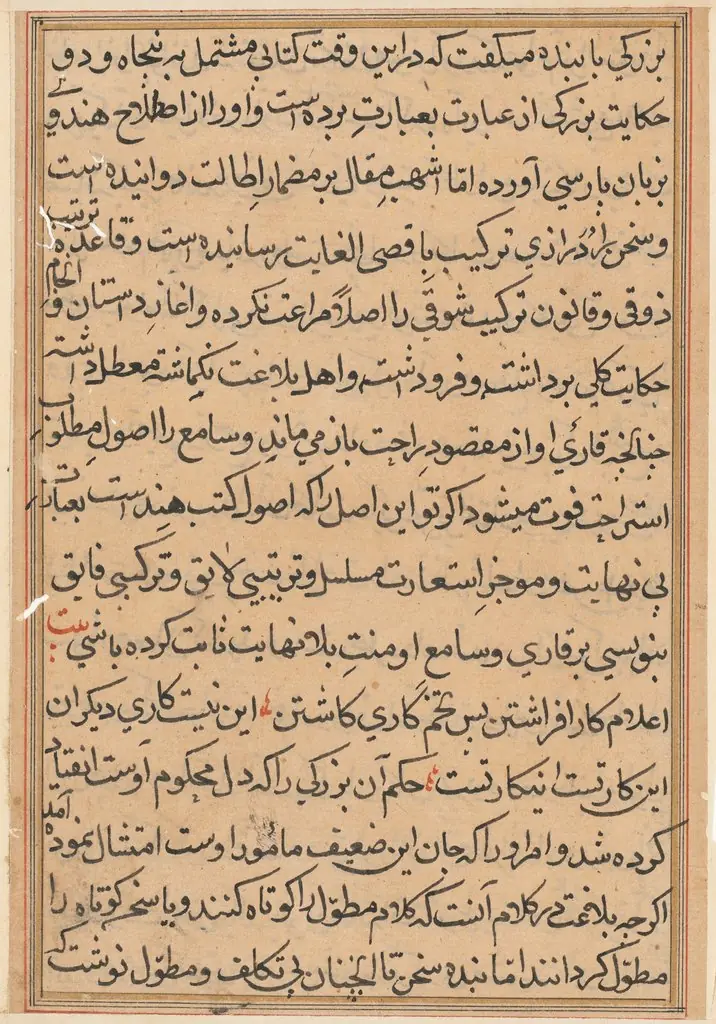 Page from Tales of a Parrot (Tuti-nama): text page
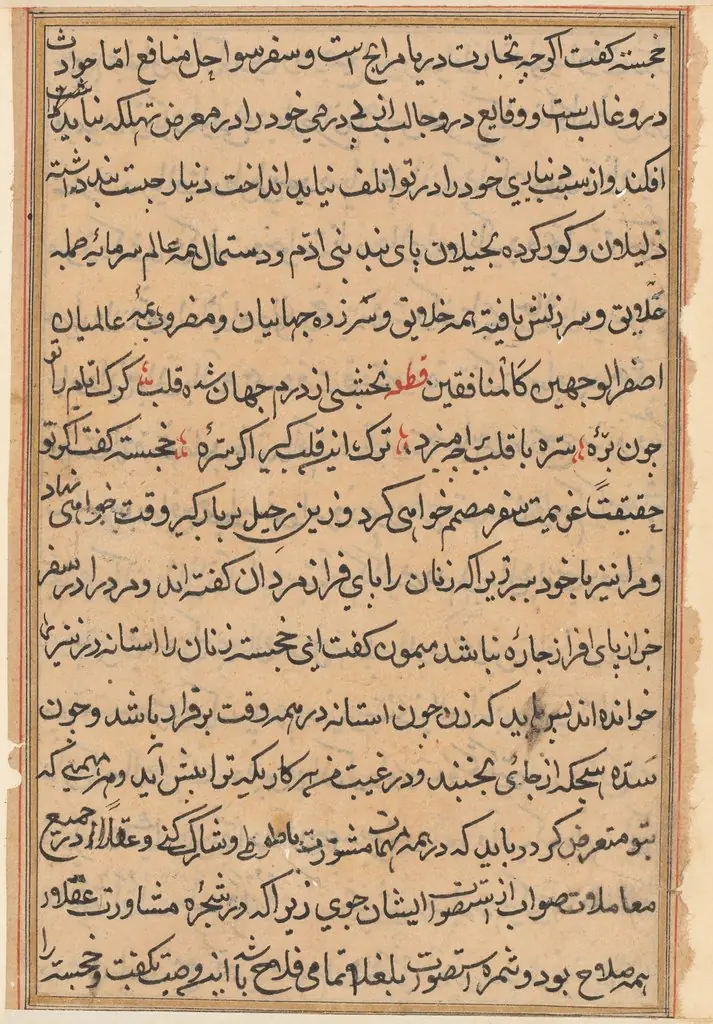 Page from Tales of a Parrot (Tuti-nama): text page
 Page from Tales of a Parrot (Tuti-nama): text page
 Page from Tales of a Parrot (Tuti-nama): text page
 Page from Tales of a Parrot (Tuti-nama): text page
 Page from Tales of a Parrot (Tuti-nama): text page
 Page from Tales of a Parrot (Tuti-nama): text page
- Page from Tales of a Parrot (Tuti-nama): text page