Artwork
Page from Tales of a Parrot (Tuti-nama): text page
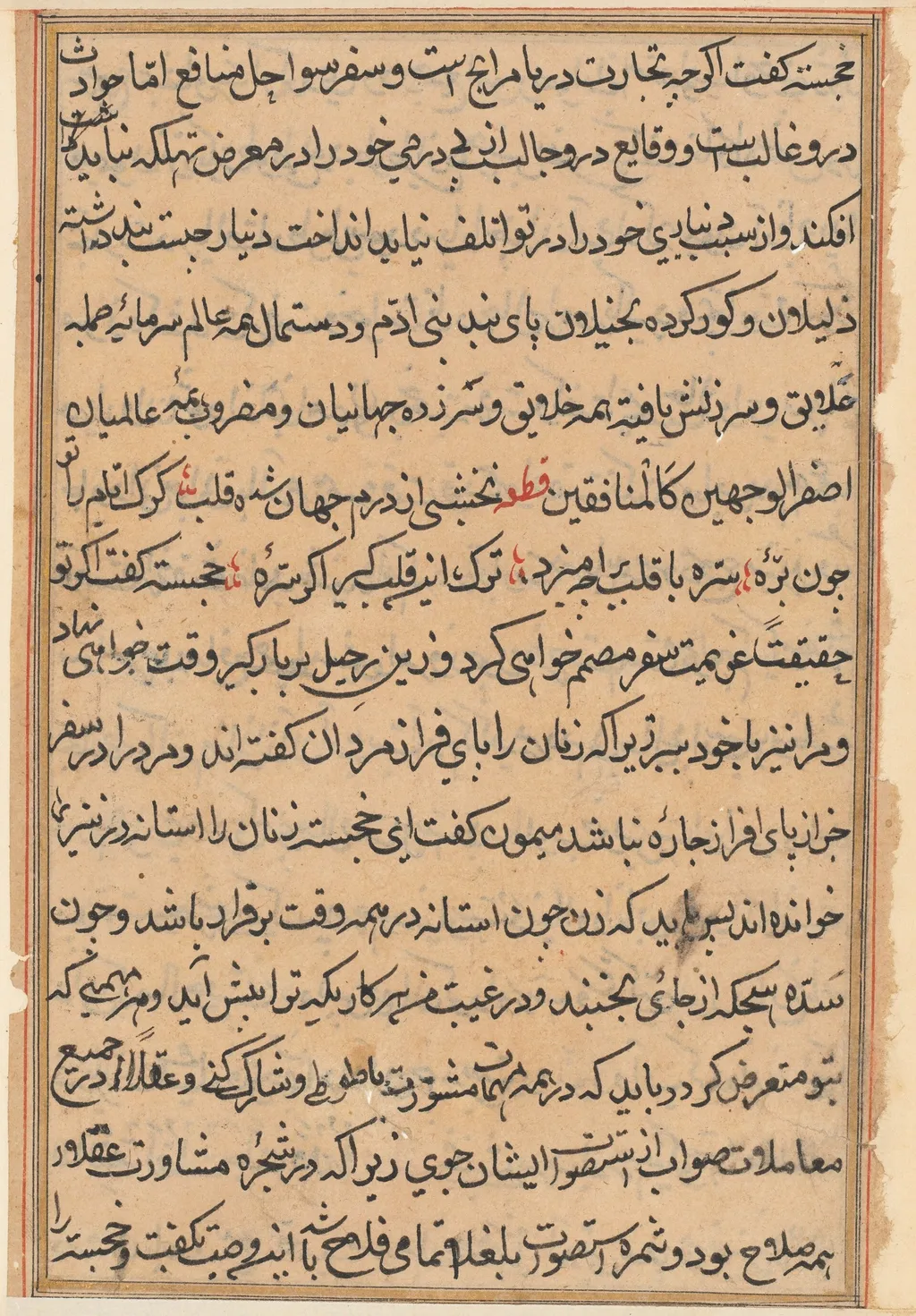
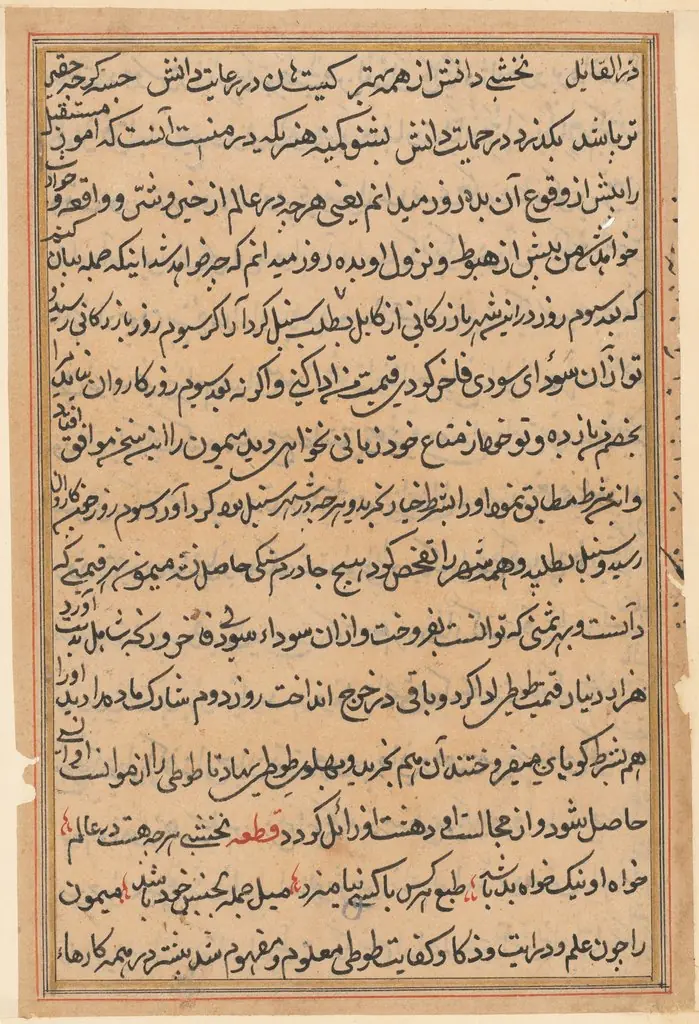
Page from Tales of a Parrot (Tuti-nama): text page is an unspecified painting. It dates from 1560 and is held in the collection of the Cleveland Museum of Art. This object is a single leaf from the 1560 manuscript known as Tales of a Parrot (Tuti‑nama).
About this work
The Cleveland Museum of Art holds this piece, and it is a testament to the beauty and craftsmanship of the time.
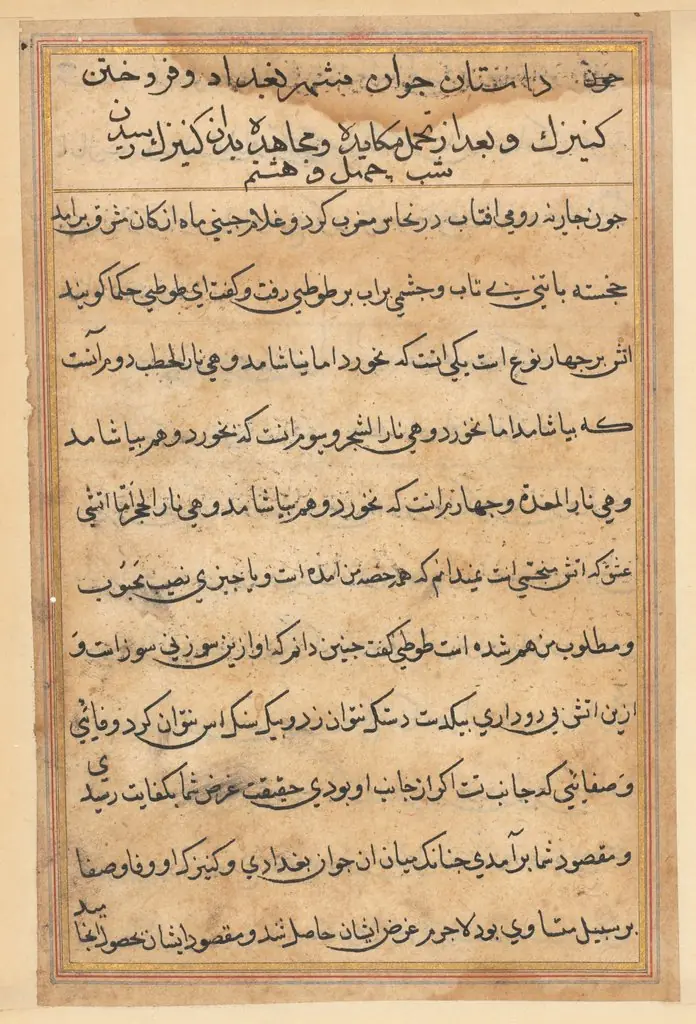
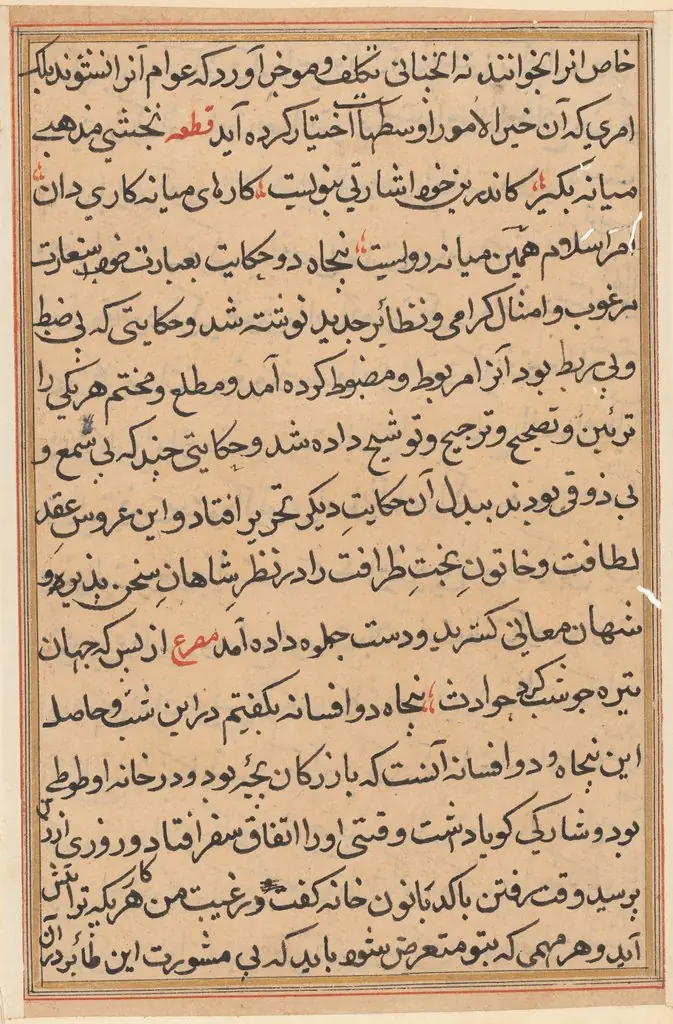
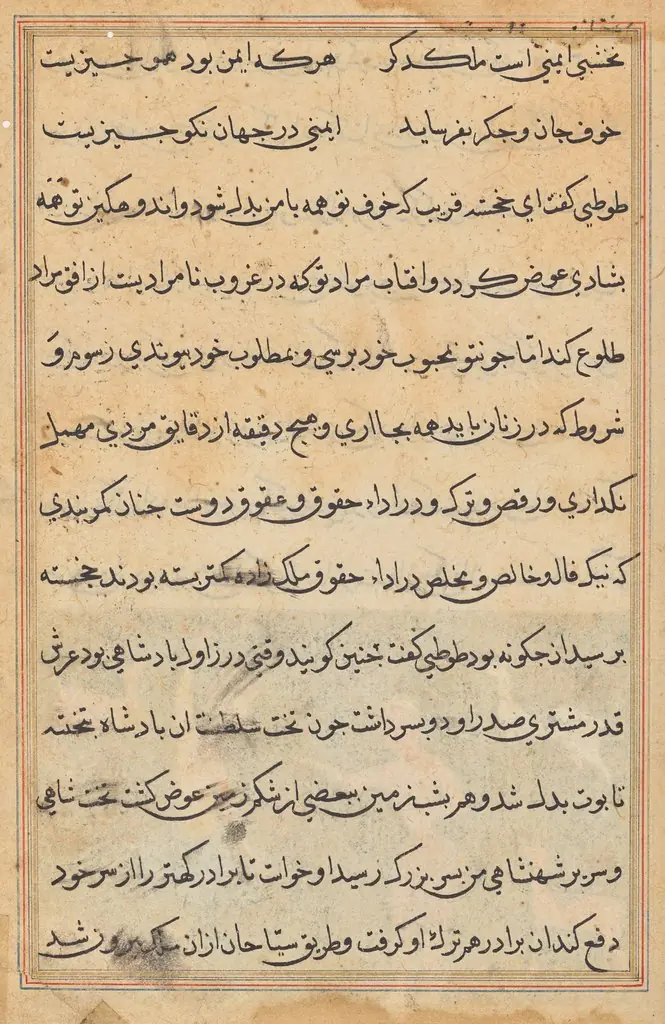
This painting is a page from the Tales of a Parrot (Tuti-nama), created in 1560. The text is written in an unknown medium, with no visible imagery. The page is a simple, yet elegant, example of the art of the time.
The text is written in a flowing script, with no visible punctuation or capitalization. The language is unknown, but the writing style is reminiscent of ancient manuscripts. The page is a beautiful example of the art of calligraphy, with intricate details and flourishes throughout.
The Cleveland Museum of Art holds this piece, and it is a testament to the beauty and craftsmanship of the time.
History & Provenance
The text page is a leaf from the illustrated manuscript Tales of a Parrot (Tuti-nama) produced around 1560 in the Mughal Empire. The artist responsible for the painting is not recorded in the sources. After its creation the leaf entered a private collection before being acquired by the Cleveland Museum of Art, where it is registered under accession number 1962.279.6.b and remains in the museum's holdings. No further details of its commission or intermediate owners are provided in the available records.
Context
Scholarship on the Tuti-nama manuscript, including this text page, situates it as a foundational example of Mughal painting under Emperor Akbar's patronage. Produced around 1560, the work reflects the early synthesis of Persian narrative traditions with emerging Mughal stylistic elements, though its artist remains unidentified. The Tuti-nama is often analyzed for its role in establishing illustrated storytelling in South Asian courtly art, bridging pre-Mughal and imperial Mughal visual cultures.
Critical reception emphasizes the manuscript's significance in art-historical studies of Mughal India, particularly its use of text-image interplay. As part of the Cleveland Museum of Art's collection, this page contributes to broader discussions about the evolution of manuscript illumination and the Mughal Empire's artistic innovations during the mid-16th century.
Overview
This object is a single leaf from the 1560 manuscript known as Tales of a Parrot (Tuti‑nama). It consists solely of handwritten text, lacking any illustrative elements, and is preserved in the collection of the Cleveland Museum of Art.
Subject & Meaning
The page contains a continuous line of script in an unidentified language, offering no overt punctuation or capital letters. While the precise narrative cannot be determined, the work reflects the literary culture of its period, where stories were often transmitted through elegant handwritten codices.
Technique & Style
The writing is executed in a flowing calligraphic hand, characterized by intricate flourishes and a smooth, uninterrupted line. The medium, whether ink on paper, parchment, or another substrate, has not been definitively identified, but the hand mirrors the aesthetic of early manuscript traditions.
Legacy
As a rare example of pure calligraphic art from the period, the leaf serves scholars studying the transmission of literary forms and the aesthetic values of pre‑modern scribes, while also enriching the museum’s representation of non‑Western textual traditions.
Artist & collection

- Page from Tales of a Parrot (Tuti-nama): text page
 Page from Tales of a Parrot (Tuti-nama): text page
 Page from Tales of a Parrot (Tuti-nama): text page
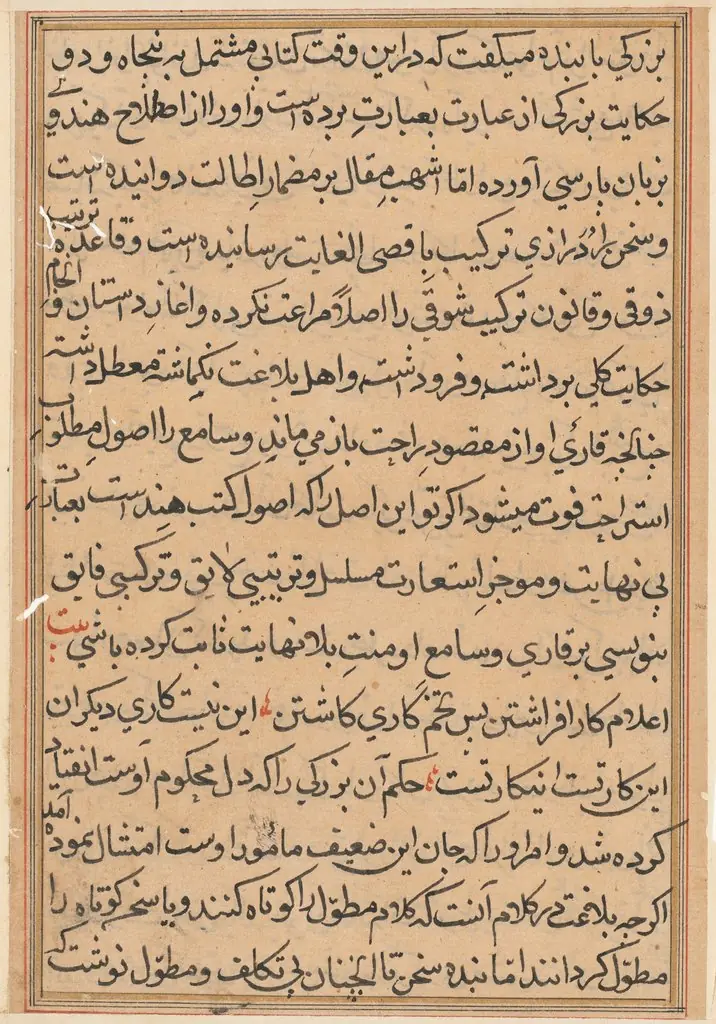 Page from Tales of a Parrot (Tuti-nama): text page
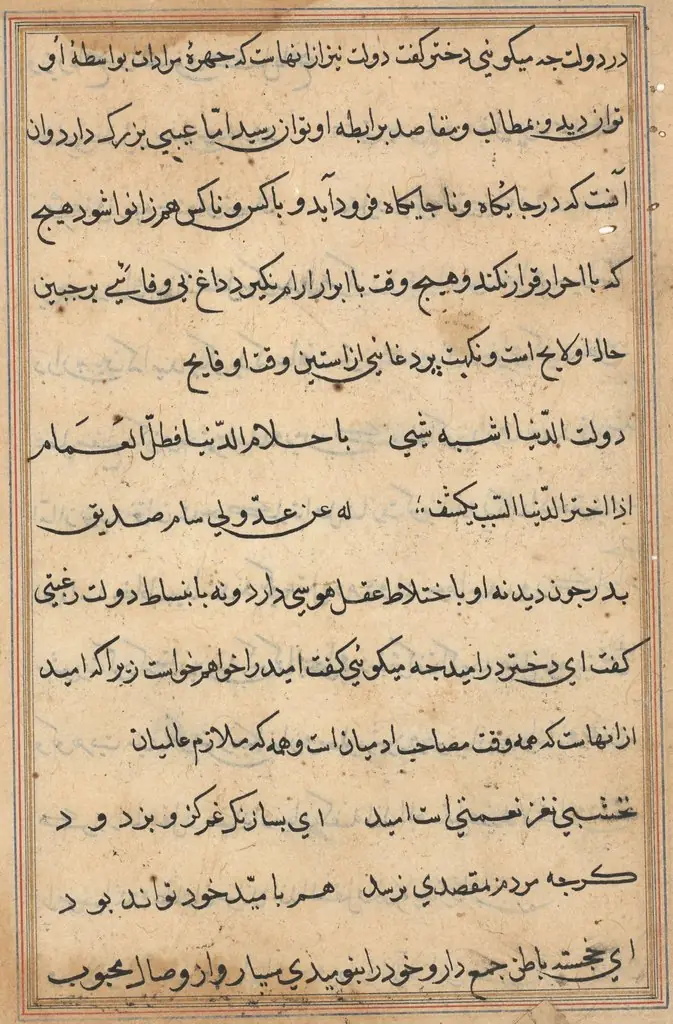 Page from Tales of a Parrot (Tuti-nama): text page
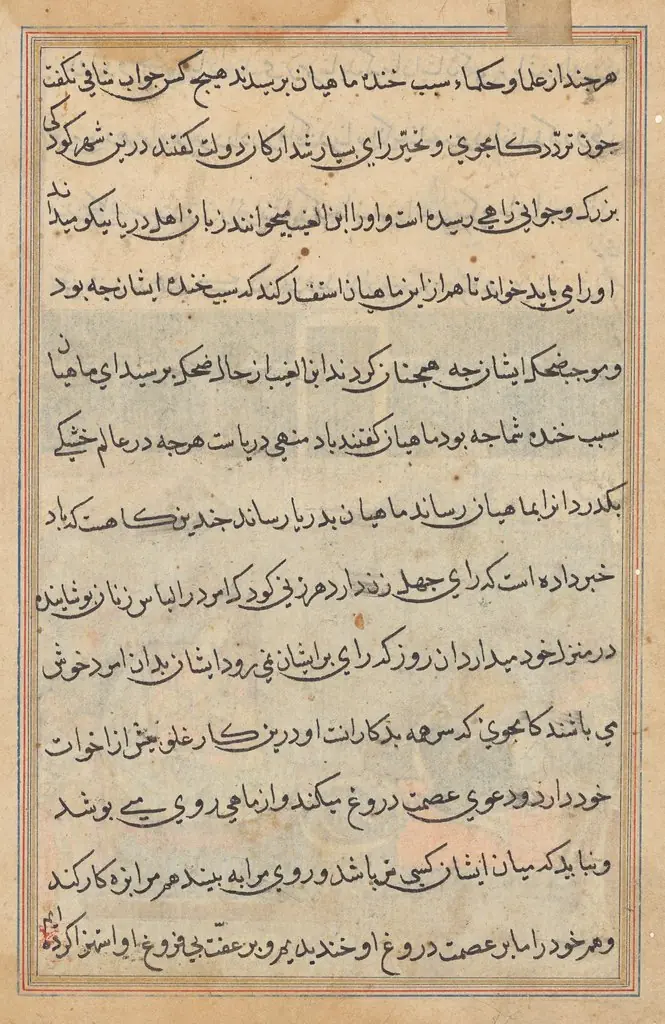 Page from Tales of a Parrot (Tuti-nama): text page
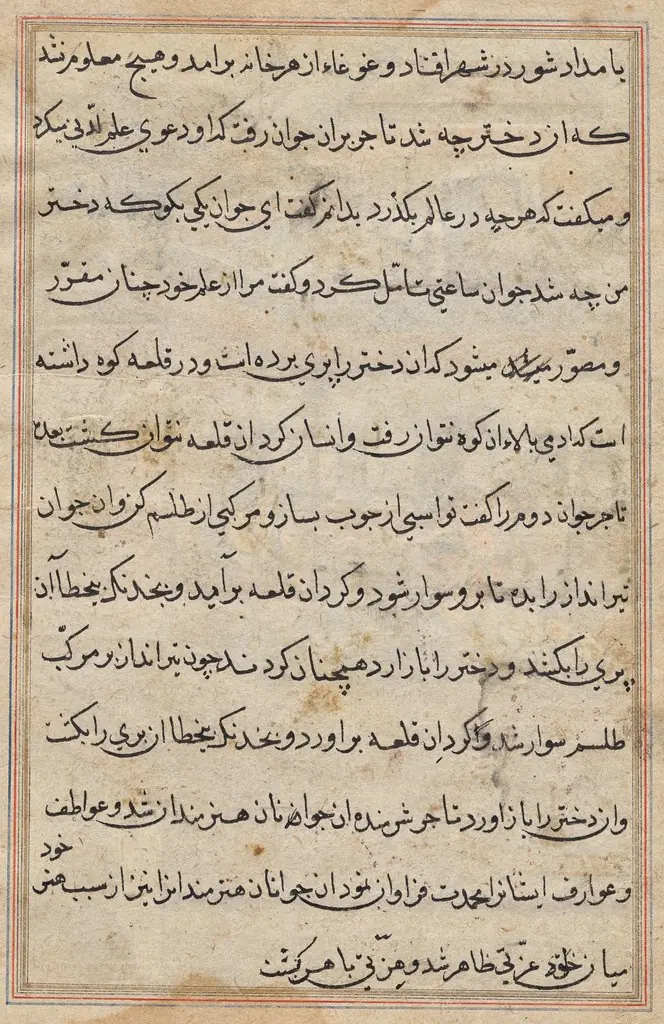 Page from Tales of a Parrot (Tuti-nama): text page
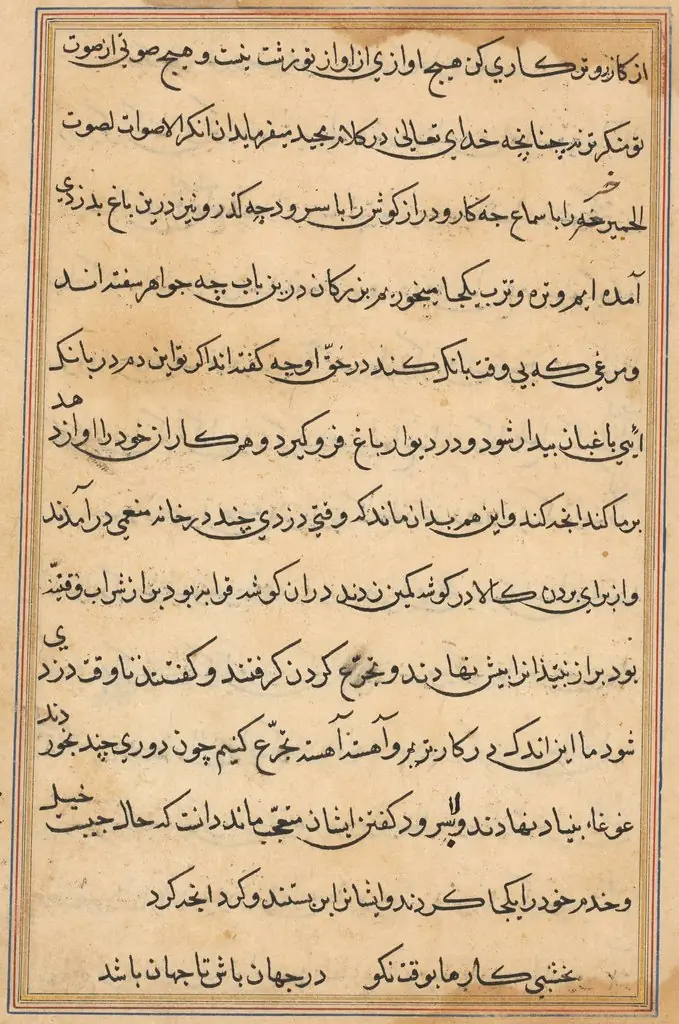 Page from Tales of a Parrot (Tuti-nama): text page
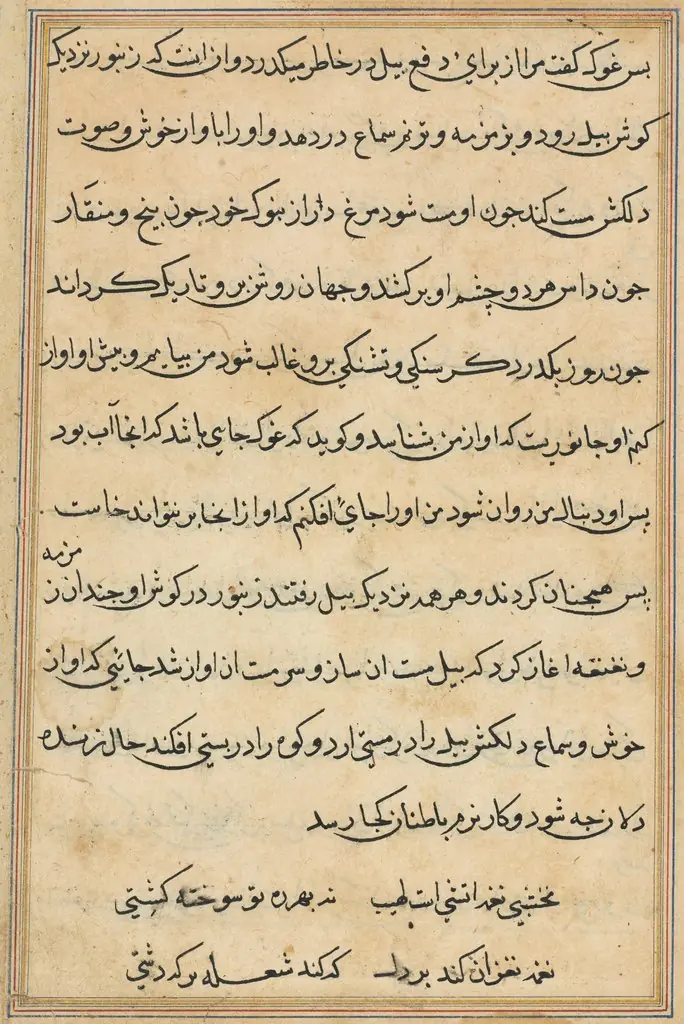 Page from Tales of a Parrot (Tuti-nama): text page
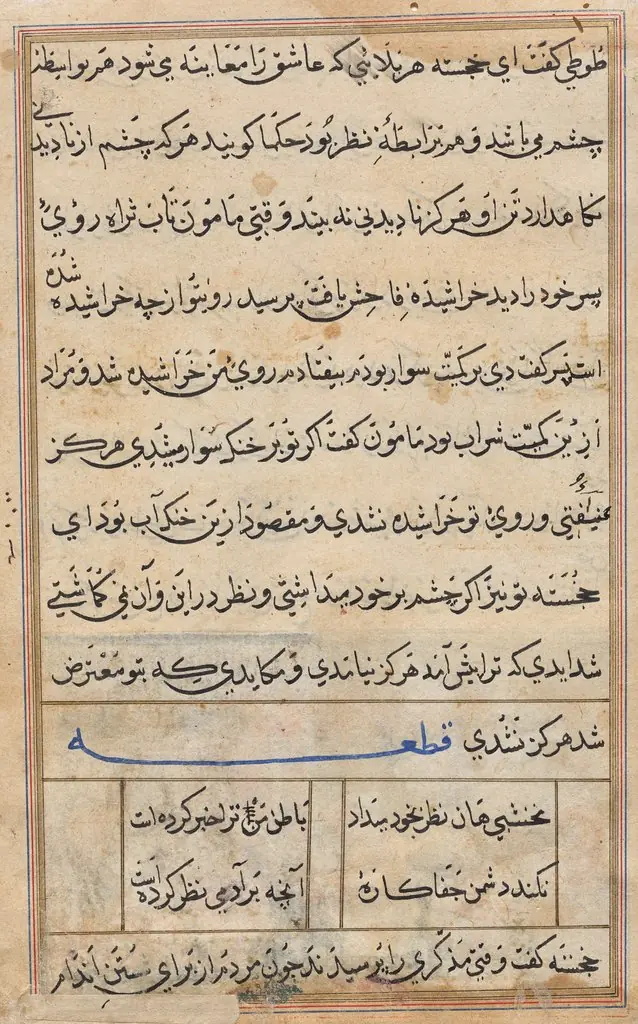 Page from Tales of a Parrot (Tuti-nama): text page
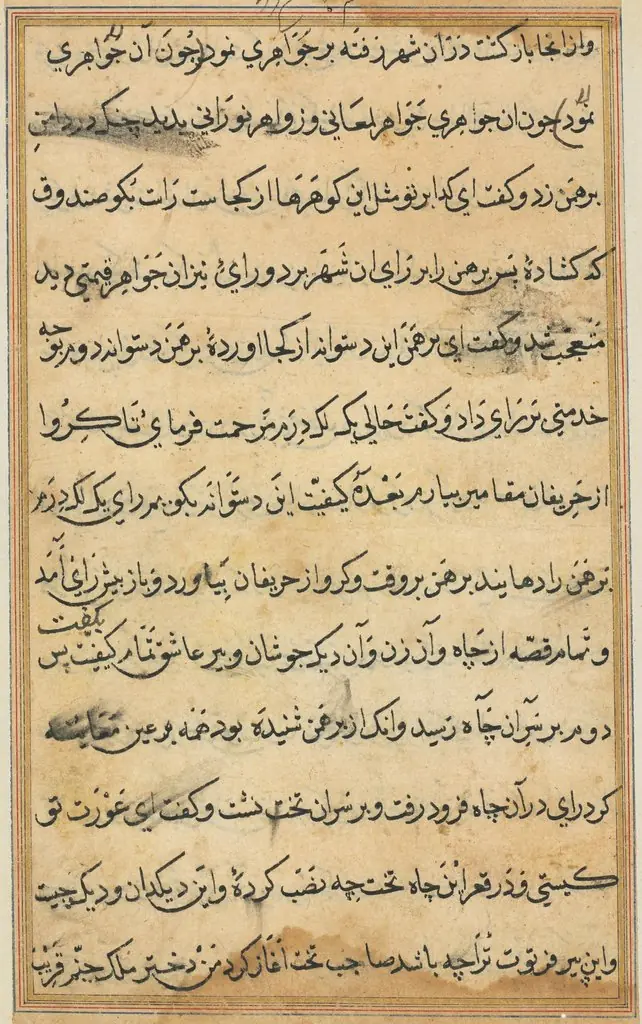 Page from Tales of a Parrot (Tuti-nama): text page
 Page from Tales of a Parrot (Tuti-nama): text page