Artwork
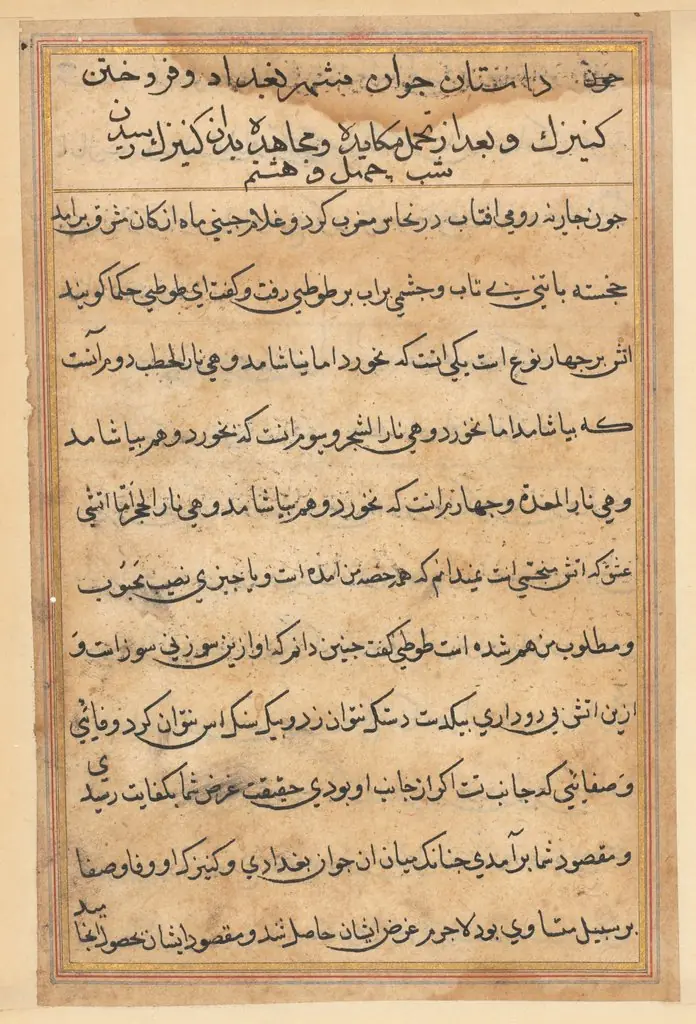
Page from Tales of a Parrot (Tuti-nama): text page
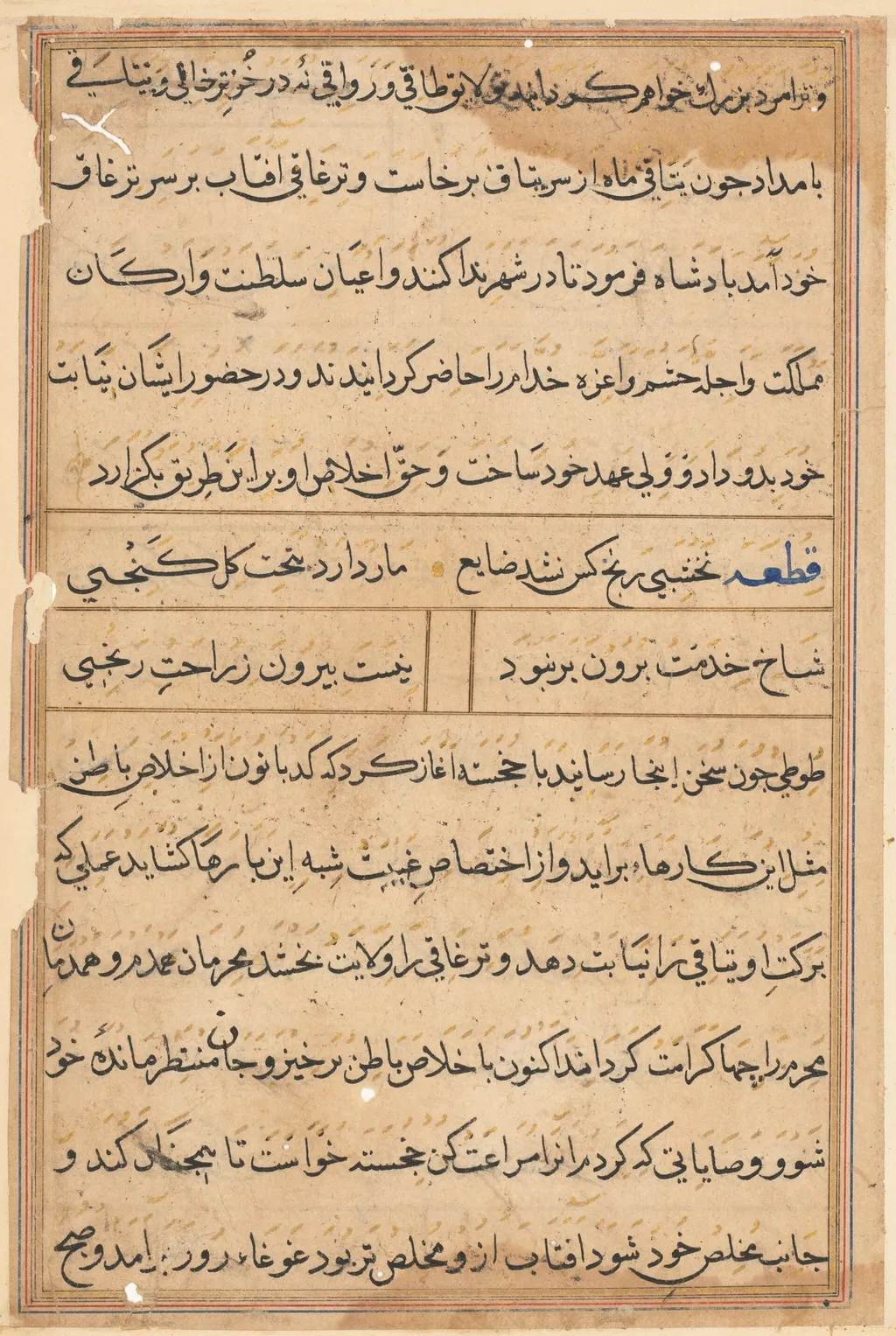
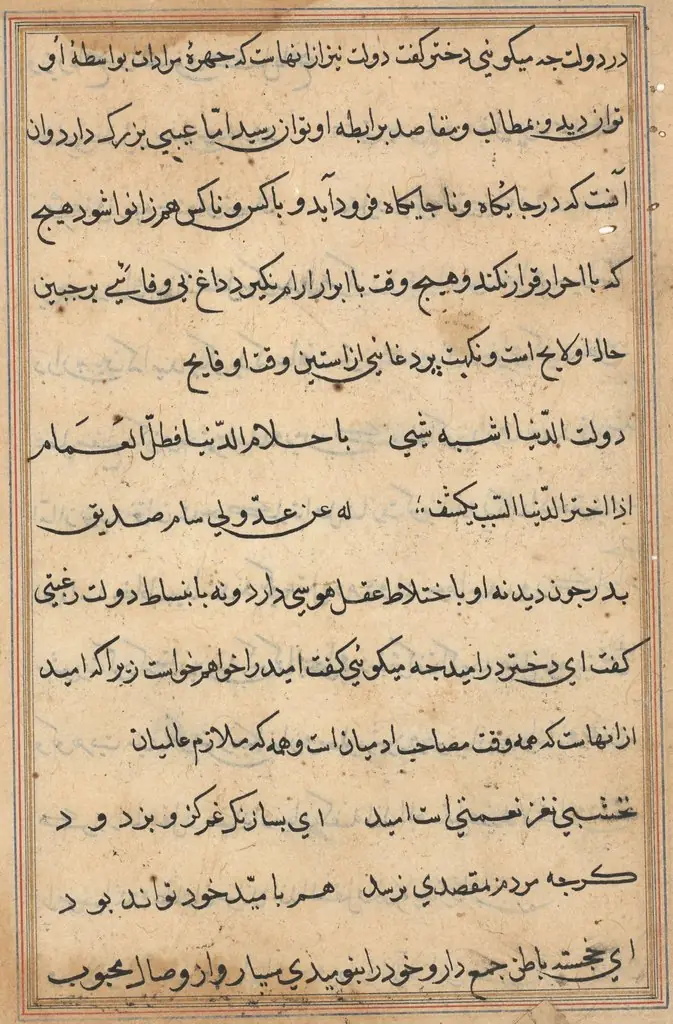
Page from Tales of a Parrot (Tuti-nama): text page is an unspecified painting. It dates from 1560 and is held in the collection of the Cleveland Museum of Art. The object is a single page from the Persian manuscript known as Tuti‑nama (Tales of a Parrot).
About this work
History & Provenance
This text page from the Tales of a Parrot (Tuti-nama) was created in 1560 within the Mughal Empire, as recorded in the work's cataloguing data.
This text page from the Tales of a Parrot (Tuti-nama) was created in 1560 within the Mughal Empire, as recorded in the work's cataloguing data. The page is held in the collection of the Cleveland Museum of Art, where it is identified by the accession number 1962.279.17.a. The sources do not provide further details on the circumstances of its commission, the original patron, or the chain of ownership prior to its acquisition by the museum.
Context
Created in 1560 within the Mughal Empire, this text page from the Tales of a Parrot (Tuti-nama) represents a specific moment in the development of Mughal manuscript illumination. The work is attributed to an unknown artist, reflecting the collaborative nature of imperial workshops where individual signatures were often secondary to the collective output of the court. Held by the Cleveland Museum of Art, the piece serves as a surviving example of the illustrated manuscripts produced during the early reign of Emperor Akbar.
As a text page rather than a standalone painting, it illustrates the integration of calligraphy and marginal decoration characteristic of Persianate traditions adapted for the Mughal context.
Overview
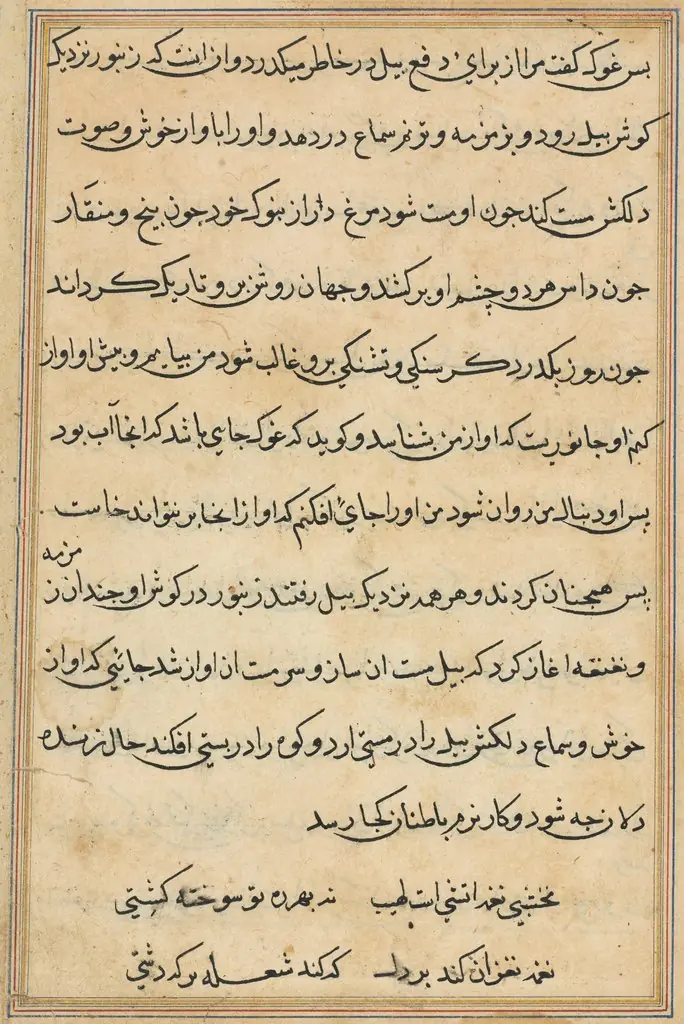
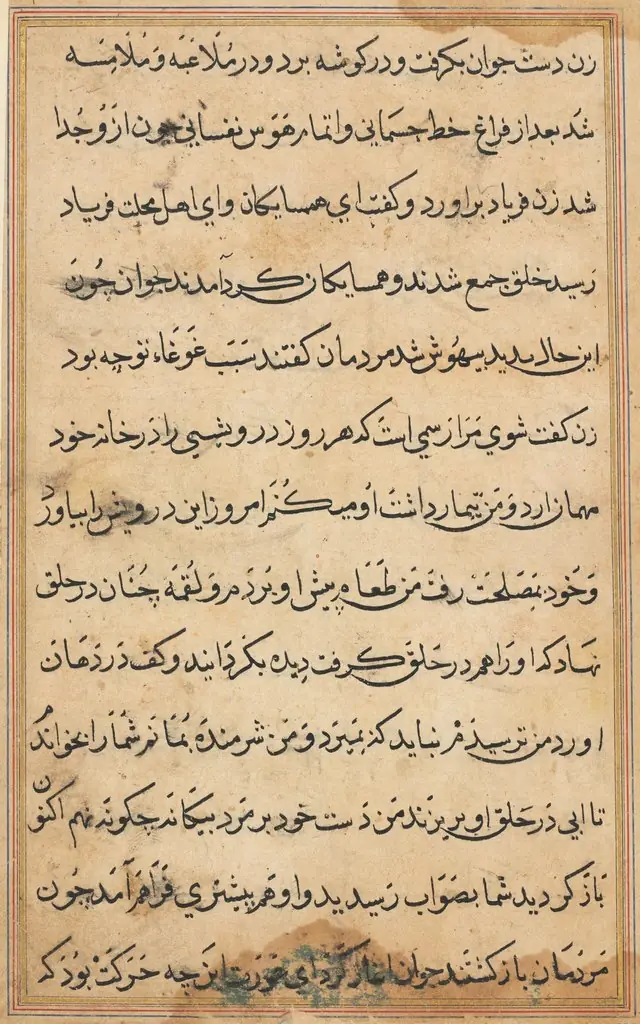
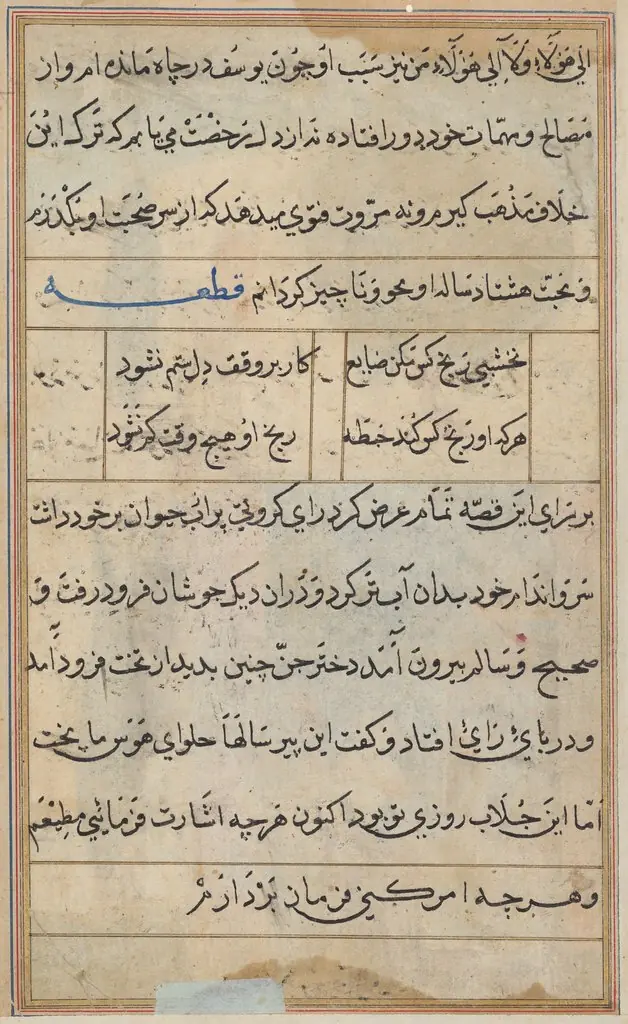
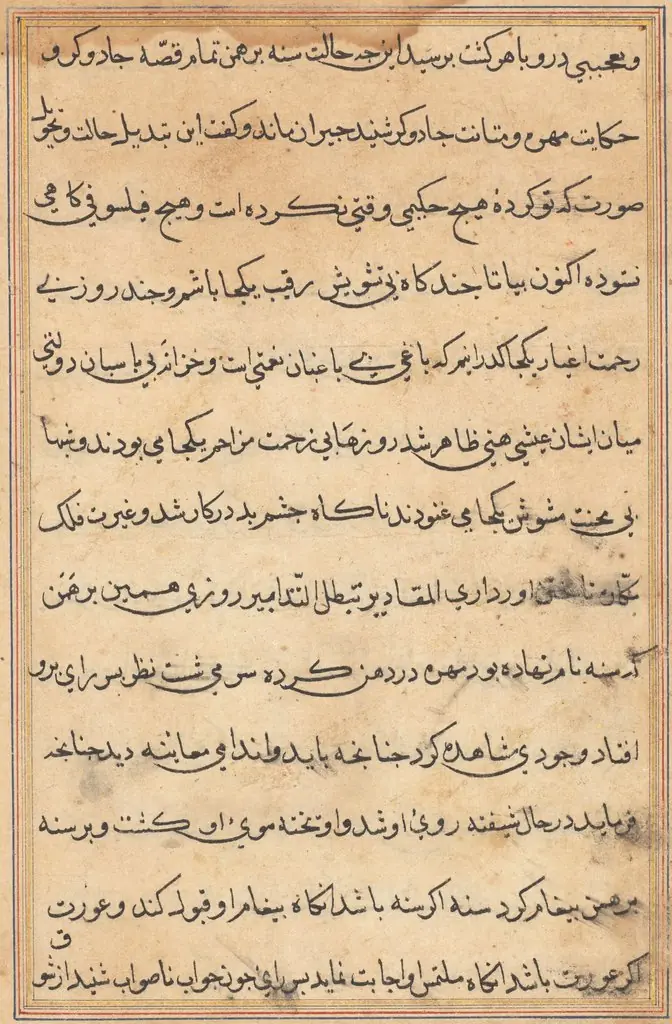
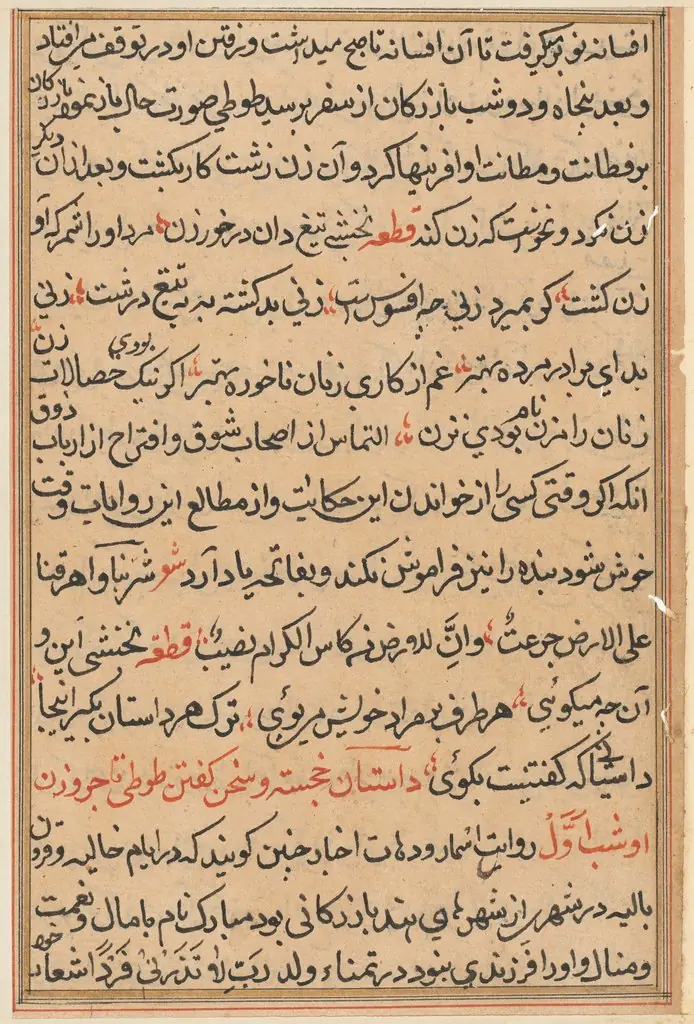
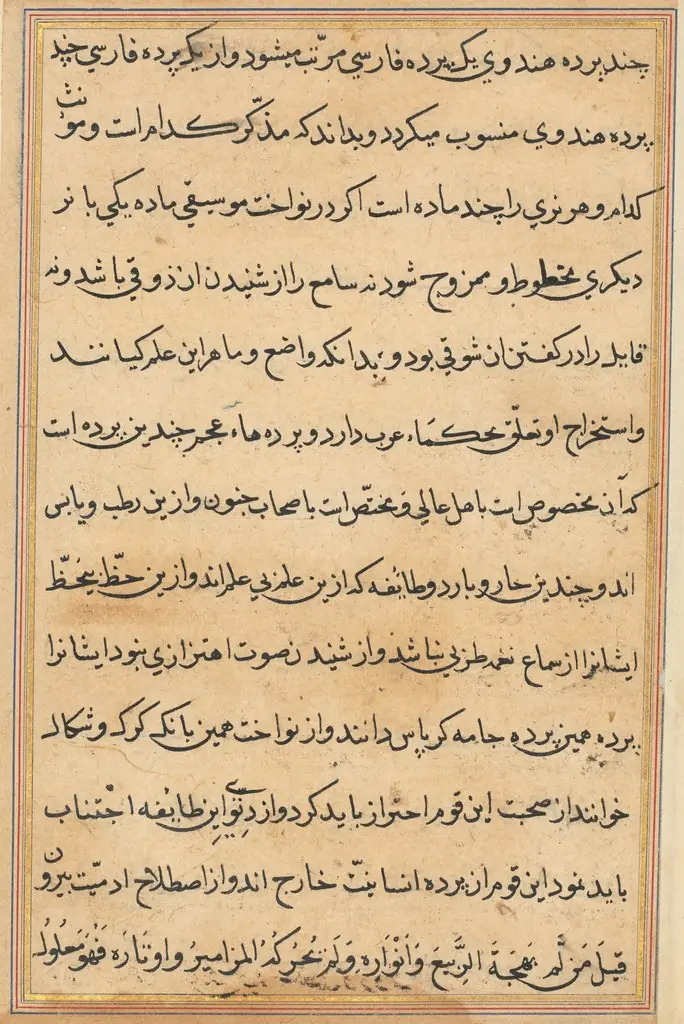
The object is a single page from the Persian manuscript known as Tuti‑nama (Tales of a Parrot). It consists of a light brown paper support on which a dense block of black Arabic calligraphy is set in neat, horizontal lines. A thin dark‑brown border frames the page, and a few words are emphasized with blue ink.
Subject & Meaning
The text appears to be narrative prose, likely a portion of the moralistic or didactic stories for which the Tuti‑nama is famed. The selective use of blue highlights suggests an intention to draw attention to titles, proper names, or key thematic terms within the story.
Technique & Style
The calligrapher employed a regular, cursive Arabic script, characteristic of Persian manuscript production in the early modern period. The ink is predominantly carbon black, with a limited application of lapis‑derived blue pigment for emphasis. The page’s border is a simple, narrow line that frames the text without decorative motifs.
Artist & collection

- Page from Tales of a Parrot (Tuti-nama): text page
 Page from Tales of a Parrot (Tuti-nama): text page
 Page from Tales of a Parrot (Tuti-nama): text page
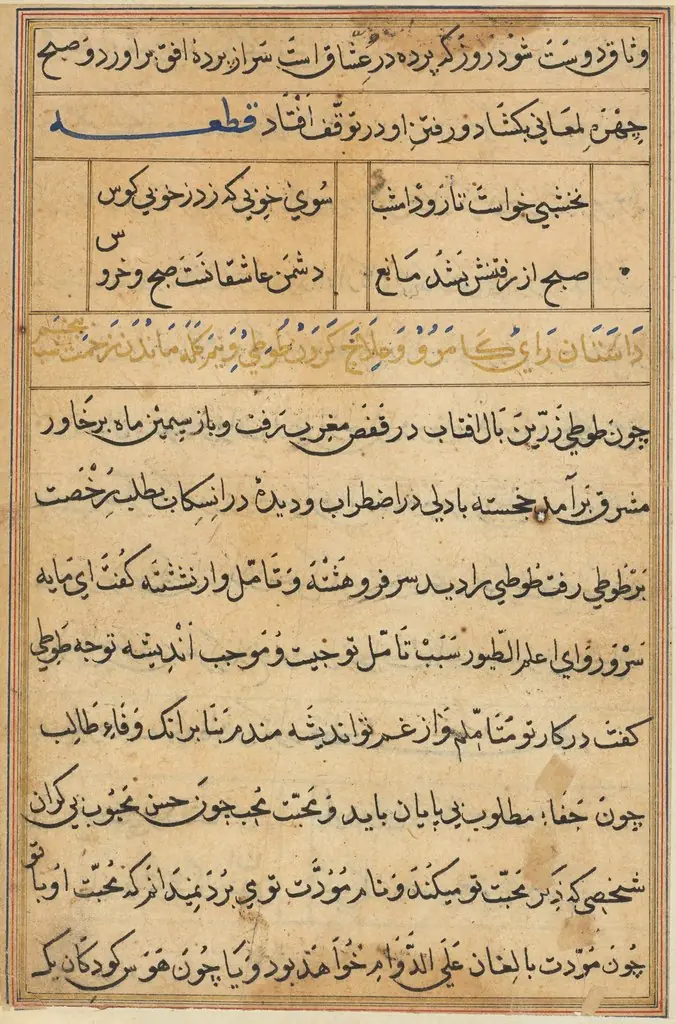 Page from Tales of a Parrot (Tuti-nama): text page
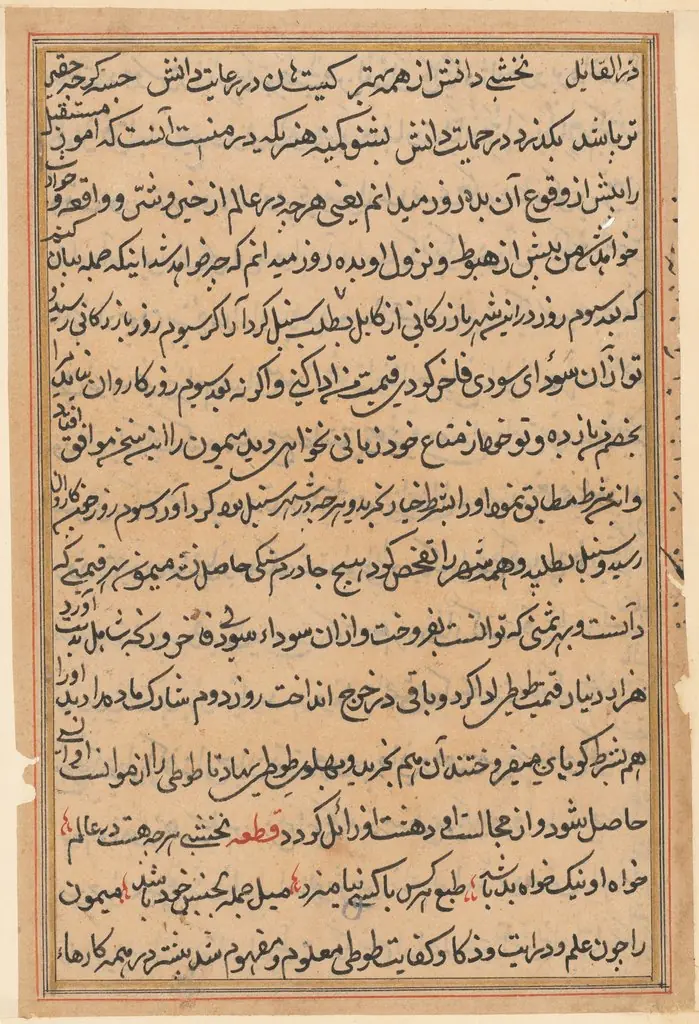 Page from Tales of a Parrot (Tuti-nama): text page
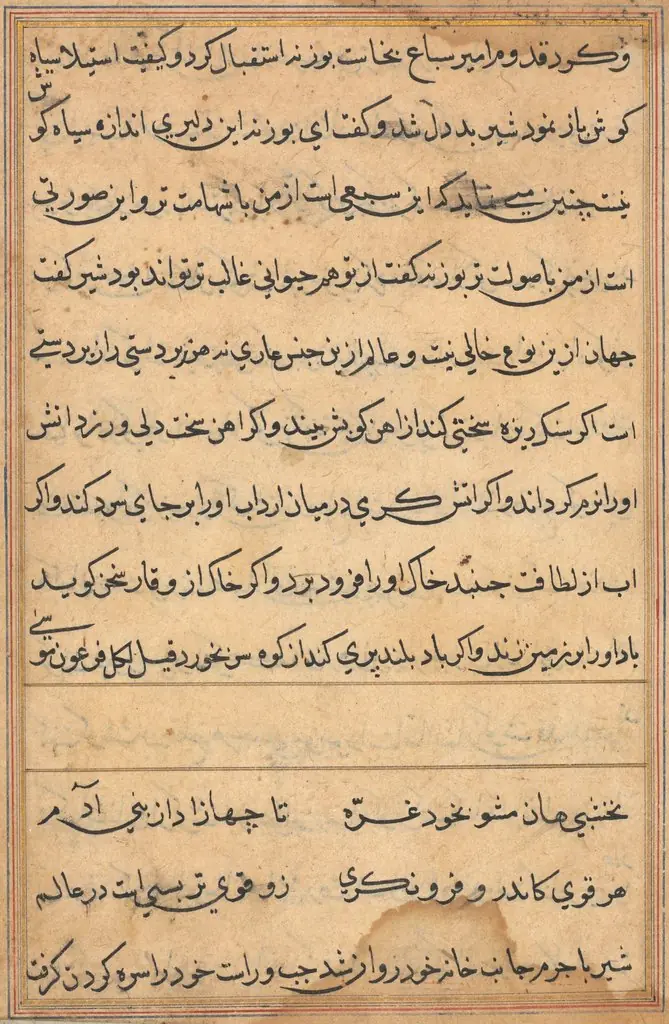 Page from Tales of a Parrot (Tuti-nama): text page
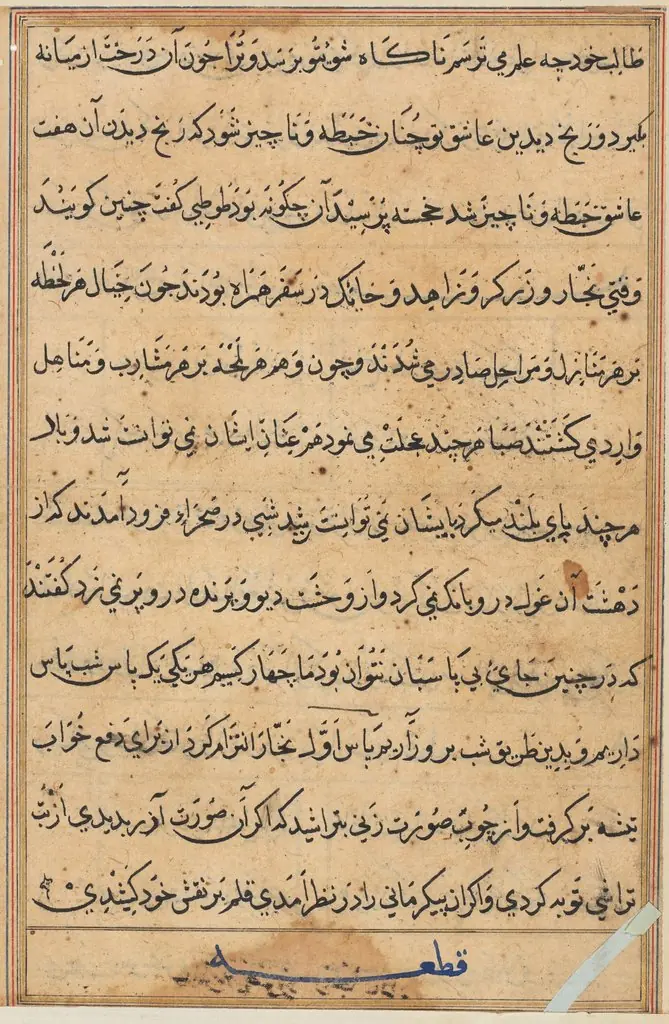 Page from Tales of a Parrot (Tuti-nama): text page
 Page from Tales of a Parrot (Tuti-nama): text page
 Page from Tales of a Parrot (Tuti-nama): text page
 Page from Tales of a Parrot (Tuti-nama): text page
 Page from Tales of a Parrot (Tuti-nama): text page
 Page from Tales of a Parrot (Tuti-nama): text page