Artwork
Page from Tales of a Parrot (Tuti-nama): text page
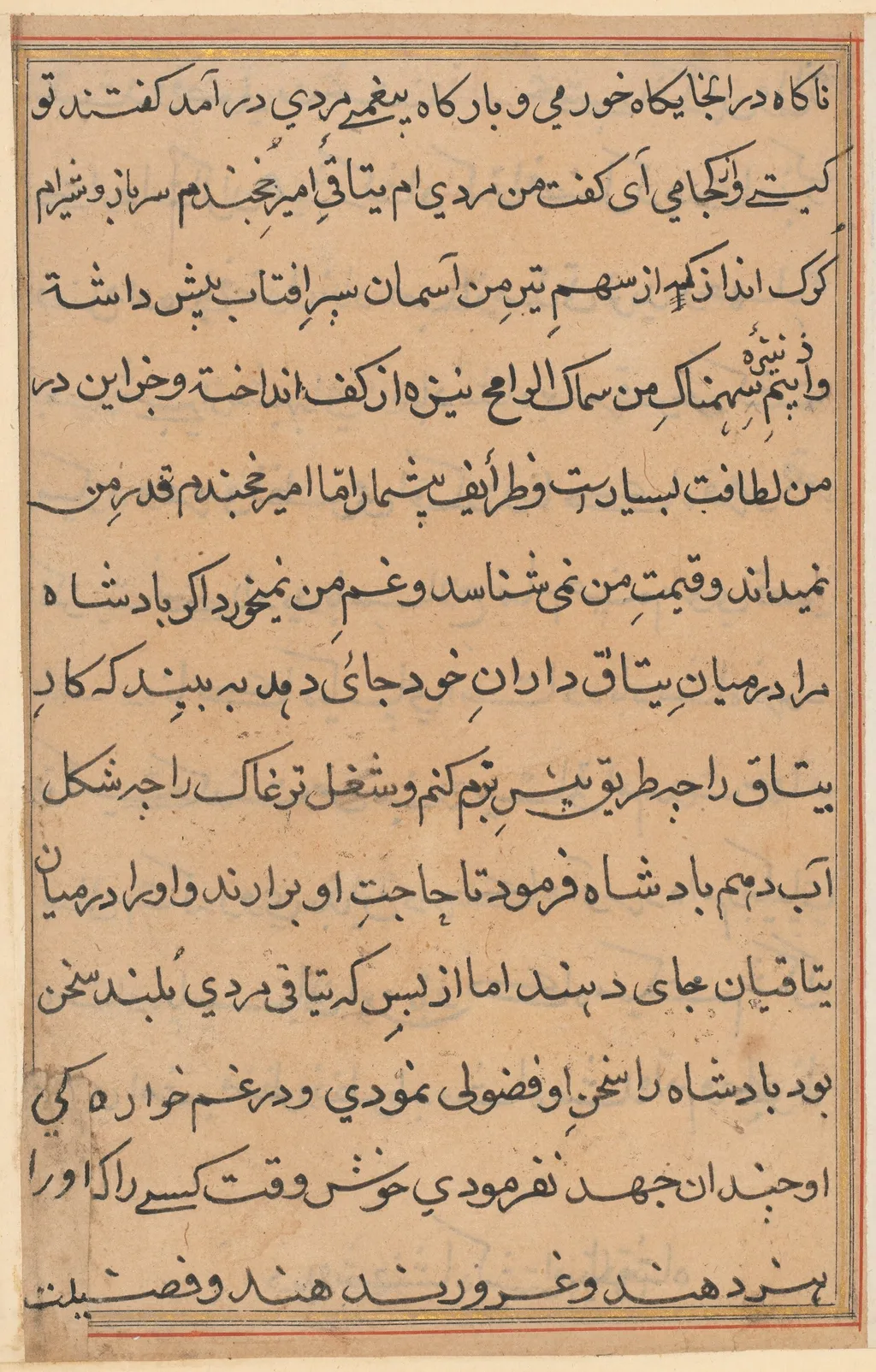
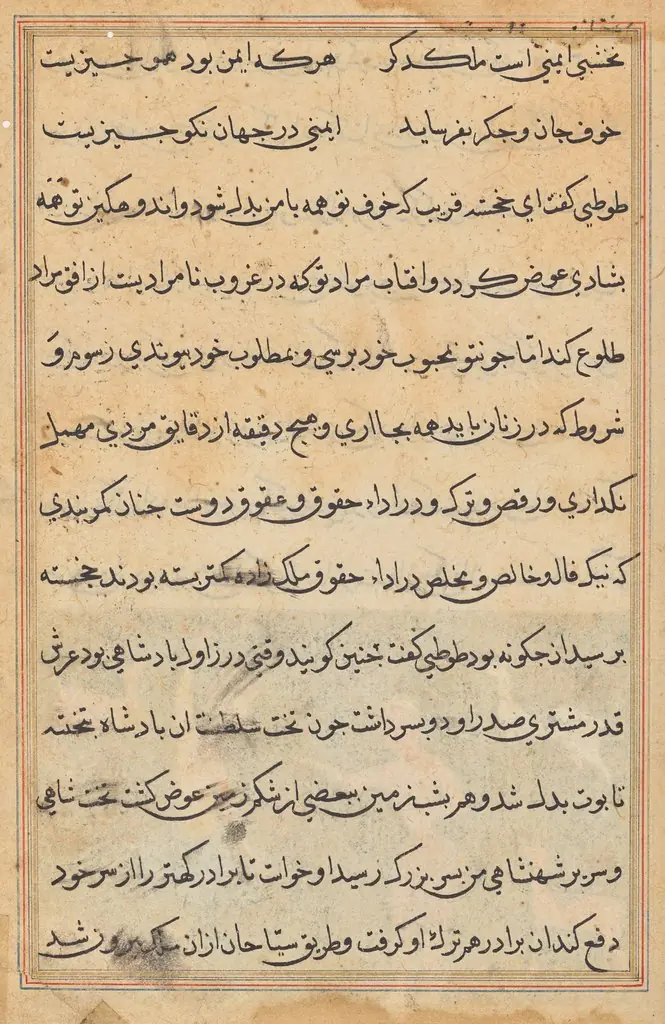
Page from Tales of a Parrot (Tuti-nama): text page is an unspecified painting. It dates from 1560 and is held in the collection of the Cleveland Museum of Art. This illuminated page originates from the Persian manuscript Tales of a Parrot (Tuti‑nama).
About this work
History & Provenance
No further details regarding its commission, earlier ownership, or chain of custody prior to the museum's acquisition are documented in the available sources.
The page originates from the Mughal Empire, where it was produced in 1560 as part of the Tales of a Parrot (Tuti-nama) manuscript. The work is now held in the Cleveland Museum of Art, catalogued as 1962.279.14.a, which records its accession into the museum's collection. No further details regarding its commission, earlier ownership, or chain of custody prior to the museum's acquisition are documented in the available sources.
The text page from the Tales of a Parrot (Tuti-nama), created in 1560, is held in the collection of the Cleveland Museum of Art in Cleveland. The work is cataloged under the accession number 1962.279.14.a. While the artifact originates from the Mughal Empire, the provided sources do not list specific past or future exhibitions for this particular page.
Overview
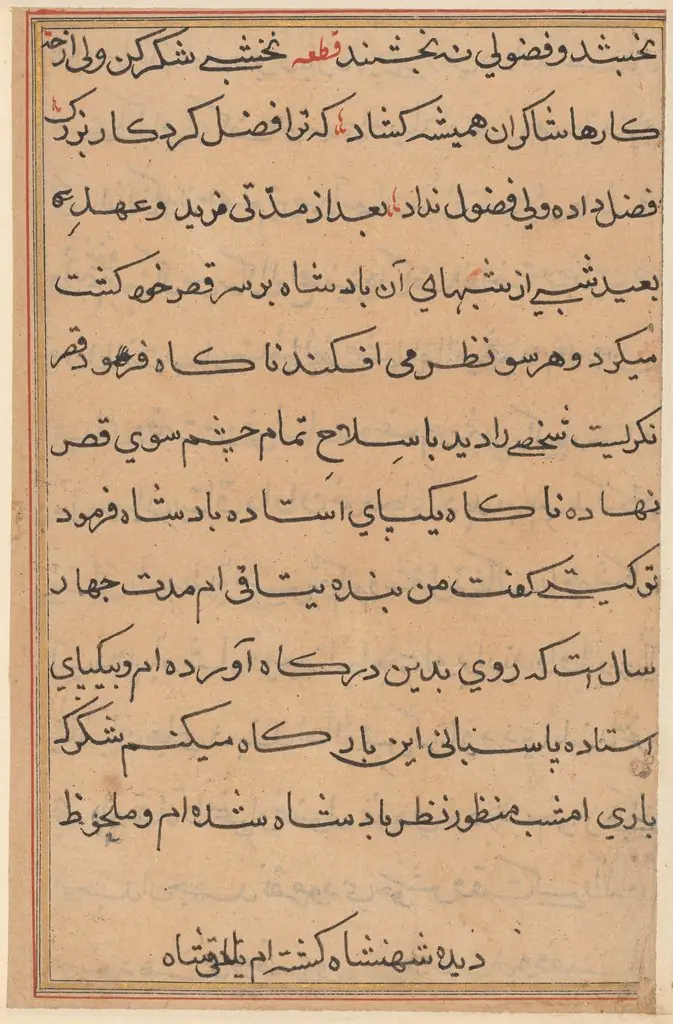
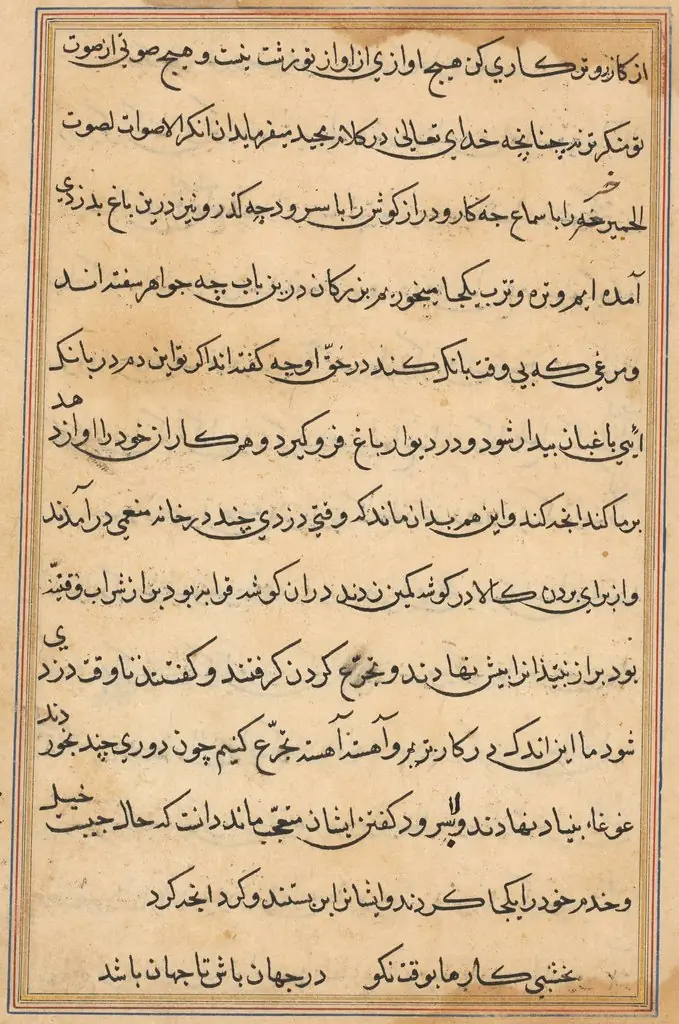
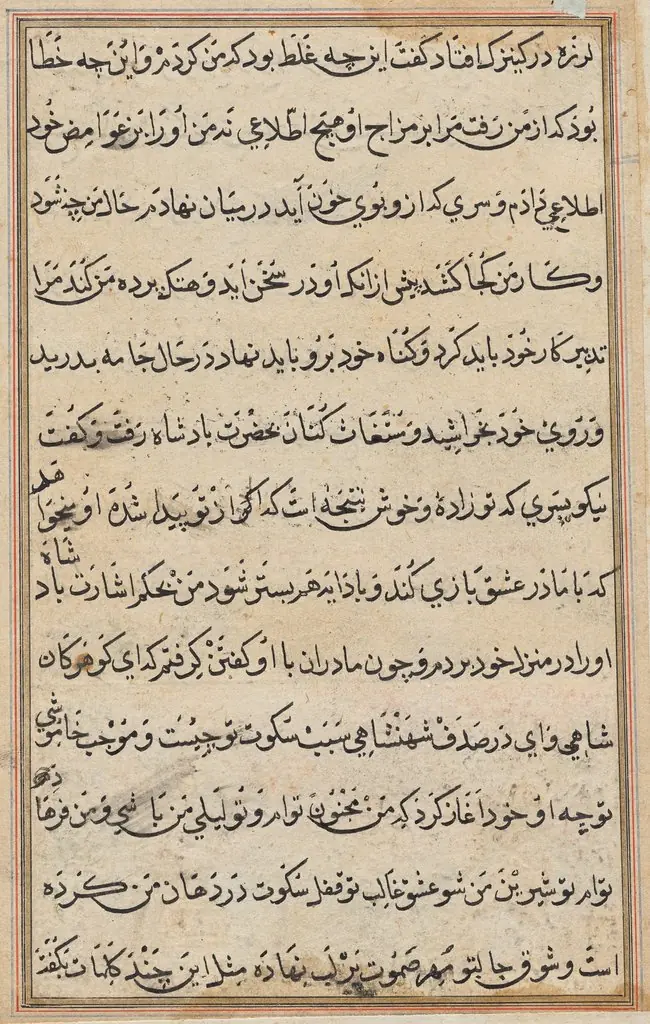
This illuminated page originates from the Persian manuscript Tales of a Parrot (Tuti‑nama). Executed in black ink on a pale substrate, the page is entirely devoted to text, arranged in sinuous, curvilinear lines that occupy the whole surface. The script varies in size, creating a dynamic visual rhythm across the page.
Subject & Meaning
The manuscript recounts a series of moral and romantic anecdotes narrated by a parrot to a young prince. The text on this leaf forms part of those stories, intended to entertain and instruct the intended recipient through allegorical tales.
Technique & Style
The calligraphy employs a flowing, cursive hand characteristic of Persian courtly writing in the early modern period. Ink density and line thickness fluctuate, producing emphasis and visual interest without the use of decorative illumination or pigment.
Context
Produced during the Mughal era, the work exemplifies the synthesis of Persian literary tradition with the imperial culture of the Indian subcontinent. Such manuscripts were often presented as gifts to royal heirs, reinforcing dynastic legitimacy through cultured education.
Artist & collection

- Page from Tales of a Parrot (Tuti-nama): text page
 Page from Tales of a Parrot (Tuti-nama): text page
 Page from Tales of a Parrot (Tuti-nama): text page
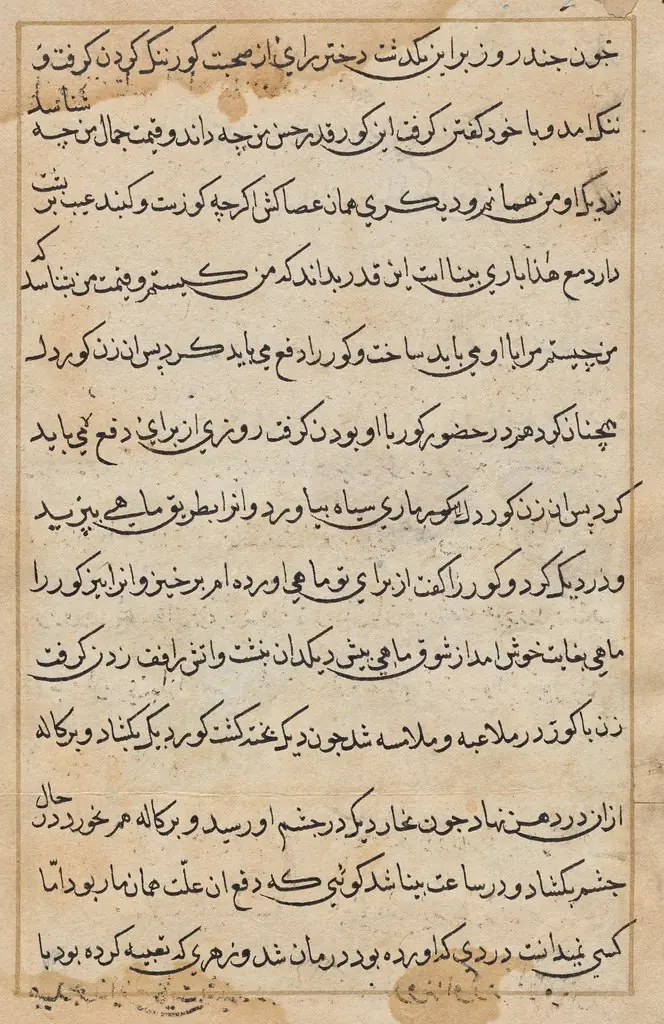 Page from Tales of a Parrot (Tuti-nama): text page
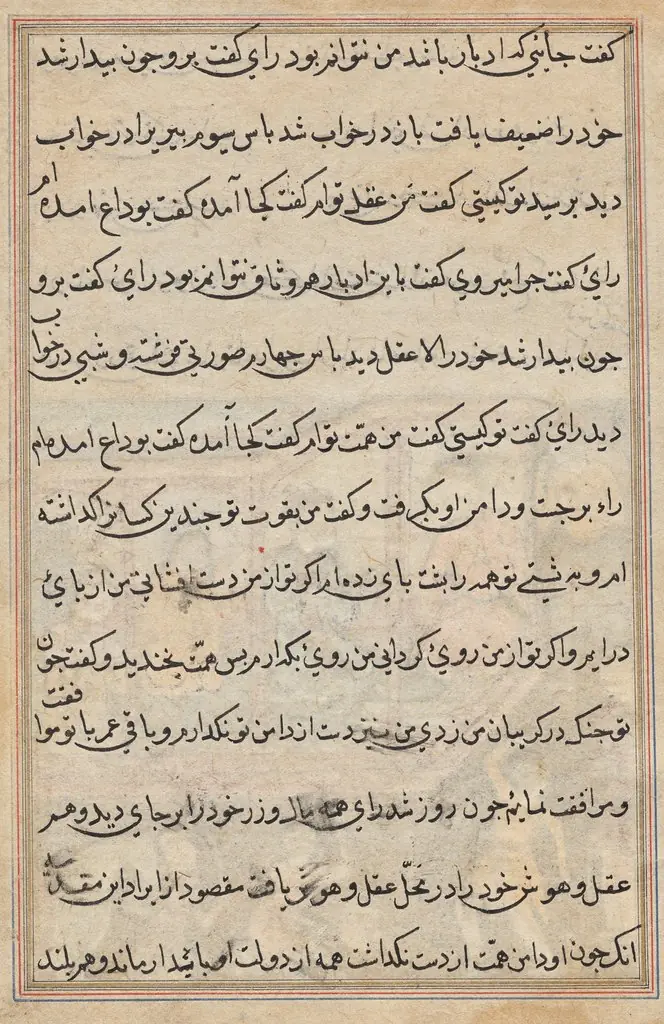 Page from Tales of a Parrot (Tuti-nama): text page
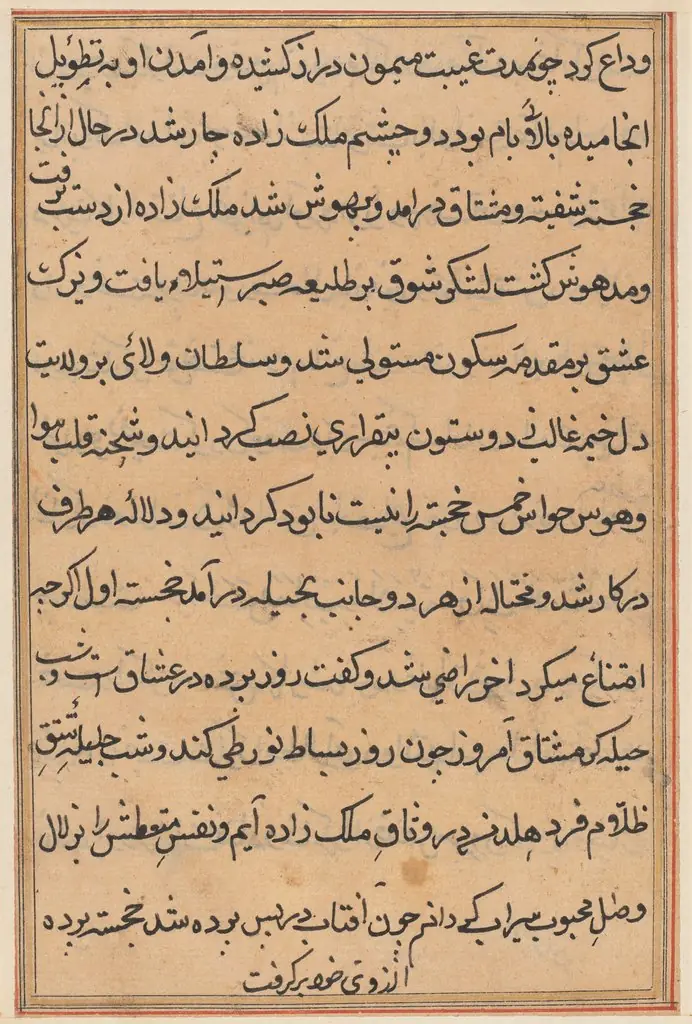 Page from Tales of a Parrot (Tuti-nama): text page
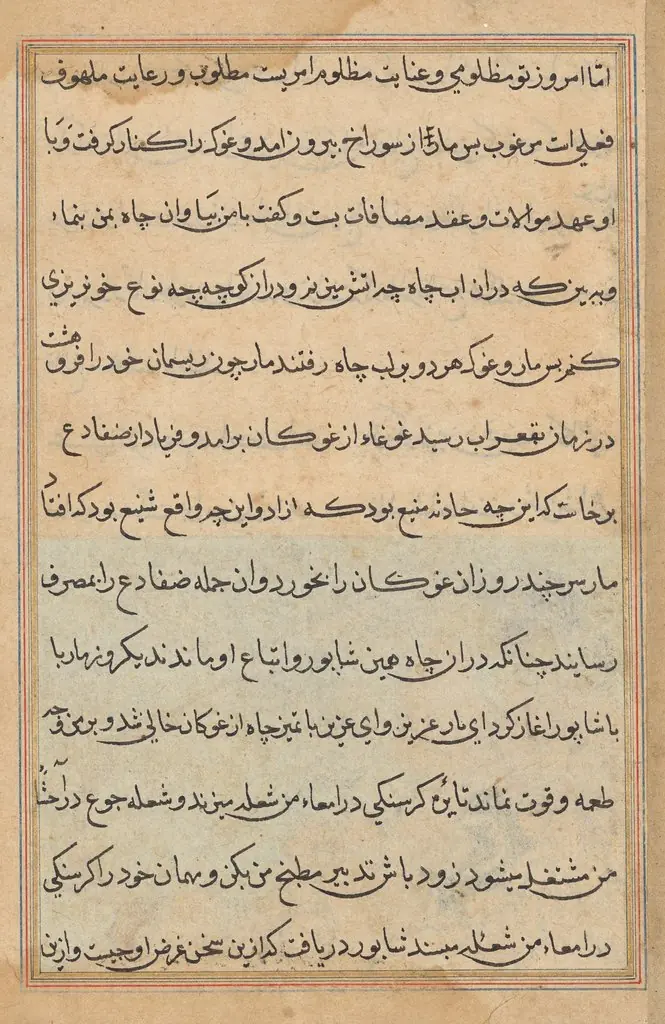 Page from Tales of a Parrot (Tuti-nama): text page
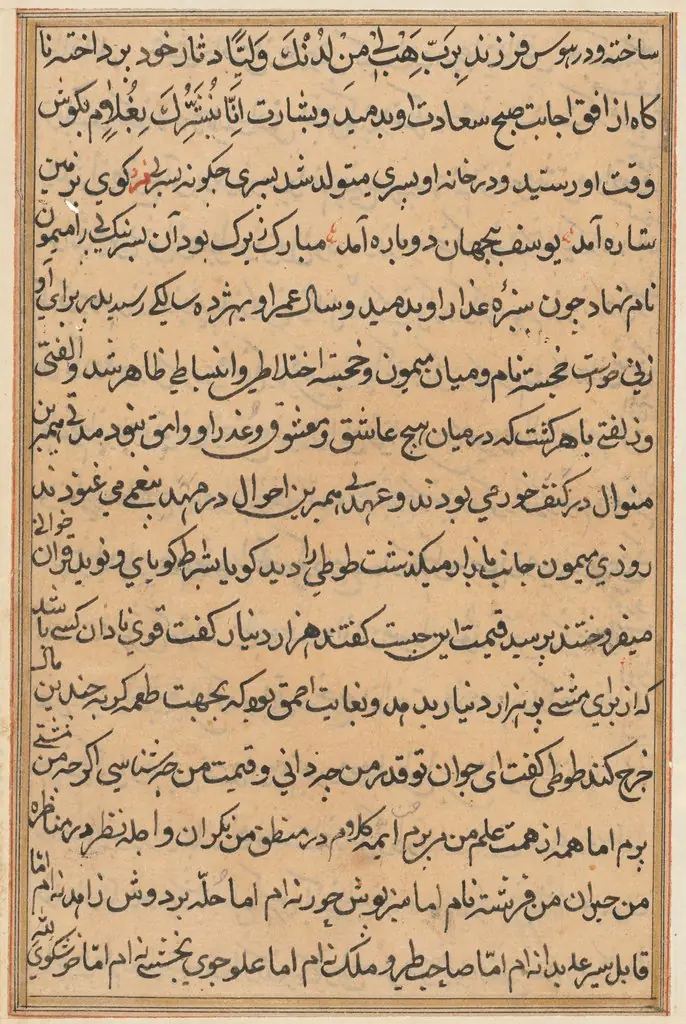 Page from Tales of a Parrot (Tuti-nama): text page
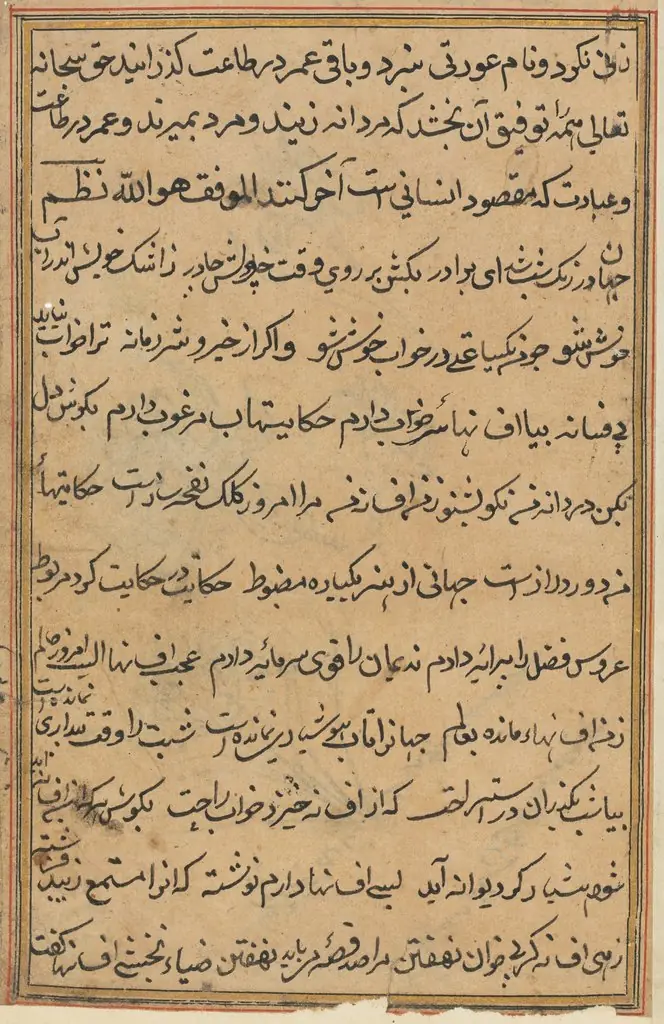 Page from Tales of a Parrot (Tuti-nama): text page
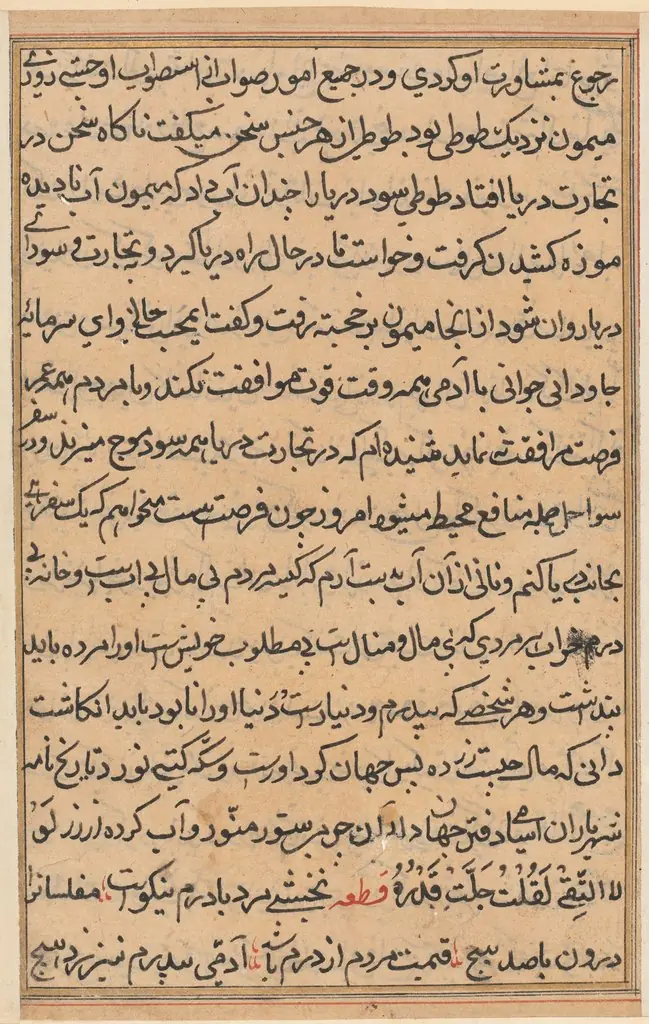 Page from Tales of a Parrot (Tuti-nama): text page
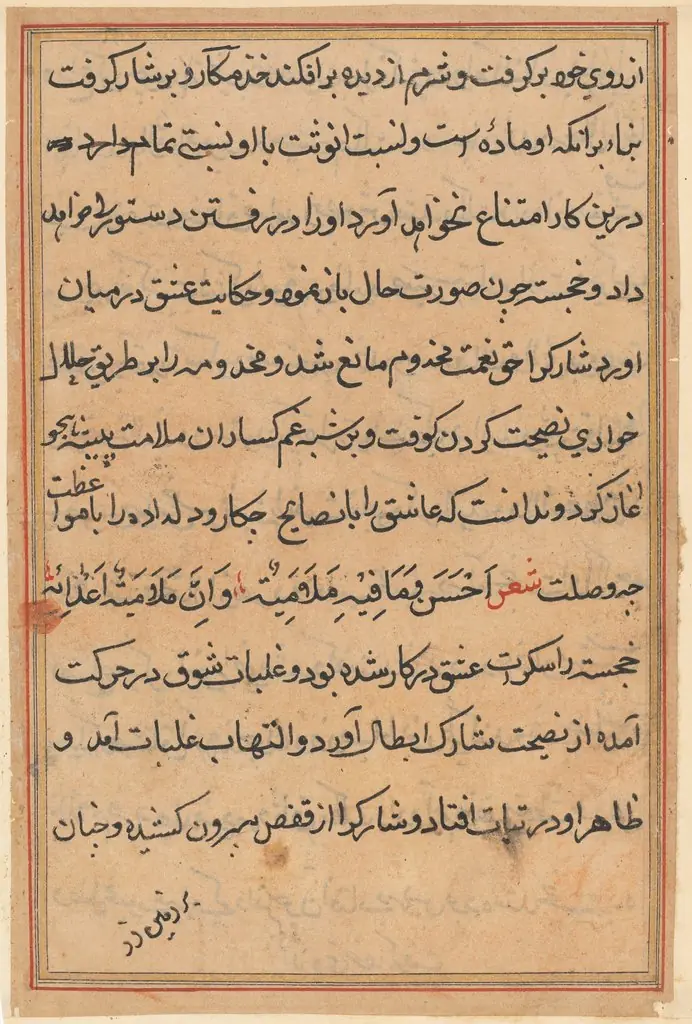 Page from Tales of a Parrot (Tuti-nama): text page
 Page from Tales of a Parrot (Tuti-nama): text page