Artwork
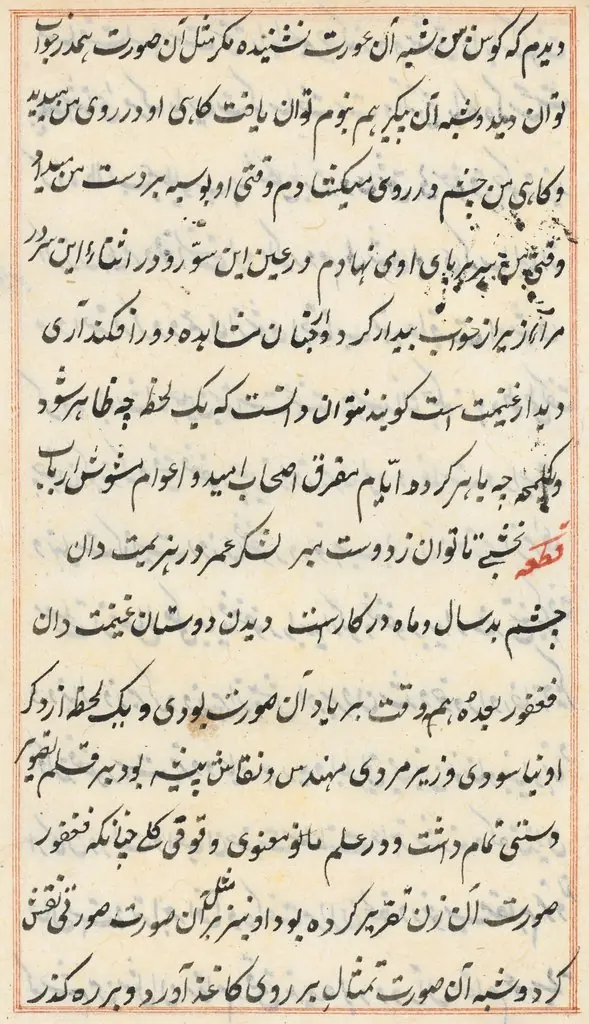
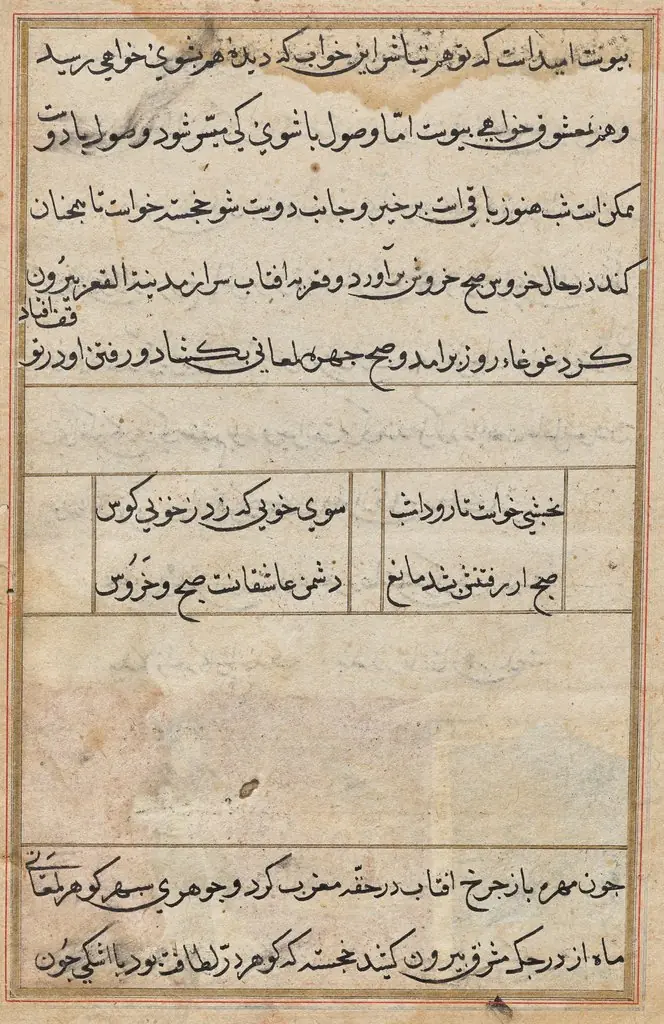
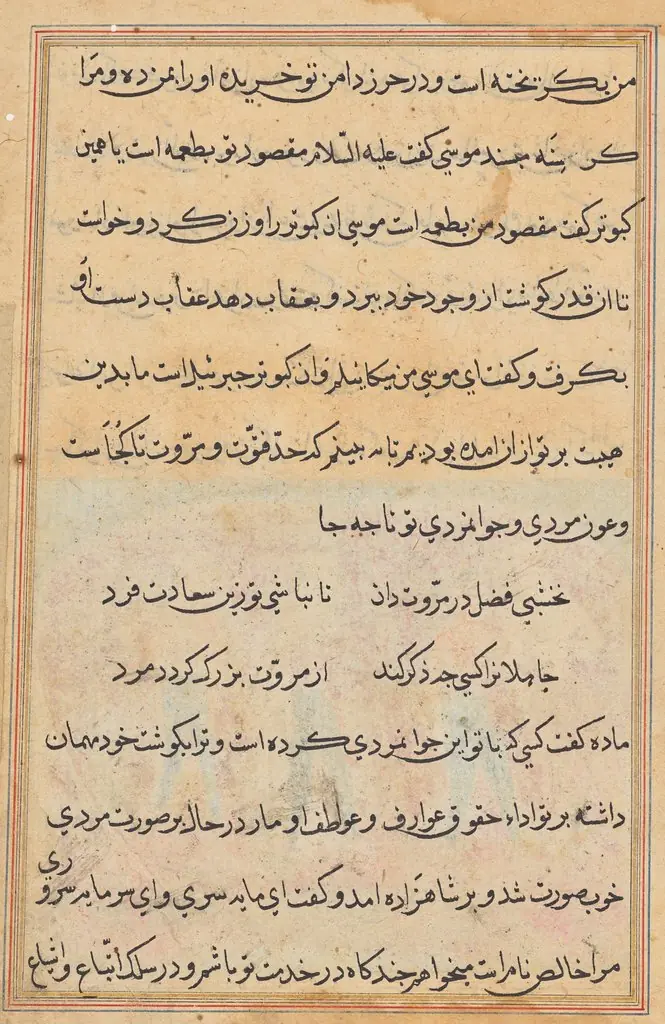
Page from Tales of a Parrot (Tuti-nama): text page
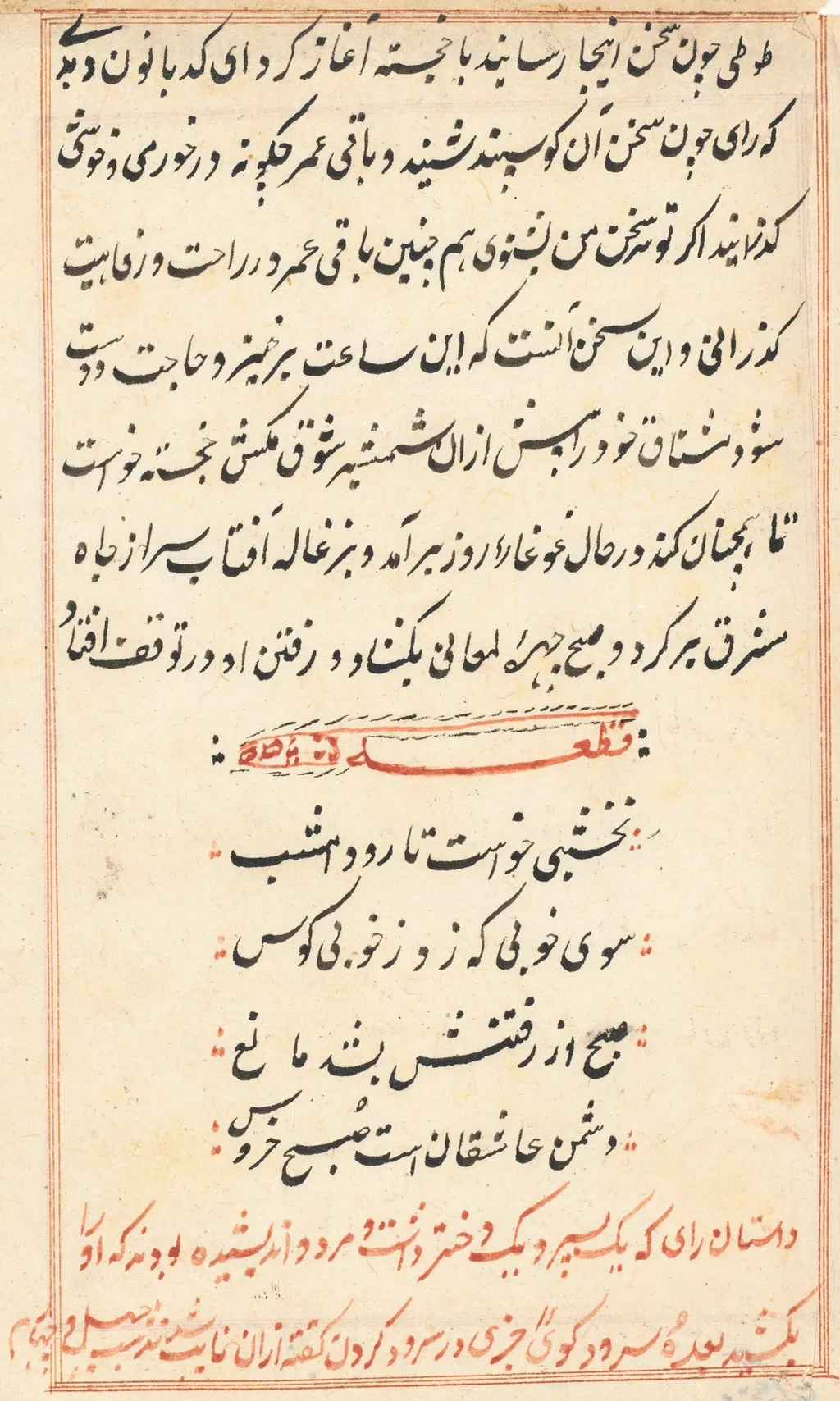
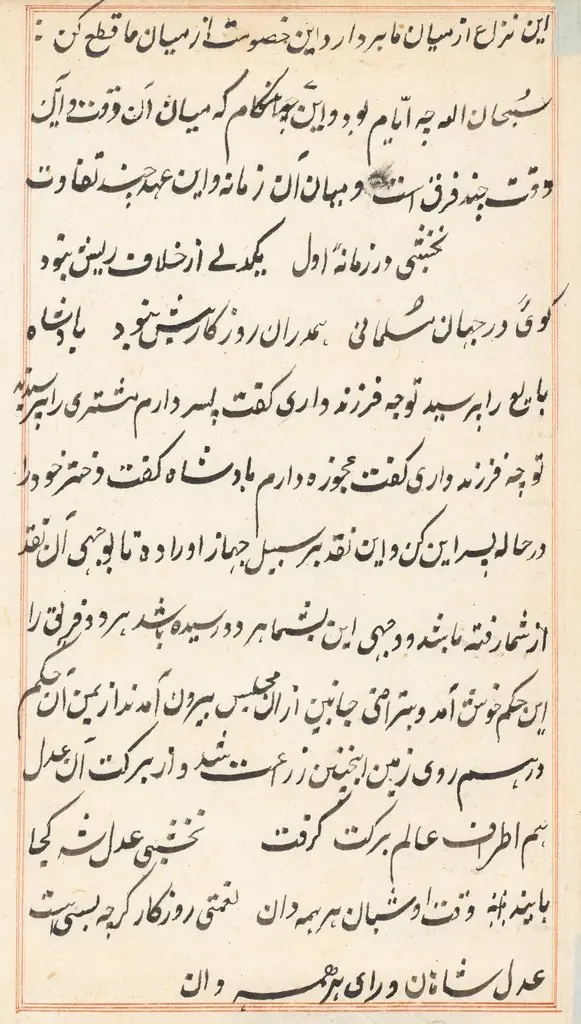
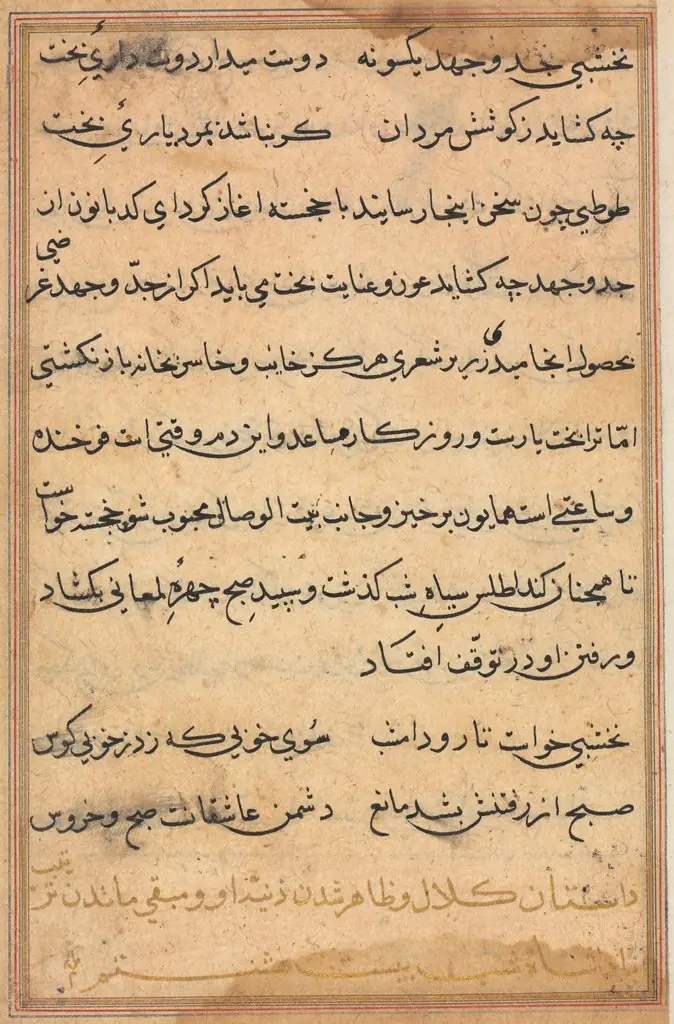
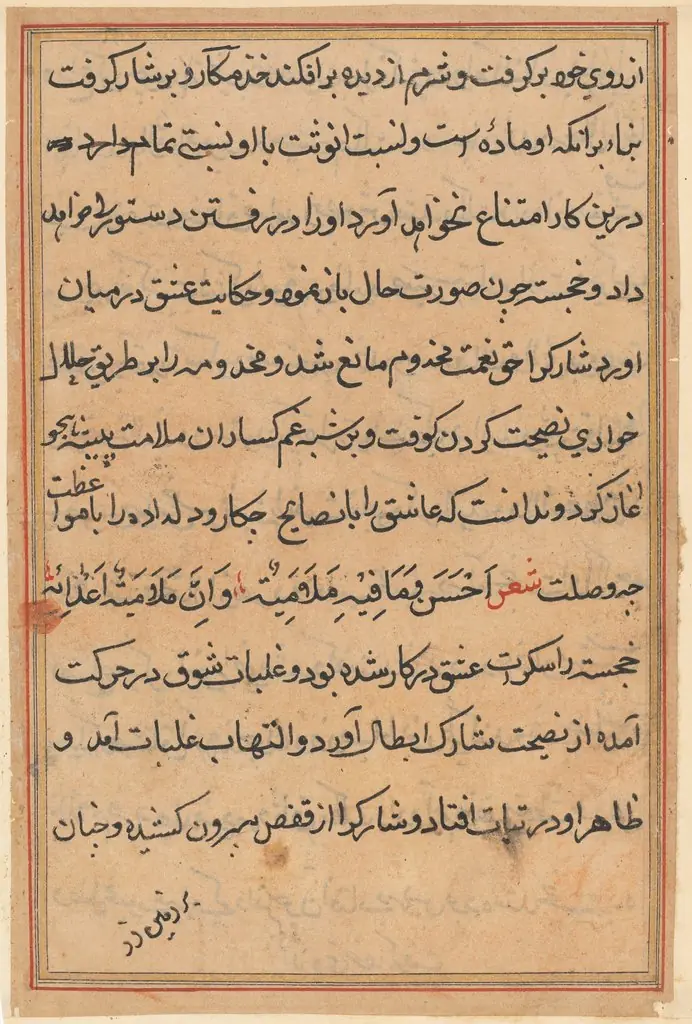
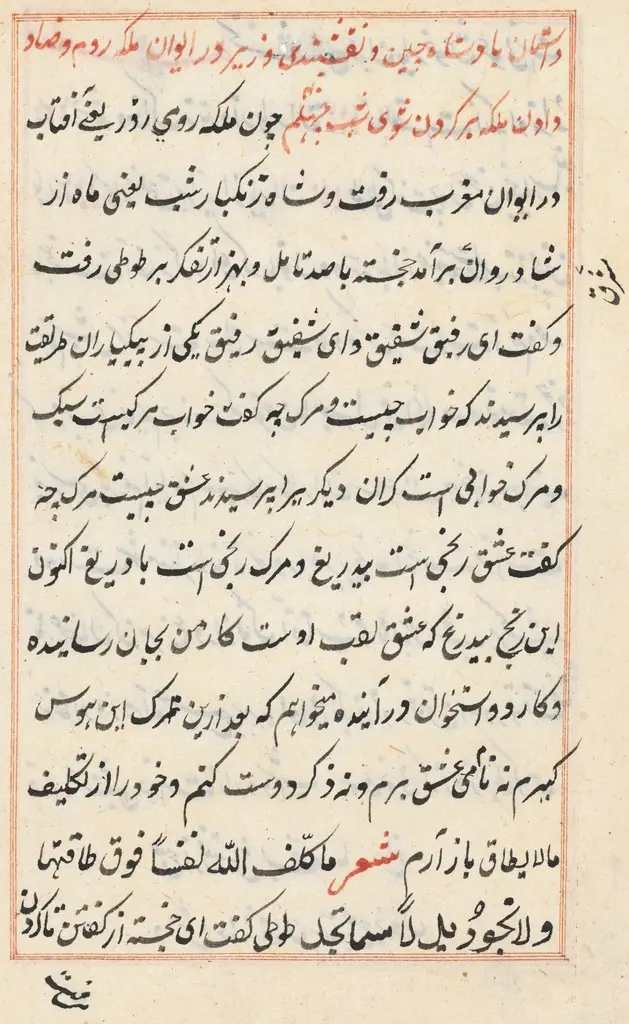
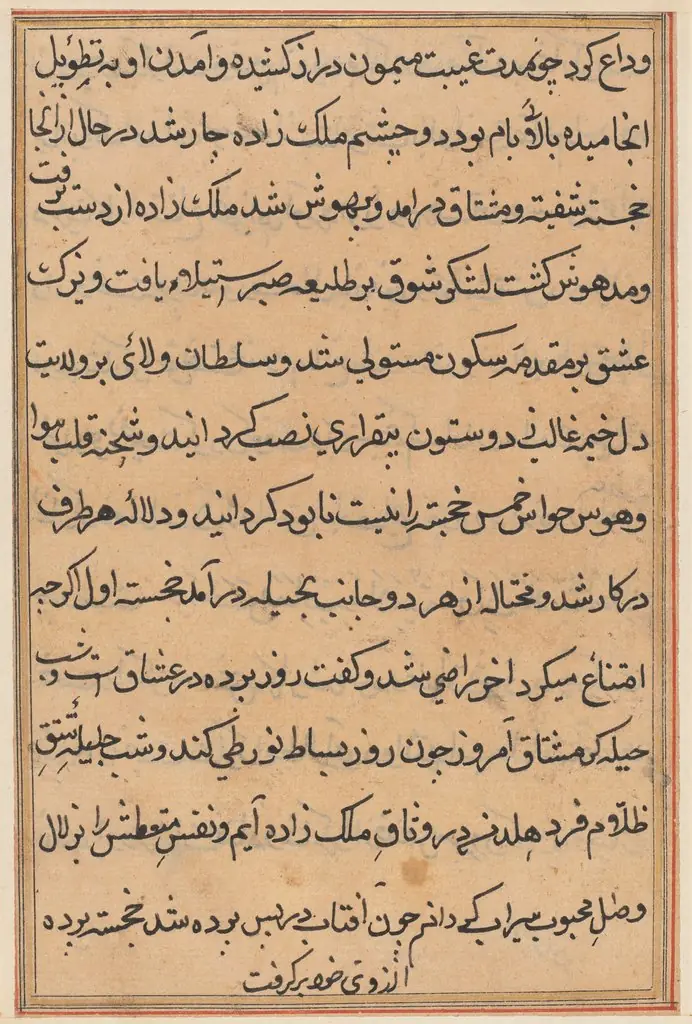
Page from Tales of a Parrot (Tuti-nama): text page is an unspecified painting. It dates from 1560 and is held in the collection of the Cleveland Museum of Art. The work is a painted representation of a manuscript leaf from the illustrated collection known as the Tales of a Parrot (Tuti‑nama).
About this work
Subject & Meaning
In the work's frame narrative, a parrot serves as the storyteller, recounting didactic tales to detain its owner's wife night after night.
This folio is a text page from the Tuti-nama (Tales of a Parrot), a Persian collection of moralizing tales produced for the Mughal court around 1560 and now in the Cleveland Museum of Art. In the work's frame narrative, a parrot serves as the storyteller, recounting didactic tales to detain its owner's wife night after night. As a text page, the folio carries the written narrative that the manuscript's accompanying illustrations depict, situating it within the Persianate literary tradition adapted by the early Mughal atelier and blended with Indian court culture.
Technique & Style
The page is executed in ink and opaque watercolor on paper, the standard materials of Mughal manuscript production. As a text page rather than an illustrated folio, it presents a block of script set within ruled margins typical of the period's book arts. The work originates from the Mughal imperial atelier and reflects the courtly book culture of the era, in which calligraphy and illustration were combined within a single bound manuscript.
History & Provenance
This text page was created around 1560 within the Mughal Empire. The work is part of the Tales of a Parrot (Tuti-nama) manuscript and is attributed to an unknown artist. It is held in the collection of the Cleveland Museum of Art, identified by the accession number 1962.279.281.a.
Legacy
The Cleveland Tuti-nama is recognized as one of the earliest illustrated manuscripts of the Mughal atelier, marking the formative phase of Mughal painting in the reign of Akbar. As a leaf from this manuscript, the text page contributes to scholarly understanding of how Persian literary models were adapted at the early Mughal court. Its place in the Cleveland Museum of Art collection has ensured continued study of the manuscript's role in the development of Mughal book arts.
Overview
The work is a painted representation of a manuscript leaf from the illustrated collection known as the Tales of a Parrot (Tuti‑nama). Rendered on a flat surface, the image reproduces a single page filled entirely with black script, without accompanying illustrations.
Context
Manuscript illustration in Persian culture often combined textual elegance with visual decoration. This work isolates the calligraphic element, illustrating the high regard for script as an aesthetic component in its own right, separate from narrative miniatures.
Artist & collection

 Page from Tales of a Parrot (Tuti-nama): text page
 Page from Tales of a Parrot (Tuti-nama): text page
 Page from Tales of a Parrot (Tuti-nama): text page
 Page from Tales of a Parrot (Tuti-nama): text page
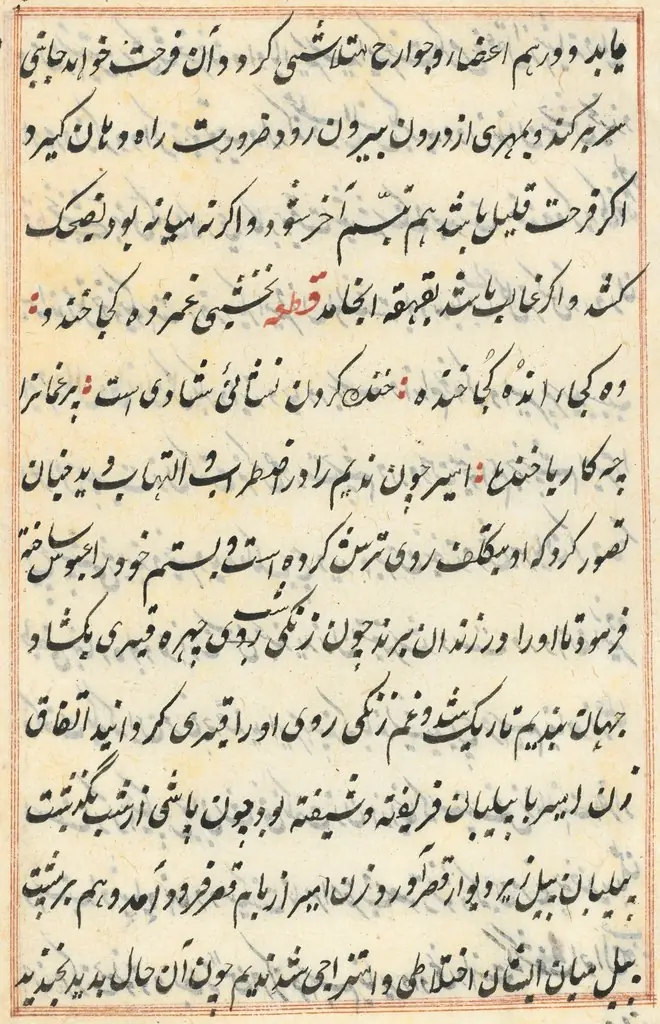 Page from Tales of a Parrot (Tuti-nama): text page
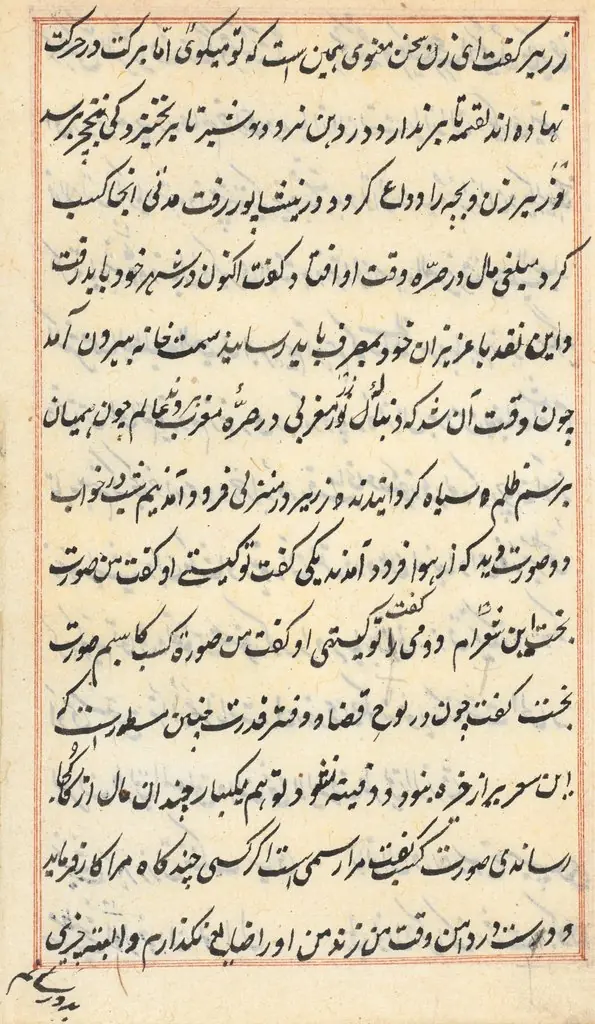 Page from Tales of a Parrot (Tuti-nama): text page
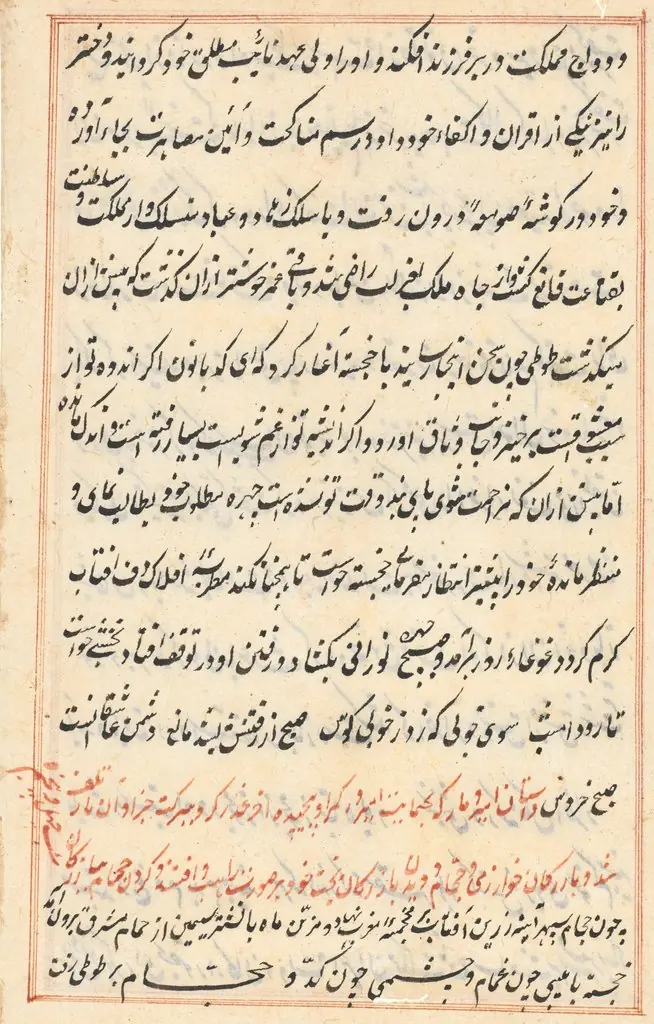 Page from Tales of a Parrot (Tuti-nama): text page
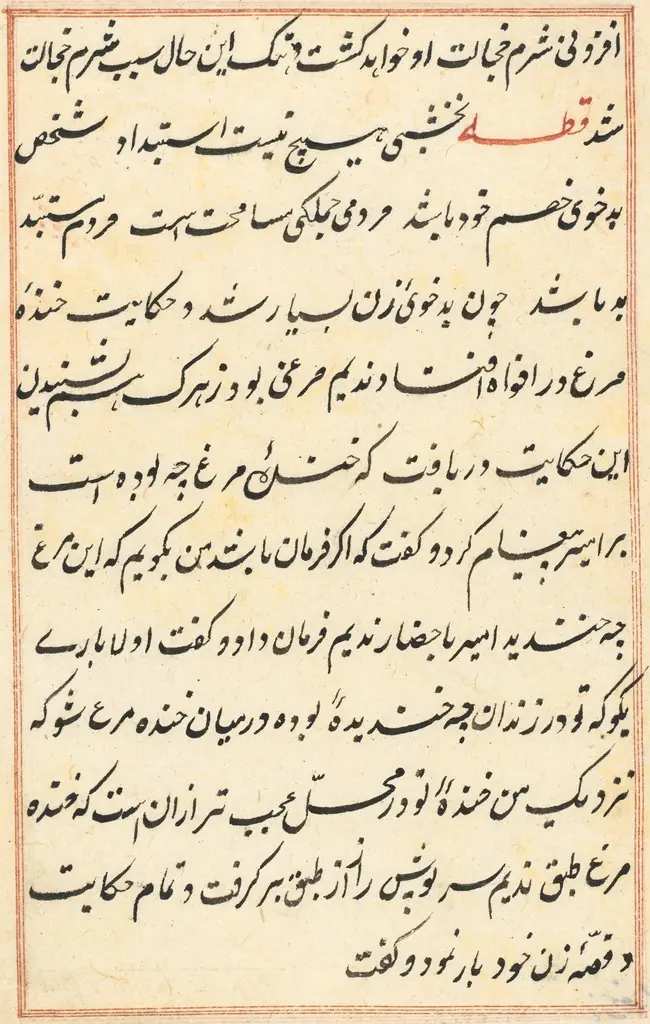 Page from Tales of a Parrot (Tuti-nama): text page
 Page from Tales of a Parrot (Tuti-nama): text page