Artwork
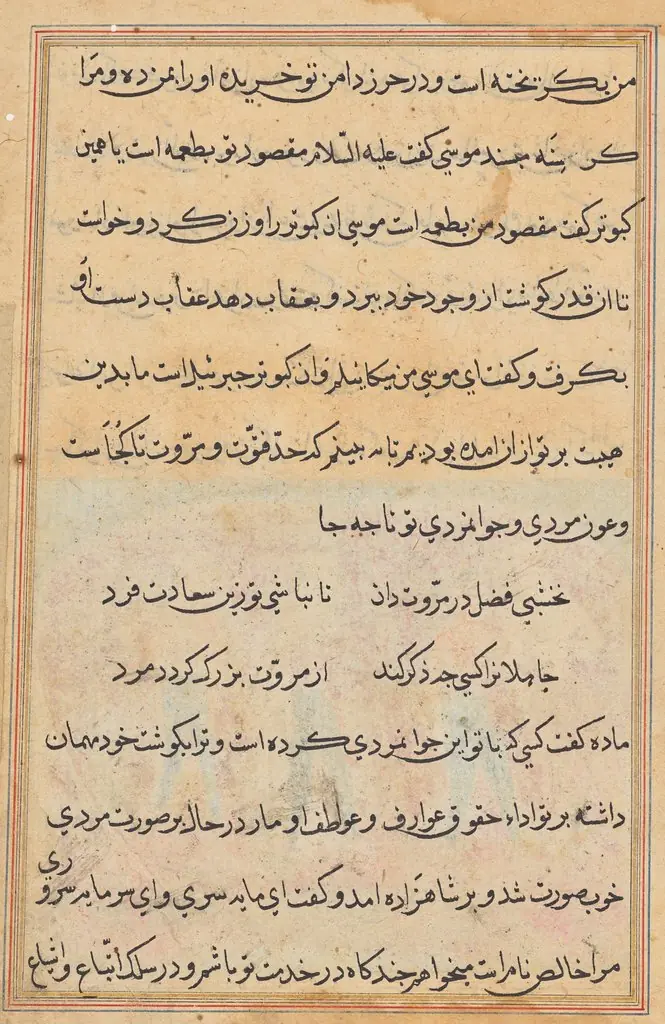
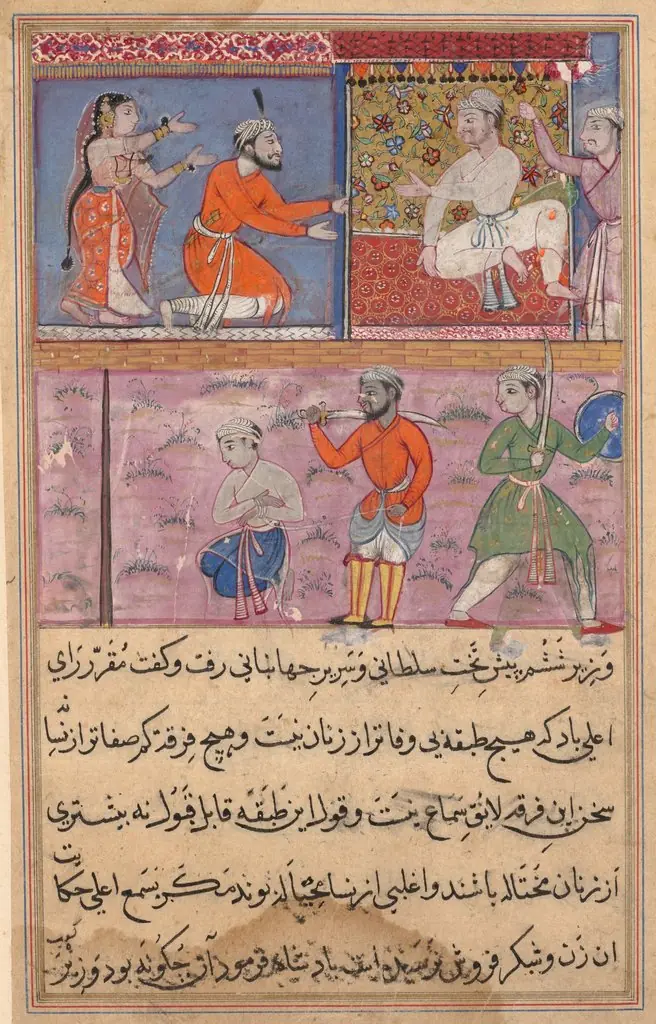
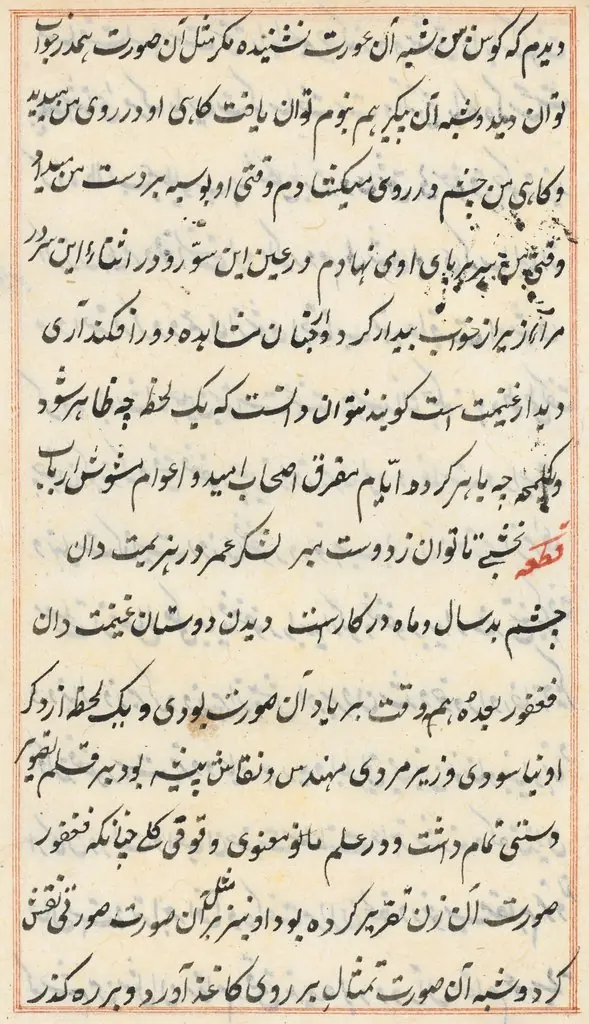
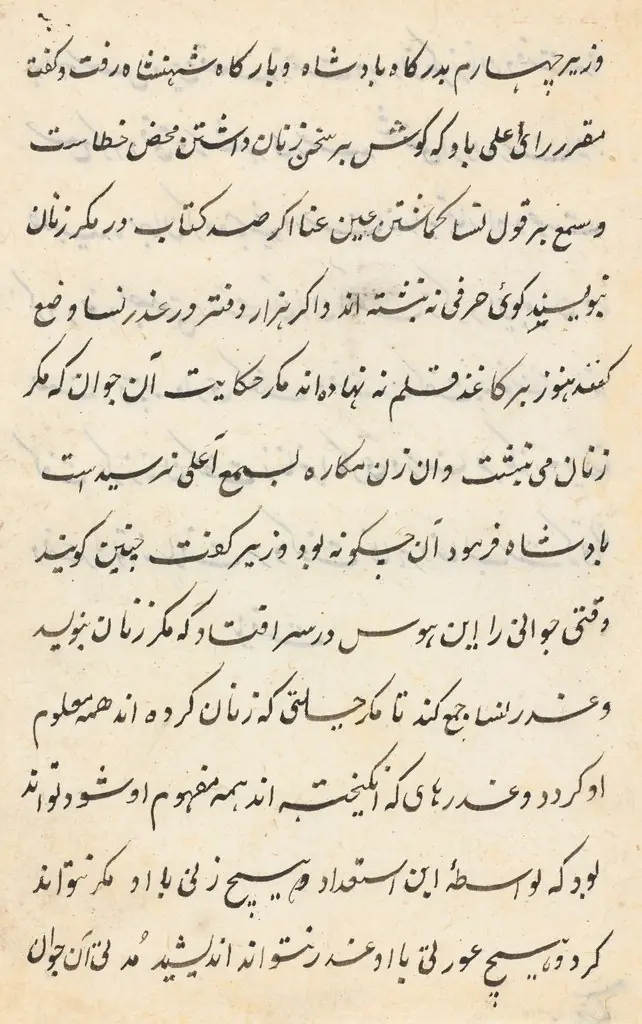
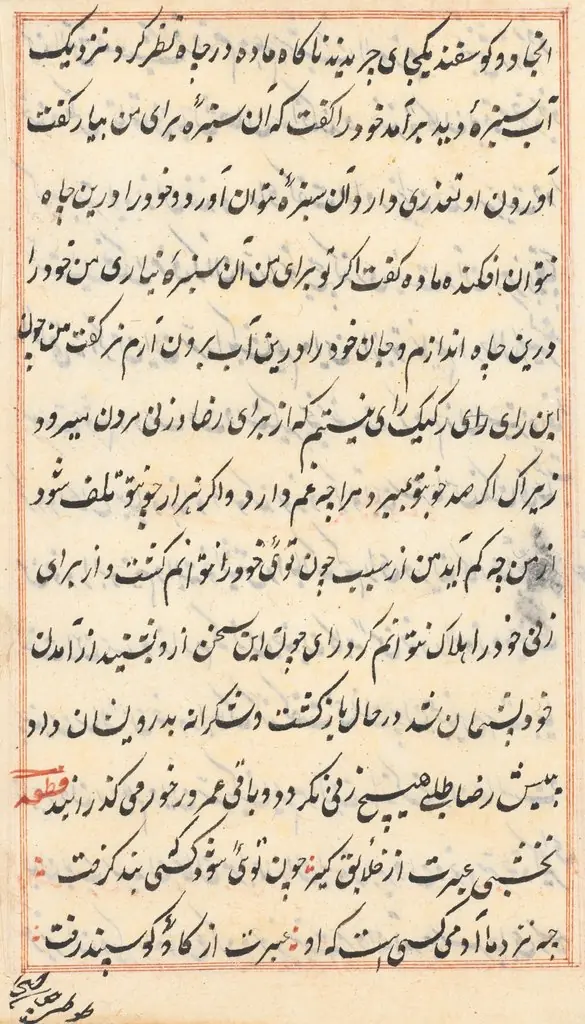
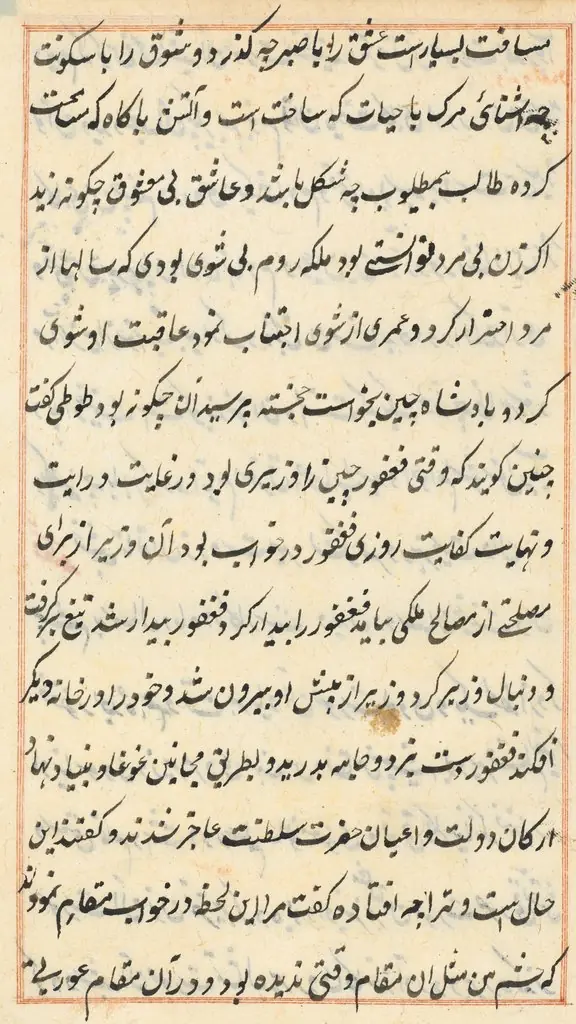
Page from Tales of a Parrot (Tuti-nama): text page
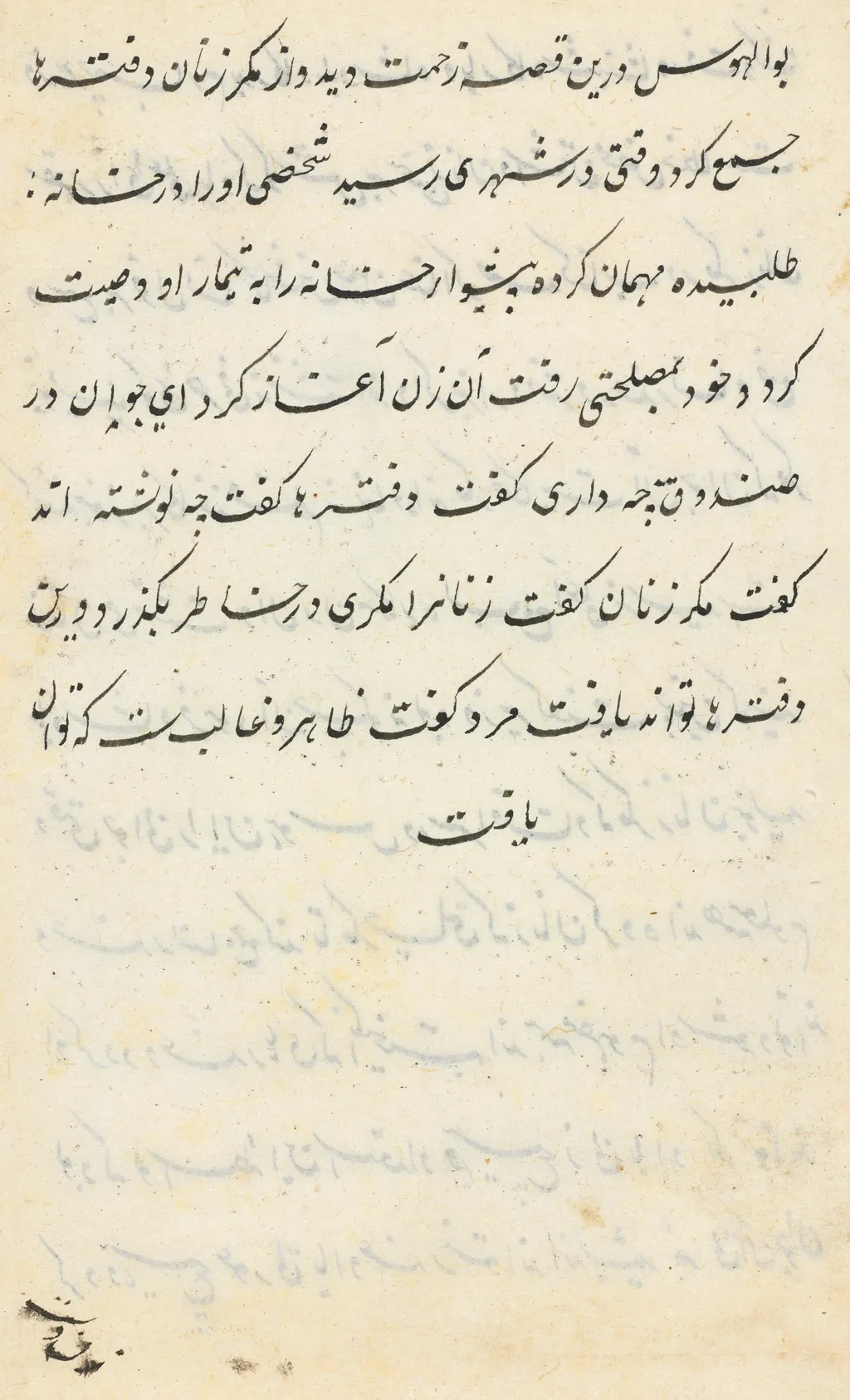
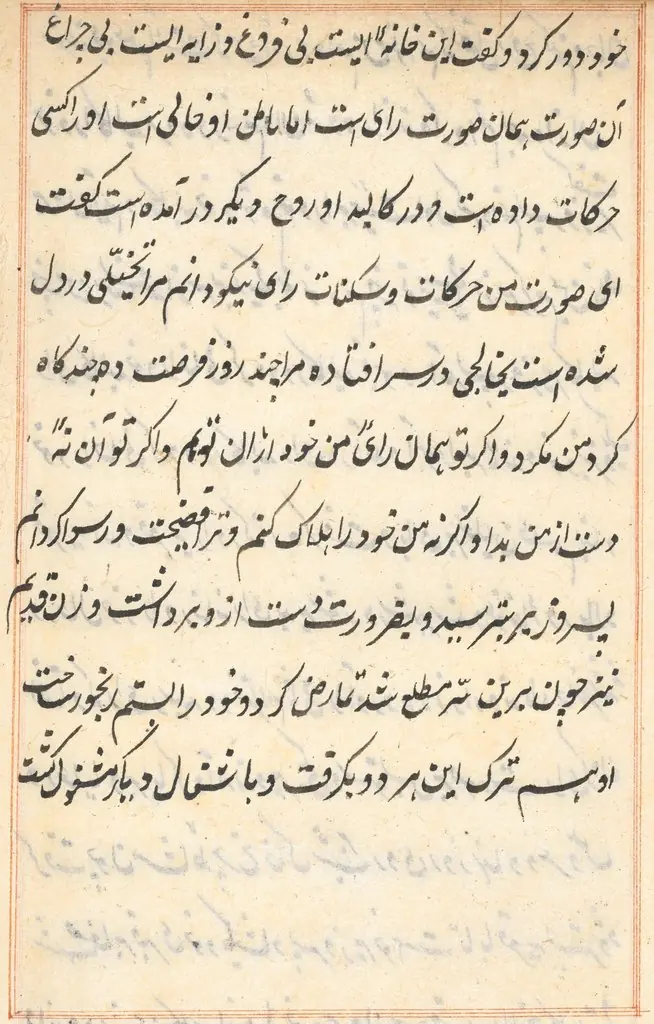
Page from Tales of a Parrot (Tuti-nama): text page is an unspecified painting. It dates from 1560 and is held in the collection of the Cleveland Museum of Art. This object is a single folio from the illustrated manuscript known as Tales of a Parrot (Tuti‑nama).
About this work
History & Provenance
The work is currently held in the collection of the Cleveland Museum of Art, where it is cataloged under the accession number 1962.
Created in 1560 within the Mughal Empire, this text page from the Tuti-nama (Tales of a Parrot) was produced by an unknown artist. The work is currently held in the collection of the Cleveland Museum of Art, where it is cataloged under the accession number 1962.279.64.b. While the specific circumstances of its original commission and the details of its ownership history prior to entering the museum's collection are not detailed in the available records, its inception is firmly dated to the mid-16th century.
The page is held by the Cleveland Museum of Art, where it is recorded under the inventory number 1962.279.64.b. It was produced in 1560 within the Mughal Empire and entered the museum's collection as part of its holdings of Mughal painting. No exhibition history is documented in the available sources.
Overview
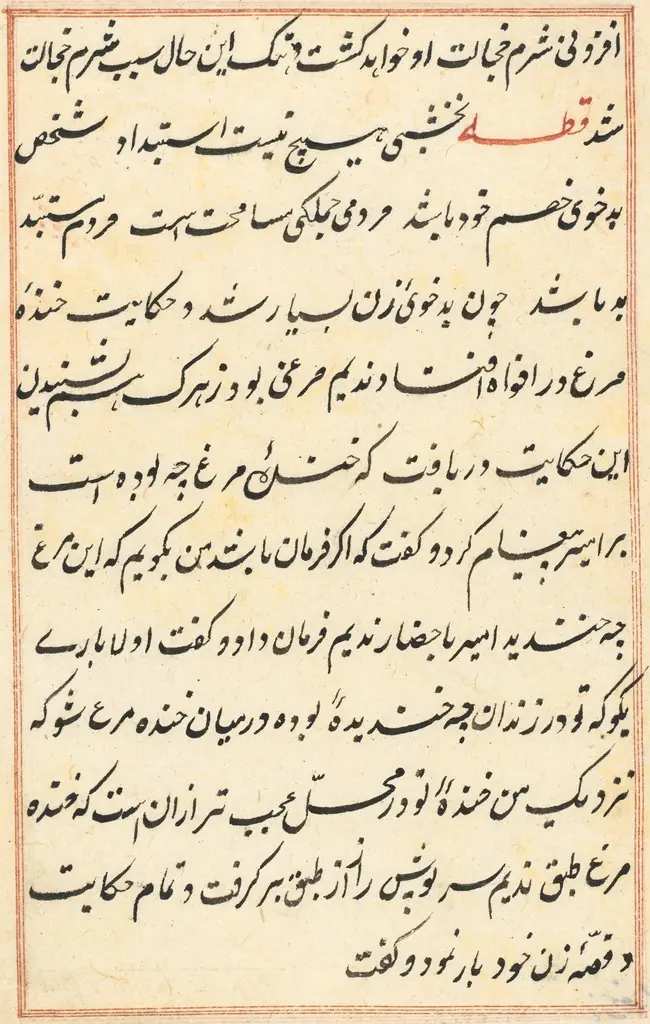
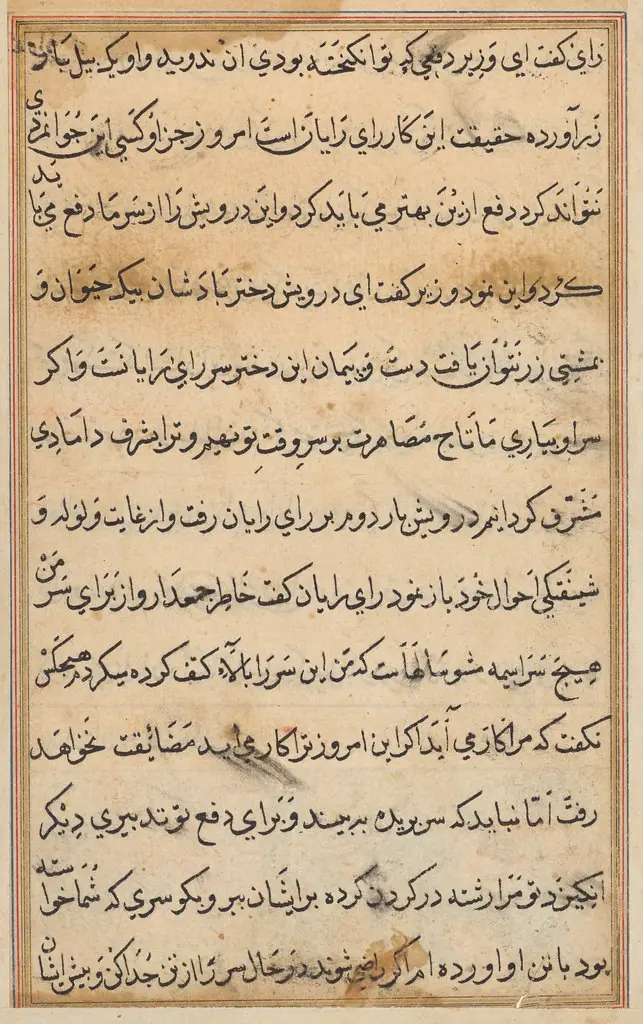
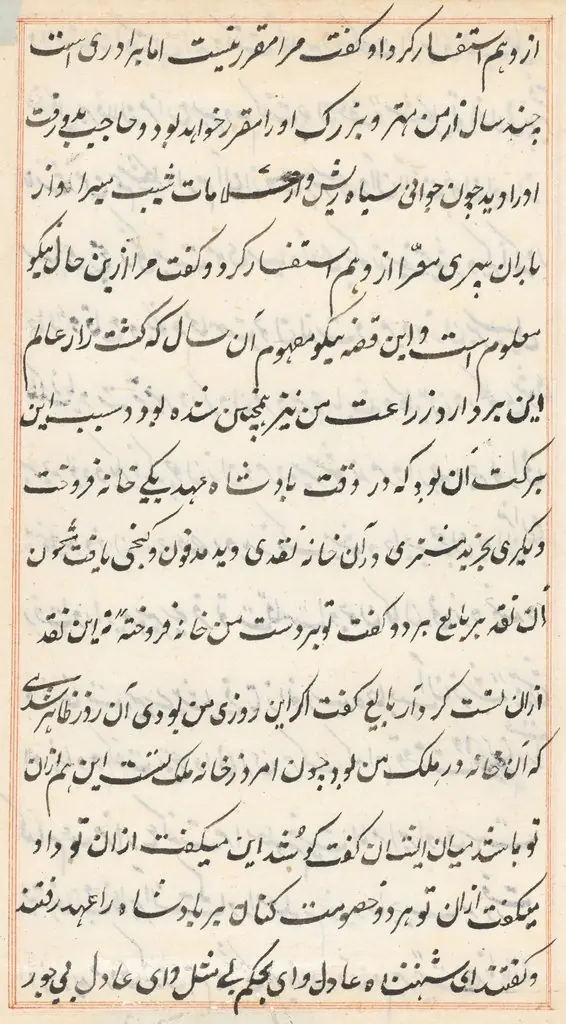
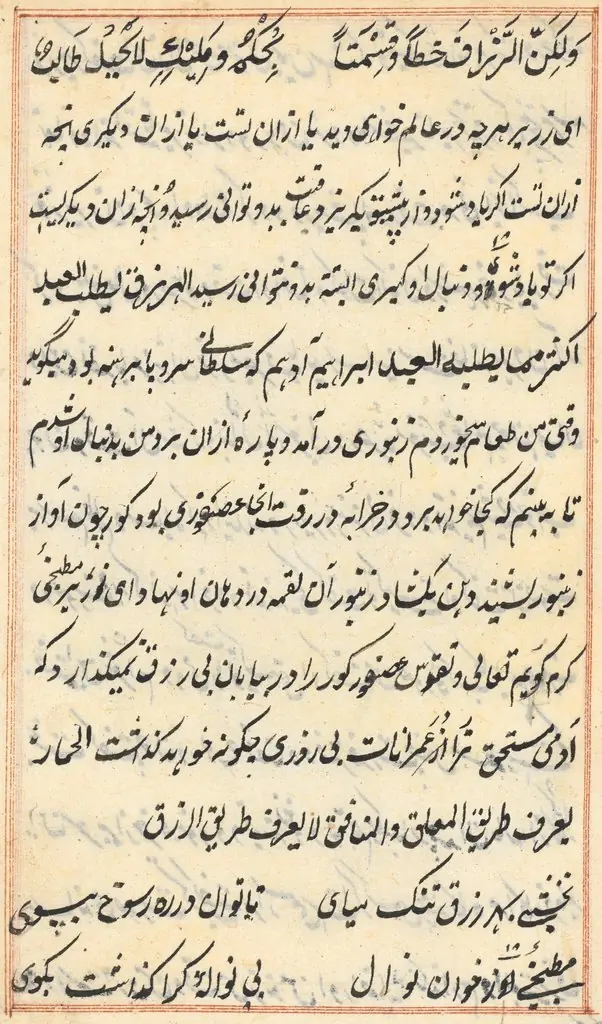
This object is a single folio from the illustrated manuscript known as Tales of a Parrot (Tuti‑nama). Executed as a painted page, it consists of black ink calligraphy on a pale ground, presenting the narrative solely through text without accompanying images.
Subject & Meaning
The written passage recounts a story centered on a parrot, a common motif in Persian literary tradition symbolizing speech and wit. The dense arrangement of verses suggests a continuous narrative flow, inviting the reader to follow the tale through the rhythmic progression of the script.
Technique & Style
The calligrapher employed a fluid, looping hand, varying the thickness of strokes to create visual emphasis. Light blue specks appear at line termini, likely indicating pauses or corrections. The overall composition balances dense text with subtle decorative touches, characteristic of Persian manuscript aesthetics.
Artist & collection

 Page from Tales of a Parrot (Tuti-nama): text page
 Page from Tales of a Parrot (Tuti-nama): text page
 Page from Tales of a Parrot (Tuti-nama): text page
 Page from Tales of a Parrot (Tuti-nama): text page
 Page from Tales of a Parrot (Tuti-nama): text page
 Page from Tales of a Parrot (Tuti-nama): text page
 Page from Tales of a Parrot (Tuti-nama): text page
 Page from Tales of a Parrot (Tuti-nama): text page