Artwork
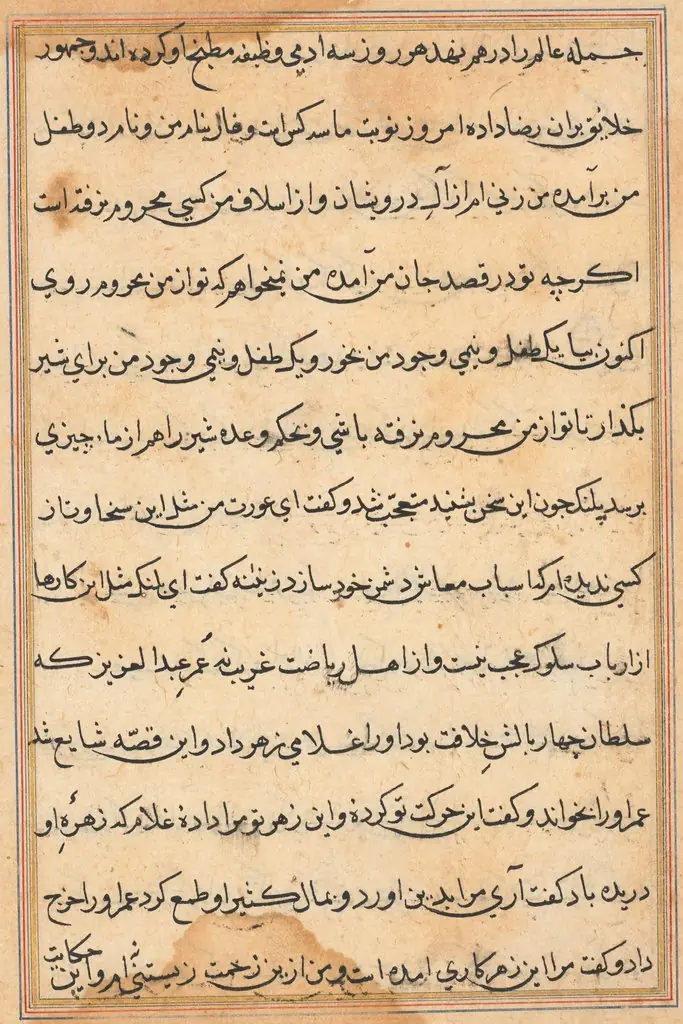
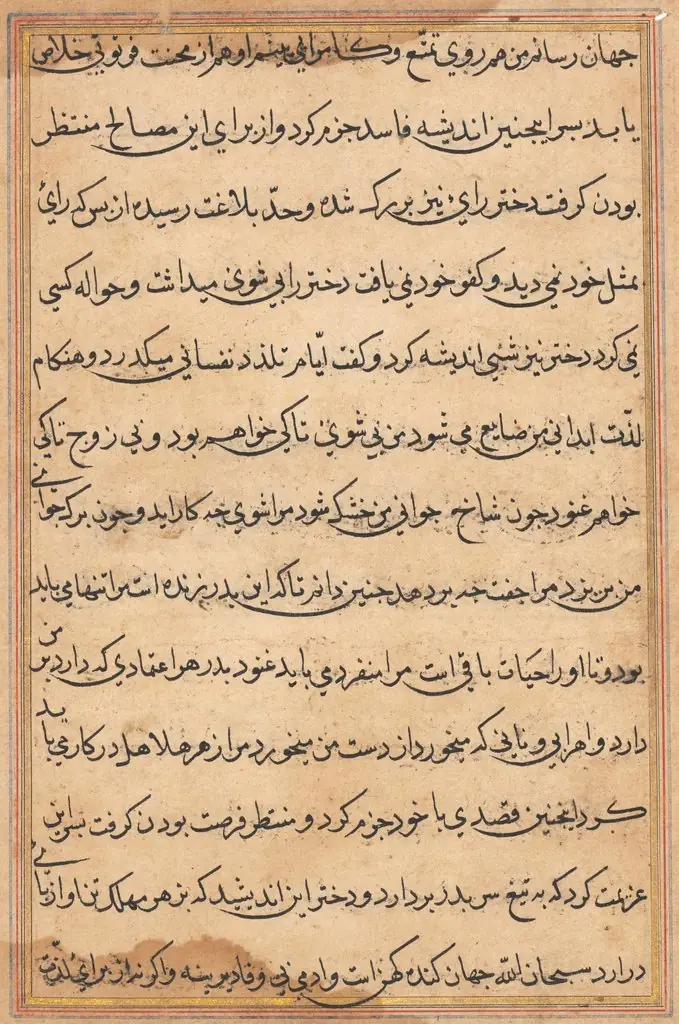
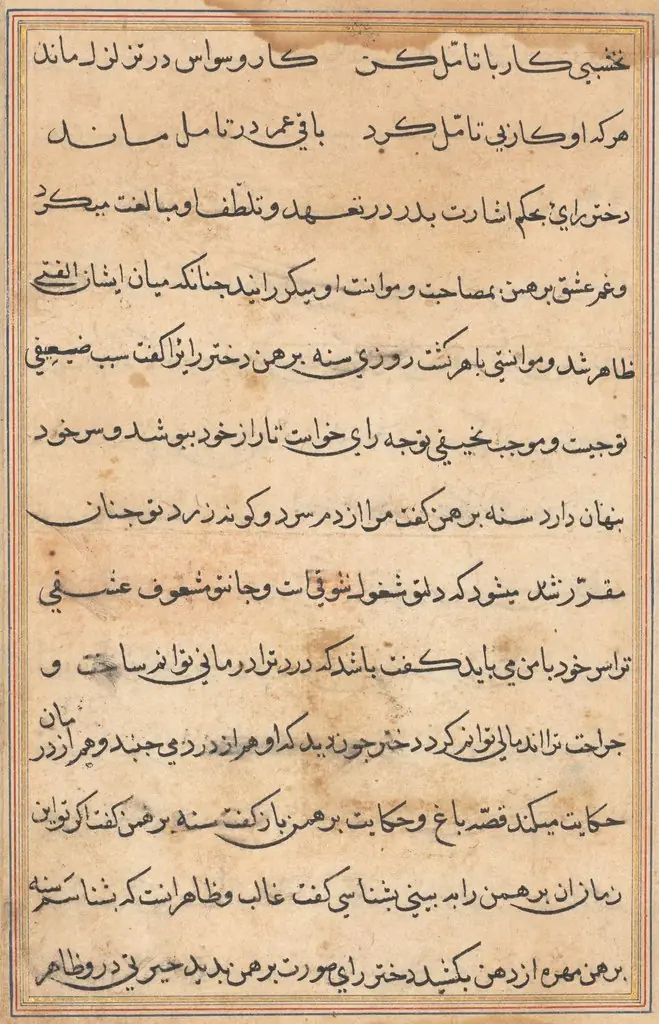
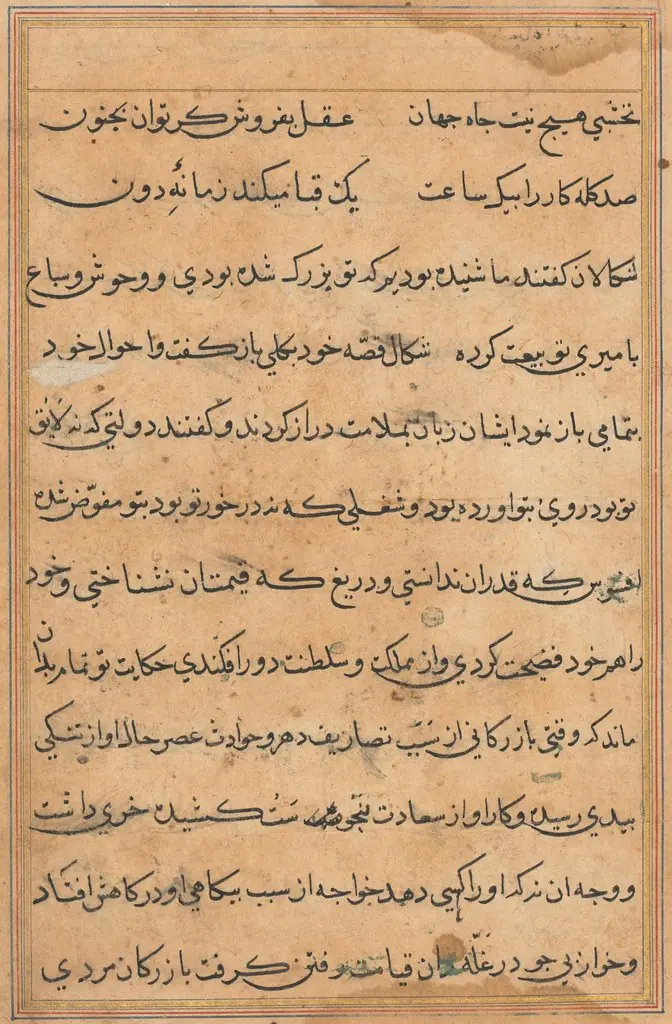
Page from Tales of a Parrot (Tuti-nama): text page
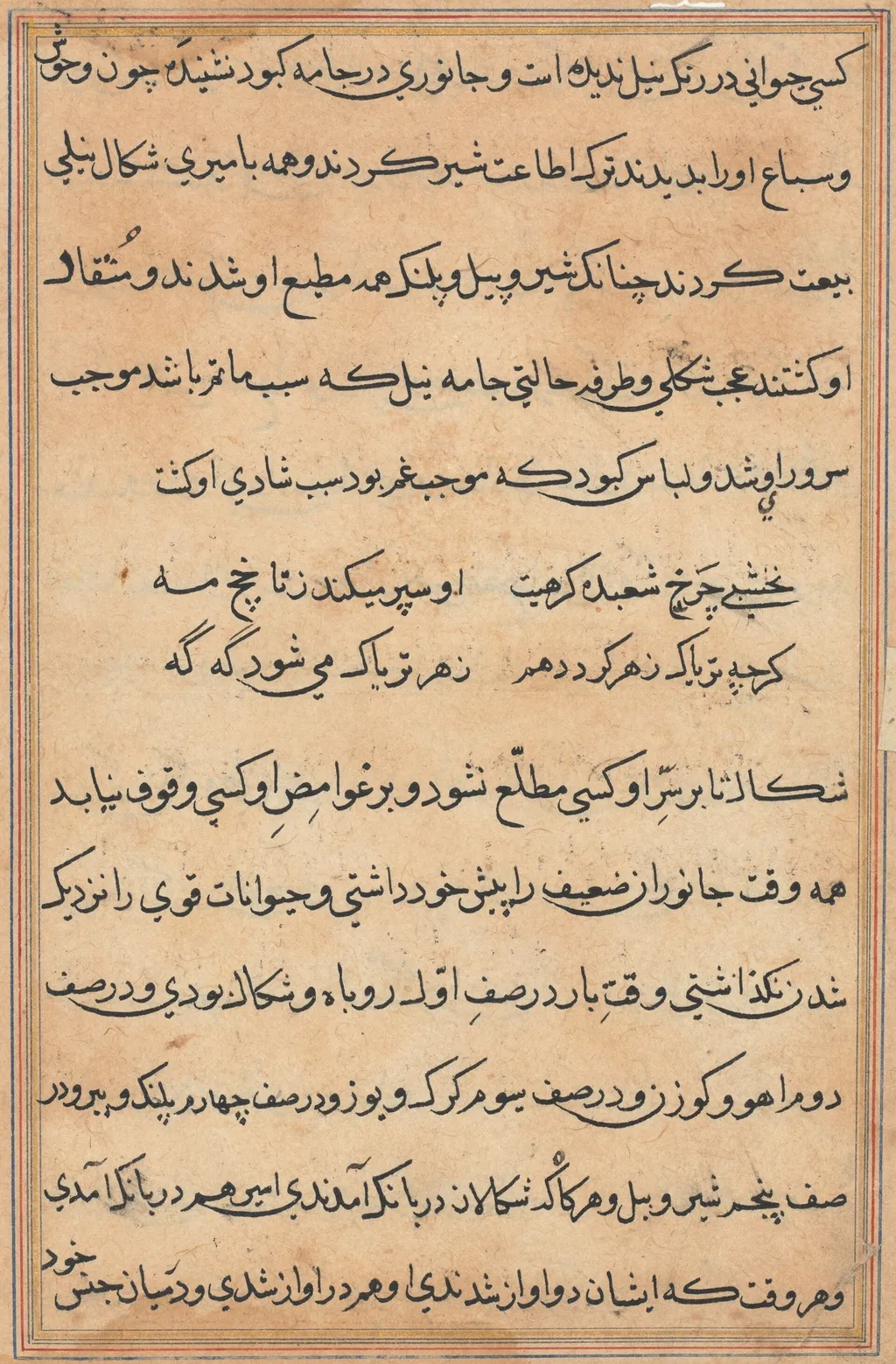
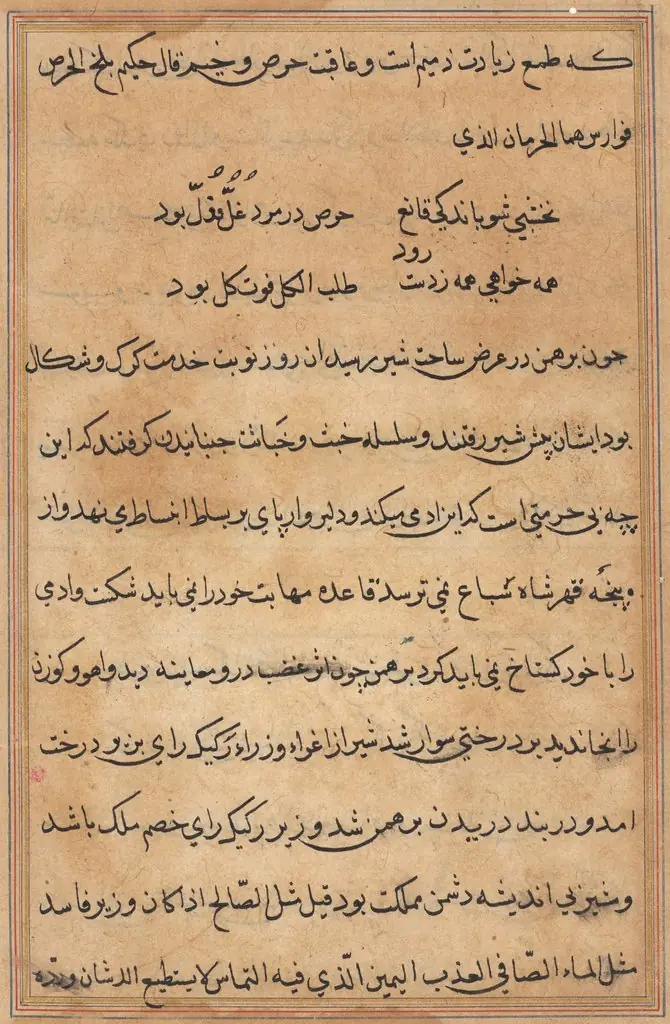
Page from Tales of a Parrot (Tuti-nama): text page is an unspecified painting. It dates from 1560 and is held in the collection of the Cleveland Museum of Art. The object is a single folio from the illustrated manuscript known as Tales of a Parrot (Tuti‑nama).
About this work
Technique & Style
Formal qualities include flattened perspective, intricate border patterning, and a focus on ornamental detail over anatomical realism.
The work is a miniature painting created with pigments on paper, characteristic of Mughal artistic practice. Its intimate scale and textual narrative reflect the tradition of illustrated manuscript production in 16th-century India, where visual storytelling accompanied poetic and moral tales. The composition demonstrates refined line work and restrained color modulation typical of courtly workshops, while the handling of spatial depth remains limited by symbolic rather than naturalistic conventions. The support is paper, and the condition is stable, preserved within a museum collection.
Formal qualities include flattened perspective, intricate border patterning, and a focus on ornamental detail over anatomical realism. Stylistically, the piece aligns with Safavid-influenced manuscript aesthetics transmitted through Mughal patronage, emphasizing narrative clarity and decorative precision over individualized expression.
History & Provenance
The page is dated to 1560 and was produced in the Mughal Empire, placing its creation within the early years of Mughal court patronage of illustrated manuscripts. It is classified as a painting and is now held in the collection of the Cleveland Museum of Art, where it is catalogued under accession reference 1962.279.204.b. No details of an earlier ownership chain, commissioner, or intermediate provenance are documented in the available sources.
The work was created during the formative period of Mughal manuscript production, when illustrated copies of Persian literary classics such as the Tuti-nama were being adapted for imperial patrons. Beyond its current institutional holding and its sixteenth-century origin, the available records do not document a prior ownership history or a specific commissioning patron.
The page from Tales of a Parrot (Tuti-nama) is held at the Cleveland Museum of Art. It is cataloged under the accession number 1962.279.204.b. The work was created in 1560 in the Mughal Empire and has been part of the museum's collection since its acquisition.
Context
The manuscript page dating to 1560 exemplifies Mughal painting's synthesis of Persian narrative tradition and Indian sensibility, reflecting the cosmopolitan artistic milieu of Emperor Akbar's court. Its inclusion in the Cleveland Museum of Art collection underscores contemporary scholarly interest in cross-cultural transmission mechanisms within Indo-Persian manuscript production, as evidenced by recent studies on 16th-century manuscript illumination techniques.
Research on the Tuti-nama corpus has emphasized this folio's role in elucidating the stylistic evolution from Timurid to Mughal aesthetics, particularly through its distinctive use of naturalistic figuration and marginal decorative motifs that bridge Safavid manuscript traditions with emerging imperial visual languages.
Overview
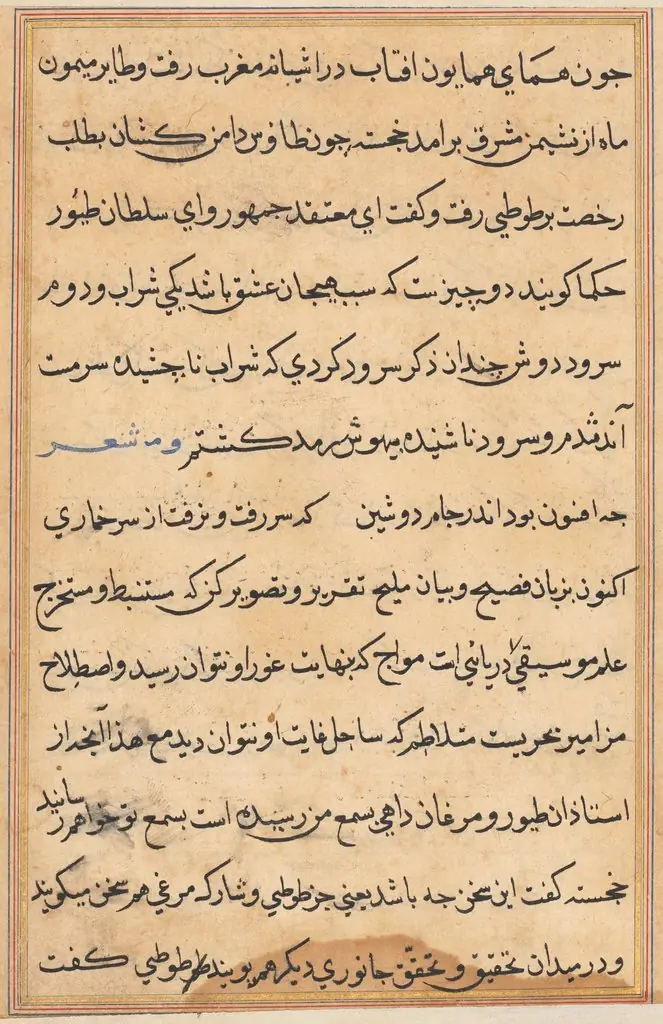
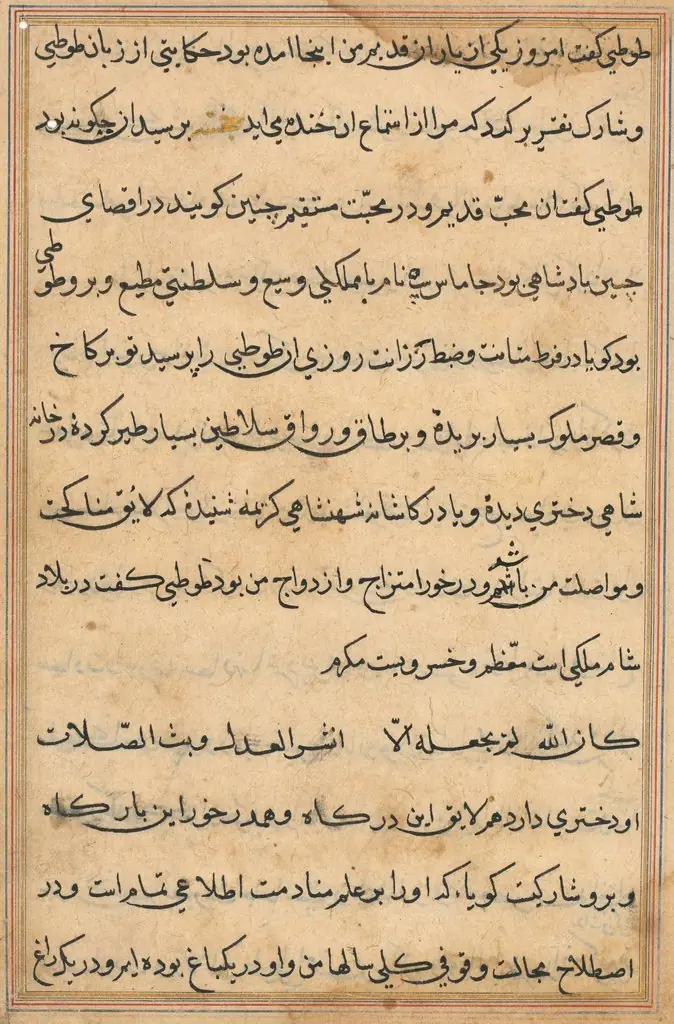
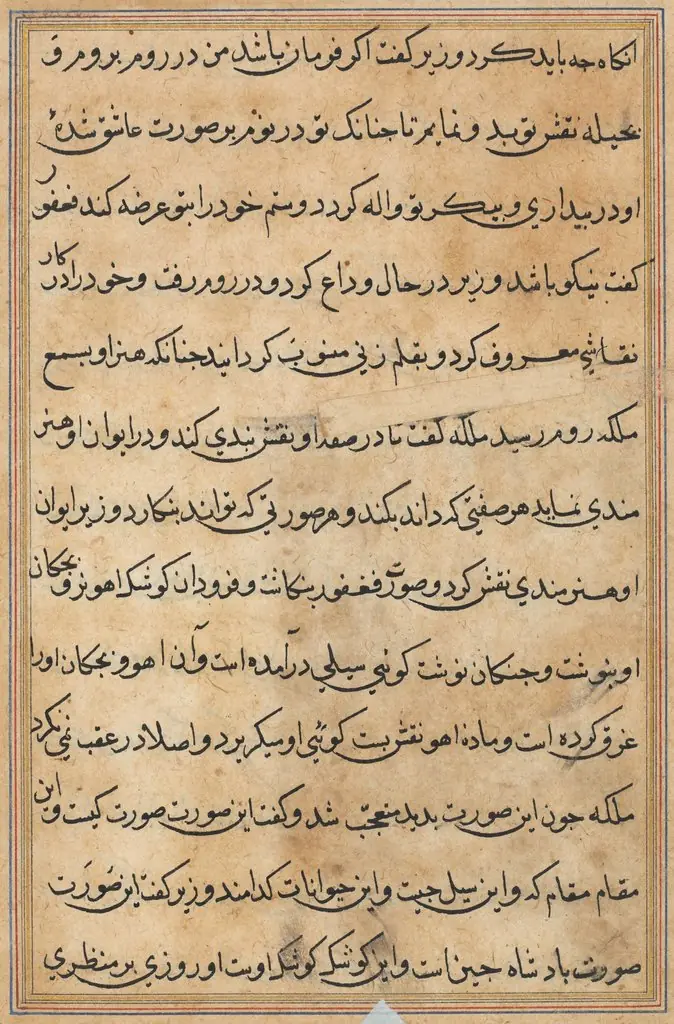
The object is a single folio from the illustrated manuscript known as Tales of a Parrot (Tuti‑nama). It consists solely of handwritten text, occupying the entire surface of a warm, off‑white sheet of paper framed by a narrow red margin. The script is rendered in flowing black ink, arranged in orderly rows without any decorative imagery.
Subject & Meaning
The page contains a narrative passage from the Tuti‑nama, a collection of moral and didactic stories traditionally transmitted in Persian literary culture. The text serves a didactic purpose, conveying ethical lessons through the allegorical figure of a parrot, a common motif in Persian storytelling.
Artist & collection

- Page from Tales of a Parrot (Tuti-nama): text page
 Page from Tales of a Parrot (Tuti-nama): text page
 Page from Tales of a Parrot (Tuti-nama): text page
 Page from Tales of a Parrot (Tuti-nama): text page
 Page from Tales of a Parrot (Tuti-nama): text page
 Page from Tales of a Parrot (Tuti-nama): text page
 Page from Tales of a Parrot (Tuti-nama): text page
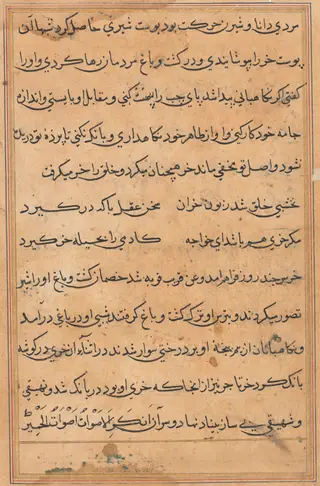 Page from Tales of a Parrot (Tuti-nama): text page
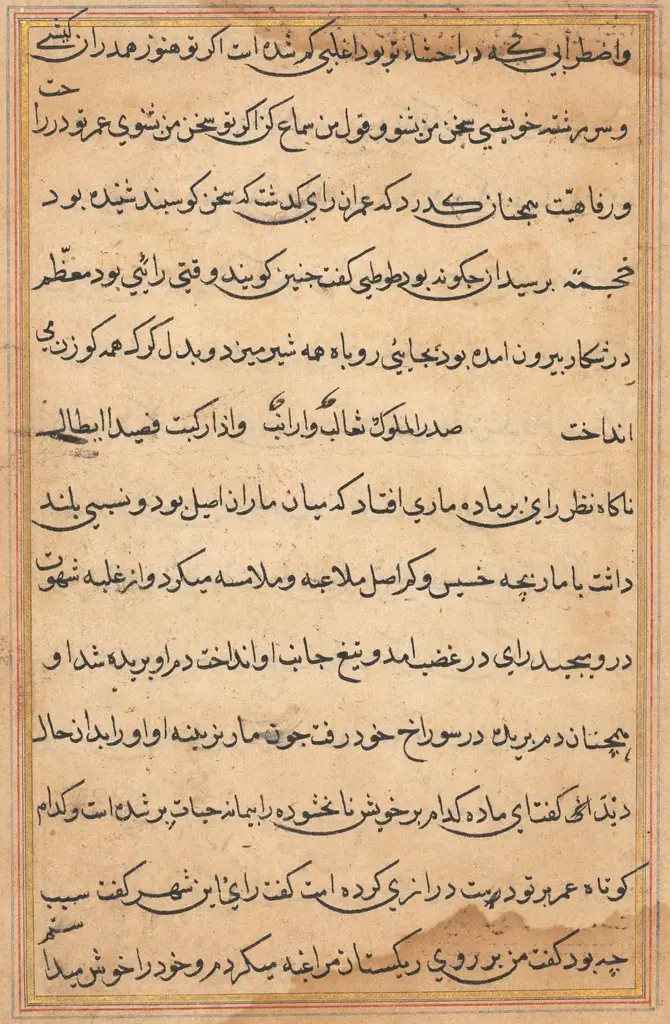 Page from Tales of a Parrot (Tuti-nama): text page
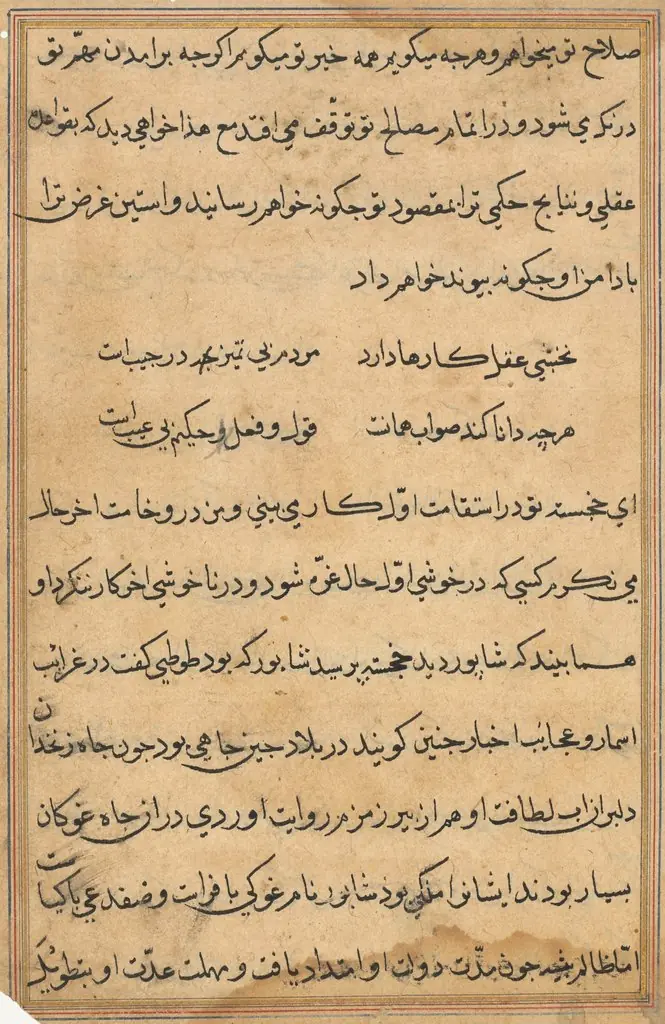 Page from Tales of a Parrot (Tuti-nama): text page
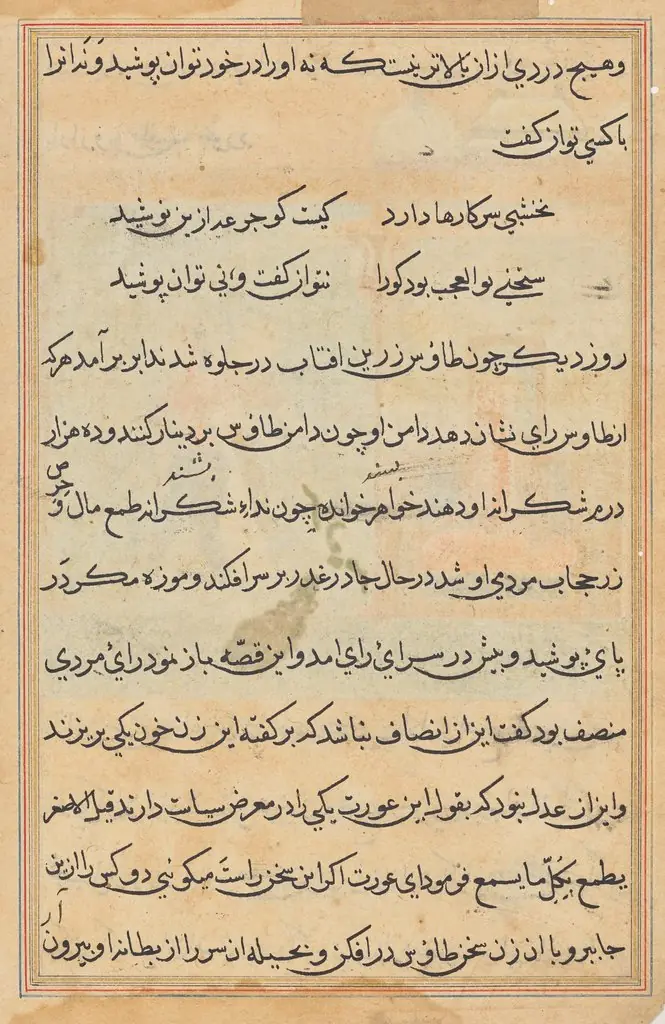 Page from Tales of a Parrot (Tuti-nama): text page
 Page from Tales of a Parrot (Tuti-nama): text page