Artwork
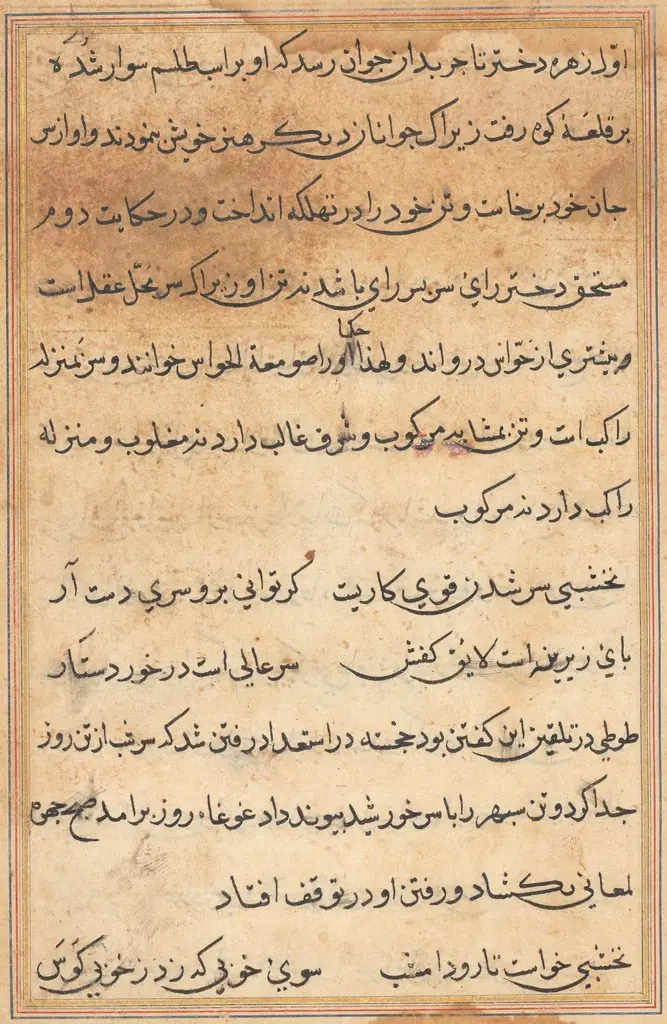
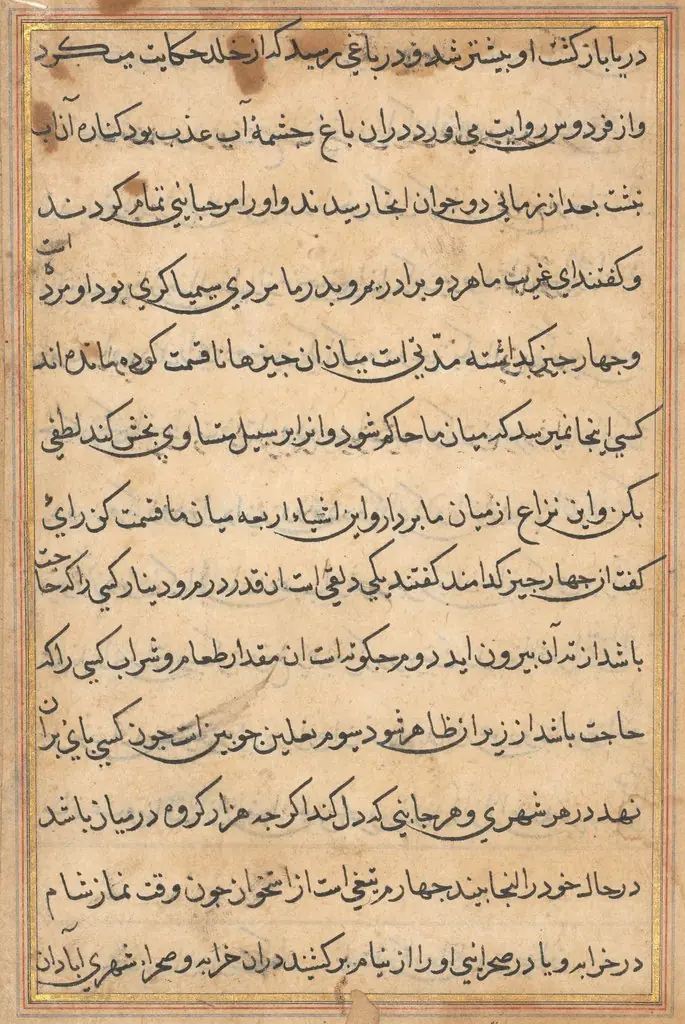
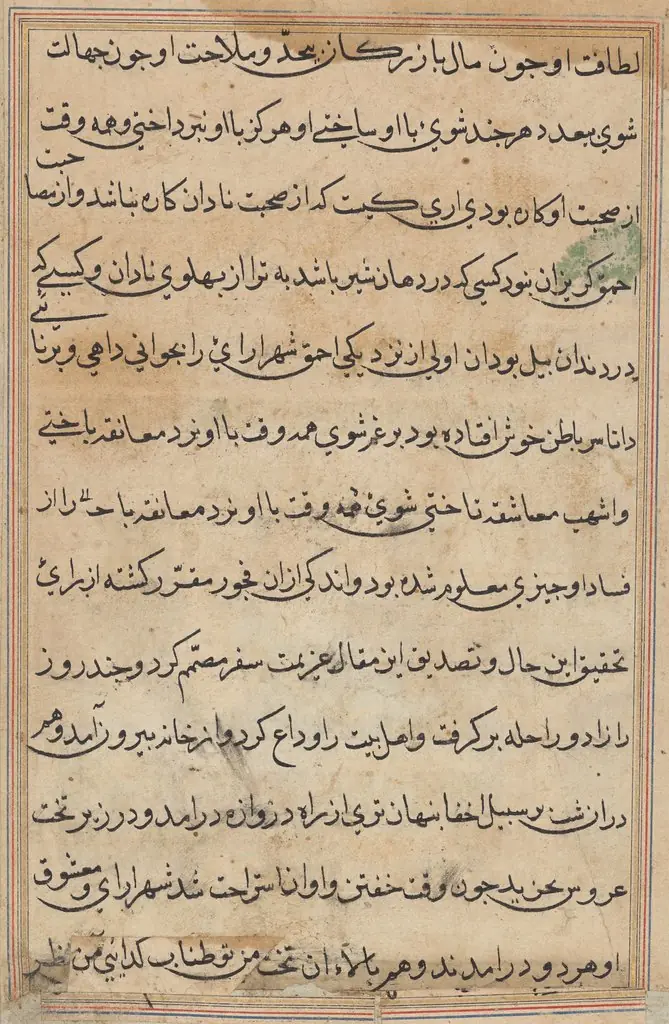
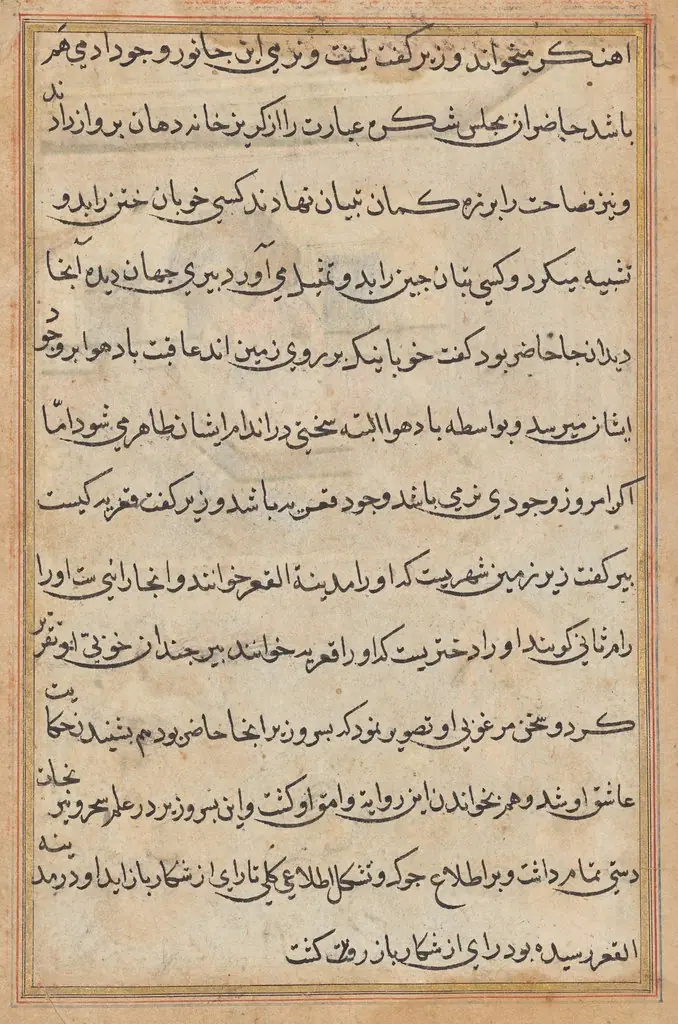
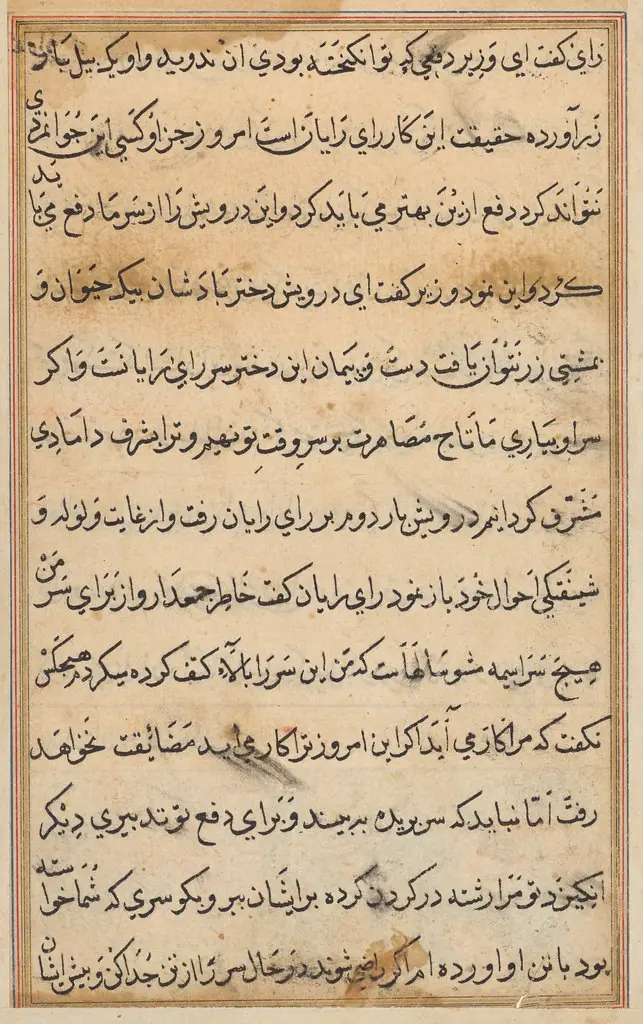
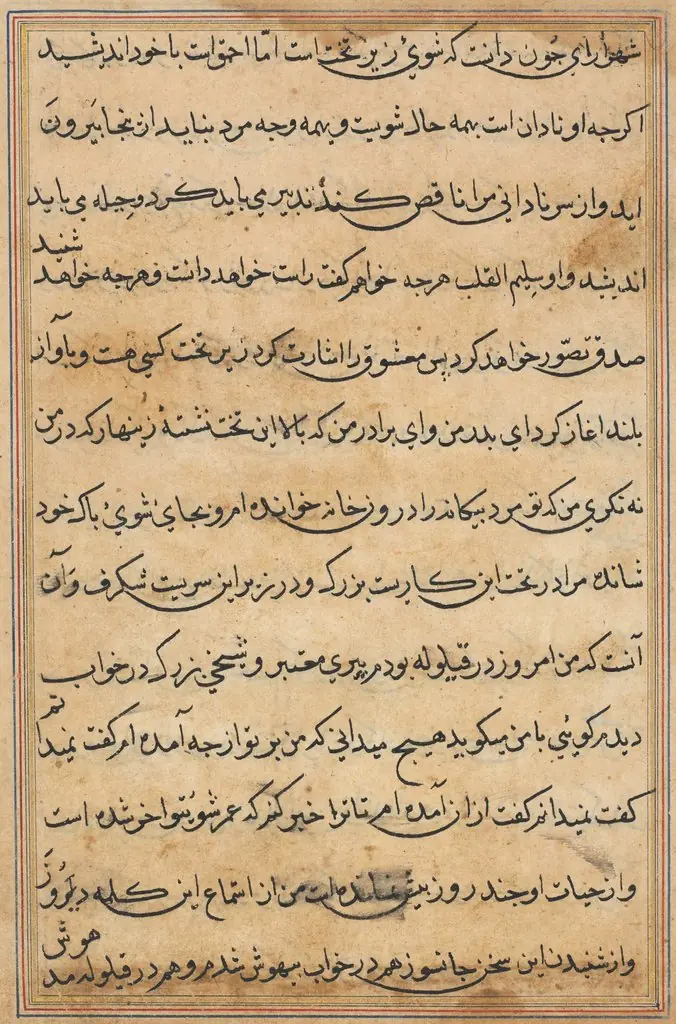
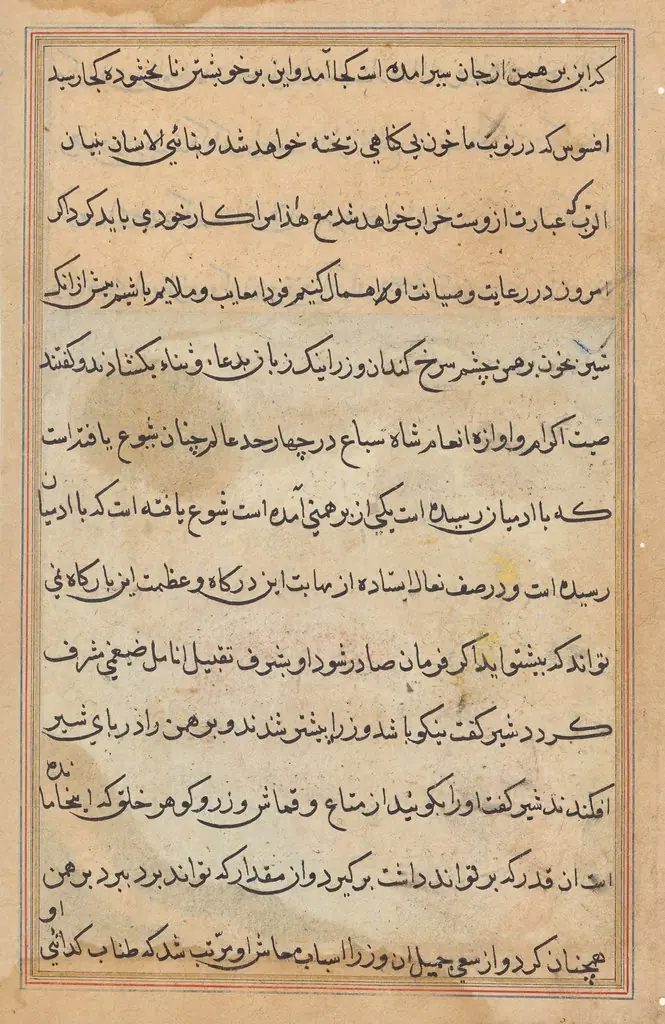
Page from Tales of a Parrot (Tuti-nama): text page
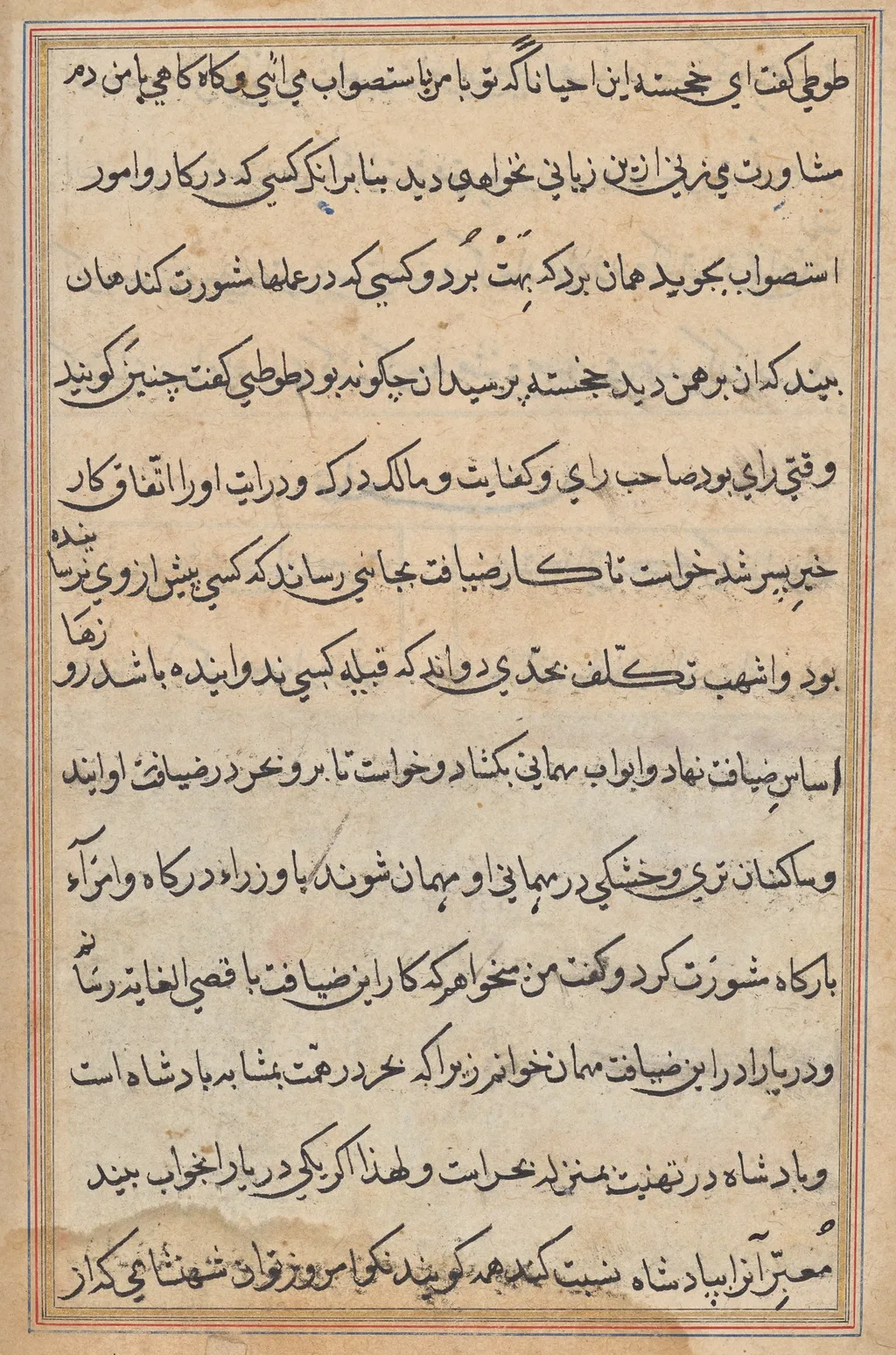
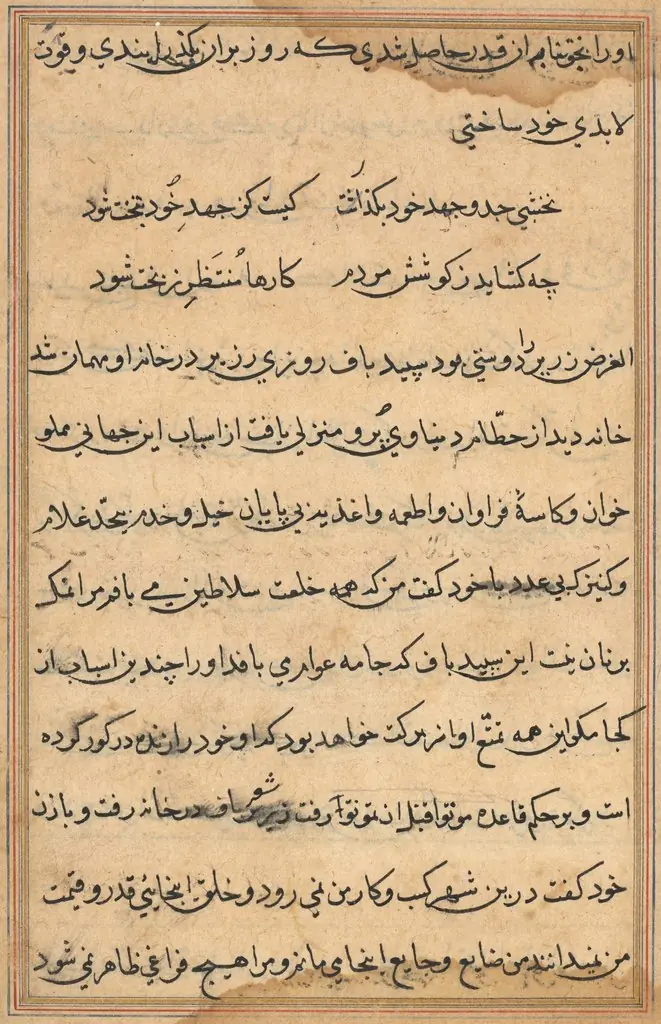
Page from Tales of a Parrot (Tuti-nama): text page is an unspecified painting. It dates from 1560 and is held in the collection of the Cleveland Museum of Art. The object is a single leaf from the Persian manuscript known as the Tuti‑nama (Tales of a Parrot).
About this work
History & Provenance
The text page from the Tales of a Parrot (Tuti-nama), dated to 1560, is held in the collection of the Cleveland Museum of Art in Cleveland.
This page from the Tales of a Parrot (Tuti-nama) was produced in the Mughal Empire around 1560, aligning with the manuscript’s traditional dating to the mid-16th century under imperial patronage.
The Cleveland Museum of Art holds the work as part of its collection, accessioned as 1962.279.87.b. Acquired in 1962, the museum’s holdings reflect its broader collection focus on Mughal-era manuscripts and paintings, though specific pre-20th-century provenance details are not documented in the cited sources.
The text page from the Tales of a Parrot (Tuti-nama), dated to 1560, is held in the collection of the Cleveland Museum of Art in Cleveland. The work is cataloged under the accession number 1962.279.87.b. Created within the Mughal Empire by an unknown artist, this painting represents a specific folio from the manuscript tradition. No exhibition history is documented in the available sources.
Overview
The object is a single leaf from the Persian manuscript known as the Tuti‑nama (Tales of a Parrot). It consists of a page of text rendered in black ink on a light‑brown, likely paper, substrate. No illustrative imagery accompanies the script; the focus is entirely on the calligraphic composition.
Subject & Meaning
The page contains a passage from the Tuti‑nama, a collection of moral and didactic stories traditionally attributed to a parrot narrator. The text’s content, though not transcribed here, would have conveyed ethical teachings or entertaining anecdotes typical of the work’s purpose as a literary guide.
Technique & Style
The script is executed in a highly ornamental hand, featuring elaborate flourishes, elongated strokes, and intricate curves that demonstrate the scribe’s proficiency. The ink is uniformly black, while faint horizontal guidelines and marginal marks indicate a hand‑made preparation of the writing surface.
Context
The Tuti‑nama belongs to a broader tradition of Persian moral literature that flourished from the medieval period onward. Such manuscripts were often produced for elite patrons, reflecting both literary taste and the high status of calligraphic art in Persian culture.
Artist & collection

 Page from Tales of a Parrot (Tuti-nama): text page
 Page from Tales of a Parrot (Tuti-nama): text page
 Page from Tales of a Parrot (Tuti-nama): text page
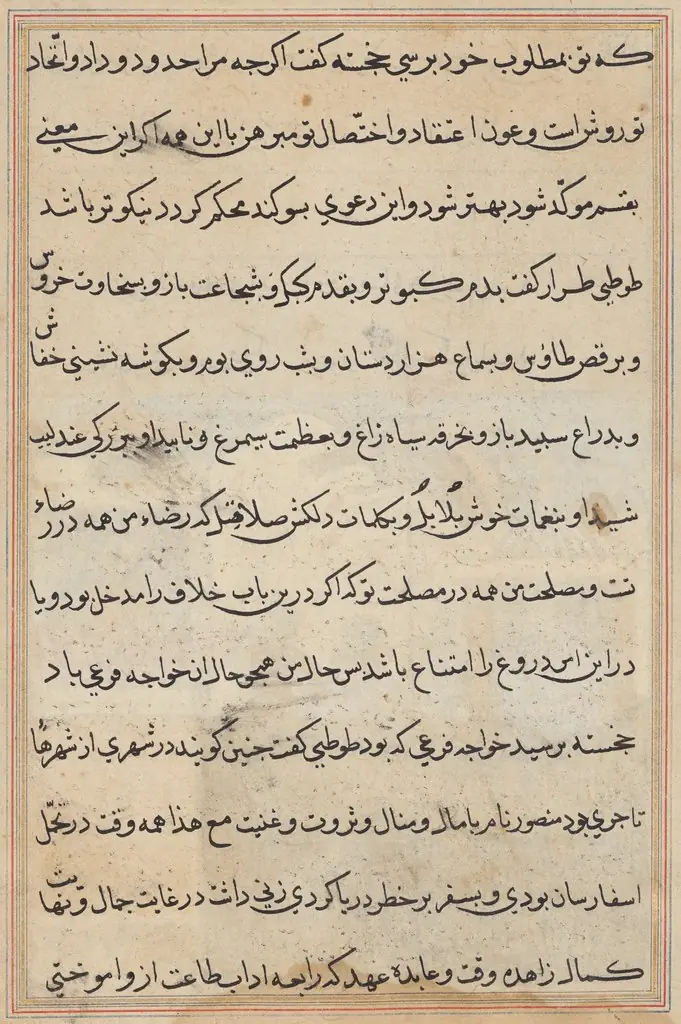 Page from Tales of a Parrot (Tuti-nama): text page
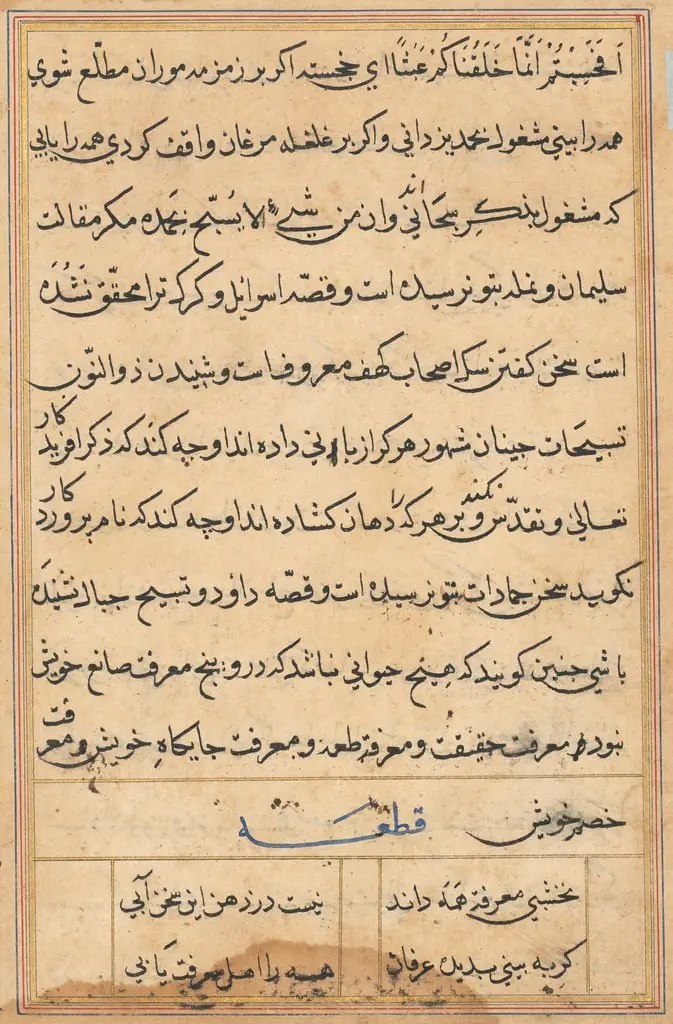 Page from Tales of a Parrot (Tuti-nama): text page
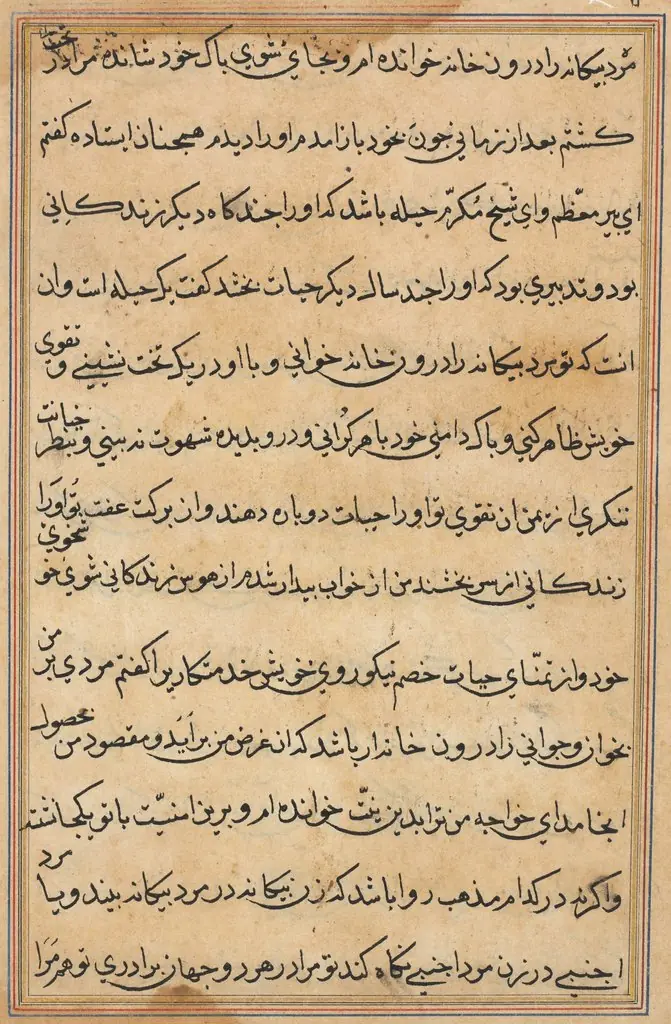 Page from Tales of a Parrot (Tuti-nama): text page
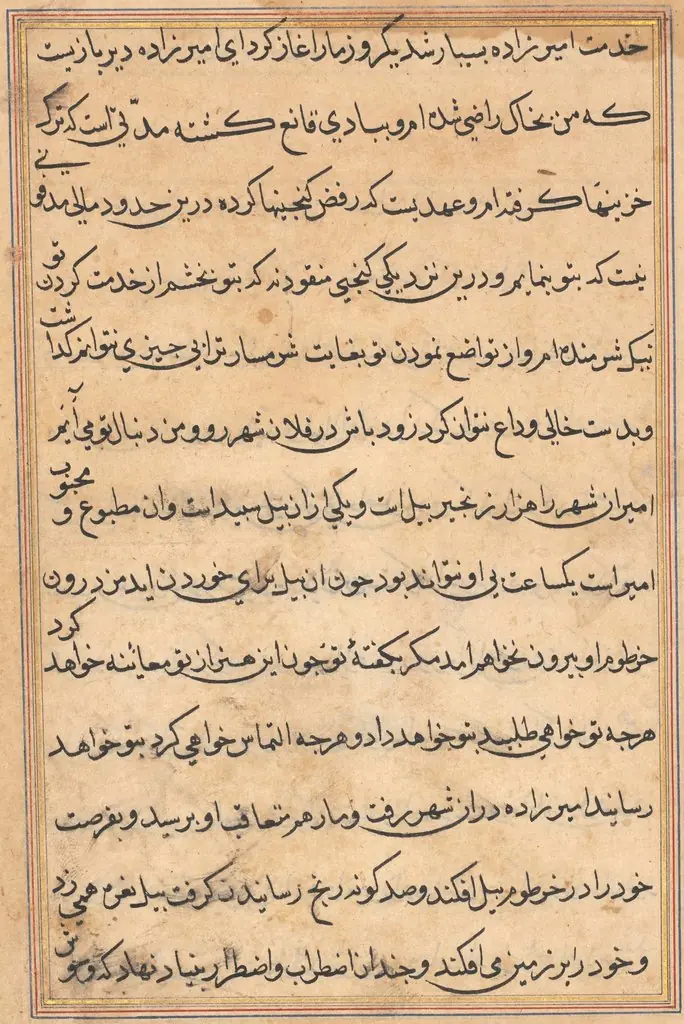 Page from Tales of a Parrot (Tuti-nama): text page
 Page from Tales of a Parrot (Tuti-nama): text page