Artwork
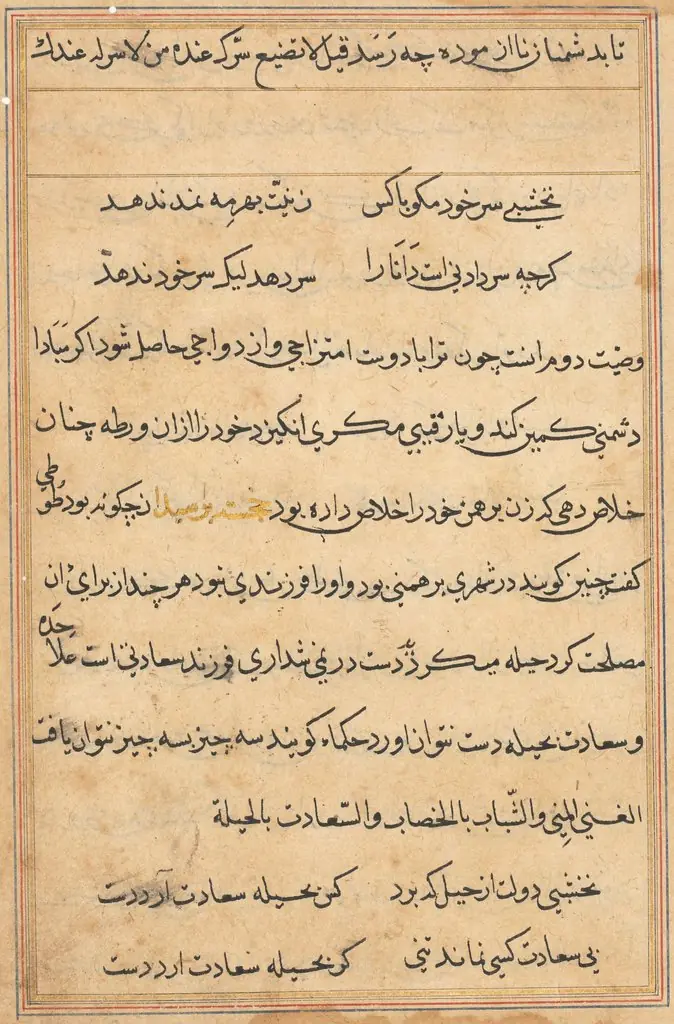
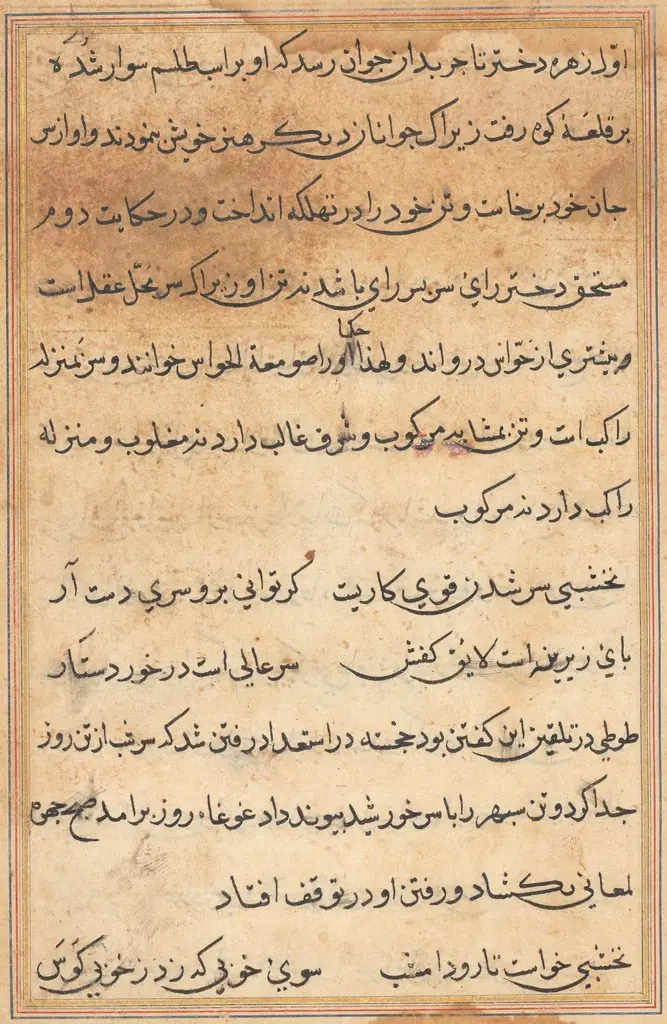
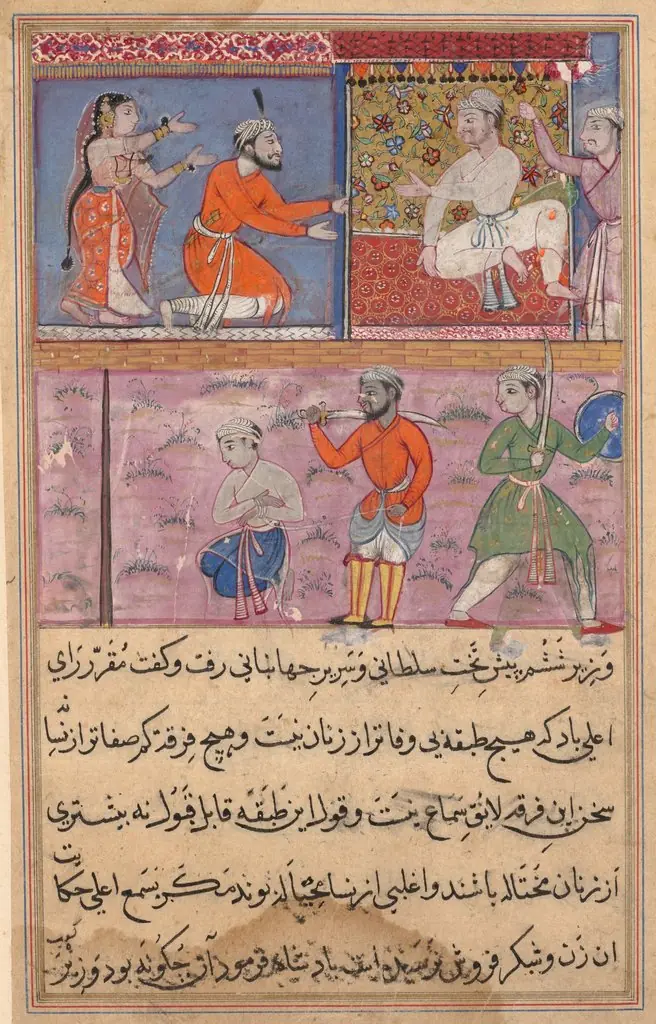
Page from Tales of a Parrot (Tuti-nama): text page
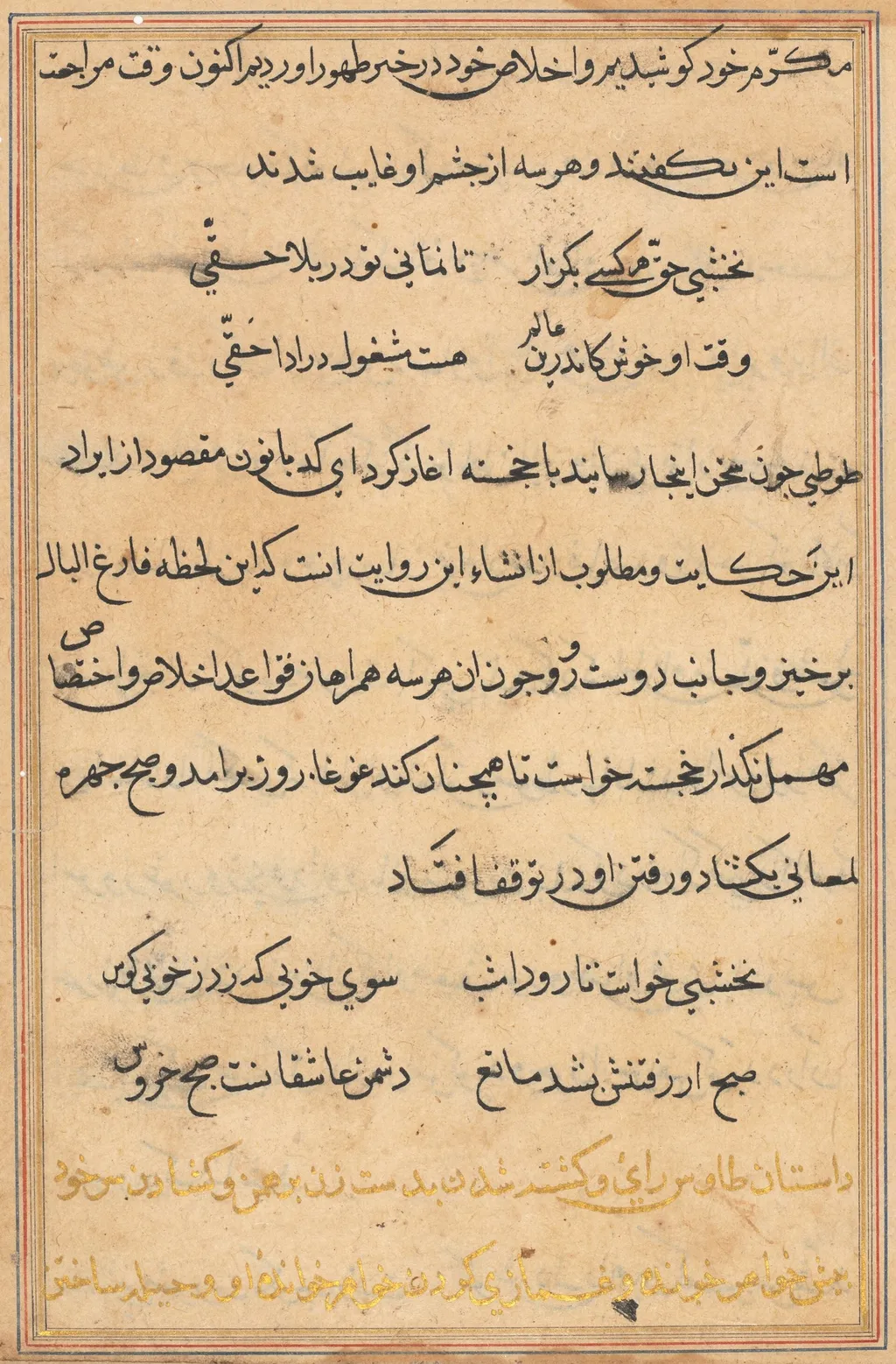
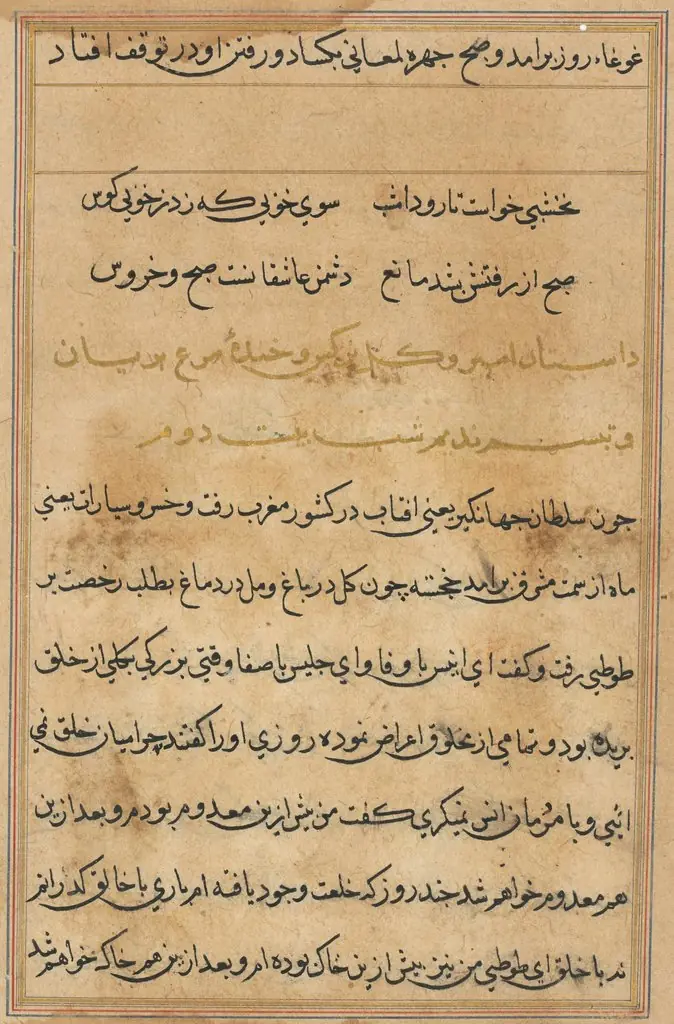
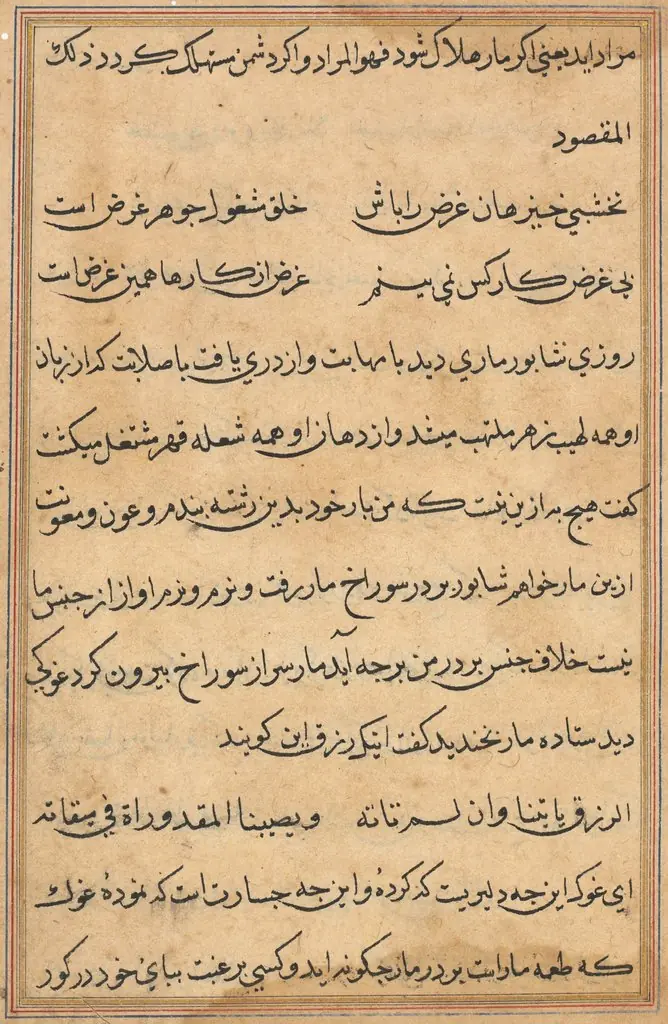
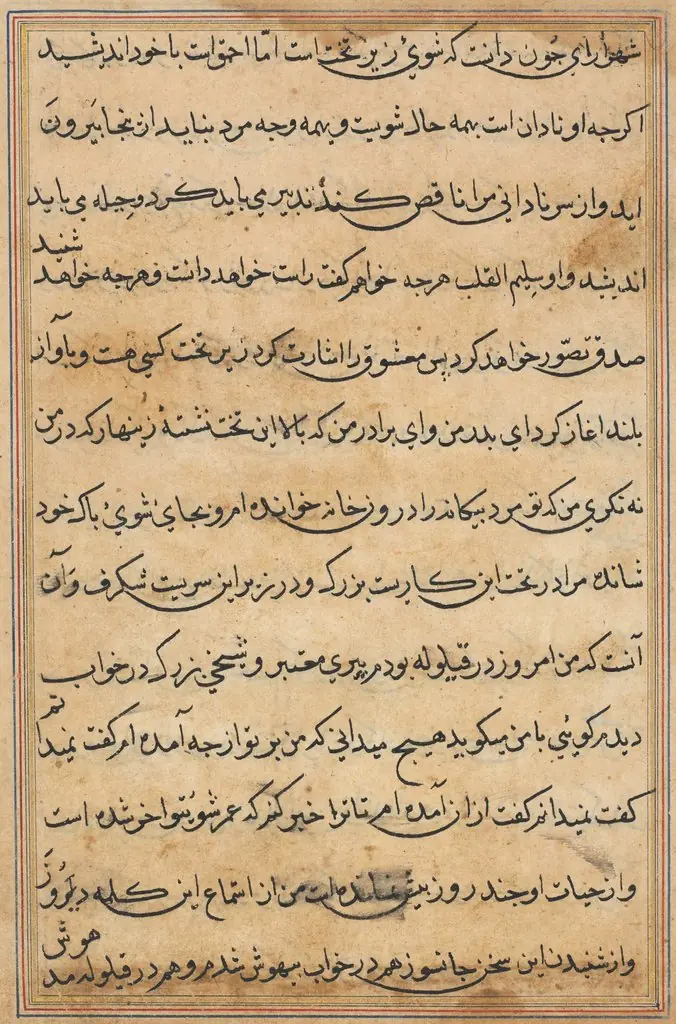
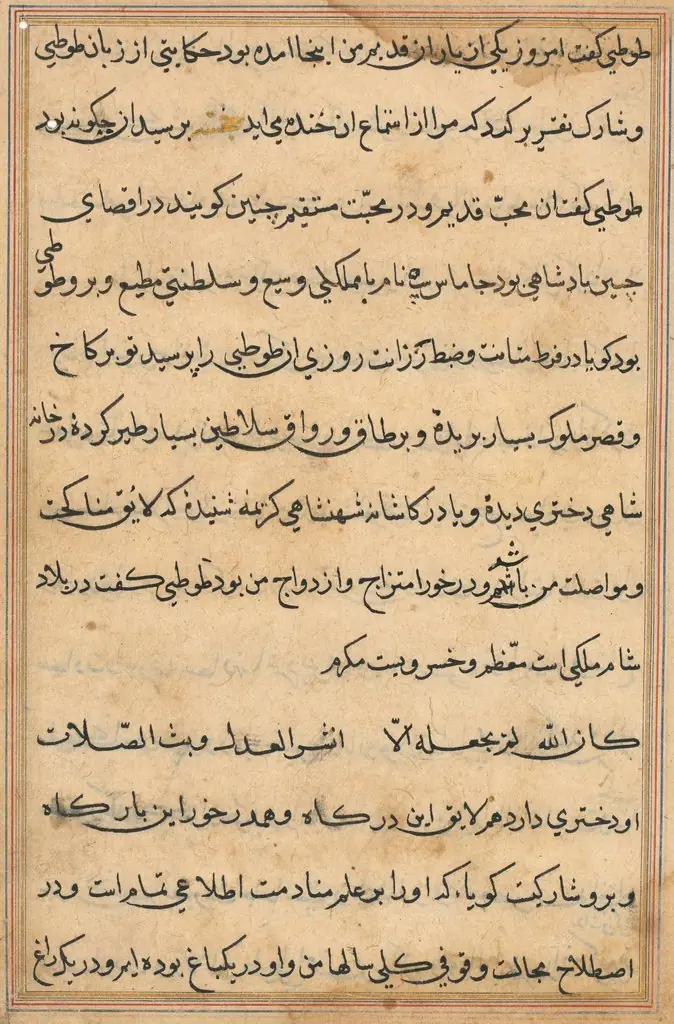
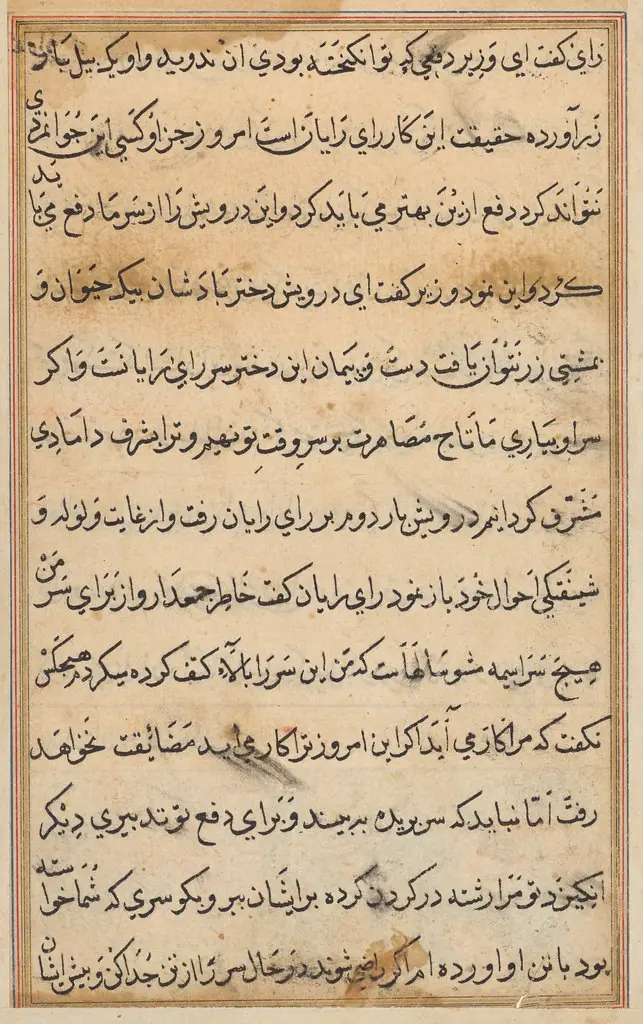
Page from Tales of a Parrot (Tuti-nama): text page is an unspecified painting. It dates from 1560 and is held in the collection of the Cleveland Museum of Art. This object is a single page from the illustrated manuscript known as Tuti‑nama or Tales of a Parrot.
About this work
Subject & Meaning
The text page originates from a 1560 manuscript produced in the Mughal Empire, reflecting court patronage of Persianate narrative art.
The page shows a scene from the Tuti-nama where a parrot recounts a story, representing moral instruction through avian symbolism in Mughal manuscript tradition. The text page originates from a 1560 manuscript produced in the Mughal Empire, reflecting court patronage of Persianate narrative art. Its iconography employs the parrot as a vehicle for didactic storytelling, linking visual representation to Sufi moral themes prevalent in 16th-century Indian painting.
Technique & Style
The page originates from a 1560 miniature painting executed in the Mughal imperial workshop, employing tempera and ink on paper as support. The work shows a single-column text block framed by a narrow border, with fine brushwork and restrained coloration that delineate figures and narrative motifs. Stylistically, the composition follows the Persianate tradition of the Tuti-nama, emphasizing elegant linearity, subtle gradation, and meticulous detail, while the handling of space remains shallow and decorative.
The surface exhibits minor foxing and a faint crease along the upper margin, yet the pigment remains largely intact, preserving the original tonal harmony.
The formal qualities prioritize calligraphic precision and ornamental patterning, reflecting courtly aesthetics of the sixteenth-century Persianate world.
History & Provenance
The text page from the Tales of a Parrot (Tuti-nama) was created circa 1560 within the Mughal Empire, as indicated by its stylistic and historical context. The work entered the Cleveland Museum of Art’s collection in 1962 as part of an acquisition numbered 1962.279.137.a. Its origins trace to a broader manuscript tradition associated with Mughal artistic production during the mid-16th century, though the artist remains unattributed.
The page’s inclusion in the museum’s holdings reflects its status as a representative example of Indo-Persian manuscript culture of the period.
The painting is housed in the Cleveland Museum of Art, where it is catalogued under accession number 1962.279.137.a. It has been displayed in exhibitions at the museum, including a 2013 presentation of Indian miniature paintings from the collection.
The work originates from the Mughal Empire and dates to 1560.
Overview
This object is a single page from the illustrated manuscript known as Tuti‑nama or Tales of a Parrot. Executed as a painted page, it consists of densely packed Arabic calligraphy rendered in black ink, surrounded by a narrow red border and accented with a faint gold line along the lower edge.
Context
Manuscripts of this period often combined literary content with elaborate visual presentation, serving as status objects for elite patrons. The Tuti‑nama belongs to a tradition of Persian‑influenced courtly literature that circulated among the Mughal elite, blending Persian poetic forms with local Indian artistic conventions.
Legacy
The page exemplifies the high level of calligraphic skill and decorative restraint characteristic of Mughal manuscript art. As a fragment, it offers scholars insight into the material culture of royal patronage and the aesthetic choices that shaped literary manuscripts in early modern South Asia.
Artist & collection

 Page from Tales of a Parrot (Tuti-nama): text page
 Page from Tales of a Parrot (Tuti-nama): text page
 Page from Tales of a Parrot (Tuti-nama): text page
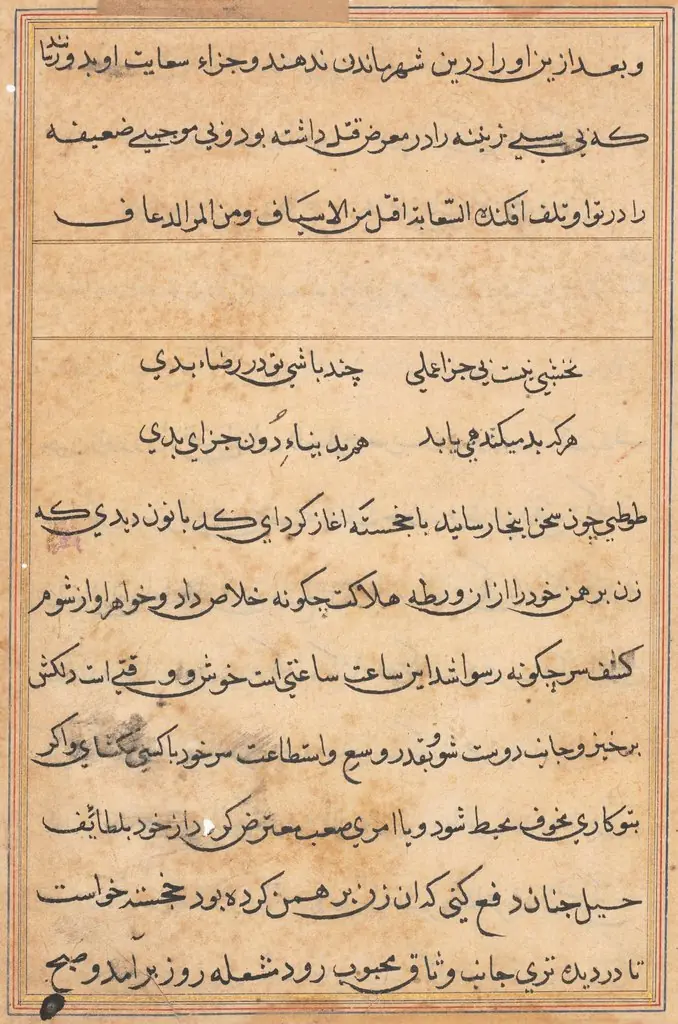 Page from Tales of a Parrot (Tuti-nama): text page
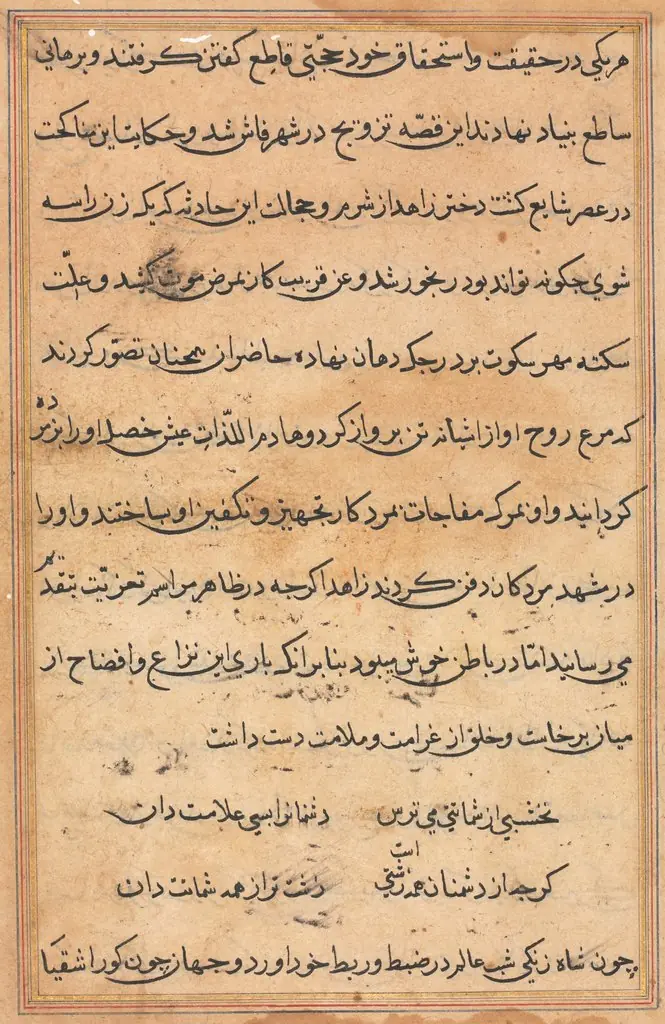 Page from Tales of a Parrot (Tuti-nama): text page
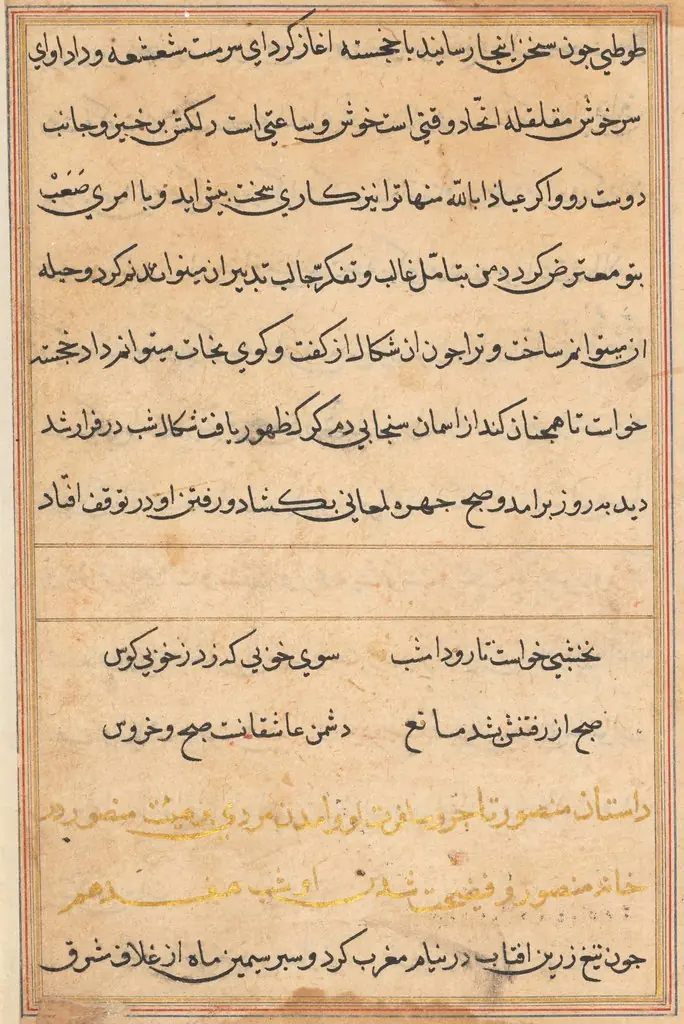 Page from Tales of a Parrot (Tuti-nama): text page
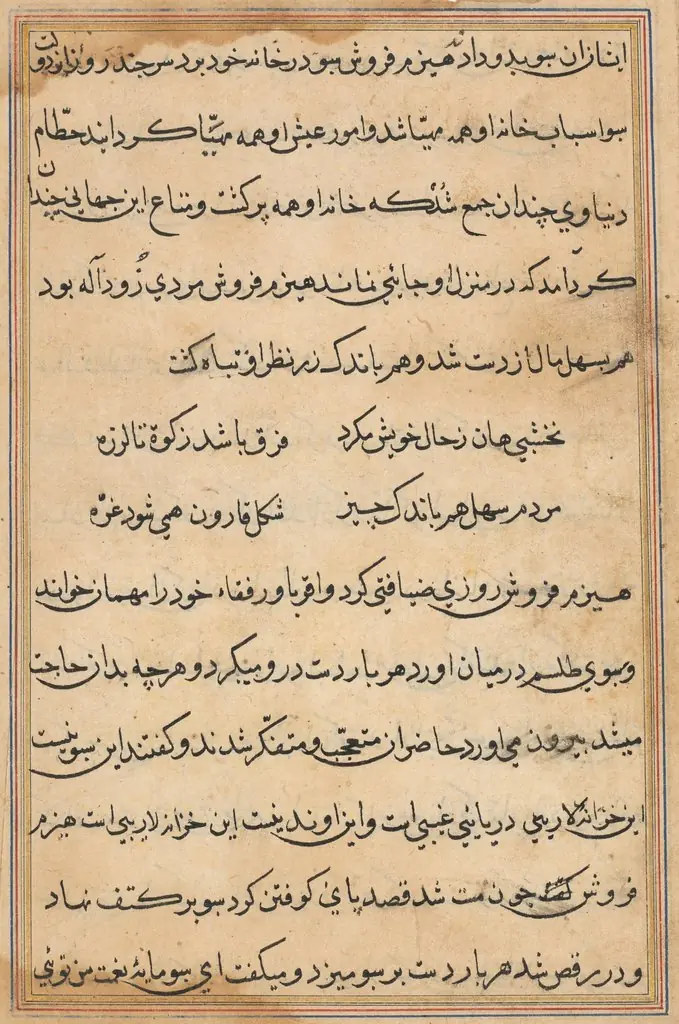 Page from Tales of a Parrot (Tuti-nama): text page
 Page from Tales of a Parrot (Tuti-nama): text page