Artwork
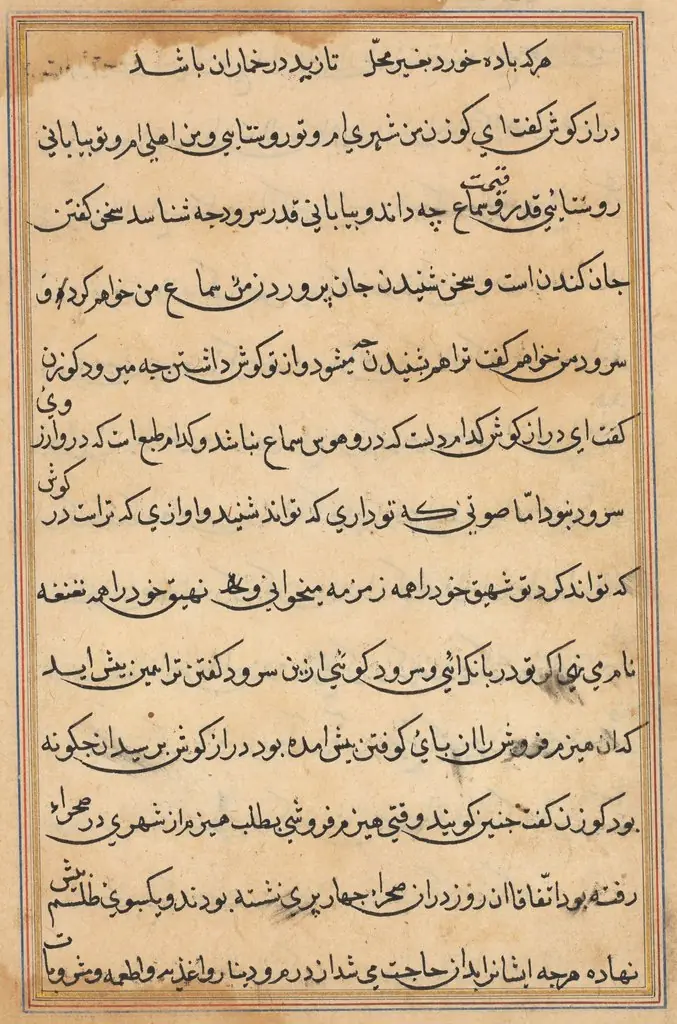
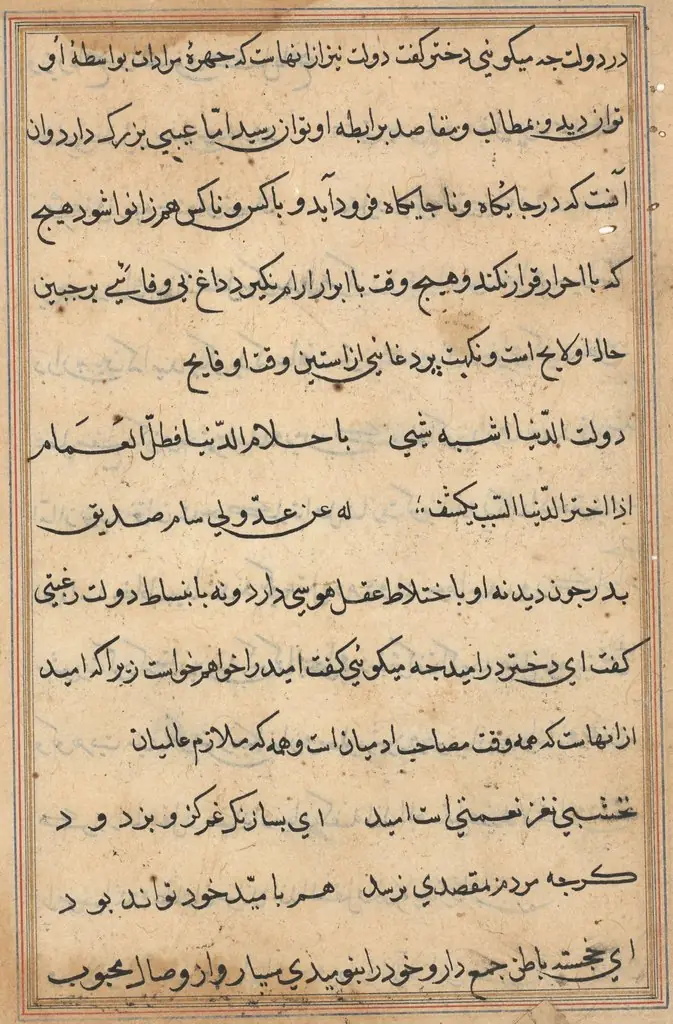
Page from Tales of a Parrot (Tuti-nama): text page
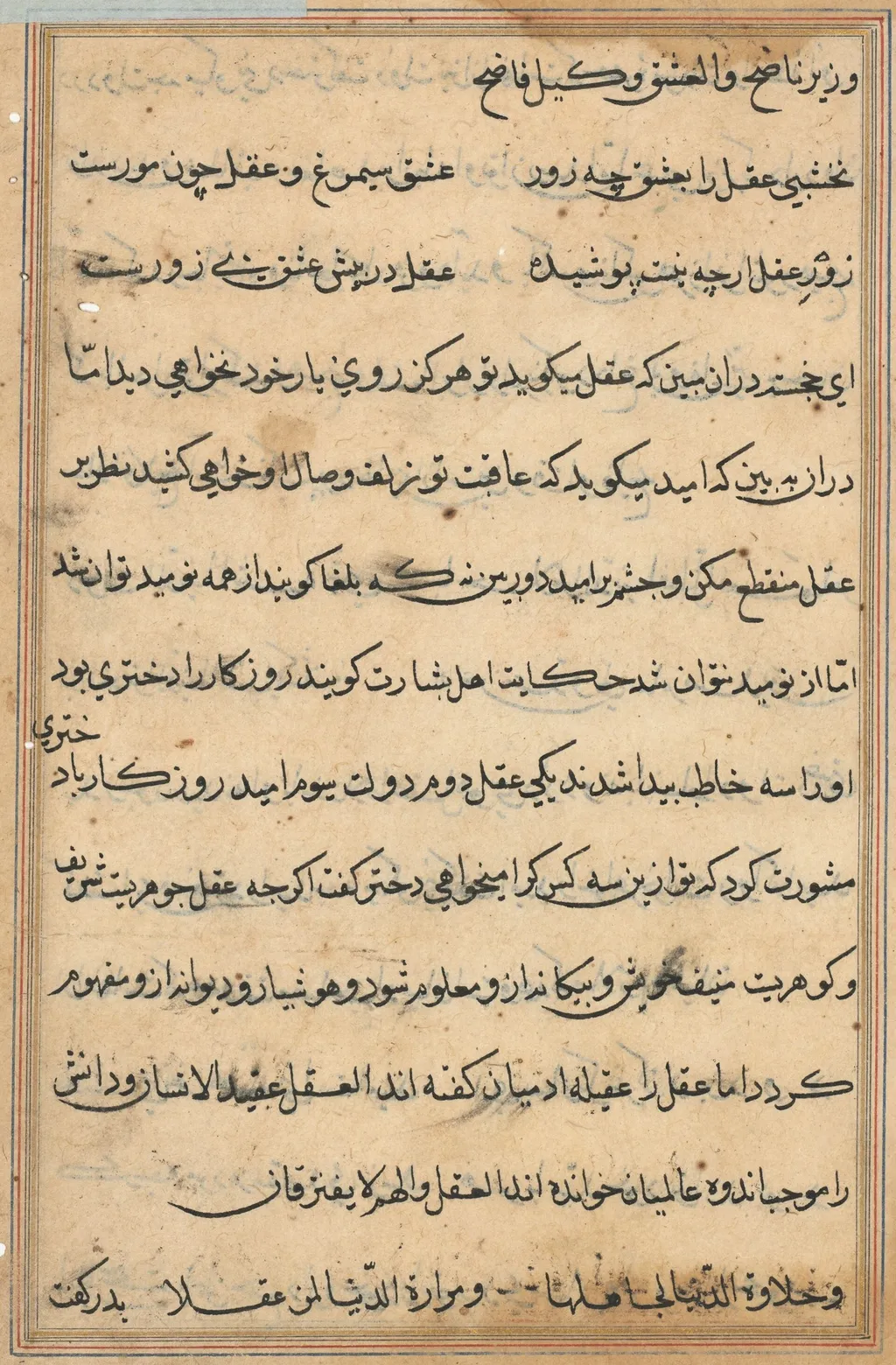
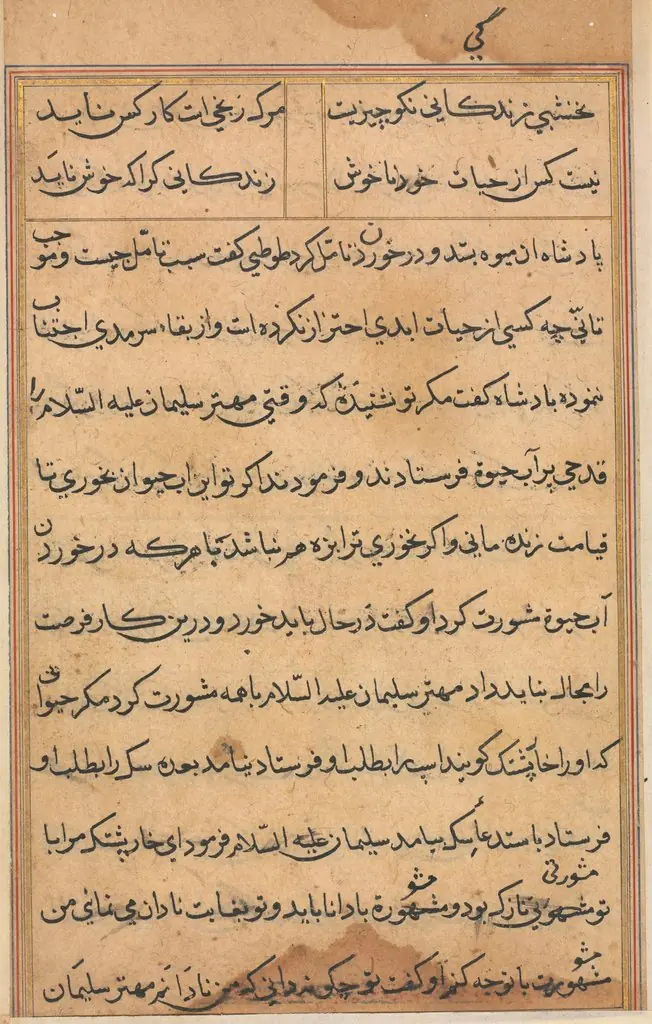
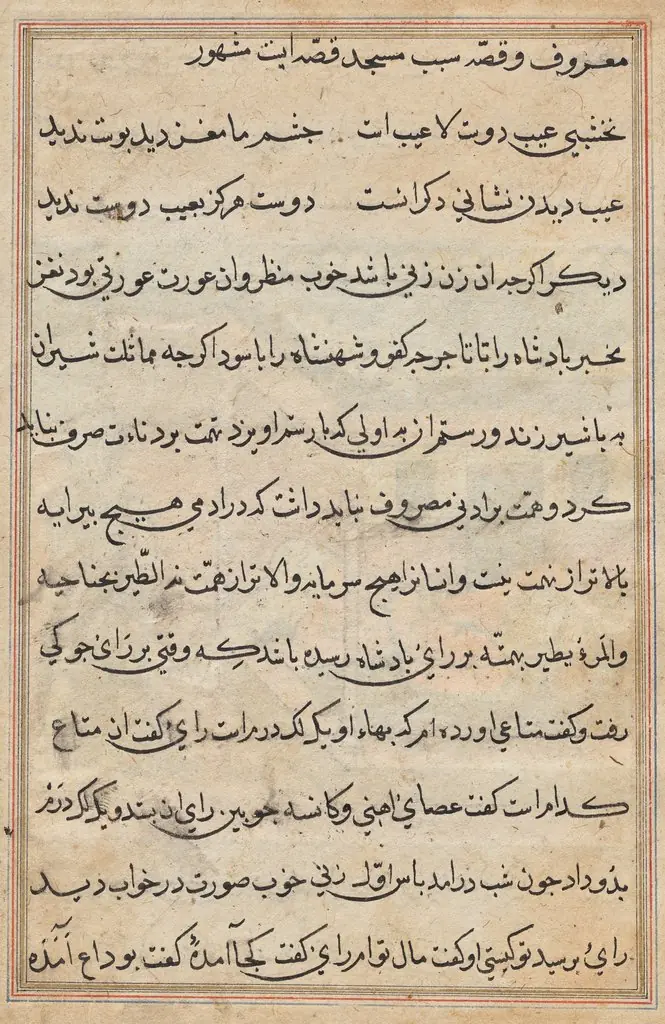
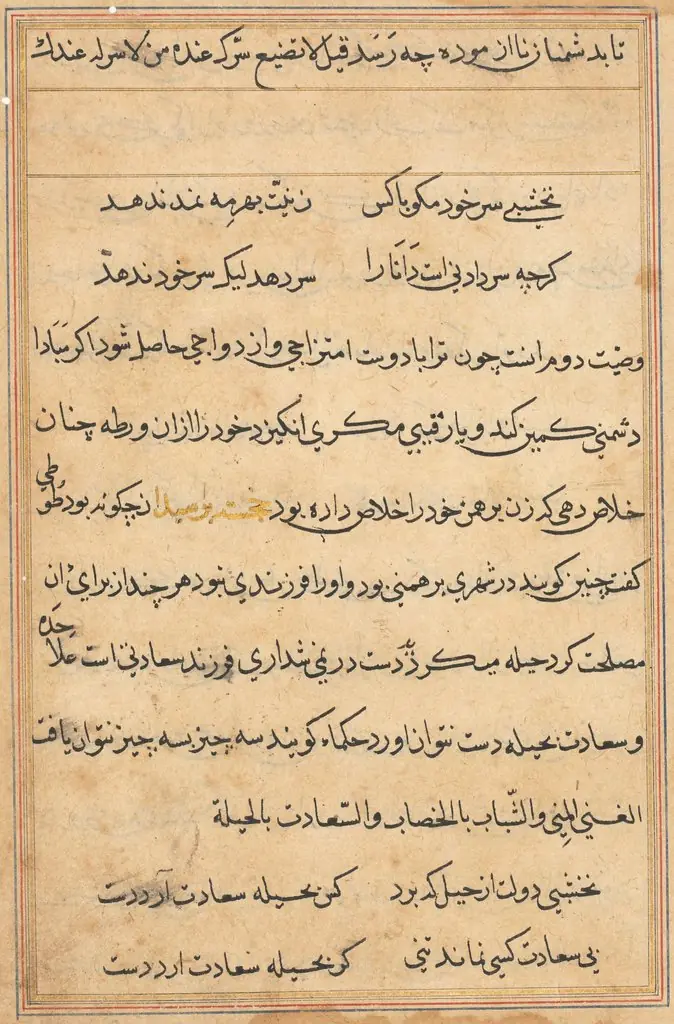
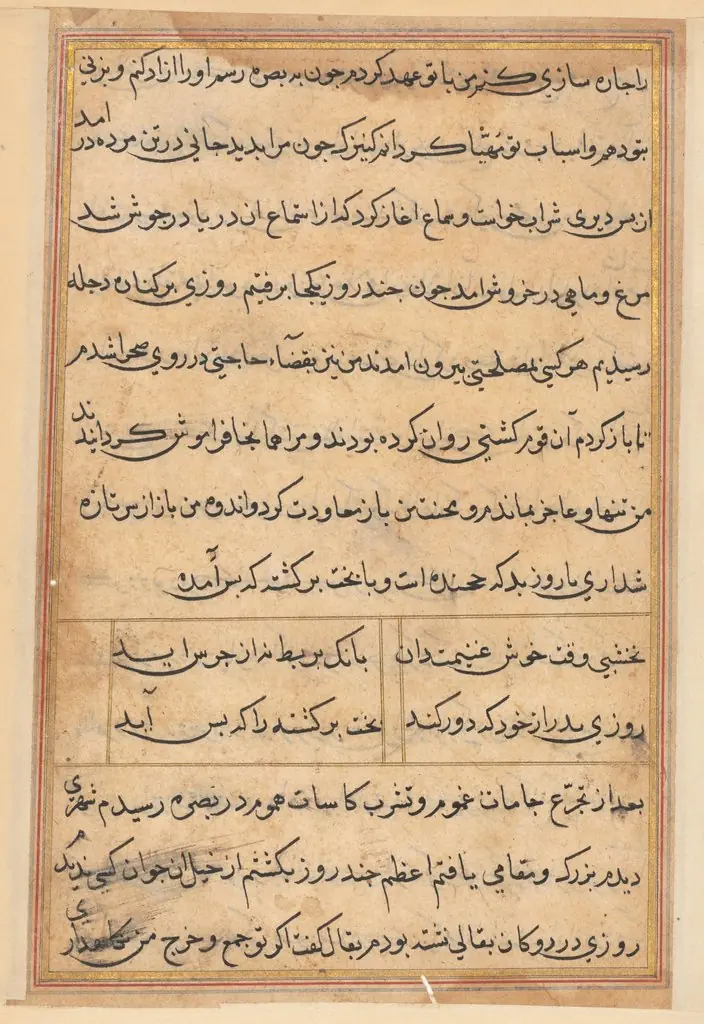
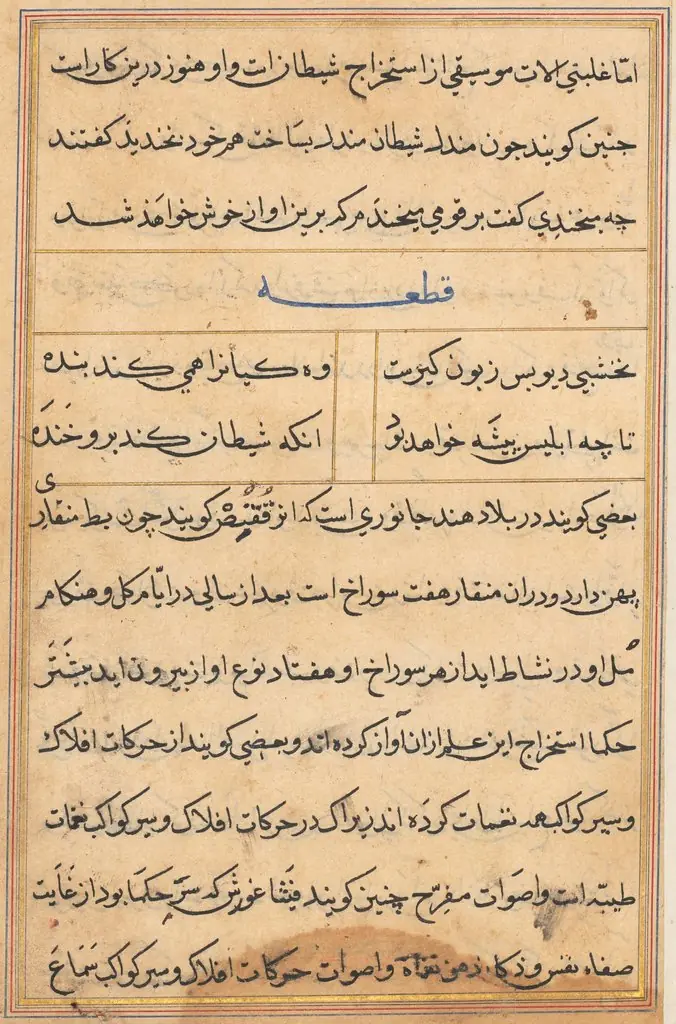
Page from Tales of a Parrot (Tuti-nama): text page is an unspecified painting. It dates from 1560 and is held in the collection of the Cleveland Museum of Art. The work presents a visual representation of a manuscript page from the Persian collection known as Tuti‑nama (Tales of a Parrot).
About this work
History & Provenance
The text page from the Tales of a Parrot (Tuti-nama), created in 1560, is held in the collection of the Cleveland Museum of Art in Cleveland.
The text page from the Tales of a Parrot (Tuti-nama), created in 1560, is held in the collection of the Cleveland Museum of Art in Cleveland. The work carries the accession number 1962.279.166.a, identifying it as a specific painting within the museum's holdings. Originating from the Mughal Empire, this folio has been cataloged under this inventory designation since its acquisition. No exhibition history is provided in the available records.
Context
The miniature originates from a 16th-century Persian manuscript produced in the Mughal imperial atelier, reflecting the syncretic artistic milieu of the era. Its creation in 1560 aligns with the reign of Akbar, when Persian narrative cycles such as the Tuti-nama were translated and illustrated for elite patrons in India. The work's stylistic traits, including delicate brushwork and naturalistic figure rendering, situate it within the broader trajectory of Indo-Persian painting that fused Safavid aesthetics with local traditions.
This piece is part of the Cleveland Museum of Art's collection, underscoring its significance in Western scholarship on South Asian art.
Critical reception has emphasized the manuscript's role in disseminating Sufi moral themes through illustrated text, while scholarly analyses highlight its contribution to understanding cross-cultural artistic exchange between Persia and the Indian subcontinent.
Overview
The work presents a visual representation of a manuscript page from the Persian collection known as Tuti‑nama (Tales of a Parrot). Rendered as a painted illusion, the image captures a single leaf of text rendered in black ink on a light‑colored background, framed by a thin red line and a broader blue border. The surface appears weathered, with faint stains and torn edges suggesting age.
Subject & Meaning
The depicted page likely contains a narrative or poetic excerpt, typical of the Tuti‑nama tradition that blends moral instruction with whimsical storytelling. While the precise content remains unreadable, the presence of underlined passages highlighted in blue hints at emphasis on particular verses, perhaps indicating moral or didactic focal points within the larger tale.
Technique & Style
Executed with meticulous brushwork, the artist reproduces the calligraphic script in a fluid, flowing hand, preserving the original ink density and line quality. The composition balances the stark black text against a muted beige field, while the decorative borders, thin red and thicker blue, add a modest chromatic contrast. Subtle shading conveys the texture of aged paper, including stains and ragged edges.
Artist & collection

 Page from Tales of a Parrot (Tuti-nama): text page
 Page from Tales of a Parrot (Tuti-nama): text page
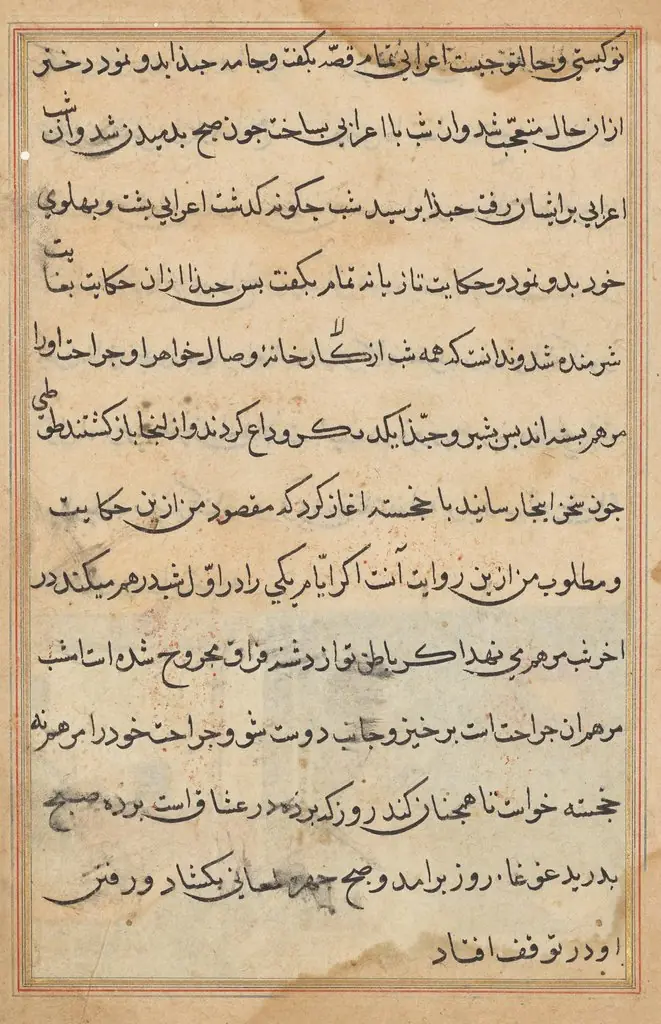 Page from Tales of a Parrot (Tuti-nama): text page
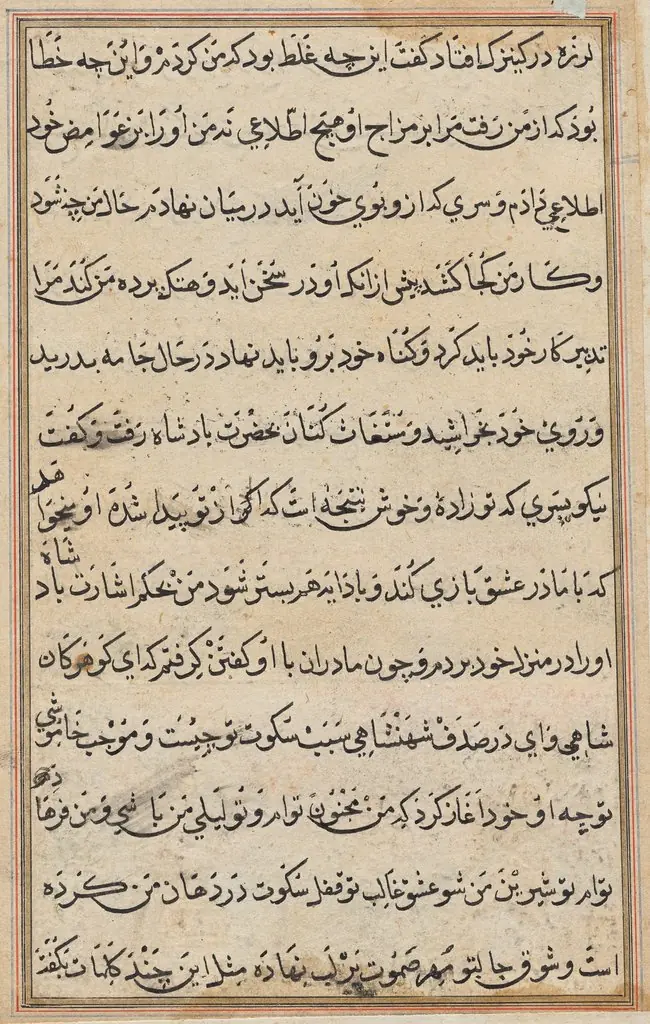 Page from Tales of a Parrot (Tuti-nama): text page
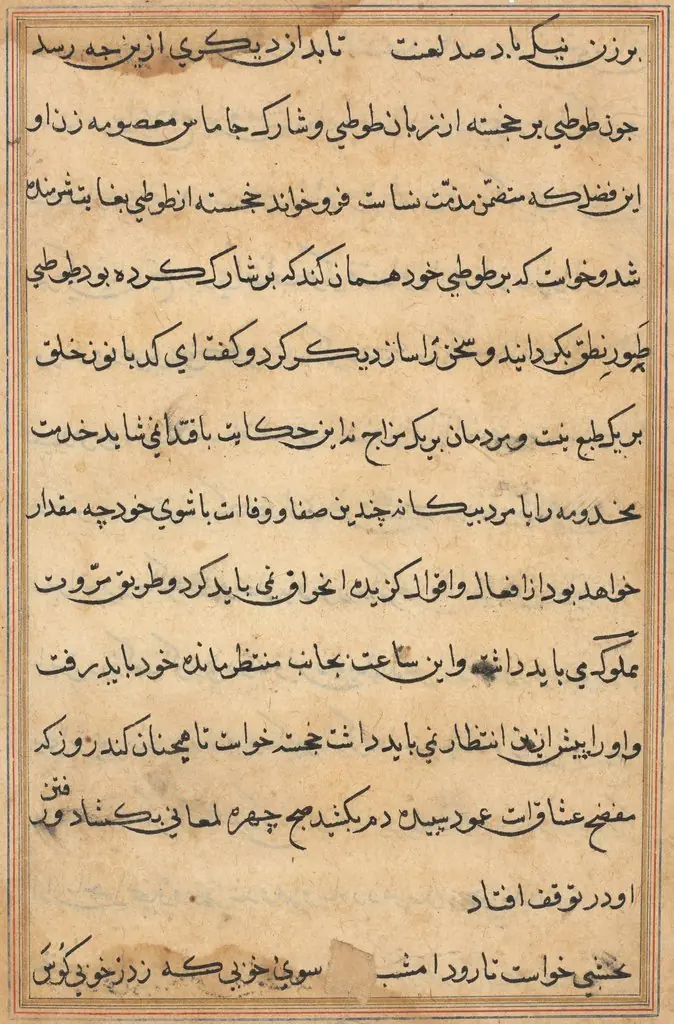 Page from Tales of a Parrot (Tuti-nama): text page
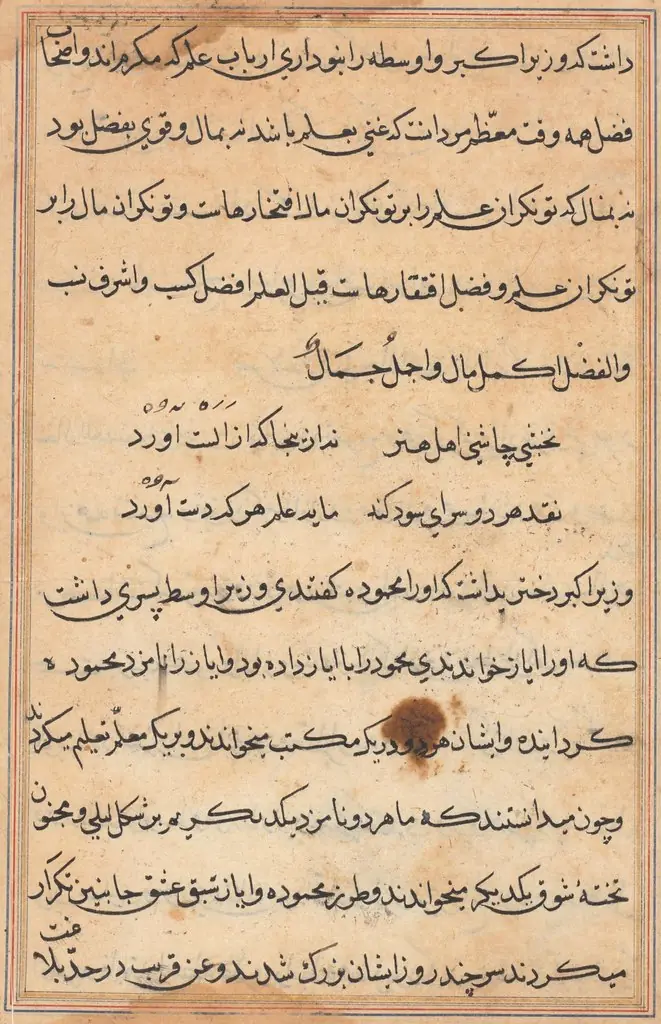 Page from Tales of a Parrot (Tuti-nama): text page
 Page from Tales of a Parrot (Tuti-nama): text page