Artwork
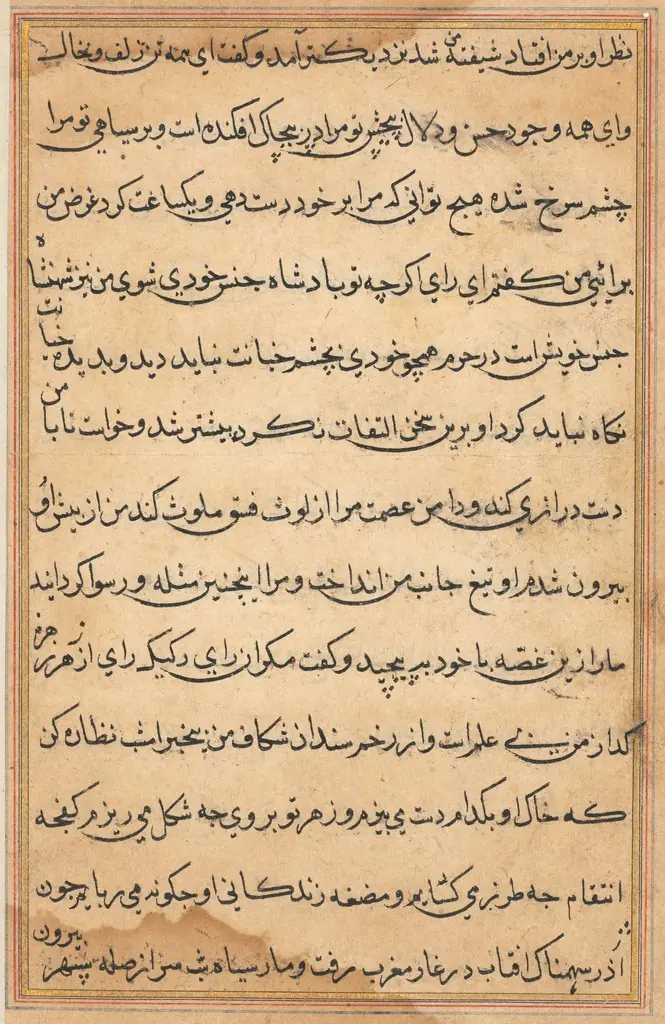
Page from Tales of a Parrot (Tuti-nama): text page
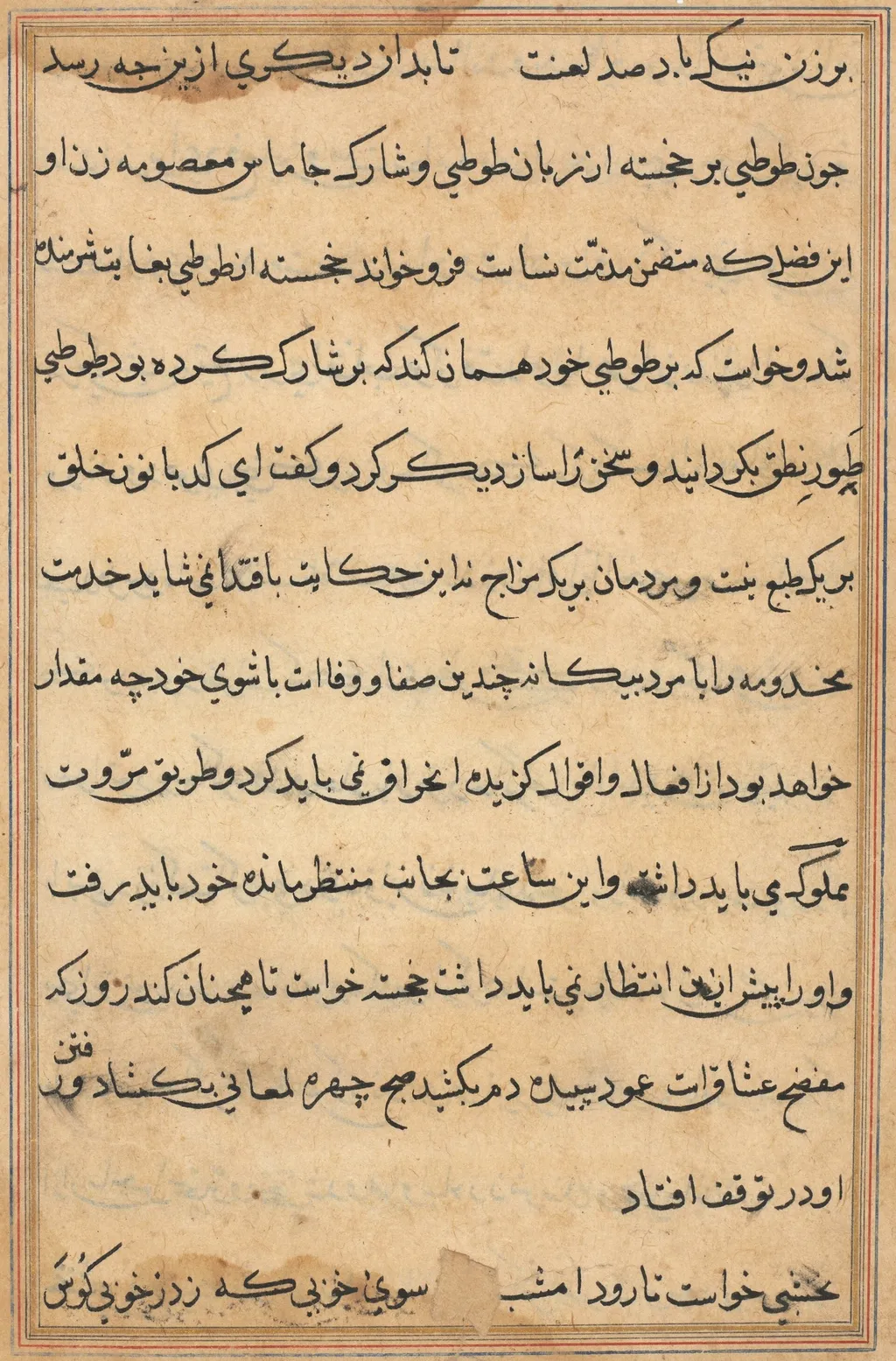
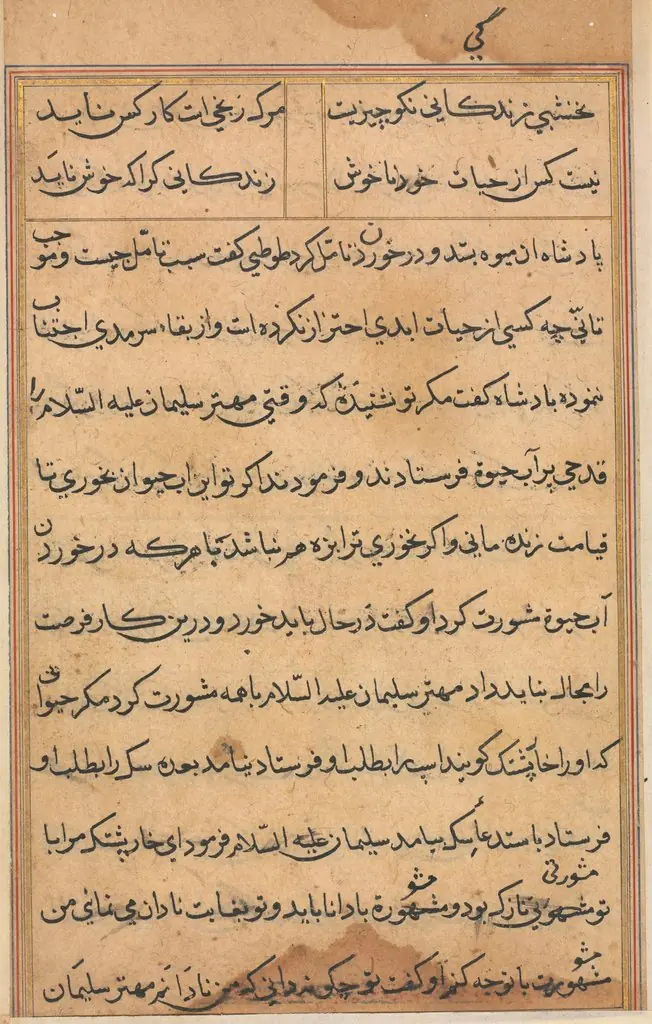
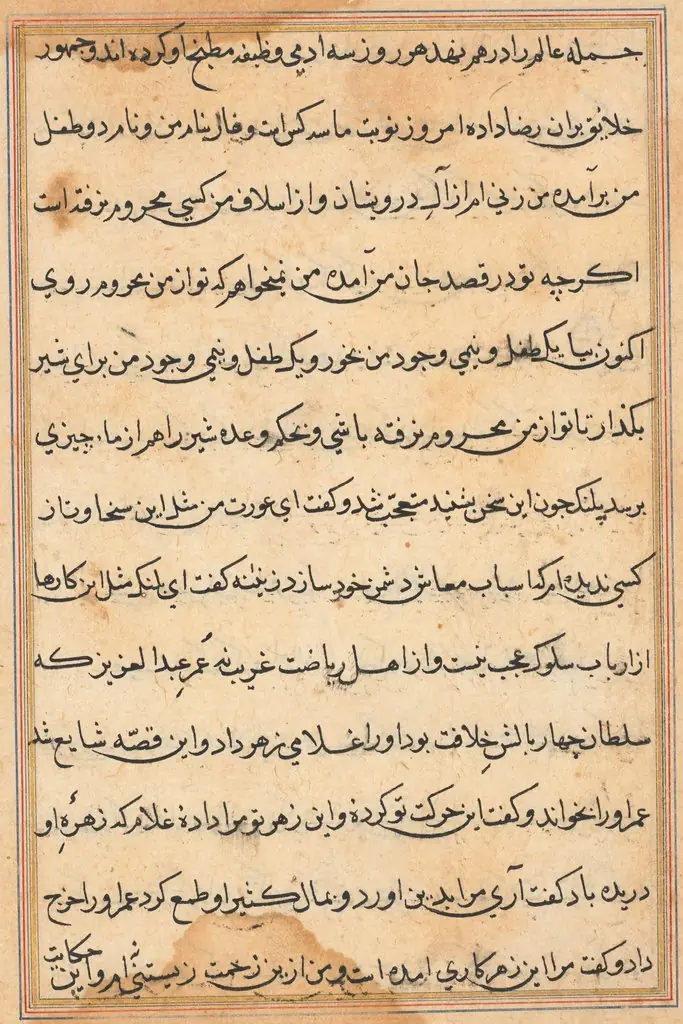
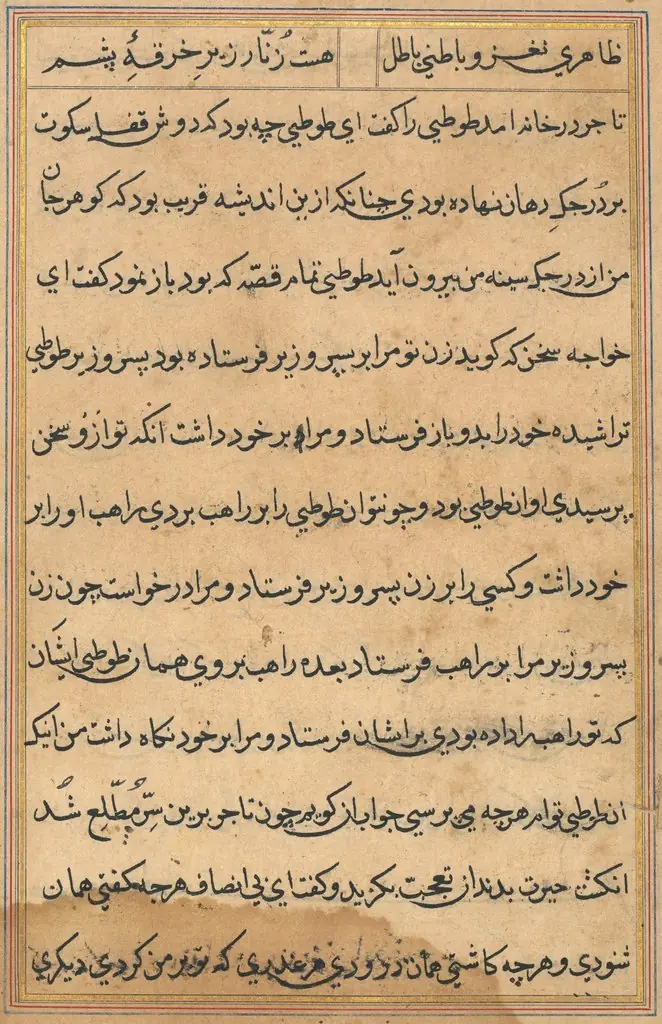
Page from Tales of a Parrot (Tuti-nama): text page is an unspecified painting. It dates from 1560 and is held in the collection of the Cleveland Museum of Art. The object is a single folio from the illustrated manuscript Tales of a Parrot (Tuti‑nama).
About this work
History & Provenance
The work was produced as part of the larger manuscript tradition commissioned during the Mughal period, specifically dating to the mid-16th century.
Created in 1560 within the Mughal Empire, this text page from the Tales of a Parrot (Tuti-nama) is attributed to an unknown artist. The work was produced as part of the larger manuscript tradition commissioned during the Mughal period, specifically dating to the mid-16th century. It is currently held in the collection of the Cleveland Museum of Art, where it is cataloged under the accession number 1962.279.178.b. The manuscript's creation reflects the artistic developments of the Mughal court during this era.
The work is held in the Cleveland Museum of Art, where it forms part of the museum’s permanent collection. It is catalogued under the accession number 1962.279.178.b.
No exhibition history for this specific folio is documented in the available sources.
Overview
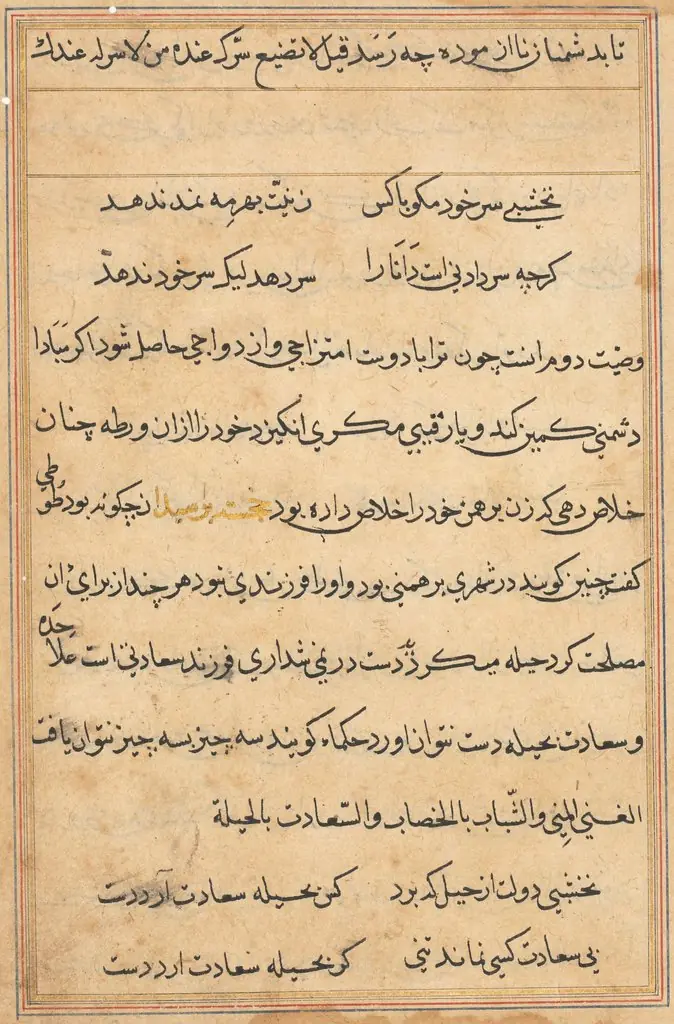
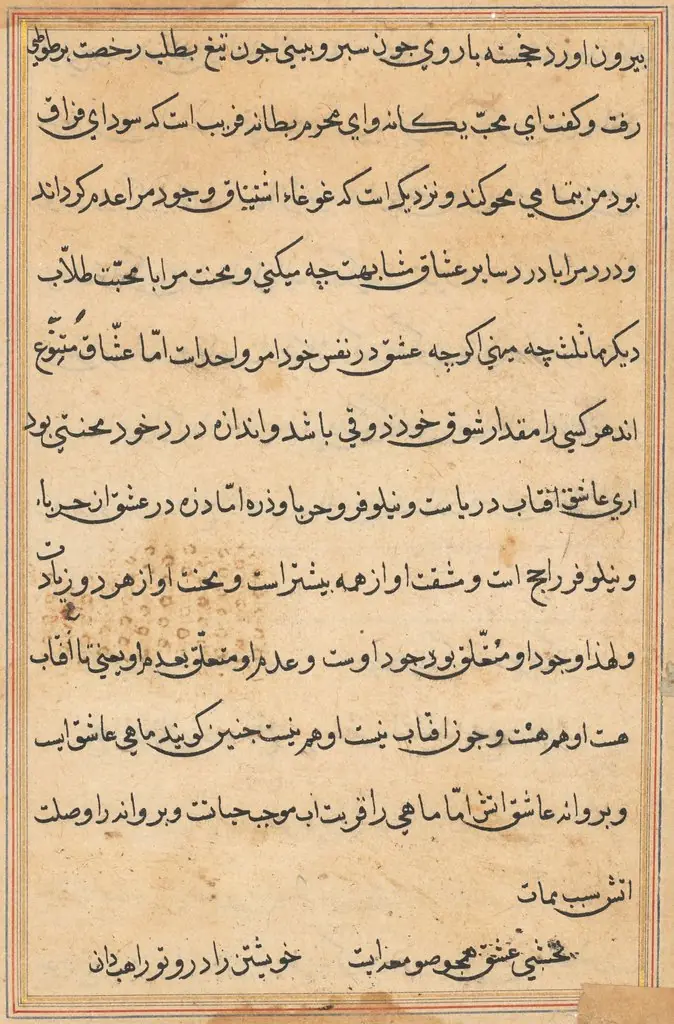
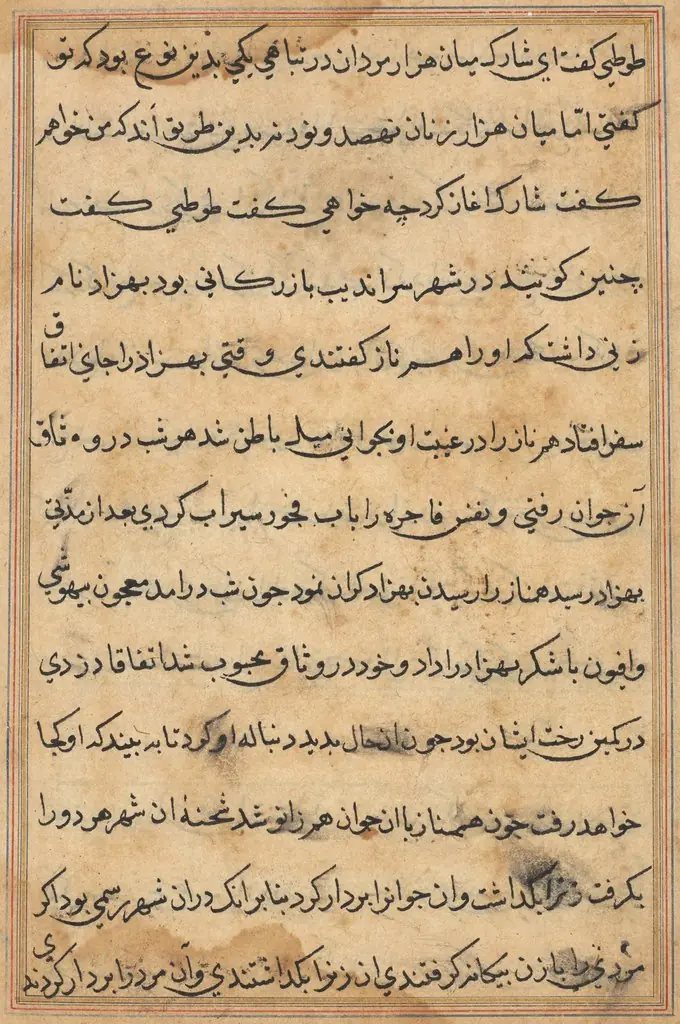
The object is a single folio from the illustrated manuscript Tales of a Parrot (Tuti‑nama). Executed on aged paper, the page is densely filled with black calligraphic script arranged in tight, orderly rows that sweep across the surface. A subtle red border outlines the margin, and occasional blue highlights accent the black ink, adding a faint chromatic contrast.
Subject & Meaning
The text presents a portion of the Tuti‑nama, a collection of moral and romantic stories traditionally addressed to Prince Salim. The narrative content, though not visible in the description, would have conveyed ethical lessons or courtly tales intended for the prince’s education and entertainment.
Technique & Style
The calligraphy displays a precise hand, with each line rendered in a flowing, vine‑like rhythm that maximizes the use of space. The script’s uniform density reflects a disciplined scribal practice, while the selective use of blue pigment provides a subtle visual hierarchy within the black ink.
Context
Manuscript production in this era combined literary and artistic expertise, with scribes and painters collaborating to produce richly decorated texts. The Tuti‑nama belongs to a broader tradition of Persian‑influenced storytelling manuscripts that circulated among elite audiences across South Asia.
Artist & collection

- Page from Tales of a Parrot (Tuti-nama): text page
 Page from Tales of a Parrot (Tuti-nama): text page
 Page from Tales of a Parrot (Tuti-nama): text page
 Page from Tales of a Parrot (Tuti-nama): text page
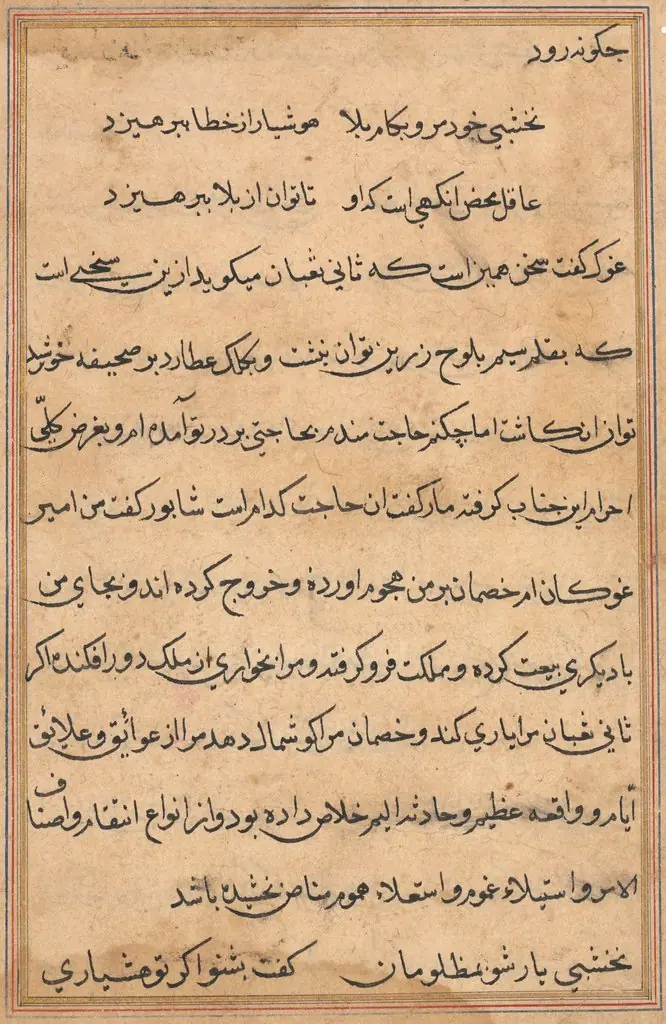 Page from Tales of a Parrot (Tuti-nama): text page
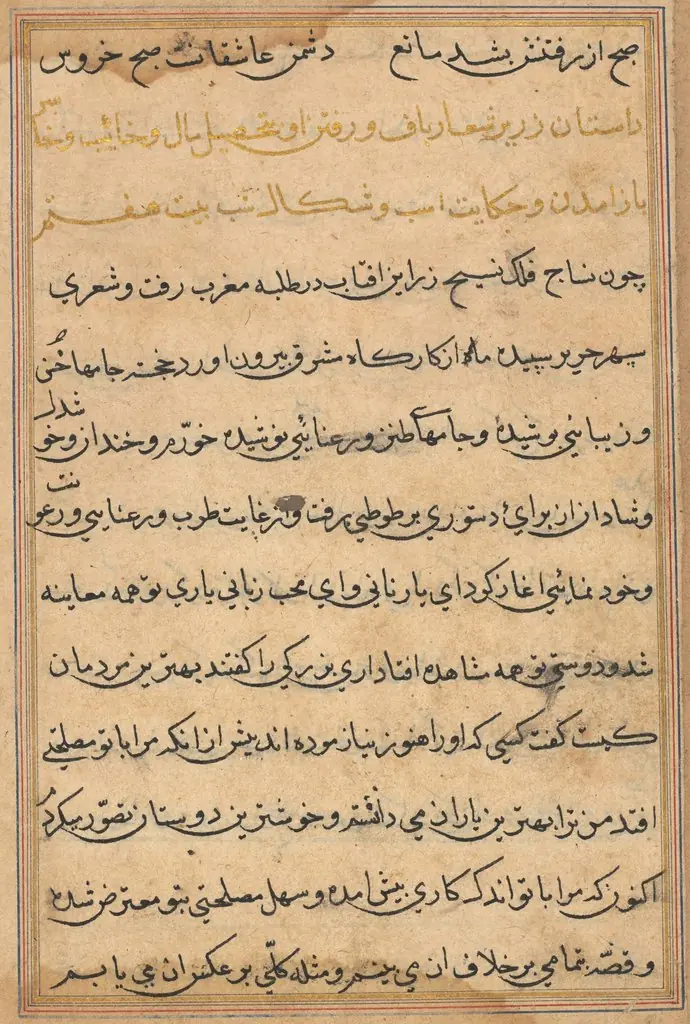 Page from Tales of a Parrot (Tuti-nama): text page
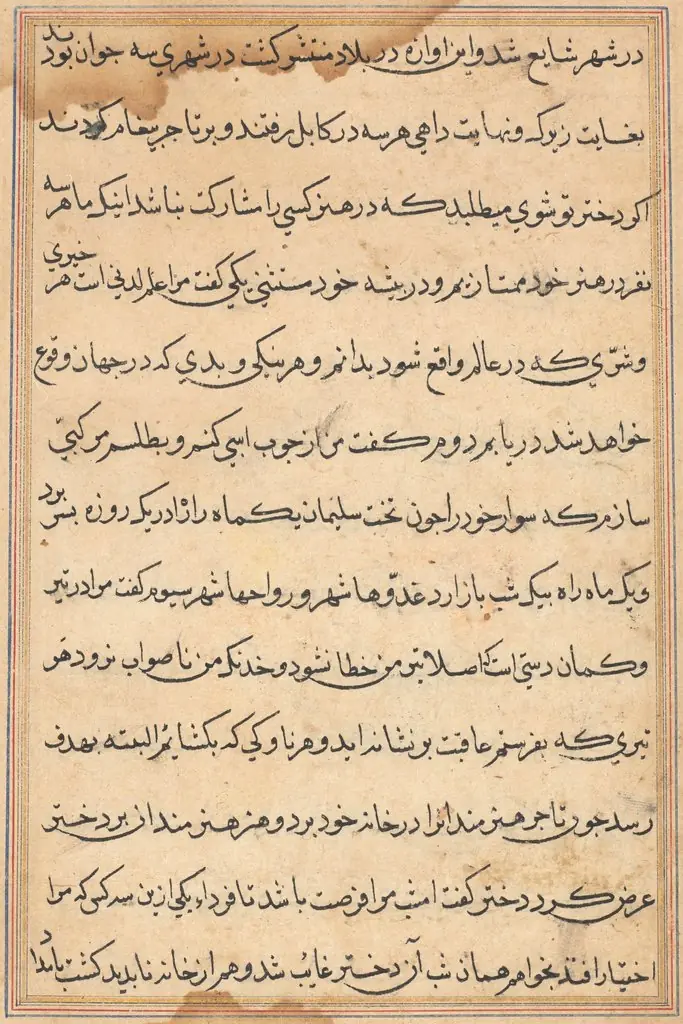 Page from Tales of a Parrot (Tuti-nama): text page
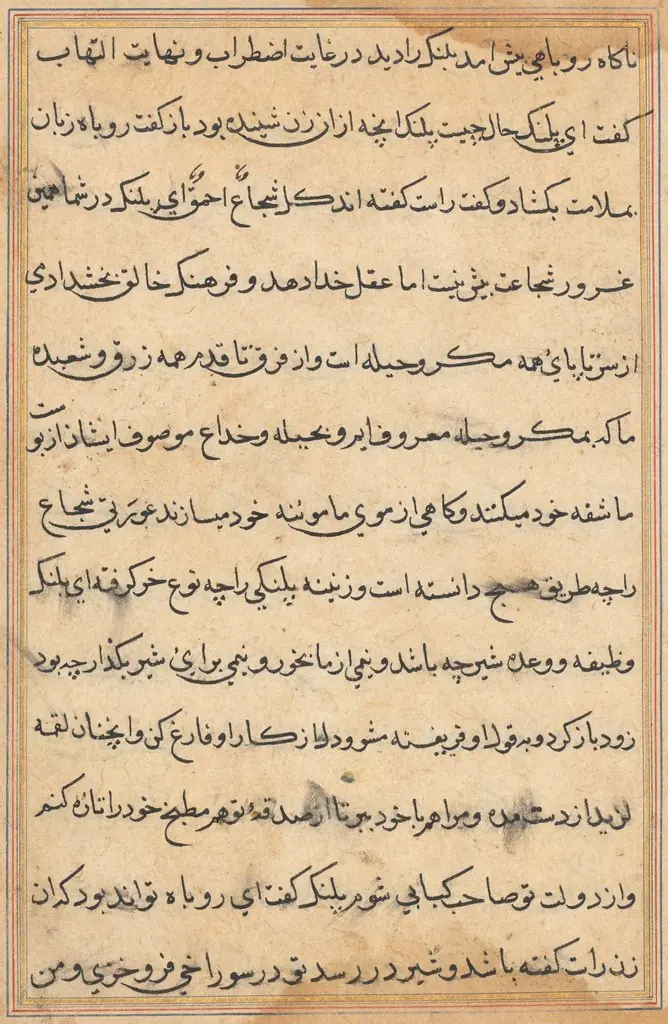 Page from Tales of a Parrot (Tuti-nama): text page
 Page from Tales of a Parrot (Tuti-nama): text page