Artwork
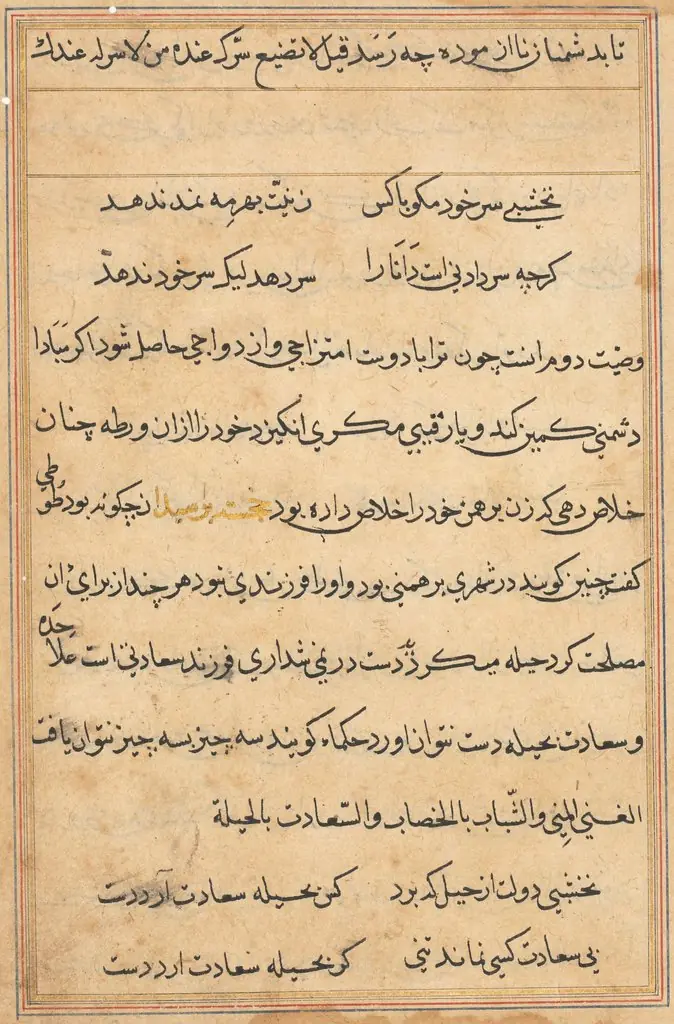
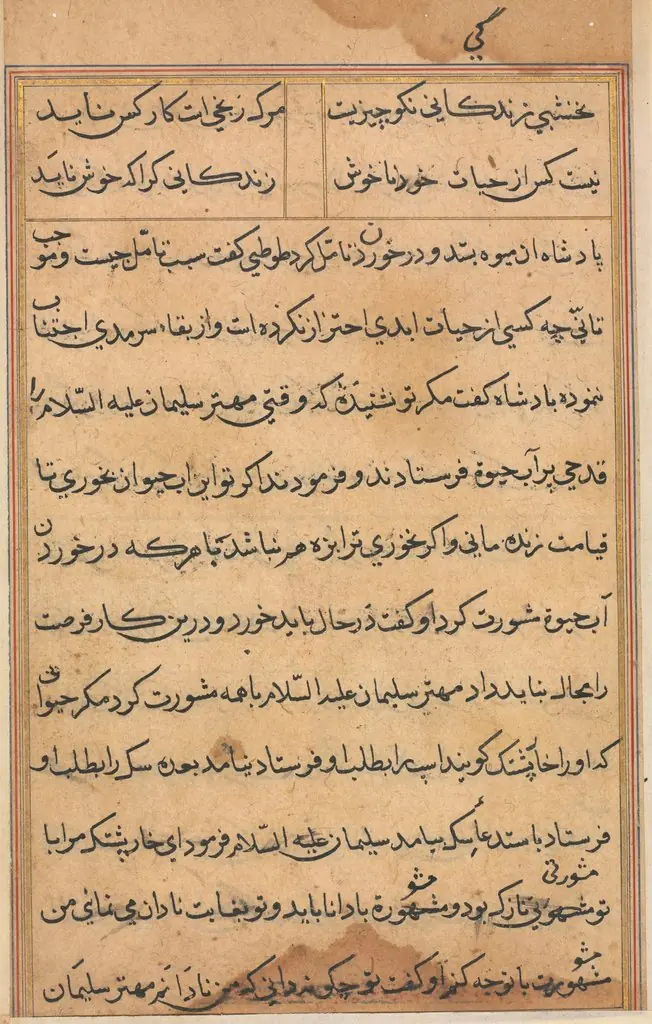
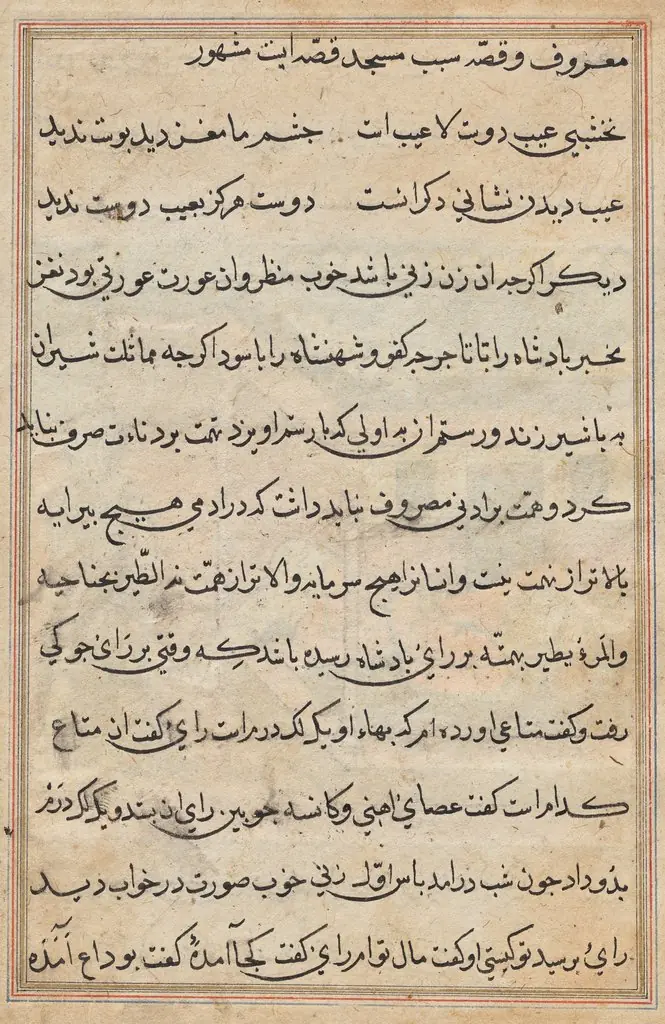
Page from Tales of a Parrot (Tuti-nama): text page
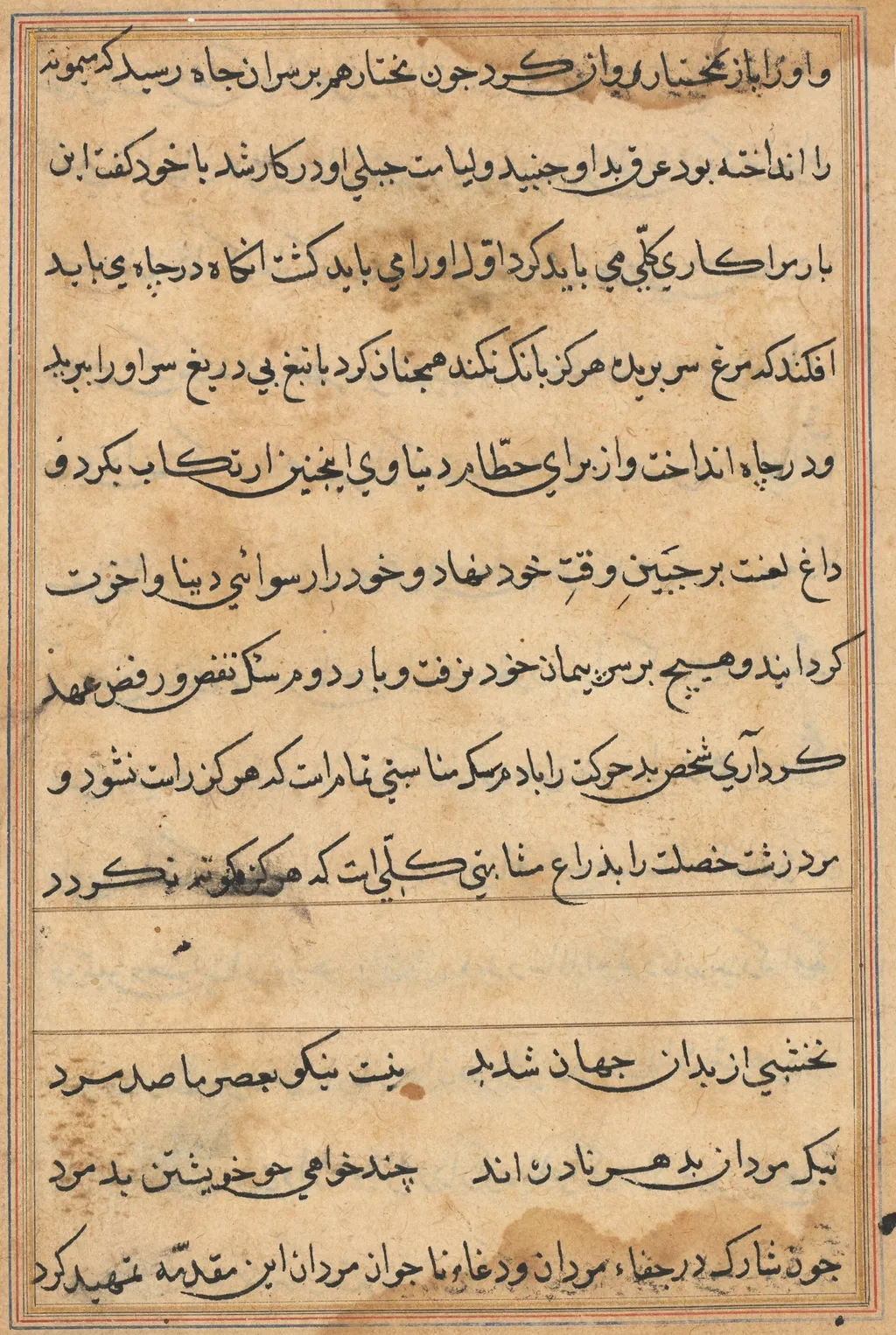
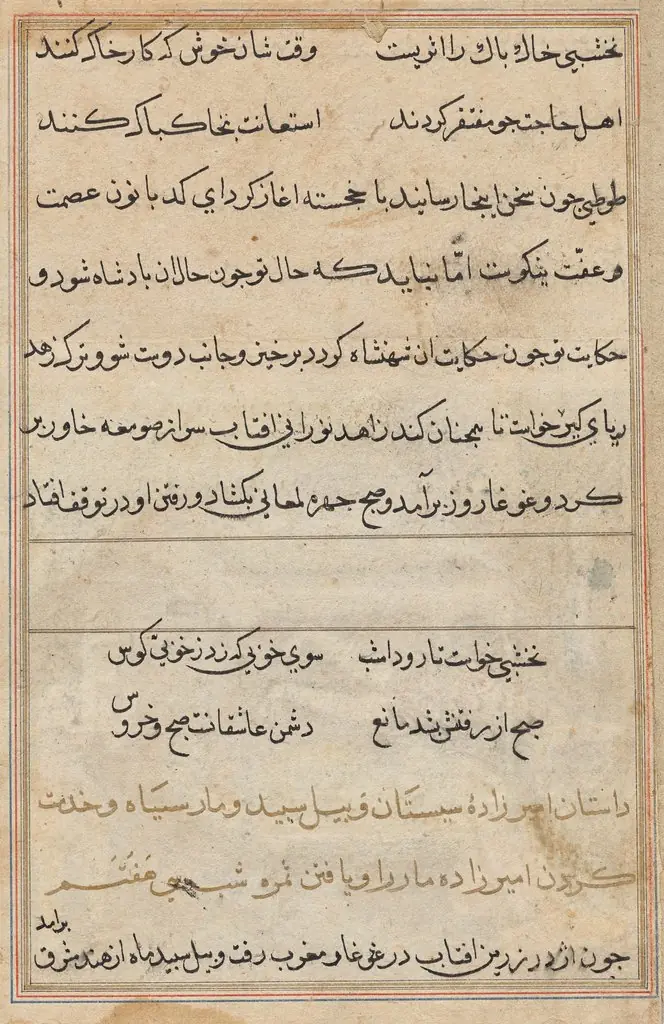
Page from Tales of a Parrot (Tuti-nama): text page is an unspecified painting. It dates from 1560 and is held in the collection of the Cleveland Museum of Art. This object is a single folio from the illustrated manuscript Tales of a Parrot (Tuti‑nama).
About this work
Subject & Meaning
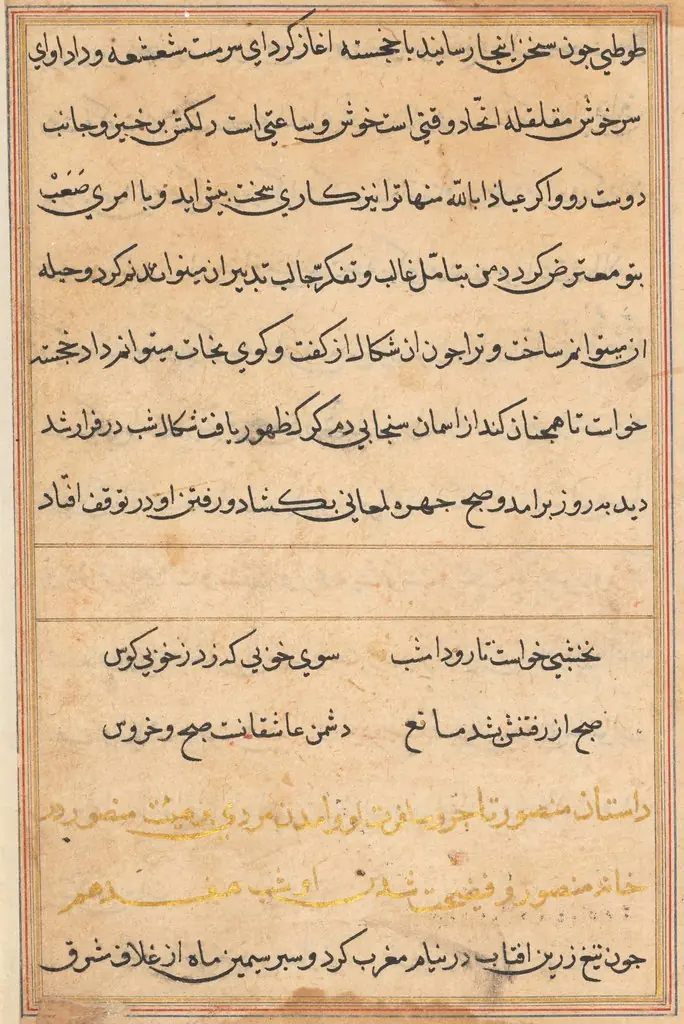
This folio from the Tuti-nama (Tales of a Parrot) is a text page rather than an illustrated scene, meaning its primary subject is the written narrative itself.
This folio from the Tuti-nama (Tales of a Parrot) is a text page rather than an illustrated scene, meaning its primary subject is the written narrative itself. The Tuti-nama is a Persian collection of moral and romantic stories told by a parrot to its mistress, Khujasta, to prevent her from meeting her lover while her husband is away. The text on this page advances the framing narrative or one of the embedded tales, reinforcing themes of loyalty, cunning, and the consequences of deception.
Symbolically, the parrot functions as a wise and articulate guide, embodying virtues such as prudence and rhetorical skill. The work's meaning lies in its didactic purpose, using storytelling to impart moral lessons, a tradition central to South Asian and Persian literary culture. The absence of visual iconography on this page directs focus to the written word as the vehicle for these allegorical teachings.
History & Provenance
This text page from the Tales of a Parrot (Tuti-nama) was created in 1560 within the Mughal Empire. The work is attributed to an unknown artist and forms part of the larger manuscript tradition. It is held by the Cleveland Museum of Art, accessioned as 1962.279.176.a, having entered the collection in 1962 as part of a larger acquisition of South Asian paintings.
The specific commission details and the chain of ownership prior to its acquisition by the museum are not detailed in the provided records.
Legacy
The text page from the Tuti-nama, produced in 1560 within the Mughal artistic milieu, exemplifies the integration of illustrated narrative with Persian miniature tradition, influencing later manuscript production across South and Central Asia through its stylized figuration and compositional balance, a legacy documented in scholarly assessments of Mughal manuscript culture and referenced in institutional collections such as the Cleveland Museum of Art, which holds a related folio and contextualizes its significance within transregional artistic exchange
Overview
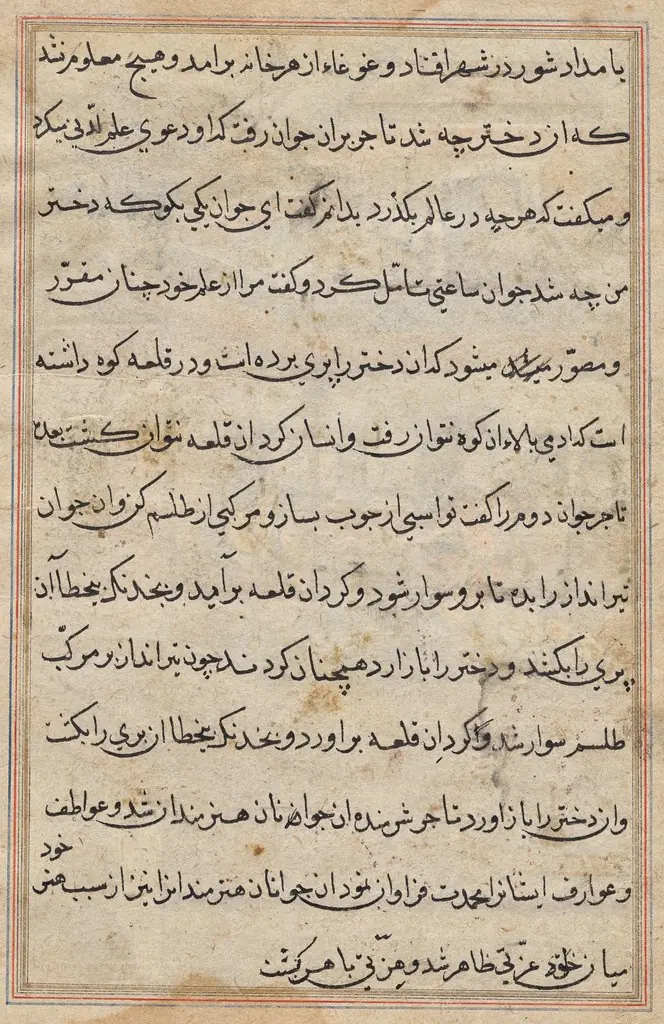
This object is a single folio from the illustrated manuscript Tales of a Parrot (Tuti‑nama). The page consists primarily of dense black calligraphic text, arranged in tight, orderly rows across the surface. A thin red line runs along the margin, framing the composition, while the paper itself shows the warm tones and minor brown stains characteristic of an aged document.
Technique & Style
The calligraphy is executed in black ink that varies in intensity, producing occasional bleed‑through and faded spots that reveal the hand of a skilled scribe. The lettering balances curvilinear strokes with angular accents, generating a visual cadence that mirrors the poetic flow of the text. A narrow red border, applied with pigment, delineates the page’s edge without detracting from the script.
Context
Manuscript production in the Mughal court blended Persian artistic traditions with indigenous Indian influences, resulting in richly illustrated texts. While this page contains only text, its elaborate calligraphic style and decorative border align with the broader aesthetic of illuminated manuscripts that accompanied royal patronage and education.
Artist & collection

- Page from Tales of a Parrot (Tuti-nama): text page
 Page from Tales of a Parrot (Tuti-nama): text page
 Page from Tales of a Parrot (Tuti-nama): text page
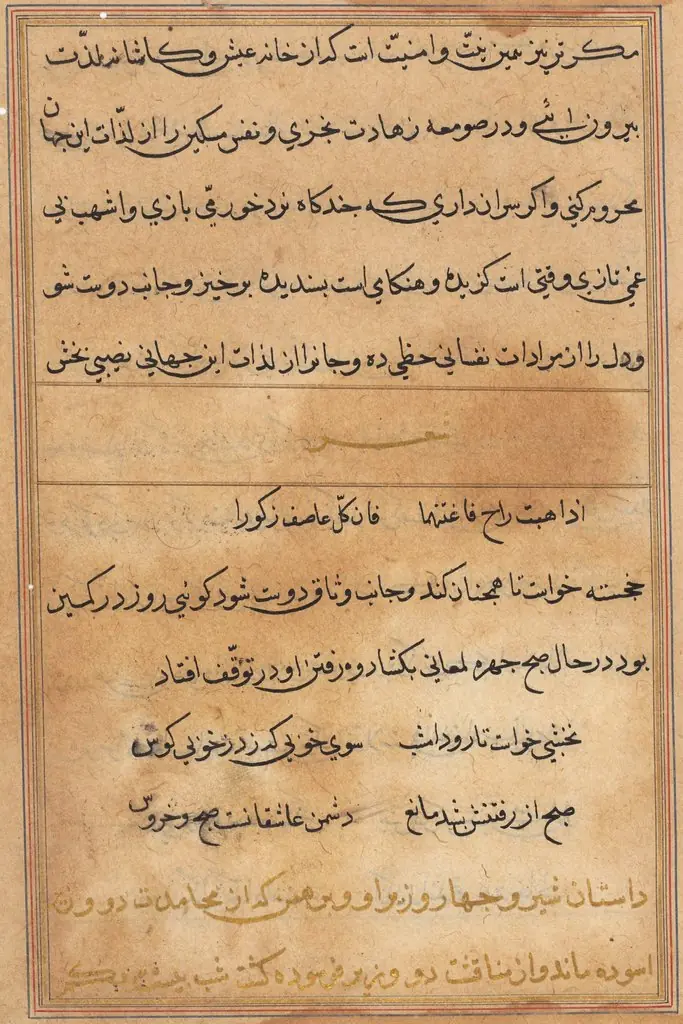 Page from Tales of a Parrot (Tuti-nama): text page
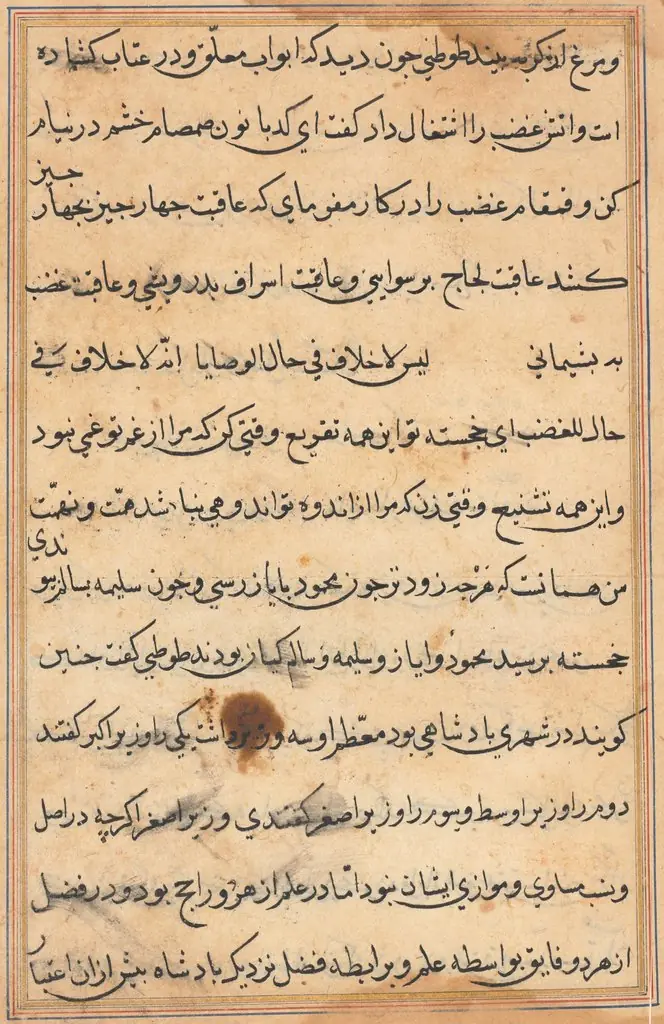 Page from Tales of a Parrot (Tuti-nama): text page
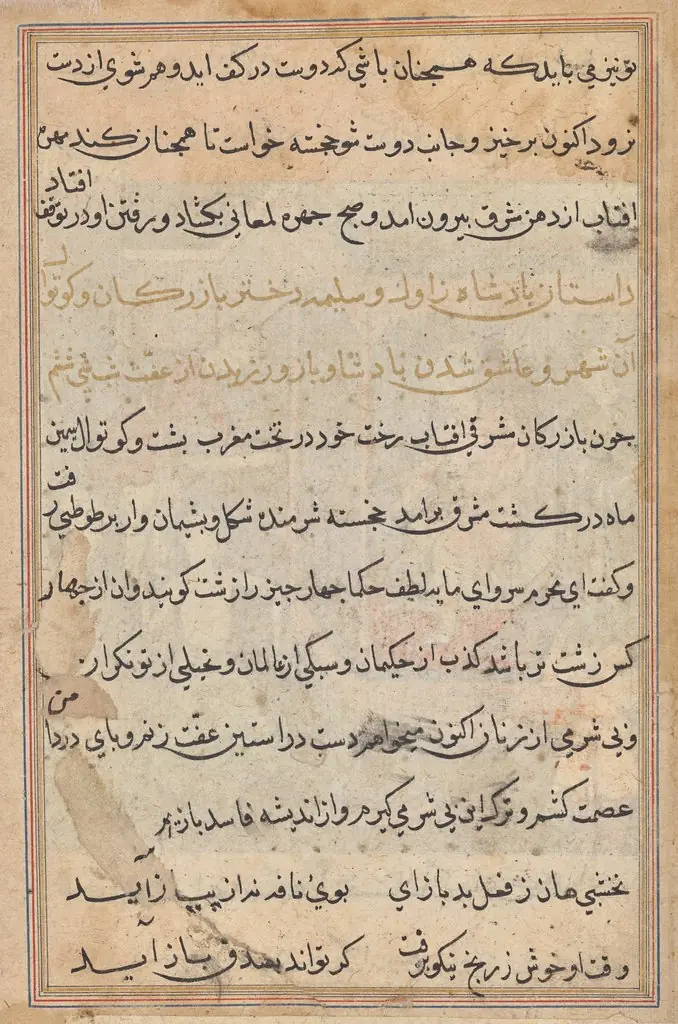 Page from Tales of a Parrot (Tuti-nama): text page
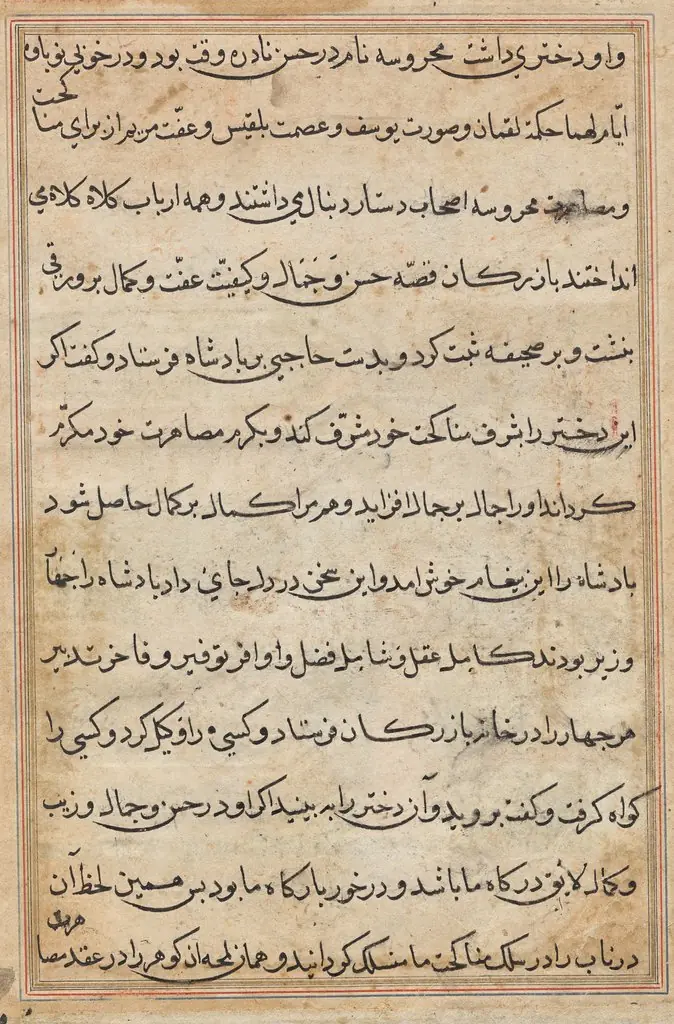 Page from Tales of a Parrot (Tuti-nama): text page
 Page from Tales of a Parrot (Tuti-nama): text page