Artwork
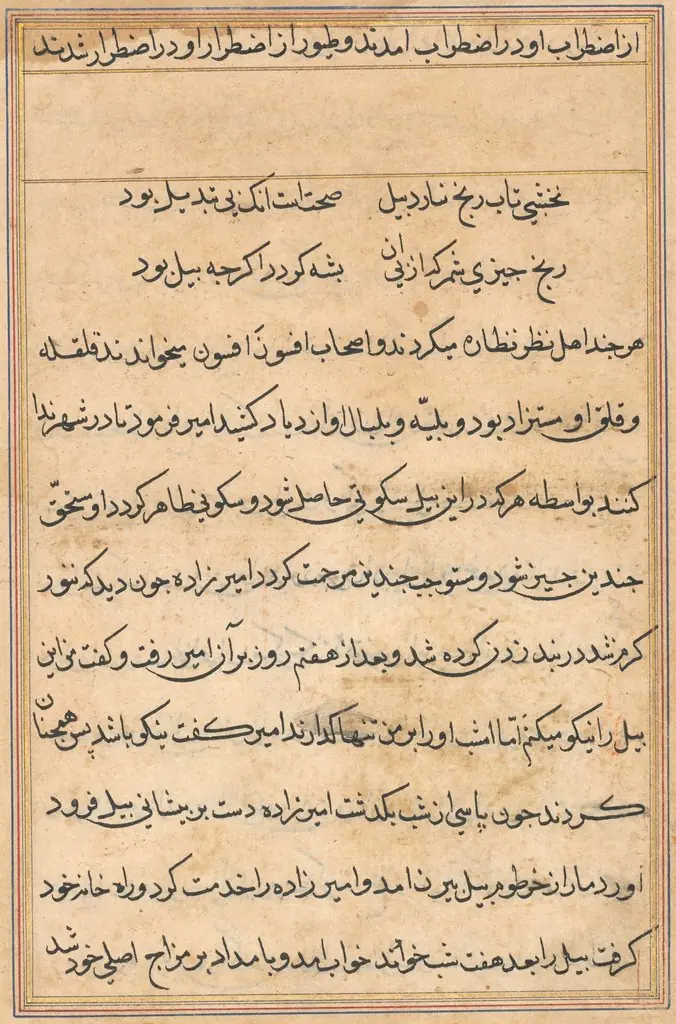
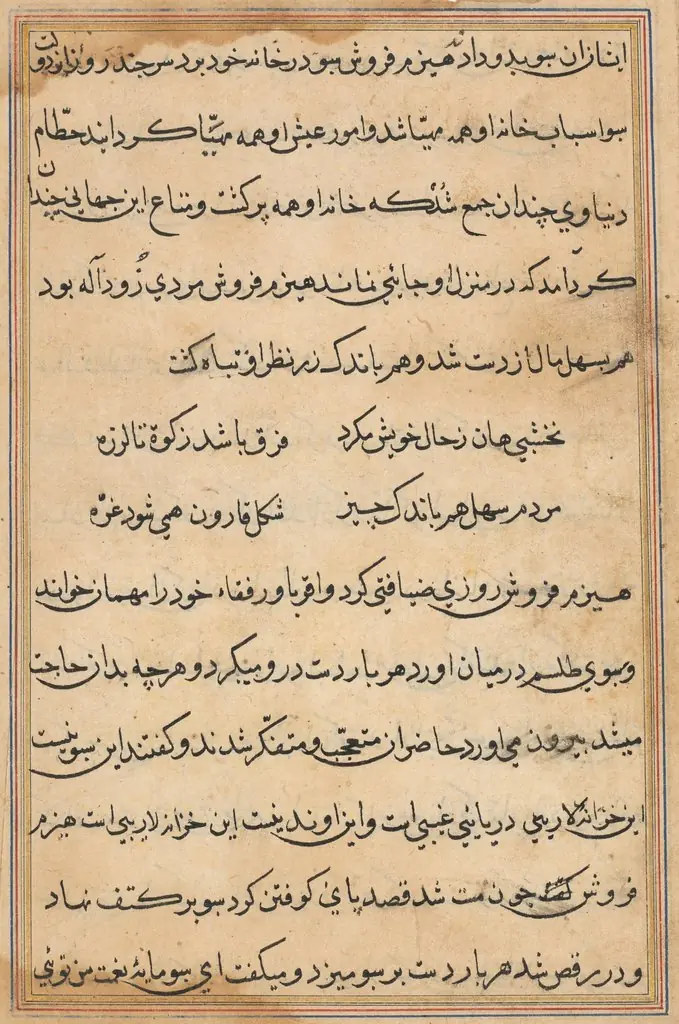
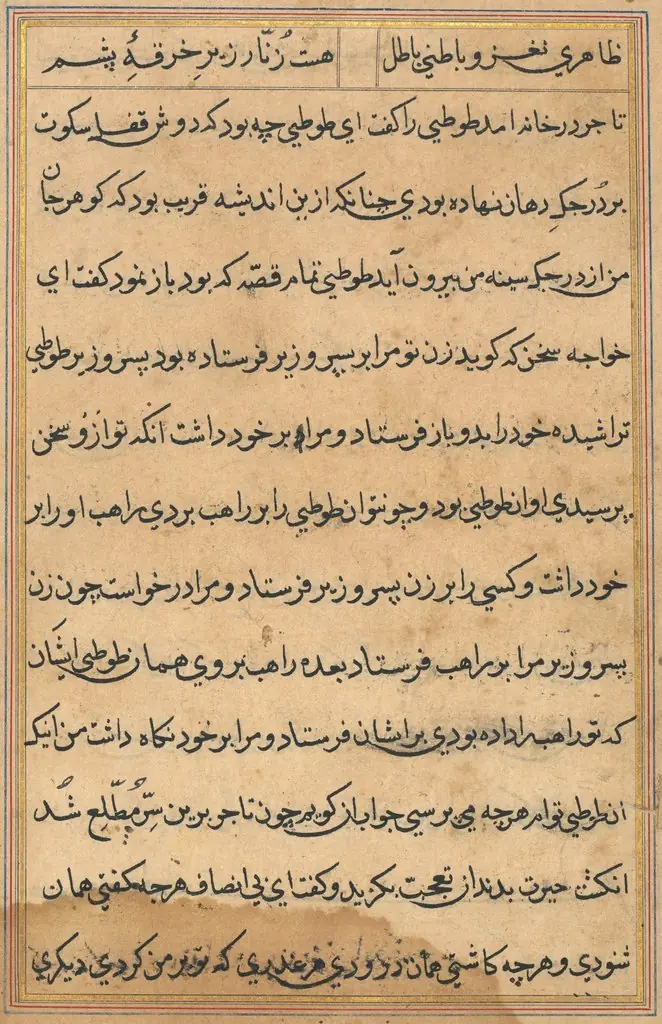
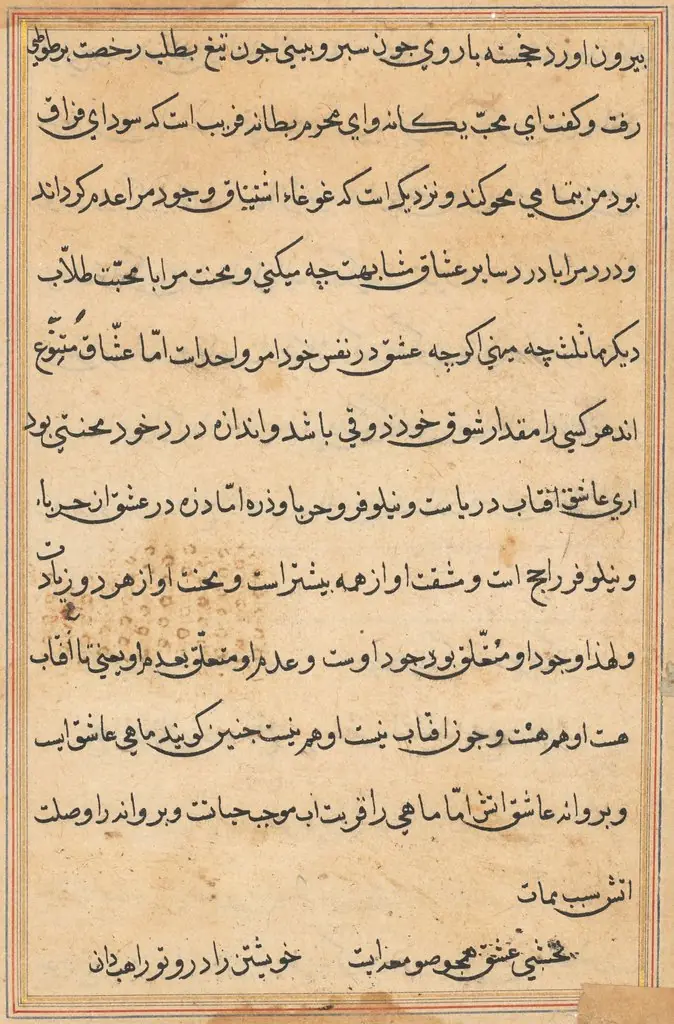
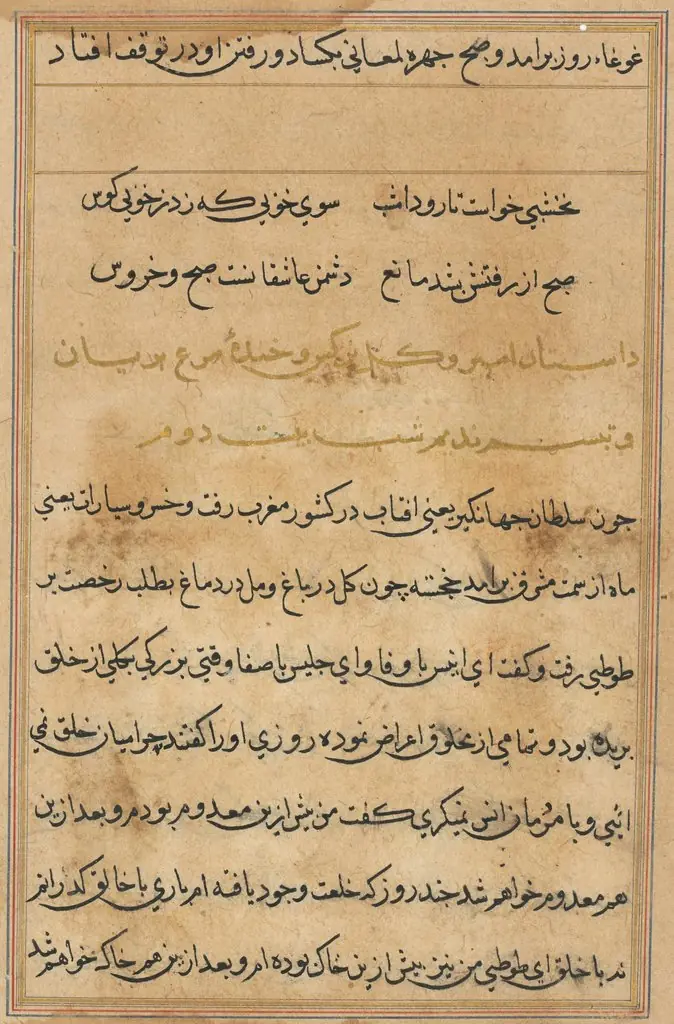
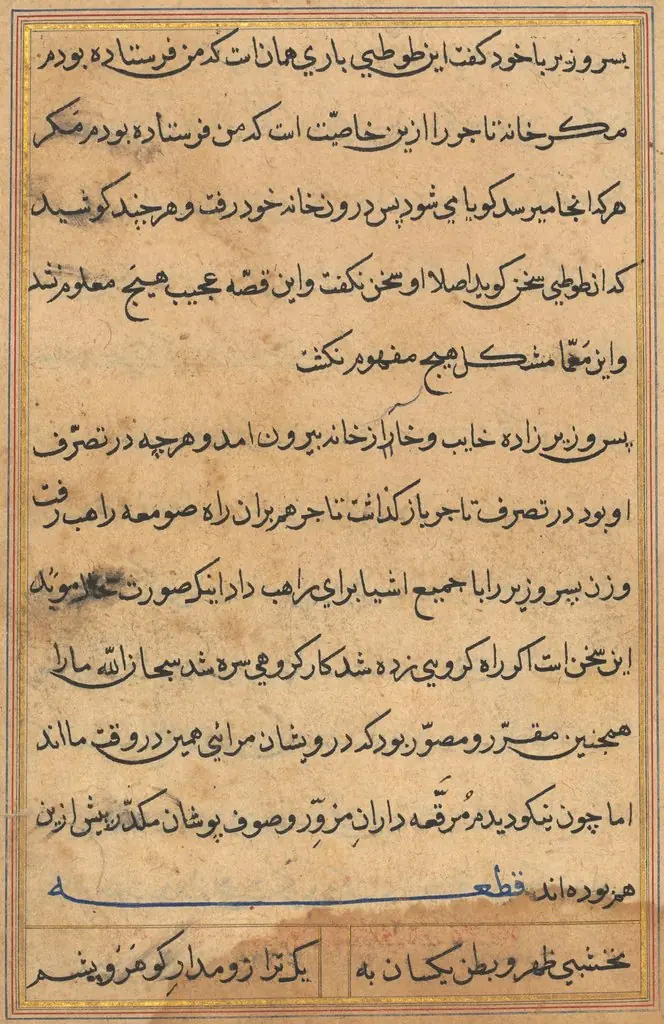
Page from Tales of a Parrot (Tuti-nama): text page
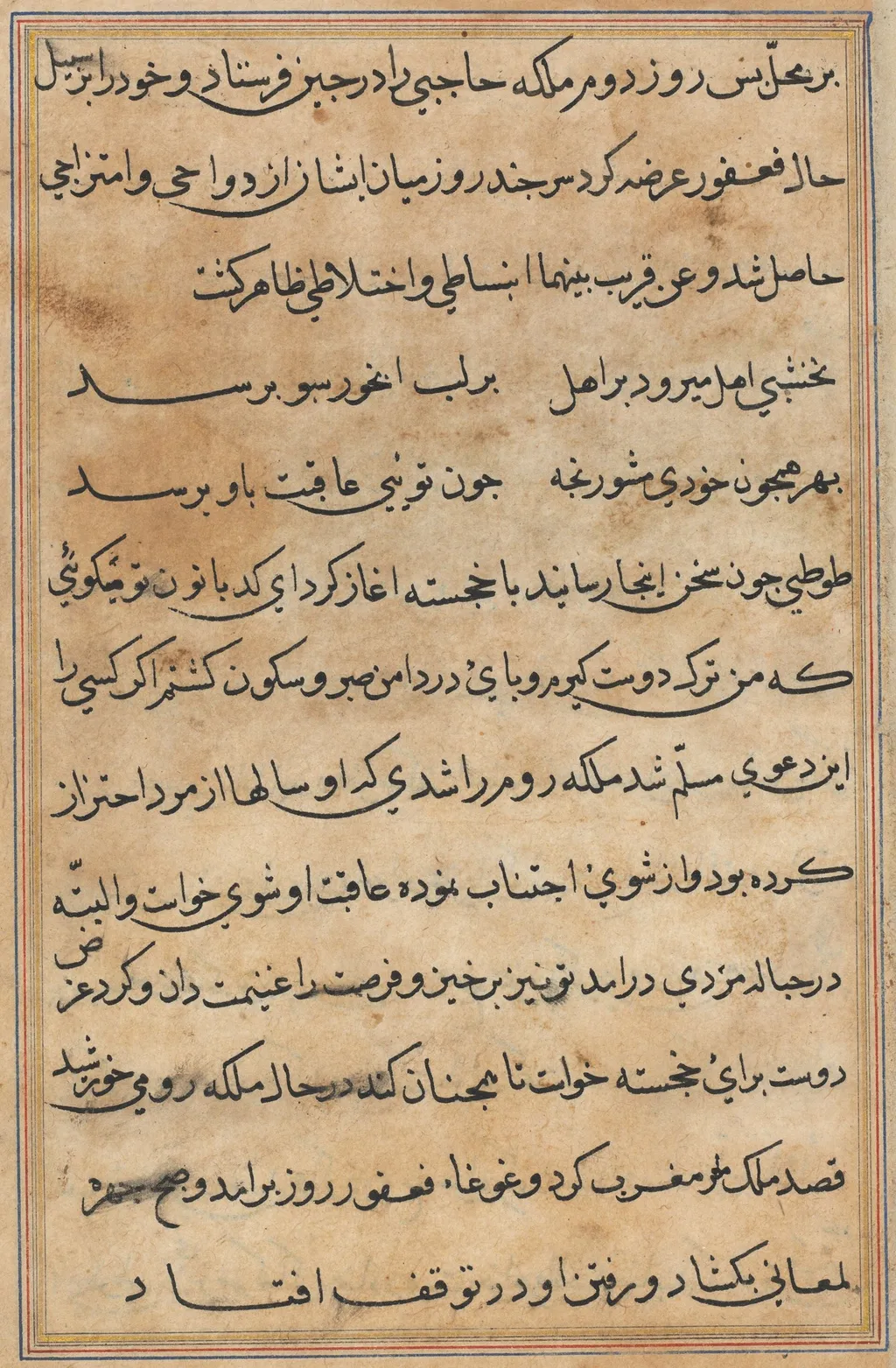
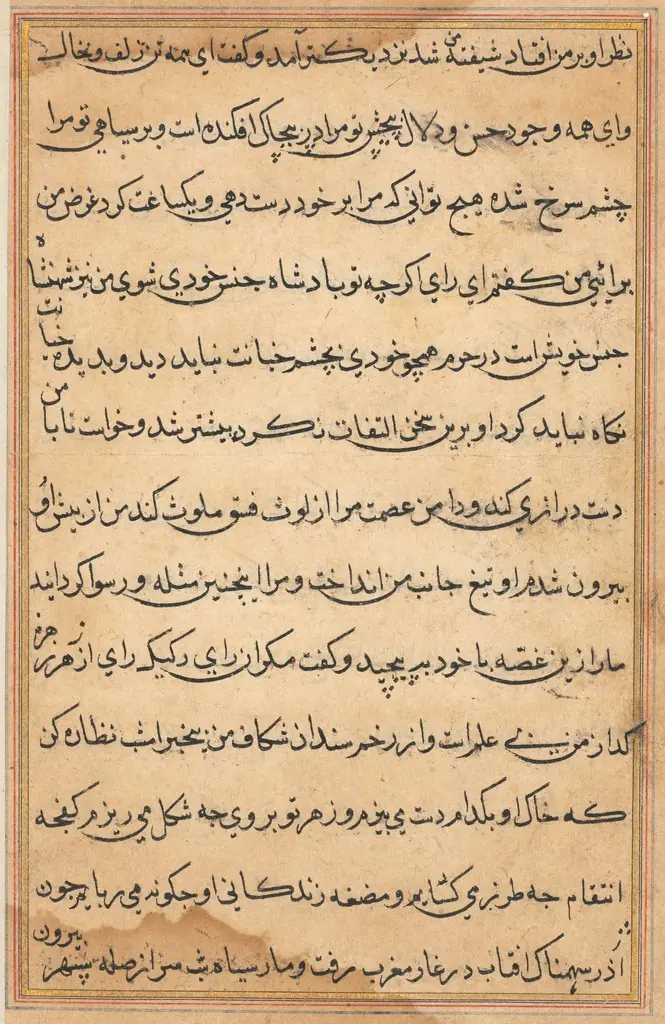
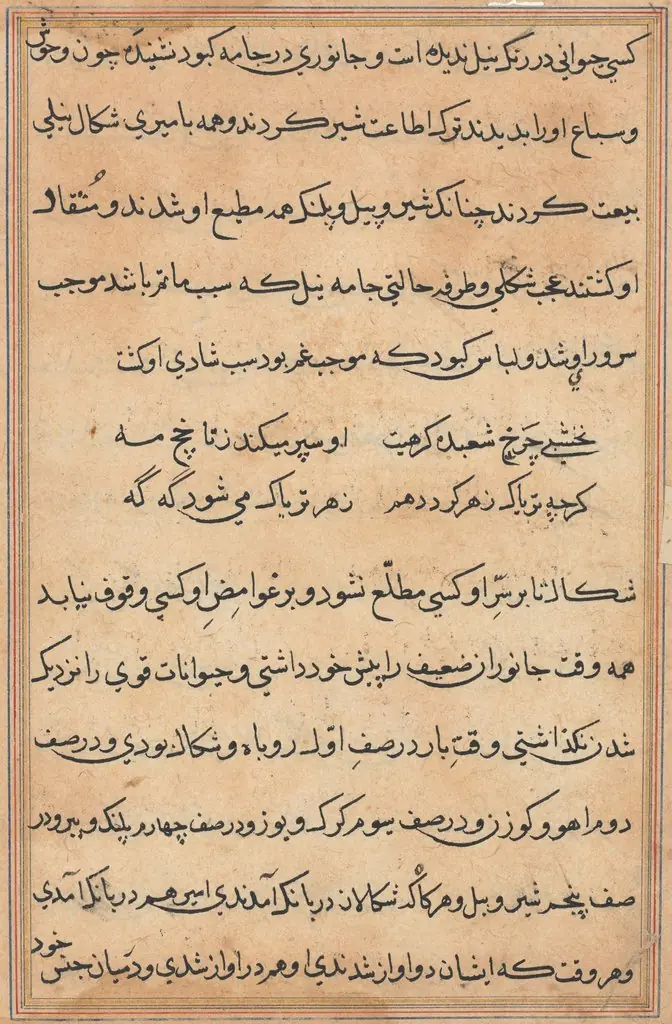
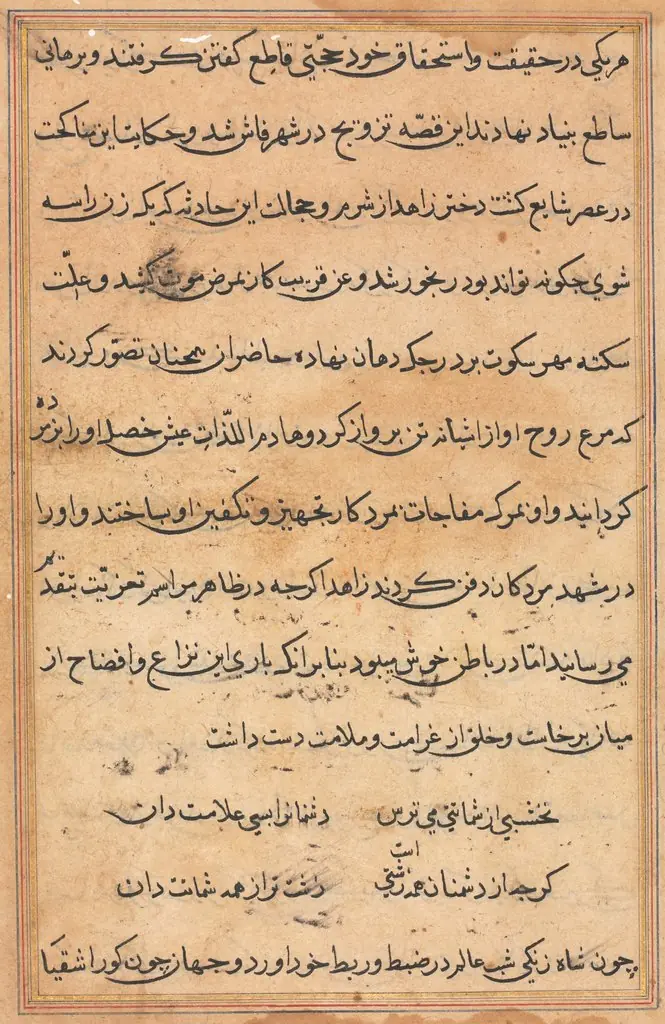
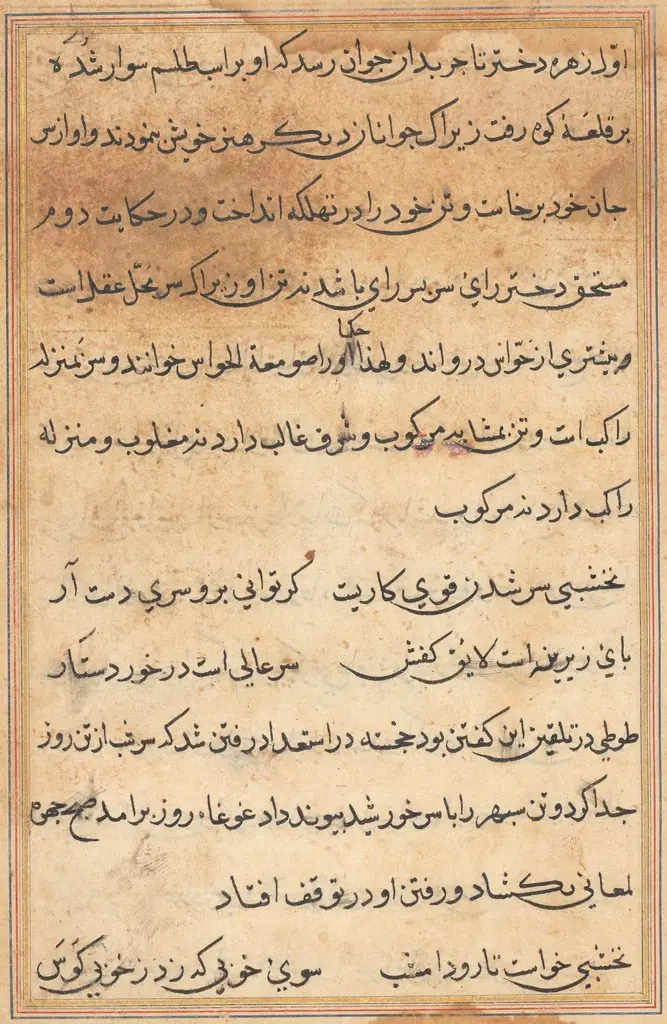
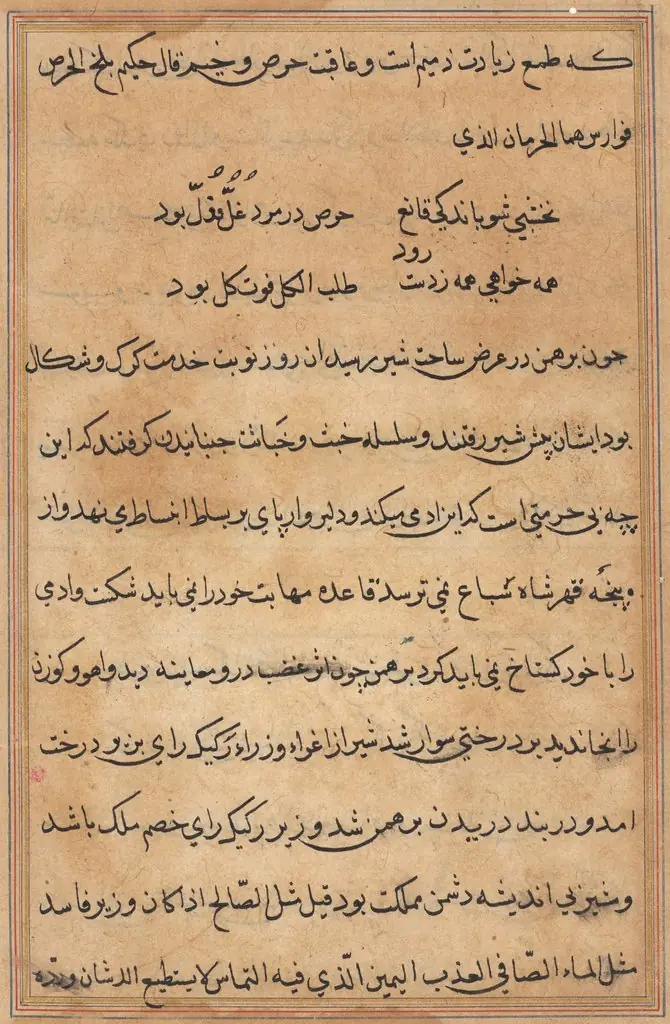
Page from Tales of a Parrot (Tuti-nama): text page is an unspecified painting. It dates from 1560 and is held in the collection of the Cleveland Museum of Art. This object is a single folio from the Persian manuscript Tales of a Parrot (Tuti‑nama), created for Prince Salim.
About this work
Subject & Meaning
In this visual tradition, the parrot often serves as a didactic interlocutor, embodying the voice of counsel that guides the listener toward ethical reflection.
The text page originates from the Persian narrative Tuti-nama, a collection of moral tales composed in the 14th century but transmitted through illustrated manuscripts in India during the mid-sixteenth century. The specific page bears a colophon date of 1560, situating its creation within the flourishing of Persianate literary culture under Mughal patronage in India. The work depicts a didactic scene drawn from the fable of the parrot, a recurring motif symbolizing wisdom, moral instruction, and the transmission of knowledge across generations.
In this visual tradition, the parrot often serves as a didactic interlocutor, embodying the voice of counsel that guides the listener toward ethical reflection. The iconography of the parrot, rendered within a domestic interior, underscores themes of domestic virtue and the instructive power of storytelling. The page thus functions not merely as illustration but as a didactic artifact, embodying the cultural synthesis between Persian literary forms and Indian artistic production in the sixteenth century.
History & Provenance
The text page from the Tales of a Parrot (Tuti-nama) is attributed to an unknown artist and dated to circa 1560, having been produced in India. It entered the Cleveland Museum of Art’s collection with the accession number 1962.279.257.a, indicating its acquisition by the museum in 1962. No further details about its earlier ownership, commission, or specific creation circumstances are recorded in the available sources.
As a textual folio, it forms part of the illustrated manuscript tradition of the Tuti-nama, though the sources do not specify its original patron or subsequent owners before the museum.
The page is held by the Cleveland Museum of Art. Its inventory designation is 1962.279.257.a. The work was made in India in 1560 and entered the Cleveland Museum of Art collection, where it remains located. No exhibition history is documented in the available sources.
Overview
This object is a single folio from the Persian manuscript Tales of a Parrot (Tuti‑nama), created for Prince Salim. The page measures roughly the size of a standard sheet of paper and is composed of a warm, slightly browned parchment. Black ink fills the surface in tightly spaced, horizontal lines of elegant script, while a thin red band outlines the margin.
Technique & Style
The calligraphy is executed in a refined, flowing hand characteristic of 17th‑century Persian scripts, with smooth connections between letters and consistent spacing. Ink, likely iron‑gall, provides a deep black contrast against the aged paper, while a narrow red pigment, possibly vermilion, frames the page, highlighting the manuscript’s decorative conventions.
Context
Tales of a Parrot belongs to a broader tradition of Persian illustrated books that combined poetic prose with moral instruction. Produced during a period of flourishing courtly patronage, such works were intended for elite audiences, reflecting both the literary tastes and the political aspirations of the Safavid elite.
Artist & collection

- Page from Tales of a Parrot (Tuti-nama): text page
 Page from Tales of a Parrot (Tuti-nama): text page
 Page from Tales of a Parrot (Tuti-nama): text page
 Page from Tales of a Parrot (Tuti-nama): text page
 Page from Tales of a Parrot (Tuti-nama): text page
 Page from Tales of a Parrot (Tuti-nama): text page
 Page from Tales of a Parrot (Tuti-nama): text page
 Page from Tales of a Parrot (Tuti-nama): text page
 Page from Tales of a Parrot (Tuti-nama): text page
 Page from Tales of a Parrot (Tuti-nama): text page
 Page from Tales of a Parrot (Tuti-nama): text page
 Page from Tales of a Parrot (Tuti-nama): text page